Plate Morphology
Particle geometry defines how layered hydrous aluminium silicates behave inside coating colors applied to paper substrates. The kaolin clay aspect ratio measures particle width relative to thickness across a population of platelets. Manufacturers govern this dimension during beneficiation and delamination stages to control barrier performance and surface smoothness.
Higher dimensional ratios extend tortuous pathways for gas and liquid penetration. This physical property stops applying once pigment loading reaches the critical pigment volume concentration where binder starvation alters film integrity. The metric dictates how mineral particles orient parallel to base paper surfaces under high shear forces during blade coating.
Coat Weight
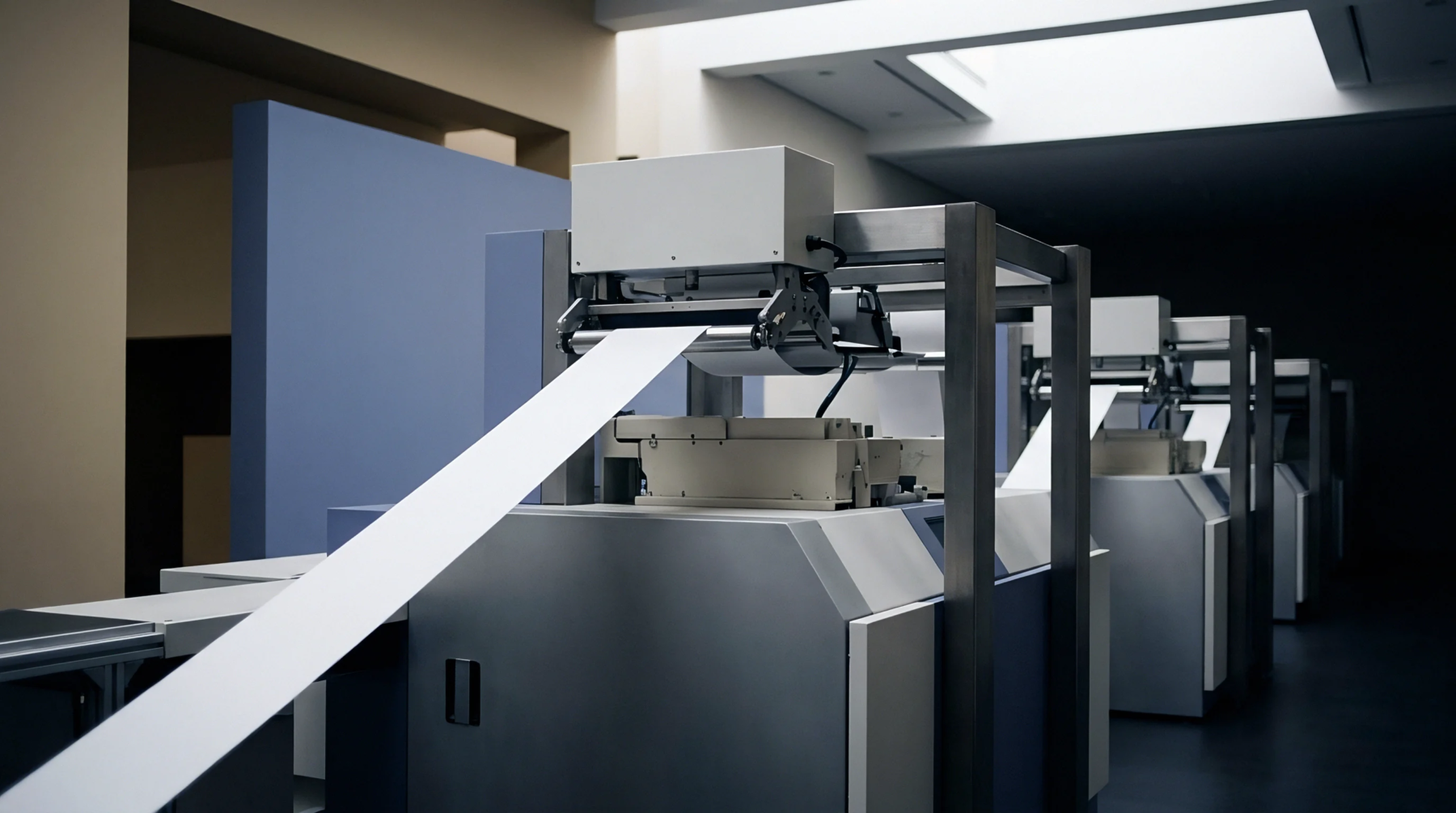
Blade loading pressures determine final film thickness by shearing platelet structures into flat configurations across moving webs. Thinner platelets create denser packing arrangements that eliminate micro voids within the pigment matrix. Calendering operations subsequently compress these oriented crystals to achieve targeted gloss values and ink receptivity levels required for high speed offset printing.
Variations in particle dimensions alter rheological behavior inside liquid slurries, forcing fluid dynamic adjustments at fluid application stations. Converters monitor viscosity profiles continuously to maintain uniform deposition across wide webs without scratching delicate base stocks.
Print Uniformity
Porosity reduction restricts fountain solution absorption and ink vehicle penetration during lithographic printing runs. Pigment layers featuring high geometric ratios present smooth planes that prevent dot gain distortion and print mottle defects. Press operators adjust drying temperatures to accommodate lower capillary absorption rates caused by densely packed mineral platelets.
Dimensional consistency across pigment batches prevents unexpected opacity drops and maintains high brightness standards on finished folding boxboard packaging. Surface energy characteristics depend directly on how uniformly these microscopic plates align beneath printing inks.