Calendering Temperature and Moisture Gradients in Folding Boxboard Processing
Selective z-directional moisture and thermal calendering plasticizes outer chemical plies to optimize surface smoothness while preserving mechanical core bulk and stiffness.
Plies
Folding boxboard achieves its bending stiffness through a three-layer sheet geometry. Bleached chemical softwood and hardwood kraft pulp make up the outer plies, giving the sheet tensile strength, surface smoothness, and resistance to cracking along folds. The central mechanical layer uses CTMP or BCTMP, whose stiff, unrefined coarse fibres add spatial volume at low mass density.
Calendering this composite involves a distinct trade-off. Compacting the web in the nip increases surface density and smooths out micro-roughness, improving ink holdout and print fidelity. But uncontrolled pressure crushes the porous mechanical core, permanently reducing thickness and bending resistance.
Under Euler-Bernoulli beam mechanics, bending stiffness scales with the third power of caliper, meaning a 10 percent loss in sheet thickness cuts structural rigidity by nearly 27 percent.
Smoothing the surface without losing bulk requires differential viscoelastic softening across the board’s z-direction. The wood polymers in pulp ~ cellulose, hemicellulose, and lignin ~ soften at temperatures that depend heavily on moisture. Unplasticized native lignin in dry pulp has a glass transition temperature (Tg) between 130 °C and 150 °C, while dry hemicellulose transitions near 160 °C. Water molecules entering the cell wall’s amorphous polymer matrices break hydrogen bonds between adjacent chains, acting as a plasticizer.
Raising fibre moisture from 5 percent to 12 percent drops the Tg of hemicellulose to 20 ~ 40 °C and lignin to 60 ~ 80 °C. Crystalline cellulose remains intact across normal mill process ranges, preserving microfibril strength.
| Ply Furnish Component | Dominant Pulp Type | Dry Glass Transition (°C) | Plasticized Glass Transition at 12% Moisture (°C) | Elastic Modulus at 23 °C (GPa) | Compressive Yield Stress at Calender Nip (MPa) |
|---|---|---|---|---|---|
| Top Surface Ply | Bleached Hardwood/Softwood Kraft | 140 ~ 155 | 55 ~ 70 | 6.2 ~ 8.5 | 18.5 ~ 24.0 |
| Central Mechanical Ply | Softwood BCTMP / CTMP | 135 ~ 150 | 75 ~ 90 | 1.8 ~ 3.2 | 4.2 ~ 7.5 |
| Bottom Surface Ply | Bleached Softwood Kraft | 142 ~ 158 | 60 ~ 75 | 5.5 ~ 7.8 | 16.0 ~ 21.5 |
Plasticizing only the outer chemical liner depends on controlling heat and moisture profiles through the sheet thickness. Standard conditioning leaves board with an even moisture content around 7 to 8 percent. If this web passes through a conventional calender nip under high line load, compressive stress spreads uniformly across the cross-section.
Because the lower-modulus mechanical core yields under less stress than the outer chemical plies, the core collapses. Gradient calendering avoids this by heating and moistening the top chemical layer past its depressed Tg while keeping the central mechanical layer below its transition point. Under these conditions, outer fibres deform rapidly at low compressive forces to smooth surface asperities, while the cooler, unplasticized core stays rigid, preserving caliper.
Viscoelastic Response Dynamics under Transient Stress
Fibre deformation inside a nip duration of 2 to 10 milliseconds depends on stress relaxation time constants relative to dwell duration. Dynamic mechanical thermal analysis shows that when outer liner fibres exceed their local glass transition threshold, their storage modulus drops by up to two orders of magnitude while the loss modulus spikes. This shift converts applied mechanical nip pressure into permanent viscous flow across the surface micro-topography.
Inside the middle mechanical layer, low moisture and lower temperatures maintain a high storage modulus. Compressive strains in the middle layer remain almost entirely elastic during the short nip transit time. Upon exiting the nip roll interface, the middle mechanical layer rebounds vertically, recovering its original thickness while the outer chemical layer retains its flattened surface finish.
Establishing these distinct mechanical zones requires managing the thermal diffusivity and moisture diffusivity of the fibrous web. The thermal diffusivity of dry paperboard averages approximately 1.0 × 10⁻⁷ m2/s, whereas moisture diffusivity through the porous fibre network operates at approximately 1.0 × 10⁻⁸ m2/s to 5.0 × 10⁻⁸ m2/s. Heat transfers through the web significantly faster than water vapour or liquid moisture can diffuse.
Applying water or steam to the surface moments before nip entry creates a steep surface-concentrated moisture gradient. When this moistened surface touches a hot calender roll, thermal energy conducts rapidly into the wet surface layer. The sudden temperature rise converts the localized high moisture content into an instant reduction of outer layer yield stress, smoothing the surface before heat or moisture can penetrate into the middle mechanical pulp.
Failure to maintain distinct thermal and moisture boundaries breaks the structural zoning of the sheet. If web speed drops while calender roll temperatures remain high, conduction drives heat deep into the middle layer. Thermal energy alone can elevate the temperature of unplasticized middle-layer lignin past its native Tg of 135 °C. When middle-layer lignin softens without added moisture, mechanical nip pressure permanently crushes the rigid BCTMP fibre network.
The board loses its thickness and bending resistance, resulting in a dense sheet with poor yield. This structural failure occurs on high-speed boxboard machines during mill speed changes when thermal profiling controls react too slowly to machine deceleration.
Substrate thickness preservation depends directly on restricting plastic deformation to the outer twenty micrometres of the chemical liner surface.
Steam
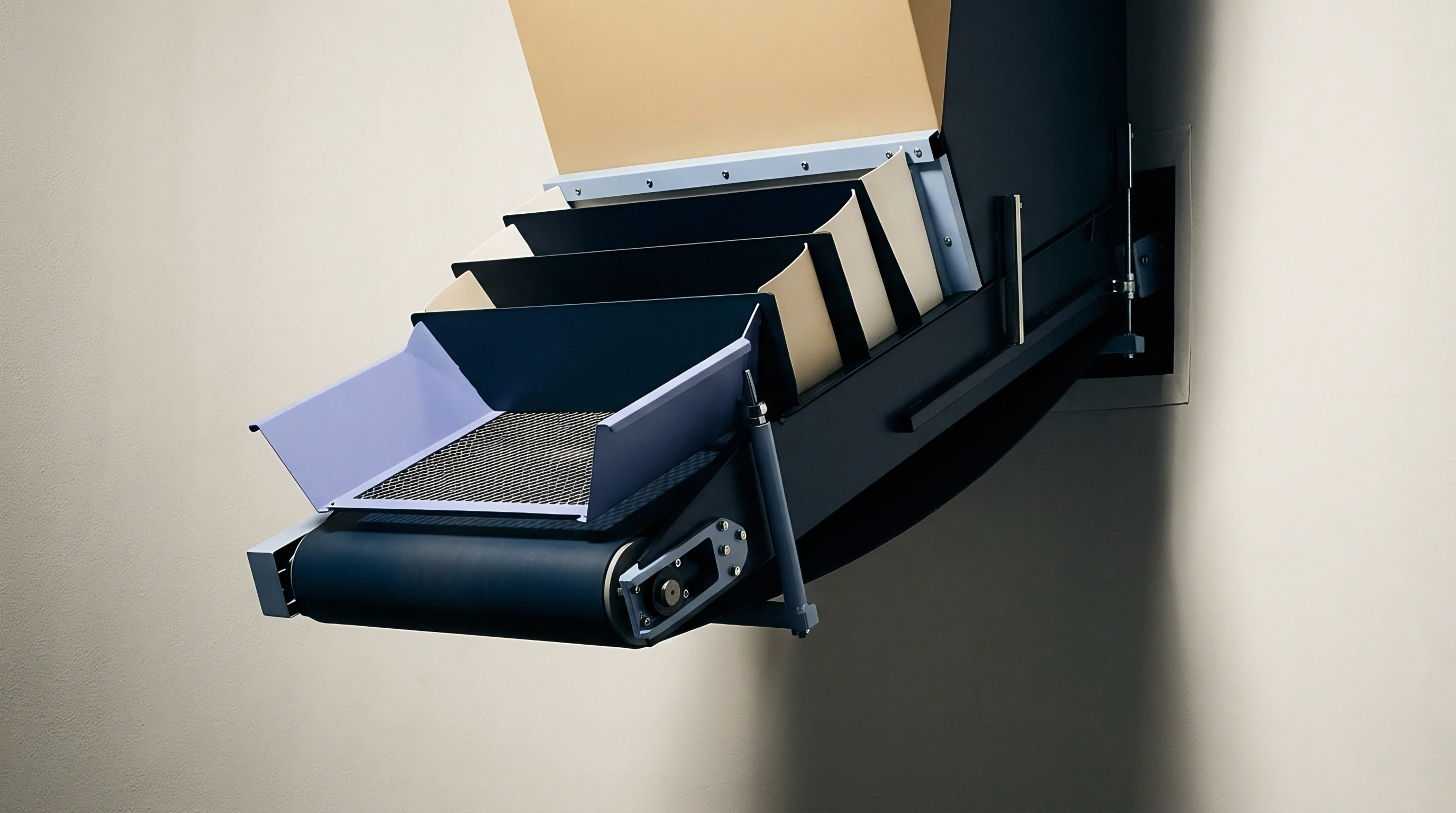
Applying vaporized moisture directly to the moving web plasticizes outer chemical fibres right before mechanical compression. Steam shower units positioned immediately ahead of the calender nip deliver targeted water vapour across the board. As saturated steam hits the cooler sheet surface, phase-change condensation transfers thermal energy directly into the top chemical ply while depositing a uniform micro-film of liquid water.
Condensation releases latent heat ~ roughly 2260 kilojoules per kilogram of steam. This combined heat and moisture input rapidly elevates surface temperature and plasticizes the outer fibres. Water boxes and liquid spray booms cannot match this uniform application at high machine speeds, where liquid application tends to form droplets that cause uneven swelling and grain raise.
Condensation rates depend on maintaining a controlled temperature difference between the incoming web and the saturated steam envelope. Board usually enters the calender section between 45 °C and 60 °C with an average total moisture content of 6.5 to 8.0 percent. The steam shower delivers dry saturated steam at 105 °C to 115 °C at low delivery pressures to avoid disrupting the air boundary layer.
On contact with the cooler sheet, moisture condenses on surface fibres, bringing local moisture in the outer ten to fifteen micrometres up to 14 ~ 18 percent within milliseconds. Penetration depth depends on machine speed, web coat mass, and steam nozzle geometry. Machine speeds above 400 metres per minute keep condensation shallow, containing applied moisture strictly within the top chemical liner.
Excessive steam or poor shower placement causes major quality defects in converted packaging lots. Too much steam forces liquid water past the top chemical layer into the mechanical core. When wet core fibres enter a heated calender nip, rapid steam generation creates high internal vapour pressure that expands violently upon exit, causing inter-ply delamination and surface blistering.
Conversely, insufficient steam fails to lower surface Tg adequately, forcing operators to increase nip line loads to meet roughness targets ~ a workaround that crushes the middle layer and reduces overall caliper yield.
- Core layer delamination occurs when internal steam pressure generated inside the nip exceeds the z-directional tensile strength of the mechanical pulp layer.
- Surface grain raise develops when non-uniform steam condensation causes localized fibre swelling that fails to flatten permanently under calender nip pressure.
- Cross-machine moisture streaks develop from clogged steam nozzle orifices, creating narrow high-moisture bands that result in localized calender blackening and uneven ink absorption.
- Blistering under high-temperature drying happens when trapped moisture within the inner board plies expands rapidly during downstream coating drying stages.
- Delayed web cockling manifests as post-calendering web distortion caused by non-uniform strain relaxation across wet and dry moisture bands across the web width.
Kinetics of Surface Moisture Penetration
Moisture movement into paperboard plies combines non-linear Lucas-Washburn capillary flow with Fickian diffusion through solid fibre walls. Capillary transport through inter-fibre voids dominates liquid movement, governed by pore radius, liquid surface tension, and contact angle. Dampening the surface liner drops the contact angle of water on cellulose close to zero, driving rapid capillary penetration.
To maintain a sharp moisture gradient, nip contact must occur before capillary forces carry water into the mechanical core. Dwell time between steam shower contact and the nip centre-line should stay between 20 and 80 milliseconds. Below 200 metres per minute, steam showers must sit closer to the nip entry to prevent deep moisture migration.
Excess moisture applied to the outer liner without sufficient web heating causes deep water migration that compromises the core modulus.
Matching condensation rate to nip residence time requires dynamic adjustments based on line speed. Automated steam shower controls monitor web speed, incoming temperature, and downstream roughness to regulate valve openings. If machine speed drops during reel changes, the system reduces steam pressure to avoid over-wetting.
Excessive moisture drops the shear modulus of the top chemical ply too far, leading to surface picking, roll wrapping, and fibre buildup on thermorolls. Steam lines require micro-separators, as entrained condensate droplets leave wet spots that trigger calender blackening, where optical brightness drops sharply from the loss of light-scattering voids.
A steam shower installation does not correct all cross-machine roughness variations regardless of base sheet formation quality. Steam showers selectively plasticize surface fibres, but they cannot compensate for severe basis weight fluting or density variations generated in the wet end forming section. Heavy basis weight zones absorb more moisture, remain denser, and experience higher compaction forces inside the calender nip, causing persistent thickness variations across the web width.
Surface moistening acts as a refining tool for micro-roughness, not a corrector for poor sheet formation.
Adjusting steam volume without accounting for incoming web temperature variations alters the depth of surface plasticization across the web deckle.
Shell
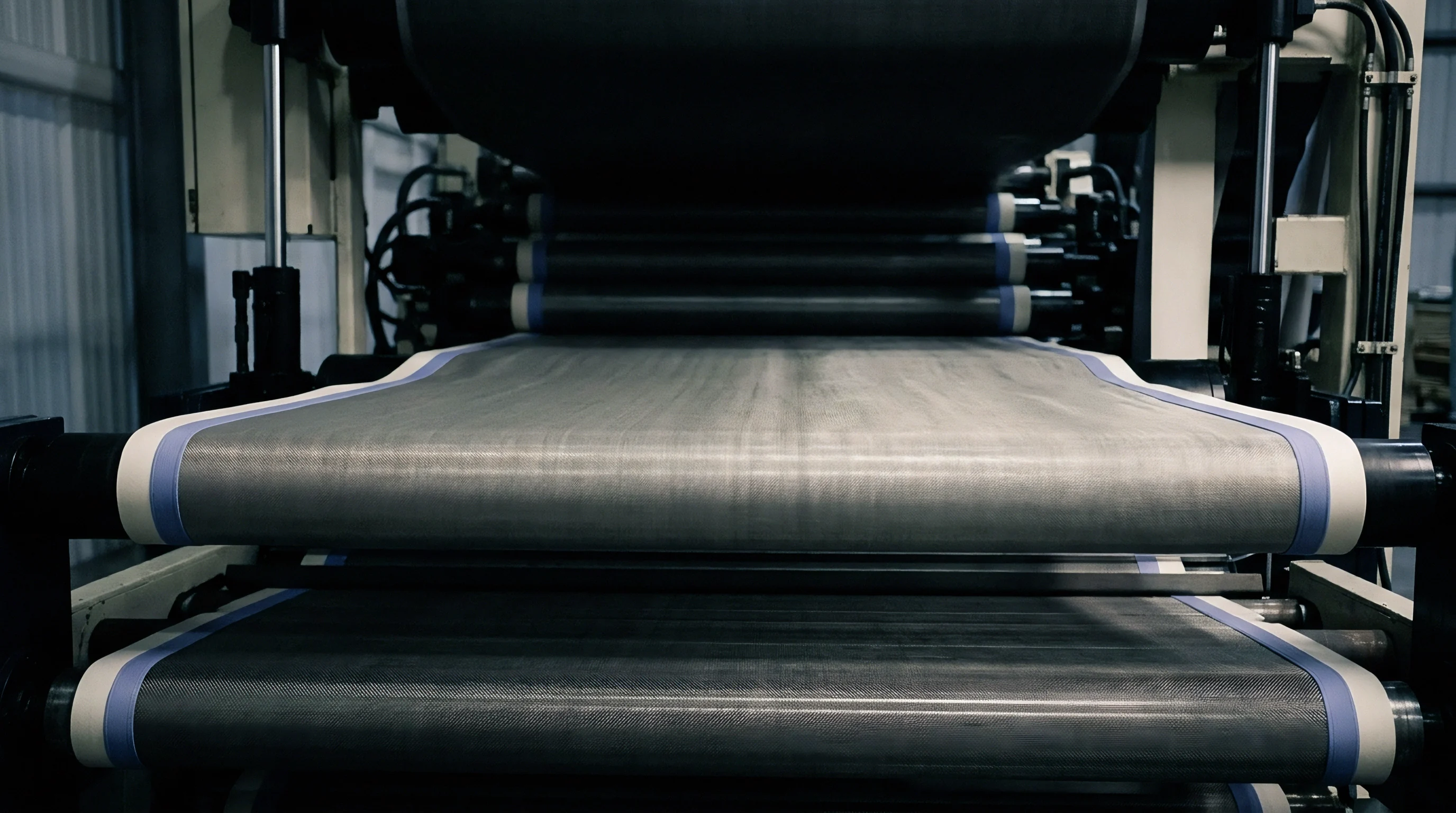
Thermoroll calenders transfer heat into the top microns of the web through direct conductive contact during high-speed nip transitions. Modern boxboard calenders use forged steel rolls heated by circulating thermal oil or pressurized steam through internal peripheral bores. Roll surface temperatures range from 140 °C to 220 °C, generating heat fluxes into the board that exceed 150 kilowatts per square metre.
Soft-nip configurations pair a heated hard steel roll with a flexible mate roll covered in a synthetic polymer or elastomer sleeve. The elastic cover deforms under load, widening the nip footprint to 20 ~ 50 millimetres and extending dwell time to 3 ~ 15 milliseconds. This combination of elevated surface temperature and lower peak nip pressure smooths the outer chemical plies without generating pressure spikes that crush the mechanical core.
Conductive heat transfer from thermoroll to paperboard follows Fourier’s law. Thermal contact resistance between the polished roll surface and the rough web decreases rapidly as nip pressure rises. At line loads below 10 kilonewtons per metre, surface asperities limit real metal-to-paper contact to less than 15 percent, restricting heat transfer.
Increasing line load to 30 ~ 60 kilonewtons per metre deforms outer chemical fibres, expanding actual contact area beyond 70 percent. This rapid contact expansion accelerates heat conduction into the top chemical ply right as compressive stress peaks, driving outer surface fibres past their local glass transition temperature.
| Thermoroll Temperature (°C) | Nip Line Load (kN/m) | Nip Dwell Time (ms) | PPS Roughness 0.8 MPa (µm) | ISO 534 Caliper (µm) | Taber 15° Bending Stiffness (mN·m) |
|---|---|---|---|---|---|
| ambient (23) | 80 | 3.2 | 3.85 | 310 | 18.5 |
| 140 | 55 | 5.5 | 2.10 | 332 | 22.4 |
| 180 | 40 | 8.0 | 1.25 | 341 | 24.8 |
| 210 | 35 | 10.5 | 0.95 | 338 | 23.9 |
| 230 | 60 | 12.0 | 0.75 | 302 | 16.8 |
Heat penetration follows a transient conduction profile governed by thermal diffusivity. The characteristic diffusion depth (zd) inside the web scales according to zd = 2 sqrtα · t, where α is thermal diffusivity (1.1 × 10⁻⁷ m2/s) and t is dwell time. For a high-speed soft calender running at 5 milliseconds dwell, heat penetrates about 45 to 50 micrometres.
This matches the caliper of the top chemical kraft ply on a standard 300 gsm folding boxboard sheet. Confining high temperatures to this surface layer keeps heat from reaching the underlying mechanical plies, protecting core bulk and stiffness.

Should Thermoroll Temperatures Exceed the Unplasticized Lignin Transition Point?
Applying temperatures above 160 °C risks scorching outer chemical fibres if moisture drops below 8 percent. Operating thermorolls up to 200 °C requires maintaining a precise surface moisture gradient via steam showers to protect the cellulose-hemicellulose matrix. When surface moisture falls below 4 percent, thermal conductivity drops, impeding heat transfer into sheet asperities.
Heat then concentrates on the immediate surface, degrading strength agents and optical brighteners. Maintaining high surface moisture creates a steam boundary layer at the roll interface that boosts conductivity while shielding optical additives from heat damage.
Soft calender roll covers distribute nip pressure evenly over local basis weight variations. Polymer covers made from polyurethane or epoxy composites exhibit elastic moduli between 1.5 and 3.5 gigapascals at operating temperatures of 80 °C to 110 °C. Under load, the polymer cover deforms around high-basis-weight flutes, keeping nip pressure uniform across thick and thin zones alike. This avoids the localized high-pressure spikes common in hard steel-on-steel nips, which cause spot calendering, density spikes, and blackening.
Soft-nip calendering maintains consistent sheet density while smoothing surface asperities across the entire deckle.
Calendering an 180-micrometre top chemical layer at 180 degrees Celsius under 40 kilonewtons per metre line load reduces Parker Print-Surf roughness from 4.2 to 1.1 micrometres while retaining 92 percent of core bulk.
Shoe calenders extend this thermal nip concept by replacing traditional cylindrical rolls with a stationary concave shoe mated to a hydrostatic oil lubrication system and a flexible rotating belt. The wide nip shoe extends contact length to 150 ~ 280 millimetres, offering dwell times up to 40 milliseconds at speeds above 800 metres per minute. Longer dwell permits lower peak nip pressures ~ below 5 megapascals ~ while keeping heat transfer high.
Heat penetrates uniformly into the plasticized top chemical layer under minimal mechanical compaction, achieving high surface smoothness while retaining caliper. Shoe calendering is the most efficient configuration for maximizing yield, though high capital cost limits it mostly to high-capacity primary packaging mills.
Maintaining thermoroll accuracy requires continuous monitoring of internal oil flow channels to prevent local temperature drops across the roll face. Synthetic thermal fluids circulating through peripheral bores can form carbonized deposits over time, acting as thermal insulation. A localized surface temperature drop of 10 °C reduces softening in the outer chemical ply, leading to sudden roughness spikes in specific web lanes.
Continuous infrared scanning heads track thermoroll surface profiles to identify localized cooling before surface smoothness deviations trigger quality rejections at the converting plant.
Determining whether thermal heat flux fully plasticizes the chemical surface ply without initiating moisture flash-evaporation inside the mechanical core remains an operational challenge for mill engineers.
Compaction
Mechanical caliper reduction directly impairs bending stiffness according to a cubic relationship with sheet thickness. Preserving structural yield requires balancing smoothness gains against density increases across the finishing line. Surface micro-topography evaluation relies on two primary test standards: Parker Print-Surf (PPS ISO 8791-4) and Bendtsen roughness (ISO 8791-2).
PPS measuring heads compress surface asperities against a flat measuring rim under controlled clamping pressures (0.5 to 2.0 megapascals), mimicking printing press nip conditions. Bendtsen testing measures uncompressed air leakage rates across the uncompressed surface at low pressure. Gradient-calendered folding boxboards achieve low PPS roughness figures under 1.2 micrometres while retaining high overall caliper, providing ideal surface smoothness for rotogravure and high-screen offset lithography printing.
Cross-machine profile uniformity requires dynamic control over local nip load and surface moisture profiles. Web thickness, basis weight, and moisture variations entering the calender section create non-uniform compression along the roll length. Modern multi-ply board calenders utilize induction heating systems positioned across the thermoroll surface.
Segmented induction coils generate localized high-frequency electromagnetic fields that expand the steel roll shell locally by micro-metres, increasing local nip pressure over thick or rough web zones. Combining induction roll profiling with segmented steam showers enables precise adjustments to local line load and surface moisture, holding cross-machine caliper variations within a narrow tolerance band of plus or minus 1.5 percent across six-metre web widths.
- Calibrate cross-machine NIR moisture gauges and laser caliper sensors at the calender reel section under ISO 187 standard environmental conditioning.
- Establish baseline line load and thermoroll oil temperature settings matching the target basis weight and furnish specification sheet.
- Engage segmented steam shower controls to apply a uniform vapour envelope across the top chemical chemical liner, observing local surface temperature spikes via thermal imaging.
- Activate high-frequency thermal induction profiling coils along the thermoroll length to eliminate cross-machine caliper ridges and localized high-roughness lanes.
- Verify Taber 15-degree bending stiffness on reel strip samples to ensure middle mechanical ply integrity remains uncompromised by calender compaction.
- Fine-tune soft-nip roll cover hydraulic crowning pressures to maintain uniform nip footprint width under dynamic thermal expansion.
Maintaining high structural stiffness requires avoiding excessive mechanical compaction during gloss calendering passes. High-grade folding boxboards specified for luxury cosmetics, pharmaceutical packaging, and spirits cartons receive multi-stage surface coatings containing calcium carbonate, kaolin clay, and latex binders. Post-coat calendering develops high specular surface gloss through high-speed polishing passes.
Uncontrolled gloss calendering crushes the base board, destroying the bending stiffness created in the wet end forming section. Applying gradient calendering principles prior to coating sets base board smoothness, minimizing the post-coating calendering severity needed to achieve high surface gloss.
ISO 2493 stiffness testing conducted after calender adjustments confirms whether cross-direction bending resistance meets converter specifications without excessive density gains.
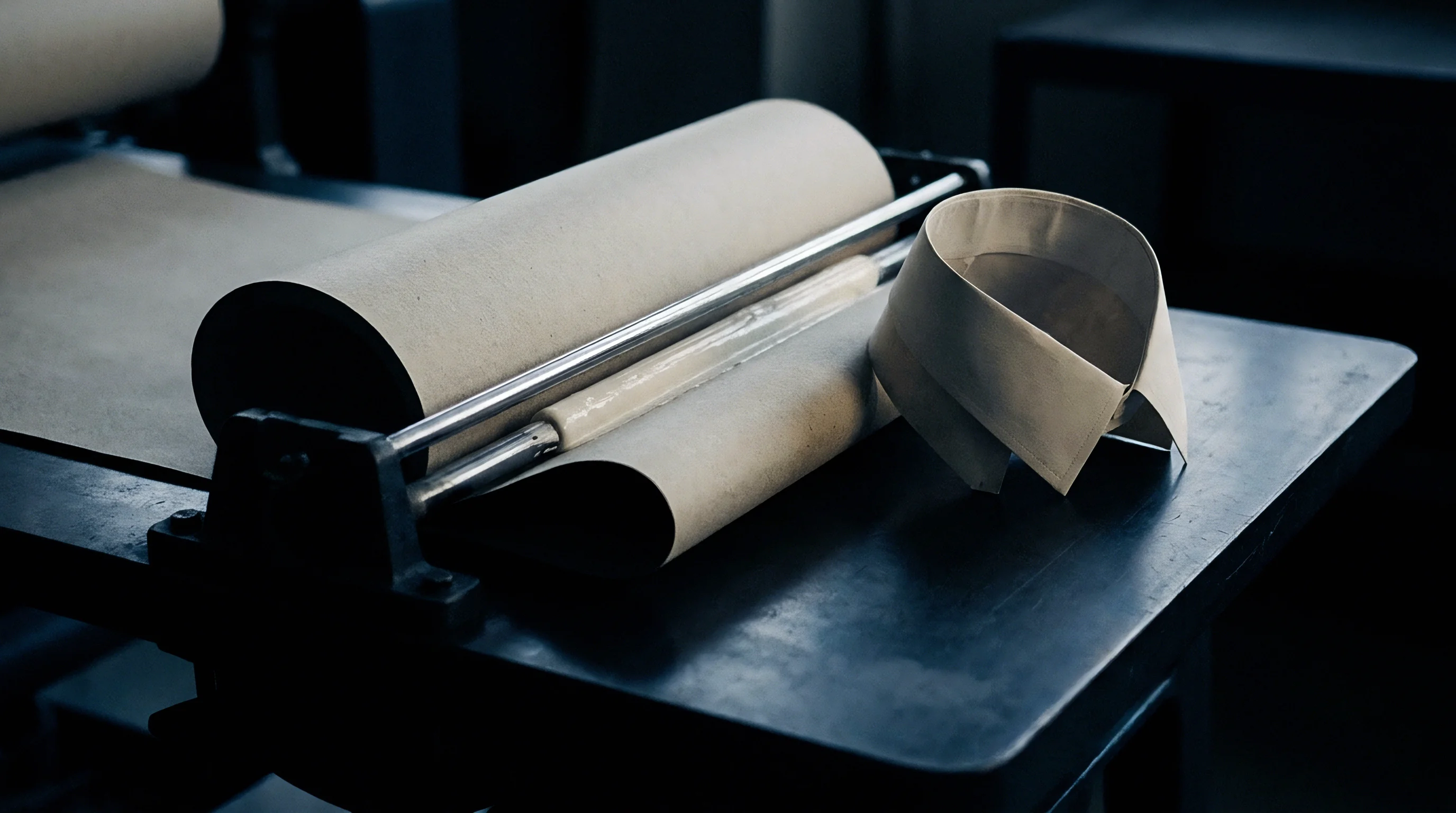
Substrate deformation behaviour under converting stresses depends on preserving outer chemical ply ductility while maintaining middle ply rigidity. Boxboard cartons undergo high-speed scoring, die-cutting, and folding during converting. During scoring, male scoring knives push the board into female channel dies, creating a localized creasing score line.
The score line must stretch on the outer surface while delaminating internally along controlled middle-ply shear planes to form a clean fold without surface cracking. Uncontrolled calender compaction crushes the central mechanical layer, destroying the shear planes required for internal delamination. When crushed board is folded 90 or 180 degrees on packaging lines, outer chemical fibres experience excessive tensile stress and snap, resulting in cracked printed scores, exposed white fibres, and structural carton failure.
Inadequate moisture gradient control during calendering causes severe post-converting carton warpage on high-speed packaging lines. When moisture is driven deep into the central mechanical ply and trapped by downstream coating layers, the board retains asymmetric internal strain profiles. As cartons sit in unconditioned warehouses, internal moisture redistributes toward environmental equilibrium.
The top chemical ply contracts or expands at different rates than the bottom kraft ply, causing severe carton bowing, panel dishing, and auto-bottom folding jams on high-speed cartoning machines. Maintaining steep moisture gradients limits moisture input strictly to outer surface layers, allowing moisture to evaporate cleanly during drying passes and leaving stable, flat board sheets.
Setting calender nip pressures too high to force poorly formed sheets into surface smoothness specifications destroys bending resistance, causing carton line jams and structural packaging failures.
Diagnostics
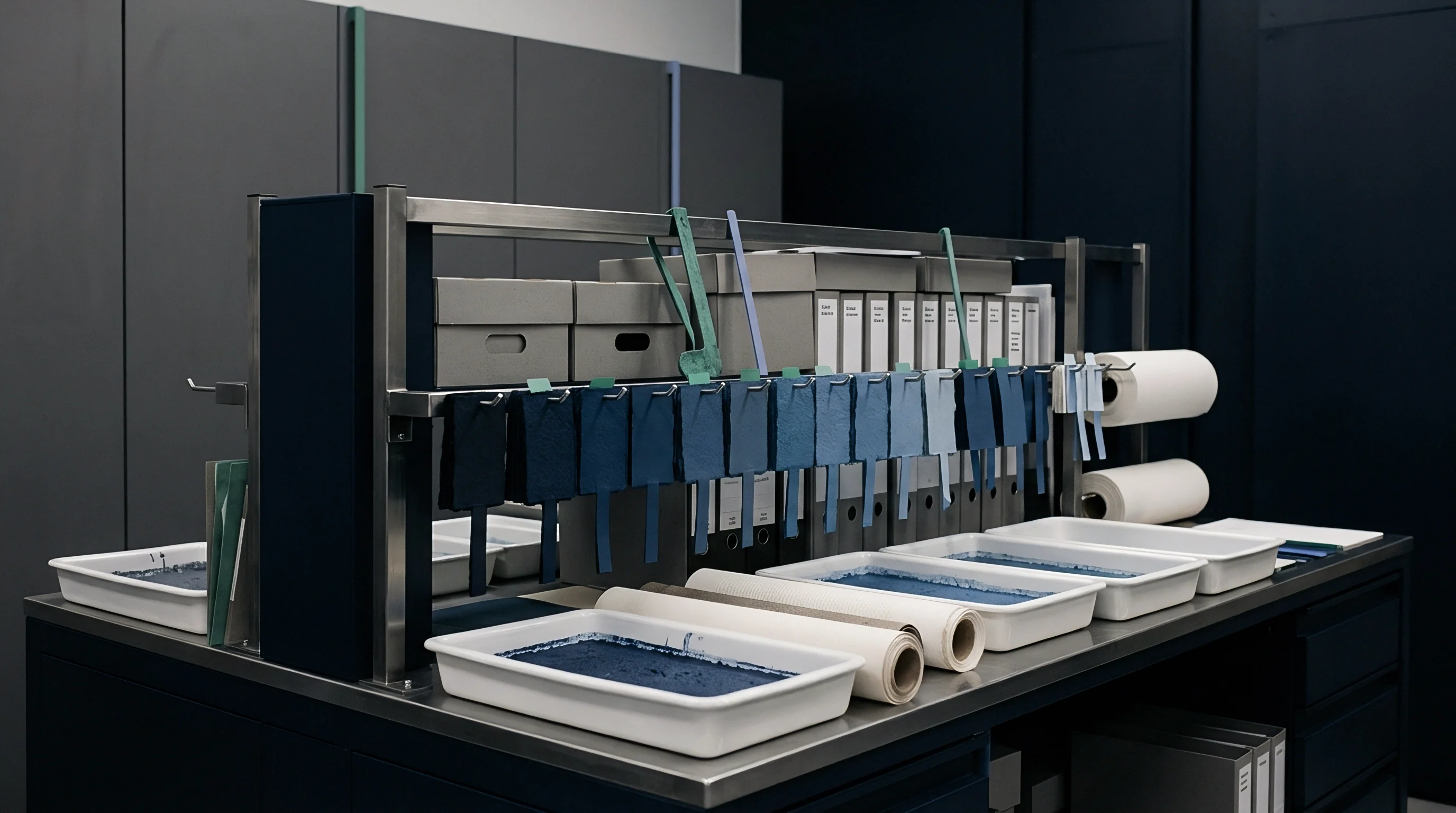
Laboratory verification of internal sheet structure relies on precise cross-sectional sampling and environmental conditioning. Evaluating thermal and moisture gradients requires methods that capture transient z-directional properties before moisture redistributes or thermal energy dissipates. Traditional gravimetric oven-drying measures overall sheet moisture content according to ISO 287 but fails to resolve moisture distribution variations across individual plies.
Modern mill laboratories utilize cross-sectional freeze-microtomy combined with microscopic Near-Infrared (NIR) spectroscopic imaging. Web samples pulled immediately after the calender nip are frozen in liquid nitrogen within seconds to lock moisture positions in place. Microtome slicing produces 5-micrometre z-directional cross-sections, allowing NIR imaging to map water concentration gradients from the top chemical layer through the mechanical core to the back chemical layer.
Laser-based non-contact displacement sensors and high-resolution micro-computed tomography (μ CT) provide three-dimensional visualization of density distribution through the board cross-section. X-ray μ CT imaging measures local attenuation coefficients, mapping spatial density variations at sub-micron resolutions. Gradient-calendered board samples display high density along the outer ten to twenty micrometres of the chemical liner, while the central mechanical BCTMP layer retains its porous, low-density network.
Uniformly compact board shows consistent, high density through its entire cross-section, confirming core collapse. These analytical methods provide definitive evidence when investigating structural stiffness loss or score cracking field failures.
| Property | Test Standard | Measurement Principle | Standard Conditioning | Typical Spec Range (300 gsm FBB) |
|---|---|---|---|---|
| Grammage | ISO 536 / TAPPI T410 | Gravimetric mass per unit area | 23 °C, 50% RH | 295 ~ 305 g/m² |
| Caliper (Thickness) | ISO 534 / TAPPI T411 | Dead-weight micrometer compression | 23 °C, 50% RH | 380 ~ 420 µm |
| Parker Print-Surf Roughness | ISO 8791-4 / TAPPI T555 | Air leakage under 0.8 ~ 2.0 MPa clamping pressure | 23 °C, 50% RH | 0.9 ~ 1.4 µm |
| Bendtsen Roughness | ISO 8791-2 | Uncompressed surface air leakage rate | 23 °C, 50% RH | 150 ~ 300 ml/min |
| Taber 15° Bending Stiffness | ISO 2493 / TAPPI T489 | Deflection force at 15-degree bending angle | 23 °C, 50% RH | 22.0 ~ 28.5 mN·m |
Goods-in reel sampling protocols must enforce strict environmental conditioning standards before accepting delivered board tonnage. Paperboard hygroscopic properties mean caliper, moisture, and stiffness values shift when exposed to varying relative humidity. Standard ISO 187 conditioning dictates holding test samples at 23 °C and 50 percent relative humidity for 24 hours prior to testing.
Opening delivered pallets or reel samples in unconditioned packaging plants causes moisture pickup or drying, obscuring original mill finishing states. A 1.5 percent shift in equilibrium moisture content alters Taber stiffness values by up to 8 percent, triggering false non-conformance rejections or hiding mill processing defects.
- Verify tambour traceability batch codes against mill MTR documentation to confirm calender line operational parameters and reel positions.
- Conduct non-destructive microwave sensor moisture profiling across the entire width of delivered reels to identify hidden internal moisture bands.
- Perform ISO 534 caliper micrometer checks at ten equidistant points across the web profile, calculating caliper standard deviation across the deckle.
- Measure PPS surface roughness under 0.8 MPa load on both top and bottom chemical liners to verify print smoothness conformance.
- Execute Taber 15-degree bending stiffness tests in both Machine Direction (MD) and Cross Direction (CD) according to ISO 2493 requirements.
- Evaluate score creasing performance using an adjustable laboratory creasing die, inspecting folded crease ridges under 20x optical magnification for surface micro-cracking.
Cross-sectional moisture analysis reveals that surface hydration dissipates into the core within three seconds if thermal energy is not immediately applied at the nip.
Laboratory roughness measurement tools must match end-use converting conditions to provide meaningful printability predictions. Bendtsen air-leakage instruments measure uncompressed surface roughness under minimal clamping forces, providing a general indication of macro-roughness. PPS testing applies defined mechanical pressures matching impression cylinder pressures found on sheet-fed offset and rotogravure presses.
A board sample may exhibit high Bendtsen roughness due to soft, compressible surface micro-flutes yet produce excellent PPS roughness values under press impression loads. Relying solely on Bendtsen values risks rejecting high-performing board stock that deforms smoothly under ink impression nips.
Supply agreements must explicitly stipulate ISO 187 pre-conditioning compliance before any mill rejection claim for low stiffness or caliper deviation is accepted by the paper mill audit team.
Ledger
Commercial evaluation of boxboard substrates balances total sheet area yield against converting line speed and spoilage rates. Buying paperboard by the metric tonne while converting it into individual printed packaging units means density determines yield efficiency. Substrate yield represents square metres of usable board produced per metric tonne.
Gradient-calendered folding boxboard achieves superior bulk at specified smoothness targets, enabling brand owners to downgauge basis weight while maintaining required structural box strength. Substituting a traditional hard-calendered 320 gsm board with an engineered gradient-calendered 290 gsm board yields identical sheet thickness and bending stiffness, delivering immediate raw material mass savings of 9.37 percent across high-volume packaging runs.
Evaluating commercial value across a production run requires calculating landed square-metre costs alongside converting performance metrics. Consider a folding carton packaging order requiring 5,000,000 pharmaceutical cartons with parent sheet dimensions of 720 mm by 1020 mm. The baseline specification uses a standard 330 gsm coated FBB priced at 1,250 EUR per metric tonne delivered.
The gradient-calendered alternative uses a 300 gsm premium FBB priced at 1,360 EUR per metric tonne delivered due to specialized thermal calendering production steps. The 300 gsm substrate matches the caliper (430 micrometres) and Taber bending stiffness (26.5 mN·m) of the heavier 330 gsm board. Calculating total job yield and expenditure reveals true commercial cost differences:
Sheet area for one parent sheet equals 0.72 m × 1.02 m = 0.7344 m2. Yielding 12 finished cartons per parent sheet requires 416,667 parent sheets. Adding 4 percent make-ready and press spoilage brings total sheet requirements to 433,334 parent sheets, providing a total required sheet area of 318,240 square metres.
For the baseline 330 gsm stock: Total mass required equals 318,240 m2 × 0.330 kg/m2 = 105,019.2 kg, or 105.02 metric tonnes. At 1,250 EUR per tonne, total substrate cost equals 131,275 EUR. Landed cost per thousand parent sheets equals 302.94 EUR, representing a unit substrate cost of 0.0252 EUR per finished carton.
For the gradient-calendered 300 gsm stock: Total mass required equals 318,240 m2 × 0.300 kg/m2 = 95,472.0 kg, or 95.47 metric tonnes. At 1,360 EUR per tonne, total substrate cost equals 129,839 EUR. Landed cost per thousand parent sheets equals 299.63 EUR, representing a unit substrate cost of 0.0249 EUR per finished carton.
| Specification Parameter | Baseline Traditional FBB | Gradient-Calendered FBB | Variance / Delta |
|---|---|---|---|
| Basis Weight (gsm) | 330 | 300 | -9.09% |
| Caliper (µm) | 430 | 430 | 0.00% |
| Taber 15° Stiffness CD (mN·m) | 26.5 | 26.5 | 0.00% |
| Price Per Metric Tonne (EUR) | 1,250 | 1,360 | +8.80% |
| Total Tonnage Required (t) | 105.02 | 95.47 | -9.09% |
| Total Substrate Expenditure (EUR) | 131,275 | 129,839 | -1,436 EUR (-1.09%) |
| Freight Cost at 85 EUR/t (EUR) | 8,927 | 8,115 | -812 EUR (-9.09%) |
| Total Landed Packaging Material Cost (EUR) | 140,202 | 137,954 | -2,248 EUR (-1.60%) |
Direct material price comparisons fail to capture additional supply chain savings unlocked by board downgauging. Freight expenditures drop in direct proportion to weight reductions, saving 812 EUR across the 9.55-tonne mass reduction. Operating with lighter rolls reduces warehouse handling constraints and allows loading more net sheet area per shipping container before reaching maximum legal transport weight limits.
Downstream extended producer responsibility (EPR) packaging waste fees charged per kilogram of placed packaging further enhance financial savings in regions with strict packaging tax regulations.
Pressroom efficiency advantages provide substantial cost benefits beyond raw material savings. Gradient-calendered board features uniform surface smoothness, reducing ink consumption by 5 to 8 percent on sheet-fed offset lithography presses compared to coarse base board. High surface smoothness enables achieving target optical print density under thinner ink films, accelerating oxidative ink drying times and reducing set-off anti-tack powder application rates.
Accelerated ink drying permits higher press speeds, boosting converter output from 12,000 to 14,500 sheets per hour while eliminating post-print drying delays before die-cutting operations.
Converting line spoilage reductions yield quantifiable financial savings during high-speed folding and gluing operations. Substrate exhibiting crushed mechanical plies suffers from crack-at-fold defects, generating customer scrap rates exceeding 1.5 percent during high-speed filling line runs. Gradient-calendered FBB retains uncrushed BCTMP core plies, preserving clean score delamination mechanics and dropping score cracking defect rates below 0.1 percent.
Across a 5-million unit packaging contract, eliminating 1.4 percent of converting scrap saves over 70,000 finished cartons, avoiding remake press time, customer penalty fees, and line jam downtime expenses.
Total cost accounting establishes that paying an 8.8 percent premium per metric tonne for gradient-calendered folding boxboard reduces total landed packaging costs while improving print fidelity and line efficiency. Sourcing practices that evaluate paperboard purchases purely on a price-per-tonne basis routinely lock converters into dense, low-yield substrates that increase total packaging spend. Specifying board based on structural caliper yield per unit mass aligns substrate physical capability with financial performance across the packaging supply chain.