Optimizing Matrix Tooling Parameters for Heavyweight Laminate Folding Boxboard Converts
Heavyweight laminated folding boxboard demands channel expansion beyond standard caliper formulas, pairing wider dies with shallow penetrations to stop film shear.

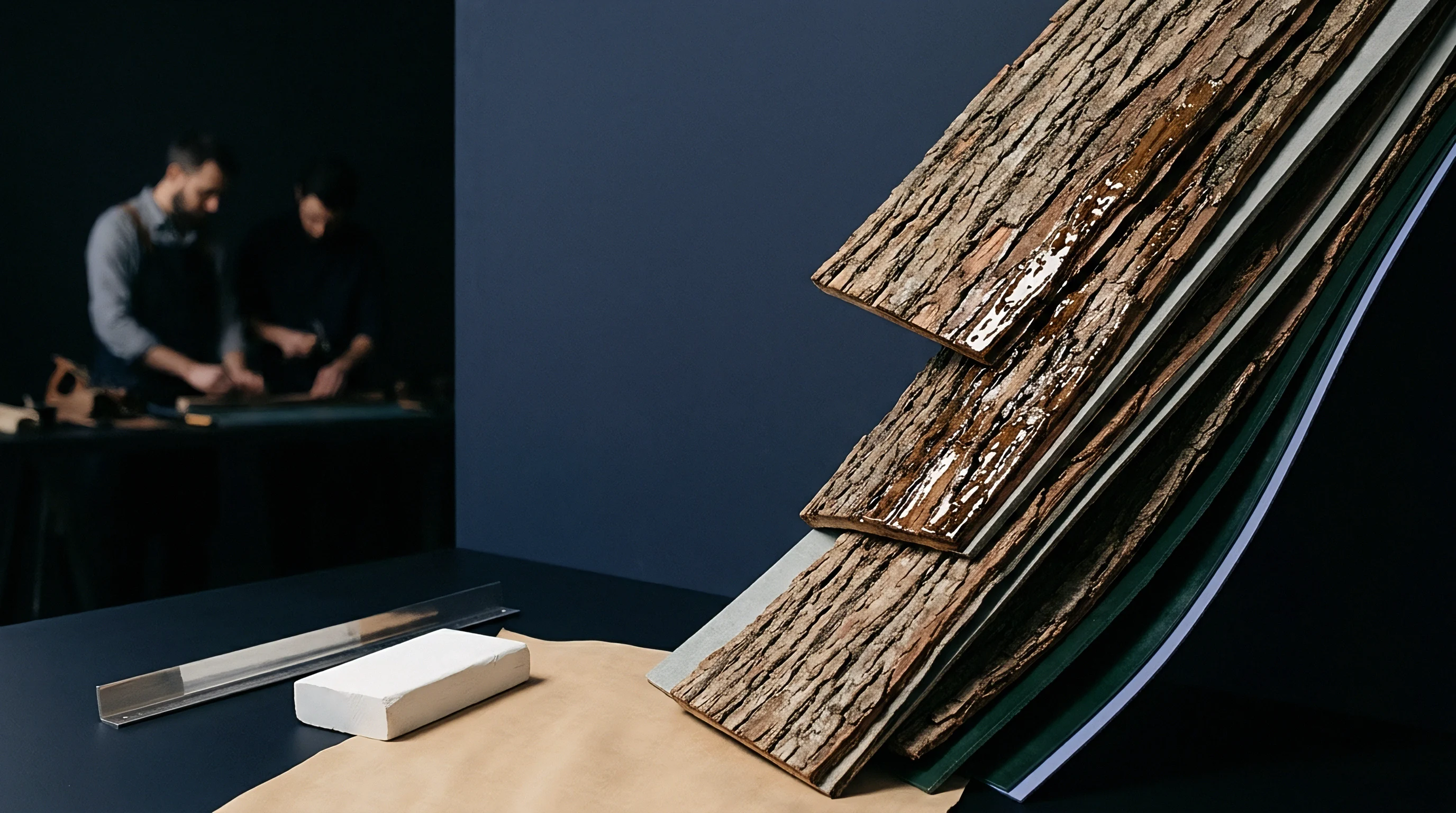
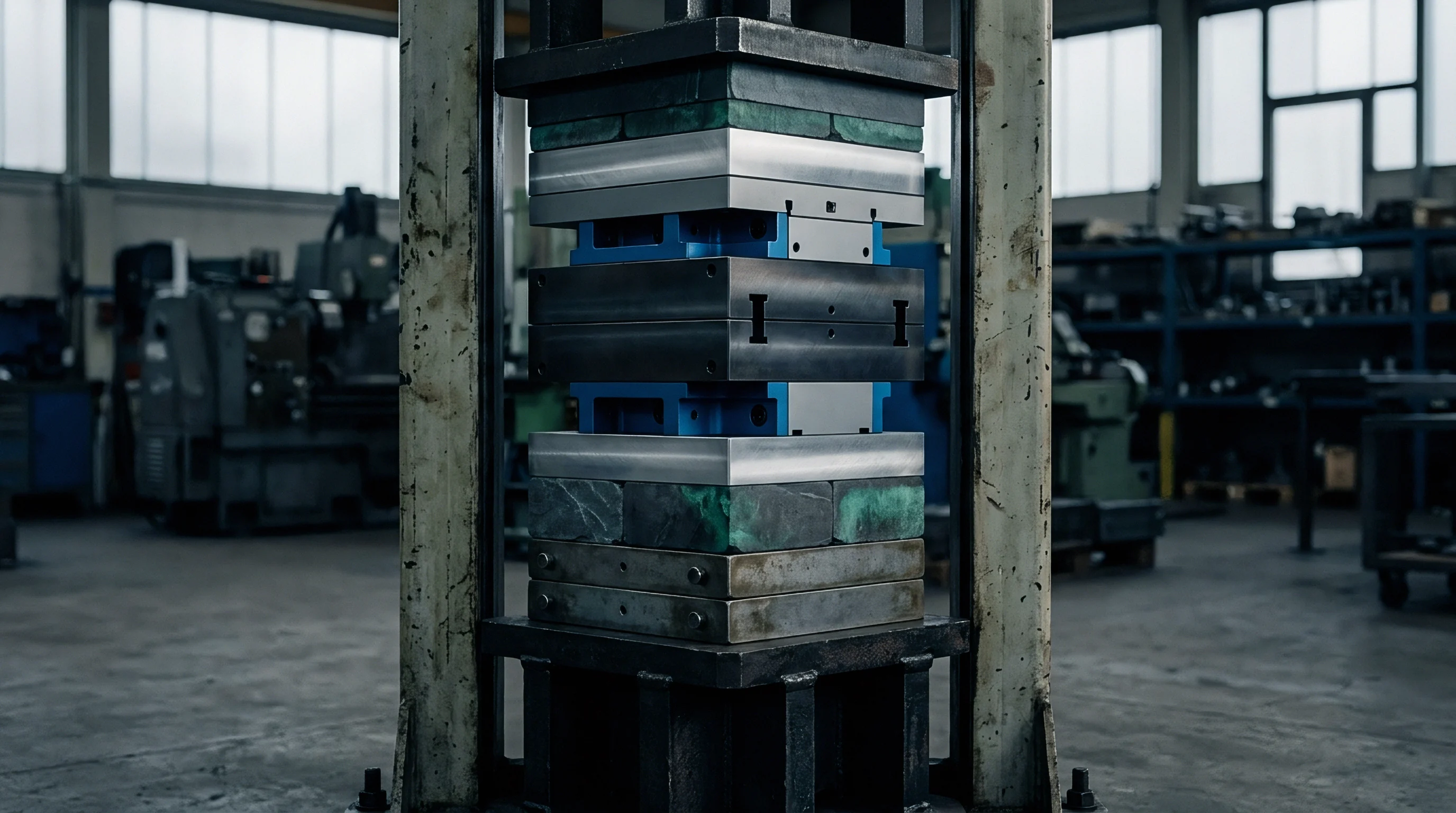
Die
Heavyweight folding boxboard presents specific resistance patterns during converting operations once a polymeric film bonds to the coated top liner. Virgin fiber boxboard between 350 and 500 grams per square meter carries thick mechanical pulp in its interior, surrounded by outer plies of bleached chemical pulp. Introducing an oriented polypropylene or polyethylene terephthalate film alters surface elongation characteristics, shifting the neutral axis during platen impact.
Standard carton conversion relies on symmetric shear across the crease channel. Unlaminated boxboard permits the top liner to sink into the female recess while the pulp fibers in the center plies separate through controlled delamination. When an oriented film covers the coated face, tensile strain distributes across the polymeric layer rather than dissipating within the surface coating.
The film resists failure, transferring lateral tension toward the shoulders of the matrix channel.
Crease matrix selection determines whether carton scores fold without liner fracture.
Converters running heavy laminate board modify female matrix widths beyond values calculated by standard packaging formulas. Conventional trade formulas state that channel width equals 1.5 times board thickness plus rule thickness. Film-faced substrates between 500 and 750 micrometers demand an expansion factor between 1.7 and 1.95 times substrate caliper to prevent surface rupture along the crease edge.
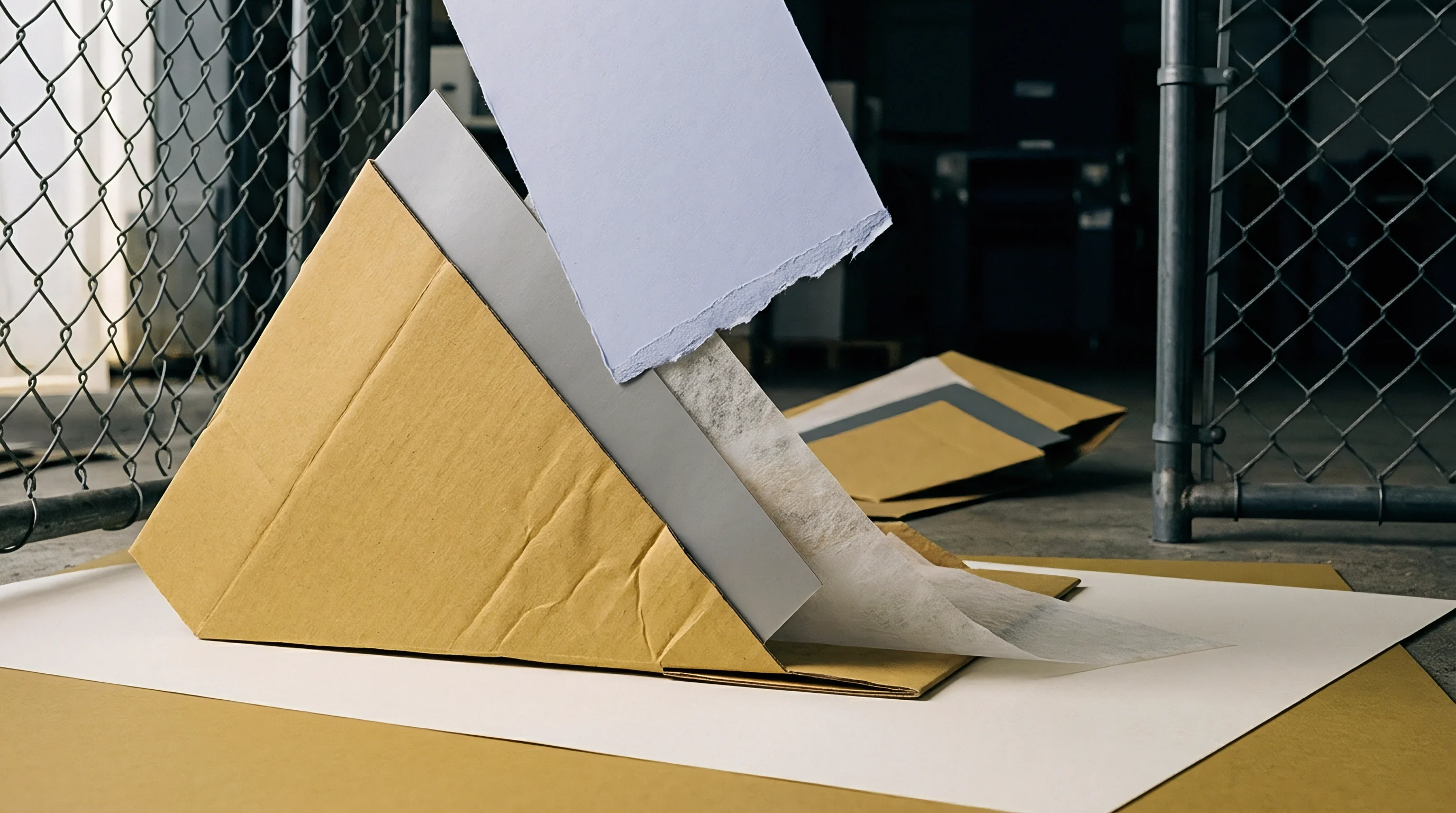
Mechanical Principles of Laminated Board Creasing
Substrate deformation occurs through localized compression directly beneath the downward stroke of the steel rule. The upper bleached liner experiences severe bending tension, whereas the bottom chemical liner enters the female recess under unsupported deflection. Center plies containing groundwood or thermo-mechanical pulp fracture horizontally along fiber boundaries, forming an internal bead that folds cleanly at folding-gluing stations.
Film lamination disrupts this fracture distribution by increasing surface hoop stress. Polymeric films demonstrate high tensile modulus combined with substantial ultimate elongation, restricting top liner rupture while imparting severe compressive forces to the underlying pulp. Insufficient matrix clearance forces the board to crush solid rather than split internally.
The crease stiffens, creating excessive folding resistance during automated erection.
The rule profile governs everything.
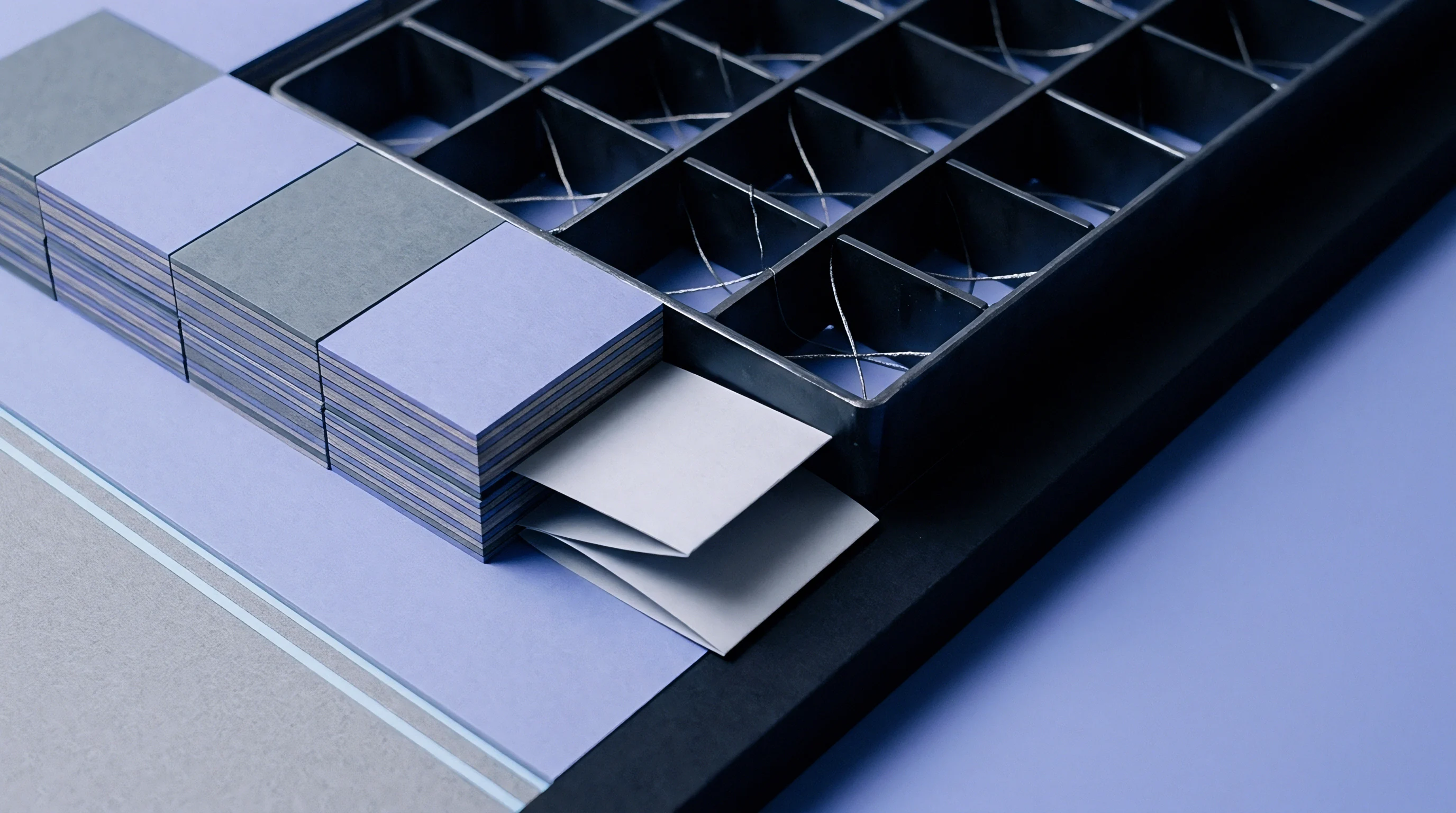
Rule Dimensions and Channel Geometry
Tooling specifications for heavy laminates depend on steel rule thickness and edge finish. Standard two-point rules measuring 0.71 millimeters frequently induce excessive point pressure on board calipers exceeding 550 micrometers. Switching to three-point rules measuring 1.05 millimeters distributes platen force over a broader surface, generating a wide internal hinge while lowering local shear strain on the laminate bond.
Rule height selection balances kiss-cut knives against creasing lines across the dieboard. Standard cutting rule height stands at 23.80 millimeters. Creasing rules drop below this plane by an offset equal to board caliper plus adhesive film thickness, with additional clearance allowances for dynamic platen compression.
A flat-face rule crushes surface fibers, whereas a round-crown rule allows the plastic laminate to slide gradually into the matrix without localized pinching.
| Board Caliper (µm) | Film Layer | Rule Thickness (pt) | Rule Profile | Matrix Channel Width (mm) | Matrix Channel Depth (mm) |
|---|---|---|---|---|---|
| 450 | 15 µm Wet BOPP | 2 pt (0.71 mm) | Round Crown | 1.50 | 0.45 |
| 550 | 18 µm Thermal BOPP | 3 pt (1.05 mm) | Round Crown | 2.00 | 0.55 |
| 650 | 12 µm Met-PET | 3 pt (1.05 mm) | Flat Top Chamfer | 2.30 | 0.65 |
| 750 | 25 µm Cast PET | 4 pt (1.42 mm) | Broad Radius | 2.85 | 0.75 |
Matrix channel depth governs how deeply the creasing rule forces the board plies into the counter-plate. Depth settings equal to uncompressed board caliper produce shallow, stiff scores on film-laminated stock because the film adds structural rebound. Increasing channel depth by five to eight percent accommodates the incompressible plastic layer, seating the score bead firmly without cutting into the reverse liner.
- Shoulder fracture emerges when matrix channel edges pinch the laminated liner against the rule flank.
- Adhesive shear failure develops where rapid tensile elongation strips the polymer film from the coated board surface along the crease edge.
- Blister formation happens when unseparated interior plies buckle upward during the carton folding sequence.
- Reverse liner splitting occurs when excessive rule penetration shears the bottom bleached fibers over matrix channel corners.
Toolmakers often state that board variations justify erratic creasing depths across multiple production batches.


Platen
Flatbed diecutting presses apply massive dynamic loads across heavy carton layouts. Operating speeds between five thousand and eight thousand sheets per hour generate severe cyclic vibration, which compresses counter-plates and shifts make-ready calibrations across a work shift. Heavyweight stocks amplify these stresses because their displacement resistance requires platen tonnage twenty to forty percent higher than lightweight folding cartons.
Steel counter-plates maintain strict dimensional stability under continuous pressure. Pertinax counter-plates, milled from dense phenolic resin sheets, offer rapid installation and precise channel alignment, yet they compress under extended production runs on thick boards. Milled steel plates measuring one millimeter in thickness prevent channel distortion, ensuring that crease profiles on sheet forty thousand replicate sheet five hundred.
Platen pressure registers a five percent increase as hydraulic components reach thermal equilibrium.
Deflection across the platen bed creates uneven creasing across large sheet formats. Center positions receive greater sustained tonnage than perimeter knife layouts, causing board scores near sheet edges to form shallow beads. Press operators level the cutting plane through zoned make-ready sheets adhered beneath the counter-plate, using calibrated tissue patches measuring twenty to thirty micrometers.
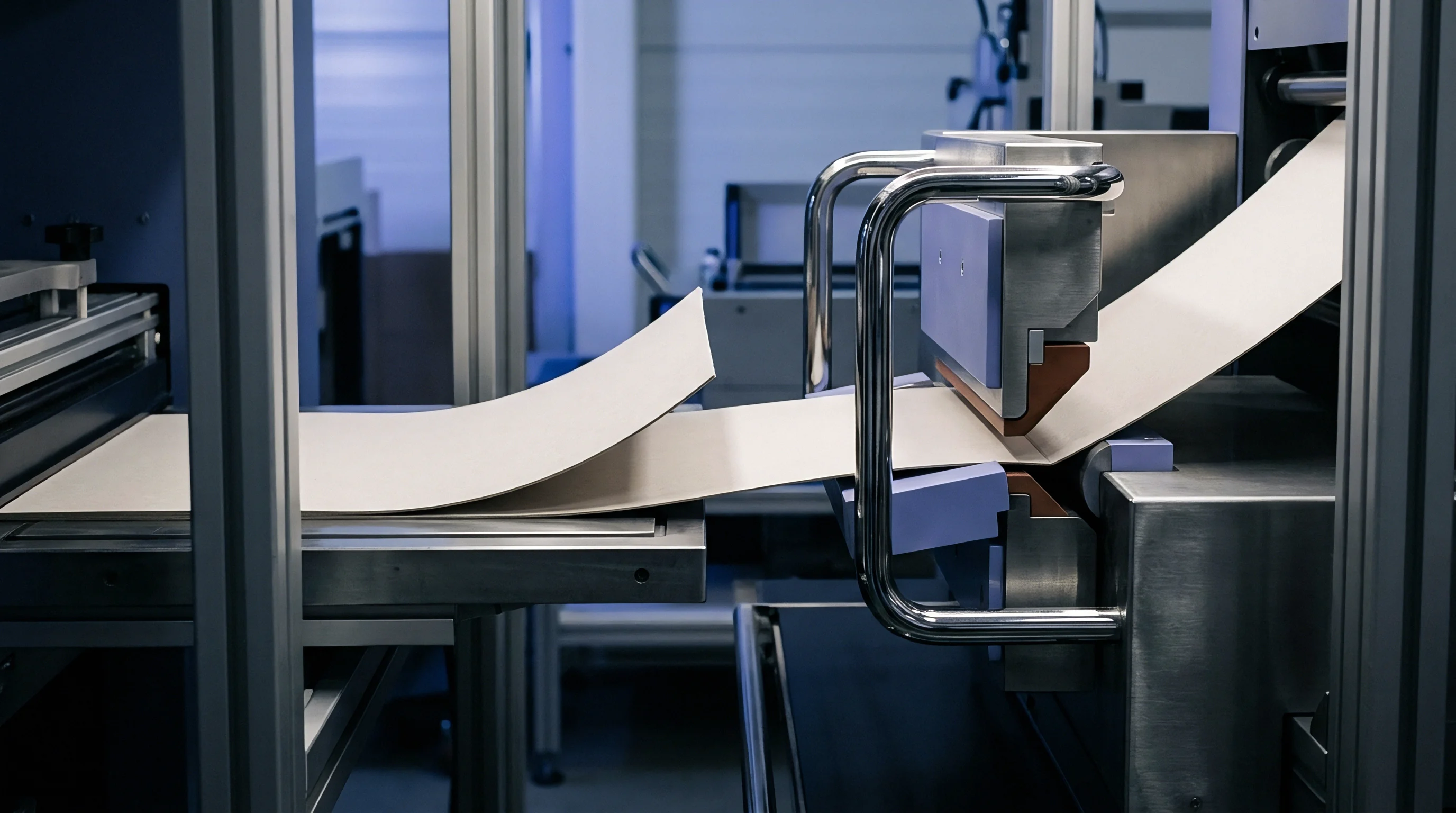
Counterplate Material Selection across Shifts
Phenolic counter materials compress permanently when cutting forces exceed three hundred tonnes on large format platens. This permanent set narrows crease channels and rounds off female matrix shoulders, reducing crease bead definition. Laminated boards passing over worn counter channels exhibit wavy fold lines and carton out-of-squareness during high-speed packing line insertion.
Steel counters eliminate deflection.
Milled steel counters eliminate channel degradation entirely, preserving crisp ninety-degree edges across millions of die strikes. Steel counters cost significantly more than phenolic alternatives and necessitate electronic file coordinate matching with laser-cut dieboards. Running laminate conversions over four hundred grams per square meter justifies this tooling expense through avoided press downtime and eliminated make-ready replacement cycles.
Make-Ready Leveling under Dynamic Tonnage
Tonnage drift ruins carton squareness.
Mechanical tolerances inside press toggle systems shift as drive housings warm during continuous operation. A press set cold at three hundred tonnes platen force drifts upward as thermal expansion decreases clearances in main shaft eccentrics. Press operators observe creasing rule impressions cutting into substrate plies after two hours of continuous running, demanding rapid make-ready thinning.
- Base sheet mapping establishes the underlying cutting plane across the entire chassis area.
- Pressure carbon testing reveals high-tonnage focal zones beneath dense knife clusters.
- Zone shimming corrects platen deflection using graded paper foils beneath the cutting plate.
- Dynamic registration check confirms creasing rule alignment inside counter-plate grooves at operating speed.
Tonnage adjustments require cautious moderation. Over-pressing a dieboard to force clean cuts through tough PET laminate films crushes creasing rules into the counter-plate, fracturing internal board plies and dulling cutting knives prematurely. Operators level the cutting rules before adding overall platen pressure.
Soft make-ready foundations yield inconsistent scores across full production shifts.


Shear
Tensile stress fields inside folding boxboard determine how effectively fiber layers separate under localized platen impact. Thick folding boxboard contains mechanical wood pulp possessing low internal bond values, typically between 120 and 160 Joules per square meter under standard Scott bond testing. Chemical pulp surface liners exhibit values exceeding 300 Joules per square meter, resisting rupture while internal mechanical plies shear cleanly.
Laminating a biaxially oriented film changes the structural boundary condition. The polymeric layer prevents micro-fissuring of the mineral pigment coating, forcing the top liner to behave as a continuous tensile band. As the creasing rule descends, horizontal shear stresses concentrate in the boundary zone between the top chemical liner and the adjacent mechanical pulp layer.
Polymer elongation protects the print.

Does Film Caliper Dictate Crease Channel Expansion?
Polymeric film thickness exerts measurable influence on required female matrix width. A standard twelve-micrometer PET film possesses modest bending resistance, allowing the sheet to follow rule contours with minimal flank pinching. Increasing film thickness to twenty-five micrometers or laminating heavy cast films multiplies surface stiffness, demanding channel widening of up to fifteen percent beyond unlaminated baselines.
Bending resistance increases sharply across the board’s machine direction. Cross direction creases deform easily into the matrix channel because fibers align perpendicular to the rule profile. Machine direction creases align rule faces parallel to fiber bundles, requiring higher penetration force and wider channels to induce inter-ply cleavage without causing outward surface delamination along score flanks.
| Board Caliper (µm) | Laminate Specification | Scott Bond (J/m²) | MD Bending Force (mN) | Expanded Width (mm) | Bending Ratio (CD/MD) |
|---|---|---|---|---|---|
| 450 | Unlaminated Base | 140 | 480 | 1.38 | 0.52 |
| 450 | 15 µm Wet BOPP | 135 | 540 | 1.52 | 0.54 |
| 550 | Unlaminated Base | 130 | 820 | 1.85 | 0.51 |
| 550 | 18 µm Thermal BOPP | 125 | 910 | 2.05 | 0.55 |
| 650 | Unlaminated Base | 120 | 1250 | 2.10 | 0.49 |
| 650 | 25 µm Cast PET | 115 | 1420 | 2.35 | 0.53 |
Adhesive selection dictates shear transfer from the film to the pigment coating. Wet lamination using water-borne acrylic adhesives yields a rigid interface that shears crisply under sudden impact. Thermal laminating films utilize ethylene-acrylic acid or EVA copolymer layers that deform viscously under die pressure, requiring tighter matrix tolerances to prevent creeping delamination along carton scores.
Fiber Separation in Mechanical Middle Plies
Groundwood pulps fracture along lignin interfaces when subjected to localized lateral shear. This separation allows the board substrate to hinge without tearing its outer paper skins. Laminated boxboards exhibiting high moisture content absorb impact energy through hydraulic compression, preventing crisp fiber cleavage and yielding spongy, poorly defined crease profiles.
Conditioning boards to standard relative humidity stabilizes converting performance. Substrates processed at forty-five percent relative humidity fracture predictably under steel rules. Processing the same material at seventy percent relative humidity induces ductile ply compaction, resulting in high folding resistance that stalls automated cartoning machinery.
Moisture equilibrium dictates whether mechanical pulp plies fracture or compact under dynamic loading.
Uncontrolled fiber delamination extends beyond the crease line if matrix channels provide excessive width. When female grooves exceed two times board caliper, platen forces fail to concentrate shear within the intended hinge zone. The mechanical center plies delaminate across a wide band, resulting in rounded, loose carton corners that crush under secondary stacking loads.
- Channel edge chamfering eliminates localized stress points that shear surface film layers during rule entry.
- Rule penetration limiting prevents over-compression of separated interior plies while preserving bottom liner strength.
- Moisture stabilization maintains board humidity within narrow operating bands to ensure crisp fiber delamination.
- Adhesive cure verification ensures lamination bonding layers resist delamination under sharp ninety-degree folding actions.
The unresolved question remains whether high-speed rotary creasing heads generate identical inter-ply shear geometries on heavyweight laminated cartonboards compared to reciprocating flatbed platens.

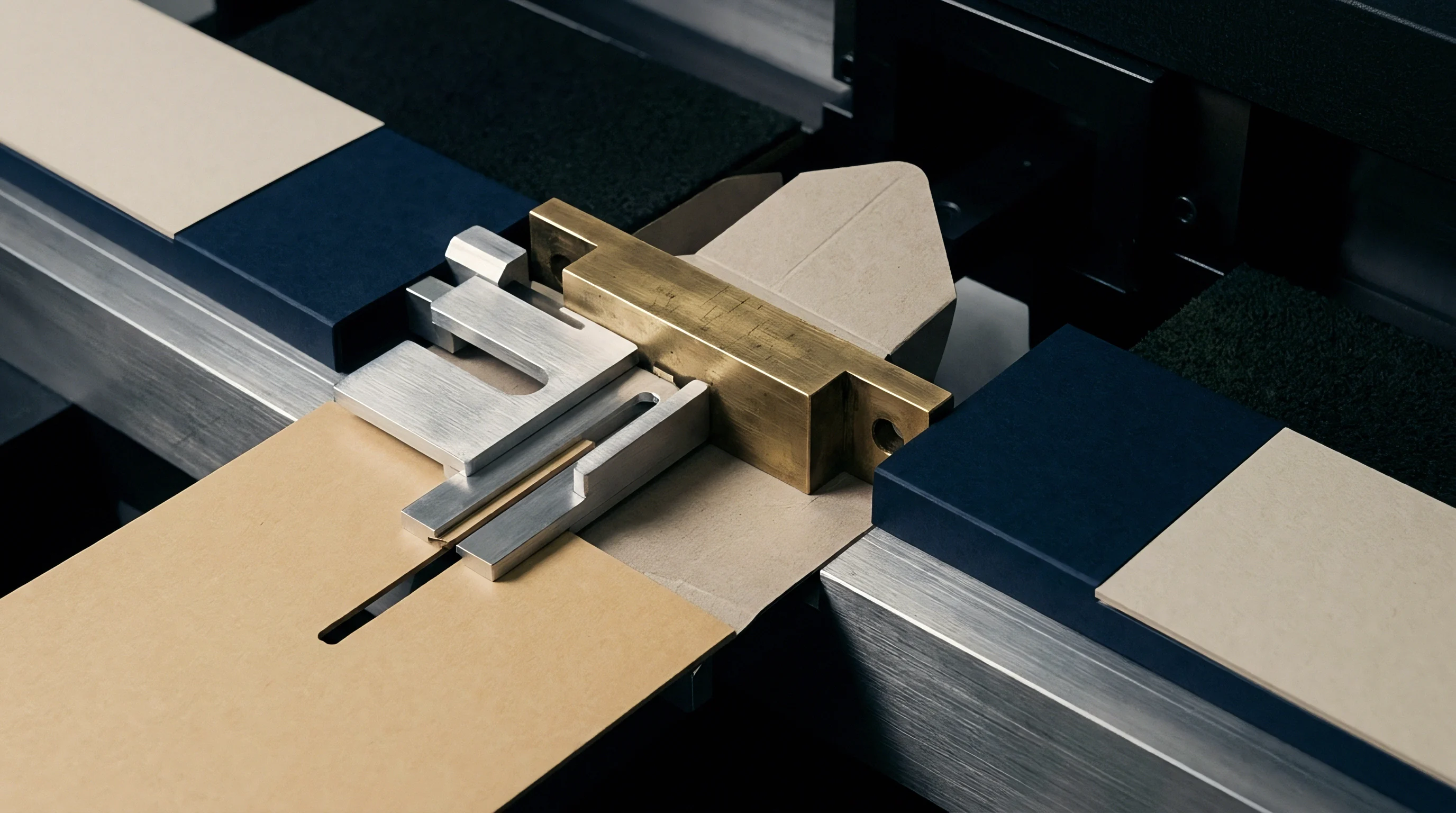
Arithmetic
Tooling parameters require precise numerical calculation to balance mechanical resistance against surface strain. Consider a packaging run utilizing a 450 gram per square meter folding boxboard substrate exhibiting a nominal caliper of 620 micrometers (0.62 millimeters). This board carries a surface finish consisting of an 18-micrometer oriented polypropylene film applied via wet water-borne lamination, bringing total converted substrate thickness to 0.64 millimeters.
Base calculation models determine creasing matrix channel width using modified expansion coefficients. For heavy laminated stock, the empirical multiplier stands at 1.85 times total substrate thickness. The rule width calculation incorporates a standard three-point steel rule measuring 1.05 millimeters.
Channel width equals rule thickness plus the product of substrate thickness and the expansion coefficient: 1.05 mm + (0.64 mm × 1.85) = 2.23 millimeters. Standard tooling catalogues supply nominal channel widths in discrete steps. The converter rounds this figure to a 2.20-millimeter matrix channel to preserve fold rigidity.

Worked Crease Parameter Calculation
Channel depth calculation requires identical precision. Unlaminated folding boxboard formulas set channel depth equal to uncompressed board caliper. Applying this assumption to film-faced board results in excessive rule penetration, crushing interior fibers into an unyielding block.
The matrix depth formula for laminated stock applies a reduction factor of 0.85 to total sheet thickness.
Matrix depth equals substrate thickness multiplied by the density reduction factor: 0.64 mm × 0.85 = 0.54 millimeters. The toolmaker selects a 0.50-millimeter matrix depth to compensate for dynamic platen compression under production loads. Penetration height calculation sets the rule offset below cutting rule height at 23.80 millimeters minus substrate caliper, establishing a creasing rule height of 23.16 millimeters.
The liner ruptures under tension.
Penetration depth testing on press demonstrates the operational envelope. Running a 23.20-millimeter rule creates an interference penetration of 0.04 millimeters beyond nominal board limits. Under three hundred tonnes platen load, this over-penetration shears bottom liner fibers, lowering tear resistance along the score line by thirty-five percent.
Yield and Spoilage Dynamics across Run Volumes
Production runs spanning fifty thousand sheets reveal the financial effect of incorrect matrix sizing. A dieboard fitted with standard unlaminated matrix channels measuring 1.90 millimeters generates micro-cracking across nine percent of carton blanks during the initial twenty thousand impressions. Expanding channel dimensions to 2.20 millimeters reduces creasing spoilage to 0.6 percent across the remainder of the run.
Make-ready duration scales inversely with counter-plate preparation accuracy. Pertinax counters cut on automated routing tables enter production within forty-five minutes of press lockup. Strip matrix systems hand-applied over channel locators consume two hours of make-ready patching to resolve register errors across four-corner carton designs.
| Tooling Setup | Channel Width (mm) | Make-Ready Time (hr) | Line Spoilage (Sheets) | Defect Mechanism | Net Output (Cartons) |
|---|---|---|---|---|---|
| Standard Strip Matrix | 1.90 | 2.2 | 4,350 | Surface Film Tearing | 182,600 |
| Adjusted Pertinax Counter | 2.20 | 0.8 | 420 | Incidental Register Drift | 198,320 |
| Milled Steel Counter | 2.20 | 1.2 | 150 | Feed Interruptions | 199,400 |
| Worn Strip Matrix | 1.90 | 2.5 | 6,100 | Score Corner Delamination | 175,600 |
Line speed capability depends directly on fold resistance values generated by matrix tooling. Scores produced using 2.20-millimeter channels exhibit folding moments below 180 millinewton-meters during ninety-degree carton erection. Narrow 1.90-millimeter channels yield folding moments exceeding 320 millinewton-meters, forcing folder-gluer operators to throttle machine velocity from 45,000 cartons per hour down to 26,000 cartons per hour to prevent jam-ups.
Selecting incorrect matrix profiles generates catastrophic packing-line failures when high-speed automated packaging machinery crushes out-of-square cartons, dumping product batches and triggering broad commercial chargebacks.

Ledger
Converting specifications generate direct financial line items on customer invoices. Adding a polymeric lamination pass to heavyweight folding boxboard introduces raw film purchasing costs, gravure or thermal laminator run hours, and inventory hold times while adhesive systems cure. Tooling charges represent a minor fraction of overall job outlay, yet deficient tooling investments compound material waste across every subsequent manufacturing phase.
A multi-cavity dieboard equipped with milled steel counter-plates demands an upfront tooling surcharge roughly three times higher than strip matrix installations. This initial tooling expense amortizes across recurring orders. On runs exceeding one hundred thousand units, the reduction in press downtime and sheet spoilage completely recoups the counter-plate investment within the opening production shift.
Die strikes compress the anvil.
Pass Economics and Tooling Depletion
Secondary finishing passes carry dedicated scrap allocations. Wet lamination lines consume between two and three percent of plain printed sheets during initial nip bring-up and tension stabilization. Diecutting presses consume an additional two percent during make-ready alignment and registration lock-in.
When matrix tooling parameters fail to accommodate the laminate, total converting waste climbs beyond eight percent, eroding production margins.
Tooling wear adds hidden operational costs. Steel creasing rules experience abrasive wear against mineral coating pigments and tough polymeric films. After three hundred thousand impressions, rule crown radii flatten, increasing the effective contact footprint from 1.05 millimeters to 1.25 millimeters.
This wear expands folding resistance, necessitating die re-knifing to maintain packaging line runnability.
Recyclability Penalties under Producer Responsibility Fees
Packaging regulations penalize multi-material laminate packaging through modulated producer responsibility fees. Under European circular economy schemes, folding cartons bearing plastic laminations exceeding five percent of total packaging weight face severe eco-modulation penalties. A 450-gram boxboard carrying an 18-micrometer BOPP film typically remains below the five percent plastic threshold by weight, avoiding class reclassification.
Heavier films alter this compliance balance. Laminating twenty-five micrometer PET films to 350-gram board pushes plastic mass above six percent. The finished carton loses standard paper recycling certification under EN 13430 protocols, incurring recycling fees up to four times higher per metric ton compared to mono-material unlaminated cartons.
Packaging compliance frameworks levy elevated disposal surcharges against paperboard formats that exceed five percent synthetic plastic by mass.
Commercial contracts define quality thresholds through strict physical performance metrics. Purchase specifications stipulate crease stiffness ratios, requiring that folded score resistance stays below fifty percent of uncreased board stiffness in accordance with ISO 2493-2 testing methods, invalidating payment obligations if delamination or cracked liners breach agreed tolerances.