Dynamic Humidity Fracture Mechanics in Crosslinked Polyurethane Laminates
Cyclic relative humidity drives interfacial shear cracks in polyurethane-laminated paperboard through hygro-expansion mismatch and localized network plasticization.
Mismatch
Paperboard laminated to impermeable barrier films exhibits violent internal stress fields when ambient relative humidity drifts across production and storage cycles. A bleached sulfate board absorbs atmospheric moisture rapidly, expanding along its cross-machine direction at rates up to 0.18 percent per ten percent change in relative humidity. The confronting film or foil layer maintains fixed dimensions across identical moisture swings.
When a two-component crosslinked polyurethane adhesive bonds these antagonistic materials, the interface absorbs the entire displacement gradient. The resulting elastic energy accumulates along the bondline, concentrating at edges, score lines, and microscopic coating voids.
Aluminum foil expands negligibly with moisture. Paperboard swells under relative humidity spikes. The strain differential drives interfacial debonding.
Mechanical failure under fluctuating moisture conditions operates through a coupled diffusion-elasticity process. As water vapor penetrates the permeable fibrous face, moisture gradients develop through the board thickness. The adhesive layer, typically applied at 1.8 to 2.5 grams per square meter in solventless laminating or 3.0 to 4.5 grams per square meter in solvent-borne systems, experiences cyclic shear strains exceeding twelve percent during rapid humidity swings between 30 percent and 85 percent relative humidity.
Because crosslinked polyurethanes possess viscoelastic relaxation times that shift dramatically with water content, stress relief cannot keep pace with sudden moisture swings. The accumulated energy release rate at interfacial defect tips climbs past the critical adhesive fracture energy, triggering stable or runaway crack advance.
Under twenty-three degrees Celsius and eighty-five percent relative humidity, the critical strain energy release rate of two-component polyurethane bonds to untreated polyolefin film drops from three hundred twenty Joules per square meter down to ninety-four Joules per square meter.
Delamination patterns governed by these environmental cycles manifest in distinct configurations across finished carton packaging:
- Edge Cleavage Tunnels develop along slitter-trimmed roll margins where exposed fiber edges drink ambient dampness, forcing peel wedges inward past the initial adhesive perimeter.
- Micro-Buckling Blisters generate circular debonds under non-permeable metallized layers when localized hygro-expansion causes compressive wrinkling of moisture-saturated paper plies away from the stiffer polymer network.
- Crease Flank Ruptures track the outer tension shoulders of ninety-degree carton folds, splitting the cured urethane plane precisely where shear displacement concentrates during scoring compression.
Interfacial shear concentrations depend on the hygro-expansion coefficients of the respective adherents and the equilibrium moisture regain kinetics of the fibrous substrate.
| Substrate Layer | Hygro-Expansion Coefficient (10^-5 / %RH) | Tensile Modulus (MPa) | Equilibrium Moisture Content (% dry basis) |
|---|---|---|---|
| Solid Bleached Sulfate Board (Machine Direction) | 4.2 to 6.8 | 5200 to 7100 | 7.2 |
| Solid Bleached Sulfate Board (Cross Direction) | 14.5 to 22.1 | 2400 to 3600 | 7.4 |
| Crosslinked Polyurethane Adhesive Layer | 0.8 to 1.4 | 120 to 450 | 1.8 |
| Biaxially Oriented Polypropylene Film (20 micron) | 0.01 to 0.04 | 2100 to 2600 | 0.05 |
| Soft Temper Aluminum Foil (9 micron) | 0.00 | 68000 to 72000 | 0.00 |
Ignoring the cross-directional hygro-expansion gradient across paper-to-foil polyurethane interfaces causes unbonded perimeter flaps, catastrophic pop-open failure at automated packaging line tuckers, and complete rejection of barrier shipping cartons.
Vapor
Liquid water molecules and airborne humidity interact with the urethane matrix through two distinct physical mechanisms. Water dissolves into the soft segments of the polyurethane network, settling between polyether or polyester chains. This penetrant population acts as an internal plasticizer, breaking interchain hydrogen bonds between urethane carbonyl and amine groups.
The glass transition temperature of the crosslinked network plunges from twenty-eight degrees Celsius down to nine degrees Celsius as water saturation approaches four weight percent. Modulus softening follows this thermal drop, reducing interfacial shear resistance while increasing viscoelastic dissipation at crack tips.
Hydrogen bonds dissociate under water plasticization. Polyurethane adhesive networks absorb ambient vapor.
Hydrolytic chain scission represents the second mechanism, attacking ester or urethane links within crosslinked polyester polyol formulations. Hydrolysis rates depend on ambient temperature, relative humidity, and residual acid values within the polyol backbone. Aromatic diisocyanates, while economical, yield amine and carboxylic decomposition products under persistent humidity spikes, lowering the network crosslink density.
Aliphatic polyisocyanates resist this chemical degradation far more effectively, maintaining network integrity over prolonged maritime transit. Once crosslinks snap, the crosslinked gel fraction decreases, permanently shrinking the adhesive fracture energy from its freshly cured baseline.
Water diffusion through paperboard reaches equilibrium within minutes while penetrant absorption into crosslinked polyurethane networks proceeds across several days.
Capillary condensation occurs at the microscopic interface between the smooth polymer film and the rough, porous surface of the coated board. Water condensates collect in un-wetted microscopic pockets between adhesive crests. This moisture layer acts as a mechanical wedge, exerting disjoining pressure that unzips secondary bonding bonds between adhesive urethane groups and board surface sizing agents.
Surface energy differences accelerate this displacement. While cured polyurethane demonstrates polar surface energy components near 12 mN/m, liquid water exhibits a polar component of 51 mN/m, thermodynamically favoring the displacement of the adhesive from mineral-coated board surfaces.
Hydrolysis cleaves ester linkages over time. Crack fronts advance during humidity drops.
Whether secondary silane crosslinkers can permanently arrest water displacement along hydroxyl-rich mineral clay paper coatings remains contentious across converting laboratories.
Rig
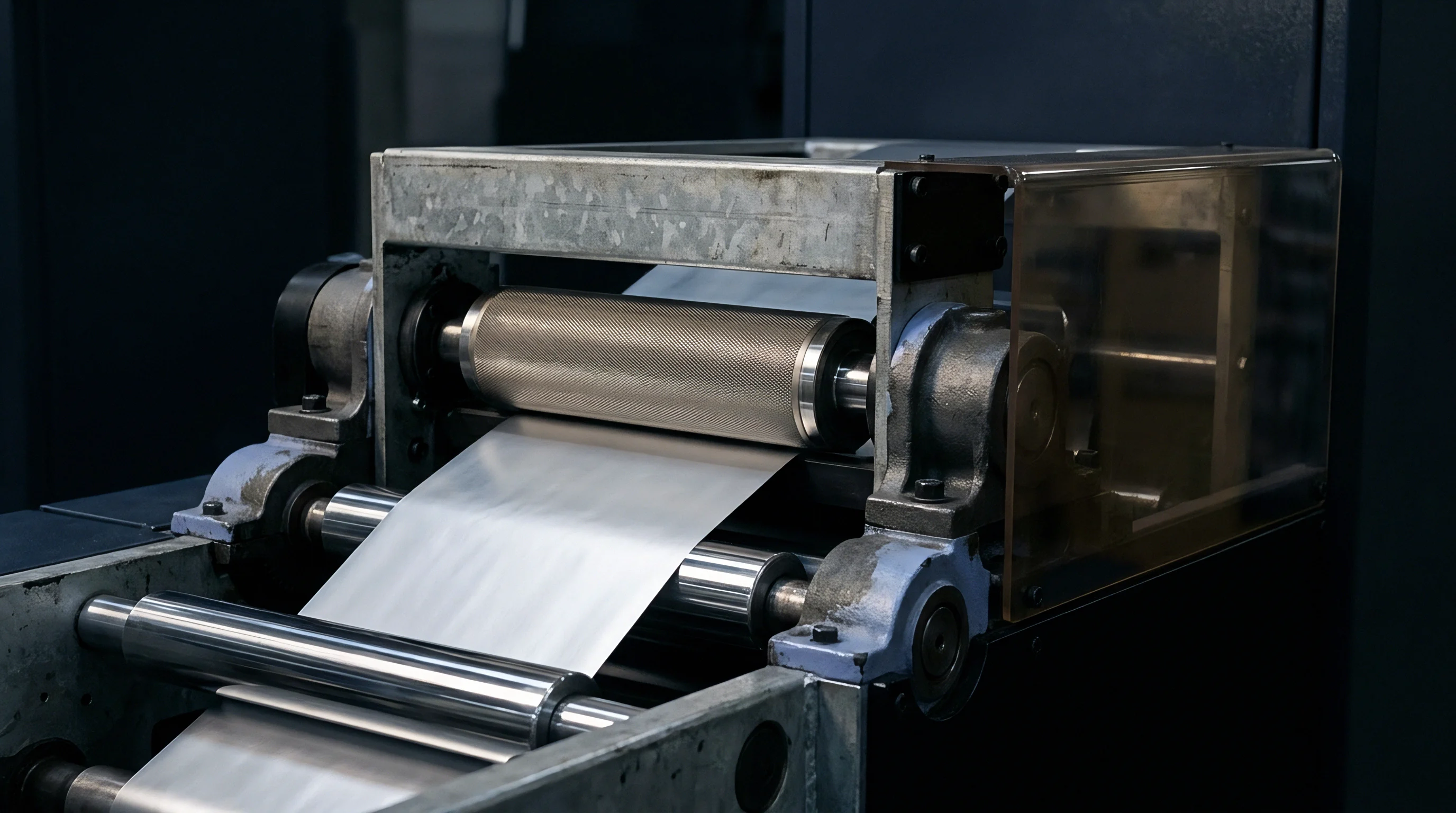
Double Cantilever Beam testing adapted for paperboard-to-polymer laminates provides the mathematical foundation for measuring interfacial crack propagation under controlled atmospheric swings. The test fixture mounts laminated specimens to rigid aluminum support backing beams using rapid-curing cyanoacrylate or structural epoxy to suppress parasitic bending deformation within the ductile board plies. A crack starter foil, positioned at the adhesive-paperboard boundary during laminating make-ready, establishes the initial crack length.
The wedge drives along the adhesive layer. Crosslink density dictates the threshold toughness.
Specimens conditioned under cyclic relative humidity schedules inside environmental chambers undergo Mode I tensile opening or mixed-mode peeling. The energy release rate, designated as G, tracks the work performed by external loads minus internal strain energy changes per unit of crack surface area created. For a specimen of width b and beam height h, beam theory calculates the instantaneous energy release rate:
G = (12 P^2 a^2) / (b^2 h^3 E)
Here P represents applied crack-opening load, a denotes instantaneous crack length, and E signifies the tensile modulus of the rigid backing beams. Under cyclic humidity exposure between 40 percent and 90 percent relative humidity, crack growth proceeds at driving forces substantially below the monotonic critical fracture energy. Subcritical crack velocities follow power-law kinetics governed by environmental crack growth thresholds.
Can Cyclic Humidity Induce Subcritical Interfacial Debonding?
Environmental cycling accelerates crack growth even when external mechanical loads remain static. When relative humidity cycles across four-hour intervals, hygroscopic swelling generates internal stress cycles identical in effect to cyclic mechanical fatigue. Crack propagation proceeds in distinct steps, advancing during drying phases when tensile stresses peak at the drying board perimeter, and pausing during high-humidity dwell intervals when compressive swelling temporarily suppresses the Mode I crack driving force.
- Specimen Preparation Stage ~ Bond laminated test samples to precision-machined aluminum backing beams using room-temperature curing structural adhesive, ensuring zero heat exposure alters the polyurethane cure state.
- Environmental Equilibrating Stage ~ Transfer the mounted test assembly into a climate chamber programmed to alternate between 20 percent and 85 percent relative humidity at twenty-five degrees Celsius across six-hour periods.
- Static Wedge Insertion Stage ~ Drive a polished stainless steel wedge into the pre-cracked laminate boundary to establish an initial crack opening displacement corresponding to seventy percent of baseline fracture toughness.
- Optical Microscopic Tracking Stage ~ Record crack front positions through optical inspection windows at twenty-minute intervals to measure subcritical debonding velocity across drying and wetting phases.
Steady crack growth occurs at 120 Joules.
| Laminate Construction | Baseline Dry G_c (J/m^2) | Equilibrated 85% RH G_c (J/m^2) | Threshold Cyclic G_th (J/m^2) | Subcritical Crack Velocity (mm/cycle) |
|---|---|---|---|---|
| Bleached Board / Solventless Aromatic PU / PET | 380 | 140 | 62 | 0.45 |
| Bleached Board / Solventless Aliphatic PU / PET | 410 | 260 | 115 | 0.12 |
| Clay-Coated Board / 2K Aliphatic PU / Foil | 290 | 110 | 48 | 0.88 |
| Uncoated Kraft / Solvent-Borne PU / Metallized OPP | 460 | 310 | 180 | 0.04 |
| Methods note: Crack velocity measured under four-hour square-wave humidity cycles cycling between 30% and 85% relative humidity under constant crack opening displacement. | ||||
International Standard ISO 11339 peel tests fail to capture subcritical humidity delamination because rapid twenty-millimeter per minute peel rates outpace environmental diffusion kinetics.
Procurement contracts specifying DIN EN 1465 lap-shear values without mandatory cyclic humidity pre-conditioning clauses release converters from all financial liability when export carton pallets delaminate in tropical container holds.
Web
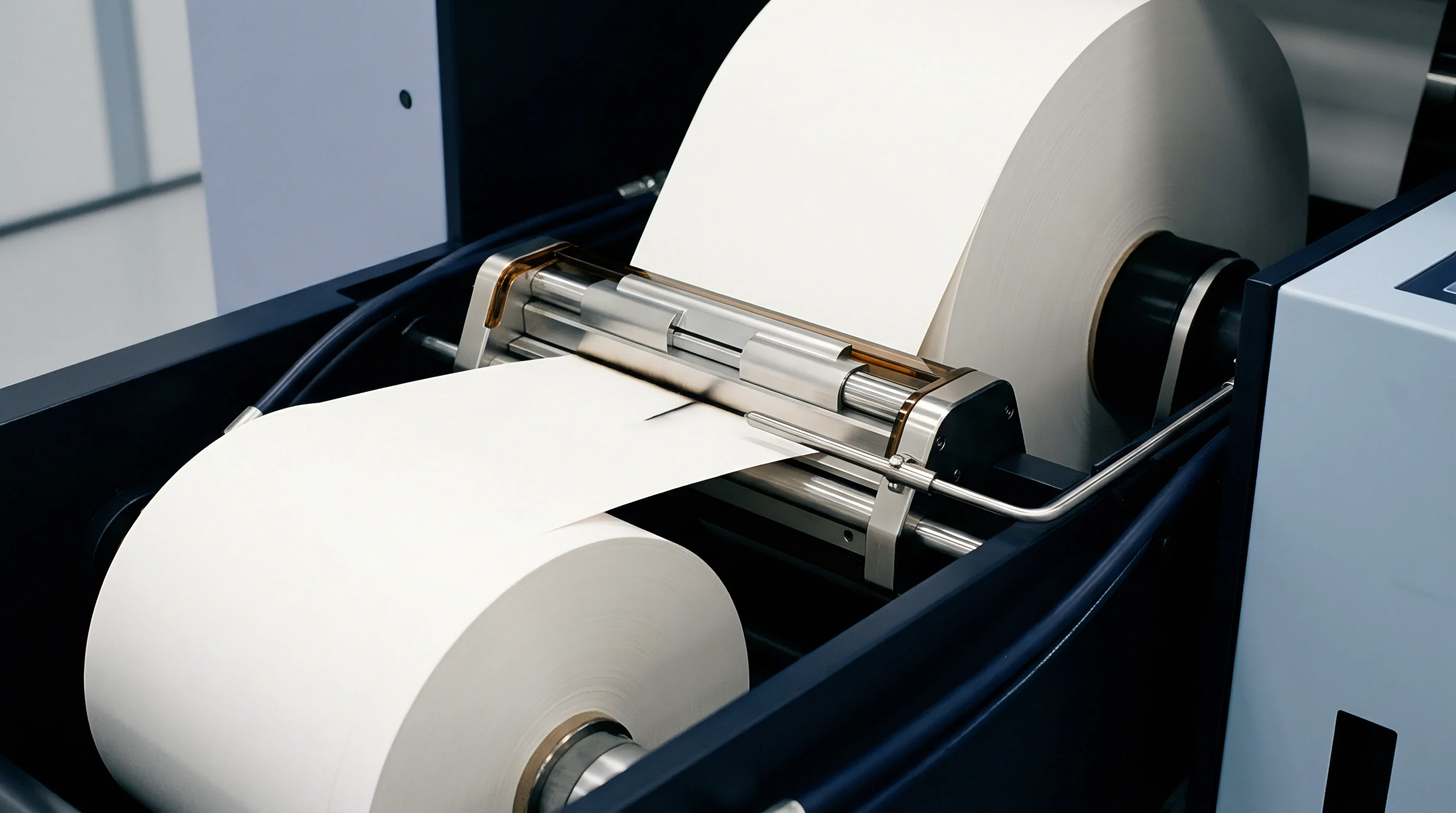
Laminating line operators manage web tension with extreme vigilance when combining paperboard reels with polymer barrier films. Excessive web tension applied to moisture-sensitive paperboard introduces latent elastic strain that becomes locked into the construction the instant the polyurethane adhesive crosslinks. When the cured roll encounters ambient moisture swings down the line, these residual stresses multiply the environmental driving force.
Tension mismatch across the laminating nip creates inherent curling moments, promoting edge curl that peels the interface apart long before cartons reach customer packing lines.
Scorers crush the linerboard without delamination. Creasing rules demand precise matrix clearance. Blister packs fail along scored perimeters.
The crosslinking stoichiometry of two-component polyurethane systems dictates moisture vulnerability. An isocyanate to hydroxyl ratio below 1.05 leaves unreacted polyol chains within the cured layer. These free hydroxyl groups act as water attractors, accelerating ambient plasticization.
Conversely, an isocyanate index above 1.25 yields excess free isocyanate groups that react with atmospheric water during curing, generating polyurea blocks and microscopic carbon dioxide gas bubbles. While polyurea linkages increase heat resistance, these micro-voids function as crack initiation notches during creasing and folding operations.
A laminating adhesive formulation running at improper stoichiometric balance cracks at the score line long before its raw peel strength shows degradation on a tensile tester.
Die-cutting and scoring passes impose severe transverse shear on the freshly cured polyurethane interface. Female creasing channels and male scoring rules must bend the laminate one hundred eighty degrees without initiating delamination tunnels. Maintaining converting line yield demands specific operational checks:
- Corona Treatment Monitoring confirms polyolefin film surface tension holds above 42 dynes per centimeter, preventing weak boundary layer formation under adhesive passes.
- Crease Depth Ratio Control keeps rule penetration clamped at forty-two percent of total laminate caliper, preventing internal shear fractures between board liner plies.
- Stack Moisture Isolation encloses pallet stacks within stretch-wrap envelopes immediately following slitting passes to prevent humidity shocks across raw roll edges.
- Stoichiometric Ratio Audits verify pump delivery rates on two-component mixing skids twice per shift, holding isocyanate-polyol mix ratios within two percent of specification.
Isocyanate index adjustments control network rigidity. Uncured adhesive runs produce immediate scrap.
A laminator run slow enough to allow full adhesive wet-out survives summer humidity swings that pop rapid make-ready stock off the core.
Docket
Run economics in high-barrier polyurethane paperboard laminations turn completely on make-ready scrap and post-curing delamination claims. A solventless laminating pass adds between 0.042 and 0.078 euros per square meter in adhesive and machine operational costs, depending on web width and running speed. The base board substrate and barrier films, however, carry twenty times that financial value.
A five-thousand-meter master roll lost to interfacial delamination during post-converting warehouse storage writes off board, film, and foil stock that no scrap broker will buy at prime rates.
Waste calculations on barrier carton runs must account for delayed adhesive cures. Two-component polyurethane systems demand forty-eight to seventy-two hours of ambient curing before achieving structural crosslink density. Pulling finished cartons off the line and certifying bond integrity after two hours creates false operational confidence.
If humidity penetrates the master roll perimeter while curing is incomplete, moisture claims the available isocyanate groups, poisoning the cure across the outer three hundred meters of the roll.
| Production Cost Category | Standard Solventless PU Run (EUR) | High-Humidity Defect Run (EUR) | Variance Impact (EUR) |
|---|---|---|---|
| Solid Bleached Board Substrate (350 gsm) | 31500 | 31500 | 0 |
| Barrier Film Stock (12 micron PET/Alu) | 18200 | 18200 | 0 |
| Adhesive Pass Chemistry and Application | 2850 | 2850 | 0 |
| Line Make-Ready and Running Hours | 4200 | 4200 | 0 |
| Converting Scrap and Roll Edge Trim (4%) | 2270 | 2270 | 0 |
| Post-Cure Edge Delamination Rejects (0% vs 8.5%) | 0 | 4820 | +4820 |
| Extended Warehouse Quarantine and Re-Testing | 0 | 1450 | +1450 |
| Total Production Docket Cost | 59020 | 65290 | +6270 |
Extended warehouse storage under monsoon or tropical shipping routes generates secondary financial liabilities under European Packaging Waste Regulations and commercial supply agreements. Delaminated packaging stock cannot be processed through standard mechanical fiber recovery streams because loosely unzipped polymer films wrap around pulper rotors, forcing mill operators to dump entire hydrapulper batches to landfill. Converters attempting to claim adhesive defect reimbursements face the universal chemical supplier defense that improper warehouse air conditioning and uncontrolled board moisture regain poisoned the bondline rather than any formulation defect in the delivered isocyanate drums.