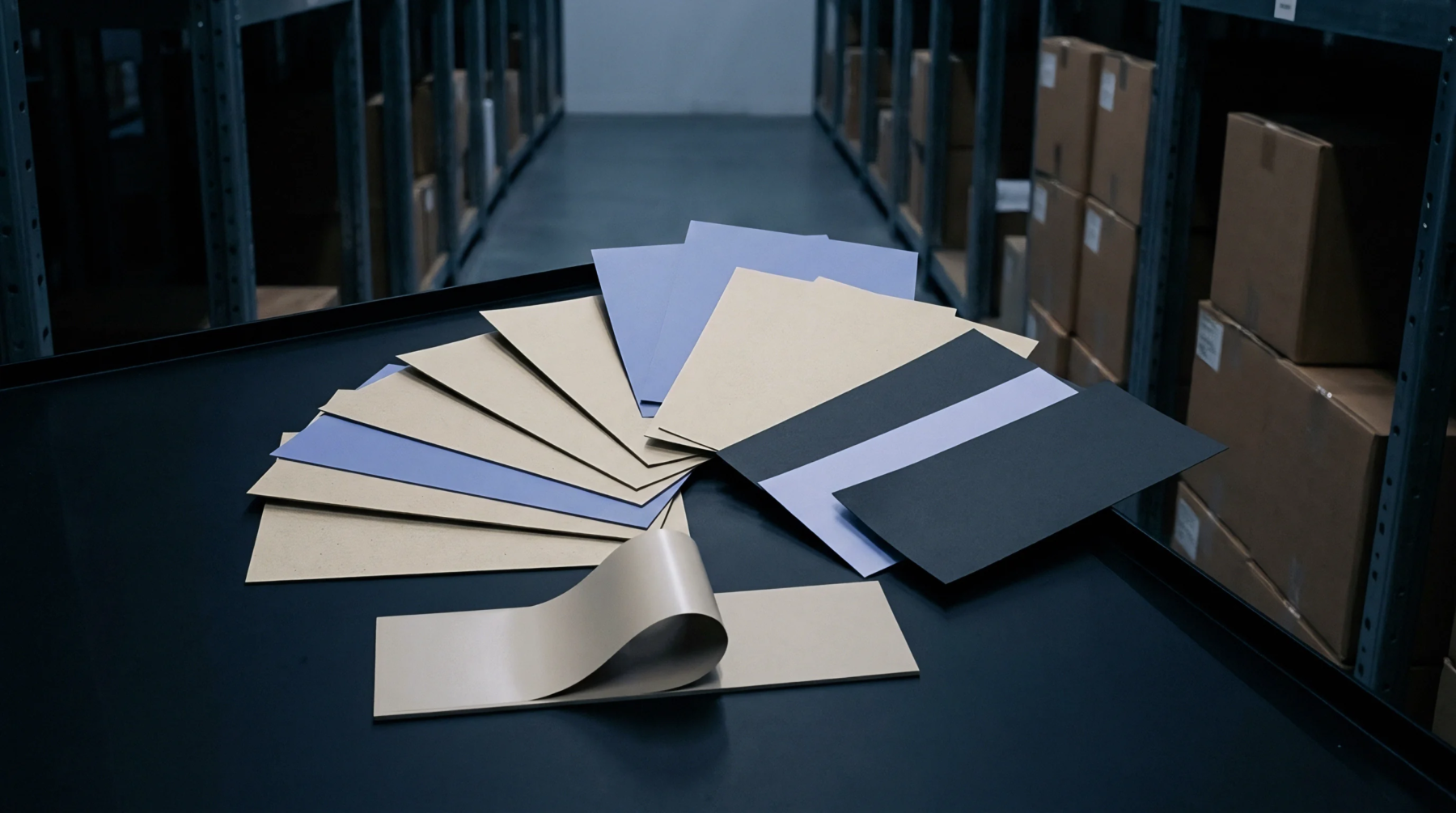
Creasing Matrix Selection Criteria for Multi Ply Folding Boxboard Grades
Select creasing matrix depth equal to FBB board thickness and calculate channel width using rule thickness plus 1.5 times thickness with-grain or 1.7 times across-grain.
Select creasing matrix depth equal to FBB board thickness and calculate channel width using rule thickness plus 1.5 times thickness with-grain or 1.7 times across-grain.
Static Z-tensile tests fail at converting speeds because Mode II dynamic shear energy dissipation governs ply bond stability under microsecond strain rates.
Prevent recycled board delamination by widening matrix channels to 1.75 times board caliper and deploying crowned creasing rules with larger tip radii.

Hornification in recycled cellulose drives non-Fickian moisture diffusion and reduces binding enthalpy, lowering box compression under cyclic humidity.
Recycled board deforms faster during humidity cycles than at fixed humidity, needing barrier coats or safety margins to prevent stack failure.
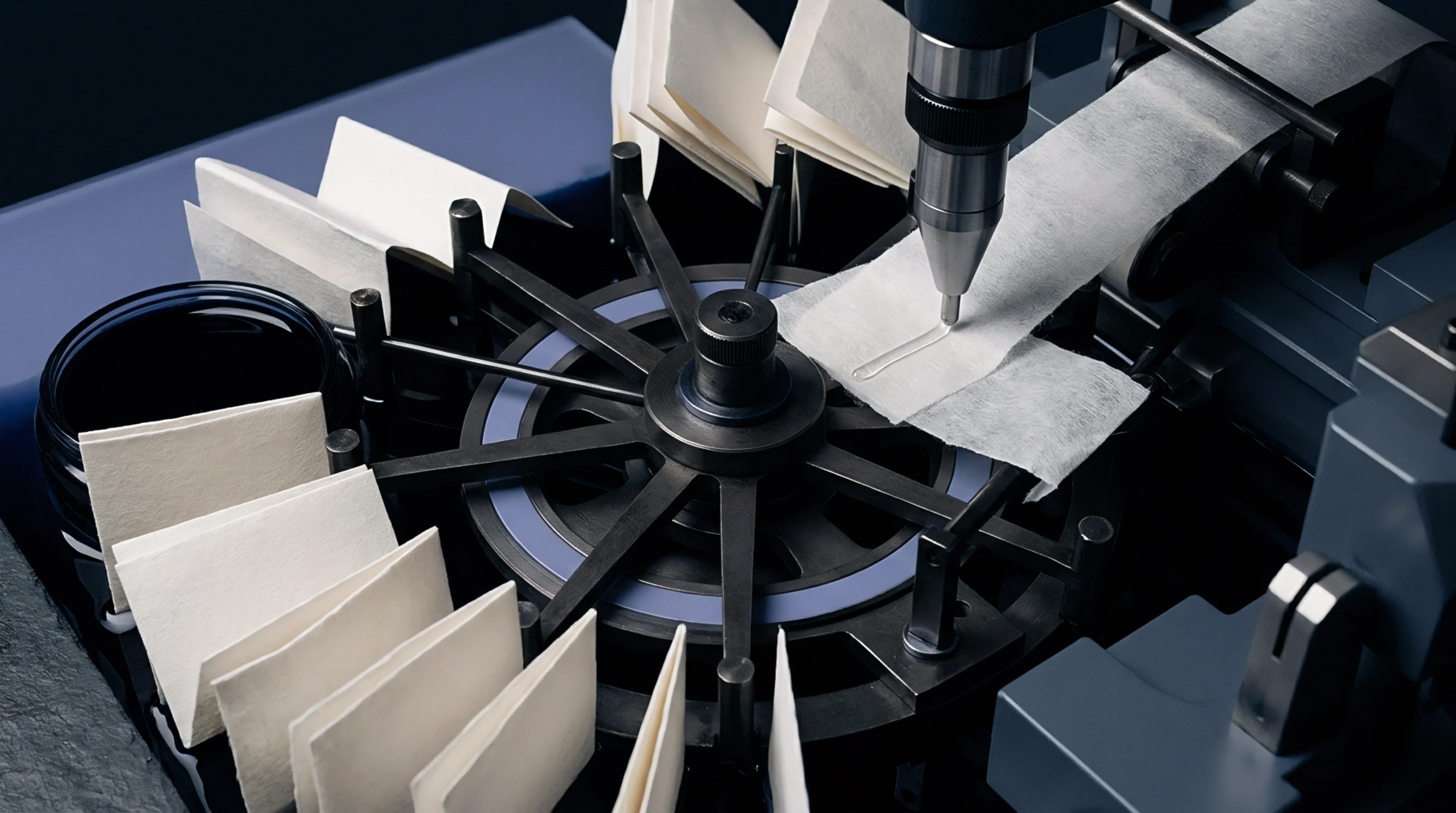
Polyhydroxyalkanoate binder passes require copolymer formulations with hydroxyvalerate fractions above twelve percent to prevent fold cracking at five degrees.
Coupled moisture regain and stress relaxation in recycled containerboard cause rapid emboss relief loss and warp, requiring heated tooling and strict humidity bounds.
Non-destructive acoustic testing tracks dynamic flexural rigidity loss in rehydrated fibers by calculating specific elastic stiffness from sound velocity squared.
Thermal dwell matching polymer glass transition arrests micro embossed geometry loss, preventing stack creep from flattening diffraction peaks under pallet storage.

Single-sided lamination curl stems from thermal shrinkage and one-way moisture gradients, causing severe converting scrap that requires mechanical breaker controls.
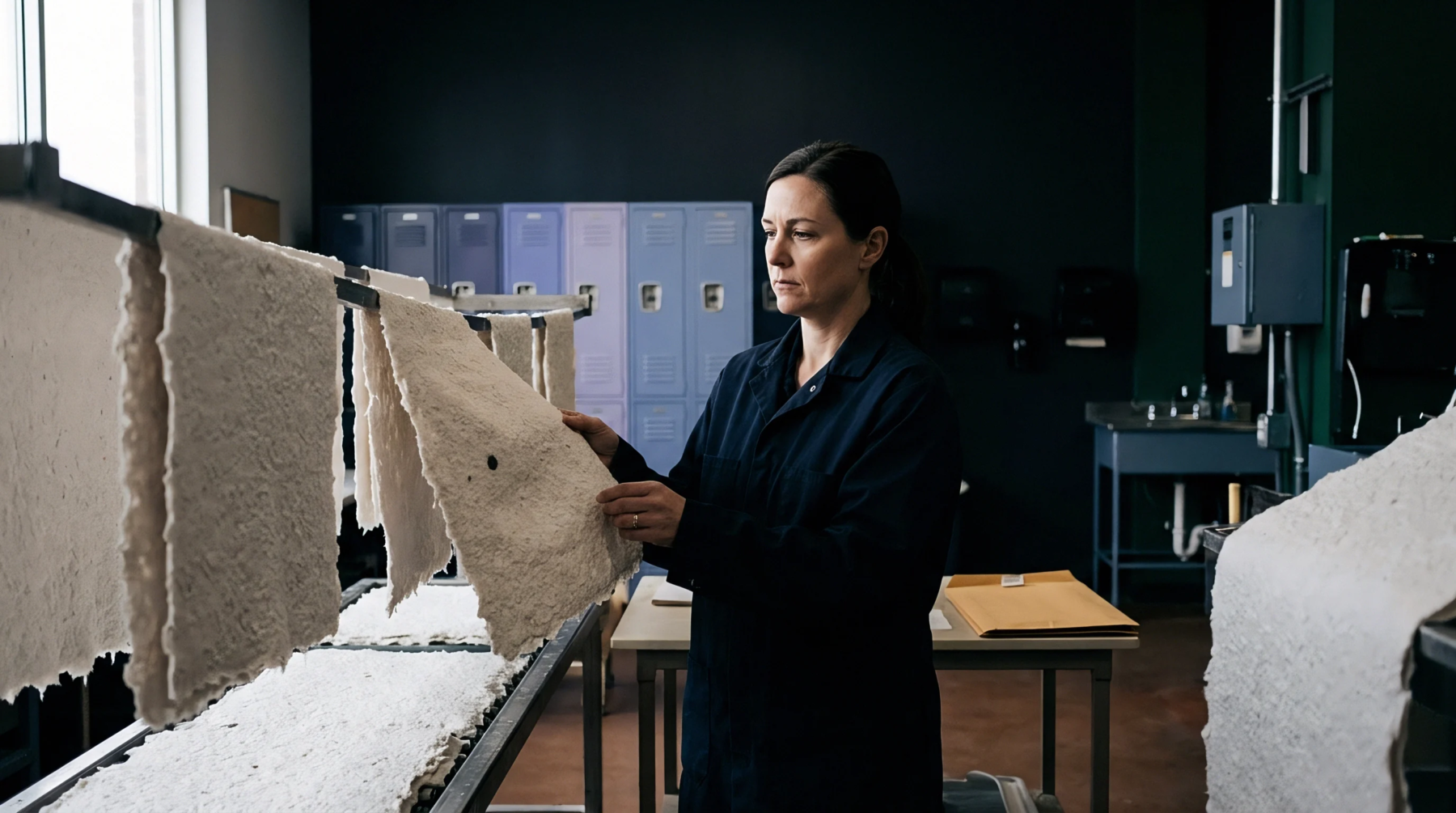
Dynamic pinholes at die-cut creases stem from brittle polymer fracture under high strain rates, mitigated by low-Tg latex formulations and rounded counter matrices.
Cyclic relative humidity drives interfacial shear cracks in polyurethane-laminated paperboard through hygro-expansion mismatch and localized network plasticization.
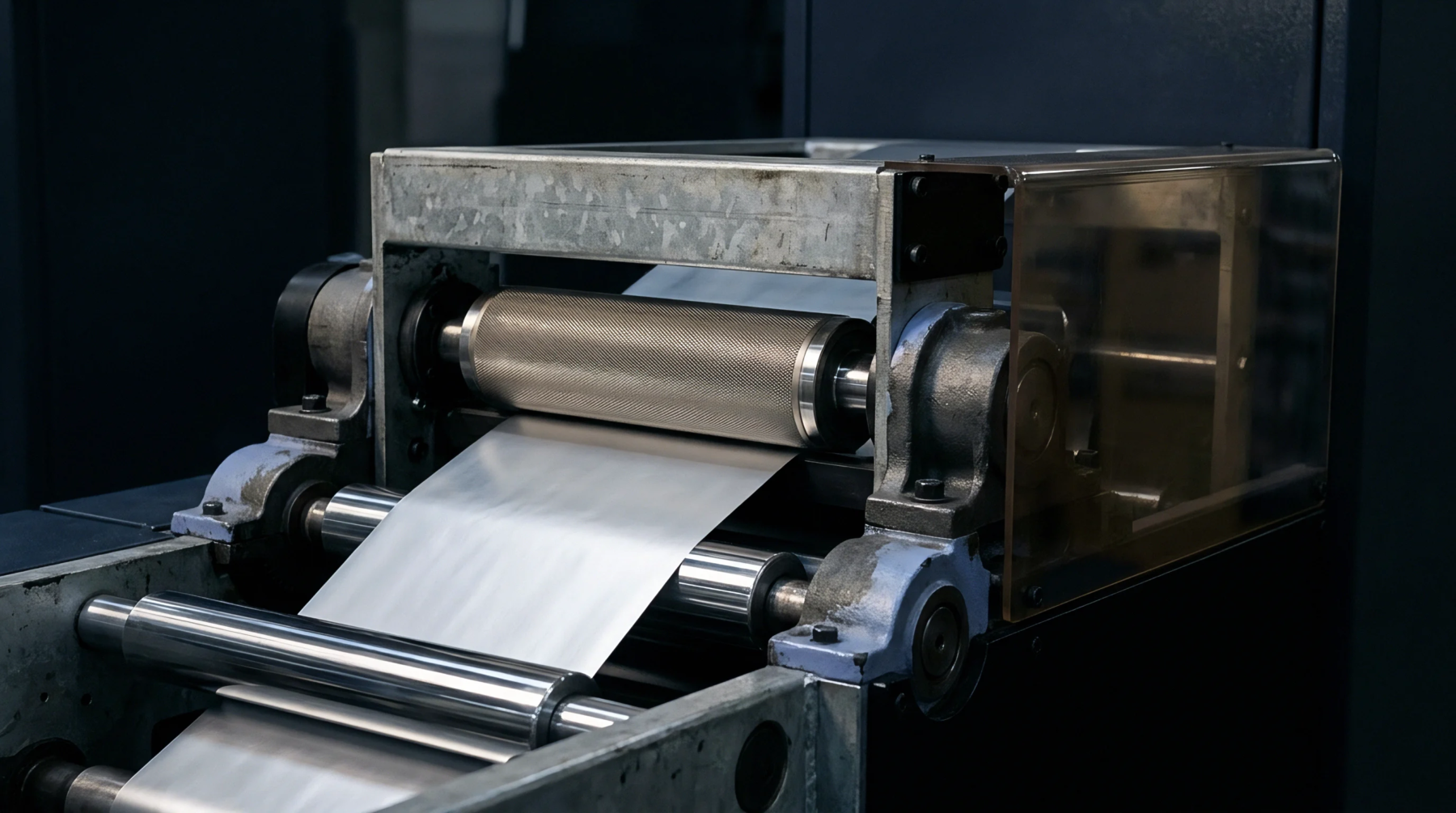
Substrate compression ratio measures z-axis compaction, balancing tool impression depth against fiber strain limits to maximize embossing height without shearing.
Crosslinked polyurethane soft touch films crack under cyclic humidity when interfacial shear stress exceeds film yield strength at elevated substrate moisture content.
Expertise is a utility, not a secret. sentiention™ publishes its working knowledge as open reference: intelligence layer covering the materials it sources, the markets it enters, and the reference that serves both.