Dynamic Pinhole Formation at Die Cut Creases in Hydrophobic Dispersion Coated Boards
Dynamic pinholes at die-cut creases stem from brittle polymer fracture under high strain rates, mitigated by low-Tg latex formulations and rounded counter matrices.
Flex
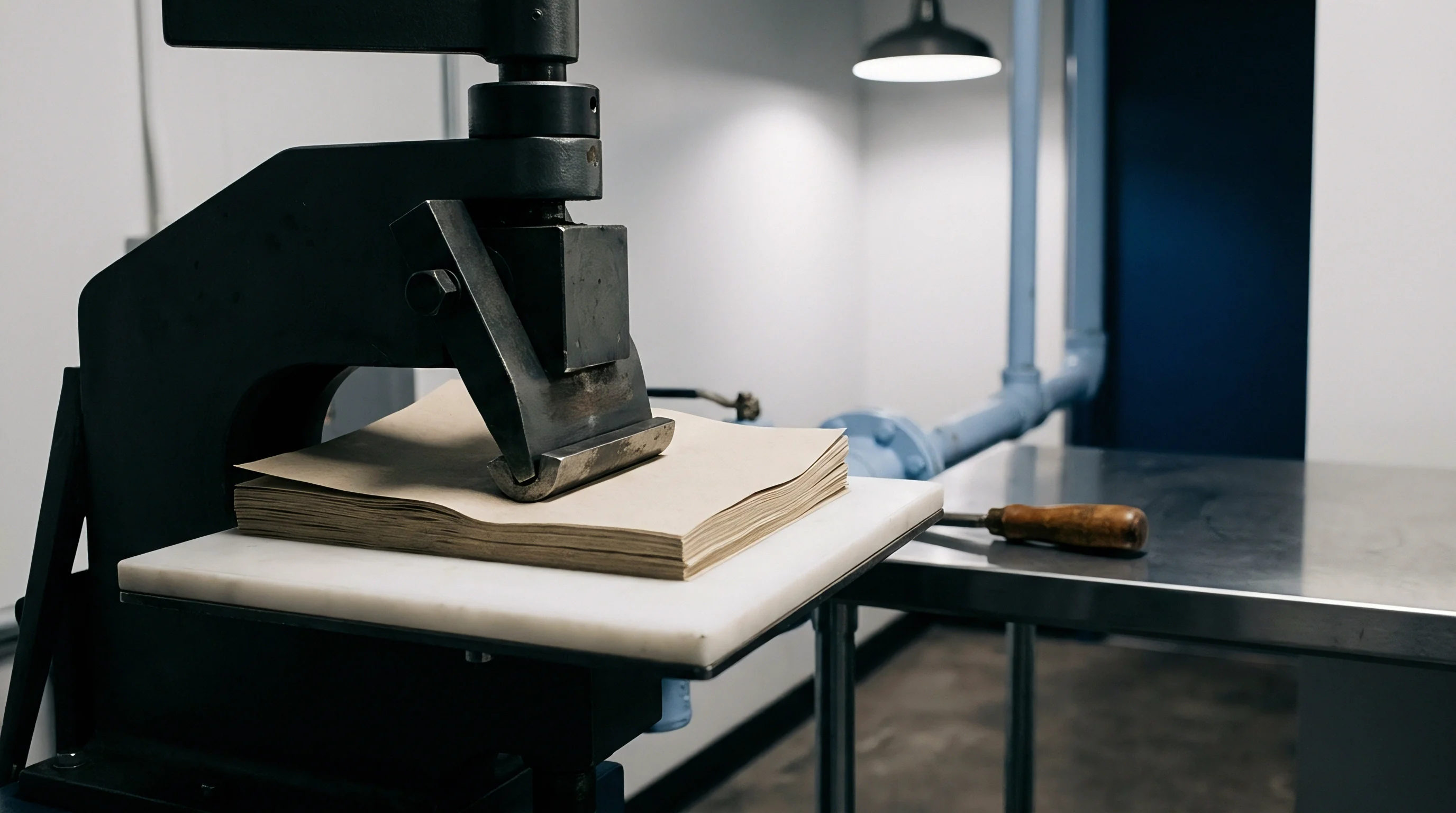
Platen die cutting subjects paperboard to localized multiaxial strain fields within milliseconds. During the mechanical engagement of a steel scoring rule against a channel matrix, the top hydrophobic dispersion coating experiences rapid tensile elongation while the underlying cellulosic network undergoes z-direction compression and shear. Aqueous dispersion coatings, typically formulated from styrene-butadiene, acrylic, or bio-based polymers like polyhydroxyalkanoates, form thin continuous films over the unbleached or bleached paperboard fibers.
The elongation capacity of these dry polymer films ranges from eighty to three hundred percent under static tensile testing. High-speed converting lines subject the score to strain rates exceeding ten thousand percent per minute, shifting the polymer behavior from viscoelastic flow to brittle fracture.

Mechanical Strain Concentration at the Fold Apex
Male scoring rules force the paperboard into the female groove, generating extreme localized curvature at the outer sheet face. Tensile forces concentrate directly at the apex of the bend, stretching the surface skin across the ruptured internal fiber bonds. When paperboard delaminates internally to form a clean, symmetrical bead inside the female matrix, energy dissipates across multiple internal ply layers.
Poor delamination transfers the entire bending strain into the outer print surface and its thin barrier film. Sheet speed alters strain rates. High line speeds reduce the available relaxation time for synthetic polymer chains, triggering micro-fractures along the line of maximum deformation.
Micro-cracking manifests as sub-micron voids that pass through the entire thickness of the hydrophobic coating layer. Fluid liquids, organic fats, and water vapor utilize these pathways to bypass the protective polymer shell. Microscopic observation demonstrates that pinholes originate at structural defects within the fiber mat, such as surface pin-holes, protruding wood fibers, or localized variations in coating density.
When the scoring blade compresses the board, mineral pigments within the coating layer act as stress risers, concentrating mechanical shear and initiating micro-fractures before the paperboard reaches its maximum structural deflection.
Viscoelastic Response of Water-Based Latexes
Polymer film formation occurs as water evaporates from the applied liquid dispersion, causing polymer spheres to coalesce into a continuous protective matrix. The resulting mechanical toughness depends directly on the glass transition temperature of the chosen resin system and the presence of surfactant residues. Resins with a glass transition temperature below zero degrees Celsius yield flexible films at room temperature, but exhibit tacky surfaces that cause block resistance in reeled board.
Higher glass transition temperature resins improve anti-blocking parameters while suffering severe embrittlement during high-impact scoring operations. Elastomer modification balances these competing physical properties, yet thermal conditions on the converting floor alter performance significantly.
Cold converting environments drop the sheet temperature below the glass transition threshold of the polymer blend, turning a resilient film into a brittle shell. Converting facilities operating without humidity and temperature controls experience elevated pinhole counts during winter shifts. The physical state of the underlying cellulosic fibers governs the strain distribution further.
Dry paperboard with moisture content below five percent lacks internal ply flexibility, resisting delamination and forcing the outer coating layer to absorb the structural distortion of the score blade.
What remains undetermined is the precise molecular weight threshold where polymer entanglement prevents micro-void propagation without increasing liquid coating viscosity beyond the operating limits of blade and curtain coaters.

Coating
Formulation parameters dictate whether a hydrophobic dispersion film survives the mechanical impact of converting machinery. Water-based barrier formulations contain synthetic or bio-derived polymers, inorganic fillers, hydrophobic waxes, dispersants, and rheology modifiers. Incorporating mineral fillers like platy talc or kaolin clay creates a tortuous path that enhances liquid and gas barrier metrics.
High pigment loading reduces the total polymer volume available to stretch across the crease apex, lowering the mechanical strain limit of the dry coating film.
Polymer Film Structure and Additive Concentration
Pigment volume concentration dictates the boundary between continuous film elasticity and brittle structural failure. Coating formulations exceeding twenty-five percent pigment volume concentration display sharp increases in crease pinhole density following a ninety-degree or one-hundred-and-eighty-degree fold. Latex chemistry defines crack threshold.
Polymer resins with high cross-linking density provide chemical resistance, yet fail rapidly under dynamic flexural strain. The inclusion of paraffin wax or synthetic polyethylene emulsion improves surface hydrophobic angles while reducing internal cohesive strength within the polymer matrix.
Coating weight uniformity across the raw paperboard substrate controls barrier survival after creasing. Blade coaters apply uniform surface profiles but leave thin coverage over elevated fiber nodes, whereas rod coaters follow the contour of the sheet, depositing consistent film thickness over surface topographies. Thin spots measuring under three grams per square meter crack instantly when subjected to female matrix entry, creating direct pathways for liquid ingress.
- Inorganic Filler Shear Crepitation ~ Rigid mineral platelets create stress concentration zones within the polymer matrix, causing film separation under high dynamic elongation.
- Thermal Embrittlement Fracture ~ Polymer films operated below their effective glass transition temperature lose molecular mobility and fracture cleanly across the fold line.
- Interfacial Fiber Separation ~ Poor adhesion between the aqueous coating and the top bleached liner allows the film to lift and snap independently during matrix penetration.
- Surfactant Pocket Rupture ~ Concentrated surfactant domains inside the dried film leave structural voids that collapse into pinhole channels under mechanical pressure.
Latex Chemistry and Mechanical Performance
Evaluating film properties requires matching polymer mechanics with converting stress demands. Latex chemistries show divergent responses when subjected to mechanical deformation at the score channel.
| Latex Chemistry Type | Glass Transition Temperature (°C) | Elongation at Break (%) | Coating Grammage (g/m²) | Pinhole Density at 180° Fold (Count/m) |
|---|---|---|---|---|
| 12 | 110 | 8.5 | 42 | |
| -5 | 240 | 8.0 | 4 | |
| 18 | 65 | 12.0 | 88 | |
| -15 | 310 | 7.5 | 1 |
Formulations relying on soft styrene-butadiene polymers demonstrate minimal pinhole formation across narrow score channels due to high ultimate elongation capabilities. Polyhydroxyalkanoate coatings, selected for industrial compostability compliance, display low elongation tolerances that demand wider female channels to avoid total barrier destruction.
Coating integrity stays intact when the dry film thickness exceeds eight micrometers and the polymer backbone retains an ultimate elongation capacity of at least two hundred percent at line temperature.
Geometry
Tooling design controls the physical strain imposed on the barrier layer during platen contact. Steel rule dimensions, counter matrix channel widths, chamfer angles, and rubbering configurations govern the mechanical deformation mode of the folding boxboard. Incorrect channel depth forces the male rule to crush the paperboard matrix rather than inducing clean internal shear delamination.
Board moisture dictates fiber stiffness. Oversized channel widths reduce surface tension but produce sloppy, poorly defined box corners that jam high-speed cartoning machines.
Score Rule Profile and Counter Matrix Alignment
Optimal scoring requires establishing precise proportional relationships between paperboard thickness, male rule width, and female matrix channel geometry. Standard folding boxboard conversion relies on mathematical relationships derived from sheet caliper to establish matrix widths.
A rule width equal to board thickness combined with a channel width equal to one point four times board thickness plus rule width prevents skin rupture.
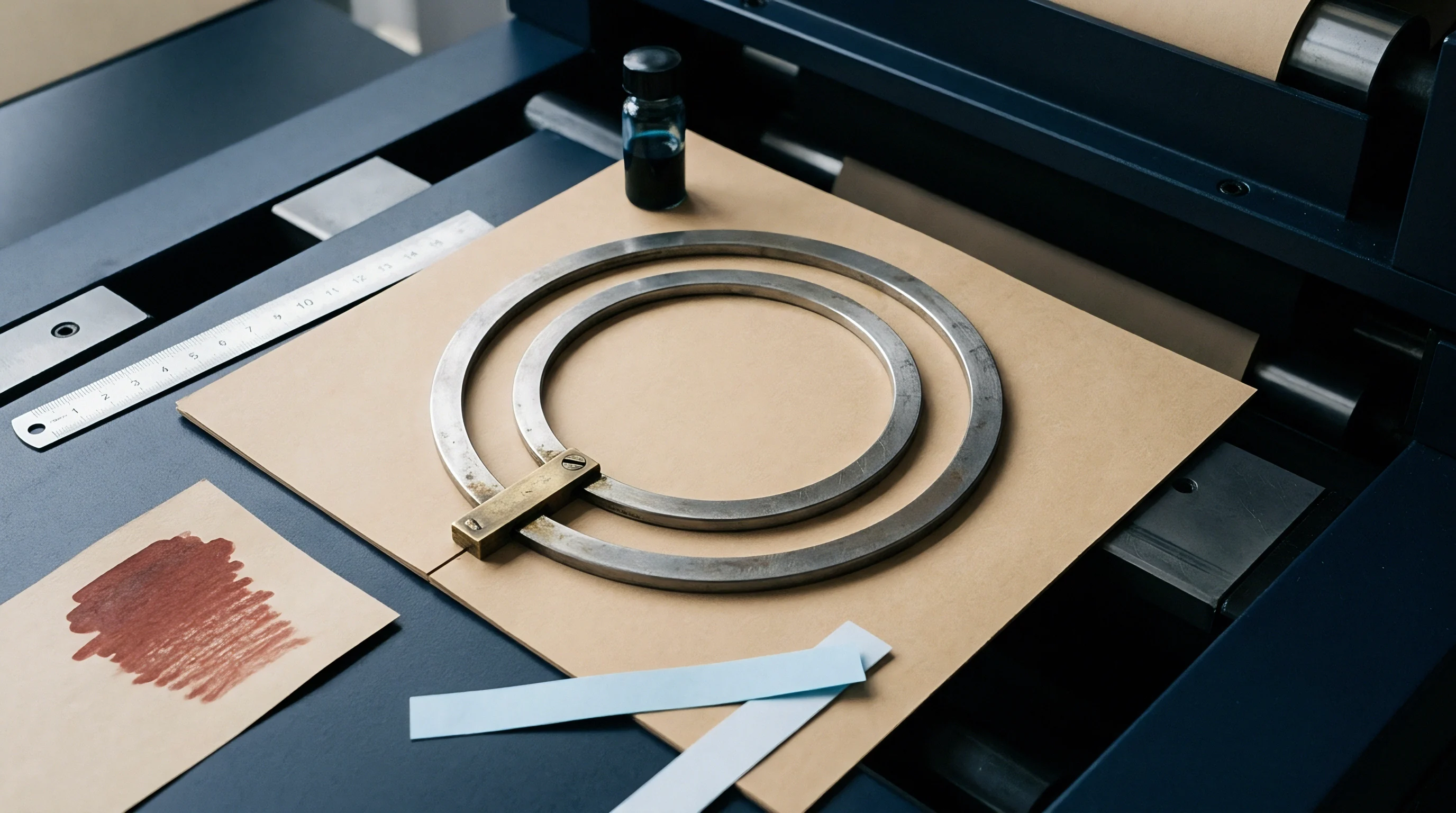
Female matrix channels with sharp, square shoulders generate cut-edges that slice directly into the hydrophobic coating layer during rule withdrawal. Rounded shoulder channels or polyurethane counter-matrices cushion the sheet entry, redistributing tensile forces across a wider arc. Tooling wear exacerbates liner rupture.
Worn male scoring rules with pitted or flattened crowns concentrate frictional shear against the barrier film, stripping hydrophobic polymer away from the underlying fibers.
- Mount precision-ground steel scoring rules into the die board, verifying rule height uniformities within a tolerance of plus or minus five micrometers across the impression area.
- Select a milled phenolic or synthetic counter matrix with rounded channel shoulders featuring a minimum radius of zero point two millimeters.
- Adjust die-cutting platen impression height incrementally until internal fiber shear occurs without inducing top liner fiber breakage on first-off sheets.
- Install high-density profile rubber elastomers immediately adjacent to scoring rules to strip the board cleanly and damp lateral sheet vibration during rule exit.
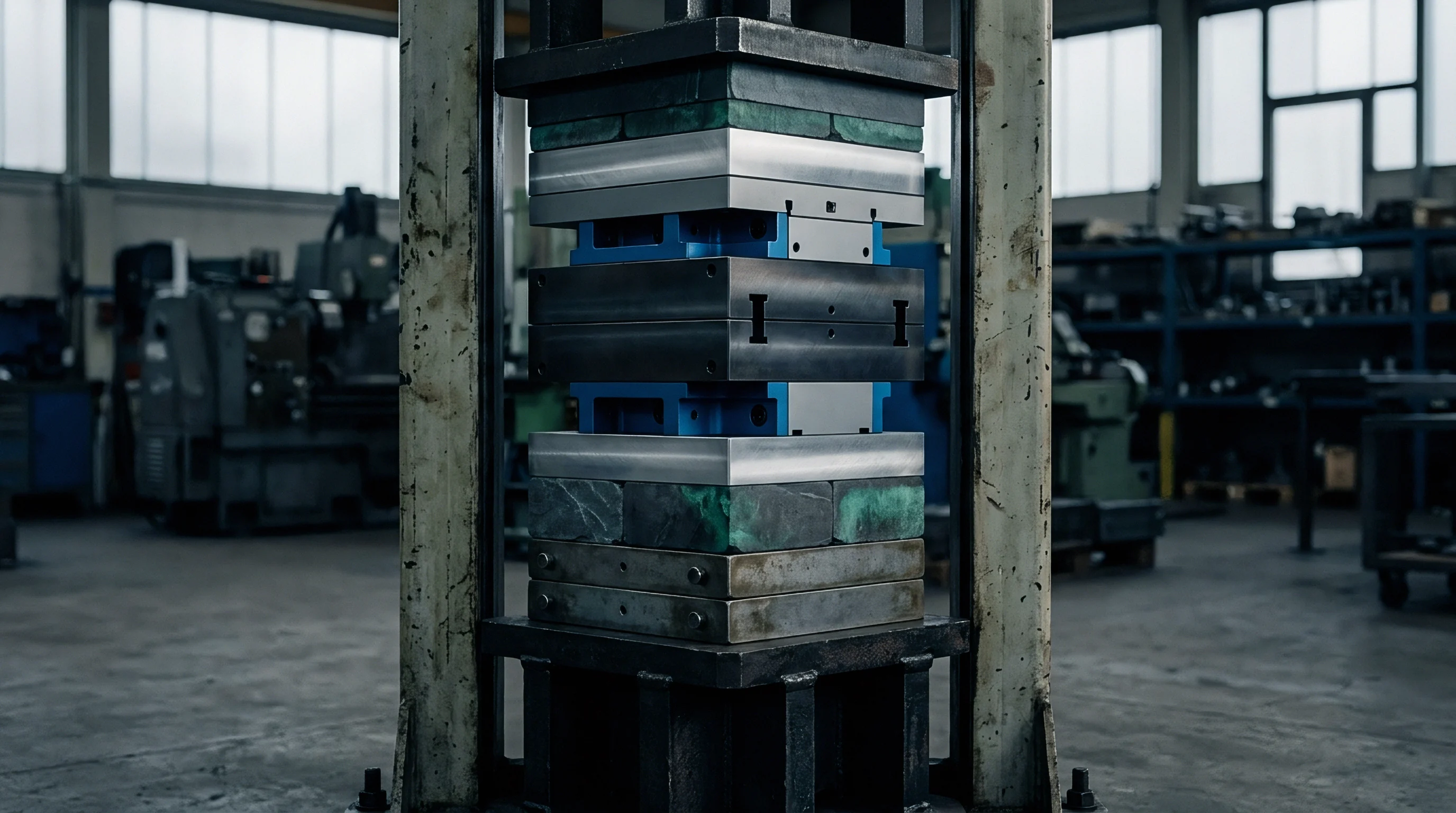
Anvil Cushioning and Impression Depth
Platen dwell time alters recovery. The physical interaction between the score blade, paperboard sheet, and anvil matrix requires strict dimensional balance to preserve surface coatings.
| Board Caliper (mm) | Male Rule Width (mm) | Channel Width (mm) | Channel Depth (mm) | Max Target Line Speed (Sheets/Hour) |
|---|---|---|---|---|
| 0.35 | 0.71 | 1.20 | 0.45 | 9,000 |
| 0.45 | 0.71 | 1.40 | 0.55 | 8,500 |
| 0.60 | 1.05 | 1.90 | 0.70 | 8,000 |
| 0.80 | 1.42 | 2.60 | 0.95 | 7,200 |
Exceeding recommended impression depths compresses the paperboard core to maximum density, forcing the surface coating to absorb the remaining vertical force and resulting in linear fracture along the inner crease wall.
Ignoring score geometry limits causes catastrophic barrier loss at the folder-gluer, turning minor micro-cracks into visible structural tears that reject entire production lots during customer quality audits.
Verification
Detecting microscopic barrier failures requires test procedures capable of identifying sub-micron channels without dissolving the underlying dispersion polymer. Standard liquid penetration methods, including the cobb water absorption test, lack the spatial resolution needed to isolate individual pinholes along a linear crease. Specialized chemical indicator solutions, dye stain penetration tests, and cross-sectional optical microscopy provide accurate quantification of coating breakdown.
Which Dynamic Stain Methods Detect Microscopic Barrier Failures?
Solvent-based dye solutions utilize capillary action to migrate through micro-cracks, staining the raw cellulosic fibers underneath while leaving the hydrophobic polymer surface unmarked. Turpentine, isopropyl alcohol, and glycol ether solutions containing dissolved dark dyes highlight coating fractures within seconds of application. Standardized test protocols mandate bending the board sample to a specified angle, applying the stain solution across the score line for a defined duration, and rinsing away excess liquid to evaluate stain trace widths.
EN 13676 testing mandates a five-minute exposure of dyed solvent solution on creased surfaces, where any visible fiber wetting invalidates the barrier rating.
Dye penetration reveals micro-channel networks. High-resolution digital image analysis quantifies the percentage of stained area along the crease length, offering an objective numerical metric for barrier integrity. Scanning electron microscopy provides three-dimensional topographical visualization of polymer tearing, isolating whether failure stemmed from interfacial adhesive failure or cohesive polymer split.
- Dye Penetration Index ~ Quantifies the total stained square area per linear meter of score line following solvent exposure.
- Conductivity Leakage Rate ~ Measures electrical current flow through aqueous salt solutions applied across the crease to identify conductive liquid pathways.
- Pin-hole Cross-Sectional Count ~ Utilizes optical microscopy on microtomed crease sections to determine structural void frequency per millimeter.
- Water Vapor Transmission Spike ~ Measures localized humidity flow increases across folded samples compared to flat control sheets inside gravimetric cups.
Diagnostic Resolution of Leak Detection Test Protocols
Selecting appropriate analytical techniques depends on the target product resistance requirements and converting speeds.
| Test Protocol Designation | Carrier Solvent Phase | Dwell Duration (sec) | Detectability Threshold (µm) | Operator Subjectivity Level |
|---|---|---|---|---|
| EN 13676 Solvent Stain | Ester / Alcohol Blend | 300 | 0.5 | Moderate |
| TAPPI T 559 Crease Test | Castor Oil / Toluene | 15 | 2.0 | High |
| ASTM F1249 Modified Cup | Water Vapor Gas | 86,400 | 0.1 | Low |
| Aqueous Salt Conductance | Deionized Water / NaCl | 60 | 1.0 | Low |
Converters routinely claim that pinhole formation results entirely from pre-existing mill raw stock surface roughness rather than improper die-cutting impression settings.
Ledger
Pinholes formed during converting generate severe commercial exposure across the packaging supply chain. Food service cartons, liquid packaging, and frozen food boxes suffer premature grease bleed, liquid leakage, and oxygen degradation when barrier coatings split at the crease. Operational financial analysis must account for substrate material costs, chemical additive expenses, press spoilage rates, and potential product failure liability penalties.
Worked Financial Calculation of Barrier Failure Waste
Consider a converter producing five million dispersion-coated folding cartons for a chilled food application. Take a twenty-five-tonne lot of three-hundred-and-fifty gram per square meter folding boxboard costing two thousand two hundred euros per tonne. The water-based hydrophobic coating adds three hundred fifty euros per tonne to the base substrate price.
Standard conversion spoilage runs at two percent on well-adjusted equipment. Running unoptimized creasing matrix tooling increases barrier breakdown rates, causing fifteen percent of finished cartons to fail dye penetration quality checks.
Operating with uncalibrated creasing tools generates three hundred seventy-five thousand defective units. Scrapping these cartons burns eight thousand two hundred eighty-seven euros in raw material outlay alone. Added press time, die-cutting energy costs, and setup labor increase total wasted production value to fourteen thousand five hundred euros per shift.
Upgrading to specialized rubber-contoured scoring rules and low-shear female counter matrices requires an initial tooling investment of two thousand eight hundred euros. Implementing optimized tooling pays back fully within the first sixty-five thousand printed sheets.
Running dispersion barrier board with inappropriate scoring matrix geometry increases scrap costs by over two thousand percent compared to standard folding boxboard.
- Substrate Technical Specification Sheet ~ Defines target moisture ranges, surface roughness caps, and minimum cross-direction stretch properties.
- Tooling Geometry Certificate ~ Documenting scoring rule tip radii, matrix channel widths, chamfer specifications, and rubber hardness durometers.
- Barrier Verification Protocol Document ~ Establishing mandatory dye test exposure times, sampling frequencies per pallet, and pass-fail threshold limits.
- Recyclability Grading Declaration ~ Verifying that dispersion polymer formulations comply with repulpability standards without requiring extra chemical separation passes.
Contractual Barrier Guarantees and Liability Boundaries
Platen dwell time alters recovery. Supply agreements must define technical boundaries regarding barrier retention after conversion steps.
Standard purchase specifications dictate that hydrophobic dispersion coated board must retain a minimum Cobb sixty water absorption rating below five grams per square meter across ninety-degree folded creases, shifting full financial replacement liability to the converter if creasing press adjustments rupture the coating layer.
Sealing
Preventing pinhole formation requires structural modifications to both the coating layer and the physical die-cutting station. Post-crease application of fluid sealing materials presents mechanical complexity and adds line passes that increase unit cost. Modern converting strategies focus on preserving coating elasticity through optimized humidity conditioning and modified die impression mechanics.
Installing localized steam humidification bars directly upstream of the die-cutting station elevates top-liner fiber moisture to eight percent, lowering internal shear resistance and allowing paperboard fibers to yield without transferring destructive strain into the hydrophobic film layer.
Inline application of liquid wax emulsions or secondary dispersion topcoats over the active crease zone immediately following die-cutting restores barrier properties on damaged sheets. Flexographic units mounted directly inside the platen press or folder-gluer deposit targeted lines of fast-drying aqueous polymer over the score line, filling micro-cracks before box gluing occurs. Polymer film thickness governs failure.
This re-sealing pass adds equipment footprint and consumes secondary chemistry, yet guarantees zero-defect performance for high-consequence liquid packaging applications.
Counter dies require precise alignment. Advanced elastomer formulations, such as polyurethane matrix strips with tailored durometer ratings, absorb initial scoring impact and cushion the barrier layer against hard metallic shear. Matching latex glass transition temperatures to converting floor thermal conditions eliminates brittle fracture entirely, securing continuous hydrophobic protection across all converted package edges.