Predictive Dynamic Dot Gain Modeling across Non-Linear Micro-Porous Secondary Fiber Substrate Matrices
Dynamic tone expansion modeling across recycled fiber matrices requires coupling transient capillary suction with viscoelastic nip deformation metrics.

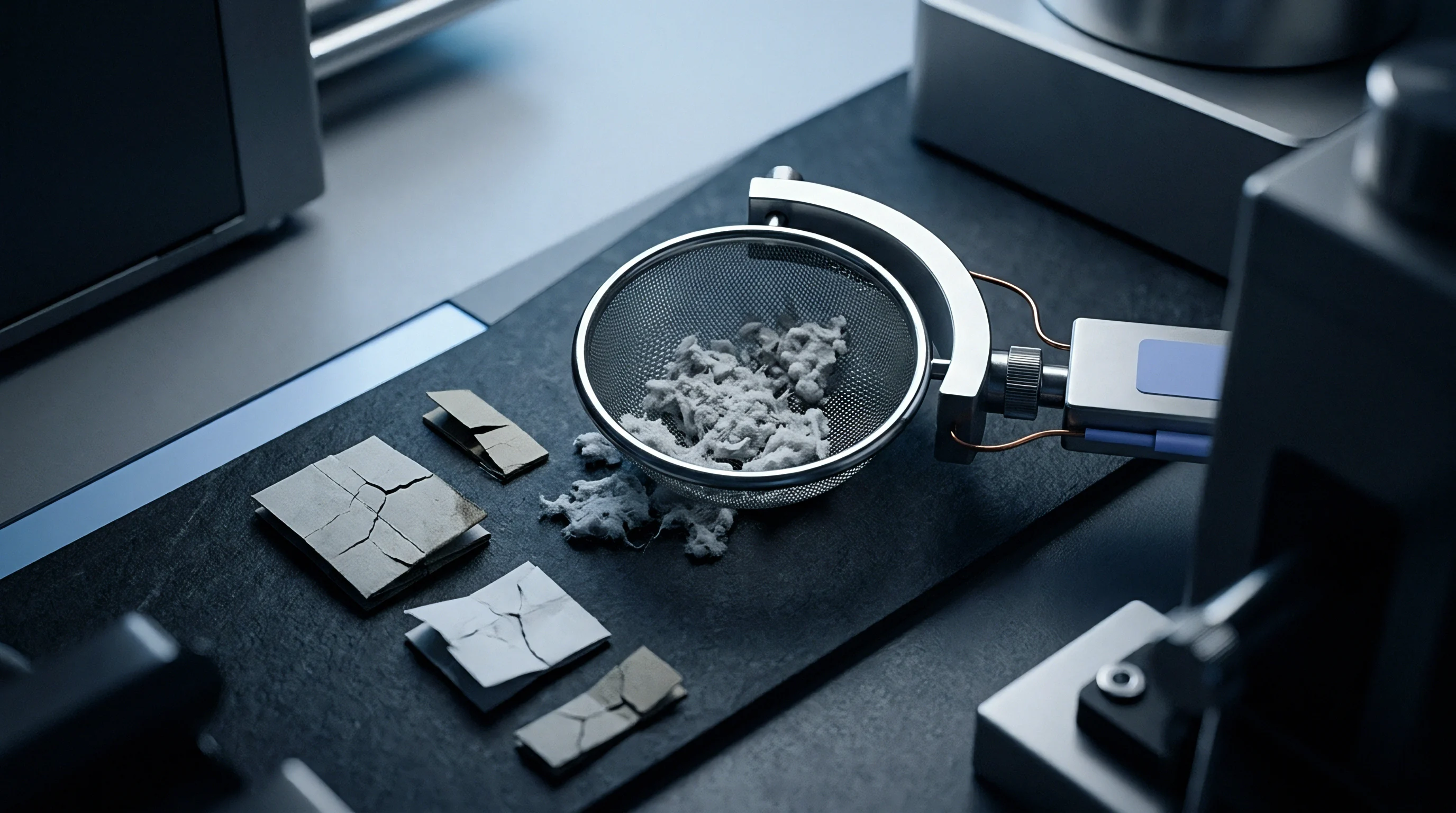
Hysteresis
Uncoated secondary fiber sheets take up fluid in a non-linear way that breaks from steady-state absorption physics. When printing ink hits a reclaimed cellulose network, differential capillary suction in the printing zone separates the liquid vehicle from the pigment suspension within milliseconds. Virgin chemical pulps have uniform lumen diameters, consistent cell walls, and predictable hydroxyl accessibility; secondary fiber matrices, by contrast, mix hornified fibers, collapsed lumens, residual mineral ash, and fragmented fines.
That structural variation changes both wetting velocity and spreading kinetics for paste and liquid inks.
The standard Murray-Davies formulation calculates tone value strictly from monochromatic optical density, assuming an ideal, non-permeable substrate where ink film thickness stays uniform across the dot. On recycled corrugated liners, white top testliners, and recycled folding boxboard, that assumption fails. Ink vehicles sink into the porous z-directional network while pigments filter out at narrow surface passages, creating an expanded perimeter around each halftone dot.
Instead of growing as solid disks with sharp edges, halftone dots form diffuse, partially saturated halos as the vehicle moves low concentrations of colorant sideways through surface pores.
As fibers flatten during drying and pores collapse under load, contact angle measurements on recovered fiber networks show severe wetting hysteresis between advancing and receding liquid fronts. For mineral-oil and vegetable-oil ink vehicles on virgin unbleached kraftliner, advancing contact angles usually run between 35 degrees and 48 degrees under standard laboratory conditions (23 degrees Celsius and 50 percent relative humidity per ISO 187). On a 100 percent secondary fiber testliner with 14 percent calcium carbonate filler and mechanical fines, the advancing angle often drops to 18 degrees while the receding angle approaches zero.
This gap drives horizontal fluid migration long before the ink vehicle can set by resin precipitation or oxidative cross-linking.
Secondary fiber matrices induce rapid ink vehicle separation, expanding dot perimeters through lateral capillary channeling before pigments immobilize.
In secondary fiber furnish composition, the recycling loop count directly governs the pore size distribution inside the formed web. Repeated drying and re-wetting cycles cause irreversible hornification of cellulose microfibrils, cutting the internal swelling capacity of the cell walls as measured by Water Retention Value under ISO 23714. Virgin unbleached softwood kraft shows a Water Retention Value between 1.40 and 1.65 grams of water per gram of dry pulp; after four recycling cycles, that drops to between 0.85 and 1.05 grams per gram.
These stiff, non-swelling fibers cannot conform tightly during sheet consolidation on the fourdrinier wire, leaving the dried web with a higher volume of inter-fiber micro-voids with equivalent pore radii from 0.1 to 2.5 micrometers. The voids act as capillary pumps, drawing fluid out of the deposited ink film.
The rate of lateral dot expansion correlates directly with the ratio of inter-fiber void volume to intra-fiber pore capacity. In virgin sheets, flexible fibers deform during wet pressing, forming dense hydrogen-bonded contact zones that limit lateral flow. Recovered furnish matrices contain rigid, hornified fibers that leave open channels along their outer boundaries, shifting fluid transport from controlled bulk penetration to rapid planar diffusion along fiber interfaces near the surface.
Sizing meant to control this absorption often forms spotty barriers on secondary fiber surfaces. Alkyl ketene dimer and alkenyl succinic anhydride emulsions distribute unevenly because they adsorb preferentially onto fines and mineral fillers, leaving raw fiber patches exposed and creating local micro-domains of high capillary pressure that distort circular halftone dots into irregular star shapes.
Predictive dot gain calculations on these substrates have to separate physical ink spreading from optical light scattering in the porous network. Optical dot gain, or the Yule-Nielsen effect, increases apparent dot area when light entering the unprinted paper scatters sideways beneath the ink film and gets trapped. In recycled sheets with high lignin content, residual carbon from deinking, and titanium dioxide fillers, scattering and absorption coefficients vary widely across millimeter-scale areas.
The traditional Yule-Nielsen exponent n, usually set between 1.5 and 2.0 for coated virgin papers, becomes a variable parameter between 2.6 and 4.2 for uncalendered secondary fiber boards. Using a static correction factor in pre-press raster image processors leads to systematic tone reproduction errors through the midtones and shadows.
Wetter furnish chemistry always yields heavier halftone fringe spreading regardless of sizing agents.


Capillarity
The void geometry in recycled fluting and testliner consists of irregular interstitial gaps created by collapsed kraft lumens and dispersed mineral ash. Fluid transport in these micro-porous networks is often modeled with the classical Lucas-Washburn equation for capillary flow in cylindrical tubes, relating penetration depth to average pore radius, liquid surface tension, contact angle, fluid viscosity, and elapsed time. But the Lucas-Washburn derivation assumes rigid, non-reactive, uniform capillaries with constant contact angles ~ conditions real paper webs fail to meet in every respect.
Secondary fiber sheets have tortuous, interconnected pores with throats that widen and narrow unpredictably along both the z-axis and the xy-plane.
Because capillary radii vary throughout the sheet, fluid velocity drops at sudden pore expansions and rises through narrow throats. Liquid vehicles moving through secondary fiber networks experience sharp shifts in capillary pressure at fiber crossovers. Local capillary suction pressure scales inversely with hydraulic pore radius.
In dense virgin kraftliner, pore diameters fall within a tight band between 0.05 and 0.3 micrometers. In recycled liners containing mixed recovered paper and old corrugated containers, mercury intrusion porosimetry per ISO 15901-1 shows a bimodal or trimodal distribution running from 0.02 micrometers up to 8.5 micrometers. Large macropores rapidly pull in the low-viscosity solvent fraction during the first five milliseconds of impression dwell, while fine micropores slowly absorb the remaining resin vehicle over several seconds afterward.
Water absorptiveness values measured under TAPPI T441 at sixty seconds correlate poorly with sub-second ink vehicle absorption on high-speed press lines.
Uneven capillary drainage destabilizes ink at the sheet surface. In flexographic printing on secondary linerboard, water-based acrylic inks break down as volatile amines evaporate and liquid penetrates the paper. When the substrate pulls water out of the ink film too quickly, acrylic polymers precipitate early, stopping physical dot spreading over macropores but leaving ragged edges.
Where the paper contains hydrophobic contaminants like residual wax, hot-melt adhesives, or synthetic stickies, capillary suction drops to zero. Under printing impression, the wet ink dot slides over the hydrophobic patch, forming elongated, smeared halftone dots that sharply increase mechanical tone value.
| Substrate Grade Furnish | Secondary Fiber Fraction (%) | Mean Pore Radius (um) | Capillary Pressure (kPa) | Penetration Rate (mm/s^0.5) | Parker Print-Surf Roughness (um) |
|---|---|---|---|---|---|
| Virgin Kraftliner | 0 | 0.18 | 412.5 | 1.12 | 4.2 |
| Semi-Chemical Fluting | 35 | 0.45 | 235.8 | 1.84 | 6.8 |
| Testliner Grade 2 | 70 | 1.15 | 118.2 | 2.95 | 8.1 |
| Testliner Grade 3 | 100 | 2.40 | 62.4 | 4.35 | 9.6 |
| Recycled Chipboard | 100 | 3.85 | 38.7 | 5.80 | 11.4 |
| Data measured via mercury intrusion porosimetry according to ISO 15901-1 and Parker Print-Surf testing under 1000 kPa clamp pressure per ISO 8791-4. | |||||
Modeling dynamic dot expansion on these substrates requires time-dependent absorption functions instead of static permeability coefficients. Darcy permeability coefficients measured under steady-state hydraulic heads overestimate initial intake by orders of magnitude. During the first ten milliseconds of contact between an offset ink film and the paper, capillary suction outweighs external hydrostatic pressure.
Effective capillary pressure shifts continuously as polar functional groups on the cellulose hydrate and swell; as fibers take on water from water-based inks or fountain solution, they expand, narrowing adjacent inter-fiber voids and restricting fluid flow.
Could Secondary Fibre Hornification Distort Tone Value Curves?
Hornification changes the surface energy spectrum of reclaimed pulp fibers. Repeated industrial drying cycles collapse internal lumens and strip hemicellulose from outer cell wall layers, lowering the polar component of surface free energy while slightly raising the dispersive Lifshitz-van der Waals component. When a polar, water-based flexographic ink lands on hornified fibers, the thermodynamic driving force for initial wetting is reduced.
Non-polar solvent components in solvent- and oil-based inks, by contrast, wet hornified surfaces quickly, spreading along dry fiber outlines.
Irregular fluid penetration leads to specific micro-scale defect modes that degrade tone reproduction:
- Capillary Starvation occurs when deep, open pores drain the ink vehicle faster than pigment particles can consolidate, leaving powdery, unbonded pigment cakes at the dot core that rub off under converting friction.
- Halftone Haloing develops when strong lateral capillary suction draws low-viscosity vehicle and fine pigment particles into surrounding unprinted paper, forming rings that double effective optical dot area.
- Micro-Mottling appears across irregular fiber flocs, where patches of dense, highly refined fibers resist fluid penetration next to loose clusters of unrefined fines that absorb vehicle instantly.
- Pinholing happens when large surface voids exceed the bridging limit of the transferred wet ink film, leaving unprinted white specks in solids and shadow halftones.
In multilayer packaging boards, dot fringes blur and ink viscosity climbs rapidly because top-ply furnish rarely matches underlying plies. A white top testliner typically uses a bleached recycled furnish or a mix of deinked pulp and virgin hardwood on the surface over unbleached mixed secondary fibers, with a top ply between 35 and 65 micrometers thick. Because capillary suction pressure in the coarse under-ply often exceeds that of the fine-pored surface layer, fluid reaching the interface encounters a steep downward suction gradient.
This vertical draw stops horizontal surface spreading but can strip binding medium from the ink film, changing light scatter inside the top ply. Micro-scale tone expansion models must account for this multi-layer hydraulic interaction.
The exact mathematical relationship defining how mineral filler agglomeration interrupts micro-pore fluid channeling across variable recycling cycles remains undetermined in current fluid literature.


Nip
Mechanical impression forces in flexographic and offset units deform porous secondary fiber networks in milliseconds. As the substrate passes between plate cylinder and impression roll, or blanket and impression cylinder, compressive stress compacts the fiber structure. Recycled testliner caliper drops by 15 to 35 percent under standard flexographic peak pressures of 0.8 to 2.5 MPa.
This compression expels air from inter-fiber voids, temporarily raising sheet density and shrinking pore radii, which alters hydraulic resistance right as the ink film splits.
On the press floor, measuring web compression behavior separates mechanical squeezing from natural capillary uptake. Total dot gain on the finished substrate reflects three sequential mechanisms: physical displacement of the wet ink film under nip pressure, instantaneous capillary penetration during dwell, and optical light spreading within the compressed fiber matrix after recovery. On high-speed web presses running between 250 and 600 meters per minute, nip dwell lasts only 1.5 to 6.0 milliseconds ~ a window where viscous hydrodynamic forces dominate over capillary suction.
The viscoelastic response of secondary fiber sheets differs fundamentally from virgin kraft. Virgin long fibers remain elastic, recovering much of their original thickness right after exiting the nip, while hornified secondary fibers undergo plastic deformation with slow, incomplete recovery. When a recycled sheet is compressed, micro-pores stay collapsed for several milliseconds post-nip.
This lingering compaction holds the transferred ink film on the surface, blocking deep z-directional drainage and forcing the wet ink to spread outward along the plate-substrate interface.
| Press Speed (m/min) | Nip Dwell Time (ms) | Nip Peak Pressure (MPa) | Mechanical Gain (%) | Optical Gain (%) | Total Measured TVI (%) |
|---|---|---|---|---|---|
| 100 | 9.0 | 1.2 | 14.2 | 11.8 | 26.0 |
| 200 | 4.5 | 1.5 | 16.8 | 10.4 | 27.2 |
| 300 | 3.0 | 1.8 | 19.5 | 9.1 | 28.6 |
| 400 | 2.2 | 2.1 | 22.1 | 8.2 | 30.3 |
| 500 | 1.8 | 2.4 | 24.6 | 7.5 | 32.1 |
| 600 | 1.5 | 2.7 | 27.0 | 6.9 | 33.9 |
The data shows an inverse relationship between mechanical squeezing and optical trapping as press speeds increase. Higher line speeds produce greater peak hydrodynamic pressure in the ink film, pushing the wet boundary beyond the geometric limits of the plate relief. At the same time, shorter dwell times limit vehicle penetration into the sheet, confining pigment to the top fiber layer.
This shallow pigment depth shortens the path length of scattered photons, slightly lowering the pure optical contribution to total tone value increase. However, the sharp rise in mechanical squashing far outweighs the optical reduction, pushing net measured tone value increase up by nearly eight percentage points across the speed range.
Viscoelastic compaction under impression forces the wet ink film to spread along surface fibers before z-directional drainage can relieve hydrodynamic pressure.

Can Optical Scattering Formulas Correct Mechanical Spreading?
Optical models like the Clapper-Yule formulation or modified Kubelka-Munk spectral equations try to correct tone calculations by measuring substrate reflectance and light transmission, calculating the probability that light entering an unprinted margin emerges through an adjacent ink dot. But these models assume the physical dot boundary is a sharp step function. In secondary fiber matrices, mechanical squeeze creates a feathered edge where ink thickness tapers from 1.8 micrometers at the center down to less than 0.1 micrometers at the edge.
The scattering coefficient S and absorption coefficient K across this feathered zone change continuously over sub-micron distances.
When calculating dynamic dot gain, mechanical displacement has to be modeled with hydrodynamic lubrication approximations before applying optical corrections. The radial displacement of an ink droplet compressed between a non-porous photopolymer plate and a rough, permeable secondary fiber web follows the Stefan squeeze-film equation modified for porous boundary drainage. Where paper permeability is low from pore collapse or surface sizing, lateral radial velocity rises sharply.
If the web contains open macropores, part of the ink volume drains vertically into the sheet, dampening the lateral surge.
A rigorous procedure for establishing dynamic tone reproduction models on high-speed packaging lines follows an exact sequential workflow:
- Mount step-wedge test targets on the plate cylinder with calibrated nominal tone steps from 1 percent to 100 percent in 5 percent increments, alongside solid density patches and micro-line slur targets.
- Measure the dynamic compression modulus of the unprinted secondary fiber substrate on a high-speed material testing apparatus at strain rates exceeding 100 per second to determine true nip thickness under operating loads.
- Execute press runs across five stepped velocity increments while keeping ink viscosity, anilox volume, and fountain solution chemistry within tight closed-loop tolerances.
- Capture spectral reflectance data across all tint patches using a spectrophotometer with 45/0 geometry, polarization filtration, and D50 illumination per ISO 13655 standards.
- Calculate mechanical ink spread by removing internal optical scatter using the inverse Clapper-Yule equation with empirically derived internal reflectance values.
- Fit a modified empirical polynomial curve to the isolated mechanical spreading values plotted against nip hydrodynamic pressure metrics.
- Integrate the mechanical transfer function into the raster image processor lookup tables to generate pre-press compensation curves that adjust dynamically for press speed and furnish density.
Secondary fibers show high Parker Print-Surf roughness, often measuring between 6.0 and 12.0 micrometers at 1000 kPa clamp pressure under ISO 8791-4, whereas virgin folding boxboard stays below 2.5 micrometers. On rough secondary surfaces, the printing plate contacts high fiber flocs while bridging over micro-valleys. To force continuous ink transfer in those valleys, press operators increase impression pressure.
That crushes dots on the floc peaks, expanding their diameter by 40 to 80 percent and causing premature tone bridging in the 65 to 80 percent halftone range.
Edge bleed often stems from irregular batch porosity rather than transient fountain solution migration.

Calibration
Predictive tone reproduction models require ongoing empirical adjustment to handle the variable light-trapping properties of reclaimed fiber sheets. Static Dot Gain Compensation curves in the pre-press RIP fail when converting runs switch between mill sources or furnish grades. A curve generated for virgin kraftliner yields washed-out halftones on testliner with high deinked pulp content.
Conversely, a curve calibrated for a dense, highly sized sheet leads to plugged shadow tones and harsh tonal jumps on an open, absorbent secondary matrix.
Tracking empirical tone value curves across sheet batches isolates furnish variability as freeness drops and calibration curves drift over time. The main operational challenge is the shifting shape of the Tone Value Increase curve. On non-porous coated stocks, tone value increase forms a symmetrical, near-parabolic profile peaking near 50 percent nominal tint.
On porous secondary fiber substrates, that peak shifts toward quarter-tones or three-quarter tones depending on the dominant mechanism: absorbent, open-structured recycled liners reach maximum gain between 30 and 45 percent tint from rapid capillary spreading around small dot perimeters, while dense, hard-sized sheets peak between 65 and 80 percent tint as squashed ink films bridge micro-roughness valleys.
Static RIP compensation curves derived from virgin paper profiles cannot stabilize tone reproduction on secondary substrates subject to batch-to-batch freeness and porosity swings.
Building a functional dynamic dot gain model requires feeding substrate physical parameters into the pre-press engine alongside press operating variables. The model takes real-time inputs for web speed, ink viscosity, Parker Print-Surf roughness, Cobb60 water absorption value per ISO 535, and sheet bulk density. Processing these parameters through a multi-variable compensation matrix adjusts rasterized halftone screen values dynamically before imaging flexographic photopolymer plates or offset thermal plates.
The mathematical architecture of the dynamic compensation model decouples the primary dot growth components:
Total Tone Value Increase equals the sum of Mechanical Squeeze Displacement, Capillary Vehicle Diffusion, and Lateral Optical Trapping. Mechanical Squeeze Displacement is calculated as a function of peak nip pressure, plate durometer hardness, ink plastic viscosity, and substrate compressibility. Capillary Vehicle Diffusion derives from effective pore radius, surface free energy differential, fluid surface tension, and contact dwell time.
Lateral Optical Trapping uses the modified Yule-Nielsen formulation, updating exponent n continuously from the substrate spectral scattering coefficient S and absorption coefficient K measured according to ISO 2471.
Executing this advanced compensation strategy on a production packaging line demands rigorous adherence to an operational control routine:
- Furnish Characterization requires testing incoming reel batches for Bendtsen roughness per ISO 8791-2 and Cobb sizing degree before staging material at press infeed.
- Viscosity Stabilization relies on temperature-controlled ink systems that maintain viscosity within plus or minus 0.5 seconds on a Zahn 2 cup during the run.
- Plate Deformation Auditing involves measuring relief depth and durometer hardness on photopolymer plates prior to mounting to ensure uniform mechanical footprint dimensions.
- Spectral Target Verification requires scanning full-width color bars on printed sheets every five hundred impressions using automated spectrophotometric tracks.
Secondary fiber webs absorb ambient moisture quickly during storage in unconditioned plants. A moisture increase from 6.0 percent to 9.5 percent swells individual fibers, lowers sheet compressive modulus, and reduces internal pore volume. Under identical impression settings, high-moisture recycled paper compresses deeper, pushing more ink sideways and adding 3 to 6 percent mechanical dot gain compared to paper conditioned at 50 percent relative humidity.
Pre-press algorithms must account for pressroom humidity and real-time sheet moisture measured by near-infrared sensors on the feed board.
Under standard packaging contracts governed by ISO 12647-2 amendment conditions, failing to maintain the agreed tone value increase curve across three consecutive production reels gives the buyer grounds to reject the delivery.
Tolerancing
Commercial contracts for high-coverage corrugated packaging and cartonboard set tight spectral thresholds to limit substrate waste. On secondary fiber matrices, keeping Delta E color tolerances below 2.0 requires tight control over halftone dot expansion. A 4 percent shift in midtone dot gain on cyan or magenta alters secondary overprints like green, orange, and purple by 4.5 to 7.0 Delta E units.
That drift pushes printed packaging outside brand tolerance bands, triggering rejections and rework penalties.
Tonnage agreements rely on predictable tone tolerances rather than broad basis weight bands because recovered fiber markets undergo furnish shifts driven by regional collection and seasonal recycling patterns. During tight virgin kraft supply, mills raise the proportion of mixed office waste and mechanical pulp in testliner recipes. That lowers average fiber length, drops Canadian Standard Freeness per ISO 5267-2, and increases the fines fraction below 200 mesh.
The resulting paper shows wider density variations across web width, creating uneven dot gain profiles between press drive and operator sides.
| Furnish Grade Classification | Cross-Web TVI Variance (%) | Make-Ready Waste (Sheets) | Running Spoilage Rate (%) | Landed Board Cost (EUR/tonne) | Net Converted Cost (EUR/1000 m2) |
|---|---|---|---|---|---|
| Virgin Kraftliner Top | +/- 1.5 | 250 | 1.2 | 890 | 142.50 |
| White Top Kraftliner (Recycled Base) | +/- 2.8 | 450 | 2.4 | 760 | 131.80 |
| Testliner Grade 1 (Sorted Recovered) | +/- 4.2 | 750 | 4.1 | 620 | 124.60 |
| Testliner Grade 2 (Standard OCC) | +/- 6.5 | 1,200 | 6.8 | 540 | 122.90 |
| Testliner Grade 3 (Mixed Low-Grade) | +/- 9.8 | 2,100 | 12.5 | 460 | 136.40 |
The numbers show the practical limit of secondary fiber selection. Moving from premium Virgin Kraftliner to standard Testliner 2 cuts paper purchase cost from 890 EUR per tonne to 540 EUR per tonne, lowering net converted cost per thousand square meters by nearly twenty euros. Pushing further into low-grade Testliner 3 for a 460 EUR per tonne price erases that advantage.
Cross-web tone value variance of 9.8 percent forces long make-ready setups, burning 2,100 setup sheets, while running spoilage hits 12.5 percent as operators contend with plugged halftone screens and persistent color drift.
Thickness variation compounds pressroom losses. Secondary fiber webs have cross-direction basis weight standard deviations twice those of virgin sheets. On a nominal 140 g/m2 testliner, local weight fluctuates between 132 and 148 g/m2 across a three-meter web width.
Dense fiber flocs take heavy nip pressure and suffer severe mechanical dot gain, while thin areas get insufficient pressure, leading to dot skipping and low optical density. Standard pre-press curves cannot fix local cross-web weight variation. Converters running low-grade secondary matrices end up adding dynamic impression systems to modulate cylinder gaps across individual press sectors, increasing capital expenditure.
Furnish selection sets the boundary conditions for press efficiency, ink consumption, and finished container quality. Sourcing paperboard solely on price per tonne transfers hidden costs to the converting floor through higher ink usage, excessive spoilage, and slower press speeds. Dynamic dot gain modeling gives engineers a reliable basis for predicting downstream performance before signing high-tonnage paper contracts.
Miscalibrating dot expansion on recycled testliner forces repeated press stoppages, inflating setup waste and eroding margins across high-volume production runs.