Frequency-Dependent Non-Linear Viscoelastic Core Shear Deformation Kinetics during High-Speed Rotary Die Creasing Protocols
Dynamic stiffening at rotary converting speeds forces delamination failure modes, requiring tuned counter clearances to protect outer carton liners from rupture.

Penetration
Creasing wheels revolving at line speeds exceeding 450 metres per minute compress multi-ply folding boxboard within contact windows measuring under 1.5 milliseconds. In this brief transit, the creasing rule exerts localized out-of-plane normal force accompanied by intense transverse displacement through the sheet thickness. Traditional static testing regimes characterize cartonboard scoring through slow-speed laboratory presses operating at stroke velocities near 10 millimetres per second.
Industrial rotary die-cutting cylinders subject paper plies to strain rates five orders of magnitude higher. Under these conditions, the internal plies exhibit severe rate-dependent stiffening that alters the failure path of internal fibres.
Contact duration drops below two milliseconds.
When the creasing rule strikes the board surface, the top liner experiences biaxial tension while the central plies absorb the principal transverse displacement. Controlled delamination in the middle plies establishes a permanent internal hinge, which dictates subsequent carton folding behaviour on downstream packaging machinery. Rapid tool entry prevents normal molecular reconfiguration among amorphous cellulose chains and branched hemicellulose polymers.
The polymer network responds with an elevated instantaneous storage modulus, suppressing the progressive, layer-by-layer delamination observed during low-speed laboratory qualification. The material acts as an integrated, rigid plate rather than a stratified laminate capable of staged shear relief.
Under ISO 187 conditioning at 23 degrees Celsius and 50 percent relative humidity, paperboard subjected to a 1.2-millisecond indentation impulse displays a 42 percent higher peak reaction force than identical stock tested under TAPPI T 829 conditions.
Shear modulus doubles under high strain.
This stiffening mechanism concentrates transverse stress along the interface between the stiff chemical pulp surface plies and the softer mechanical pulp interior. Instead of creating multiple microscopic slip planes distributed throughout the bulk furnish, the high-velocity punch triggers sharp, singular crack paths that propagate prematurely toward the outer liner plies. The resulting structural damage compromises score line durability before the printed carton ever reaches the folder-gluer.
| Converting Speed (m/min) | Contact Dwell (ms) | Effective Strain Rate (s^-1) | Apparent Interlayer Shear Strength (MPa) | Primary Ply Deformation Mode |
|---|---|---|---|---|
| 15 | 35.0 | 2.8 x 10^1 | 1.85 | Progressive Inter-Fibre Delamination |
| 150 | 3.5 | 2.8 x 10^2 | 2.60 | Mixed Delamination and Transverse Compression |
| 350 | 1.5 | 6.5 x 10^2 | 3.45 | Brittle Interface Shearing |
| 500 | 1.0 | 9.8 x 10^2 | 4.10 | Local Crack Propagation and Liner Tension |
| 600 | 0.8 | 1.2 x 10^3 | 4.55 | Coincident Top Liner Tensile Rupture |
Fibre bonds snap under rapid displacement.
Failure to absorb these kinetic loads uniformly across the cross-section forces the outer coated plies into severe tensile elongation that exceeds their ultimate tensile strain limits. Packaging operations then encounter cracked exterior print surfaces, flaking barrier coatings, and erratic opening forces on cartoning machines running at commercial filling speeds.
Groove
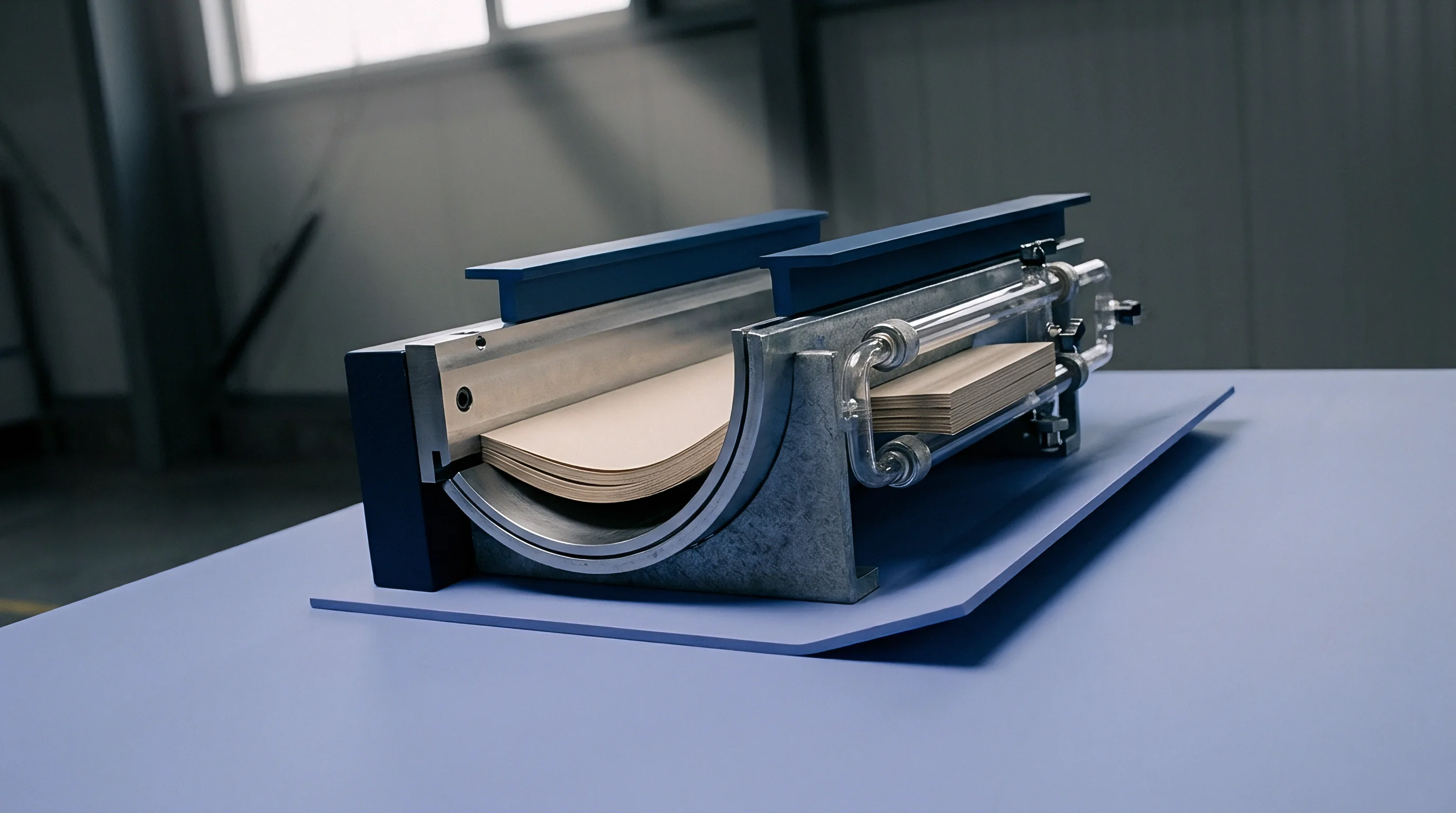
Die-cutting cylinders employ counter-pressure anvils machined with recessed channels or fitted with polyurethane matrices that receive the pushed stock. Rotary geometry dictates an angled entry and exit path, contrasting sharply with the parallel, rectilinear motion of reciprocating flatbed dies. As the male creasing rule swings through its circular arc, the leading edge of the rule engages the sheet offset from the counter-channel center.
This geometric asymmetry imposes an unbalanced lateral shear load across the board thickness prior to full bottom dead center engagement.
Surface tensile stress spikes immediately.
The channel width must accommodate the displaced paperboard volume plus the creasing rule width, calculated traditionally through static thickness multipliers. High-speed cylinder rotation complicates this clearance calculation. Polyurethane counter channels deform under frequency-dependent loads, displaying delayed recovery and localized thermal expansion after prolonged production cycles.
Steel counter cylinders maintain fixed dimensions, eliminating anvil compliance but transmitting all kinetic energy directly into the passing cellulose substrate.

When Does Nip Dwell Invalidate Static Creasability?
Short dwell durations eliminate the viscous relaxation phase that converters rely on during flatbed die creasing. In flatbed conversion, dwell times typically span 25 to 50 milliseconds, permitting stress relaxation to dissipate transverse compaction forces throughout the furnish matrix. When dwell times fall below two milliseconds in rotary setups, the viscous relaxation spectrum of moist wood fibres remains unactivated.
The board responds almost purely elastically, requiring deeper tool penetration to achieve permanent plastic deformation of the internal scores.
Steel counter channels resist web deflection.
- Channel Width Verification requires optical measuring microscopes across cylinder quadrants to confirm clearances within a twelve-micron tolerance band before mounting.
- Anvil Shore Hardness Inspection identifies elastomeric hardening across high-speed polyurethane counters where dynamic indentation exceeds 95 Shore A.
- Crease Depth Calibrations establish minimum punch values that achieve board delamination without exceeding 70 percent of total caliper.
- Rotary Synchronization Checks align cylinder pitch line velocities with the incoming web tension to eliminate scuffing shear along the crease shoulder.
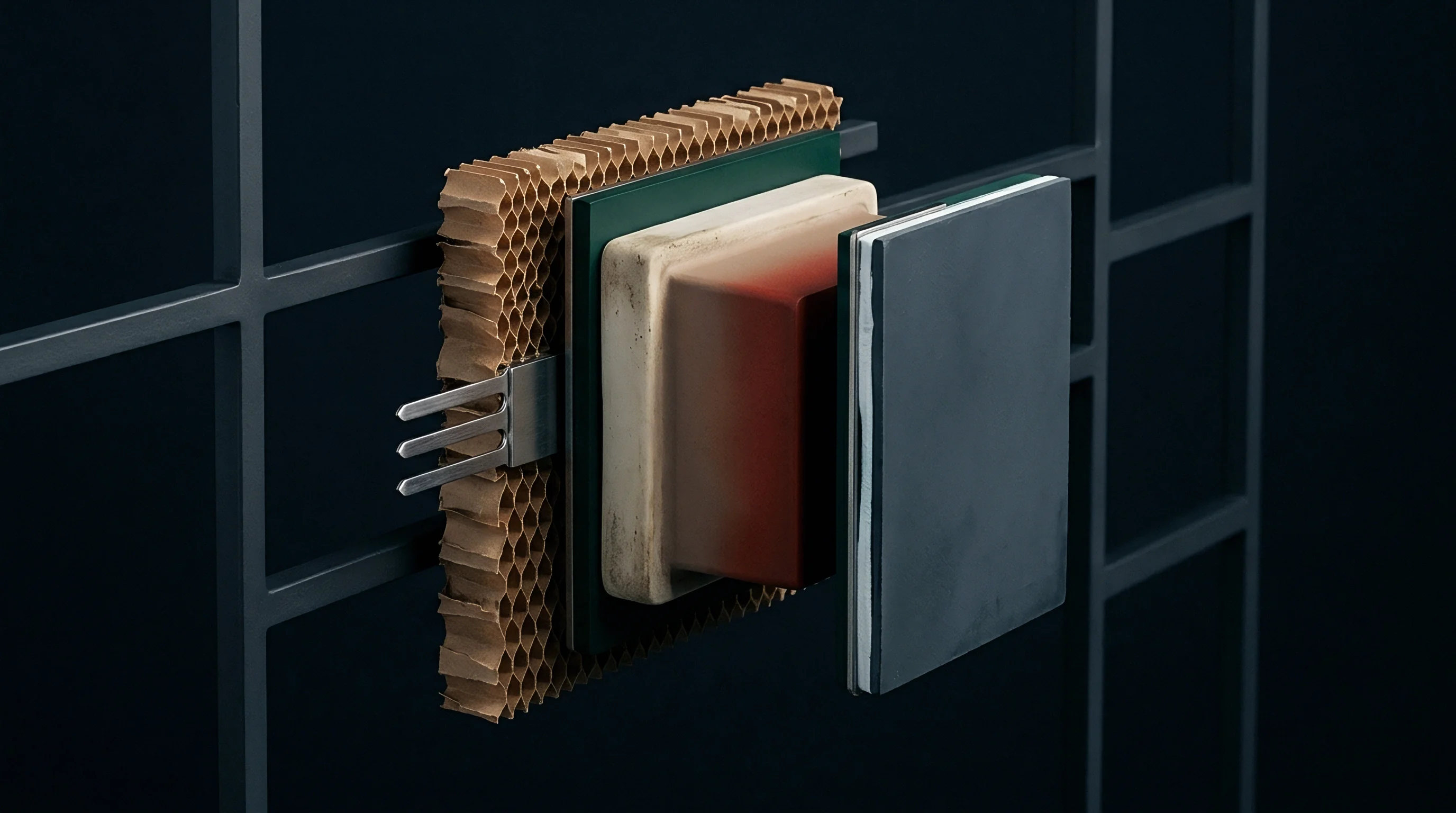
Creasing rule clearance governs the formation of the internal delamination bubble, known among carton converters as the crease bead. An undersized counter-channel restricts sideways expansion of the sheared plies, driving out-of-plane shear stress into destructive vertical compression that crushes the hollow lumens of mechanical pulp fibres. An oversized counter-channel allows the entire sheet to sag between support shoulders, failing to generate sufficient shear strain to rupture internal interfiber bonds.
Tooling manufacturers frequently contend that erratic score cracking on high-speed web presses stems entirely from poor moisture control at the board mill rather than inadequate counter-channel clearance profiles on rotary tooling sets.
Hysteresis
Oscillatory mechanical energy input during rotary conversion generates considerable internal friction within the fibre structure. The loss modulus reflects viscous energy dissipation, transforming mechanical indentation work into localized heat within the board bulk. Concurrently, the storage modulus dictates instantaneous elastic recoil.
Polymeric wood components, primarily amorphous lignin and branched hemicellulose, experience small shifts in their viscoelastic transition regions as localized temperatures rise and deformation rates escalate simultaneously.
Frictional energy dissipates through internal plies.
Dynamic mechanical thermal analysis reveals that the loss factor exhibits frequency-dependent peaks between 100 Hz and 1 kHz at converting temperatures. These frequencies match the Fourier harmonic spectrum generated by a creasing rule contacting a board surface at 500 metres per minute. The spatial distribution of this dissipated energy remains confined to the narrow shear zones bordering the creasing rule tip.
Temperature increases of 8 to 15 degrees Celsius have been recorded in the crease bead during sustained rotary runs, softening lignin binders while leaving cellulose microfibrils rigid.
Clause 7 of standard ISO 1924-3 dictates that tensile energy absorption testing must specify constant elongation rates because dynamic loading shifts apparent failure thresholds across cellulosic networks.
Internal ply delamination creates the hinge.
This localized thermal rise alters the balance between internal shear displacement and compressive yield. Softened hemicellulose allows individual fibre elements to slip past each other without extensive cell wall rupture, facilitating the creation of an ideal crease hinge under specific speed bands. If web velocities exceed this boundary, the kinetic excitation frequency moves beyond the relaxation capability of the polymer chains, re-stiffening the furnish and causing brittle interface fracture.
| Board Grade Designation | Furnish Construction | Basis Weight (g/m^2) | Storage Modulus G prime (MPa) | Loss Modulus G double prime (MPa) | Damping Factor Tan Delta |
|---|---|---|---|---|---|
| Solid Bleached Sulphate (SBS) | 100% Bleached Chemical Pulp | 280 | 310 | 34.1 | 0.110 |
| Folding Boxboard (FBB) | Bleached Chemical Plies, Mechanical Pulp Core | 300 | 245 | 39.2 | 0.160 |
| White Lined Chipboard (WLC) | Recycled Fibre Furnish, Mixed Mechanical/Deinked | 320 | 285 | 48.5 | 0.170 |
| Coated Kraft Back (CKB) | Unbleached Kraft Base, Chemical Surface | 275 | 360 | 32.4 | 0.090 |
Can Viscoelastic Relaxation Prevent Liner Rupture?
Mechanical relaxation time constants for papermaking fibres typically span from tens of milliseconds down to several microseconds. In ultra-high-speed rotary cutting units, the deformation cycle terminates before intermediate relaxation processes can relieve peak strain fields along the exterior tension zone. Strain relief relies on controlled delamination inside the middle plies.
Without prompt interior yield, the outer ply absorbs all tensile deformation, resulting in fractured coating layers and ruptured surface fibres.
High moisture lowers the shear threshold.
- Inter-Ply Cleavage Failure emerges when transverse shear forces exceed the chemical bonding threshold between virgin top liners and mechanical pulp middles.
- Compressive Buckling Rupture occurs within the bottom plies as the crease bead enters the counter channel without sufficient clearance volume.
- Diagonal Web Splitting develops from uneven tension profiles across wide rotary cylinders running paperboard webs with moisture variations above 1.5 percent.
- Brittle Surface Fracture manifests across mineral coating layers incapable of matching the instantaneous strain imposed by narrow rule radii.
The unresolved engineering challenge remains whether specialized chemical sizing agents or plasticizing additives applied at the size press can alter the dynamic relaxation spectrum of folding carton stocks without reducing finished box compression strength.

Knife
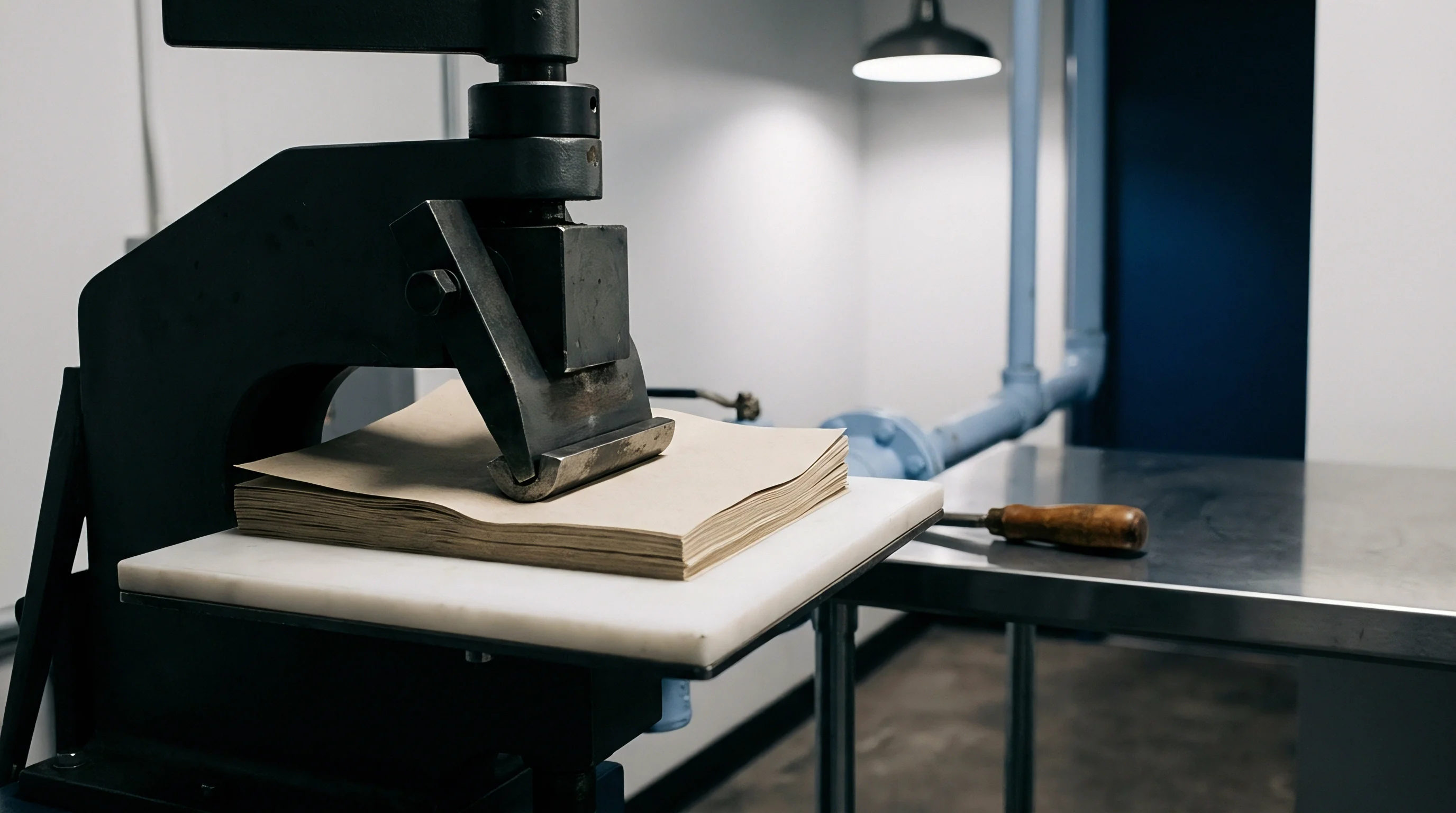
Creasing rules mounted on rotary tooling cylinders undergo relentless impact cycles that test steel metallurgy and geometric precision. A standard two-point rule possesses an imperial thickness of 0.71 millimetres, whereas three-point rules measure 1.05 millimetres. The profile geometry of the rule tip directly controls the distribution of transverse shear and normal compression.
Fully radiused rule tips distribute entering contact stresses across an arc, while flat-faced or chamfered profiles concentrate normal loads along sharp transition shoulders.
Tooling wear alters scored dimensions.
Rotary cylinders introduce eccentric mechanical wear patterns unknown in flatbed die setups. Cylinder deflection under high operating pressures produces non-uniform crease penetration across the web width, often showing lighter scores in the machine center and excessive penetration near cylinder bearers. Precision ground steel bearers mitigate center deflections, yet micro-vibrations induced by sheet entry anomalies propagate through the cylinders as mechanical noise, generating cyclical score quality variations along the converting length.
A wider creasing rule reduces peak surface tension on fragile carton coatings by distributing normal compression over a broader radial contact area.
Polyurethane anvil inserts compress rapidly.
Substrate Mechanical Thresholds under Repeated Impact
Repeated impact loading dulls rule edges and work-hardens steel counter channels over millions of cylinder revolutions. As the rule tip profile wears from a circular arc into an asymmetric flat surface, indentation kinematics shift toward compressive crushing. Mechanical pulp fibres within the interior plies lose their resilience, collapsing entirely rather than parting along shear slip planes.
This degradation elevates carton folding resistance, causing carton blanks to skew during folder-gluer transport.
Carton blanks jam packing lines.
- Creasing Rule Hardness Verification confirms tooling steel ratings between 42 and 48 Rockwell C to avoid premature shoulder flattening.
- Cylinder Bearer Pressure Monitoring maintains constant contact loads, suppressing harmonic vibration across high-speed rotational sweeps.
- Dynamic Web Tension Control stabilizes longitudinal stretch before web entry into the creasing nip zone.
- Optical Crease Bead Profiling measures fold symmetry and delamination volume within twenty minutes of reel changeovers.
Maintaining adequate crease bead formation without damaging exterior liner coatings requires operators to balance penetration depth against press speed settings directly on the production floor.


Ledger
Production economics in high-volume folding carton converting depend heavily on continuous machine uptime and minimal waste generation during high-speed runs. Unscheduled press stops caused by board splitting or carton jamming rapidly consume the operating margins gained from faster rotary die machinery. When a converter elevates rotary die speed from 250 to 500 metres per minute, hourly output doubles in theory, but scrap rates often escalate from three percent to over eight percent if score line integrity collapses under the higher strain regime.
Yield loss consumes converter margins.
Consider a pharmaceutical carton production program converting 45-tonne master rolls of 280 g/m^2 folding boxboard into finished individual cartons. At a market cost of 1,450 dollars per metric tonne, material inputs represent 65,250 dollars per production sequence. A rotary die line operating at 500 metres per minute generates approximately 180,000 carton blanks per hour across a multi-lane web configuration.
If dynamic score cracking forces an unplanned speed reduction back to 280 metres per minute, the converting plant absorbs an operational efficiency penalty that severely degrades machine hourly return rates.
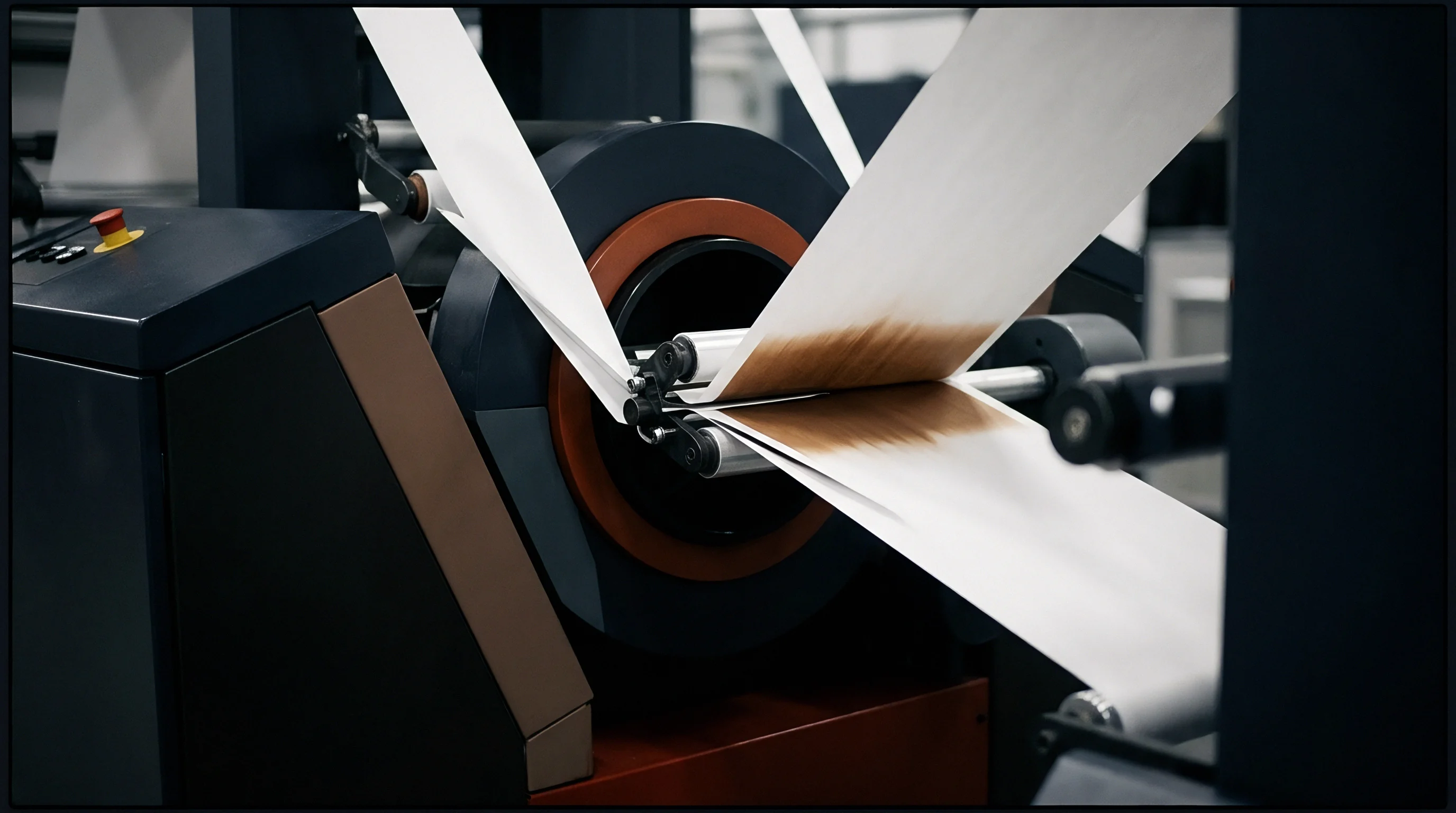
Cost Allocation Models for Substrate Upgrades
Converters facing score-line fractures frequently attempt to resolve the issue by shifting furnish specifications from economical recycled white-lined chipboard to higher-grade virgin folding boxboards or solid bleached sulphate boards. Virgin chemical pulp furnishes deliver superior tensile elongation and tear resistance, tolerating severe dynamic deformation without surface rupture. This material upgrade carries a direct cost penalty that must be balanced against converting line productivity gains and spoilage reductions.
Waste percentages multiply during trials.
| Substrate Classification | Landed Cost per Tonne (USD) | Maximum Safe Rotary Speed (m/min) | Average High-Speed Spoilage (%) | Carton Gluer Jam Rate (per 10k) | Net Blank Cost per Thousand (USD) |
|---|---|---|---|---|---|
| Recycled White Lined Chipboard | 1,050 | 280 | 7.4 | 14.2 | 16.80 |
| Mechanical Folding Boxboard | 1,450 | 450 | 3.1 | 4.5 | 18.40 |
| Solid Bleached Sulphate | 1,820 | 550 | 1.6 | 1.2 | 21.90 |
| Coated Unbleached Kraft | 1,620 | 500 | 2.0 | 2.1 | 19.75 |
Gluing lines stop at speed.
A packaging converter calculating total landed cost per delivered carton finds that the cheapest furnish does not always yield the lowest unit cost. Elevated scrap rates, combined with gluer stoppages caused by inconsistent score line bending resistance, readily erode the raw material savings of lower-tier boards. Virgin fibre furnishes provide wider operating windows under severe kinetic strain rates, permitting sustained press throughput that offsets raw material premiums.
Caliper loss degrades carton stacking.
Procurement agreements that enforce European Standard EN 20187 test conditioning while leaving high-strain dynamic crease bending resistance unmonitored allow board mills to deliver lots that meet laboratory specifications yet fail on rotary converting lines.