Mechanical Yield
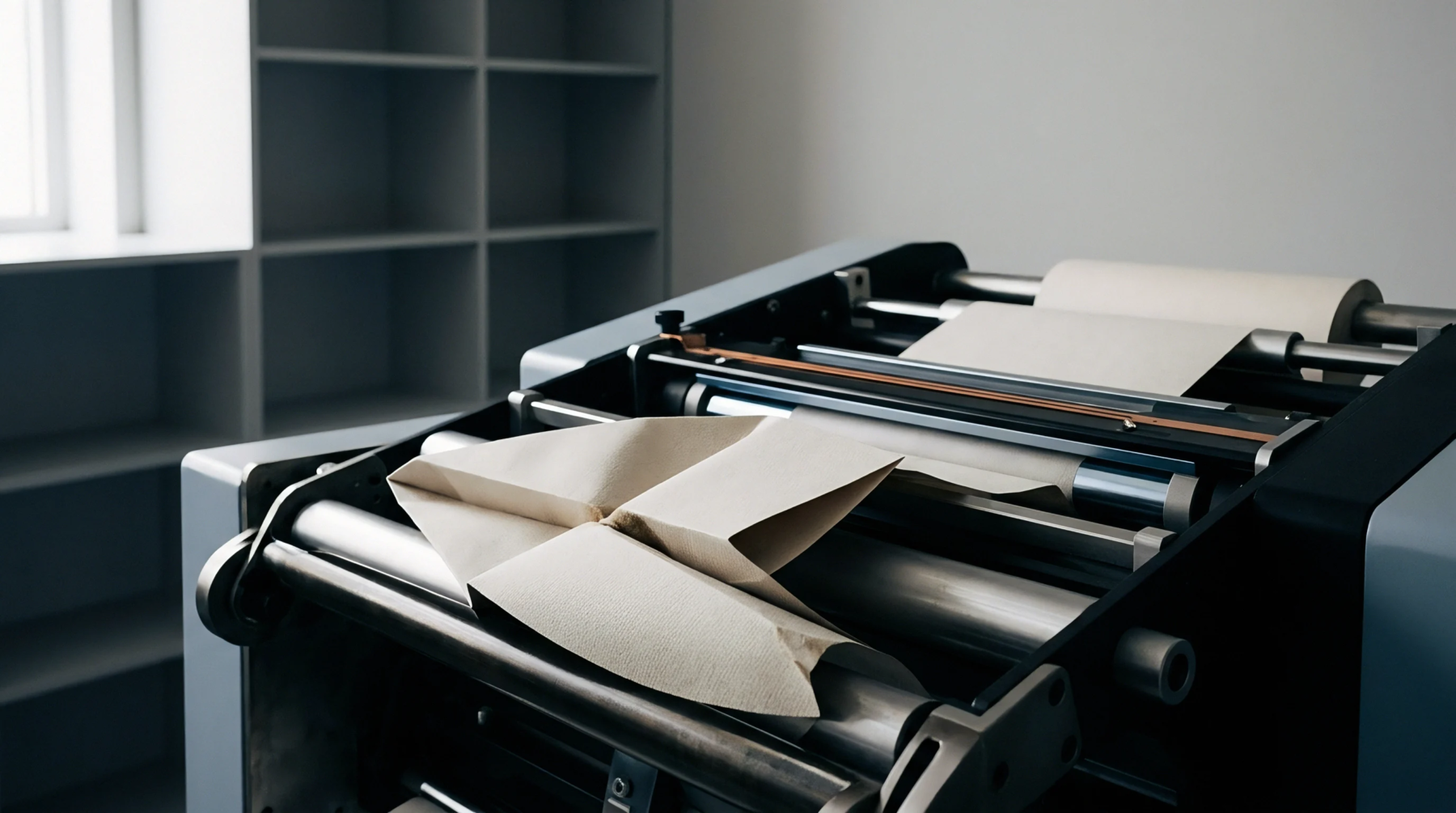
Automatic carton converters measure the reliability of high-speed high-volume production lines by tracking the folder gluer jam rate during uninterrupted runs. Substrate stiffness and moisture content directly influence this frequency of unplanned stops on industrial lines. Creasability failures and adhesive transfer inconsistencies create downstream blockages that interrupt the continuous mechanical feed.
Operators monitor board caliper variations and glue bead placement tolerances to isolate the mechanical root causes of these interruptions.
Adhesive Variance
Cold set emulsion drying times and hot melt viscosity profiles dictate whether blanks pass cleanly through compression sections without fouling the transport belts. Chemical formulations containing excessive plasticizers migrate into the paperboard matrix and weaken structural integrity under high pressure. Machine speeds exceeding four hundred meters per minute demand rapid tack development to prevent panel slippage during the final folding sequence.
Poor surface energy on laminated folding boxboard prevents adequate wet out and leads to erratic bond failure inside the delivery module.
Substrate Tolerance
Material stiffness discrepancies across different mill batches alter the dimensional stability of creases and panels moving through the pre-breaking stations. Grain direction alignment perpendicular to the running axis causes buckling when blanks encounter high friction guide rails and vacuum belts. Heavyweight solid bleached board requires wider scoring channels to accommodate displaced fibers without cracking the outer surface liner.
Accurate caliper verification at the reel unwinding stage prevents unexpected jams caused by localized caliper swelling across the web width.