Die Imposition Optimization Balancing Web Deckle Yield against Packaging Line Jam Rates
Nesting carton blanks across web deckles saves converting trim but rotates crease lines against machine grain, escalating carton erection failures at speed.

Geometry
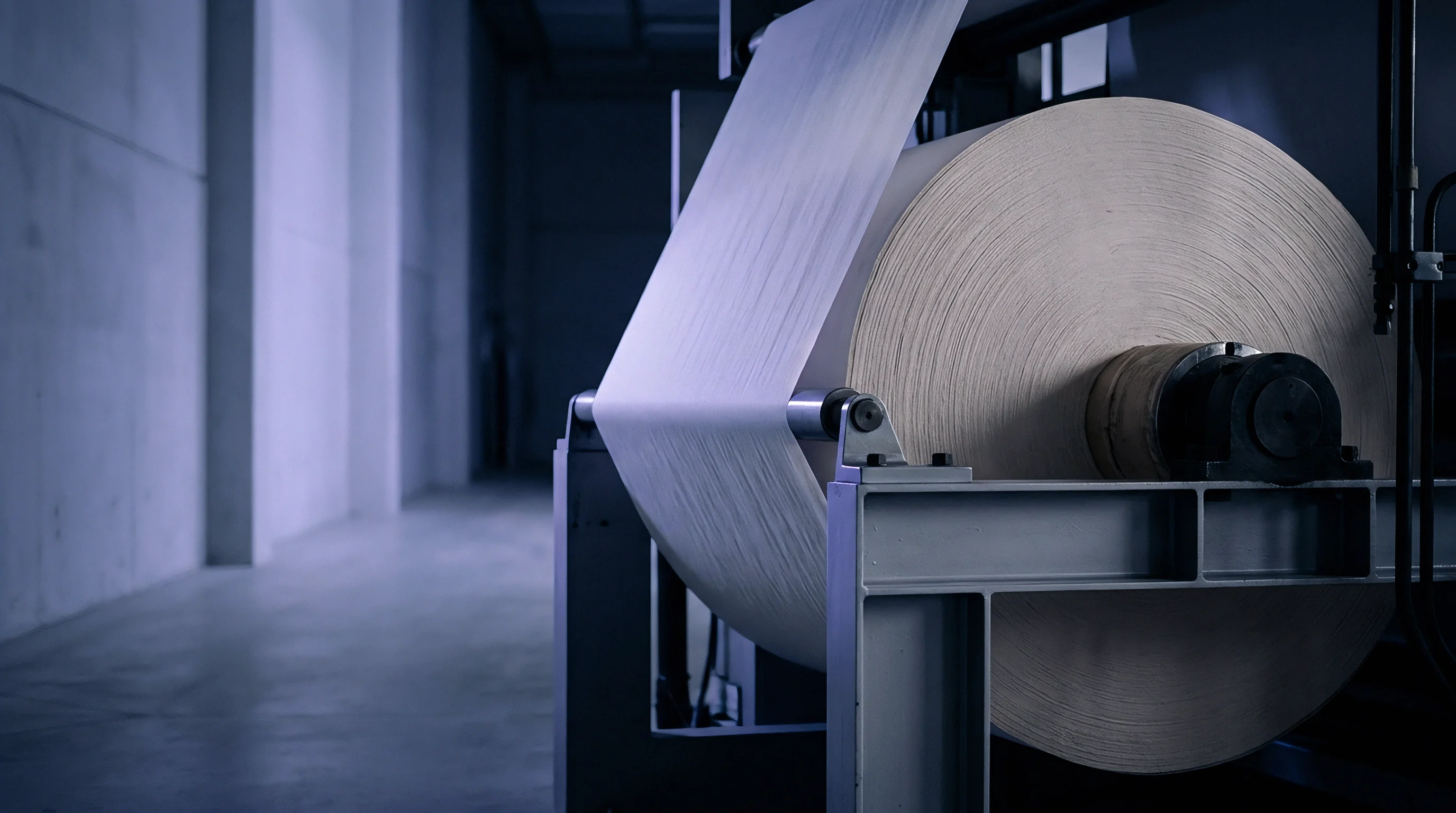
Slitter positioning across a paperboard machine reel determines parent roll cut patterns and edge trim loss before converting dies touch stock. Board mills produce parent webs at master machine deckles ranging from 2.8 to 5.6 metres. Converting carton blanks on narrow web presses or sheetfed die cutters forces converters to divide that master web into workable widths.
When blank dimensions align awkwardly against available parent reel deckles, edge trim climbs past eight percent. Web trim represents direct financial loss. Converters therefore alter carton nesting or rotate blank impositions ninety degrees to claim an extra carton out of the web width.
Die designers arrange carton profiles within the sheet layout using interlocking nesting strategies. Angling cartons or alternating top-to-tail orientations across the knife matrix closes the gutter between blanks, lifting web utilization toward ninety-five percent. This layout manipulation directly alters the relationship between the blank crease lines and the continuous fiber grain of the parent roll.
Reel slitters cannot adjust infinitely. Every change in blank rotation shifts the carton panels from grain long to grain short, exchanging trim efficiency for altered mechanical stiffness.
- Trim ribbon snapping creates lateral web wander across knife stations during high-speed unwinding passes.
- Anisotropic shrinkage distortion pulls off-axis carton panels out of parallel during infrared drying passes.
- Gutter clearance reduction invites blade deflection and micro-nicking along perimeter cut edges.
Carton blanks rotated ninety degrees across the reel save trim scrap while transferring every structural burden to carton opening mechanisms.
Rotated impositions alter the perimeter geometry of the blank relative to the roll unwind direction. Gripper edges on flatbed die cutters require twelve to fifteen millimetres of dedicated trim margin. Inline rotary die cylinders demand continuous side trim ribbons to maintain web tension through stripping stations.
Compressing these gutters below technical tolerances causes web breaks, matrix winding failures, and erratic blank delivery stacks. Blank layouts that turn panels sideways against reel run directions trade cheap trim loss for expensive downtime down the hall.

Score
Mechanical fiber alignment inside virgin and recycled paperboard sheets creates distinct bending resistance properties along orthogonal axes. Board fibers align during wet formation. The machine direction retains two to three times the bending stiffness of the cross direction under ISO 2493-1 testing.
Folding carton erectors rely on carton crease lines functioning as predictable mechanical hinges. Crease rules strike into matrix channels, breaking internal fiber bonds in the central plies while leaving outer liners intact. Fibre alignment dictates mechanical response.
Delamination destroys carton integrity.
Can Cross Direction Creasing Survive Rotary Feeders?
Anisotropic fiber networks respond with brittle fracture when bending moments run parallel to the original wet web travel. Creasing along the cross direction requires the creasing rule to rupture fibers perpendicular to the web run, producing a clean, defined hinge. Scoring parallel to the machine direction causes creasing rules to wedge between parallel fibers rather than shearing plies symmetrically.
The resulting crease displays erratic bead height, asymmetric shoulder profiles, and unpredictable folding force under TAPPI T 829 testing. Crease stiffness ratios climb from nominal levels around zero point four five up to zero point seven five.
| Substrate Grade | Caliper (µm) | MD Bending Resistance (mN) | CD Bending Resistance (mN) | MD Score Ratio | CD Score Ratio |
|---|---|---|---|---|---|
| Solid Bleached Sulfate (SBS) | 450 | 420 | 195 | 0.42 | 0.68 |
| Folding Boxboard (FBB) | 450 | 510 | 220 | 0.39 | 0.72 |
| Coated Recycled Board (CRB) | 450 | 360 | 140 | 0.48 | 0.79 |
| Uncoated Kraft Back (CUK) | 450 | 580 | 260 | 0.38 | 0.65 |
| Data measured according to ISO 2493-1 for 15-degree bending resistance and TAPPI T 829 for score stiffness ratio after 24-hour preconditioning under ISO 187 standards. | |||||
Recycled boards exhibit rapid embrittlement when crease scores run parallel to the grain. Repeated mechanical repulping shortens cellulose chains, lowering internal Scott bond strength under TAPPI T 569. When the scoring tool compresses these short fibers, the outer liner splits before the inner plies can delaminate into controlled micro-buckling zones.
High-speed cartoning machines hit these unyielding scores with rotary pick arms. Vacuum cups slip off the carton surface because the required opening force exceeds the suction seal limit.
- Matrix channel calibration matches female counter die width to board caliper plus rule thickness to prevent liner shear.
- Penetration depth adjustment sets indentation until residual board thickness reaches fifty percent of nominal sheet caliper.
- Resistance verification tests bending force on creased samples against uncreased blanks under standardized TAPPI T 829 parameters.
Cross-direction folding endurance drops below sixty double folds under ISO 5626 conditioning at twenty-three degrees Celsius and fifty percent relative humidity when scoring lines parallel the machine grain.
The exact moisture boundary where internal fiber shear shifts from plastic deformation to brittle ply detachment during sub-millisecond creasing strikes remains undefined across commercial recycled boards.

Velocity
Packaging machinery introduces severe mechanical acceleration when pulling flat carton blanks from feed hoppers into rotating flight lugs. Continuous cartoning machines operating between 300 and 600 cartons per minute permit an opening window of only forty to eighty milliseconds. During this transient phase, vacuum cups grip opposing carton panels and pull outward against crease resistance.
Speed exposes every minor crease defect. High velocity amplifies kinetic shock. Carton erecters demand predictable crease lines.

How Do Inertial Forces Distort Flaccid Panels?
High acceleration profiles generate bending moments that overpower uncreased side panels whenever carton grain runs perpendicular to the feed direction. If blank imposition places the cross direction across the main body panel, panel bending stiffness drops by more than fifty percent. The vacuum cups pull the center of the panel into an arched dome while the stubborn, grain-parallel crease line resists rotation.
The carton distorts instead of squaring. Vacuum cups fail on curled board. The leading edge misses the flight lug, wedging the blank between reciprocating guide rails.
- Vacuum cup seal failure occurs when high panel deflection prevents complete face contact with elastomer suction heads.
- Erector lug collision smashes leading carton panels when delayed squareness blocks lug entry timing windows.
- Tuck flap jam forces line stoppage when guide plows catch misaligned dust flaps during high-speed insertion.
Erector suction cups pull pinholes through unyielding carton faces whenever score resistance exceeds board panel stiffness.
Unplanned stoppages ruin line productivity. Clearing crushed board fragments from high-speed cartoning lines takes operators between three and eight minutes per event. During these stoppages, upstream blister sealers, pouchers, or bottle fillers back up, triggering automatic line clearances that scrap partially filled product.
Carton lines forced into repeated emergency stops vent compressed air, crush blanks in the flight chains, and erode shifts into unprofitable recovery drills.

Tradeoff
Calculating true manufacturing economics requires evaluating parent reel trim percentages alongside packaging line overall equipment effectiveness. Consider a standard commercial scenario involving a 50-tonne order of pharmaceutical folding cartons. Converting savings vanish under clearing costs.
Downtime charges rapidly surpass paperboard yields. The baseline stock is 350 g/m² Solid Bleached Sulfate board running on a 1,400 mm master reel width, priced at $1,650 per metric tonne delivered. The flat blank dimensions measure 180 mm in length by 130 mm in width.
The layout engineer faces two distinct imposition choices. Option A aligns the blanks on-grain, running length along the machine direction to keep main body scores perpendicular to fiber alignment. This imposition fits nine blanks across the 1,400 mm deckle with a 230 mm side trim, generating an edge trim scrap rate of 16.4 percent.
Option B rotates the layout ninety degrees to run blanks cross-grain. This rotated nesting fits ten blanks across the deckle with only 100 mm side trim, reducing edge trim loss to 7.1 percent. Option B saves 4.65 tonnes of paperboard across the 50-tonne production run, yielding an apparent material cost reduction of $7,672.
Reconciling Material Scrap against Converting Downtime
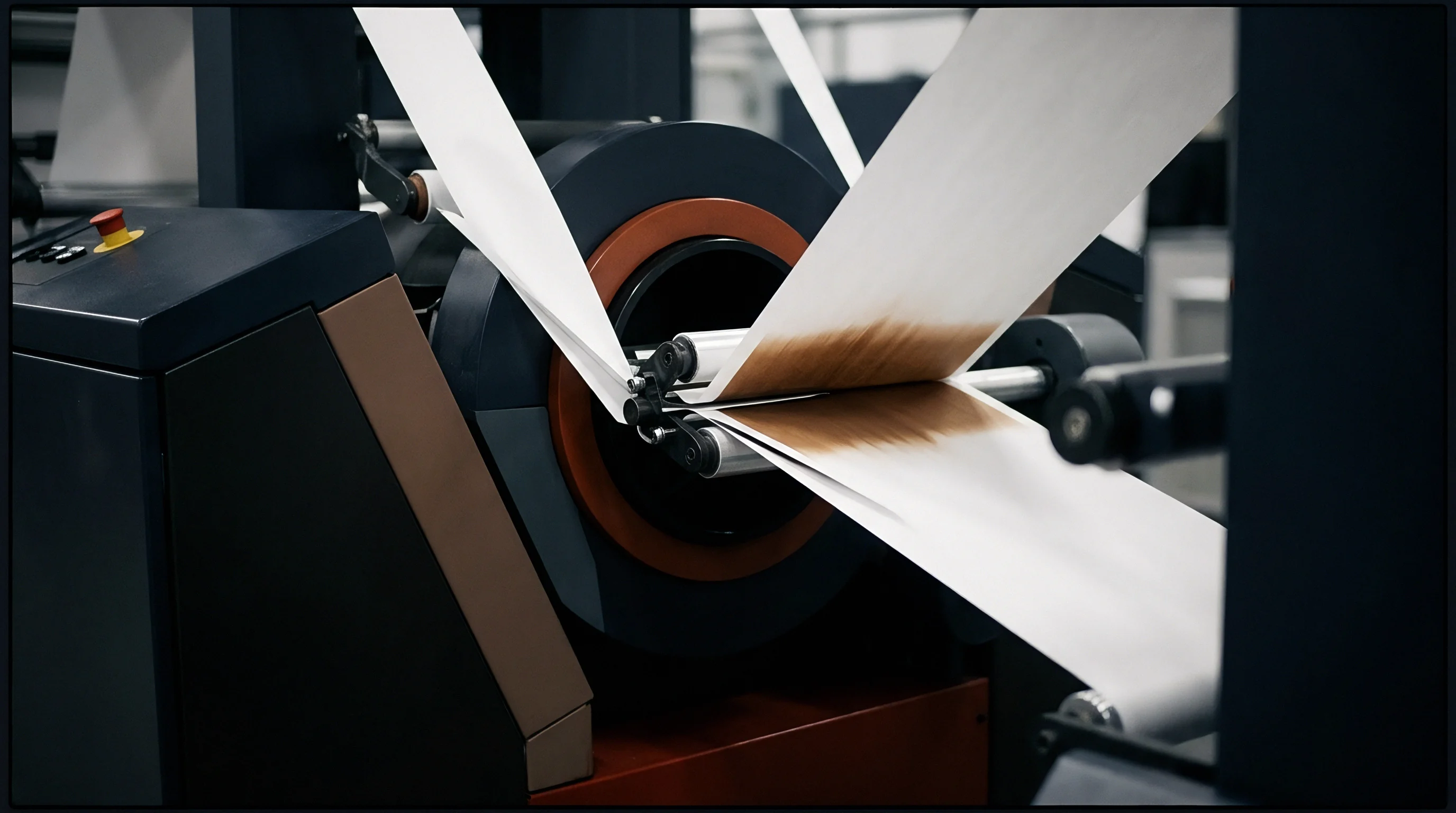
Downstream cartoner performance reverses these initial converting cost calculations once production commences at scale. The 50-tonne board order yields approximately 1,600,000 finished folding cartons. The packaging plant runs an automated cartoner at a rated speed of 400 cartons per minute, representing an operational cost of $450 per line hour.
Option A blanks exhibit an average jam frequency of 0.12 percent, causing roughly two line halts per eight-hour shift. Total cartoner downtime for the entire batch equals 2.8 hours, costing $1,260 in lost machine hours.
Option B blanks feature scores running parallel to board grain, lifting opening resistance while decreasing panel stiffness. The jam rate on the cartoner surges to 1.85 percent, translating to 7.4 jams per operating hour. With each clearance and restart cycle averaging 4.5 minutes, accumulated downtime over the production run climbs to 222 operating hours.
The direct line downtime cost reaches $99,900, obliterating the initial $7,672 substrate savings by a factor of thirteen.
| Operational Parameter | Option A: On-Grain Layout | Option B: Rotated Layout | Economic Difference |
|---|---|---|---|
| Master Web Trim Scrap (%) | 16.4% | 7.1% | -9.3% Trim Waste |
| Raw Board Consumption (Tonnes) | 50.0 | 45.35 | -4.65 Tonnes Board |
| Total Substrate Expenditure | $82,500 | $74,828 | -$7,672 Board Cost |
| Packaging Line Jam Rate (%) | 0.12% | 1.85% | +1.73% Jam Frequency |
| Total Packaging Line Downtime (Hours) | 2.8 | 222.0 | +219.2 Hours Lost |
| Packaging Line Downtime Cost ($450/hr) | $1,260 | $99,900 | +$98,640 Line Expense |
| Net Operational Impact | $83,760 | $174,728 | +$90,968 Net Cost Penalty |
Die makers routinely push for Option B configurations because press efficiency metrics reward high square-meter utilization per parent sheet. Procurement teams celebrate lower board tonnage per million cartons without tracking packaging line overall equipment effectiveness. Converting account managers repeatedly assert that press deckle efficiency represents the sole contractual yield metric within converter responsibility.


Specification
Commercial supply agreements maintain stability when procurement teams link raw board purchase orders directly to cartoning efficiency thresholds. Sourcing agreements require verified creasing tolerances. Mill certificates rarely guarantee converting performance.
Contracts that isolate print and die cutting from high-speed filling lines invite costly downstream disputes. Packaging specifications govern fiber grain orientation alongside basis weight and caliper.

Establishing Binding Grain Alignment Tolerances
Purchase contracts define structural carton axes by designating blank orientation directly on approved die layout drawings. Technical drawings specify grain direction relative to the longitudinal glue seam and main body panels. Blank delivery requirements mandate score opening force verification under DIN 55437 testing prior to pallet release.
Buyers stipulate maximum allowable score bending force ratios between zero point four zero and zero point five zero to guarantee that blanks erect cleanly under high mechanical acceleration.
DIN 55437 score ratio compliance clauses allow converters to reject board shipments that fall outside the zero point four zero to zero point five five threshold.
Incorporating DIN 55437 score ratio criteria directly into carton supply agreements binds converters to line efficiency thresholds, invalidating deckle-driven blank rotations executed without brand authorization.