
Paperboard Anisotropic Hygrothermal Expansion Mechanics in Converting Operations
Paperboard expands five to seven times more across the grain than along it, requiring precise humidity control and pass timing to maintain converting register.
Paperboard expands five to seven times more across the grain than along it, requiring precise humidity control and pass timing to maintain converting register.
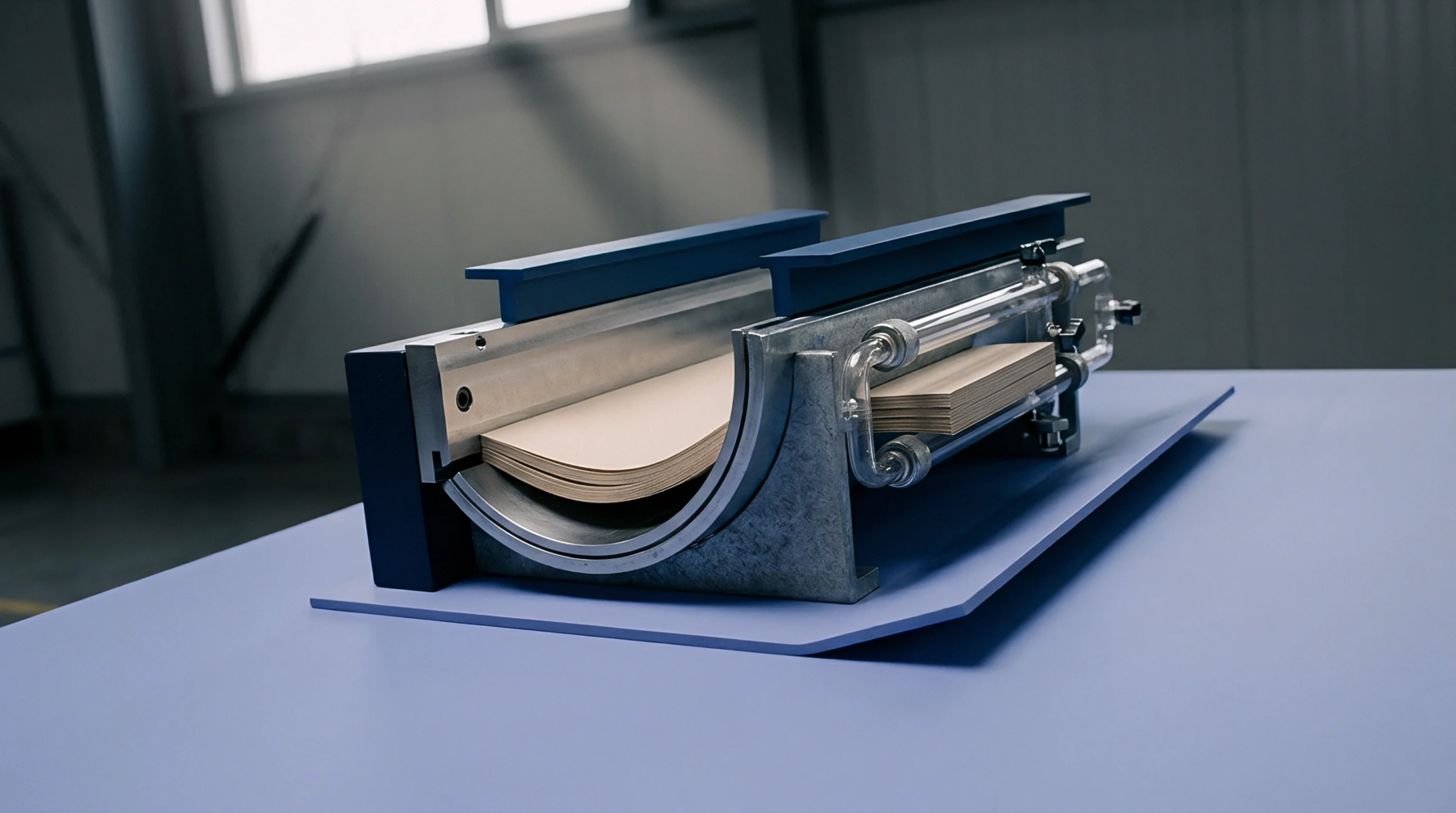
Low transverse shear modulus in foamed cores reduces effective bending stiffness and causes early compression collapse on short spans.

Optimizing rule depth and matrix channel width induces internal ply delamination, preventing top liner crack failures during high-speed carton folding.

Low-fibre recycled board requires widening female matrix channels to 1.8 times caliper and reducing penetration depth to prevent top-liner rupture.

Core shear stiffness governs folding boxboard creasing performance; correct values enable middle ply delamination while preventing outer coated liner failure.

Non-destructive ultrasonic wave attenuation evaluates paperboard crease quality by measuring acoustic energy loss caused by internal shear delamination.

Evaluating machine direction anisotropy and crease depth ratios in SBS board balances fold integrity against corner springback on high-speed cartoning lines.

Matrix depth ratios dictate counter-die selection by balancing polymer yield strain against substrate compaction to preserve layer integrity under pressure.

Cross direction score lines on solid bleached sulfate require a 50 percent crease stiffness reduction ratio achieved via a 1.8 to 2.0 times caliper matrix width.

Polypropylene lamination crease failure is prevented by expanding female matrix channel width to one point seven times board caliper plus rule thickness.

Recycled fibre shortening and hornification limit bending strain, requiring wider matrix channels and virgin top layers to prevent score cracking.
Expertise is a utility, not a secret. sentiention™ publishes its working knowledge as open reference: intelligence layer covering the materials it sources, the markets it enters, and the reference that serves both.