Fibre Length Loss across Recycling Loops and Score Cracking
Recycled fibre shortening and hornification limit bending strain, requiring wider matrix channels and virgin top layers to prevent score cracking.

Degradation
Every trip through a hydrapulper, cleaner, and press nip pushes mechanical pulp further down an irreversible physical gradient. Softwood kraft fibres entering their first papermaking loop carry length-weighted average values between 2.2 and 3.2 millimetres. By the fourth pass, high-consistency pulping shear snaps these hollow conduits across weak points in the cell wall, dropping the arithmetic mean length while fine fragments under 0.2 millimetres accumulate in suspension.
Once stock breaks down into these short segments, it can no longer redistribute localized strain when creased under pressure, causing the board to split.
Recycled furnish undergoes a fundamental structural shift as chemical and physical changes alter its cell wall matrix. When virgin cellulose dries over steam-heated cylinders during initial sheet formation, internal hydrogen bonds lock adjacent microfibrils together inside the secondary cell wall layer. Re-wetting in later recycling passes never fully restores that original swelling capacity ~ a permanent loss known as hornification.
The lumen collapses, internal wall pores seal off, and the fibre wall hardens into a rigid structure that resists conformation as the web consolidates.
Fibre Shortening Mechanics in Mechanical and Chemical Pulpers
High-shear hydrapulpers break down post-consumer waste bales through hydraulic turbulence and direct impact against rotor knives. Softwood kraft fibres, which supply basic tensile strength, fracture transversely when hit repeatedly at stock consistencies above 12 percent. Long softwood elements from Scandinavian pine or spruce lose up to 35 percent of their length-weighted average length (Lw) after five recovery passes.
Hardwood fibres from eucalyptus or birch suffer less absolute length reduction simply because they start shorter, between 0.8 and 1.2 millimetres, but their cell walls shed external microfibrils during repulping, weakening their ability to bridge micro-gaps through inter-fibre bonding.
Continuous mechanical action generates heavy loads of secondary fines ~ broken cell wall fragments, ray cells, and loose microfibrils that pass through a 200-mesh screen in fraction analysis. Fines alter drainage dramatically. While primary fines from virgin wood help establish initial bonding, secondary fines from recycled stock are essentially rigid, hornified debris.
These fragments settle between longer structural fibres without forming strong hydrogen bonds, expanding total surface area and consuming chemical additives while adding no shear resistance to the folded sheet.

Hornification and Inter-Fibre Hydrogen Bonding Capacity
Drying paper webs down to target moisture levels between 6 and 8 percent forces lumens to collapse and microfibrils to aggregate. Removing water brings adjacent hydroxyl groups on cellulose chains close enough together to form tight, covalent-like hydrogen networks. Hydrodynamic re-wetting during repulping breaks only a fraction of these intra-fibre bonds.
Water retention value testing under ISO 23714 tracks the resulting loss directly: virgin unbleached softwood kraft usually measures 1.6 to 1.8 grams of water per gram of dry fibre, but after six repulping cycles that figure drops below 0.85 grams per gram.
Stiff, hornified fibres resist flattening under wet-end presses, reducing total bonded area throughout the sheet volume. Page’s equation models this balance between individual fibre strength and inter-fibre bond density: when active contact area shrinks, overall sheet strength falls regardless of how intact individual cell walls remain. If a die-cutter strikes a score line in board with compromised contact area, rigid bonds snap cleanly under tensile load instead of sliding or distributing stress through micro-yielding.
ISO 1924-2 tensile index drops by 22 percent after four wet-slushing cycles when conditioned at 23 C and 50 percent relative humidity.
Fibre shortening and hornification combine to degrade the board’s strain-to-failure performance. In virgin chemical pulp, long flexible fibres yield plastically under local tension, redistributing stress across thousands of contact points. In heavily recycled board, short rigid segments pass stress across a much smaller contact area.
Tensile energy absorption under ISO 1924-3 falls by over 40 percent between cycles one and five, leaving surface fibres vulnerable to snapping along the crease line as the outer liner is pulled around a folding mandrel.
Dry zero-span tensile testing to ISO 15361 isolates intrinsic fibre strength from inter-fibre bond performance. Laboratory data shows individual fibre strength drops only modestly over recycling loops ~ losing roughly 10 to 15 percent of ultimate axial load capacity across six cycles. The main driver of sheet failure is the collapse of inter-fibre contact area coupled with severe length reduction.
Zero-span wet tensile measurements across mixed waste streams show network strength falling off sharply, confirming that inter-fibre adhesion degrades far more than the underlying cellulose polymer chains.
Mills running 100 percent OCC or mixed municipal waste attempt to recover lost bonding through mechanical refining. Low-consistency refining at 3 to 5 percent solids uses shear forces to re-hydrate hornified fibre walls and generate new surface microfibrils, but the process also cuts fibres that are already short. Passing recycled stock through disc refiners drives up Schopper-Riegler wetness without restoring length-weighted average length.
The mill essentially trades sheet bulk and wire drainage speed for a marginal gain in dry burst strength, leaving the board unusually prone to score cracking during converting.
Matching virgin stock on total sheet tensile index does not guarantee structural equivalence, because static tensile resistance cannot substitute for dynamic flexural strain capacity along a score line.

Hinge
Turning flat paperboard into a three-dimensional carton requires controlled mechanical deformation along set crease lines. Scoring creates a deliberate localized damage zone ~ an internal mechanical hinge that lets the board bend 90 or 180 degrees without breaking. For the score to work, internal plies must delaminate cleanly while top and bottom outer plies stay intact.
When recycled stock loaded with short, hornified fibres undergoes this fold, tension on the outer face easily exceeds the board’s diminished strain limit, tearing the surface open into an exposed crack.
Stress distribution along the score follows classic beam bending mechanics, modified by transverse shear delamination. As the male creasing rule pushes paperboard into the female matrix channel, the sheet encounters three distinct force vectors: tension on the outer convex surface, compression on the inner concave surface, and horizontal shear within the central core plies. Multi-ply cartonboards rely on core delamination to absorb that displacement energy.
Recycled core plies, however, fail to shear evenly; stiff hornified fibres transfer stress straight through the Z-axis, forcing the outer liner to take on all the elongation.

Stress Distribution across the Score Line
Outer liner tension during a 90-degree fold increases with sheet thickness and decreases as the fold radius widens. Theoretical strain on the outermost cellulose fibres reaches anywhere from 5 to 12 percent depending on rule geometry. Virgin softwood chemical liners can stretch 6 to 9 percent before failing, providing sufficient margin to handle the fold.
Recycled liners built from short furnish fail at less than 2.5 percent elongation, causing outer tension to tear the sheet apart.
On the inside of the bend, compression causes local micro-buckling in the inner plies. In virgin sheets, flexible lumens collapse and plies separate along microscopic planes, forming a smooth interior bulge that relieves stress on the outer face. Recycled stock lacks that interior yield.
Short, stiff fibres resist controlled micro-buckling, building up a dense compression block instead. That block acts as a solid fulcrum, focusing tensile strain on the outer liner and driving micro-fissures through the coating layer into the fibrous base stock.

Delamination Shear and Ply-Bond Dynamics
Clean ply separation preserves the outer surface during creasing. Multi-ply boards like coated recycled board (CRB) or coated news back (CCNB) combine three to five distinct layers formed on separate wet ends or multi-channel headboxes. ISO 15754 Z-directional tensile testing measures how well these layers stay attached.
Effective scoring requires Z-span bonding strong enough to resist flat compressive loads, yet weak enough to shear locally under matrix creasing forces.
Fibre shortening undermines Z-directional shear performance across the core. Short recycled fibres provide weak Z-axis anchoring across layer interfaces during wet consolidation. To maintain basic sheet stiffness, mills add wet-end starches and synthetic strength agents, but these additives make core bonding brittle.
Under creasing forces, the core plies fail to shear gradually across multiple micro-planes; they give way in a single transverse crack, directing concentrated stress into the outer liner.
| Property and Test Standard | Virgin Softwood Kraft | Loop 1 (Unbleached OCC) | Loop 3 (Mixed Waste) | Loop 6 (De-Inked Pulp) |
|---|---|---|---|---|
| Length-Weighted Avg Length Lw (mm) | 2.85 | 2.20 | 1.55 | 0.95 |
| Fines Content (% under 0.2mm) | 4.2 | 8.5 | 16.8 | 28.4 |
| Water Retention Value (g/g) | 1.75 | 1.40 | 1.05 | 0.78 |
| Zero-Span Tensile Index (Nm/g) | 165.0 | 152.0 | 138.0 | 118.0 |
| Tensile Energy Absorption (J/m²) | 145.0 | 110.0 | 72.0 | 41.0 |
| Z-Directional Tensile (kPa) | 480.0 | 410.0 | 320.0 | 210.0 |
Coated board introduces another failure mode because mineral coatings and underlying fibre substrates have very different mechanical stiffnesses. Pigmented coatings made with calcium carbonate, clay, and latex binders stretch less than 1.5 percent before cracking. When a short-fibre recycled substrate stretches under tension, the brittle coating cracks before the base fibres yield.
Micro-cracks in the coating then propagate directly into the top liner, appearing as white lines along printed fold edges.
Grain orientation influences this degradation. Scores run parallel to the machine direction (MD) force the fold to rely on cross-direction (CD) tensile strain capacity and inter-fibre bond shear. Because paper machines align fibres predominantly in the machine direction during formation, CD elongation is naturally higher, though inter-fibre bonding along MD lines is lower.
Scores placed perpendicular to the machine direction force stiff MD fibres to bend across their long axes; short, hornified MD fibres snap under cross-bending, producing severe cracks along transverse box edges.
Moisture content alters score dynamics significantly. Stiff recycled fibres turn increasingly brittle when board moisture falls below 5 percent. At 3 percent moisture, inter-fibre hydrogen bonds fail to yield plastically, lowering tensile energy absorption and turning controlled shear delamination into brittle fracture.
Higher moisture levels ~ around 7 to 8 percent ~ act as a plasticizer inside amorphous cellulose regions, allowing short fibres to slide past one another without micro-fracturing under the creasing rule.
Deep scores formed in recycled stock hold higher residual elastic stress than identical creases in virgin chemical pulp. Once released from the die-cutter, the bent board tries to spring flat. When automatic packaging lines force these high-rebound cartons into square shapes, constant mechanical pressure sits on the score lines, opening cracks wider over time.
Thick substrates require proportional internal delamination zones to bend cleanly. A 500-micrometre recycled board needs three or four separate delamination planes across its thickness to distribute bending strain safely. Short-fibre furnishes cannot support multiple delamination planes; their low internal shear strength collapses into a single fracture line, making the board fold like a rigid plate rather than a laminar spring.
Low Z-directional bond strength in recycled cores prevents clean score formation when converting speeds exceed 300 sheets per minute.

Nip
Precision creasing requires close mechanical alignment between the male rule on the cutting die plate and the female matrix channel on the anvil. Press operators setting up recycled board must adjust die parameters to accommodate the lower compliance of short-fibre stock. Running recycled board through standard virgin setups causes immediate liner failure, cracking, or score rollover.
Configuring female matrix dimensions involves balancing channel width (W) and depth (D) against board caliper (t) and male rule width (R). Standard matrix formulas for virgin folding boxboard (FBB) calculate channel width as 1.5 times board caliper plus rule width: W = 1.5t + R. For recycled boards with high fines ratios and short fibres, operators open up the channel to relieve tension on the outer liner, adjusting matrix width to between 1.7 and 1.9 times board caliper plus rule width: W = (1.8 × t) + R. Widening the channel reduces peak elongation strain on the outer liner during rule entry.
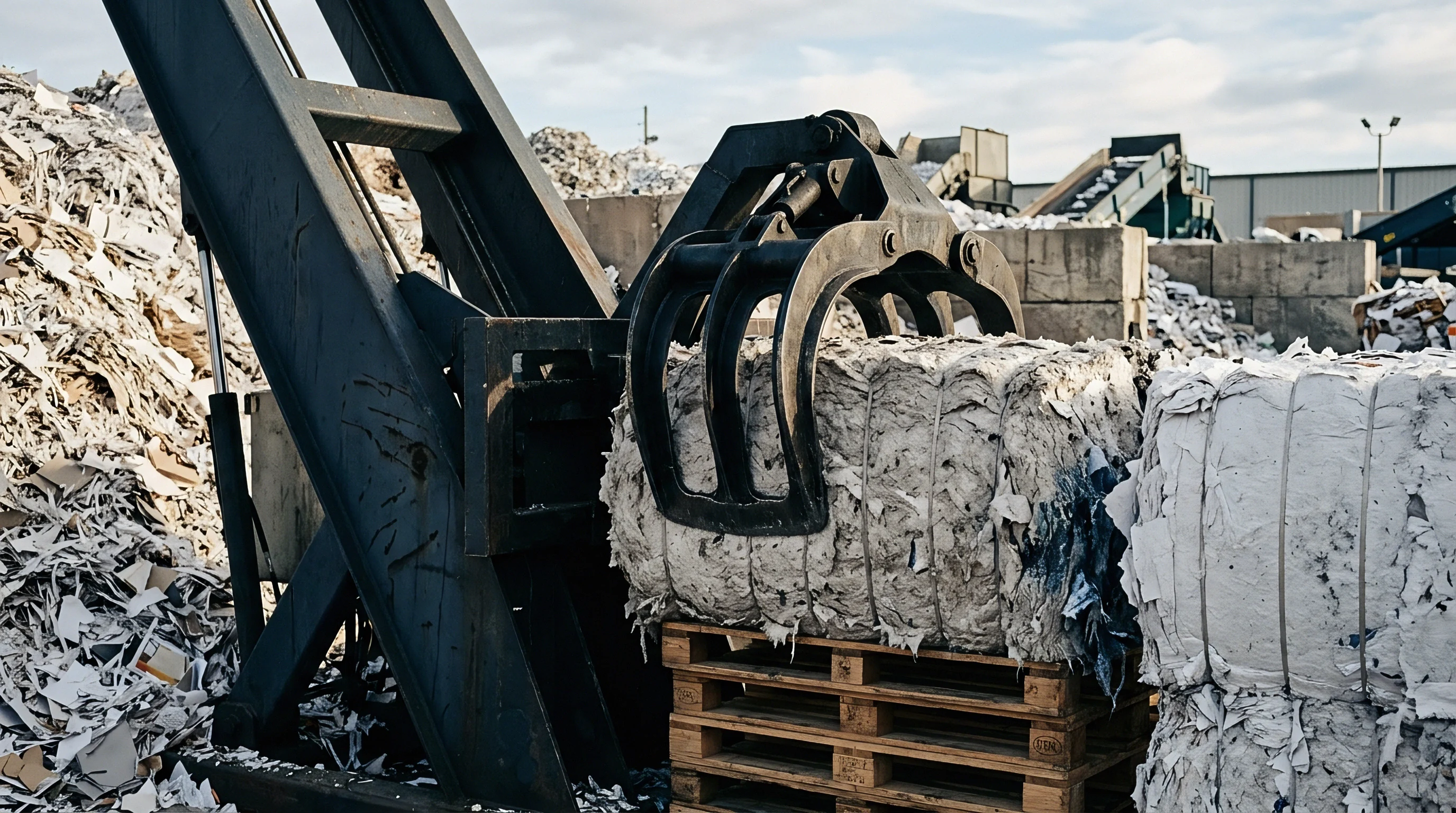
Creasing Rule Geometry and Matrix Channel Matching
Rule tip profile governs initial stress concentration across the board. Standard creasing rules feature a fully rounded tip radius equal to half the rule thickness. Striking short-fibre recycled substrates with sharp rule edges cuts surface fibres instead of forming them into the matrix channel.
Operators use broad-radius rules or trapezoidal score profiles to distribute downstroke impact over a wider area. Penetration depth must be calibrated to hundredths of a millimetre, as excessive penetration shears the bottom liner before folding begins.
Matrix channel material determines tool longevity over long production runs. Phenolic resin channels and steel counter-plates provide rigid channel walls that hold tight tolerances under continuous impact. Press-paste counter-lines and paper matrix strips wear down at speed, rounding off critical shoulders.
As shoulders deform, recycled board slips laterally during rule entry, leading to asymmetrical scoring, uneven core shear, and score cracking along an off-center crease.
- Liner Splitting Under Impact occurs when the male rule width is too narrow for the specified board caliper, cutting surface fibres during penetration.
- Core Delamination Breakdown results from shallow matrix channel depths that compress interior plies into a solid, unyielding mass instead of allowing ply separation.
- Shear Fluting and Rollover happens when female matrix channels are excessively wide, allowing the board to buckle irregularly without establishing a defined hinge line.
- Coating Flaking Along Creases arises from sharp matrix channel shoulders that shear brittle mineral coatings away from short-fibre recycled substrates.

Board Moisture and Ambient Conditioning Atmosphere
Board moisture serves as a primary operational lever during converting. Stock stored in unheated winter warehouses can drop below 35 percent relative humidity, pulling internal sheet moisture below 4.5 percent. Cold, dry recycled fibres lose what plastic yield capacity they have left; when die-cutters strike dry board, the outer liner cracks regardless of matrix width.
Converting plants maintain pressrooms at 23 C and 50 percent relative humidity under ISO 187 conditioning guidelines to keep sheet moisture between 6.5 and 7.5 percent.
Crease stiffness testing under BS 7484 or ISO 2493-2 measures folding resistance directly. The test instrument records the torque needed to bend a creased sample to 90 degrees and compares it against the bending resistance of uncreased board. That ratio ~ creased bending stiffness divided by uncreased stiffness ~ defines creasing efficiency.
Uncreased recycled board is stiff due to high sheet density and chemical additives, but its creased stiffness drops unpredictably when internal plies fail to shear cleanly. Target crease stiffness ratios for high-speed cartoning lines run between 40 and 50 percent; recycled boards with damaged short fibres routinely exceed 65 percent, causing jams in automatic carton feeders.
Standard purchasing contracts mandate stock delivery at 7.0 plus or minus 0.5 percent moisture content, rejecting lots under 5.5 percent due to score cracking risks.
Press speed increases strain rate sensitivity in short-fibre recycled stock. Modern flatbed die-cutters run up to 9,000 sheets per hour, while rotary units reach 350 metres per minute. At those speeds, rule impact occurs in milliseconds.
Shortened recycled fibres cannot redistribute rapid strain across their inter-fibre networks fast enough, and high strain rates induce brittle micro-fractures in the liner. Press operators drop production speeds by 15 to 20 percent on low-grade recycled lots to prevent cracking, which cuts directly into planned margins.
Press adjustments can only do so much when stock suffers from severe mechanical fibre damage. An 80 percent recycled boxboard job produced two full shifts of continuous score line failure after stock arrived at 3.8 percent moisture ~ the sheet simply would not hold a crease, even after widening the female matrix by 0.3 millimetres.

Assay
Laboratory testing of recycled board requires analytical methods that separate physical fibre dimensions from bulk mechanical properties. Relying solely on standard basis weight and caliper specifications leaves converters exposed to unexpected score failures. Comprehensive stock evaluation combines automated optical fibre length analysis, wet classification, and directional tensile testing to establish runnability limits before committing material to high-speed lines.
Automated optical analyzers operating under ISO 16065-1 evaluate thousands of diluted pulp fibres in a flow cell using high-resolution digital imaging. The system calculates arithmetic average length (Ln), length-weighted average length (Lw), weight-weighted average length (Lz), and total fines percentage. Length-weighted metrics provide the most reliable prediction of score cracking performance because they weight structural long fibres by their actual mass contribution.
Stock showing an Lw below 1.4 millimetres cannot maintain score integrity on multi-ply cartons without a heavy virgin top liner.
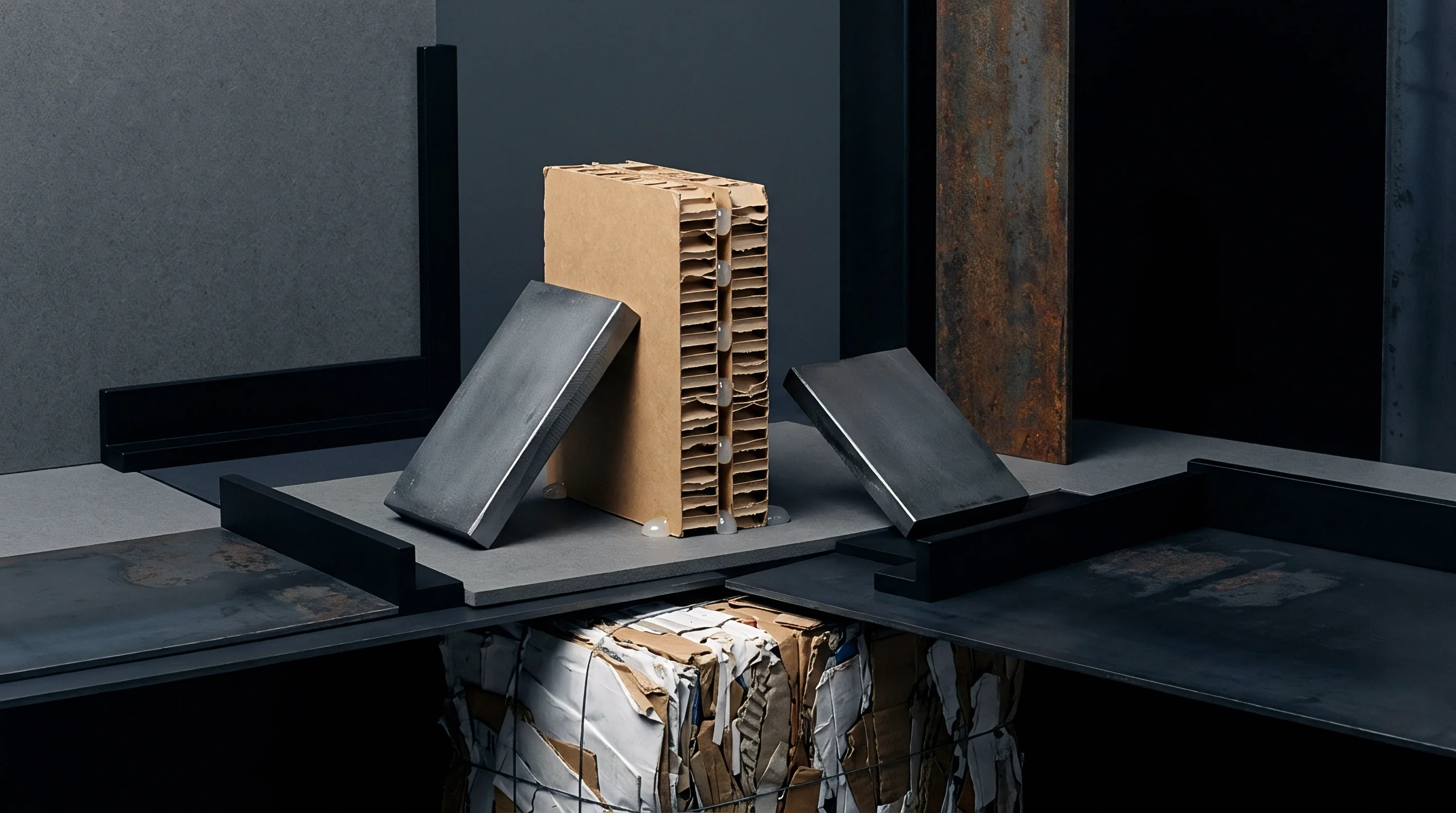
Laboratory Fractionation and Optical Morphology Analysis
Bauer-McNett wet classification, governed by TAPPI T233, separates pulp furnishes into distinct length fractions using cascaded mesh screens (typically 16, 30, 50, 100, and 200 mesh). Running recycled furnish through a Bauer-McNett test shows the true mass distribution of structural elements. The R16 screen catches the longest softwood fibres, which are essential for Z-directional toughness and outer liner stretch.
A healthy recycled furnish maintains at least 25 percent R16 retention; as recycling loops degrade the pulp, R16 retention falls below 12 percent while the P200 pass-through fraction (fines and ash) climbs past 30 percent.
Schopper-Riegler testing (ISO 5267-1) and Canadian Standard Freeness testing (ISO 5267-2) measure drainage rates in diluted pulp slurries. Low freeness readings indicate heavy refining or elevated fines levels. Recycled stock testing above 45 SR drains slowly on the paper machine wire, forcing mills to reduce line speeds or add drainage chemicals.
Slow-draining recycled furnish produces dense, tightly matted sheets with poor Z-directional compliance, raising the risk of score cracking during converting.
| Test Parameter | Standard Method | Sample Conditioning | Acceptable Threshold (Recycled) | Failure Indicator |
|---|---|---|---|---|
| Optical Fibre Length (Lw) | ISO 16065-1 | Aqueous slurry, 0.01% solids | Greater than 1.45 mm | Less than 1.20 mm |
| Zero-Span Tensile Index | ISO 15361 | 23 C, 50% RH (ISO 187) | Greater than 130 Nm/g | Less than 110 Nm/g |
| Water Retention Value | ISO 23714 | Centrifugal 3000g, 30 min | Greater than 1.10 g/g | Less than 0.85 g/g |
| Folding Endurance (Schopper) | ISO 5626 | 23 C, 50% RH, 1.0 kg tension | Greater than 50 double folds | Less than 15 double folds |
| Score Bending Resistance | ISO 2493-2 / BS 7484 | 23 C, 50% RH, 15-degree fold | Ratio less than 50% | Ratio greater than 65% |
Zero-Span Tensile and Folding Endurance Metrics
Zero-span tensile testing uses specialized clamping jaws that meet with zero distance between them. By removing unbonded fibre length from the measurement, this method isolates intrinsic fibre network strength. Comparing dry zero-span tensile index (ISO 15361) against short-span tensile index (ISO 1924-2) yields the bonding index ratio: Bonding Index = Tensile Index / Zero-Span Tensile Index.
A ratio dropping below 0.45 indicates severe bonding failure caused by hornification and surface contaminants.
Schopper folding endurance testing under ISO 5626 subjects paper strips to continuous double-folding under constant tension until failure, recording the total double folds achieved. Standard virgin kraft easily withstands over 1,500 double folds, whereas recycled boxboard often fails before reaching 30. The Schopper test serves as an early failure indicator: stock folding fewer than 15 times will crack along primary score lines on automatic folder-gluers.
- Sample preparation requires conditioning board sheets at 23 C and 50 percent relative humidity for a minimum of 24 hours in accordance with ISO 187 specifications.
- Specimens are die-cut into 15-millimetre wide strips along both machine direction and cross direction axes, avoiding damaged edges.
- Optical morphological analysis measures total length distribution, weighted average length, cell wall coarseness, and fines ratio from a representative 1-gram pulp specimen.
- Zero-span tensile clamping anvils clamp the specimen at 0.6 MPa pressure to determine maximum intrinsic fibre load capacity.
- Bending stiffness gauges record initial resistance to 15-degree deflection, followed by scoring line force deflection curve recording.
- Data integration software calculates bonding index ratios, crease stiffness efficiency percentages, and tensile energy absorption totals to generate stock qualification certificates.
Double-fold counts dropping below 15 on Schopper testing predict immediate outer liner fracture during automatic folder-gluer setups.
Mill test reports frequently highlight Mullen burst strength (ISO 2758 / ISO 2759) as evidence of sheet quality. Burst testing applies hydraulic pressure through a rubber diaphragm to measure multi-directional tensile resistance, but high burst figures can be engineered artificially by adding starch to short-fibre recycled stock. Starch elevates hydraulic burst numbers while making the sheet brittle.
Relying on Mullen burst to clear board for scoring routinely leads to failure, with high-burst sheets shattering along die-cut crease lines.
The remaining analytical challenge lies in establishing how real-time micro-tomography can map micro-delamination networks inside recycled board layers during high-speed creasing operations without destroying the sample.

Specification
Procuring paperboard capable of taking sharp score lines without cracking requires clear contract specifications. Relying on generic trade designations like Coated Recycled Board (CRB) or Folding Boxboard (FBB) leaves buyers vulnerable to mill substitutions where short, degraded fibre replaces long chemical pulp. Sourcing engineers write precise structural parameters into purchase agreements, defining layer builds, minimum fibre lengths, and chemical strength bounds.
Multi-ply architecture provides structural defense against score cracking while incorporating post-consumer content. Constructing boxboard with an asymmetric layer layout keeps degraded recycled pulp isolated within core plies. The top liner, which takes peak bending tension, requires 100 percent virgin chemical pulp or high-grade recycled furnish reinforced with long softwood kraft.
The back liner needs sufficient strain capacity to prevent flaking under compressive folds, while middle core plies supply bulk using lower-cost recycled furnish, relying on controlled shear to protect outer layers.
Multi-Ply Furnish Architecture and Top-Layer Selection
Top liner weight must scale with overall sheet caliper. On a 450-micrometre folding boxboard, a bleached chemical softwood top layer needs a minimum grammage of 60 grams per square metre to maintain tensile energy absorption. Reducing top layer weight to 40 grams per square metre exposes underlying short-fibre recycled plies to surface tension, allowing micro-cracks to propagate through the thin virgin surface.
Purchase specifications should set top-layer length-weighted average fibre length (Lw) at a minimum of 2.1 millimetres.
Recycled board grades like GD2, GT2, or white-lined chipboard substitute de-inked pulp (DIP) or sorted office paper (SOP) for virgin chemical pulp. De-inked pulp has shorter fibres than virgin softwood, but retains better bonding capacity than raw OCC or mixed municipal waste. Contracts specifying GD2 recycled board should cap post-consumer OCC in the top liner at 0 percent, confining mixed recycled streams strictly to core plies.
- Furnish Composition Bounds define precise ratios of virgin chemical softwood, de-inked chemical hardwood, and post-consumer recycled waste allowed per individual ply layer.
- Length-Weighted Fiber Minimums mandate minimum Lw values for top and bottom liner plies measured via ISO 16065-1 optical analysis.
- Crease Efficiency Parameters cap maximum acceptable creased-to-uncreased bending stiffness ratios at 50 percent under ISO 2493-2 testing.
- Moisture Tolerance Windows restrict delivered pallet moisture drift to between 6.5 and 7.5 percent absolute moisture under ISO 287 protocols.
- Z-Directional Bond Limits set minimum internal bond strength thresholds to guarantee progressive shear delamination inside the creasing matrix.
Chemical Strengthening Additives and Internal Sizing
Mills add chemical strength agents to compensate for fibre shortening and hornification in recycled furnishes. Cationic potato starch added at the wet end boosts inter-fibre hydrogen bonding by depositing positively charged polymer chains onto negatively charged cellulose surfaces. Starch additions up to 1.5 percent dry weight improve tensile and burst indices, but exceeding 2.0 percent starch introduces severe matrix brittleness, lowering strain-to-failure limits and worsening score cracking during die-cutting.
Synthetic dry strength resins like glyoxalated polyacrylamide (GPAM) and amphoteric polyacrylamides (PAM) supply targeted strength without hardening the sheet. GPAM resins form reversible covalent bonds with cellulose hydroxyl groups as the web dries, boosting dry tensile energy absorption and internal ply bonding while maintaining network flexibility. Adding 0.3 to 0.5 percent GPAM resin to recycled core furnishes improves Z-directional shear, supporting clean delamination along crease lines.
Microfibrillated cellulose (MFC) represents a major advancement for recycled board performance. MFC consists of nanoscale cellulose fibrils stripped from wood pulp through high-pressure homogenization. Adding 2 to 4 percent MFC to recycled top liner furnishes creates an interconnected web across short fibres, raising tensile strength, surface smoothness, and strain-to-failure limits simultaneously.
This dense micro-network prevents micro-cracks from propagating through coatings into the base stock during tight folding.
Internal sizing agents like alkyl ketene dimer (AKD) and alkenyl succinic anhydride (ASA) control moisture penetration into the fibre matrix. Over-sizing recycled board keeps ambient moisture out, but excess hydrophobic agent prevents water-soluble strength resins from bonding at the wet end. Procurement specifications should set Cobb 60 water absorption (ISO 535) between 25 and 35 grams per square metre on printed liners to balance ink holdout with mechanical flexibility.
Incorporating 3 percent microfibrillated cellulose into recycled top liners elevates strain-to-failure limits to equal virgin hardwood chemical pulp performance.
Purchasing contracts require formal mill certificate validation tied to financial penalties. Mill test reports presenting a single average value across an entire production reel mask cross-machine variation. Specifications should mandate that certificates report standard deviations across ten sampling points per reel.
Delivered board lots showing parameter deviations greater than plus or minus 5 percent from target bands should trigger lab re-testing at the mill’s expense.
Procurement contracts can stipulate that any board lot delivered with an average optical fibre length below 1.40 millimetres on top-ply pulps incurs an automatic 15 percent price penalty to offset die-cutter slowdowns.


Landed
Comparing board stock solely on initial mill invoice price per dry tonne produces misleading financial figures. Recycled board grades cost less per tonne than 100 percent virgin chemical pulp boards, but lower runnability, higher scrap rates, and score cracking liabilities alter the real economic yield. Calculating true landed cost requires tracking performance from raw paperboard procurement through carton converting to end-of-life Extended Producer Responsibility (EPR) fees.
Base price gaps between Coated Virgin Boxboard (like FBB/GC2) and Coated Recycled Board (like CRB/GD2) fluctuate with recovered paper pulp indices and virgin pulp pricing. Recycled board typically trades at a 20 to 30 percent discount per metric tonne compared to virgin boxboard. However, recycled board is denser and less bulky than virgin chemical board.
Achieving equal bending stiffness requires higher grammage in recycled stock, meaning converters consume more tonnes of material to produce the same carton count.

Extended Producer Responsibility Tariffs and Eco-Modulation
Extended Producer Responsibility (EPR) regulations in major global markets apply eco-modulated fee structures to commercial packaging, charging brand owners based on recyclability and recycled content percentages. Packaging made from 100 percent post-consumer recycled fibre qualifies for substantial fee discounts or zero-rate eco-tariffs, whereas packaging built from 100 percent virgin chemical pulp incurs maximum EPR surcharges, reaching 150 to 300 Euros per tonne depending on the compliance scheme.
EPR fee structures give brand owners a direct financial incentive to shift from virgin boxboard to recycled specifications. That regulatory benefit disappears, however, if recycled board fails on press, generating elevated scrap rates or retail rejections from score cracking. Sourcing teams establish net landed box costs by combining purchase price, converting spoilage, freight adjustments, and EPR fees into a consolidated financial model.
Net Box Cost Arithmetic and High-Speed Gluer Waste
High-speed automatic folder-gluers run up to 500 metres per minute, processing over 40,000 cartons an hour. When score lines crack or folds misalign because of poor internal delamination, cartons jam in the folding belts. Clearing a high-speed gluer jam requires 15 to 30 minutes of downtime, consuming machine capacity, labor, and glue.
A single batch with score cracking defects that pushes folder-gluer scrap from a baseline 1.5 percent up to 6.0 percent eliminates the upfront savings of cheaper recycled board.
Retail pack failures carry substantial commercial penalties. Cracks along outer boxboard scores spoil printed graphics, expose raw grey underlying fibres, and compromise pallet stacking strength in warehouses. Major consumer goods companies reject entire shipments if sample inspections show score cracking above 0.5 percent under ISO 2859-1 acceptance sampling plans.
Rejected lots demand manual sorting, reprints, or emergency virgin stock substitution, eroding profit margins.
| Cost & Performance Parameter | Virgin Softwood FBB (GC2) | Premium Hybrid Board | 100% Recycled Board (GD2) |
|---|---|---|---|
| Base Mill Price per Metric Tonne | $1,450 | $1,280 | $1,020 |
| Caliper Target for 1.8 Nm Stiffness (µm) | 380 | 400 | 450 |
| Required Grammage (g/m2) | 250 | 280 | 350 |
| Effective Sheet Yield per Tonne (m2) | 4,000 | 3,571 | 2,857 |
| Raw Substrate Cost per 1,000 m2 | $362.50 | $358.44 | $357.01 |
| Converting Scrap Rate (Gluer Jams / Cracks) | 0.8% | 1.2% | 4.5% |
| Net Production Scrap Cost per 1,000 m2 | $2.90 | $4.30 | $16.07 |
| EPR Eco-Modulation Fee per Tonne | +$180 | +$40 | -$60 |
| Net EPR Tariff Cost per 1,000 m2 | +$45.00 | +$11.20 | -$17.14 |
| Total Net Landed Cost per 1,000 m2 | $410.40 | $373.94 | $355.94 |
Analyzing operational trade-offs in this model shows that base mill price per tonne is an incomplete metric for total packaging cost. The high density of 100 percent recycled GD2 board requires a 350 grams per square metre sheet to match the 1.8 Newton-metre bending stiffness of a 250 grams per square metre virgin FBB sheet. The sheet yield advantage of virgin chemical pulp brings raw material costs per square metre to virtual parity.
Substrate yield comparisons shift once scrap rates and EPR eco-modulation fees enter the calculation. Premium hybrid board ~ built with a 100 percent virgin softwood chemical top liner over an 80 percent recycled core ~ retains the structural strain resistance of virgin fibres while securing lower EPR eco-tariffs. The hybrid sheet avoids high converting scrap rates caused by score cracking, operating at a 1.2 percent scrap level versus 4.5 percent for 100 percent recycled GD2 board.
Calculating true landed cost per 1,000 finished cartons provides procurement teams with clear sourcing parameters. On high-volume automated packaging lines where downtime costs exceed $800 an hour, hybrid board architectures present the lowest operational risk. For low-speed lines or secondary packaging where score appearance is less critical, 100 percent recycled board delivers savings despite higher scrap rates.
Freight charges add a final logistical variable to substrate selection. Transporting heavy 350 grams per square metre recycled board reaches truck payload limits faster than shipping 250 grams per square metre virgin sheets, increasing logistics emissions and transport costs per unit of finished packaging delivered to the distribution centre.
Sourcing engineers balance fibre physics, converting mechanics, laboratory data, contract specifications, and landed cost models to select board substrates that survive high-speed scoring while satisfying sustainability mandates. The physical reality of cellulose degradation across recycling loops establishes mechanical limits that chemical additives and press adjustments cannot fully offset.