Optimizing Matrix Channel Geometry for Recycled Score Cracking Prevention
Widening matrix channel width to 1.7 times board caliper mitigates score cracking on recycled board by promoting controlled internal ply delamination.
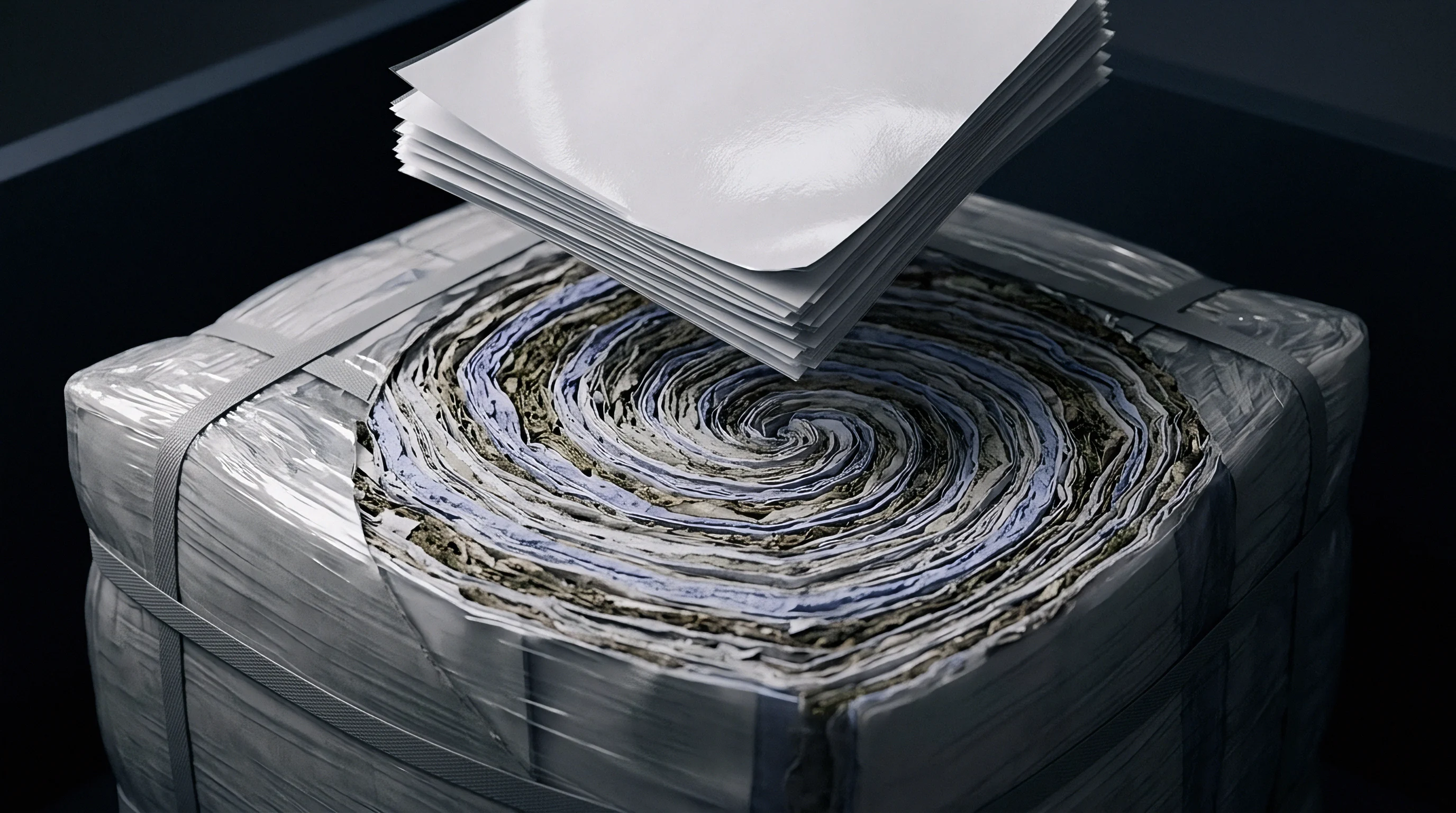
Strain
When a micrometer anvil closes on a 450-micrometre sheet of coated recycled folding boxboard, the density shift it registers marks a change in how the board will respond under creasing force. Repeated drying cycles cause recycled fibers to undergo hornification, which collapses the cell lumen and drops average fiber length from 2.5 millimeters to under 1.1 millimeters. Under ISO 1924-2 testing, this fiber degradation cuts cross-direction tensile stretch capacity from 3.2 percent in virgin bleached kraft pulp to below 1.8 percent in multi-ply recycled grades.
As a die-cutting rule forces the board down into a matrix channel, the top clay coating and white liner come under intense circumferential tension. Unless the interior plies delaminate cleanly, that surface tension quickly surpasses the tensile strain limit of the recycled furnish, splitting the board along the score fold.
Delamination within the central plies provides essential strain relief during a 180-degree fold. High-grade virgin board carries an internal bond strength above 200 Joules per square meter under ISO 16260 Scott Bond tests, allowing adjacent plies to slide past each other and form a smooth internal bulge or bead. Recycled stock, by contrast, shows erratic bond strength ~ frequently between 90 and 130 Joules per square meter ~ compounded by heavy loadings of calcium carbonate and kaolin clay.
Under creasing force, these shortened fibers fail to redistribute localized shear through the thickness of the sheet. Rather than forming a clean internal bead, the recycled structure either shears straight through or transfers stress directly up into the top coat.
Cross-direction strain to break on coated recycled boxboard drops below 1.8 percent when tested at 23 degrees Celsius and 50 percent relative humidity under ISO 1924-2.
The main failure modes seen when creasing recycled cartonboard point directly to structural weaknesses across the furnish layers:
- Surface Coating Rupture occurs when cross-direction tensile elongation exceeds the elasticity limit of the latex binder in the mineral topcoat, leaving visible white cracks along the outer crease edge.
- Reverse Ply Splitting develops on the underside of the sheet when an overly narrow channel forces the creasing rule to punch through the bottom liner, fracturing short mechanical fibers.
- Uncontrolled Shear Delamination spreads broad, uneven ply separation far past the crease zone, weakening box side walls and bowing panels during high-speed carton assembly.
- Crease Shear Shear-Through happens when excessive press impression depth cuts straight through the recycled core plies, destroying the hinge structure entirely.
Moisture content in recycled stock largely dictates how prone it is to score fracture. Boards held in unconditioned storage below 45 percent relative humidity lose bound water within their amorphous cellulose matrix, pushing cross-direction strain-to-break values even lower. On the other hand, moisture levels above 7 percent degrade internal shear strength so much that the crease bead collapses, leaving floppy, weak folds.
Preventing score cracking means tailoring creasing tool geometry to offset the lower elasticity and reduced shear resistance of recycled fibers. Overlooking these strain limits during tooling specification frequently causes widespread score failure on automated packing lines, leading to rejected batches and emergency die modifications.
Groove
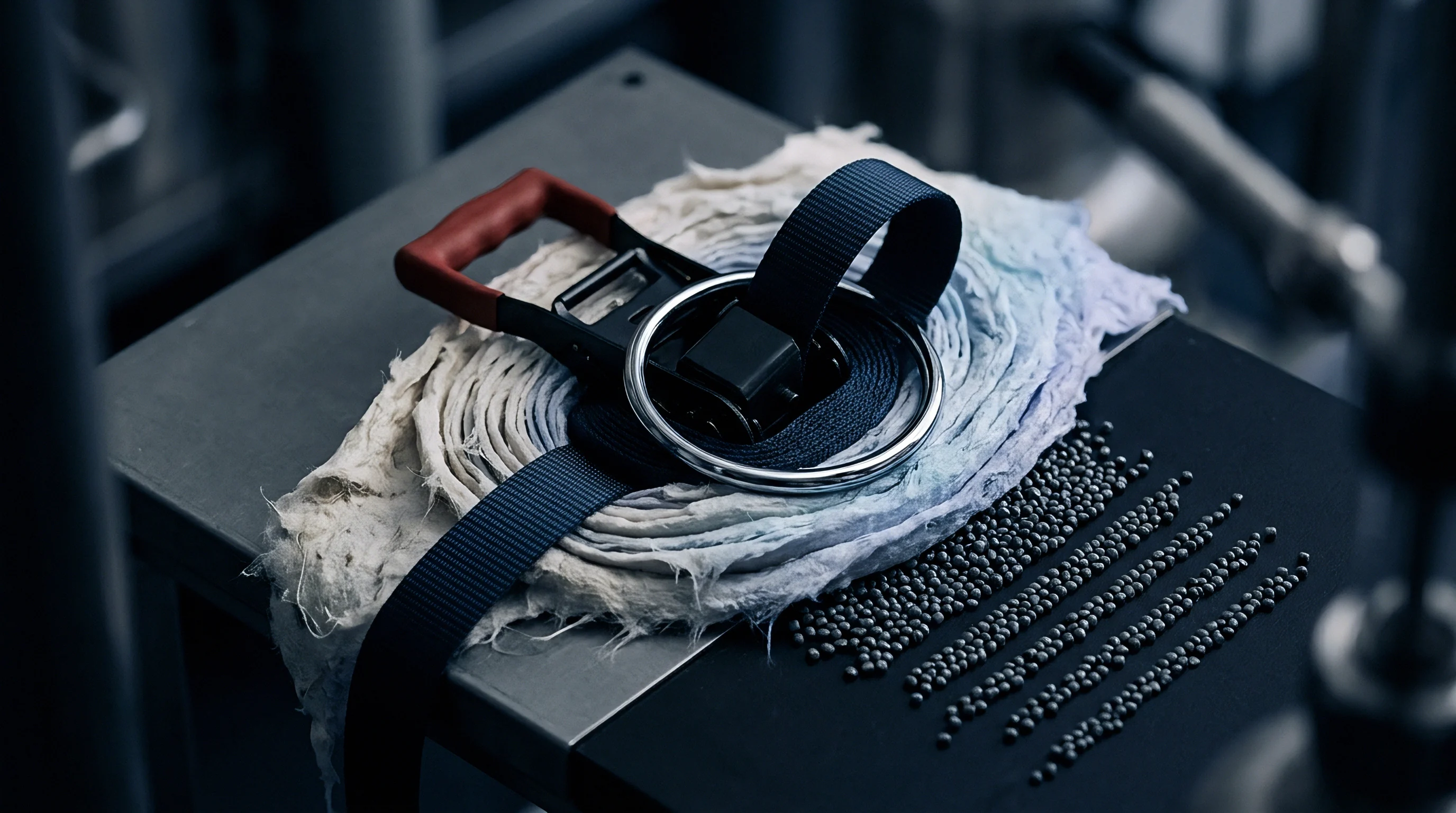
When setting up a press, an operator snaps a fresh PVC matrix channel onto a two-point steel rule and dials in impression depth until the crease bead reaches height. Conventional matrix sizing relies on empirical formulas developed for virgin fibers, where channel width is calculated using a standard multiplier ~ specifically, 1.4 times board caliper plus rule thickness. Applying that same virgin ratio to recycled folding boxboard concentrates shear stress along the channel edges, tearing the shorter fibers.
Recycled grades require a wider channel geometry so the stiffer, less flexible sheet can sink smoothly into the groove without taking sharp localized shear.
Bumping the width multiplier up to between 1.6 and 1.8 times sheet caliper spreads bending forces over a wider zone, encouraging clean internal ply separation instead of surface cracking. Channel depth ought to stay close to total sheet caliper, maintaining a depth-to-caliper ratio between 0.95 and 1.00. Deep channels allow the board to stretch too far before contacting the bottom, causing tensile failure across the top liner.
Conversely, shallow channels prevent the bead from forming fully, which increases folding resistance and ruins panel squareness on high-speed folder-gluers.
| Board Grade | Nominal Caliper (µm) | Rule Thickness (pt / mm) | Channel Width (mm) | Channel Depth (mm) | Shoulder Radius (mm) |
|---|---|---|---|---|---|
| Coated Recycled Board (CRB) | 350 | 2 pt / 0.71 mm | 1.30 | 0.35 | 0.25 |
| White Lined Chipboard (WLC GD2) | 400 | 2 pt / 0.71 mm | 1.40 | 0.40 | 0.30 |
| White Lined Chipboard (WLC GT2) | 450 | 3 pt / 1.05 mm | 1.80 | 0.45 | 0.30 |
| Recycled Folding Boxboard | 500 | 3 pt / 1.05 mm | 1.90 | 0.50 | 0.35 |
| Heavy Recycled Linerboard | 600 | 3 pt / 1.05 mm | 2.10 | 0.55 | 0.40 |
Correctly sizing creasing tools requires reviewing a few key board parameters before setting up the platen press:
- Board Caliper Measurement checks baseline sheet thickness across multiple points with a dead-weight micrometer under ISO 534 conditions to set the depth target.
- Furnish Density Assessment evaluates the proportion of short secondary fibers and mineral fillers to determine if a wider expansion multiplier is needed.
- Rule Thickness Selection determines whether a 2-point or 3-point steel rule best fits the channel opening without creating tight pinch points.
- Channel Width Dimensioning applies the higher multiplier formula so internal delamination takes place over a wider, stress-relieving area.
Switching to a 3-point rule (1.05 mm thickness) from a standard 2-point rule (0.71 mm thickness) on recycled stock over 450 micrometres wide broadens the deformation footprint. The wider rule face cuts concentrated line pressure and spreads force more evenly across the short-fiber core. For highly filled recycled boards, opening up the channel width to support a broader internal bead prevents coating separation far more effectively than cranking up press impression pressure.
Radius
Sharp counter-die shoulders cause micro-fractures in recycled paperboard plies during the millisecond of platen impact. Standard matrix channels use square 90-degree internal walls at the entrance. When the creasing rule forces recycled board against these square corners, the sharp edge acts like a blade, shearing lower ply fibers before the board can delaminate internally.
Rounding or chamfering the channel entrance softens that entry angle, easing the board into the groove and lowering localized strain concentrations by up to 35 percent.
Does Counter-Die Chamfering Reduce Surface Fiber Fracture?
Adding a 0.3 mm rounded radius to the matrix entrance wall reduces localized shear as the rule first enters. Machining a 15- to 30-degree chamfer onto those top edges helps the substrate roll smoothly over the matrix shoulder. That slight geometric change spreads compressive loads across a wider arc, keeping the matrix wall from digging straight into the bottom liner.
Because platen presses operating at 9,000 sheets per hour generate dynamic impact forces far beyond what static bench tests show, smooth entrance radii help cushion those sharp force spikes without cracking the top coating.
A matrix channel that is too wide generates loose female folds with erratic glue flaps, whereas a channel that is too narrow shears the liner plies before the bead can form.
Internal ply delamination needs adequate room inside the matrix channel to happen cleanly. When channel walls are strictly vertical and unchamfered, board material gets pinched tightly between the rule sides and the channel wall, locking plies together and preventing delamination. Beveled or chamfered entry walls offer relief pockets where bulged material can flow.
This extra side clearance encourages clean, horizontal delamination along the weak, filler-heavy core layers of recycled board, shielding both the outer printable topcoat and the back liner.
Tolerance
Checking thickness across six points on an incoming pallet with a digital caliper reveals cross-web variation before board ever hits the die-cutter. Caliper drift across a single roll of recycled stock frequently exceeds plus or minus 5 percent, creating real instability in creasing performance. When board thickness fluctuates against a fixed matrix channel, the effective creasing ratio shifts continuously.
If sheet caliper spikes while channel width stays fixed, the effective width ratio shrinks, jamming the board into a tight groove and fracturing the score. If caliper drops, the resulting crease bead turns loose and structural integrity suffers.
Crease stiffness testing measures the force required to bend a scored sample to 90 degrees relative to the force needed for an uncreased sample, following ISO 5628 and DIN 55437. For recycled folding boxboard, the target bending stiffness ratio sits between 30 and 45 percent. Ratios above 50 percent point to under-creasing, where excessive fold resistance leads to panel spring-back and bowing on folder-gluers.
Ratios under 20 percent warn of internal structural breakdown or partial shear-through, which causes split scores when cartons are erected.
| Substrate Type | Grammage (g/m²) | Caliper (µm) | Uncreased Stiffness (mN·m) | Creased Force (mN) | Bending Stiffness Ratio (%) |
|---|---|---|---|---|---|
| Coated Recycled Board | 280 | 350 | 18.5 | 6.2 | 33.5 |
| White Lined Chipboard GD2 | 320 | 400 | 24.0 | 8.4 | 35.0 |
| White Lined Chipboard GT2 | 360 | 450 | 31.2 | 11.8 | 37.8 |
| Recycled Folding Boxboard | 400 | 500 | 42.0 | 16.0 | 38.1 |
| Heavy Recycled Linerboard | 480 | 600 | 65.0 | 27.3 | 42.0 |
Quality control on the press floor depends on a routine bench-testing procedure to verify crease performance before committing full tonnage to a run:
- Cut ten test specimens across the full width of the delivered roll, five in the machine direction and five in the cross direction.
- Condition the samples for 24 hours at 23 degrees Celsius and 50 percent relative humidity under the ISO 187 standard atmosphere.
- Measure baseline sheet caliper with a calibrated micrometer to capture web thickness variation.
- Run test cuts across a sample platen fitted with calibrated matrix channels and measure the resulting crease bead height.
- Mount specimens in a crease stiffness tester to record the peak force required to bend scores to 15 degrees and 90 degrees.
- Calculate the bending stiffness ratio and inspect the top coating under 10x magnification for micro-cracks along the fold.
Specifying ISO 5628 compliance on delivered cartonboard lots forces the mill to report bending resistance across both machine directions, preventing unannounced furnish adjustments from causing score line failure.
Temperature fluctuations on the press floor alter board moisture levels and impact matrix tape stability, widening crease stiffness variations over long production runs. Monitoring bending resistance across shifts lets operators adjust platen impression or change out matrix channels before score cracking shows up on finished cartons. Setting DIN 55437 compliance standards in substrate purchase contracts gives buyers clear grounds to reject board shipments if cross-direction bending resistance drifts by more than fifteen percent from specification.

Friction
The shear stability of matrix backing tape against platen plates dictates whether creasing channels stay aligned over a 50,000-sheet job. Commercial matrix products use various backing materials, including vulcanized rubber, extruded synthetic polymers, phenolic laminates, and milled steel counter-plates. Synthetic polymer strips allow quick make-ready and carry low upfront costs, but soft channel shoulders tend to flatten under sustained press impacts, widening the groove profile over time.
As channel width opens up, creasing pressure drops off, causing erratic ply delamination and score cracking on short-fiber stock.
Phenolic counter-die plates feature rigid, dimensionally stable walls that withstand shoulder deformation on runs beyond 100,000 impressions. For high-volume long runs, steel matrix inserts provide maximum durability, maintaining channel width within a 0.01 mm tolerance band. Friction from sheets dragging across the platen can also break loose cheaper matrix tapes, creating minor misalignments that exert uneven shear along score lines.
Phenolic counter-die channels maintain dimensional stability across long production runs but require longer setup times during press make-ready.
A complete tooling procurement spec should define clear material standards so die-cutting components hold up under recycled board conditions:
- Channel Substrate Composition specifies polymer, phenolic laminate, or steel counter-plates depending on total job volume and board abrasiveness.
- Adhesive Tape Shear Rating sets the bond strength required to stop matrix movement under constant lateral sheet impact.
- Locating Bridge Dimensional Precision defines allowable tolerances for plastic locator bridges that align channels over creasing rules during mounting.
- Thermal Expansion Coefficient limits dimensional movement caused by heat buildup in the press room during extended runs.
Choosing durable counter-die materials keeps matrix geometry stable throughout the run, preventing wear from causing mid-batch score cracking. Whether newer bio-based composite matrices can match the durability and thermal stability of conventional phenolic strips under high-speed platen impact remains to be seen.
Spoilage
Unplanned press shutdowns from score cracking eat into margins through wasted stock, missed impression cycles, and added sorting labor. While recycled boxboard carries a lower initial per-ton price than virgin SBS board, unoptimized converting setups quickly wipe out those savings. When running 450-micrometre recycled stock on standard virgin matrix dimensions, score cracking can spike to 3 to 5 percent of total volume, forcing operators to throttle press speeds back by 20 percent to lessen impact shock.
Tailoring matrix channel geometry to the physical traits of recycled stock removes scoring defects and lets presses run at full rated speed. A commercial cost comparison on a 100,000-sheet run of 400-micrometre GD2 recycled board highlights the financial difference between optimized matrix geometry and standard, unadjusted tooling setups.
| Parameter | Standard Matrix Setup | Tuned Recycled Matrix Setup | Variance Unit | Cost Impact (€) |
|---|---|---|---|---|
| Production Run Volume | 100,000 sheets | 100,000 sheets | 0 sheets | 0.00 |
| Press Running Speed | 6,500 sheets/hr | 8,500 sheets/hr | +2,000 sheets/hr | -420.00 (Labor/Overhead) |
| Score Cracking Scrap Rate | 4.2 % (4,200 sheets) | 0.3 % (300 sheets) | -3.9 % (-3,900 sheets) | -1,365.00 (Material Scrap) |
| Make-Ready Matrix Material Cost | € 180.00 | € 320.00 | +€ 140.00 | +140.00 (Tooling Cost) |
| Manual Sorting & Inspection Labor | 12.0 hours | 0.0 hours | -12.0 hours | -540.00 (Labor Cost) |
| Net Financial Summary | High Scrap / Slow Speed | Low Scrap / Full Speed | Net Saving / 100k Sheets | -€ 2,185.00 Total Net Saving |
Sourcing custom chamfered matrix channels adds 140 Euros to initial setup tooling costs. However, preventing 3,900 spoiled sheets saves 1,365 Euros in paperboard based on a price of 350 Euros per thousand sheets. Running the press at its full 8,500 sheets per hour rate reclaims nearly 3.6 operating hours, providing 420 Euros in labor and overhead recovery.
Cutting out manual offline inspection saves another 540 Euros, bringing net savings to 2,185 Euros per 100,000 sheets.
Matching matrix geometry directly to recycled board caliper and internal bond strength creates a consistent operating window that cuts scrap and preserves carton structure during automated packaging.