Optimizing Base Sheet Calendering for Aqueous Barrier Coating Application
Heated soft-nip calendering closes sheet surface pores to control aqueous barrier holdout while preserving the bulk required for carton creasing.

Porosity
Aqueous barrier dispersions demand a dense, uniform base sheet to prevent liquid strike-through during application. When applying water-borne synthetic or bio-based polymers such as styrene-butadiene, acrylics, polyhydroxyalkanoates, or polyvinyl alcohol, the fluid carrier wets the cellulose substrate immediately. If the capillary pore radius within the fibrous network remains open, the aqueous phase and suspended polymer particles drain into the sheet interior.
Fiber geometry controls initial porosity. This drainage starves the surface, leaving bare fiber tips exposed and generating micro-pinholes that ruin grease resistance and water vapor barrier continuity.
Base sheet calendering compacts the random fiber mat, reducing void volume and narrowing the pore size distribution. High nip pressures collapse unbonded lumens and flatten tubular fibers into ribbon-like geometries. This mechanical reduction of void volume restricts liquid penetration according to the Lucas-Washburn equation, which models fluid penetration depth into a porous matrix as a direct function of pore radius, liquid surface tension, contact angle, and liquid viscosity over penetration dwell time.
Narrowing the equivalent capillary radius from four micrometers down to below one micrometer drastically slows the rate of capillary suction.
A closed surface pore network eliminates the capillary draft that pulls water-based polymer dispersions away from the sheet exterior.
Capillary suction drains fluid binder. Applying aqueous coatings over an uncalendered or poorly consolidated base sheet leads to specific structural failures during converting and final use.
- Fiber Swell Blistering occurs when uncalendered raw fibers absorb carrier water rapidly, expanding outward and rupturing the wet latex film before oven drying finishes.
- Pinholing From Roughness Peaks develops because elevated surface asperities protrude through low coat weights, creating direct pinhole pathways for mineral oils and moisture vapor.
- Binder Depletion Desorption takes place when porous sheets siphon surfactant and water away from polymer particles, triggering premature coagulation at the interface and ruining film cohesion.
- Mottled Film Formation results from uneven regional absorbency across the web, generating localized caliper variations and uneven barrier density across large container blanks.
Rough peaks rupture thin coatings. Smooth surfaces always defeat heavy chemical loads when creating grease barriers on cartonboard.

Roll
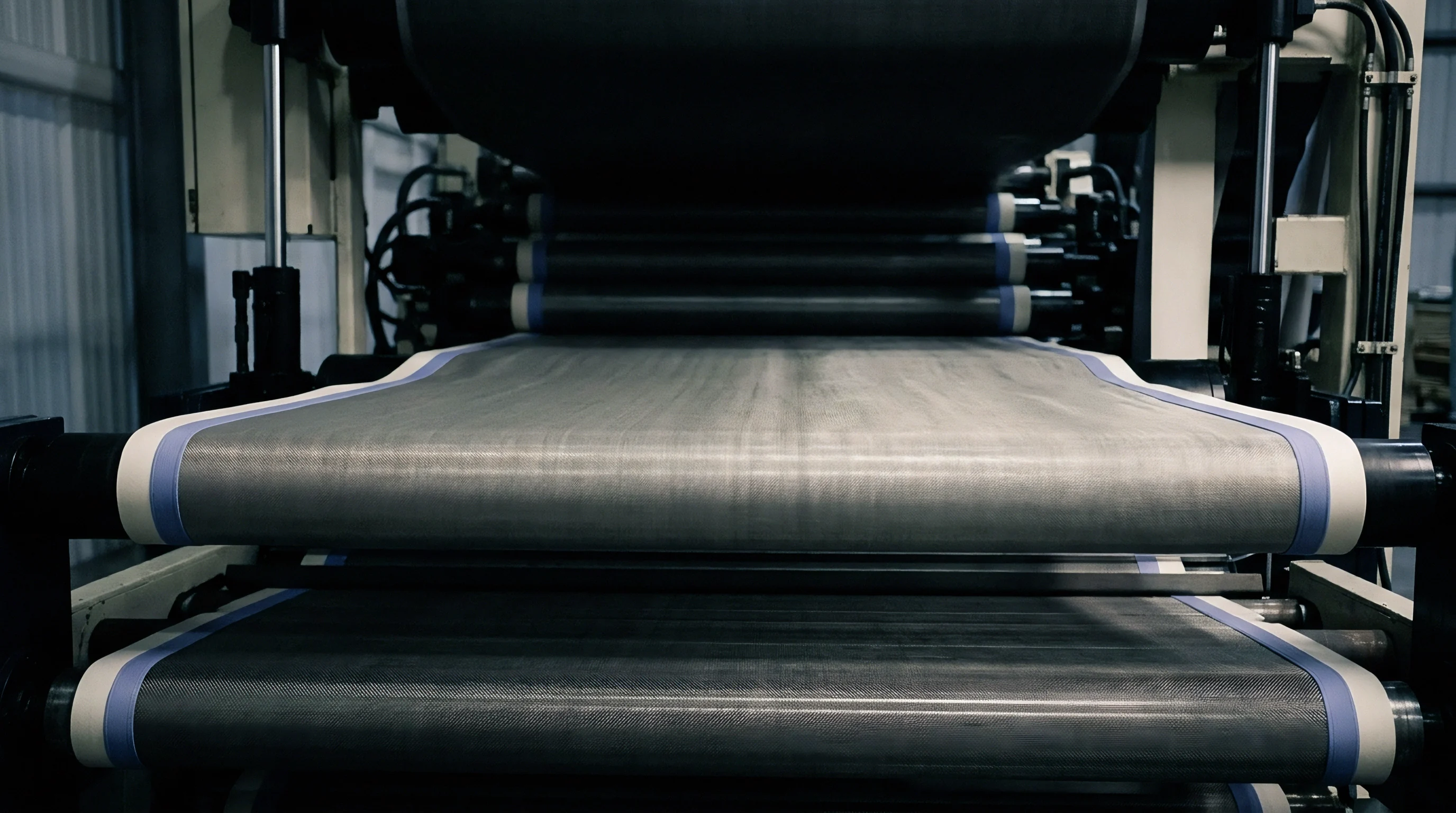
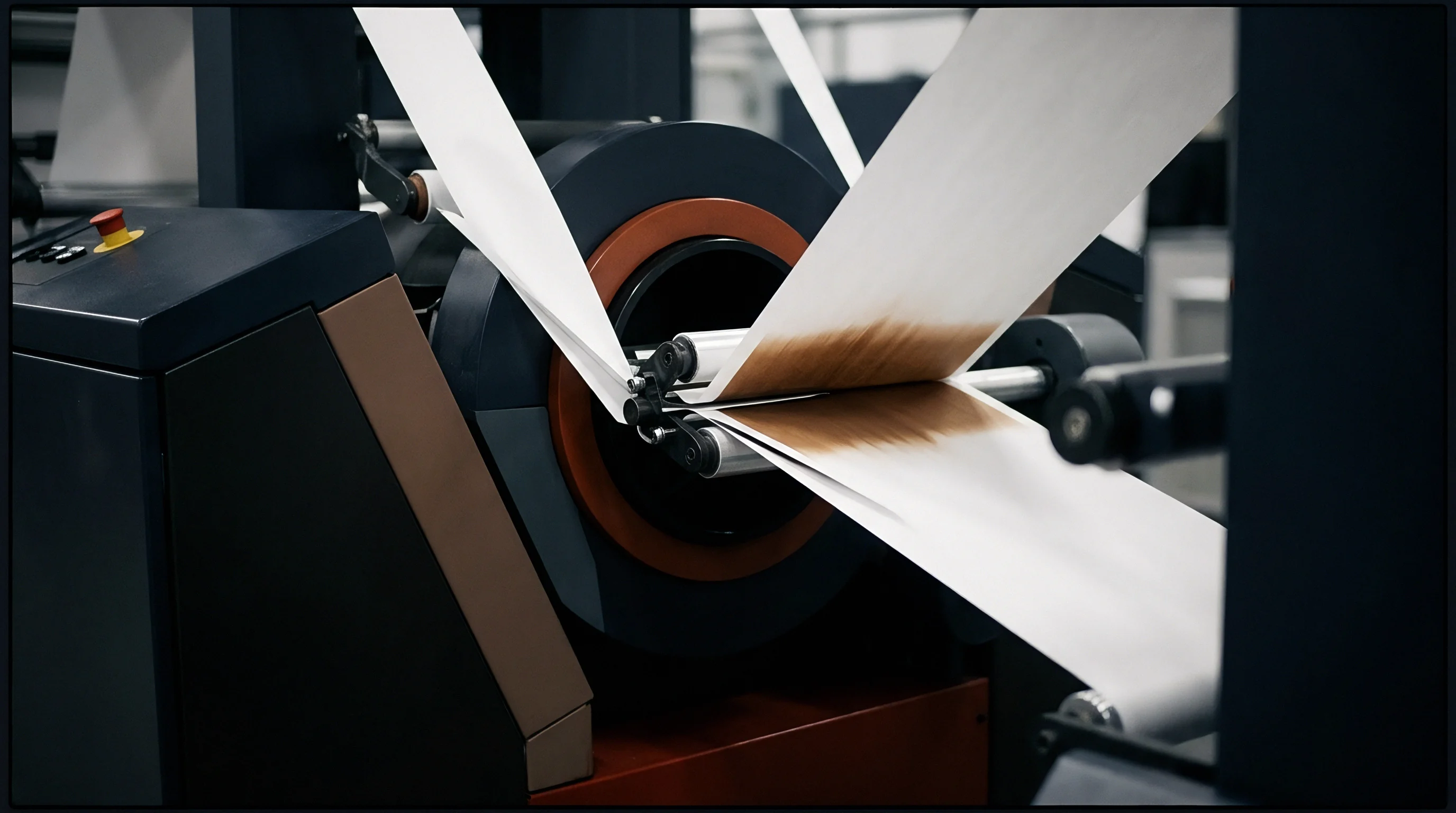
Mechanical finishing options dictate whether the base board retains interior bulk or flattens into high-density sheets. The arrangement of chilled cast iron cylinders, elastic polymer covers, and heated backing rolls establishes the mechanical shear and compressive stress applied to the web. Machine calendering with rigid metal rolls compresses fiber high spots indiscriminately, causing localized crushing, caliper variation, and sheet blackening where moisture peaks exist.
Can Soft Nip Configurations Preserve Sheet Compressibility?
Polymer elastomer covers allow deep thermal penetration under moderate pressures without crushing internal z-directional voids. In a soft nip calender, a synthetic composite roll with a Shore D hardness between 88 and 92 deforms against a heated cast iron cylinder. This deformation widens the nip contact zone from approximately five millimeters up to twenty or thirty millimeters, increasing dwell time while reducing peak compressive stress.
Densification concentrates within the top fiber layers, leaving the core resilient and porous. Soft roll covers distribute pressure. Steel nips crush internal bulk.
| Calender Configuration | Linear Load (kN/m) | Roll Surface Temperature (°C) | Dwell Time (ms) | Parker Print-Surf Roughness (µm) | Caliper Reduction (%) |
|---|---|---|---|---|---|
| Uncalendered Base | 0 | 23 | 0.0 | 6.8 | 0.0 |
| Hard Nip Machine Stack | 80 | 60 | 1.2 | 3.4 | 18.5 |
| Single Soft Nip | 140 | 160 | 8.5 | 2.1 | 9.2 |
| Tandem Heated Soft Nip | 180 | 190 | 17.0 | 1.4 | 12.4 |
| Extended Shoe Calender | 350 | 180 | 45.0 | 1.2 | 7.8 |
Soft nip finishing at 180 degrees Celsius under 120 kilonewtons per meter holds Parker Print-Surf roughness below 2.2 micrometers while restricting caliper loss to six percent.
Heated soft nip calendering exploits the viscoelastic properties of moist cellulose and lignin. By raising the roll surface temperature above the glass transition temperature of hemicellulose and moist lignin, surface fibers become thermoplastic. The hot roll polishes the top fibers into a mirror-like plane, sealing open macropores while the resilient backing roll preserves sheet bending stiffness.
Mill technicians frequently assert that raw virgin furnish variations account for unexpected density losses rather than improper calender cylinder loading.
Moisture
Water content inside raw paper webs determines how fibers deform under mechanical compression. Water acts as a powerful low-molecular-weight plasticizer within amorphous cellulose and hemicellulose chains. As web moisture rises, the glass transition temperature of the fiber matrix drops precipitously, shifting from roughly 200 degrees Celsius in bone-dry conditions to below 70 degrees Celsius at eight percent moisture content.
Moisture plasticizes the cellulose matrix. Dry fibers resist thermal smoothing.
Plasticization Thresholds and Temperature Gradients
Cellulose softens rapidly once heat transfers across wet web boundaries. If sheet moisture entering the calender drops below six percent, the fibers behave elastically, resisting permanent deformation and springing back after leaving the nip. This elastic springback roughens the surface within hours, creating micro-cracks across subsequently applied aqueous barrier coatings.
Conversely, feeding a sheet containing over ten percent moisture into a high-temperature nip generates flash steam that blisters the sheet surface and causes calender blackening through severe fiber crushing.
- Initial Web Conditioning stabilizes internal water fractions at eight percent to prevent thermal steam blistering when passing through heated nips.
- Thermal Calender Engagement heats the sheet exterior to two hundred degrees Celsius, compressing surface fibers while leaving the inner core cool.
- Post-Calender Moisture Equalization brings the compressed web to six percent water content, preventing curl before dispersion coaters apply aqueous barrier emulsions.
Controlled steam showers installed upstream of the calender nip create a steep moisture gradient through the sheet thickness. Applying a thin condensation film directly onto the sheet surface plasticizes only the outermost fiber layers. The dry core passes through the nip uncompressed, maintaining structural caliper and flexural rigidity.
Sheets calendered below four percent water content exhibit permanent fiber brittleness and shatter when folded on carton gluers.

Holdout
Barrier integrity relies entirely on maintaining a uniform polymer layer across the fiber network. Aqueous barrier dispersions function by forming a pinhole-free, continuous film over the paper surface during drying and film coalescence. If the base sheet displays high surface roughness or broad pore radii, the wet dispersion pools in valleys and recedes from peaks due to surface tension forces.
Pinholes ruin oil barrier performance. The resulting film displays thin spots over fiber asperities, degrading both water vapor transmission rates and grease resistance.
Surface Roughness Parameters and Film Uniformity
Parker Print-Surf testing under ten kilograms per square centimeter clamp pressure correlates directly with pinhole density in aqueous acrylic coatings. Air-leak roughness measurements via the Bendtsen or Sheffield methods fail to detect narrow, deep micro-crevices that consume coating solids without forming barrier layers. Parker Print-Surf values below 2.0 micrometers allow an aqueous dispersion dry coat weight of eight grams per square meter to form a completely sealed film.
Dense surfaces slow water absorption. Base sheets with Parker Print-Surf values above 4.5 micrometers require up to eighteen grams per square meter of identical dispersion to achieve equivalent grease holdout.
| Base PPS Roughness (µm) | Dry Coat Weight (g/m²) | Pinhole Count (per dm²) | Cobb60 Value (g/m²) | Kit Rating (TAPPI T559) | WVTR (g/m²·day) |
|---|---|---|---|---|---|
| 5.2 | 8.0 | 142 | 48.5 | 3 | 125.0 |
| 4.0 | 8.0 | 68 | 22.1 | 6 | 64.0 |
| 2.8 | 8.0 | 12 | 8.4 | 9 | 22.0 |
| 1.8 | 8.0 | 0 | 1.8 | 12 | 6.5 |
| 1.4 | 6.5 | 0 | 1.6 | 12 | 5.8 |
| Methods note: Conditioning per ISO 187; PPS roughness per ISO 8791-4; Cobb water absorption per ISO 535; grease resistance per TAPPI T559; water vapor transmission rate per ISO 2528 at 23°C and 85% RH. | |||||
Delivery contracts referencing ISO 535 water absorption thresholds above forty-five grams per square meter trigger an immediate pass of secondary barrier coating to prevent moisture blistering.
Excess coat weight inflates drying costs. Minimizing base sheet absorbency and roughness reduces the quantity of high-cost barrier dispersion required to pass certified oil and moisture vapor tests.
- Parker Print-Surf Target Verification ensures base sheet roughness measures between 1.8 and 2.5 micrometers before applying dispersion barriers.
- Surface Energy Compatibility Assessment confirms the base sheet exhibits a contact angle with pure water below seventy degrees for immediate wetting.
- Formation Index Auditing verifies specific mass distribution across the web to eliminate localized light spots that swallow coating volume.
Coating chemistry cannot fix poor formation. Supply agreements specifying ISO 535 Cobb60 water absorption below thirty grams per square meter shift financial responsibility for pinhole rejections directly to base paper mills.
Conversion
Downstream manufacturing stages reveal whether calendered substrates can survive mechanical scoring. When carton blanks pass through rotary die-cutters, female scoring channels and male scoring rules compress and shear the board across its thickness. The score profile must form a distinct internal delamination hinge, allowing the carton panel to fold ninety or one hundred and eighty degrees without cracking the exterior barrier film.
Score cracking exposes raw fibers. Cracked creases ruin liquid containment.
Will Calender Densification Compromise Converting Score Integrity?
Severe roll compression crushes cross-directional stiffness, promoting flaking when carton edges fold ninety degrees. Over-calendered sheets lose internal z-directional elasticity, behaving as dense, brittle monoliths. Instead of splitting cleanly into internal shear layers during scoring, an over-densified sheet fractures along the crease exterior.
This rupture tears the aqueous barrier layer, destroying water vapor resistance and allowing aggressive liquid contents such as mineral oil, hot coffee, or greasy fast food to penetrate the raw substrate along the score line.
Excessive nip compaction transforms the board core into brittle fiber glass that fractures along carton creases during high-speed folder-gluer operations.
Calendering also impacts the overall box compression test resistance of finished folding cartons. Bending stiffness scales with the third power of sheet thickness. A ten percent reduction in caliper produces approximately a twenty-seven percent decrease in structural bending stiffness.
When a mill runs extreme linear calender loads to force a rough, poorly formed furnish down to acceptable smoothness targets, the resulting caliper loss severely degrades carton stacking performance on warehouse pallets. Over-calendering degrades box stack strength.
Whether chemical sizing agents can fully replace mechanical calender action to preserve score line elasticity under aqueous barrier layers remains unresolved across industrial converting operations.
Ledger
Financial balance sheets reflect the physical penalties of caliper reduction and excess chemical application. Base paperboard is purchased by weight, but converted packaging sells by surface area and unit count. Calendering excessive line loads to achieve smooth surfaces decreases caliper and yield, forcing converters to purchase heavier grammages to satisfy customer board rigidity specifications.
Thinner calipers reduce yield margins. Balanced calendering saves expensive aqueous barrier latex by keeping application rates low.
Yield Economics and Polymer Dispersion Consumption
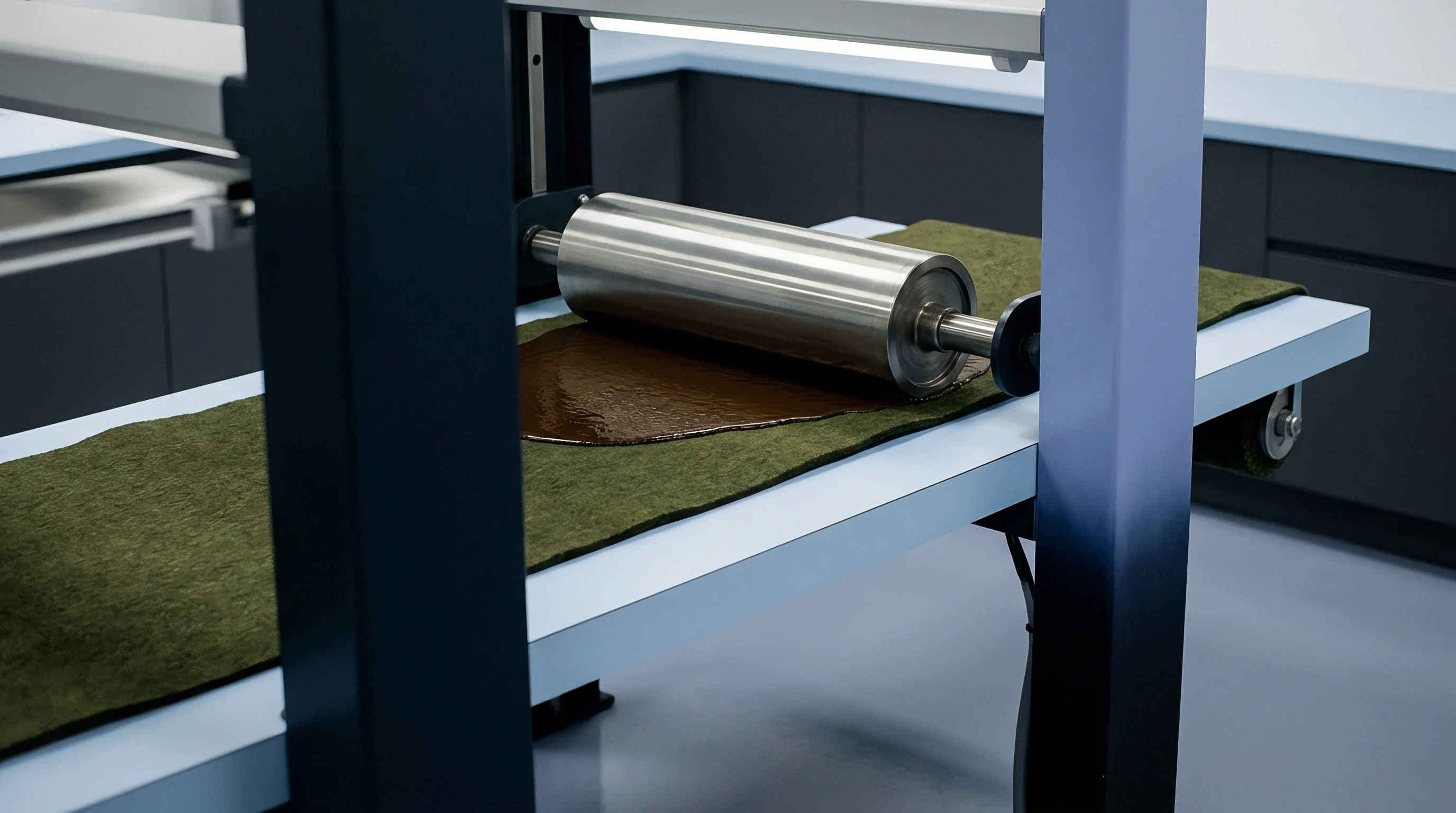
Calendering reduces board thickness, lowering the square meters produced per metric ton of virgin fiber. Aqueous barrier coatings cost between three thousand and six thousand dollars per dry metric ton, whereas base bleached kraft pulp costs roughly one thousand dollars per metric ton. Applying an unnecessary four grams per square meter of barrier polymer across a high-volume run to compensate for an uncalendered, rough sheet rapidly erodes line profitability.
| Calendering Strategy | Base Yield (m²) | Applied Dry Barrier (g/m²) | Total Barrier Resin (kg) | Resin Cost ($ at $4.50/kg) | Scrap Rate At Score (%) |
|---|---|---|---|---|---|
| Uncalendered Base | 500,000 | 14.0 | 7,000 | 31,500 | 1.2 |
| Over-Calendered Hard Nip | 460,000 | 7.0 | 3,220 | 14,490 | 8.5 |
| Optimized Heated Soft Nip | 485,000 | 8.0 | 3,880 | 17,460 | 0.8 |
A plant processing five hundred thousand square meters of board saves nearly fourteen thousand dollars in chemical dispersion costs by moving from uncalendered board to an optimized soft-nip base sheet. Avoiding hard-nip over-densification preserves six percent in total yield and prevents scrap losses from score cracking during carton erection. Optimizing soft nip calendering saves raw emulsion coats, protects converting speeds, and delivers compliant food containers at predictable margins.