Delamination Evaluation
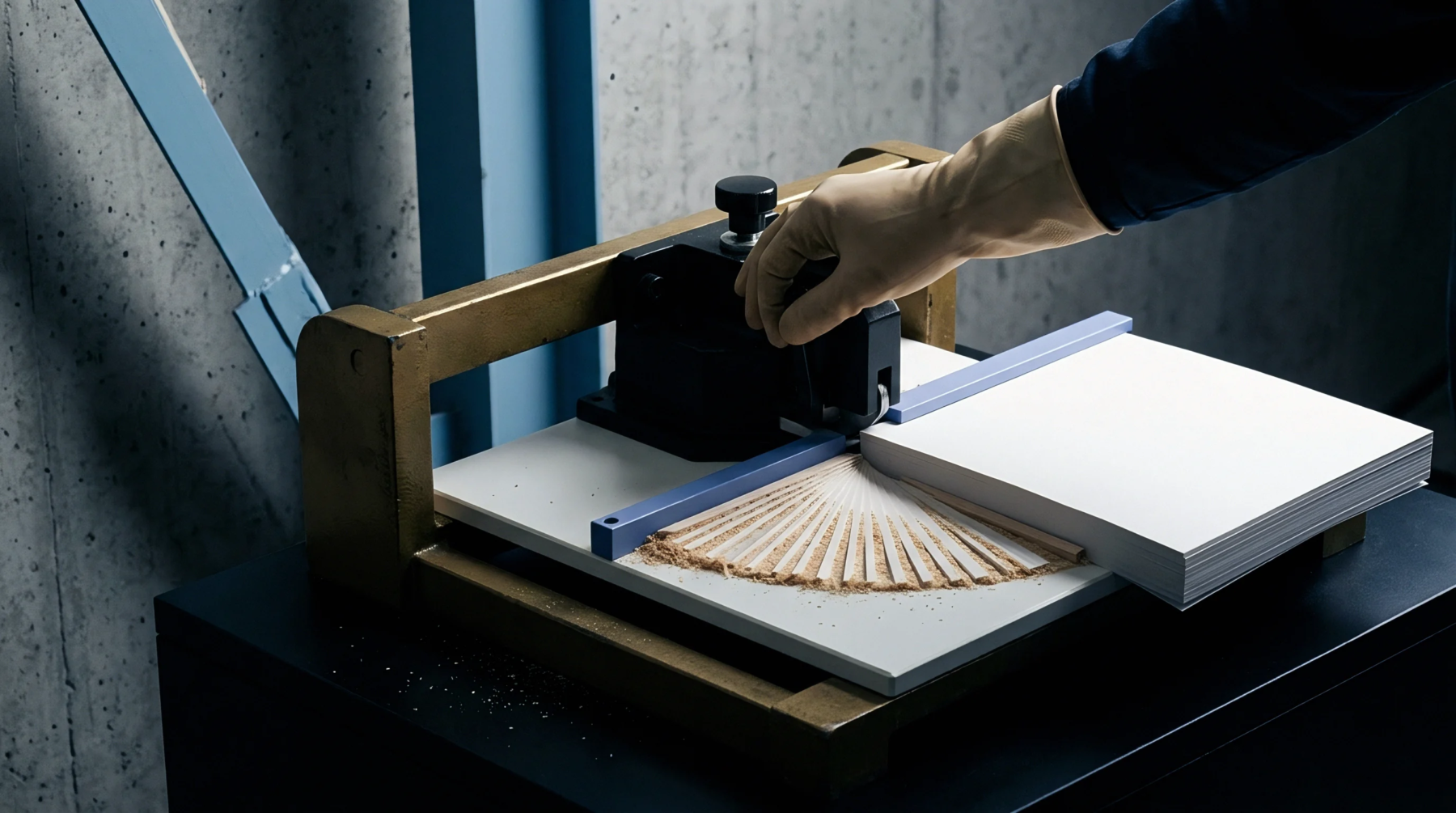
Microscopic cross sectional examination characterizes structural deformation inside creased paperboard after mechanical scoring. Packaging testing laboratories perform cross sectional crease analysis to inspect internal ply separation and shear crack formation within the board matrix. The assessment verifies that score tooling generates clean internal delamination rather than surface tensile fracture.
Shearing Response
Mechanical scoring forces top and bottom plies to bend around a male creasing rule while female die shoulders support the substrate edges. In cross sectional crease analysis, cross sections cut through score lines reveal the extent of shear plane development between individual paperboard layers. Controlled internal delamination reduces bending stiffness along the score line, allowing the board to fold at low torque without cracking the outer printed liner.
Deep score depth creates severe shear strain that splits internal fiber bonds without breaching top ply coating layers. Inadequate creasing depth leaves internal plies intact, forcing bending stress to concentrate on outer fibers during box erection.
Board Integrity
Structural evaluation stops at the boundary where outer liner fibers snap under tension. Data from cross sectional crease analysis establishes proper rule depth and die width parameters for recycled and virgin boxboard grades. Uncontrolled fiber fracture across outer plies destroys print graphics and compromises box compression strength.