Harmonized Dry Basis Mass Adjustments for Cross Border Pulp Invoice Disputes
Cross-border market pulp invoice adjustments require ISO 801 core sampling, bone-dry moisture testing, and contractually binding air-dry mass recalibration.


Sampling
Determination of commercial pulp mass begins with certified scale weights taken at time of discharge or mill departure. Scale calibration dictates weight accuracy. When a shipment arrives at a destination port, gross weighbridge readings establish total package weight, but dry fiber content determines financial settlement.
Market pulp absorb atmospheric water rapidly during transit, making visual inspections useless for establishing dry fiber mass. Verification relies strictly on standardized physical specimen extraction protocols performed immediately upon vessel hatch opening or container unsealing.
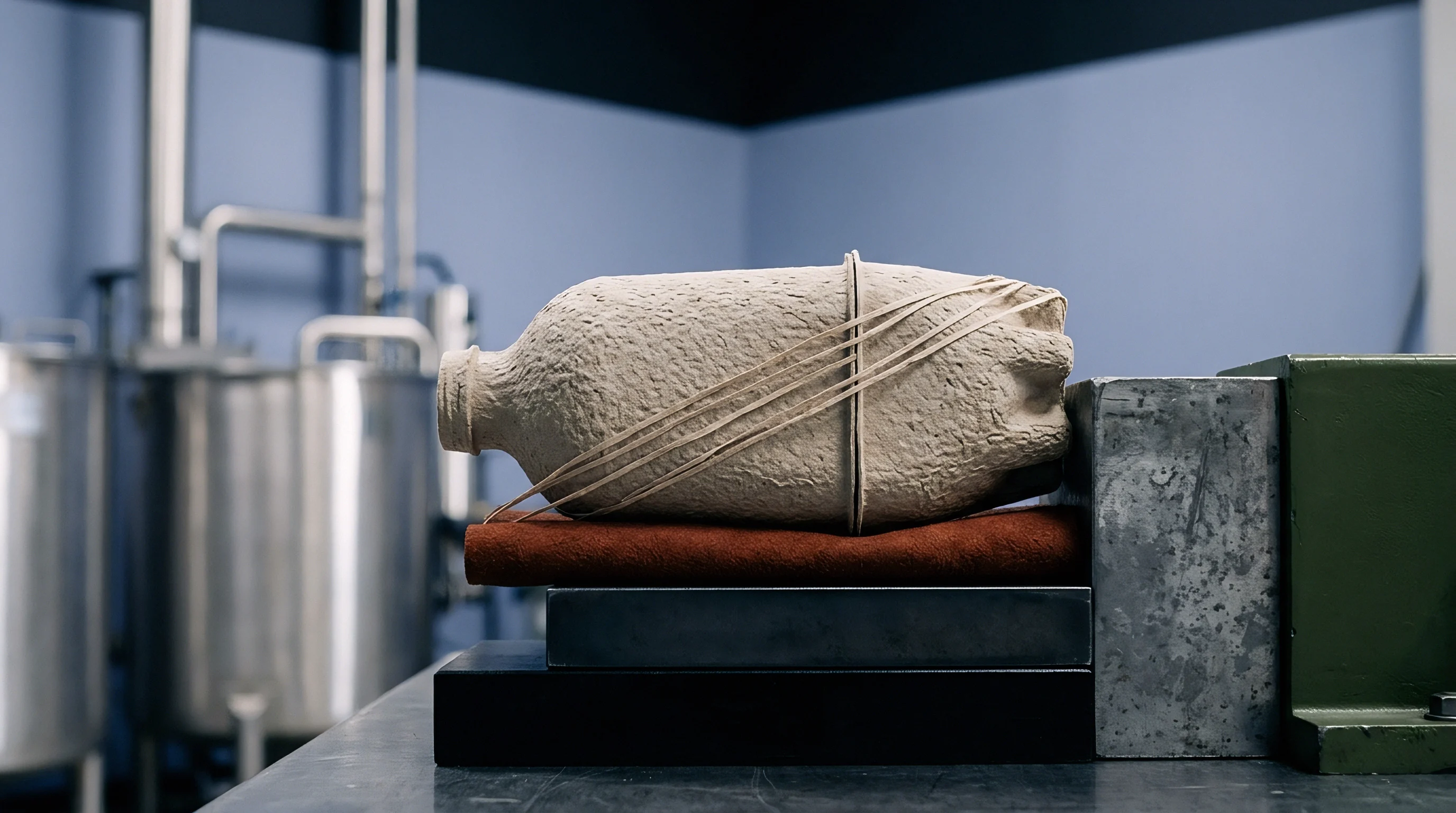
Standardized Bore and Wedge Extraction Mechanics
Testing laboratories apply specific physical cutting rules to extract representative fiber specimens from sealed pulp bales. The international standards ISO 801 parts 1 and 2, alongside TAPPI T210, define two primary mechanical approaches: wedge extraction for sheet pulp and core drilling for baled flash-dried or sheeted units. The wedge method requires cutting triangular specimens from specified positions across selected sheets within a bale, ensuring edge fiber and center fiber are represented in precise geometric proportions.
Moisture sealed containers prevent dryout.
Bore extraction uses a motorized rotating cutter to drive a hollow drill deep into the bale body. Core depth affects test accuracy. The extraction cutter generates frictional heat during penetration, which risks evaporating localized moisture if the tool speed exceeds five hundred revolutions per minute.
Technicians pull core disks from varying depths, transferring them into airtight glass or stainless steel vessels within seconds of withdrawal. Gravimetric moisture determination takes place by weighing the wet specimens, drying them in a ventilated oven at one hundred five degrees Celsius until mass constancy is achieved, and reweighing the dried fiber.
| Test Standard | Extraction Method | Specimen Geometry | Sample Size Requirement | Primary Error Source |
|---|---|---|---|---|
| ISO 801-1 | Sheet Wedge Cutting | Triangular Wedges | 12 Bales per 100 Metric Tonnes | Edge Ambient Moisture Ingress |
| ISO 801-2 | Core Drilling | Cylindrical Disks | 20 Bales Minimum per Lot | Frictional Thermal Drying |
| TAPPI T210 | Bore or Strip Extraction | Disks or Full Strips | 1% to 2% Total Package Count | Delay in Container Sealing |

Bale Selection Rules across Commercial Shipments
Extrapolating a shipment’s total dry mass requires systematic bale selection across the entire freight volume. Selecting bales exclusively from top layers introduces severe dryout bias, whereas taking units only from lower hold strata overstates moisture content due to bilge humidity accumulation. Certified protocols mandate selecting bales according to a fixed numerical sequence during vessel unloading.
- Bale selection and scale verification transfers initial gross weight data into the inspection record before environmental exposure alters package surface moisture.
- Core cutter temperature control prevents localized thermal drying during mechanical specimen extraction across dense pulp units.
- Immediate hermetic container sealing isolates extracted fiber disks from room ambient air before initial wet weighing occurs on calibrated lab balances.
- Oven drying to constant mass completes the moisture determination sequence at one hundred five degrees Celsius under controlled air circulation.
Discharge sampling requires immediate sealing. If a buyer delays extraction beyond forty-eight hours after container unsealing, ocean transit moisture gradients equalize with local ambient conditions, destroying the evidentiary value of the lot test. Mill suppliers routinely assert that ambient humidity absorption during ocean transport invalidates destination moisture testing unless cores are extracted within forty-eight hours of hatch opening.


Calculus
Financial adjustments for delivered pulp lots rely on exact transformations between measured dry solids and invoiced air-dry mass. Dry fiber yields dictate commercial value. International pulp contracts invoice on an air-dry basis, which defines commercial mass as ninety percent absolute dry fiber and ten percent water content.
A mill shipping five hundred metric tonnes of pulp does not deliver five hundred tonnes of zero-moisture fiber; the invoiced mass represents the theoretical tonnage corresponding to the measured bone-dry solids divided by zero point nine zero.

Commercial Air Dry Conversion Formula Mechanics
Market pulp trades on an air-dry basis defining ninety percent absolute dry fiber and ten percent moisture. Air dry mass standardizes commercial transactions. When laboratory analysis establishes a lot’s absolute dry solids percentage, the air-dry metric tonnage derives directly from multiplying gross scale weight by the measured dry content percentage, then dividing by ninety percent.
The resulting commercial weight forms the sole legal basis for invoice generation or credit claims.
Consider a commercial shipment assumed at one thousand nominal air-dry metric tonnes of bleached softwood kraft pulp billed at eight hundred fifty dollars per air-dry metric tonne. The mill issues an invoice assuming ninety percent nominal dry matter content, representing nine hundred absolute bone-dry metric tonnes of fiber. Upon discharge, an ISO 801 core drilling inspection yields an average dry solids content of eighty-eight point four percent.
Destination weigh scales require certified calibration.
The mathematical adjustment proceeds sequentially. Multiplying the gross scale mass of one thousand one hundred eleven point eleven metric tonnes by eighty-eight point four percent dry solids yields eight hundred eighty-two point two two bone-dry metric tonnes of actual fiber. Dividing eight hundred eighty-two point two two by zero point nine zero establishes the adjusted commercial mass at nine hundred eighty point two four air-dry metric tonnes.
The deficit equals nineteen point seven six air-dry metric tonnes. Multiplying this tonnage deficit by the contract price of eight hundred fifty dollars yields a mandatory invoice credit of sixteen thousand seven hundred ninety-six dollars.
A net dry solids reduction of one percent on a five-thousand metric tonne shipment creates a fifty-five air-dry tonne deficit requiring an immediate forty-four-thousand dollar invoice credit.
| Measured Dry Solids % | Absolute Dry Weight (BDMT) | Commercial Air Dry Weight (ADMT) | Mass Variance (ADMT) | Invoice Adjustment (USD) |
|---|---|---|---|---|
| 91.0% | 910.00 | 1011.11 | +11.11 | +$9,443.50 |
| 90.0% (Nominal) | 900.00 | 1000.00 | 0.00 | $0.00 |
| 89.0% | 890.00 | 988.89 | -11.11 | -$9,443.50 |
| 88.0% | 880.00 | 977.78 | -22.22 | -$18,887.00 |
| 87.0% | 870.00 | 966.67 | -33.33 | -$28,330.50 |

Financial Sensitivity in Commercial Mass Deviations
Small variations in measured dry solids percentages trigger significant capital movements on large cross-border shipments. A shift of zero point five percent dry content on a ten-thousand metric tonne vessel loading represents fifty air-dry metric tonnes, translating to tens of thousands of dollars in commercial exposure. Importers and mills must maintain strict calculation precision, carrying figures to at least three decimal places during intermediate steps to prevent rounding drift.
- Container liner microclimate shift causes moisture migration from bale cores to outer wrapper layers during extended ocean transport.
- Bale wrapper integrity failure permits atmospheric exposure, increasing surface water content without altering internal core dry matter.
- Scale calibration drift distorts net gross mass readings taken at discharge terminals prior to specimen extraction.
- Delayed discharge inspection introduces storage humidity bias, confusing transit weight loss with port warehouse environmental exposure.
Failing to enforce air-dry conversion formulas against destination moisture tests causes buyers to pay full fiber prices for reabsorbed atmospheric water.


Discrepancy
Moisture content variations between loading ports and discharge terminals emerge from environmental shifts and physical packaging defects. Hold condensation increases outer bale weight. Ocean voyages expose containerized and breakbulk pulp shipments to extreme temperature swings, driving water vapor movement within sealed units and across hold spaces.

What Causes Moisture Drift during Maritime Ocean Transit?
Maritime vessel holds experience ambient temperature fluctuations during transoceanic voyages. When a vessel moves from warm tropical corridors into cold northern waters, warm air trapped inside pulp bale packaging or container liners cools rapidly. Water vapor condenses on interior steel walls and plastic packaging films, dripping directly onto exterior bale surfaces.
Bale wrapping delays moisture ingress.
Outer bale sheets absorb this liquid condensation, elevating surface moisture readings while the core dry solids percentage remains identical to mill departure levels. Standard surface moisture meters fail in these scenarios because they register localized condensation rather than true lot mass average. Extracting deep core cores provides the only reliable defense against superficial transit condensation claims.
Contract terms specifying destination weights as binding without ambient temperature logging disclaim supplier responsibility for hold condensation.

Commercial Tolerance Thresholds and Contract Thresholds
Standard pulp purchasing contracts define specific weight deviation limits before formal claim filing proceeds. Tolerance thresholds protect minor variances. Trade customs under international pulp conventions accept dry matter variations within plus or minus zero point five percent without triggering financial invoice adjustments.
This band accounts for normal testing variance between separate laboratory ovens and balance scales.
When measured variance exceeds zero point five percent, the financial adjustment covers the entire deviation from the nominal ninety percent baseline, rather than merely the amount exceeding the tolerance limit. Contract clauses defining destination weights as binding must state whether testing occurs on gross delivered weight or strictly on absolute dry fiber mass. Standard Baltic and International Maritime Council charter terms transferring risk at vessel rail eliminate supplier liability for hold condensation unless moisture barrier packaging breaches are logged at discharge.


Certificate
Cross-border shipments demand complete alignment between chemical grade documentation, chain of custody claims, and customs entry declarations. Customs duties apply to net mass. Discrepancies between physical fiber tonnage and declared invoice weights create compliance liabilities with customs authorities and forest certification scheme auditors.

Customs Tariff Classification and Dry Mass Valuation
Customs authorities assess import duties based on physical pulp mass and dry fiber percentage. HS Code 4703 covers chemical wood pulp, soda or sulphate, unbleached or bleached, while HS Code 4704 governs sulphite wood pulps. Custom entry entries must declare net dry mass alongside gross shipping weights.
Overdeclaring dry mass results in overpayment of customs duties and value-added taxes, whereas underdeclaring mass creates tariff evasion risks and regulatory fines.
Importers filing corrective post-entry customs declarations must present certified ISO 801 lab reports and signed commercial mass recalculation balance sheets. Customs agencies reject invoice adjustments based solely on internal buyer spreadsheets without accredited laboratory stamps.
Discrepancies between physical air-dry weight adjustments and volume ledger entries expose importers to chain of custody suspension during annual audits.

Chain of Custody Integration with Shipping Manifests
Forest management claims tracked through FSC and PEFC credit systems attach to physical fiber volumes. Chain of custody credits track net mass. When a buyer receives an invoice adjustment deducting twenty air-dry metric tonnes due to moisture excess, the certified credit ledger entry must reflect the adjusted commercial mass rather than the original bill of lading tonnage.
Deducting incorrect certified volumes breaks chain of custody trace integrity.
- Customs valuation clearance requires matching mill invoice ADMT adjustments with official discharge port weighmaster certificates.
- Chain of custody volume balancing aligns credit ledger deductions precisely with final paid commercial dry mass figures.
- Food contact compliance proof verifies heavy metal limits and extractable restrictions under BfR Recommendation XXXVI rules.
- Third-party weigh scale validation supports discharge port weight claims against carrier bill of lading quantities.
Whether customs authorities will universally accept ISO 801 re-test documentation as grounds for retroactive duty refunds across all major trade corridors remains unresolved.


Remedy
Contractual dispute mechanisms establish clear procedural sequences when destination test figures diverge from invoice scale weights. Unsealed samples forfeit claim validity. Buyers cannot simply deduct arbitrary amounts from invoice payments without adhering to strict claim timelines, joint sampling rules, and third-party laboratory arbitration protocols.

Independent Umpire Laboratory Testing Protocols
When buyer and seller test results exceed agreed tolerance limits, an accredited neutral facility performs binding analysis. Umpire laboratory decisions bind both parties. The buyer notifies the seller of the variance, presenting the destination lab report within twenty-one days of vessel discharge.
If the seller disputes the destination finding, original sealed duplicate core specimens extracted during discharge are dispatched to an ISO 17025 accredited neutral paper testing institute.
The umpire laboratory follows ISO 801 testing rules precisely. If the neutral laboratory dry solids percentage falls between the mill certificate result and the buyer test result, the commercial settlement uses the arithmetic mean of the umpire test and the closer party test. If the neutral test falls outside the range between the two original certificates, the neutral laboratory figure supersedes all prior testing and binds both commercial parties unconditionally.

Contractual Dispute Clauses for Pulp Invoicing
Effective commercial terms define strict timelines for claim notification and sample retention. Purchase agreements must explicitly state the testing standard, sampling location, tolerance threshold, and cost allocation for arbitration testing. Without written agreement on these operational parameters, buyers forfeit legal standing to enforce dry basis invoice adjustments.
- The buyer submits written notice of weight variance within twenty-one calendar days of vessel discharge.
- The seller inspects duplicate core samples retained in sealed containers at the destination port laboratory.
- An ISO 17025 accredited independent laboratory receives sealed split samples if private consensus fails.
- The final financial credit calculation applies the neutral laboratory dry solids percentage to the total shipment gross mass.
When re-test results fall between the buyer’s test and the mill certificate, splitting the financial difference preserves commercial relations while establishing accurate baseline weights for future shipments.