Recycled Content Verification in Mass Balance Packaging Chains
Mass balance verification requires auditing physical feedstock inputs against accounting credit allocations across site level balancing cycles.


Allocation
Steam crackers process raw hydrocarbons continuously at scale. Chemical recycling of post-consumer plastic waste introduces secondary feedstock, primarily liquid pyrolysis oil derived from mixed polyolefins, directly into thermal cracking furnaces alongside virgin fossil naphtha. Steam crackers process raw hydrocarbons.
Once introduced, recycled carbon atoms blend homogeneously with fossil carbon atoms within the thermal cracking zone at temperatures between 750 and 870 degrees Celsius. Physical separation of recycled molecules from fossil molecules becomes analytical impossible at the cracker outlet. Refineries assign credits mathematically.
Spectroscopic methods including FTIR, NMR, and carbon-14 isotope analysis cannot isolate the recycled content of downstream polymer resins because chemical recycling breaks plastic back down into identical monomer building blocks.

Physical Mixing at the Cracker Interface
Petrochemical facilities co-feed recycled pyrolysis oil directly into thermal cracking furnaces alongside fossil naphtha. The mass balance model defined under ISO 22095 provides the standardized book-and-claim architecture that permits physical co-processing while allowing accounting attribution of secondary material content to specific batch outputs. Feedstock tracking relies on strict mass balance bookkeeping where every kilogram of verified recycled input enters an accounting ledger maintained at the site level.
Pyrolysis oil replaces naphtha feedstock. Conversion yields determine the conversion of raw chemical inputs into virgin-equivalent monomers such as ethylene and propylene.
Chemical cracking blends recycled molecules with fossil stocks beyond physical separation.
Mass balance accounting requires balancing physical feedstock receipts against finished resin dispatches over a defined accounting period. Physical segregation proves commercially impossible. Standard refinery conversion losses reduce the available credit volume; thermal cracking generates methane, hydrogen, heavy pyrolytic tars, and residual coke alongside target olefins.
Refineries apply a mass balance conversion factor to deduct non-polymerizable co-products before transferring credits downstream. Inaccurate input reporting invalidates downstream certificate transfers and exposes importing brand owners to severe statutory penalties under regional packaging compliance frameworks.
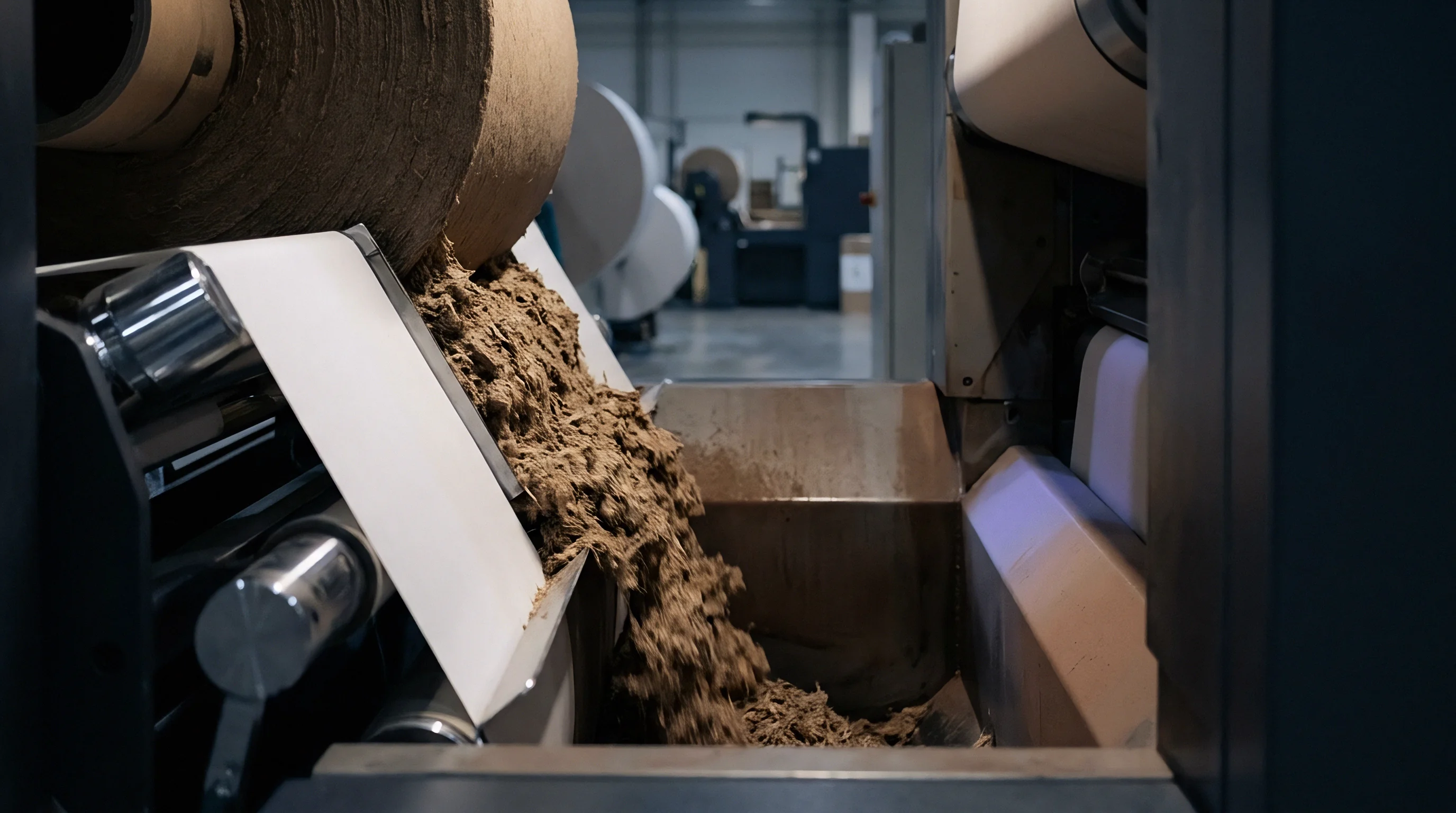

Flake
Mixed plastic waste undergoes thermal conversion to yield secondary oil feedstocks. Chemical recycling processing yields depend on the purity and resin composition of the incoming waste stream. High concentrations of polyvinyl chloride, PET, moisture, or organic contaminants degrade pyrolysis oil quality, demanding energy-intensive hydrotreating and dehalogenation steps before steam cracker injection.

Feedstock Yield Losses across Recycling Chemistries
Pyrolysis reactors convert polyolefin fraction streams into liquid hydrocarbons at thermal thresholds between four hundred and six hundred degrees Celsius. Non-polyolefin contaminants lower liquid yield and generate gas or char fractions. Chemical testing reveals no atomic difference.
Gasification operates at temperatures exceeding 1200 degrees Celsius with oxygen and steam, breaking polymers down into synthesis gas consisting of carbon monoxide and hydrogen. Gasification breaks molecules down completely. Solvolysis and depolymerization reactions selectively clea chemical bonds in condensation polymers like PET or polyamide, yielding purified monomer units with low thermal loss penalties.
| Recycling Process | Input Feedstock | Primary Liquid/Monomer Yield (%) | Co-Product Fuel Allocation (%) | Solid Residue / Loss (%) |
|---|---|---|---|---|
| Polyolefin Pyrolysis | Post-Consumer PE/PP Flake | 62.0 to 75.0 | 18.0 to 28.0 | 7.0 to 12.0 |
| Waste Gasification | Mixed Plastic Residuals | 35.0 to 48.0 | 42.0 to 55.0 | 10.0 to 18.0 |
| PET Methanolysis | Unwashed PET Bottle Flake | 84.0 to 91.0 | 3.0 to 6.0 | 6.0 to 10.0 |
| PA6 Solvolysis | Post-Industrial Nylon Fiber | 88.0 to 94.0 | 2.0 to 4.0 | 4.0 to 8.0 |
| Yield figures derived from commercial plant operating balances under atmospheric to elevated pressure conditions; yields exclude non-recycled carrier solvent inputs. | ||||
Process efficiency losses directly dictate how many physical tonnes of post-consumer plastic waste must enter pyrolysis processing to yield one certified metric tonne of recycled polypropylene or polyethylene resin.
- Feedstock Contamination Breaches Chlorine levels exceeding 50 parts per million in pyrolysis oil corrode cracker tube metallurgy and force unannounced refinery shutdowns.
- Unallocated Residue Divergence Non-polymerizable gas and heavy tar fractions allocated as recycled content inflate environmental assertions illegally under European packaging rules.
- Purification Yield Reductions Multi-stage hydrotreating strips heteroatoms but consumes significant hydrogen volume, reducing final liquid mass by 8 to 15 percent.
- Multi-Site Credit Drift Assigning mass balance credits earned at remote pyrolysis plants to olefin crackers lacking direct pipeline linkages invalidates verification under strict physical connectivity rules.
Pyrolysis conversion of post-consumer polyolefins yields precisely sixty-two percent virgin-equivalent monomer credit under standard thermal cracking parameters.
Yield losses reduce usable output. Uncertified claims create regulatory exposure. Suppliers frequently maintain that process yield losses fall entirely within normal refinery operating tolerances when questioned about unallocated residue streams.


Attribution
Accounting rules dictate how certified recycled properties distribute across output product streams. Petrochemical operations utilize distinct mathematical credit distribution models depending on market requirements and scheme rules.

Free Allocation versus Pro Rata Credit Assignment
Polymer manufacturers distribute mass balance credits using either proportional mathematical splitting or targeted concentration approaches. Pro rata attribution divides input recycled credits evenly across every tonne of output polymer, resulting in uniform but low recycled content percentages across all production runs. Free allocation concentrates accumulated mass balance credits onto specific designated product lines.
Free allocation permits a manufacturer to sell 10 percent of production as 100 percent recycled resin while designating the remaining 90 percent as conventional virgin resin.

Whose Inventory Period Governs Mass Balance Claims?
Certifying bodies permit site balance reconciliation windows ranging from three months to a full operating year. The physical inventory balancing period establishes the precise time frame within which input feedstock credits must match downstream resin deliveries. Unused credits rollover within defined validity limits, but credit expiry policies prevent perpetual hoarding of recycled claims during market downturns.
Audit trails bridge the physical gap.
Consider a chemical recycling allocation model operating under ISCC PLUS rules. A steam cracker facility processes 1,000 metric tonnes of liquid pyrolysis oil derived from post-consumer flexible packaging over a three-month balancing window. Steam cracking yields 620 tonnes of polymer-grade ethylene and propylene monomers, while 380 tonnes convert to heavy pyrolytic fuel oil, methane, and process residue.
Scheme rules ban assigning mass balance credits to energy recovery products. The refinery registers 620 tonnes of net recycled olefin credit in its site ledger. The converter orders resin to produce food-contact polypropylene film demanding a 30 percent recycled content declaration.
Under free allocation, the polymer producer concentrates 300 tonnes of olefin credit onto a 1,000-tonne production run of polypropylene, assigning zero credits to adjacent industrial polymer runs. Under pro rata attribution rules, the 620 tonnes of credit spread across total plant output of 20,000 tonnes, yielding a mandatory fixed declaration of 3.1 percent recycled content across all shipped resin pallets.
Clause 4.3 of ISCC PLUS System Document 203 prohibits transferring mass balance credits to energy recovery streams while permitting full concentration onto high-value polymer outputs.
Attribution decisions directly dictate packaging declaration claims. Paperwork carries the legal weight. Purchasing teams establish clear contractual parameters regarding credit allocation methodologies prior to issuing resin purchase orders.
- Identify Governing Voluntary Standard Review whether the polymer supplier operates under ISCC PLUS, REDcert2, or RSB mass balance rules.
- Verify Allowed Allocation Rules Check whether the buyer jurisdiction accepts free allocation concentration or demands proportional pro rata distribution under packaging waste regulations.
- Audit Fuel Exclusion Calculations Validate that all non-material outputs including cracker off-gases have been deducted from the credit ledger before resin attribution.
- Set Balancing Period Limits Establish quarterly reconciliation requirements to prevent seasonal credit carryover discrepancies.
Incorporating ISCC PLUS Clause 5.2 into supply agreements prevents upstream producers from reallocating chemical recycled credits to non-packaging polymer grades during market price spikes.


Chain
Documentary evidence links the physical movement of raw materials to the digital transfer of environmental credits across complex manufacturing tiers. Chain of custody verification requires unbroken traceability from the post-consumer waste collector, through pyrolysis oil production and steam cracking, down to film extrusion and final packaging conversion.

Mass Balance Audit Frameworks and Standards
Independent third-party verification schemes validate site balance ledgers against physical delivery notes and production logs. Scheme auditors inspect mass accounting balance sheets, checking mass input totals against mass output allocations across designated site boundaries. Verification bodies enforce strict physical linkage requirements between processing locations.
| Standard / Scheme | Governing Standard | Max Balancing Period | Fuel Use Exclusion | Multi-Site Credit Pooling |
|---|---|---|---|---|
| ISCC PLUS | ISCC System GmbH | 12 Months | Mandatory | Restricted to physical pipeline links |
| REDcert2 | REDcert GmbH | 12 Months | Mandatory | Permitted within defined country borders |
| RSB Advanced Products | Roundtable on Sustainable Biomaterials | 3 Months | Mandatory | Prohibited across non-adjacent sites |
| ISO 22095 | International Organization for Standardization | Defined by scheme | Optional dependent on implementation | Depends on scheme mapping |
Auditing procedures follow sequential steps to verify mass balance continuity along the conversion chain.
- Cross-check raw material delivery invoices against physical weight bridge receipts at the pyrolysis plant interface.
- Verify the valid scope certificate code of the chemical recycling supplier on the central scheme online register.
- Calculate physical processing conversion yield ratios against baseline historical plant performance data.
- Audit site balance ledger debits and credits to ensure zero overdraft positioning at the end of the reconciliation period.
- Inspect final resin shipment sustainability declarations for correct certificate numbers and claim phrasing.
Mass balance accounting integrity relies on physical inventory reconciliation at the single site before credit transfer across legal entities.
Discrepancies trigger formal compliance holds. Customs officers review site declarations. Balancing periods run twelve months.
Buyers demand documented ledger proof. The industry continues to debate whether site-level mass balance pooling across distinct cracker facilities under common corporate ownership maintains sufficient physical connection to genuine recycling activities.


Receipt
Enforcement authorities and corporate packaging buyers verify compliance through systematic review of transaction documents at customs frontiers. Regulatory scrutiny surrounding green claims forces brands to assemble comprehensive legal dossiers proving chemical recycled content assertions under strict packaging waste mandates.

Dossier Construction for Customs and Regulatory Inspection
Border verification demands a complete documentation trail linking the physical shipment to valid chain of custody scope certificates. Customs agents and environmental inspectors demand document sets showing physical material movement alongside accredited chain of custody certificates. Uncertified claims create regulatory exposure.
Import entries carrying recycled packaging declarations face physical hold directives if scope certificates exclude specific packaging grades or manufacturing sites. Compliance files contain site-level mass balance balance sheets, chemical safety testing reports, and food-contact migration test reports conforming to EU Regulation 10/2011 limits.
Food contact verification introduces secondary technical barriers for chemically recycled packaging. Thermally cracked polyolefin resins derived from pyrolysis processes meet overall migration limits of 10 milligrams per square decimeter under EN 1186 test conditions, identical to virgin polymers. Chemical testing confirms heavy metal contamination remains below 100 parts per million, satisfying EN 94/62/EC heavy metal restriction mandates.
Paperwork carries the legal weight. Customs clearance delays incur significant container demurrage fees and risk complete shipment rejection if mass balance accounting credits fail independent cross-checking against scheme registry databases.
A packaging claim remains defensible only when every upstream link in the physical supply chain holds an active certificate covering the exact chemical conversion process.