Statistical Acceptance Sampling Protocols for Paperboard Package Lot Verification
Statistical lot verification protects packaging buyers by tying standardized sample testing directly to batch acceptance quality limits and contract settlement terms.


Gauge
Physical testing of paperboard lots starts right on the receiving dock before any skid enters warehouse storage. Intake verification checks delivered folding boxboard, solid bleached board, or corrugated stock against purchase specifications. Sound sampling breaks incoming tonnage into uniform inspection units, ensuring that localized converting defects do not distort the picture of the entire delivery.
Grabbing sheets straight from outer pallet wrap misses internal moisture gradients within the rolls or skid cores. Reliable data requires pulling specimens from multiple depths across the stack.

Conditioning Requirements and Structural Testing Standards
Test sheets pulled from incoming board shipments must undergo strict pre-conditioning before testing. ISO 187 sets the baseline atmosphere for paper, board, and pulp at 23 degrees Celsius and 50 percent relative humidity. Skipping this step skews caliper, basis weight, and stiffness figures: a 5 percent swing in relative humidity shifts sheet moisture enough to knock Taber stiffness down by 8 to 12 percent.
Laboratories therefore hold test cuts under ISO 187 conditions for twenty-four hours before running any physical stress tests.
| Test Parameter | Standard Reference | Specimen Count | Standard Conditioning | Acceptance Boundary |
|---|---|---|---|---|
| Grammage (Grammage / Basis Weight) | ISO 536 | 20 cuts per sample unit | 23°C / 50% RH, 24 h | ±3.0% of nominal rating |
| Caliper (Single Sheet Thickness) | ISO 534 | 10 points per sheet | 23°C / 50% RH, 24 h | ±5.0% of specified micron rating |
| Bending Stiffness (Taber / 15 Deg) | ISO 2493-1 | 10 MD / 10 CD strips | 23°C / 50% RH, 24 h | -7.5% maximum allowable deficit |
| Cobb Water Absorption (Cobb60) | ISO 535 | 5 specimens per side | 23°C / 50% RH, 4 h minimum | +1.5 g/m² maximum absorption limit |
Evaluating physical board properties requires stratified sampling across distinct positions within the delivery. Technicians log roll numbers, skid positions, and grain orientation directly on each cut piece to ensure traceability on the test bench.
Physical Sampling Procedure for Palletized Lots
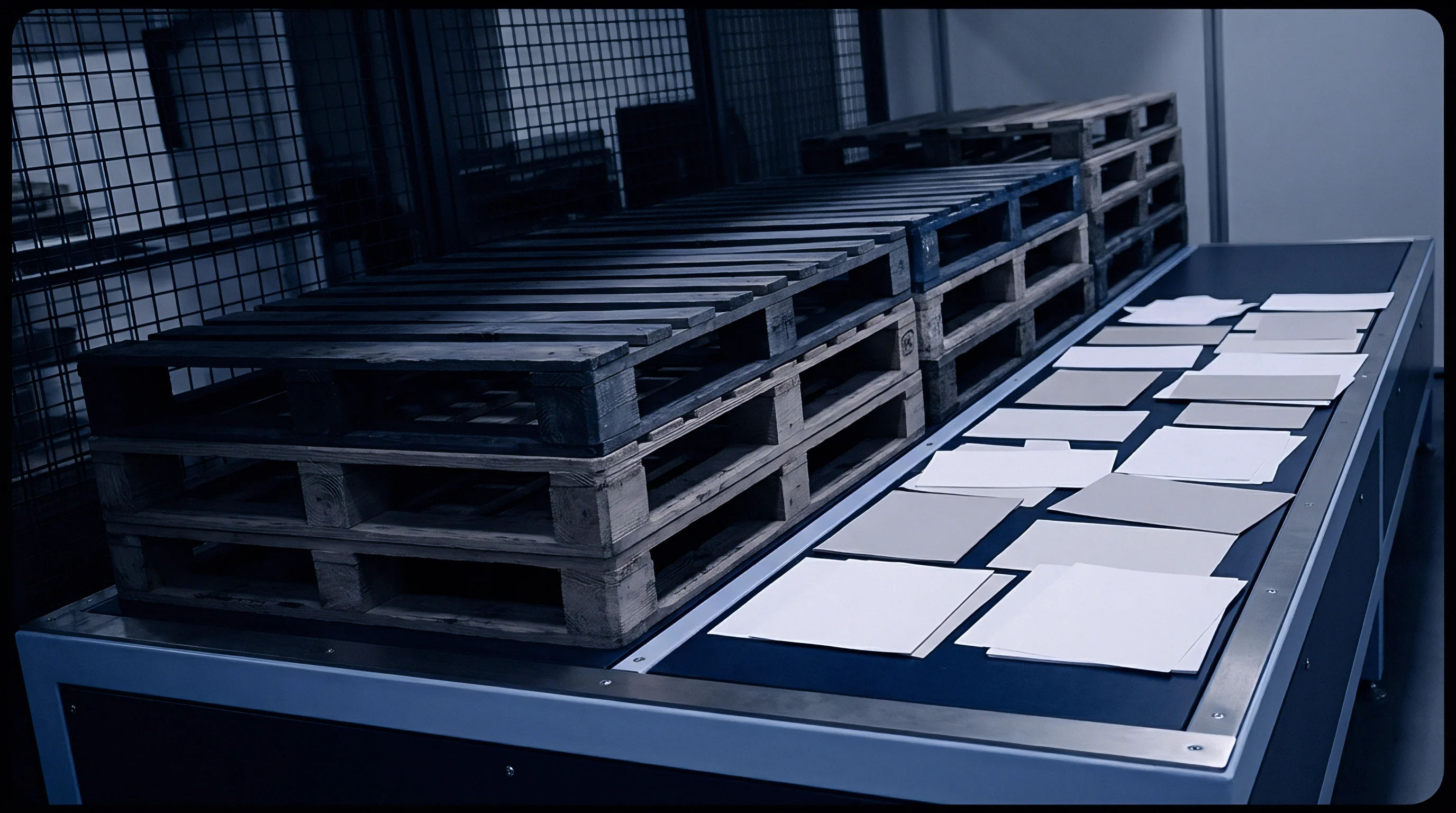
Accurate verification hinges on pulling unbiased material across the delivered skids. Intake technicians follow a set sequence as trucks unload.
- Verify freight documentation matches pallet tags and physical skid counts.
- Select pallets using a random number table mapped to skid positioning numbers.
- Strip stretch film and top protective caps from selected test pallets.
- Extract ten consecutive sheets from the top, middle, and bottom thirds of each pallet stack.
- Trim outer two centimeters from sheet margins to prevent edge-damage skew.
- Place extracted test sheets into sealed vapor-barrier bags for transit to conditioning rooms.
Converting lines depend on predictable substrate behavior during high-speed scoring, folding, and gluing. Thickness fluctuations jam feeder gates, while high Cobb values cause water-based adhesives to fail downstream during transit. Catching substrate deviations on the dock prevents running flawed material through the plant.
Disputes over out-of-spec Cobb test values on delivered folding carton stock frequently turn on whether humidity spiked during road transit or the board arrived non-compliant from the mill.


Arithmetic
Statistical intake tables in ISO 2859-1 and ANSI/ASQ Z1.4 hinge on Acceptance Quality Limits. These protocols determine the sample size n from lot size N alongside the chosen inspection level. General Inspection Level II serves as the standard operational starting point for paperboard verification.
More demanding levels increase sample counts when consumer risk must be squeezed down, while reduced inspection shrinks sample sizes once a mill establishes a reliable track record.

Sampling Plan Mechanics and Switching Rules
Statistical acceptance rests on defined acceptance numbers (Ac) and rejection numbers (Re). Single sampling plans clear a shipment when defective pieces remain at or below Ac, rejecting the delivery the moment non-conforming units reach Re. Double sampling introduces a middle tier: an ambiguous first round triggers a second pull, which lowers average sample counts over long runs while preserving equivalent statistical rigor.
A single sampling plan for a lot of 50,000 folding cartons under General Inspection Level II requires 500 samples, accepting at 10 non-conforming units and rejecting at 11 under an AQL of 0.65 percent.
Dynamic switching rules adapt sampling stringency to running performance. Deliveries begin under normal inspection. If two out of five consecutive lots fail initial verification, testing tightens, either demanding larger sample sizes or lowering the allowable Ac threshold.
Moving back to normal inspection requires five consecutive clean lots under these tighter criteria, while five consecutive failures under tightened inspection mandate stopping receipt of goods.

Producer Risk against Consumer Risk
Statistical verification balances two competing commercial risks, mapped on Operating Characteristic curves that plot lot acceptance probability against true defect rates. The steepness of this curve reflects the chosen sample size.
- Producer Risk Alpha defines the probability of rejecting a lot whose defect rate matches the agreed acceptance quality limit. Standard tables fix alpha between 0.01 and 0.05.
- Consumer Risk Beta represents the probability of accepting a lot whose defect rate reaches the Lot Tolerance Percent Defective threshold. Standard verification tables calibrate beta near 0.10.
- Acceptance Quality Limit marks the maximum acceptable percentage of non-conforming units for ongoing process verification. AQL defines acceptable producer performance rather than absolute zero-defect output.
- Lot Tolerance Percent Defective isolates the poor quality level that a buyer tolerates only with minimal probability. Sampling protocols protect against LTPD arrival at the converting facility.
Consider a delivery of 100,000 folding boxboard blanks evaluated under General Inspection Level II. Standard tables assign code letter N, requiring a sample size n=500. At an AQL of 1.0 percent, the limits sit at Ac=10 and Re=11.
Finding 10 non-conforming items clears the shipment; an 11th defect rejects it outright. If the 100,000-unit batch carries an actual defect rate of 2 percent, the Operating Characteristic curve caps acceptance probability below 15 percent, keeping unworkable board off the production floor.
Clause 8.3 of ISO 2859-1 permits switching from normal to tightened inspection when two out of five consecutive lots are rejected on original inspection, doubling the sampling intensity without altering lot size.


Defect
Categorizing packaging non-conformities determines whether a shipment passes statistical verification. Quality frameworks divide flaws into three tiers based on practical consequences. Critical defects involve regulatory breaches, food-contact contamination, or complete structural collapse during packing.
Major flaws compromise structural stiffness, scoring performance, or barcode scan rates. Minor defects represent surface cosmetic flaws that leave the carton functionally intact.

Why Do Critical Defects Override Standard Acceptance Numbers?
Critical non-conformities carry an acceptance threshold of zero (Ac=0), superseding standard AQL tables. Discovering a single critical defect in any sample size immediately flunks the entire lot. In food packaging, pinholes in barrier coatings, migratory chemical contamination, or sheet delamination count as critical failures.
A failed glue seam that jams an automated cartoner halts packaging lines, producing losses that quickly eclipse the invoice value of the board itself.
| Severity Class | Defect Example | AQL Standard | Sampling Method | Operational Consequence |
|---|---|---|---|---|
| Critical | Delamination, migration barrier loss, structural seam failure | 0.00% (Ac=0) | Visual & Barrier Assay | Immediate lot rejection and quarantine |
| Major | Out-of-spec crease stiffness, scuffed barcode, caliper error >10% | 1.00% AQL | Bench Measurement | Conditional acceptance or sorting required |
| Minor | Ink overspray, slight color shift, minor surface dusting | 4.00% AQL | Visual Comparison | Lot accepted with recorded supplier feedback |
Receiving inspectors log non-conformities as soon as samples are drawn. Clear defect catalogs within supply contracts are essential here, preventing subjective disagreements between mill representatives and plant quality personnel over borderline visual issues.

Non-Conformity Classification in Board Converting
Quality protocols rely on structured decision criteria when a sampled lot displays mixed defects.
ANSI/ASQ Z1.4 assigns an Acceptance Quality Limit of zero to critical safety failures, meaning a single unglued seam in a packaging run halts lot clearance across the line.
- Critical Defect Protocol requires instant quarantine of the full lot, immediate supplier notification, and mandatory third-party lab verification.
- Major Defect Accumulation triggers lot rejection when total major defects exceed the calculated Ac for AQL 1.0, regardless of minor defect counts.
- Combined AQL Limit Check evaluates overall lot compliance by assessing major and minor non-conformities against their respective acceptance thresholds simultaneously.
- Sorting Re-evaluation allows supplier-funded 100 percent sorting only when defect types permit clear visual or automated segregation on the factory floor.
Misjudging defect severity corrupts the entire sampling protocol. Treating structural flaws as minor surface blemishes allows defective substrate into finishing operations, triggering line jams and downstream customer rejections.
Downgrading a structural glue seam separation to a minor visual defect risks stalling high-speed filling lines, where downtime costs run into thousands of Euros an hour.


Conformity
Documentary checks reconcile physical delivery lots with certified laboratory test data. Every incoming board delivery requires unbroken paperwork linking physical skid labels back to mill production runs. Chain of custody certificates, analytical test sheets, and food-grade compliance filings make up this dossier.
Mismatches between pallet tags and test certificates invalidate third-party laboratory reports during border customs clearance.

Testing Certificates and Chain of Custody Validation
Certificates of Analysis (CoA) must list traceable mill run numbers, manufacturing dates, and actual test metrics generated under ISO 17025 accredited laboratory procedures. Blanket compliance declarations fail regulatory muster. Chain of custody verification for certified fiber schemes like FSC or PEFC requires valid license codes printed directly on commercial manifests and delivery invoices.
A mill certificate of analysis without matching batch production numbers on the pallet wrap carries no legal standing during border regulatory checks.
Food-contact paperboard requires formal declarations under Regulation EC 1935/2004 alongside relevant national standards, such as BfR Recommendation XXXVI. These filings must specify overall and specific migration limits, extraction simulants, test temperatures, and the surface-to-volume ratios applied during laboratory assays.

Food Contact and Barrier Declarations
A complete regulatory dossier compiles mill certificates, analytical assay results, and fiber tracking records into an audit-ready file.
- Mill Certificate of Analysis specifies batch-specific grammage, caliper, moisture content, and strength test values signed by qualified quality assurance personnel.
- ISO 17025 Test Reports document overall and specific migration testing under defined chemical simulants, temperature settings, and contact durations.
- Chain of Custody Document tracks certified fiber percentages through transfer or credit accounting mechanisms from pulp supplier to converter.
- Packaging Waste Regulatory File records material recyclability classifications under EN 13430 and heavy metal content compliance under EU packaging laws.
Quality assurance on paperboard relies on tying dock sampling directly to paper trails. A delivery lacking proper certificate scope lines leaves the importer of record open to customs impoundment and port demurrage fees.
When batch documentation lacks explicit timestamp cross-references to pulp digest logs, verification defaults to independent third-party laboratory re-testing.


Settlement
Commercial resolution on a rejected delivery depends on contract provisions governing quarantine, secondary inspection, and sorting costs. A formal rejection isolates the material in a secure warehouse bay. The buyer files a Notice of Non-Conformity backed by physical sampling logs, defect counts, and conditioning lab reports.
Agreed sampling terms inside the master contract bind both sides to set dispute workflows if the mill challenges intake findings.
Quarantine Procedures and Financial Recourse
Non-conforming stock stays in quarantine pending joint re-inspection or formal disposition instructions from the supplier. Feeding rejected paperboard into converting operations forfeits buyer rejection claims under standard commercial terms. Contracts define whether disputing a result calls for a double sampling protocol or sending blind specimens to an accredited reference laboratory.
Sorting a rejected lot of one hundred thousand paperboard blanks manually costs more than the raw material value of the board.
Financial recovery covers debit notes for replacement board, floor storage fees, and reimbursement for independent laboratory testing. When defective lots require manual sorting to maintain converting deadlines, commercial agreements assign these sorting costs directly to the mill.

Sorting Costs and Line Interruption Risk
Deciding whether to sort requires weighing substrate value against sorting labor costs. Manual sorting through 100,000 folding boxboard blanks burns through considerable labor hours while risking handling scuffs on repacked board. Contractual cure windows grant mills a fixed period to provide replacement skids before the converter covers the shortfall through open-market purchases charged back to the supplier.
Whether automated vision inspection systems integrated directly into converting lines can legally replace statistical manual lot verification under international contract law remains an open question for packaging buyers.