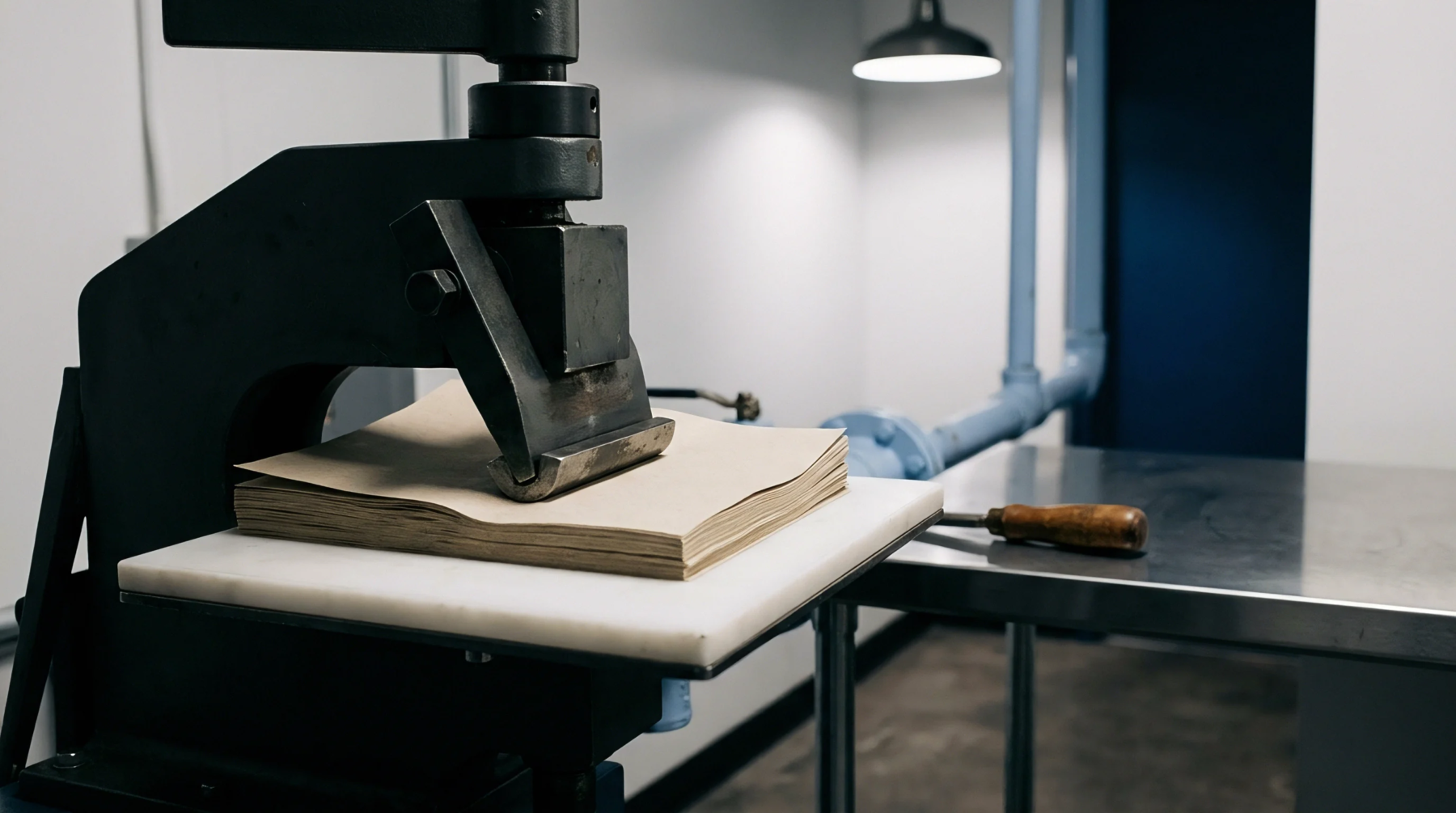
Die Imposition Optimization Balancing Web Deckle Yield against Packaging Line Jam Rates
Nesting carton blanks across web deckles saves converting trim but rotates crease lines against machine grain, escalating carton erection failures at speed.
Automated packaging systems convert flat die-cut blanks or pre-glued sleeves into open, three-dimensional containers ready for product insertion. A carton erector draws individual blanks from a loading magazine using vacuum cups or mechanical pick fingers, forces the scored panel along pre-broken creases, folds the bottom flaps, and seals them using hot-melt adhesive or mechanical interlocking tabs. The machinery functions downstream from printing and die-cutting operations and immediately upstream from volumetric fillers, pick-and-place robots, or manual packing stations.
Mechanical operation relies on precise timing between rotary pick heads and walking beams, where any dimensional variation in carton board stock risks a mistimed feed or misaligned closure. Equipment scope excludes bulk corrugated tray builders and case formers that process heavy shipping grades, maintaining boundaries around primary folding cartons manufactured from solid bleached sulphate, folding boxboard, or coated recycled paperboard.
Magazine extraction initiates the operational cycle by breaking static friction between stacked board blanks. Here, the carton erector pulls a single blank across feed dogs, opening the body panels by driving the scored hinges through ninety degrees against opposing guide rails. Pre-break angles applied during folding and gluing determine the mechanical resistance encountered by the machine, where creases bent to one hundred and eighty degrees during conversion open with significantly lower opening force than raw, unbent scores.
Resistance to opening must remain below specified threshold values, typically measured in milli-Newton metres, to prevent the vacuum cups from separating prematurely from the coated board surface. Once squared, base flaps fold in deliberate sequence through pneumatic tuckers or stationary curved plows. Adhesive nozzles deposit metered beads of ethylene-vinyl acetate or metallocene hot melt across minor flaps before major flaps compress against an internal mandrel to cure the bond.
High-speed cartoners run continuously at rates exceeding three hundred units per minute, leaving less than two tenths of a second for complete flap compression.
Caliper consistency and board stiffness directly govern machine runnability across extended operational cycles. Cross-direction bending stiffness provides the necessary structural resistance against erecting plows, preventing panel bowing when mechanical arms drive flat sleeves into rectangular profiles. Insufficient machine-direction stiffness causes carton blanks to sag within horizontal feed magazines, producing irregular feed angles and consequent pick failures.
Coating formulations also alter interaction with rubber or polyurethane suction cups, where high-gloss dispersion varnishes or metallic foils present low air permeability but reduced frictional grip compared to clay-coated surfaces. Environmental humidity introduces another operational variable by altering paperboard equilibrium moisture content, where elevated moisture softens cellulose fibres, lowers score stiffness, and increases carton opening force. Dimensional tolerances for die-cut blanks running through high-speed erectors permit variations no greater than zero point five millimetres between creasing rules.
Nesting carton blanks across web deckles saves converting trim but rotates crease lines against machine grain, escalating carton erection failures at speed.
Expertise is a utility, not a secret. sentiention™ publishes its working knowledge as open reference: intelligence layer covering the materials it sources, the markets it enters, and the reference that serves both.