Short Time Surface Tension Impact on High Speed Carton Glue Spreading
Folder gluers above four hundred meters per minute demand adhesives under fifty millinewtons per meter at twenty milliseconds to stop dry carton joints.
Nip
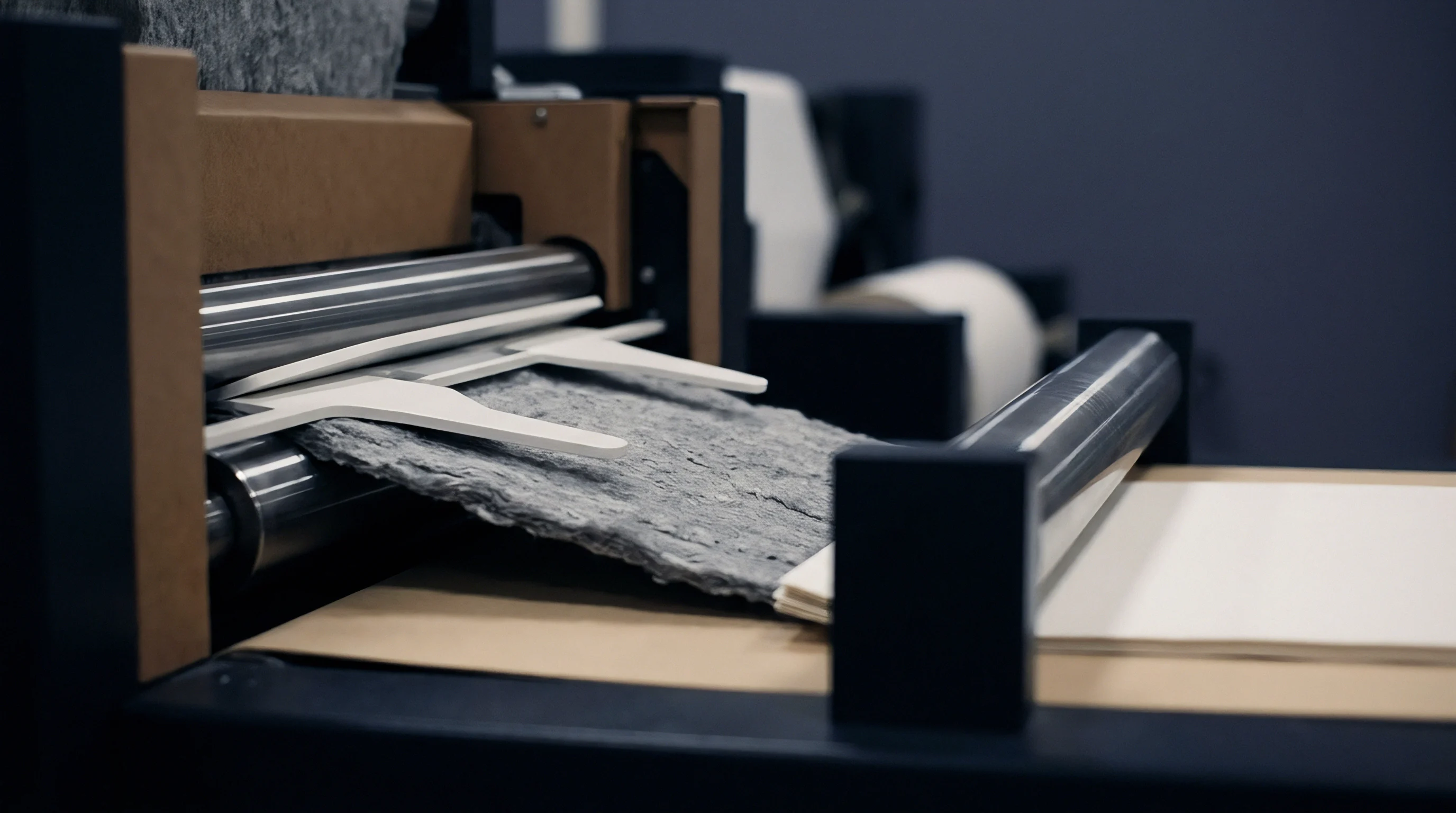
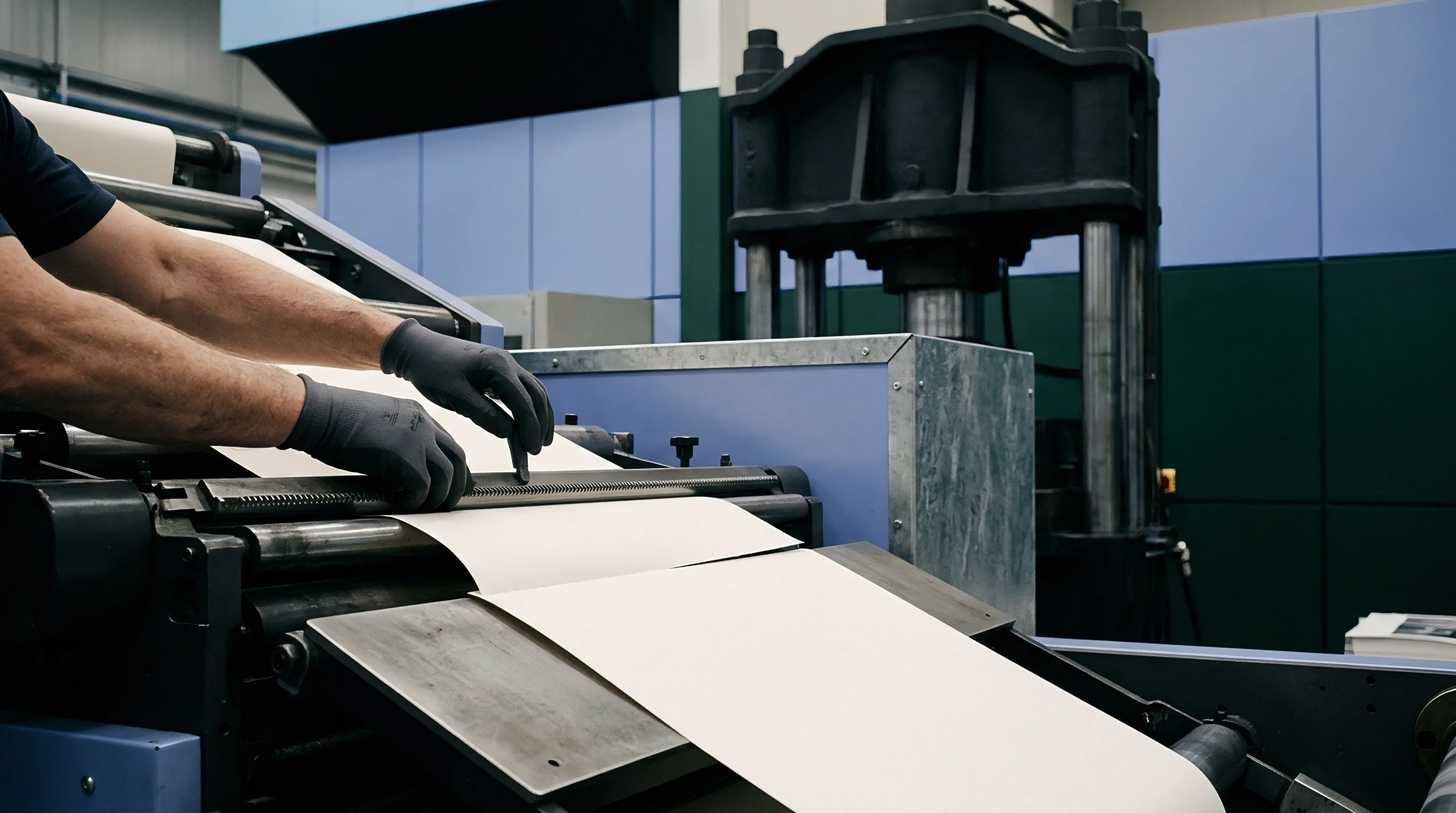
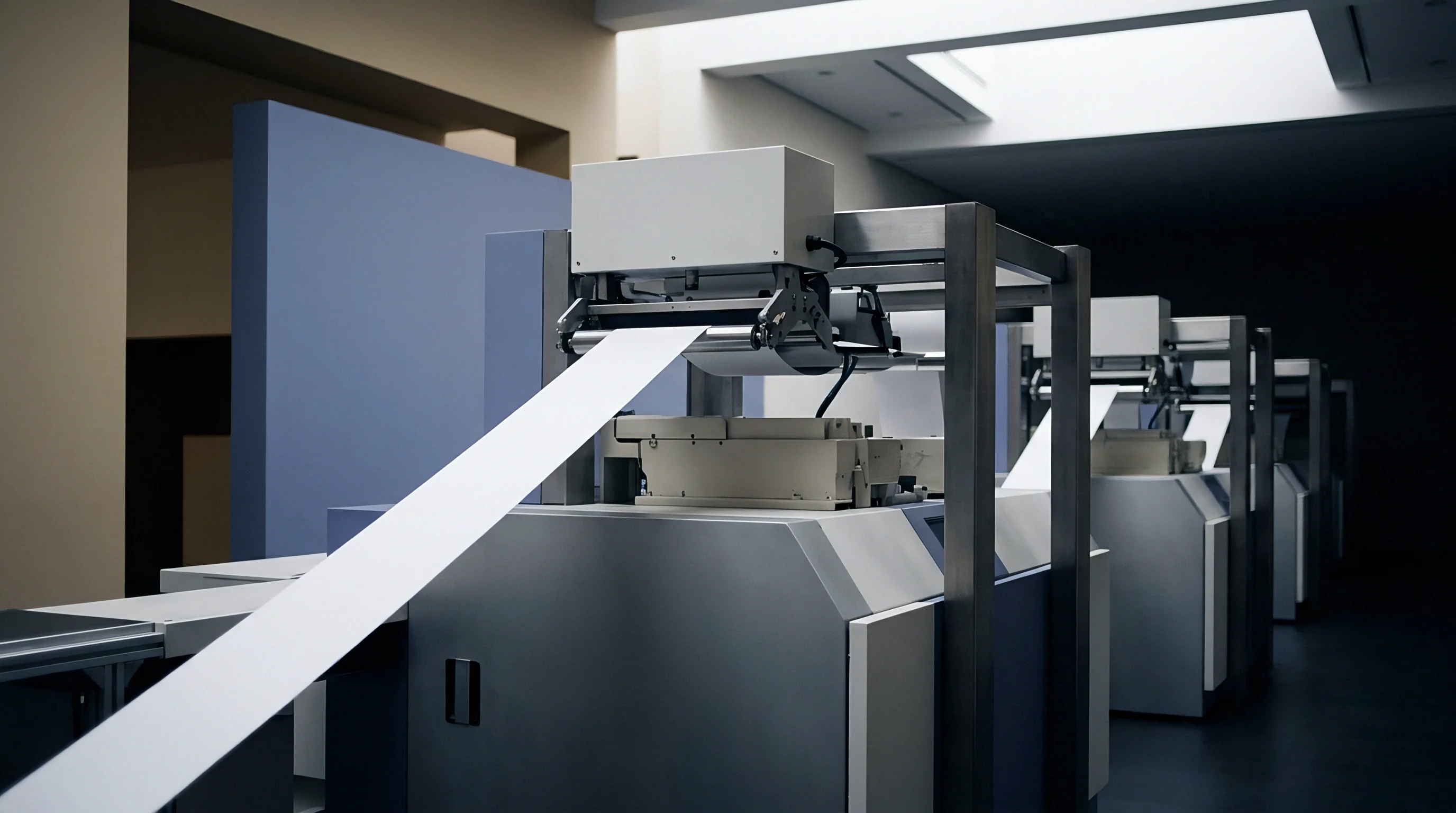
Folder-gluer belts running at five hundred meters per minute move blanks through the glue station in eighty milliseconds. Adhesive droplets strike board cold. Cold-set emulsion beads experience a flight time of twelve milliseconds from nozzle release to initial carton contact, followed by thirty to sixty milliseconds of open dwell before the upper and lower carriers press the joint shut.
Standard laboratory tests report surface tension after seconds or minutes of static equilibrium, yet high-speed folding cartons live and die within this hundred-millisecond threshold. Fluid contact angle, wetting velocity, and interfacial spreading across the mineral coating occur under non-equilibrium states.
When line speeds pass four hundred meters per minute, fluid displacement shifts from capillary-dominated penetration to inertia-controlled surface spreading. The fluid front moves across the board plane before internal capillaries accept liquid volume. Compression belts leave zero margin.
If the aqueous bead maintains a contact angle above fifty degrees as the blank enters the pressure belt, the fluid skids across the top coat rather than flattening into a continuous anchor film. The result is uneven adhesive transfer, irregular bead profile, and asymmetric squeeze along the manufacturer seam.
Carton blanks running above four hundred meters per minute provide less than sixty milliseconds of open time before compression belts force seam closure.
Adhesive formulation chemists add surfactants to lower the surface energy of water-based polyvinyl acetate and ethylene-vinyl acetate adhesives. These surface-active molecules sit homogeneously distributed through the bulk fluid while contained within pressurized delivery hoses. Mechanical extrusion through jetting valves generates fresh liquid-air and liquid-substrate interfaces at microsecond intervals.
The speed at which surfactant molecules migrate from the bulk solution to these newly created boundaries determines whether the adhesive wets the clay coat or beads up like rain on a waxed hood.
The chemical distributor routinely claims the board mill adjusted internal alkyl ketene dimer sizing levels without notifying the converting plant.

Bubble
Tensiometers measuring liquid-gas boundaries through maximum bubble pressure quantify non-equilibrium surface tension across discrete surface ages. Nitrogen bubbles formed at capillary tips submerged in the adhesive bath record surface tension from one millisecond to five seconds. At surface ages below twenty milliseconds, conventional packaging adhesives show surface tensions fifteen to thirty millinewtons per meter higher than their published static values.
A technical data sheet stating thirty-four millinewtons per meter measured via Wilhelmy plate conceals a transient value of sixty-two millinewtons per meter during nozzle jetting.

Transient Interface Kinetics
Surfactants require time to diffuse. Large branched molecules, ethoxylated nonionic blends, and fluorochemical surfactants exhibit steric hindrance and sluggish diffusion kinetics through viscous polymer emulsions. At zero point zero five seconds, newly generated droplet surfaces remain starved of surfactant orientation.
The effective surface tension remains close to that of pure water, sixty-eight to seventy-two millinewtons per meter at twenty-three degrees Celsius. High transient values prevent droplet relaxation, retarding the outward movement of the triple contact line on the carton flap.
| Adhesive Grade | Base Polymer Chemistry | Static Tension at 60 s | Transient Tension at 10 ms | Transient Tension at 50 ms | Transient Tension at 100 ms |
|---|---|---|---|---|---|
| Standard Folding Carton | Polyvinyl Acetate Homopolymer | 35.4 mN/m | 64.2 mN/m | 58.1 mN/m | 46.3 mN/m |
| High Speed Jetting | Ethylene Vinyl Acetate Blend | 33.1 mN/m | 44.8 mN/m | 38.2 mN/m | 35.0 mN/m |
| Dextrin Modified Kraft | Formulated Starch Dextrin | 42.6 mN/m | 68.9 mN/m | 63.5 mN/m | 54.2 mN/m |
| Rapid Surfactant System | Modified Acetylenic Diol PVAc | 31.8 mN/m | 39.2 mN/m | 34.1 mN/m | 32.4 mN/m |
Does Transient Surface Tension Restrict Bead Expansion?
Spreading coefficients define whether a liquid drop spontaneously wets an impermeable or semi-porous plane. The initial spreading coefficient equals the solid surface energy minus the sum of the liquid-gas surface tension and the solid-liquid interfacial tension. Whenever transient surface tension stays elevated above fifty-five millinewtons per meter during open dwell, the spreading coefficient remains negative.
The bead retains a high aspect ratio, spherical profile.
High viscosity stalls droplet spreading. Droplet height stays elevated, forcing mechanical compression belts to do the work of distribution. Mechanical squash exerts outward pressure on the wet line, pushing liquid sideways into non-glued panel sectors and score lines.
Clean bead line placement degrades into lateral squeeze-out.
Aqueous carton adhesive measured under ASTM D3825 yields sixty-four millinewtons per meter at ten milliseconds while registering thirty-five millinewtons per meter under equilibrium Wilhelmy plate testing.
How far surfactant desorption rates at the solid-liquid interface lag behind bubble pressure measurements taken purely at the liquid-air interface remains unquantified across commercial converting speeds.


Clay
Mineral coatings applied to solid bleached board and folding boxboard establish the boundary against which transient wetting occurs. Paperboard top coats contain kaolin clay platelets, ground calcium carbonate granules, and styrene-butadiene latex binders. Kaolin platelets orient parallel to the sheet surface, generating smooth topographies with small capillary radii.
Ground calcium carbonate introduces porous structures with high initial suction potential. High binder levels fill microscopic voids, reducing capillary draw and lowering polar surface energy components.
Pigment Coating Capillarity
Pore structures draw water inward. Liquid entry into mineral coatings follows the Lucas-Washburn equation during initial contact, where penetration depth scales with pore radius, liquid surface tension, contact angle cosine, and elapsed time divided by fluid viscosity. Elevated transient liquid surface tension acts paradoxically here: high surface tension provides thermodynamic capillary drive inside micro-pores, yet simultaneously causes high contact angles exceeding ninety degrees, which halts capillary intake entirely.
Latex binder migration blocks water penetration.

Polar Surface Energy Components
Surface energy calculations partition total solid energy into dispersive Lifshitz-van der Waals forces and polar Lewis acid-base components. Untreated clay coats display total surface energies between thirty-eight and forty-six millijoules per square meter, with polar contributions between four and twelve millijoules per square meter. Polyvinyl acetate emulsions rely on polar interactions, hydrogen bonding between acetate groups and hydroxyl groups on cellulose fibres or coating pigments, to establish rapid structural tack.
| Substrate Classification | Caliper Microns | Total Energy mJ/m² | Polar Fraction mJ/m² | Contact Angle at 10 ms | Contact Angle at 100 ms |
|---|---|---|---|---|---|
| Solid Bleached Board SBB | 350 | 44.2 | 11.8 | 68 deg | 41 deg |
| Folding Boxboard GC1 Double Coated | 400 | 41.5 | 8.6 | 74 deg | 49 deg |
| Coated Recycled Board CRB | 450 | 37.1 | 4.2 | 89 deg | 67 deg |
| Barrier Coated Polyethylene Board | 380 | 32.0 | 1.1 | 98 deg | 92 deg |
| Data gathered using automated high-speed video goniometry with deionised water and diiodomethane at standard conditioning atmosphere of 23°C and 50% relative humidity. | |||||

Dynamic Goniometry and Absorption
Automated contact angle goniometers track the advancing droplet boundary from ten milliseconds to two seconds following droplet detachment. On coated bleached board, contact angles drop thirty degrees within the first sixty milliseconds when run with optimized surfactant packages. Uncoated kraft backsides absorb water rapidly via coarse fibre lumina, causing rapid mechanical setting.
Double-coated top plies, heavily calendered for gloss printing, present dense barriers where liquid spreading must precede liquid uptake.
Incoming board material specifications bound by ISO 187 conditioning must demonstrate advancing contact angles below sixty degrees at fifty milliseconds under TAPPI T 558 verification.
- Mount twenty-millimeter test strips across the vacuum stage of an automated high-speed optical absorption goniometer.
- Calibrate the micro-syringe dispensing tip to deliver zero point eight microliter droplets of formulated adhesive or test fluids.
- Capture baseline image frames at one thousand frames per second starting five milliseconds prior to surface contact.
- Measure contact angle, droplet base diameter, and droplet volume at ten, twenty, fifty, and one hundred milliseconds.
- Plot spreading velocity against droplet aspect ratio to identify surfactant migration lag times.
Purchase contracts enforcing technical delivery conditions dictate that lots showing contact angle decay rates under zero point three degrees per millisecond on top-liner clay coatings permit immediate shipment rejection without converter processing trials.


Bond
Mechanical performance tests reveal adhesive failure modes across folding lines when interfacial wetting fails during the compression cycle. Cold-set adhesives form structural seams through water removal into the cartonboard matrix, which brings emulsified polymer particles into intimate contact, triggering particle coalescence. If high transient surface tension prevents the droplet from spreading into the microscopic texture of the clay coat before water drains, the adhesive film forms a skin without anchoring to the substrate.
The joint lacks mechanical keying.
Cohesion Transitions
Adhesive joints cure through progressive drying phases. Initial tack depends entirely on physical capillary suction pulling water out of the emulsion, increasing solids content from fifty percent to seventy percent within the first four seconds after compression. Unbonded flaps pop open downstream.
When contact angles remain wide, the adhesive contact surface area is thirty to forty percent smaller than calculated. Stress concentrates along a narrow boundary stripe.

Do Rapid Contact Angles Predict Line Adhesion?
Static surface tension readings show poor correlation with high-speed line failures. Production trials running at fifty thousand cartons per hour demonstrate joint separation on boards that passed static contact angle checks. Transient contact angle readings taken at twenty milliseconds correlate directly with deep fiber tear percentages measured twenty-four hours post-conversion.
Rapid droplet flattening guarantees microscopic surface wetting before pressure belts close.
A stable adhesive bead with complete fiber tear forms only when the initial liquid spread velocity exceeds line advance displacement during the open compression phase.
Converting lines experience specific mechanical defects when transient fluid tension conflicts with folder-gluer machine timing:
- Dry Joint Formation occurs when adhesive beads fail to wet the board surface before pressure application, resulting in zero fiber transfer upon box opening.
- Adhesive Tail Stringing develops at jetting nozzles when high extensional viscosity combines with slow surface tension reduction, depositing glue filaments across non-target carton panels.
- Compression Squeeze Contamination arises when unspread, tall adhesive beads are squashed by top belts, forcing wet adhesive onto interior carton surfaces.
- Delayed Seam Pop manifests hours after palletizing as residual mechanical flap tension overcomes shallow, non-interlocked adhesive interfaces.
Pulp choices dictate capillary suction. Recycled fibres deliver slower capillary uptake than virgin chemical fibres due to hornification, requiring longer open times or faster-wetting adhesive chemistries to secure seam integrity.
Evaluating line chemistry requires checking critical production variables across the converting floor:
- Surface Energy Differential between adhesive and coated board determines initial wetting drive.
- Nozzle Shear Rate alters bulk polymer alignment and transient surfactant release during jet discharge.
- Ambient Air Velocity around the gluer track accelerates water loss from high-surface-area droplet beads.
- Compression Belt Dwell supplies mechanical pressure while emulsion coalescence begins.
Skimping on fast-migrating surfactant packages leads directly to rejected warehouse pallets, seam burst claims from brand fillers, and unrecoverable sorting charges on high-speed automated packing lines.
Yield
Line speed determines factory recovery margins. Folder-gluers stopping due to glue contamination or seam pop cost upwards of six hundred dollars per hour in direct mechanical downtime, excluding wasted printed stock. Running machines at sixty percent rated speed to nurse a poorly wetting glue formulation through compression destroys machine payback schedules.
Slower speeds allow surfactants to orient, but they cut daily pallet yield by thirty to forty percent.
Makeready Spoilage and Scrap Accrual
Carton scrap escalates during makeready. Machine operators adjust jet volumes, pressure belts, and nozzle locations to force adhesion when cold glue beads resist spreading. Extra adhesive volume compensates for poor wetting, yet thicker wet films prolong dry times and elevate glue mileage costs.
Running heavier beads creates squeeze-out risk and increases water load on the paperboard score, causing score rolling, blister formation, and seam distortion.
| Performance Metric | Standard PVAc Formulation | Surfactant Optimized PVAc | Formulation Cost Variance |
|---|---|---|---|
| Line Running Speed | 320 m/min | 520 m/min | +62.5% machine output |
| Adhesive Application Rate | 1.85 g/m of seam | 1.20 g/m of seam | -35.1% glue consumption |
| Adhesive Cost per kg Landed | $2.40 | $3.85 | +$1.45/kg chemistry premium |
| Glue Cost per 1,000 Cartons | $1.78 | $1.85 | +$0.07 net adhesive expense |
| Makeready and Run Scrap | 2.8% (28,000 blanks) | 0.4% (4,000 blanks) | -24,000 rejected blanks |
| Substrate Scrap Cost Loss | $3,920 | $560 | $3,360 direct board savings |
| Net Production Run Profit | Base baseline | +$4,180 net margin gain | $4.18 per 1,000 cartons net |
Landed Cost of Rapid Wetting Formulations
Formulated adhesives containing rapid-migrating acetylenic diol surfactants carry raw material price premiums of twenty to sixty percent over standard homopolymer emulsions. That chemical price premium evaporates against the tonnage economics of folding boxboard. A typical twenty-tonne carton order represents thirty-five thousand dollars in printed, cut, and stripped blanks.
Sacrificing two percent of that order to glue seam pop or squeeze-out creates seven hundred dollars in lost substrate value, vastly exceeding the sixty-dollar cost differential of five buckets of rapid-wetting adhesive.
A modest chemical premium on rapid-acting surfactants recovers its investment twenty times over through machine speed gains and reduced sheet spoilage.
Clean fibre pull proves bond integrity. Sourcing engineers balance sheet surface chemistry against line speeds by qualifying adhesive surface tension at millisecond intervals rather than accepting static data sheets. Gluer downtime destroys converting margin.
Specifying dynamic wetting thresholds protects board investments, guarantees seam reliability on packaging lines, and ensures high-speed carton converting hits financial targets.
Run speed follows surface wetting rate.