Deformation Behavior
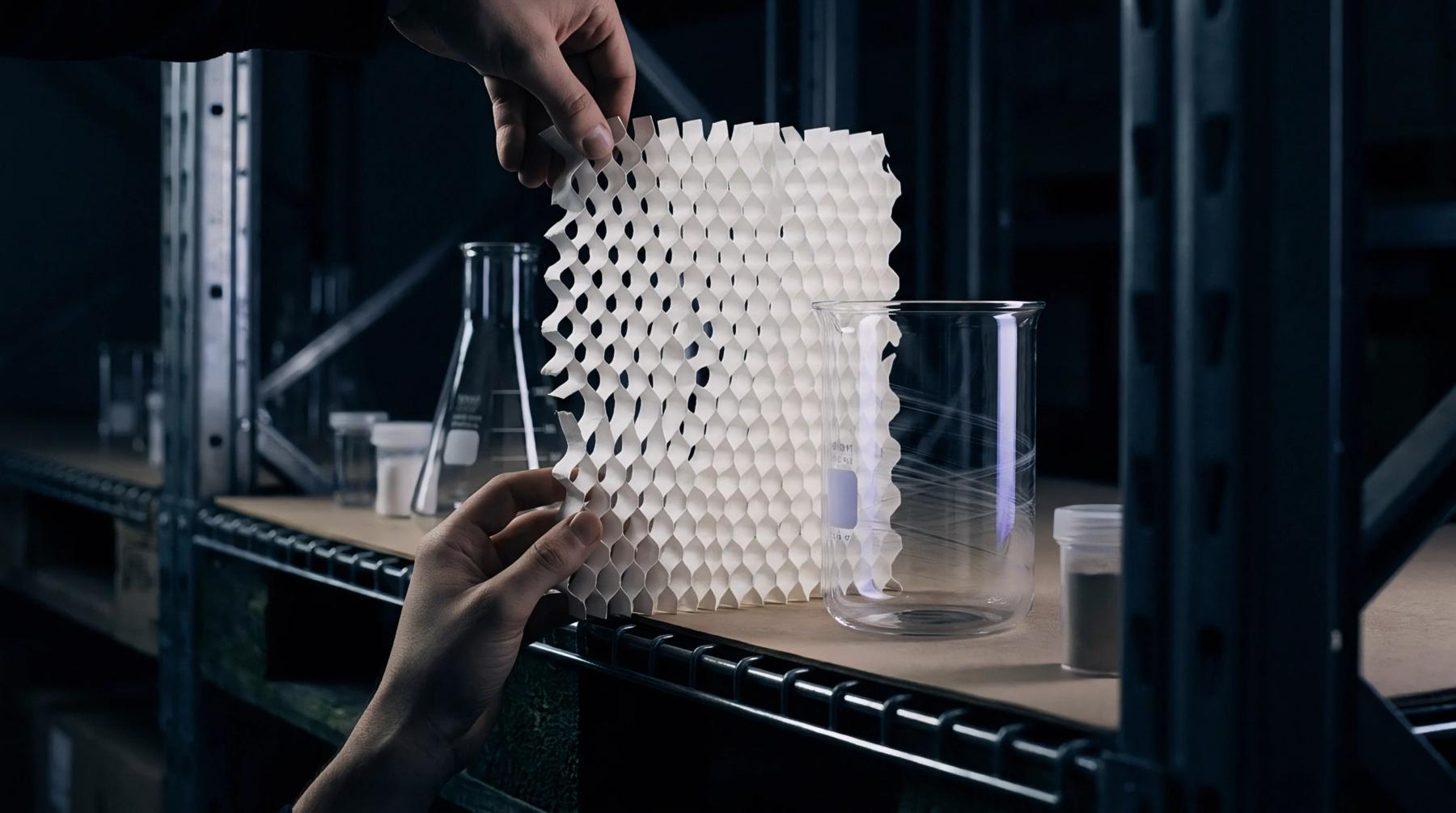
Deformation behavior describes the internal sliding of parallel layers within a material when subjected to a force acting across its thickness. In thick paperboard and corrugated structures, transverse shear deformation accounts for the loss of bending stiffness that occurs when the internal layers shift. This movement is distinct from the pure bending or stretching seen in thin films.
The shear modulus of the core or the fluting medium determines how well the overall structure resists this type of distortion.
Loading Capacity
Loading capacity of a corrugated board depends on the ability of the medium to keep the two liners apart while resisting horizontal sliding. If the transverse shear deformation is high, the board will deflect more under a given load than predicted by simple beam theory. This characteristic is particularly relevant in the design of heavy duty packaging and structural components where thickness is a major factor.
Manufacturers use specific testing rigs to measure the shear stiffness by applying a force that attempts to slide the top liner relative to the bottom.
Material Limitation
Material limitation is evident when soft or poorly bonded cores are more prone to this failure mode than dense, well refined structures. High levels of shear strain often lead to a permanent loss of structural integrity and a decrease in the stacking strength of the finished box.