Transverse Shear Deformation in Multi Ply Folding Boxboard Creasing
Controlled transverse shear delaminates the middle ply into sliding plates, lowering folding torque and protecting outer coated liners from tensile fracture.
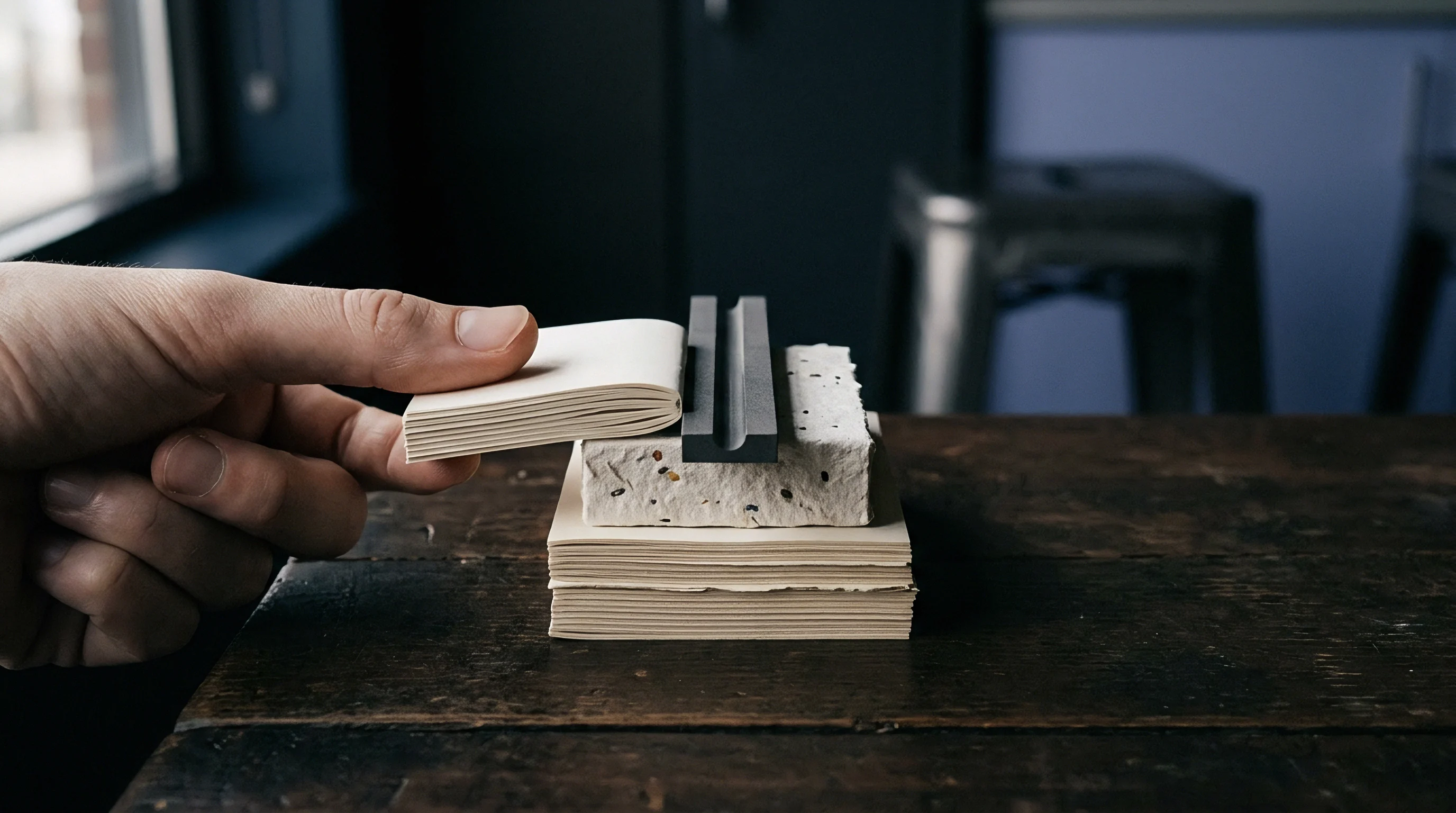
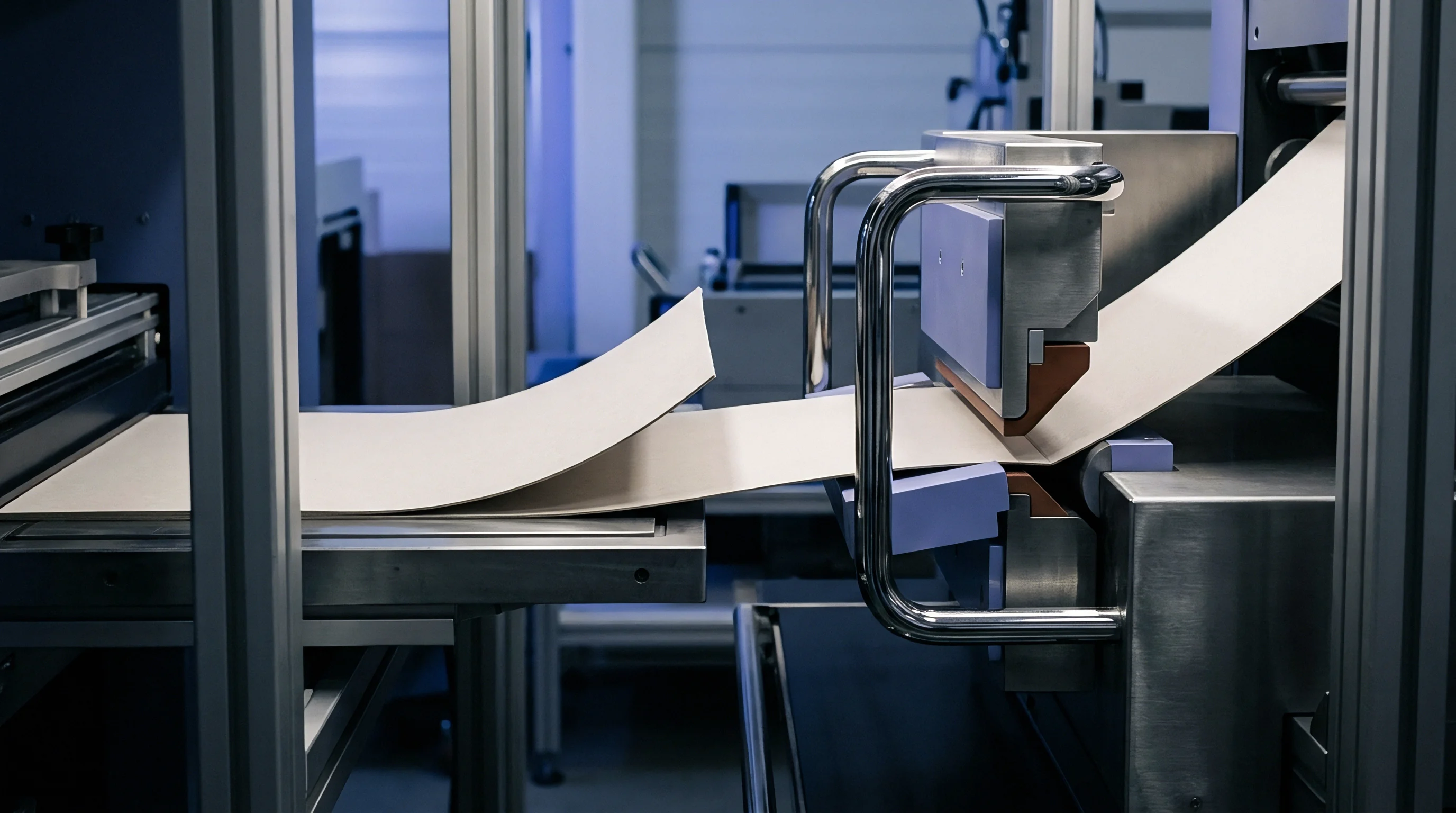
Anvil
Creasing folding boxboard creates a localized delamination hinge through out-of-plane shear stress. When a flatbed steel rule drives board into an open groove matrix, the sheet deflects under three-point bending before reaching full bottom dead center. Multi-ply folding boxboard, composed of bleached chemical pulp outer liners and a high-bulk mechanical pulp middle layer, relies on this controlled structural breakdown.
The middle ply yields internally under transverse shear while the outer tensile liner stays intact. The crease delaminates into distinct sub-layers rather than fracturing in tension. If that internal yield fails to materialize, outer surface coatings split open during high-speed folding on the cartoning line, ruining print finishes and structural stiffness.
The mechanical distinction between folding boxboard (FBB) and solid bleached sulfate (SBS) dictates how tooling forces distribute across the sheet caliper. Solid bleached sulfate features a relatively homogeneous density across its z-axis, requiring high compressive force to crush fibers. Folding boxboard incorporates chemi-thermomechanical pulp (CTMP) or groundwood in its interior plies to maximize bending stiffness per unit basis weight.
This mechanical core exhibits low out-of-plane shear modulus relative to its in-plane tensile stiffness. Tooling setup focuses on generating out-of-plane shear strains that exceed the internal bond strength of the core while preserving the elastic limit of the chemical pulp liners.
Out-of-plane shear stress peaks at the neutral axis of the board along the vertical shear planes defined by the matrix channel edges.
Tooling geometry fixes the shear angle across the sheet thickness. Rule width, matrix channel width, and channel depth govern the resulting deformation field. Standard packaging practice establishes matrix channel width by multiplying total board caliper by a factor between 1.3 and 1.7, then adding the rule thickness.
Changing this multiplier shifts the mechanical regime within the board plies. A tight matrix channel increases vertical shear strain, provoking rapid core delamination at shallow penetration depths. An excessively wide matrix channel decreases shear angle, shifting the deformation into pure bending.
Pure bending stretches the print-side liner over the creasing rule tip until the outer coating layer cracks.
Coated boxboard runs through creasing dies at press speeds between 4,000 and 9,000 sheets per hour on modern flatbed autoplaten presses. Make-ready shims level the steel cutting plate beneath the matrix to achieve uniform penetration across the sheet. A penetration variance of 25 micrometers across the die alters shear strain sufficiently to turn a clean folding hinge into a fractured carton panel.

Cleavage
Delamination within the middle ply develops along predictable shear planes. The steel creasing rule pushes the board down between the matrix shoulders. This movement forces the top liner into tensile strain directly beneath the rule tip, while the bottom liner stretches over the matrix counter-crease edges.
Between these two boundary faces, the mechanical pulp core experiences combined transverse compression and through-thickness shear deformation. Out-of-plane shear stresses peak at the matrix edges. The shear stress distribution follows the classic parabolic profile of a beam in transverse loading, but the material anisotropy of paperboard shifts the peak location toward the interface between the chemical pulp liner and the mechanical pulp bulk.
Internal peeling begins when local shear stress exceeds the transverse shear strength of the CTMP core, which typically measures between 0.8 and 2.5 megapascals depending on moisture content and density. Delamination spreads laterally toward the center of the rule profile, creating multiple discrete horizontal fissures. The middle ply separates into stacked, unbonded plates.
When the creased board later enters the gluer section and folds to 90 or 180 degrees, these unbonded plates slide over one another. This internal sliding displaces the neutral axis inward toward the folding center, preventing tensile strains on the outer liner from reaching the elongation-at-break threshold of the top coating.
| Grade Specification | Caliper (micrometers) | Basis Weight (g/m²) | MD Bending Stiffness (mNm) | Out-of-Plane Shear Strength (MPa) | Scott Bond Internal Strength (J/m²) |
|---|---|---|---|---|---|
| GC1 Fully Coated Virgin FBB | 350 | 215 | 12.5 | 1.25 | 135 |
| GC1 Fully Coated Virgin FBB | 450 | 270 | 26.0 | 1.10 | 120 |
| GC2 Cream Back Virgin FBB | 400 | 250 | 21.5 | 0.95 | 110 |
| GC2 Cream Back Virgin FBB | 600 | 380 | 78.0 | 0.85 | 95 |
| WLC Recycled Duplex Core | 450 | 320 | 20.0 | 1.85 | 160 |
Variations in Scott Bond internal strength alter this cleavage behavior. High internal bond values resist shear rupture during the downstroke. When internal bond strength is excessively high, the mechanical core resists shear separation, absorbing the penetration stroke through bulk thickness compression instead.
Solid bleaching treatments and heavy starch additions elevate this resistance. A stiff core forces outer tensile liners to bear excessive load, inducing liner burst before internal cleavage occurs.
Low core density reduces the force needed to initiate transverse delamination. Groundwood fibers provide lower cross-fiber bonding than chemical fibers, yielding more cleanly under through-thickness shear. Virgin mechanical fibers separate without fracturing cell walls, generating smooth horizontal cleavage planes that glide during subsequent carton erection.
Converting lines running heavy cartons face rejection when these internal fissures fail to disconnect. The whole structural stack then folds as a monolithic solid sheet, buckling the inner liner outward and crushing the carton profile.
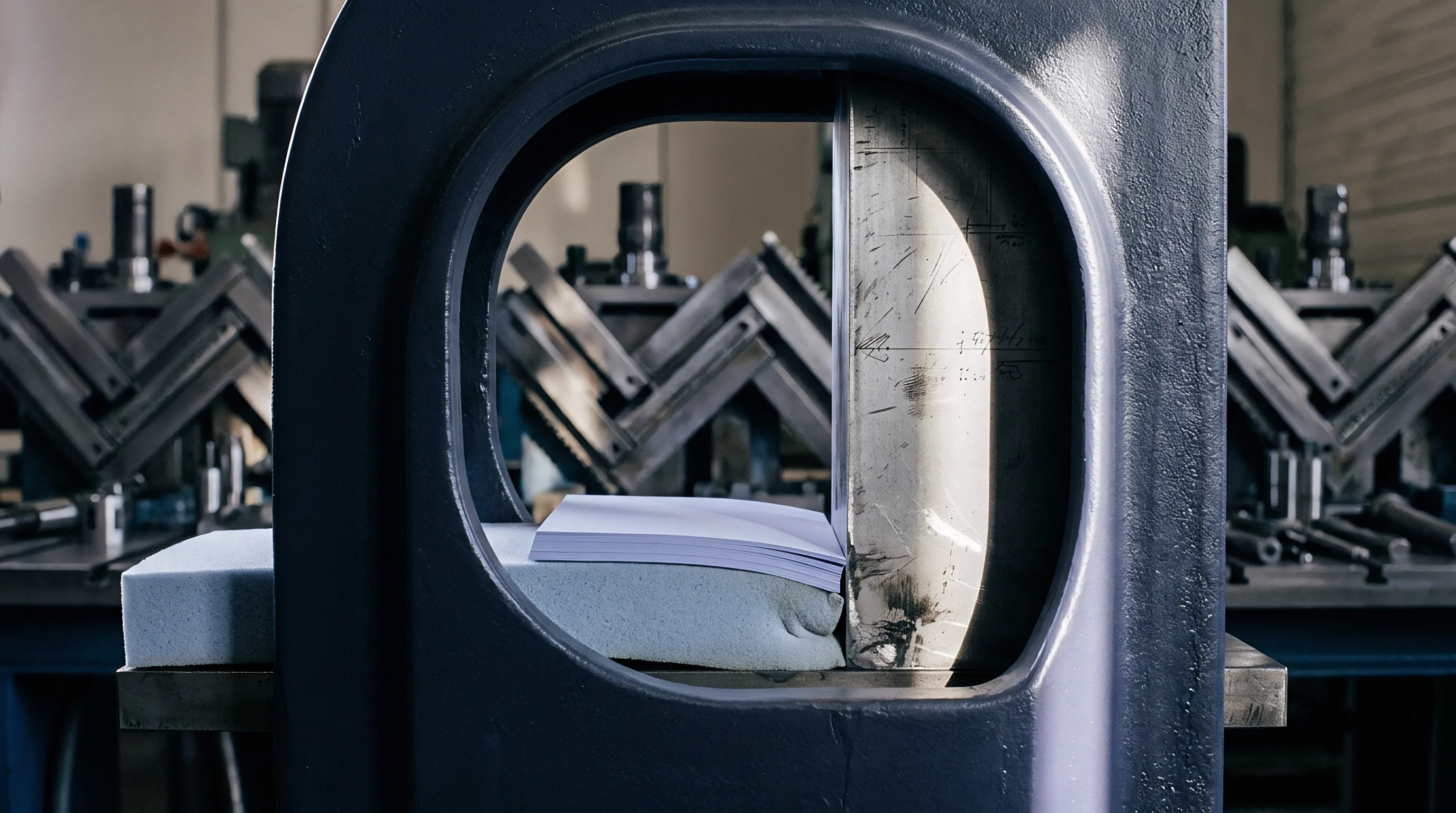
Tooling
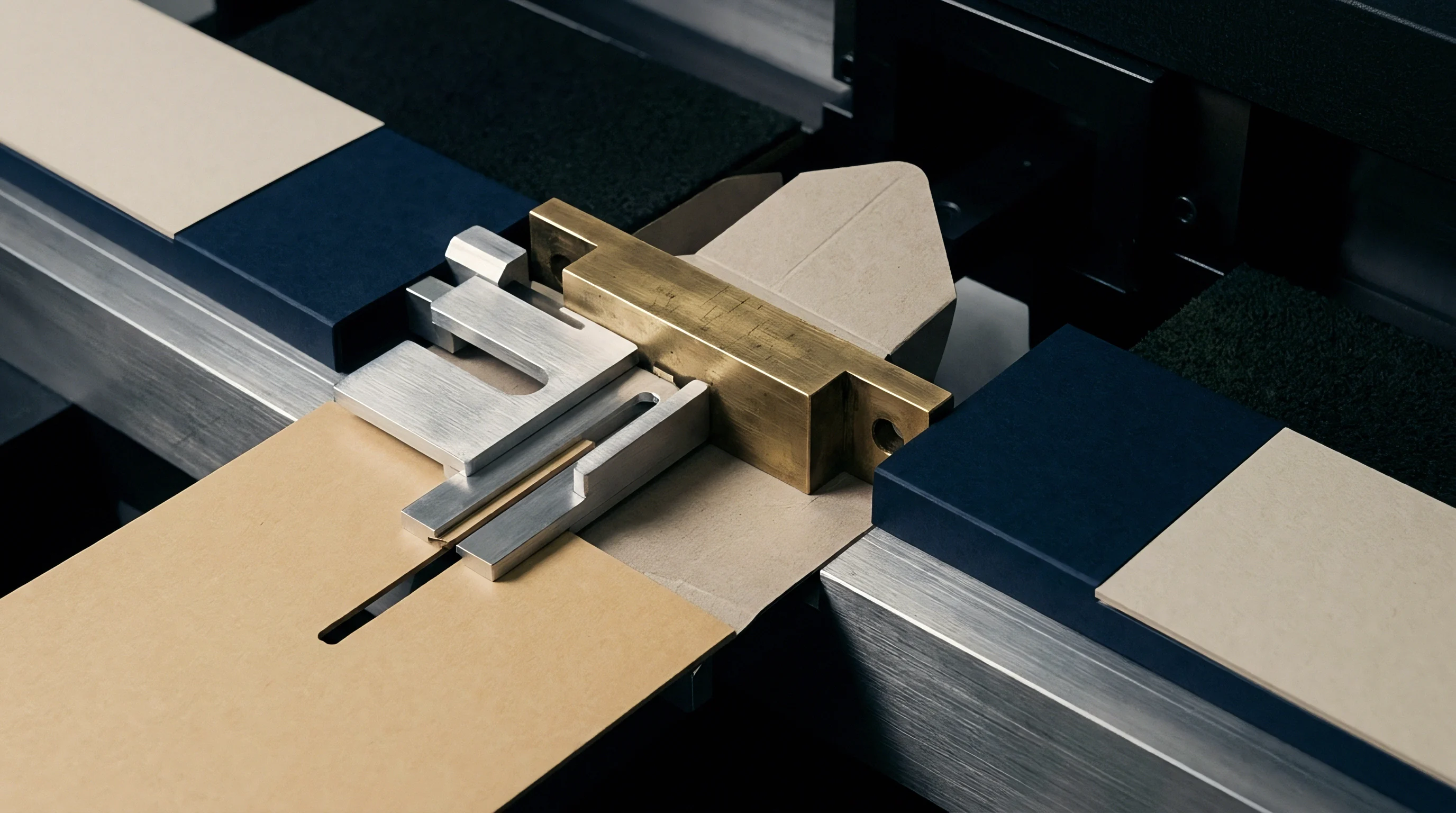
Press tooling establishes the boundary dimensions that govern through-thickness shear strain. Tool designers select steel rule thickness, rule edge profile, matrix channel width, and channel depth according to board caliper and grain direction. The standard creasing rule features a rounded 2-point profile (0.71 millimeter width) with a circular crown radius of 0.35 millimeters.
For board calipers exceeding 500 micrometers, tooling converters move to 3-point rules (1.05 millimeter width) with a 0.52 millimeter crown radius to widen the contact footprint and moderate peak surface contact stresses.
Matrix channel geometry establishes the reaction forces during stroke penetration. Phenolic resin counters and milled steel matrix plates define channel width through established calculations. Standard machine equations compute matrix channel width as:
W = 1.5 × C + R
where W represents channel width, C represents board caliper, and R represents rule thickness. Running cross-grain creases frequently requires adjusting this factor to 1.4 to concentrate transverse shear, while machine-direction creases use 1.6 to prevent grain-aligned tensile cracking. Matrix depth matches board caliper within strict limits, typically set equal to caliper or caliper plus 0.05 millimeters to avoid hard bottoming of the sheet against the steel bed plate.
- Rule profiling verifies tip radius uniformity and inspects grinding tolerances to avoid localized stress concentrations that cut outer liners.
- Counterplate positioning aligns channel centerlines against rule centerlines within a bilateral tolerance of 0.02 millimeters across the entire chase area.
- Channel clearance verification checks matrix openings using mechanical feeler gauges and optical profile gauges under operational clamping pressure.
- Bed leveling adjustment applies zoned patch tapes beneath the cutting chase to equalize mechanical penetration to within 0.015 millimeters across all four corners.
Misalignment between the rule centerline and matrix channel distorts internal shear deformation. When an offset of 0.10 millimeters occurs, shear strain concentrates along one matrix shoulder while the opposing shoulder experiences pure bending. One side of the crease shows early liner splitting while the opposite side shows incomplete ply cleavage.
The carton subsequently folds out of square, binding inside automatic packing line cartoner pockets.
Finish
Surface treatments modify how multi-ply folding boxboard accommodates out-of-plane shear stresses. Applied films and coating layers alter the tensile elongation threshold of the outer liner, shifting the mechanical balance of the crease. Extrusion barrier layers, cold-set coatings, and decorative films behave as non-fibrous skins that transmit creasing rule force directly into the fiber network without stretching.
Polypropylene laminating films exhibit high tensile strength but stiffen the outer boundary layer, suppressing initial surface slip across the creasing rule crown.
Lamination with 12 to 15 micrometer oriented polypropylene (OPP) films increases top liner resistance to indentation. When the rule descends, the film distributes normal forces over a broader surface area, lowering peak shear stresses at the matrix shoulder edges. The internal CTMP plies experience lower local shear strain, reducing the density of internal delamination fissures.
To overcome this effect and initiate ply separation, die press operators must increase rule penetration depth. Higher penetration stretches the OPP film near its elongation limit. If the film bond strength to the coated board is marginal, through-thickness shear stress causes adhesive delamination at the ink-coating interface.
Biaxially oriented film lamination shifts the shear stress distribution outward, raising the penetration threshold required to break internal core bonds.
Mineral pigment coatings behave differently than polymer films. A double-coated board surface carrying 20 to 24 grams per square meter of calcium carbonate and clay binder possesses limited tensile elasticity, typically fracturing at 1.2 to 1.8 percent elongation. When transverse shear deformation fails to initiate internal core cleavage promptly, the top liner bears pure bending strain.
The mineral coating then develops micro-cracking across the crease exterior. These microscopic fissures expose white raw base fibers beneath dark solid print inks.
Application of UV-curable overprint varnishes further restricts outer ply movement. Free-radical UV coatings cross-link into dense acrylic polymer networks with ultimate elongation values below 2 percent. Applying a heavy UV coating pass directly over the crease zone hardens the exterior face, converting what should be an elastic bending surface into a brittle plate.
The underlying fibers may delaminate correctly, but the cured varnish layer shatters during subsequent folding operations.

Drift
Moisture content governs the transverse shear modulus of paperboard fibers. Boxboard manufactured to equilibrium at 50 percent relative humidity holds between 6.5 and 8.0 percent water content by dry weight. Within this operational window, cellulose fibers and lignin matrices exhibit balanced viscoelastic response to dynamic shear loads.
Water acts as a plasticizer within the amorphous regions of cellulose and hemicellulose, lowering the yield stress of the middle ply fibers while preserving adequate liner tensile modulus.
Storage of cartonboard blanks in dry converting environments alters these mechanics. When warehouse ambient relative humidity drops below 35 percent, sheet moisture drops toward 5 percent. Water loss stiffens the CTMP middle ply, driving transverse shear modulus higher.
As shear modulus rises, the force required to create delamination fissures increases substantially. The brittle mechanical core resists cleavage, and rule penetration forces bleed outward into tensile liner elongation. Surface liners tear along the crease edges under conditions that produced clean delamination hours earlier.
| Equilibrium RH (%) | Board Moisture (%) | Out-of-Plane Shear Modulus (MPa) | Top Liner Tensile Strain at Break (%) | Crease Folding Torque at 90° (Nmm) | Visual Surface Crazing |
|---|---|---|---|---|---|
| 30 | 4.8 | 42 | 1.2 | 185 | Severe splitting |
| 40 | 5.9 | 35 | 1.5 | 140 | Slight cracking |
| 50 | 7.2 | 28 | 2.1 | 110 | None observed |
| 65 | 8.6 | 22 | 2.8 | 85 | None observed |
| 80 | 11.2 | 15 | 3.4 | 60 | Liner peel delamination |
Excessive humidity produces the opposite failure mode. When board moisture rises above 9.5 percent, transverse shear strength falls below 0.6 megapascals. The core plies separate too easily across wide zones extending far beyond the crease width.
Instead of creating a controlled, narrow delamination channel, the crease creates an undefined, spongy depression. The resulting fold loses positional accuracy, generating inconsistent carton dimensions and reduced vertical top-to-bottom compression strength (BCT) across the assembled box.
Production facilities maintaining tight climate control prevent seasonal drift in shear properties. Converting operations running unconditioned production halls experience elevated scrap rates during winter months, when heated air lowers plant humidity and dries sheet stacks between printing and die-cutting passes.
Assay
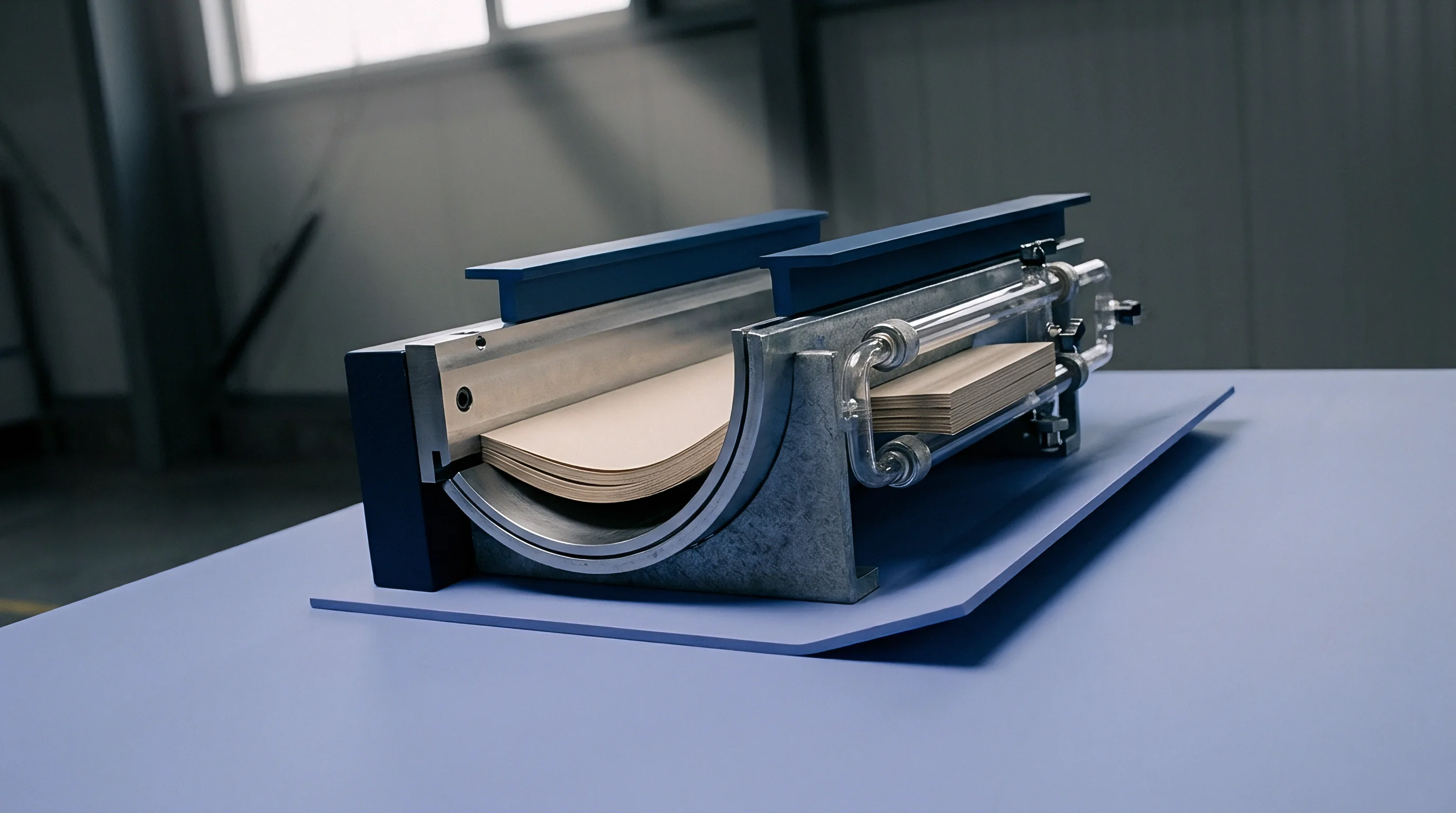
Quantifying transverse shear deformation requires instruments that separate internal delamination from global panel stiffness. Traditional Taber or L&W two-point bending testers evaluate bulk structural stiffness across whole sheets, but they fail to measure local hinge dynamics. Converting testing relies on the Creasability Tester and the Marbach Crease Toughness system to record moment-angle curves as creased samples fold through 90 degrees.
These protocols record initial bending resistance, maximum bending moment, and residual spring-back torque.
Standard testing according to DIN 55437 evaluates crease quality using the crease resistance ratio. This dimensionless index compares the bending force of a creased specimen against the bending force of an uncreased board sample of identical dimensions:
Ratio = (F_creased / F_uncreased) × 100
Acceptable folding performance on automated pharmaceutical and food packaging lines demands a ratio between 30 and 55 percent. A ratio above 60 percent indicates inadequate internal delamination, leaving excessive residual stiffness that overloads mechanical folding tuckers. A ratio below 25 percent indicates excessive core destruction, leaving a weak hinge that buckles uncontrollably during carton erecting.
Cross-sectional microscopy provides visual verification of shear band morphology. Laboratory technicians cast creased board specimens in low-viscosity epoxy resin, slice them through the transverse plane using diamond microtome blades, and inspect them under polarized light microscopy. High-grade creases exhibit a symmetrical array of horizontal fissures within the mechanical pulp core, centered between the rule indentations and extending outward precisely to the matrix channel edges.
If the microscopy reveals crushed fiber walls without distinct shear cleavage, the die setup has applied excessive vertical compression without sufficient transverse shear deflection.
Process control relies on automated image analysis systems mounted on modern folder-gluers. High-speed vision systems read crease symmetry and register at production speeds up to 400 meters per minute, catching incomplete delamination before cartons enter outer packing cases.
Yield
Defective crease deformation carries measurable financial costs across conversion and filling operations. When transverse shear failure occurs, folding boxboard cartons fail on high-speed cartoning machines running at 300 to 500 units per minute. Incomplete core delamination forces excessive carton opening force.
This defect causes mechanical feed arms to drop blanks, triggering line stops that idle packaging crews and delay production schedules.
Consider an operational batch run of 500,000 pharmaceutical cartons manufactured from 350-micrometer GC1 folding boxboard, printed four colors with offline matt water-based dispersion coating. Material pricing runs at 1,450 euros per metric ton, which equates to 0.048 euros per blank in raw board expenditure. Printing, die-cutting, and gluing add 0.032 euros per unit, yielding a total manufactured cost of 0.080 euros per finished carton blank before packing.
- Inadequate matrix depth generates poor shear cleavage on 4 percent of cartons, producing cartons that jam automated product loading funnels.
- Off-center rule alignment produces asymmetric hinge scores on 2.5 percent of sheets, causing skewed glue flaps that fail line vision checks.
- Surface coating cracking along exterior crease lines forces aesthetic rejection of 6 percent of finished units on premium cosmetics packaging.
- Excessive makeready pressure shears the outer tensile liner through completely, instantly scrapping entire die-cut lifts during press bring-up.
If tooling setup errors allow poorly delaminated cartons to ship to a customer, line downtime costs dwarf the original conversion margins. Industrial packaging lines bill downtime at 600 to 1,500 euros per hour. A line shutdown caused by carton erection jams across an eight-hour filling shift generates 8,000 euros in unrecoverable operational charges, easily wiping out the net margin on a 500,000-unit print run.
Tooling wear introduces financial risk across long production jobs. Steel creasing rules experience abrasive wear across their rounded crowns, particularly when converting abrasive mineral-coated boards. After 250,000 impressions, crown radius increases by 0.04 to 0.08 millimeters through abrasive flattening.
This increased contact area dilutes normal penetration force, lowering localized transverse shear stresses. The crease gradually migrates from a delaminated structural hinge to a flattened compression groove, increasing crease stiffness by 20 to 35 percent by the end of the run.
Converters mitigate this tooling degradation by specifying laser-hardened or plasma-coated creasing rules for jobs exceeding 200,000 impressions. The additional tooling investment of 350 euros per die set prevents mid-run crease drift, preserving proper out-of-plane shear mechanisms through the final lift of the order.