Shear Sliding
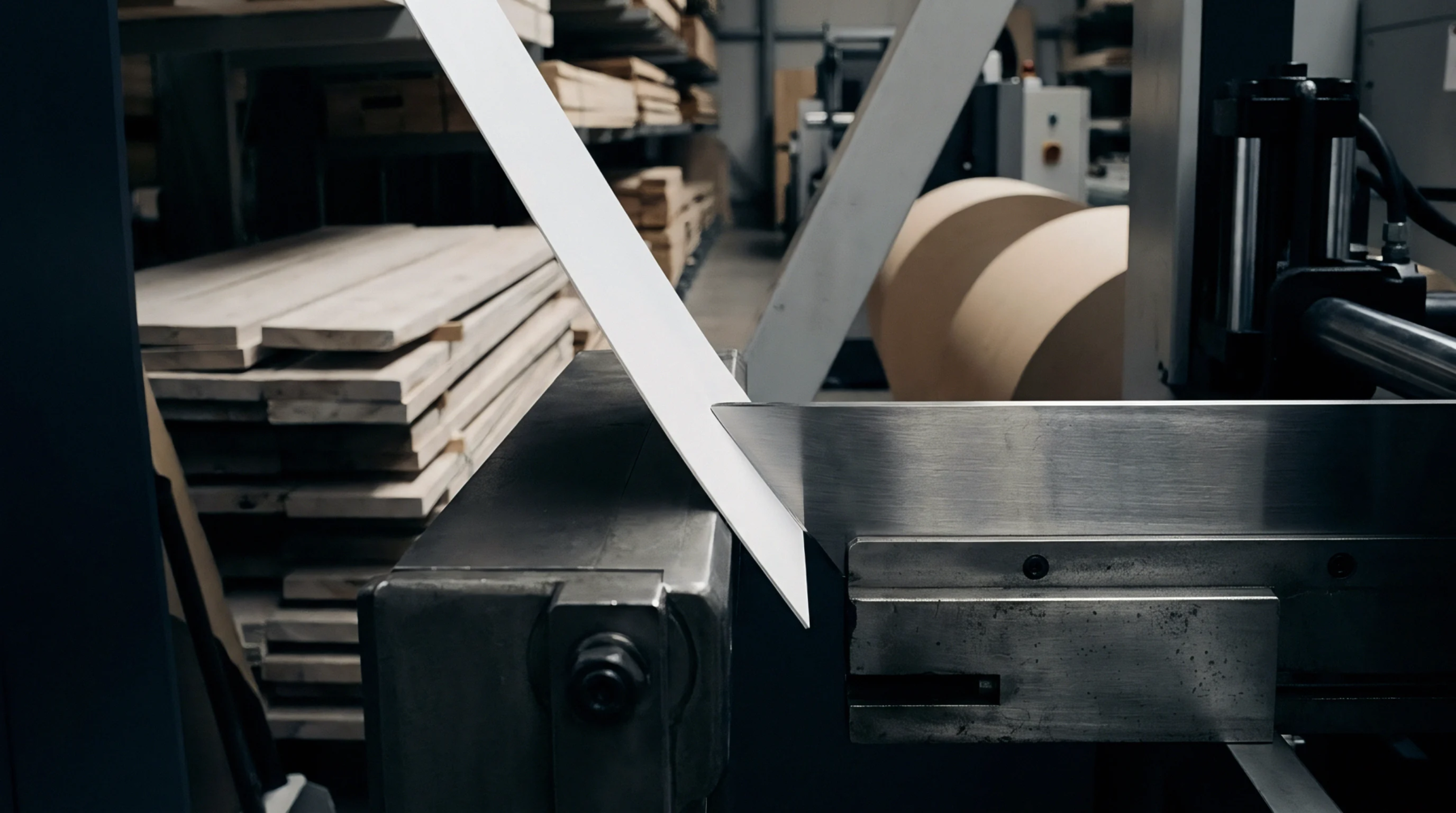
In-plane shear failure characterized by crack surface sliding parallel to the direction of applied shear load governs planar material separation. Fracture mechanics specialists analyze mode II shear fracture to evaluate how paper and paperboard layers slide past each other under shearing stress. Test procedures apply asymmetrical loading or end-notched flexure setups to induce shear failure along specified internal planes.
Quantifying critical shear energy release rates helps packaging designers predict internal ply delamination.
In-Plane Shearing
Resistance to shearing fracture depends on fiber alignment and z-direction bonding density across paperboard plies. Multi-ply folding boxboard requires balanced shear strength between internal plies to enable clean scoring and folding without continuous surface cracking. During dynamic shearing, fiber segments slide past one another, absorbing mechanical energy through localized friction and micro-structural fiber shear deformation.
Controlled refining of mechanical pulps improves internal shear resistance by increasing fiber contact points.
Scoring Performance
Creasing and scoring operations in folding carton converting induce high in-plane shear strains within internal paperboard layers. Controlled shear failure along internal plies permits localized delamination during folding, allowing the outer linerboard to bend without cracking or tearing. When material lacks sufficient mode II shear fracture toughness, shear cracks propagate uncontrollably through the board thickness, causing score line bursting and corner failure.
Board mills optimize multi-ply sheet structures to balance bending stiffness against controlled shear yield during mechanical packaging assembly. Shear fracture resistance testing ensures reliable score line formation in high-speed automated cartoning machinery.