Constitutive Shear Strain Localization and Interface Debonding in Multilayer Polymer Creases
Shear strain localization in multilayer polymer creases drives interfacial debonding, manageable through optimized matrix clearance and tie-layer adhesion.

Localization

Yield Criteria in Polymeric Substrates
Multilayer polymer films and extrusion-coated paperboards experience concentrated mechanical field gradients when subjected to male-female creasing tools. Polymer layers yield under compression. The plastic deformation onset in semi-crystalline polyethylenes, amorphous polyethylene terephthalate, and polypropylene barrier structures follows pressure-dependent yield formulations.
The Drucker-Prager yield criterion models this behavior by incorporating hydrostatic pressure sensitivity into the equivalent von Mises plastic flow formulation. The yield strength increases systematically under compressive normal stress components, whereas tensile stress components accelerate yielding. During the initial penetration of a creasing rule, compressive stresses directly beneath the indenter tip elevate the local yielding threshold, forcing deformation into narrow lateral bands adjacent to the indentation zone.
Polymer chains undergo reorientation and thermal softening during rapid loading cycles. Strain-softening kinetics drive the evolution of thin bands where plastic shear strain accumulates exponentially while the surrounding material remains elastoplastic. In high-density polyethylene and coextruded ethylene vinyl alcohol layers, this concentration alters the stress distribution across the sheet thickness.
High strain creates narrow bands.

Shear Band Initiation and Strain Softening
The formation of intense shear bands represents the primary physical mechanism of deformation in compressed polymeric laminates. Once the critical shear stress is surpassed, intrinsic strain softening causes localized softening in micro-domains measuring between 5 and 25 micrometers in width. Thermomechanical coupling intensifies this process.
Plastic work conversion into thermal energy raises local temperature within milliseconds, reducing local flow stress and accelerating localized sliding.
Amorphous regions within semi-crystalline structures reorient rapidly along the principal shear plane. Temperature accelerates plastic flow. In coextruded polyolefin structures containing ductile tie layers, the mismatch in strain-softening moduli between adjacent layers creates sharp discontinuities in shear strain rates.
The rigid barrier layer resists plastic flow, concentrating shear deformation inside the softer boundary zone. This concentrated deformation generates steep velocity gradients across the interface, setting up intense interfacial shear tractions before outward sheet bending begins.
Mill technical desks frequently attribute localized polymer thinning during creasing to transient web tension variation rather than intrinsic strain-softening kinetics under high shear rates.

Bond
Cohesive Zone Modeling of Extrusion Interfaces
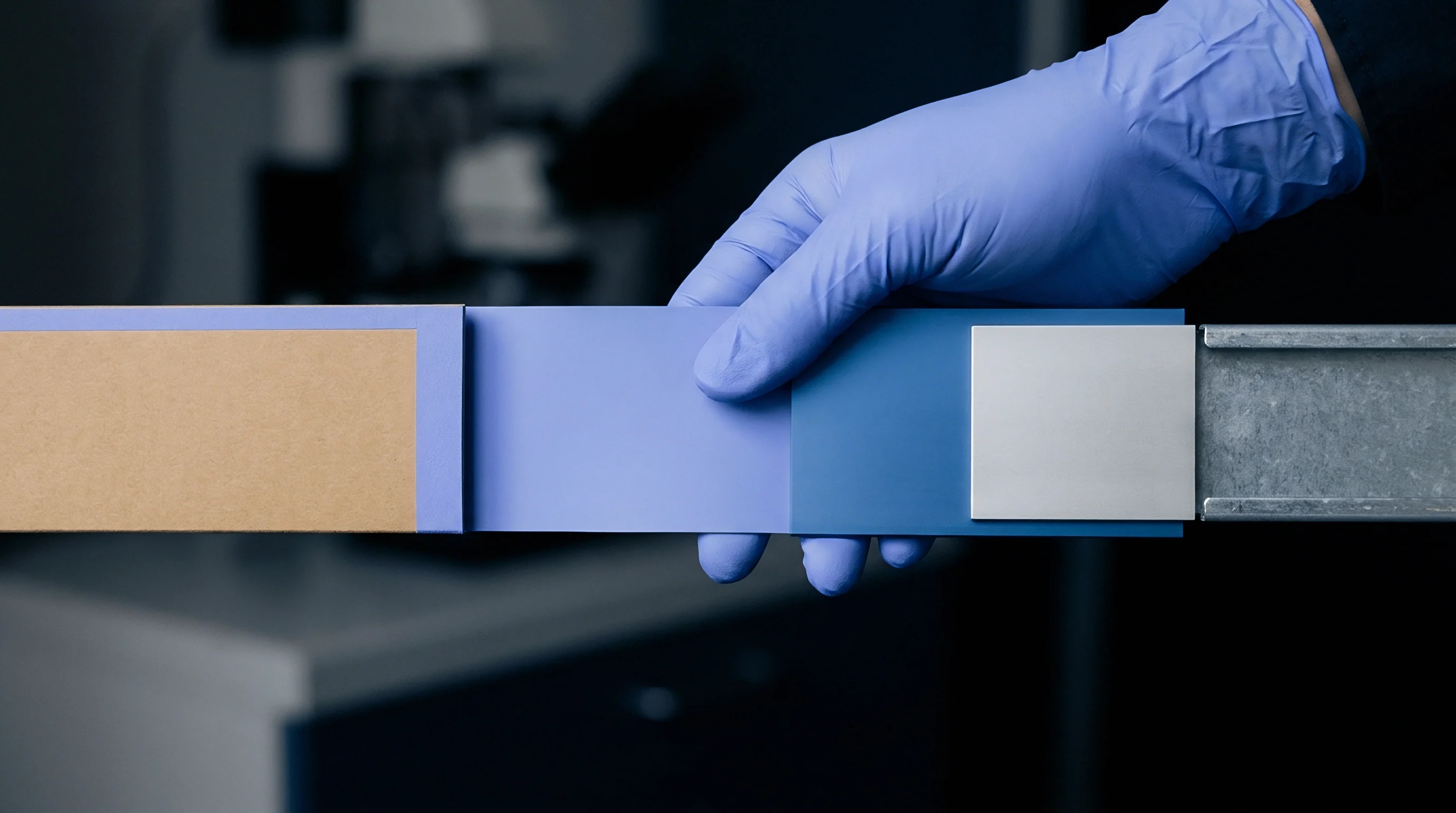
Interfacial integrity between polymer layers depends on the critical fracture energy and stress transfer capacity across the material junction. Tie layers prevent adhesion loss. Cohesive zone formulations describe this traction-separation relationship through bilinear or exponential constitutive models.
The initial linear elastic domain transfers shear stress across the interface up to a peak cohesive strength, after which progressive damage evolution reduces stress capacity to zero. In maleic anhydride grafted polyolefin tie layers bonded to solid bleached sulfate board or polar barrier polymers, the maximum shear traction dictates whether shear bands pass across the interface or trigger interfacial sliding.
When localized shear strains intersect an interface with insufficient cohesive strength, micro-voids nucleate at interfacial stress concentration sites. The local energy release rate exceeds the critical Mode II fracture toughness under shear-dominated deformation. Shear deformation along the creasing axis shifts the dominant load path from bulk polymer flow to interfacial crack opening.
Coextruded low-density polyethylene on solid bleached board exhibits a critical Mode II energy release rate of 185 Joules per square meter when conditioned at 23 degrees Celsius and 50 percent relative humidity under ISO 187.
Mode Competition under Bending Shear
The stress state during creasing transitions rapidly from dominant compressive shear during tool indentation to combined tensile and shear loading during subsequent folding. Mode I opening forces combine with Mode II shear forces, creating mixed-mode interfacial failure conditions. The fracture envelope follows a power-law criterion where mixed-mode fracture toughness drops significantly below pure Mode I values.
| Substrate Interface Structure | Peak Shear Traction (MPa) | Mode I Toughness (J/m2) | Mode II Toughness (J/m2) | Dominant Debonding Mode |
|---|---|---|---|---|
| LDPE / Paperboard Extrusion | 4.2 | 120 | 185 | Mixed Mode I/II Shear Delamination |
| LLDPE / Maleic Anhydride Tie / EVOH | 8.6 | 210 | 340 | Plastic Shear Yielding in Tie Layer |
| PET / Polyethylene Extrusion Lamination | 3.1 | 95 | 140 | Interfacial Adhesive Separation |
| PP / Aluminum Oxide Barrier Coating | 1.8 | 35 | 52 | Brittle Interfacial Cleavage |
| Values measured at 23 degrees Celsius and 50 percent relative humidity using ASTM D1876 and ISO 11339 protocols at a crosshead displacement rate of 100 millimeters per minute. | ||||
Interface adhesion levels dictate whether plastic strain remains distributed across the polymer film thickness or collapses into a single interface crack. Incompatible polymers without suitable tie-layer chemistry exhibit low critical traction thresholds, permitting interfacial debonding long before the bulk polymer reaches its ultimate strain capacity.
Inadequate tie-layer adhesion causes complete interfacial separation during high-speed folding, destroying liquid packaging barrier performance and generating customer return liabilities.

Score

Tooling Alignment and Groove Geometry
Precise control of creasing matrix geometry limits shear localization severity in polymer coatings. Crease depth dictates failure thresholds. Male rule width, matrix channel width, and matrix depth determine the spatial strain distribution across the crease channel.
When the matrix channel width is configured too narrow relative to total board and film thickness, extreme shear forces accumulate directly over the matrix edges. Groove dimensions govern shear angles. Narrower tools elevate shear stress.
Clearance geometry governs the bending radius during the mechanical stroke. Excessive male rule penetration forces deep displacement of the polymer skin into the matrix cavity, producing steep curvature gradients. High strain localization develops precisely at the tangent points where the polymer coating leaves the solid board surface and enters the span over the matrix groove.

Penetration Mechanics across Board Thickness
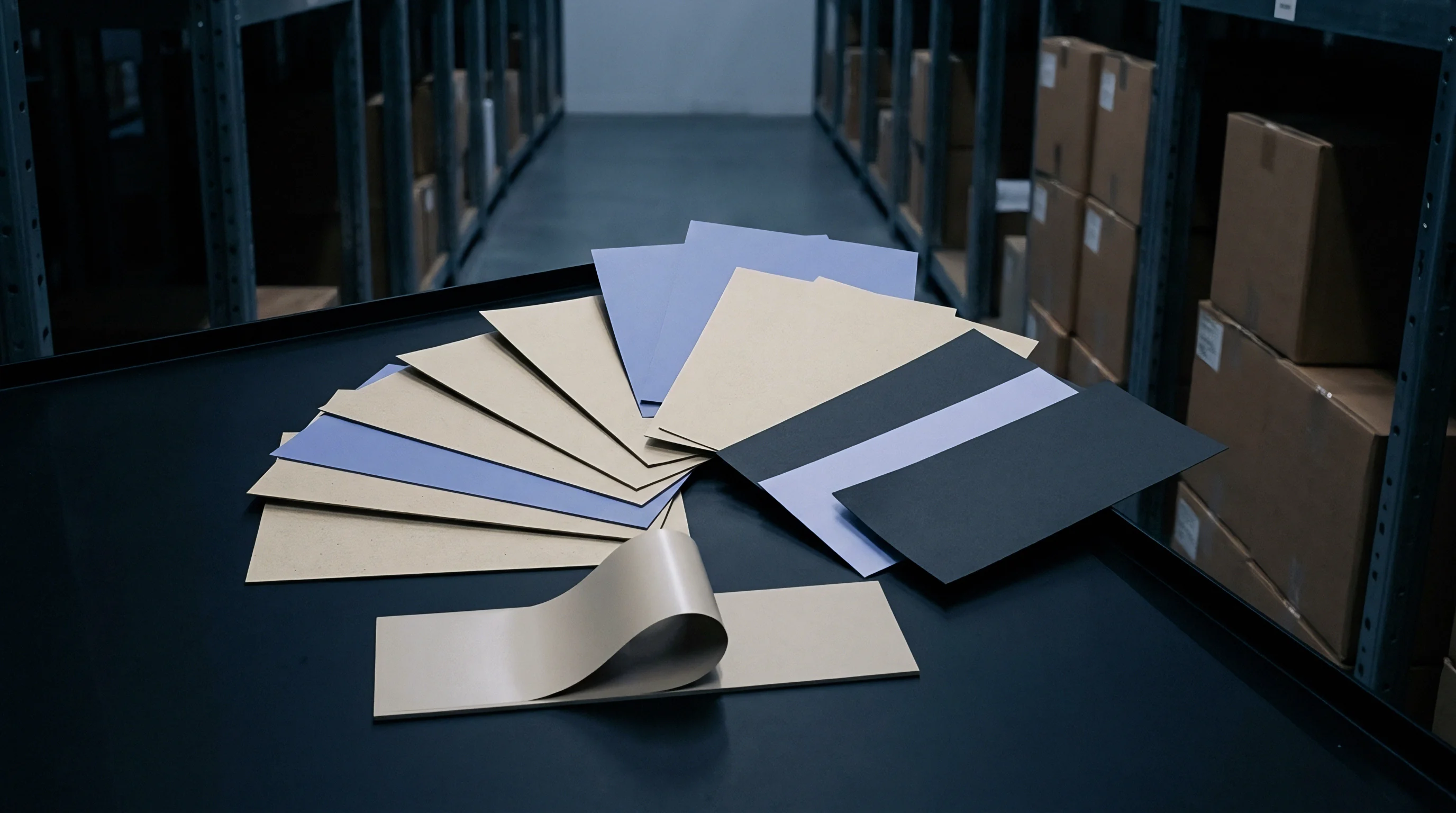
Adjustment of female matrix width must account for the compressed thickness of both the fibrous base stock and the coextruded polymer overlay layers. Standard setup sequences prevent mechanical crushing of polymer coatings during creasing press operations.
- Mount the counter die matrix plate onto the cutting plate and verify spatial alignment using precision positioning pins across the bed width.
- Measure the combined caliper of the polymer overlay and base board using an ISO 534 dead-weight micrometer to set baseline tool penetration depth.
- Select the male scoring rule thickness corresponding to 1.0 to 1.2 times the uncompressed sheet caliper.
- Adjust the matrix channel width to equal the male rule thickness plus 1.5 times the total substrate caliper to establish correct bending clearance.
- Execute a slow-speed test impression on trial stock and inspect the reverse side of the crease for coating micro-fissures using low-power optical magnification.
Correct mechanical clearance allows the polymer layer to stretch uniformly without generating concentrated shear bands across the tie-layer boundary.
Matrix groove clearance must accommodate total polymer displacement without forcing extreme tensile elongation across the outer tie layer.
Split

Microstructural Failure Modes in Folding Creases
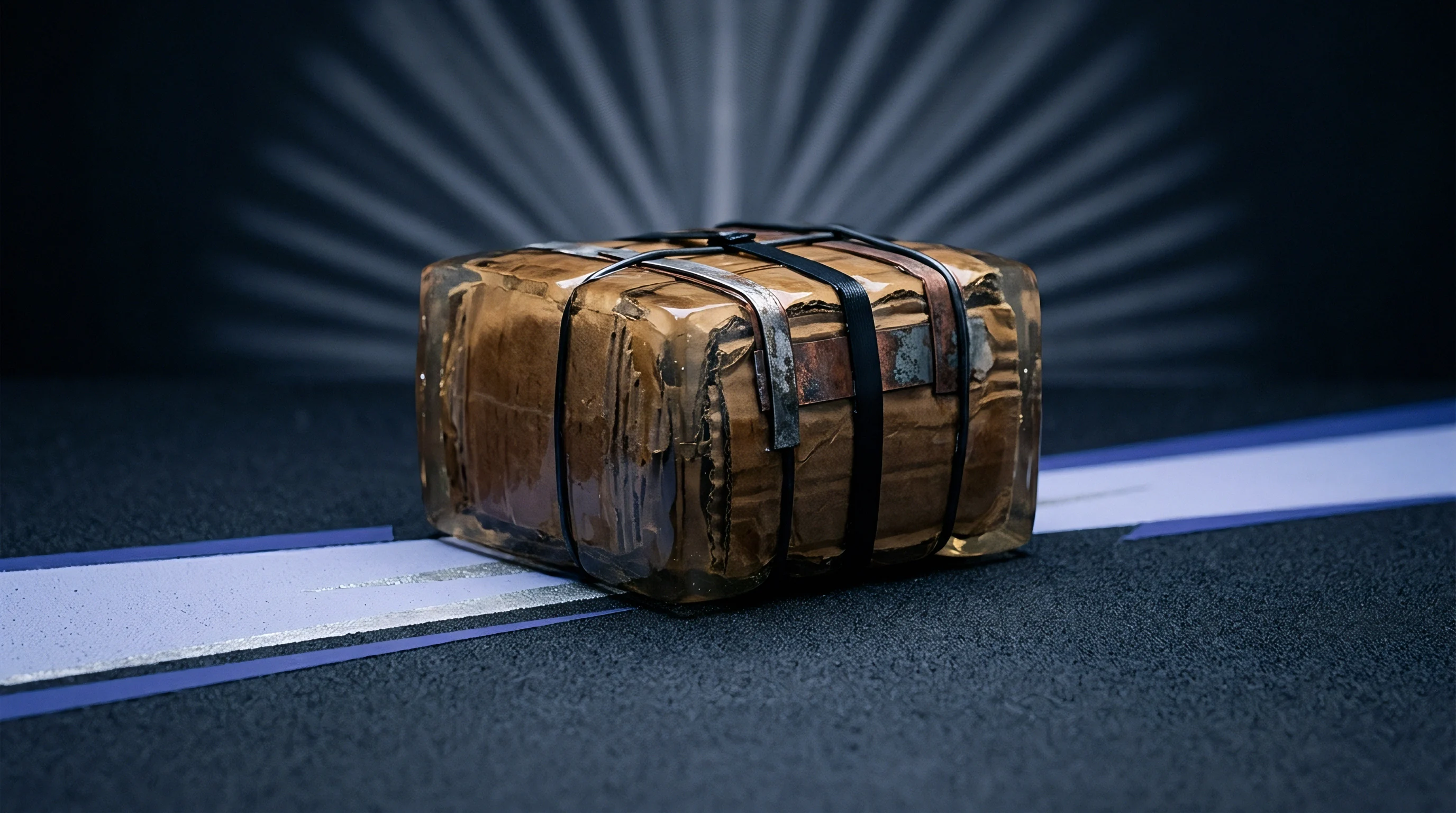
Structural breakdown along polymer creases manifests through specific physical degradation patterns during continuous converting operations. Micro-cracks destroy barrier integrity. Shear localization initiates microscopic voids along the primary strain paths.
These voids coalesce into continuous internal micro-channels under repeated mechanical flexing during cartoning and filling processes.
Delamination reduces package stiffness. Interface debonding propagates parallel to the sheet surface, detaching the protective polyolefin film from the underlying paperboard fibers or adjacent barrier polymers. Once debonding occurs, the unsupported polymer layer bridges the crease channel as a free film, rendering it vulnerable to puncturing and tensile rupture during package erect and seal phases.
Delivery specifications governed by DIN EN ISO 11339 require minimum average T-peel strength of 2.0 Newtons per centimeter, where failure below threshold triggers automatic lot rejection.
The failure sequence in complex multilayer packaging stocks involves distinct physical damage forms:
- Interfacial Shear Delamination occurs when shear tractions exceed the tie-layer critical stress, causing flat separation along the boundary plane.
- Intramatrix Shear Banding develops within the bulk polyolefin layer, creating dense milky stress lines without immediate loss of surface adhesion.
- Pin-hole Cavitation emerges at the intersection of shear bands where localized plastic stretching exceeds the ultimate elongation limit of thin vacuum-deposited metallized or oxide barrier coatings.
- Fibre-Layer Cleavage takes place within the top paperboard ply directly beneath the extrusion layer when polymer bond strength exceeds the internal z-directional bond strength of the fibrous matrix.
How Does Temperature Shift Shear Band Propagation?
Thermal conditions during converting drastically modify the mechanical response of polymers. Glass transition temperature characteristics dictate whether polymers undergo ductile plastic flow or brittle micro-fracture under high-speed scoring punch impacts. Sub-ambient storage temperatures elevate the yield stress of low-density polyethylenes, promoting sharp shear strain localization rather than broad plastic distribution.
Preheating the web surface to 35 to 45 degrees Celsius lowers the initial yield threshold and softens tie-layer polymers. Temperature accelerates plastic flow. Heat input broadens the deformation band, distributing plastic work over a wider volume and preventing stress concentration peaks at polymer-substrate interfaces.
The exact transition threshold where micro-void coalescence shifts from a shear-dominated regime to tensorial peeling in nano-scale barrier aluminum oxide coatings remains an active subject of laboratory debate.

Metrology

Optical Shear Strain Profiling Methods
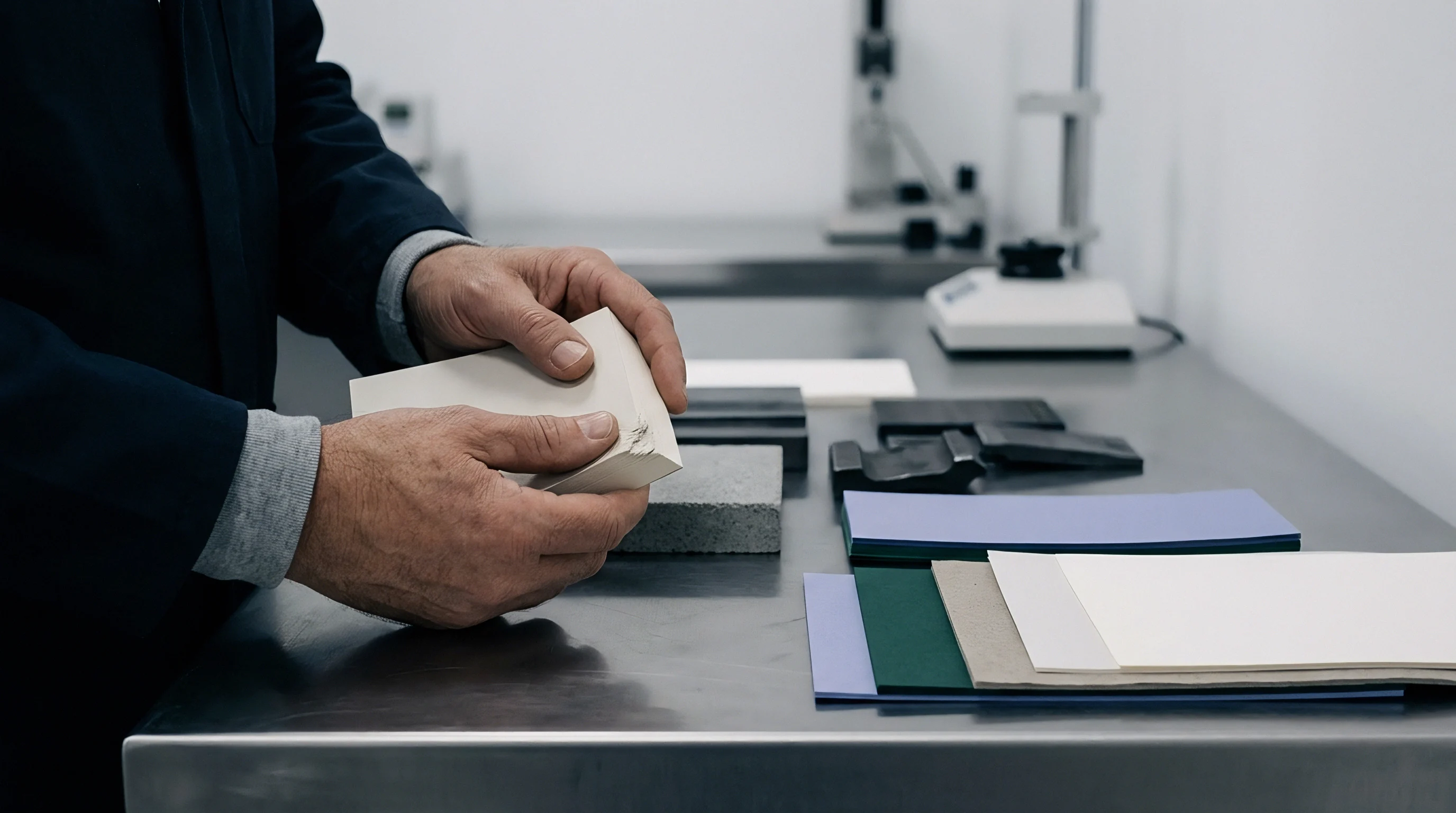
Quantitative measurement of strain fields inside creased cross-sections provides essential data for constitutive model validation. High-resolution Digital Image Correlation analyzes displacement fields across polished cross-sections during active crease formation. Sample preparation requires precise cross-sectional slicing using microtome blades under cryogenic conditions to prevent mechanical smearing of soft polymer interfaces.
Digital Image Correlation tracks stochastic speckle patterns applied to the sample edge, yielding full-field tensor maps of normal and shear strains. High speed increases shear heating. Peak shear strains reaching 1.2 to 1.8 millimeter per millimeter are regularly detected inside narrow shear bands, matching theoretical predictions of pressure-dependent strain-softening kinetics.
Standardized Mechanical Adhesion Assays
Routine quality assurance relies on standardized physical testing protocols to verify interface integrity before committing large paperboard tonnages to high-speed converting lines. Standard conditioning requires 23 degrees.
| Standard Designation | Test Parameter Target | Conditioning Environment | Failure Criterion Threshold |
|---|---|---|---|
| ISO 187 | Atmospheric Standard Conditioning | 23 °C ± 1 °C, 50% ± 2% RH | Environmental deviation beyond limits invalidates test |
| ASTM D1876 | T-Peel Resistance of Adhesive Bonds | 23 °C ± 1 °C, 50% ± 2% RH | Peel force below 1.5 N/cm for general barrier grades |
| ISO 11339 | Flexible-to-Flexible Bond Peel Resistance | 23 °C ± 1 °C, 50% ± 2% RH | Delamination force drop exceeding 20% across width |
| TAPPI T 577 | Score Quality Test for Board | 23 °C ± 1 °C, 50% ± 2% RH | Bending moment variance exceeding 15% along crease |
Physical audit protocols require structured verification steps during incoming material qualification to catch adhesion defects prior to reel loading.
- Conditioning Compliance Verification ensures all test reels undergo 24 hours of stabilization under ISO 187 atmospheric parameters prior to physical sampling.
- Microtome Cross-Section Microscopy evaluates crease cross-sections under optical magnification to detect internal delamination channels exceeding 50 micrometers.
- Peel Strength Rate Mapping measures T-peel resistance across crosshead displacement rates from 10 to 500 millimeters per minute to evaluate viscoelastic rate sensitivity.
- Barrier Pin-Hole Testing applies conductive electrolyte solution across creased zones to detect microscopic dielectric breakdown caused by barrier film fracture.
High adhesion limits strain band expansion.
Substrate qualification dossiers omitting full-rate T-peel profiles fail quality audits under standard automotive and aseptic packaging supply agreements.
Specifying ASTM D1876 T-peel compliance with an explicit speed clause of 300 millimeters per minute eliminates vendor ambiguity regarding rate-dependent polyolefin yielding during incoming lot verification.

Outlay

Yield Optimization and Downgauging Risks
Material specification decisions balance barrier coating thickness against structural converting yield. Resin selection sets processing limits. Lowering the caliper of coextruded polyethylene coatings reduces raw material cost per square meter while significantly increasing susceptibility to localized shear debonding.
Downgauging a outer low-density polyethylene layer from 25 micrometers to 15 micrometers elevates the peak shear strain under identical creasing matrix configurations by roughly 40 percent.
Extrusion lines running high-speed barrier board production must account for resin price spreads against total converting spoilage costs. High tie-layer performance justifies premium resin pricing by reducing scrap rates on automated packaging lines.

Converting Waste and Financial Exposure
Operational financial calculations demonstrate the economic impact of strain localization failure modes in commercial production runs. Consider a packaging converter processing a 50-tonne order of 300 gram per square meter solid bleached board featuring a 20-micrometer coextruded barrier film. Standard material costs calculate at 1,800 Euros per tonne for raw paperboard and polymer stock, yielding a baseline material commitment of 90,000 Euros.
Yield loss alters unit margins. Operating high-speed creasing equipment with unoptimized matrix tooling generates a 3.5 percent scrap rate caused by interface debonding and micro-channel leakage defects. Adjusting male rule depth, optimizing matrix width, and specifying an engineered ethylene methyl acrylate tie layer reduces the scrap rate to 0.7 percent.
This operational adjustment reclaims 1.4 tonnes of finished product, representing a direct raw material saving of 2,520 Euros per 50-tonne production lot.
Engineered tie layers adding three percent to raw resin costs yield net operational savings by suppressing crease delamination scrap.
Eliminating delamination scrap prevents downtime on high-speed liquid packaging filling lines running at 400 cartons per minute. Field failures caused by pin-hole leakage in filled packages incur severe contract penalties, commercial claim administration costs, and brand reputation damage that dwarf raw material price differentials during substrate procurement negotiations.