Surfactant Residues in Hardwood Stock Affecting High Speed Ink Absorption
Surfactant residues collapse dynamic contact angles in hardwood stock, inducing vessel picking, ink strike-through, and optical density loss at high press speeds.
Furnish
Bleached kraft pulps derived from eucalyptus, birch, and acacia contain a dense matrix of short fibers alongside broad vessel elements. Papermakers select these hardwood species to achieve high sheet opacity, uniform formation, and smooth surface topography. The morphological properties that create these benefits also introduce vulnerabilities during liquid application.
Surface chemical treatments applied during pulping remain within the finished web when washing stages operate below design efficiency. Chemical processing aids leave amphiphilic residues across the external fibril structure during pulp manufacture. These residues alter the wetting kinetics when water-based inks strike the paper surface at line speeds exceeding two hundred meters per minute.
Hardwood vessels create wide capillary channels. Eucalyptus fibers retain low wall thickness. These structural features produce an open pore structure that absorbs fluids through capillary suction governed by interfacial energy.
Surface-active agents deposited on the cellulosic matrix alter this energy balance by lowering the liquid-solid contact angle within millisecond contact windows. Nonionic surfactants lower transient surface tension. Contact angles collapse below thirty degrees.
Industrial papermaking systems use debonders, pitch dispersants, and defoamers to maintain machine runability and modify sheet bulk. When these chemistry packages carry through to the dry sheet, they interfere with synthetic sizing agents like alkylketene dimer and alkenyl succinic anhydride.
Chemical additives deployed in virgin hardwood processing and secondary fiber deinking fall into distinct surfactant classifications based on polar headgroup behavior:
- Quaternary Ammonium Debonders reduce internal hydrogen bonding between adjacent cellulose fibers to increase sheet bulk, leaving hydrophobic hydrocarbon chains oriented outward along the fiber wall.
- Ethoxylated Alkylphenols disperse sticky pitch and hydrophobic extractives within brownstock washing loops, redepositing as nonionic films on parenchymal cells when process water temperatures drop.
- Fatty Alcohol Ethoxylates act as flotation collectors during secondary deinking, clinging tenaciously to hardwood vessel elements due to preferential physical adsorption on unrefined vessel walls.
- Polydimethylsiloxane Defoamers suppress foam generation at the wet end through hydrophobic silica particles, creating localized low-surface-energy spots that resist aqueous vehicle wetting while accelerating solvent strike-through.
Synthetic sizing agents establish fluid holdout by covalently binding or anchoring hydrophobic groups across cellulose hydroxyl sites. Residual surfactants counter this mechanism by competitive adsorption. Surfactant molecules migrate to the air-water-cellulose interface faster than bulky synthetic sizing waxes can orient their hydrocarbon tails.
The hydrophilic headgroups of nonionic surfactants face outward toward incoming aqueous droplets, drawing the water carrier into the capillary network prematurely. Fiber lumen absorption accelerates under these conditions. Ink pigments penetrate porous lumens rapidly.
The colorant carrier separates prematurely from the binder resin, pulling sub-micron pigment particles below the optical scattering zone of the top fiber layer.
Surfactant deposition on hardwood vessel walls accelerates droplet spreading while stripping sizing resistance across short contact times.
Pulp washing extracts water-soluble fractions. Defoamers deposit hydrophobic siloxanes across fibrils. Extractives redeposit during sheet formation.
Sizing emulsions fail under competitive adsorption. The mill sales desk maintains that trace processing aids evaporate completely on drying cylinders without altering surface receptivity.

Wash
Mill processing removes process water through counter-current extraction stages to strip dissolved organic matter. Modern pulp lines run closed white-water loops to minimize fresh water consumption and satisfy environmental effluent limits. This system closure concentrates non-volatile process aids within the stock chest.
Surfactant levels in the headbox head tank often reach equilibrium concentrations ten times higher than individual chemical dosage rates suggest. Alkylphenol ethoxylates resist standard clarification. Mill white water recirculates dissolved organics.
When hardwood stock enters the headbox at three percent consistency, the aqueous phase carries free micelles and unadsorbed surfactant monomers that distribute throughout the forming web.
Do Deinking Agents Inhibit Capillary Draw?
Nonionic ethoxylates adhere tenaciously to lignocellulosic fines, resisting neutral aqueous displacement. Secondary hardwood fibers recovered from sorted office waste undergo intensive alkaline deinking to detach toner particles. Flotation collectors relying on alcohol ethoxylates with high hydrophilic-lipophilic balance numbers remain entangled with the hardwood fraction.
While long softwood fibers wash clean across screen baskets, hardwood fines present enormous specific surface area that traps surfactant chemistry. When deinked stock forms a printing base, residual collectors suppress the capillary suction pressure of the bulk pore network.
Incoming raw stock inspections identify chemical contamination before rolls reach the printing press floor through standardized testing steps:
- Aqueous Extraction Sampling isolates soluble chemical residues by boiling five grams of dry hardwood fiber in one hundred milliliters of deionized water under ISO 6588 neutral extraction parameters.
- Surface Tension Verification determines the air-water interfacial tension of the cooled extract using a Wilhelmy plate tensiometer according to ASTM D1331 specifications.
- Solvent Residue Partitioning extracts organic fractions using dichloromethane in a Soxhlet apparatus for four hours to isolate non-polar defoamer oils and synthetic sizing residues.
- Spectroscopic Quantification identifies surfactant functional groups and concentration thresholds by analyzing concentrated organic extracts through gas chromatography-mass spectrometry.
Aqueous extracts depress air-water surface tension. Pure deionized water displays a surface tension of 72.8 mN/m at twenty-three degrees Celsius. Extracts contaminated with nonionic pulping surfactants consistently yield values below 52.0 mN/m.
The presence of extractable surfactants within the hardwood matrix degrades sizing performance measured by the standard Cobb test. Water absorption values measured under ISO 535 escalate when surfactant concentrations climb, indicating breakdown of internal sizing barriers.
An aqueous extract surface tension below 50.0 mN/m at twenty-three degrees Celsius indicates significant processing surfactant contamination in virgin hardwood furnish.
Pulp cleanliness varies across processing grades, directly influencing interfacial liquid properties on the finished web as documented in comparative laboratory evaluations:
| Hardwood Grade | Pulping Chemistry | Extract Surface Tension (mN/m) | Cobb 60 Water Uptake (g/m²) | Active Surfactant (mg/kg) |
|---|---|---|---|---|
| Bleached Eucalyptus Kraft | Virgin Elemental Chlorine Free | 68.4 | 22.5 | 12.0 |
| Deinked Hardwood Market Pulp | Flotation Deinked Recycled | 46.2 | 58.0 | 185.0 |
| Bleached Birch Kraft | Pitch Dispersant Treated | 51.8 | 41.2 | 94.0 |
| Bleached Acacia Kraft | Defoamer Overdosed | 44.5 | 64.8 | 230.0 |
The accumulation of surfactants inside closed white-water systems creates persistent operational challenges for mills running high-filler hardwood grades. How deep into the crystalline cellulose matrix nonionic ethoxylates migrate during high-temperature calender consolidation remains an open question across commercial pulping circles.

Pore
Capillary transport governs liquid uptake during the initial milliseconds of droplet contact on raw paper. Fluid motion through the void structure follows the physical principles expressed in the Lucas-Washburn relation. Capillary driving pressure equals two times the liquid surface tension multiplied by the cosine of the contact angle, divided by the capillary pore radius.
Surfactant residues alter every variable in this equation simultaneously. Nonionic chemistries suppress liquid surface tension while lowering the contact angle. The contact angle cosine shifts closer to unity, which theoretically accelerates capillary draw.
Simultaneously, the reduction in overall liquid surface tension depresses total capillary driving force. Capillary pressure drops with falling surface tension.
Which Transient Contact Angle Governs Wetting?
High-speed optical tensiometers record droplet spreading profiles at intervals between five and eighty milliseconds. Standard static contact angle measurements taken after sixty seconds fail to capture the behavior of ink droplets propelled onto high-speed webs. Droplets discharged from piezo inkjet heads strike the sheet at velocities between six and ten meters per second.
The droplet dwell time prior to initial vehicle penetration spans less than ten milliseconds. High-speed video contact angle analyzers operating per TAPPI T 558 demonstrate that pristine sized hardwood maintains a contact angle above ninety degrees during the first twenty milliseconds. Stock carrying surfactant residues displays immediate wetting, with contact angles collapsing below forty degrees inside eight milliseconds.
| Surfactant Dosing (mg/kg) | Contact Angle at 10 ms (deg) | Contact Angle at 50 ms (deg) | Absorption Rate (mm/ms^0.5) | Optical Density at 1.0 Mil |
|---|---|---|---|---|
| 0 (Control Sized) | 104 | 96 | 0.08 | 1.42 |
| 50 (Light Residual) | 78 | 54 | 0.24 | 1.28 |
| 150 (Moderate Residual) | 42 | 21 | 0.62 | 1.11 |
| 300 (Severe Contamination) | 18 | 8 | 1.15 | 0.94 |
| Test methodology utilizes aqueous dye solution with dynamic surface tension of 38 mN/m dispensed via 10-picoliter automated droplet generator. | ||||
Fast liquid spreading along individual fiber walls initiates lateral capillary movement. This movement pulls ink outward across the surface rather than allowing controlled vertical drainage into the base sheet. Pigments migrate through large vessel openings.

Lumen Chemistry and Vessel Element Picking
Broad anatomical vessels present an open cross-sectional diameter reaching three hundred micrometers in eucalyptus hardwoods. Vessel elements possess thin cell walls and expansive internal lumens compared to dense libriform fibers. In an unsized or surfactant-contaminated sheet, these vessel lumens act as low-resistance sinks for fluid vehicles.
Surfactants concentrate preferentially around vessel pits due to residual processing chemicals accumulating in vessel wall openings during pulp drainage. When an ink droplet hits a surface vessel saturated with surfactant residues, the droplet collapses instantly into the vessel cavity.
Deposition of processing surfactants on raw fiber walls dictates ink spread velocity before mechanical absorption begins.
This localized fluid sink starves adjacent fibers of ink vehicle, producing severe print mottle. The rapid capillary draining pulls pigment particles deep into the vessel interior, shielding them from ambient light reflection. Pigment settling within the lumen destroys color intensity.
The optical density of solid print areas drops sharply because the colorant no longer forms a continuous film across the outer paper surface. Sizing agents located on surrounding fibers cannot counteract the capillary suction generated by contaminated vessel lumens. When dynamic contact angles fall faster than capillary suction draws ink inward, edge feathering governs print resolution.

Press
High-speed inkjet webs moving at three meters per second expose the paper surface to water-based pigment inks for a tiny fraction of a second. High speeds amplify dynamic fluid shear. Commercial roll-to-roll presses apply fluid volumes between six and twenty picoliters per nozzle array across print zones spanning less than one meter of web travel.
Drying units positioned downstream rely on near-infrared radiation and heated air impingement to evaporate water carriers before the web reaches the chill rolls or rewind stand. Surfactant contamination within the hardwood stock corrupts this sequence by dislocating the balance between droplet spreading, vehicle penetration, and pigment fixation.

Spoilage Profiles at High Web Speeds
Print defects manifest as lateral bleeding, edge raggedness, and optical strike-through when sizing systems fail under high deposition volumes. Edge raggedness escalates across printed solids. Optical density drops across saturated areas.
When nonionic surfactant residues reduce the interfacial tension of the paper web, the aqueous ink vehicle breaks through the surface sizing barrier within fifteen milliseconds. Pigment particles follow the fluid carrier into the Z-directional core of the sheet. The colorant strikes through to the reverse side of the web, rendering lightweight stocks unsuitable for duplex printing applications.
Printers encountering inconsistent ink uptake on commercial hardwood webs isolate press-side root causes through systematic diagnostic checkpoints:
- Interfacial Bleed Verification inspects four-point negative text reverse lines under twenty-times magnification to detect ink vehicle creeping across cross-direction fibers.
- Color Gamut Compression measures solid cyan and magenta density values with an automated spectrophotometer using D50 illumination under ISO 13655 conditions.
- Reverse Show-Through Auditing evaluates diffuse opacity and reverse-side luminance drop on unprinted backing areas immediately following infrared drying.
- Barcode Edge Raggedness determines ISO 15416 print quality grades on high-contrast identification codes to verify scan decoding reliability.
Laboratory measurements show that a paper grade displaying acceptable static water holdout under a standard Cobb 60 test can fail completely on a digital web press. The short dynamic contact times of high-speed printing expose surfactant-induced wetting defects that sixty-second water absorption tests mask entirely. When ink vehicles penetrate into the sheet core within twenty milliseconds, the paper fibers swell unevenly.
This local dimensional distortion generates cockle and web wander across drying spans, causing register misalignments between successive print heads.
| Extractable Surfactant Band | Solid Black Density (OD) | Edge Raggedness (ISO/IEC 13660) | Reverse Show-Through (Delta E) | Run Spoilage Rate (%) |
|---|---|---|---|---|
| Low (Under 30 mg/kg) | 1.52 | 8.5 um | 1.2 | 1.5 |
| Medium (30 to 100 mg/kg) | 1.34 | 14.2 um | 3.8 | 4.8 |
| Elevated (100 to 250 mg/kg) | 1.12 | 22.6 um | 7.4 | 12.2 |
| Extreme (Above 250 mg/kg) | 0.88 | 36.1 um | 14.1 | 28.5 |
Run-Length Calculation under Defect Limits
Production economics dictate tight reject thresholds during commercial roll-to-roll operations. Assume a print facility runs an eighty-gram uncoated hardwood web on a high-speed commercial inkjet press operating at two hundred meters per minute with a print width of five hundred millimeters. A five-thousand-meter parent roll runs to completion in twenty-five minutes.
At this line speed, paper stock containing elevated surfactant levels of one hundred and fifty milligrams per kilogram generates unacceptable optical density loss and line feathering on barcode zones.
The press operator throttles ink laydown by fifteen percent to suppress line bleeding, reducing the color gamut volume below contract specifications. When line edge raggedness exceeds twenty-two micrometers, barcode verification systems fail automated grading thresholds, dropping print yield below ninety percent. The press line generates three hundred and sixty kilograms of unsalable converted stock per hour.
Drying energy consumption escalates as operators increase infrared lamp output to force-dry pooled ink carriers, adding thermal stress to the web. Mismatched absorption rates force converters to discard entire parent rolls due to irreversible ink bleed and illegible line barcodes.

Tariff
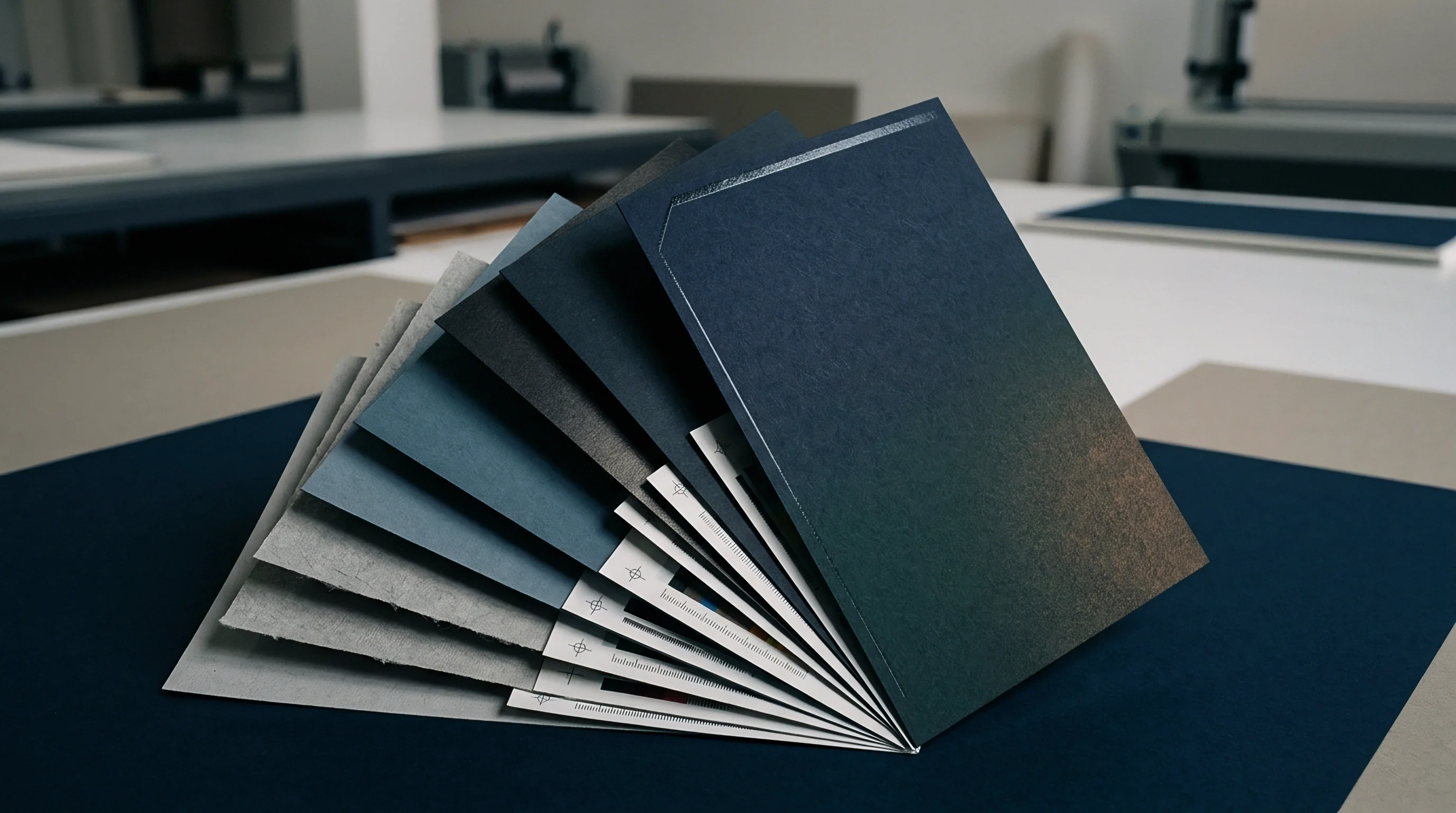
Purchasing agreements for commercial paper grades require explicit chemical purity baselines to prevent downstream converting losses. Sourcing directors negotiate tonnage pricing based on basis weight, brightness, and mechanical strength, frequently overlooking wet-end chemical additives that dictate fluid absorption behavior. Virgin hardwood kraft pulp and recovered hardwood furnish traded across global borders carry diverse residual surfactant loads depending on regional environmental discharge mandates and washing efficiencies.
Sourcing contracts that lack explicit surfactant limits transfer financial liabilities directly onto the print converter.
Procurement Specifications for Absorbent Hardwood
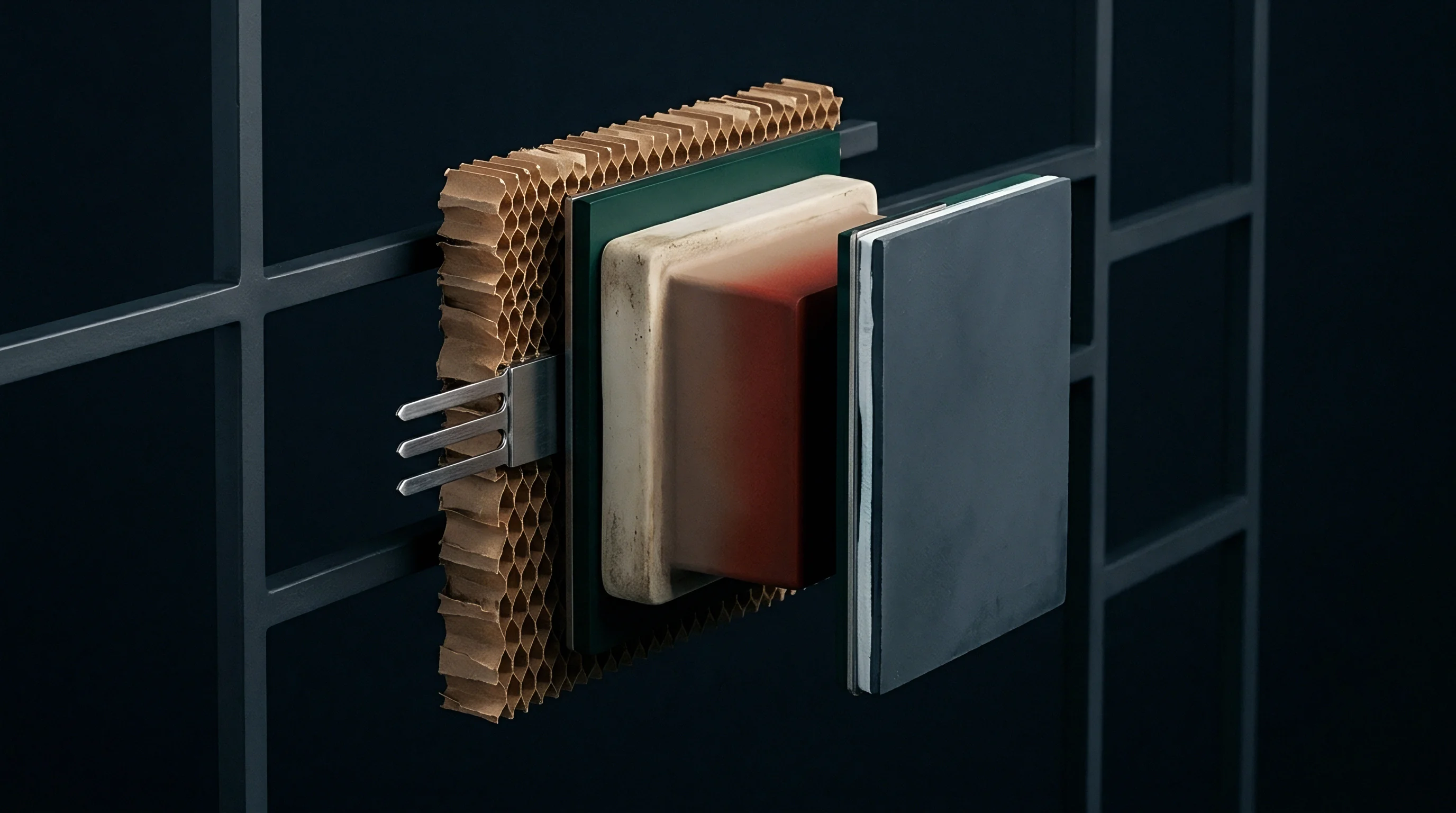
Commercial contracts establish quantitative thresholds for extractable chemical residues within delivered pulp and paper reels. Mill test certificates routinely document grammage according to ISO 536, thickness per ISO 534, and burst strength under ISO 2758. These physical parameters provide zero visibility into the chemical cleanliness of the cellulose fiber walls.
Technical purchase orders specify maximum allowable chemical concentrations to ensure predictable fluid uptake on high-speed presses.
Buyers specify analytical limits based on aqueous surface tension depression and gas chromatography targets:
Aqueous extract surface tension measured per ASTM D1331 cannot fall below sixty-five millinewtons per meter at twenty-three degrees Celsius. Total extractable nonionic surfactants identified via dichloromethane extraction must register below fifty milligrams per kilogram of bone-dry fiber. Sizing stability requirements stipulate that Cobb 60 water absorption values, evaluated per ISO 535, maintain stability within a ten percent tolerance band over six months of pallet warehouse storage.
These thresholds eliminate rolls contaminated with excess pitch dispersants, debonders, or secondary flotation collectors.
A contract clause restricting extractable nonionic surfactants below fifty milligrams per kilogram prevents press-room solvent bleed disputes.
Chargeback Mechanisms for Converting Scrap
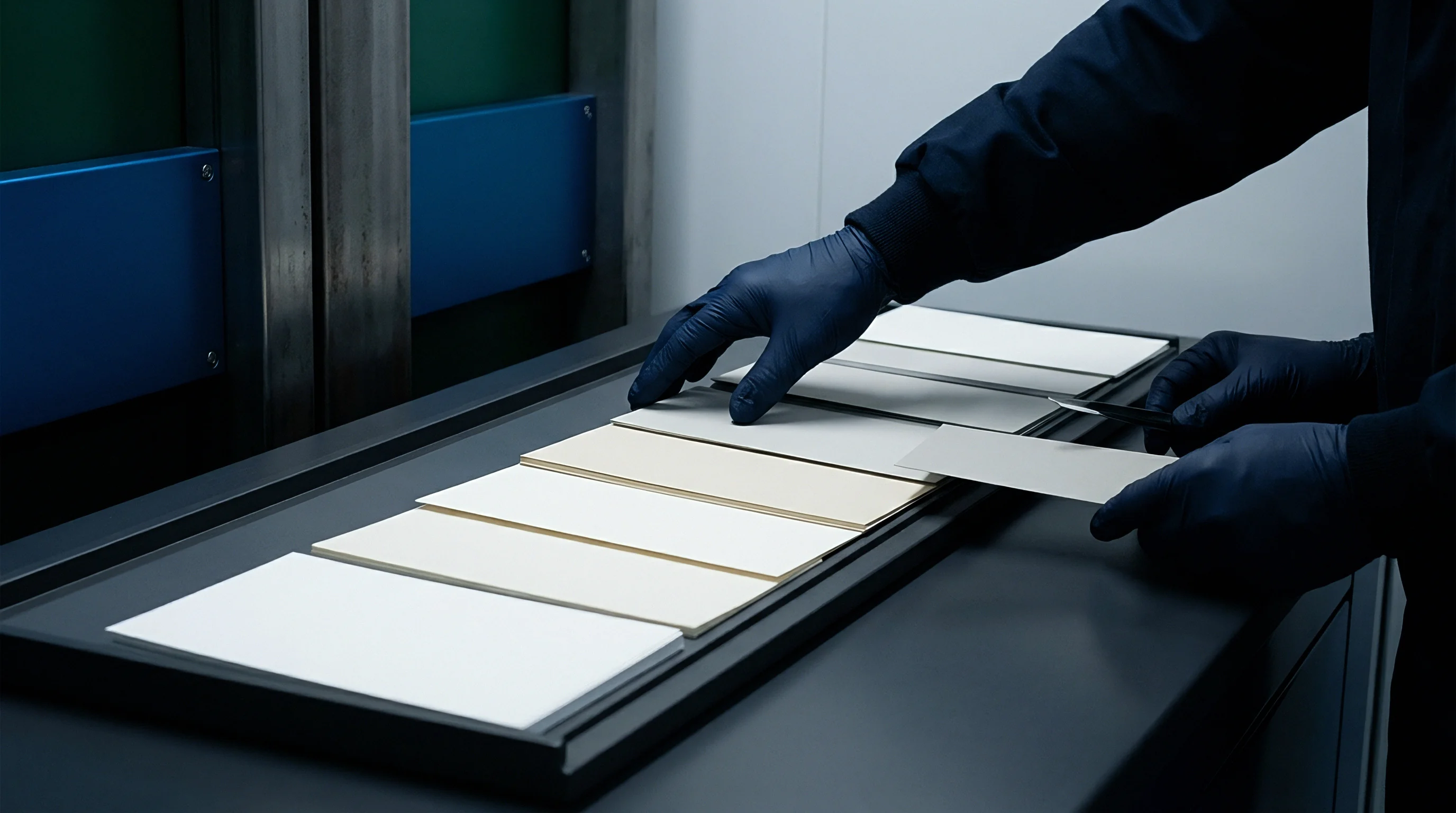
Financial recovery clauses enforce printer compensation when chemical contamination causes runability failures. A converting facility running one hundred metric tons of uncoated hardwood stock monthly encounters severe economic exposure if delivered reels contain irregular surfactant distributions. Assume paper stock purchased at twelve hundred dollars per metric ton yields an expected ninety-seven percent usable output.
If surfactant contamination elevates press spoilage from three percent to twelve percent across forty tons of delivered stock, direct material scrap costs surge by forty-three hundred dollars.
Make-ready spoilage, wasted ink sets, press crew downtime, and rescheduled line time amplify the initial material loss threefold. Total commercial loss on the defective lot approaches thirteen thousand dollars, dwarfing the original profit margin of the print run. Sophisticated supply agreements bind the paper mill to indemnify converters for both substrate costs and machine downtime whenever delivered reels violate specified surfactant thresholds.
Standard procurement clause 9.4 binds the pulp vendor to complete material replacement and press downtime reimbursement whenever gas chromatography detects residual nonionic surfactants above forty milligrams per kilogram of dry fiber.