Quantifying Capillary Stalling Limits Induced by Dynamic Surfactant Migration during High Speed Converting Operations
Capillary stalling occurs when high line speeds outpace surfactant migration, elevating fluid tension and halting penetration before ink or glue bonding sets.
Meniscus
Capillary penetration on high-speed converting lines relies on immediate fluid wetting within inter-fiber voids. When an aqueous formulation contacts raw cellulose, liquid uptake proceeds through capillary suction driven by the Laplace pressure across the advancing fluid curvature. Standard converting specifications assume static surface tension values, typically measured between 28 and 35 millinewtons per meter through Du Noüy ring or Wilhelmy plate techniques.
On web presses running at 500 to 1000 meters per minute, fluid contact with the dry substrate occurs across a contact window of two to twenty milliseconds. This brief exposure creates non-equilibrium physical conditions.
Surfactant molecules dispersed throughout the bulk water phase require finite time to transport toward the newly generated liquid-air and liquid-fiber interfaces. When the speed of interfacial expansion outstrips the molecular diffusion rate of the wetting agent, the advancing fluid boundary becomes depleted of active molecules. The local surface tension spikes toward that of pure deionized water, reaching 72.8 millinewtons per meter.
This steep tension rise alters the contact angle, arrests spontaneous imbibition, and confines the liquid to surface asperities.

Transient Adsorption Kinetics in Millisecond Regimes
Molecular migration toward an advancing interface involves bulk aqueous diffusion followed by steric organization at the boundary. Surfactant molecules encounter an energy barrier before orienting their hydrophobic tails toward the vapor phase. Low molecular weight wetting agents, such as acetylenic diols, diffuse across short distances rapidly, exhibiting diffusion coefficients around 5 multiplied by 10 to the negative tenth square meters per second.
Bulky ethoxylated nonionic molecules move slower, often possessing diffusion coefficients below 1 multiplied by 10 to the negative tenth square meters per second.
Pore radius dictates the required volume flow. Liquid intake halts when the molecular replenishment flux lags the rate of pore surface generation. At an operational line velocity of 600 meters per minute, a doctor blade or flexographic transfer nip exposes dry paperboard to ink or adhesive for roughly three milliseconds.
If the wetting additive requires forty milliseconds to depress surface energy down to 32 millinewtons per meter, the liquid front advances under a high apparent surface tension during the entire pressure nip contact.
A surface age of four milliseconds yields a dynamic tension of sixty-two millinewtons per meter in conventional ethoxylated alcohol surfactant packages.
Bulk surfactant concentration influences the replenishment rate directly. Formulations compounded above the critical micelle concentration maintain a reservoir of unimers, yet micelle breakdown kinetics impose a separate delay. Micellar relaxation times range from one millisecond to over one hundred milliseconds.
When diluting a concentrated water-based coating or fountain solution on the plant floor, operators often unknowingly reduce unimer supply, prolonging relaxation times and inducing localized starvation at the pore throat.
Equilibrium Imbibition Models and Pore Arrest
Classical fluid transport calculations apply the Lucas-Washburn equation, which models paper as a parallel bundle of cylindrical capillary tubes. This formulation sets the penetration depth proportional to the square root of time, balancing capillary suction against bulk viscous drag. The driving capillary pressure depends on fluid surface tension, pore radius, and the cosine of the advancing contact angle.
Viscosity acts as the primary drag resistance.
Paper substrates present tortuous geometries with irregular cross-sections, alternating between fiber wall pinches and wide lumen cavities. When dynamic surface tension remains high, the local contact angle increases beyond ninety degrees. The cosine of the angle turns negative.
Capillary pressure reverses direction, producing resistance rather than spontaneous suction. The liquid front arrests at the first pore constriction. Fluid immobilization happens before the adhesive or barrier coating penetrates the fiber network to form a mechanical anchor.
Pore diameter distribution determines the severity of this arrest. Uncoated recycled containerboard presents broad pore distributions ranging from 0.1 micrometers in internal fiber pits to 25 micrometers between adjacent fibers. Large pores empty or stall first because their volume demands exceed the diffusive flux of surfactant.
Smaller pores exert higher capillary suction, yet their narrow geometries restrict viscous flow. Fluid distribution becomes patchy across the sheet plane.
| Surface Age | Dynamic Tension Acetylenic Diol | Dynamic Tension Alcohol Ethoxylate | Contact Angle Acetylenic Diol | Contact Angle Alcohol Ethoxylate |
|---|---|---|---|---|
| 1 millisecond | 46.2 mN/m | 68.4 mN/m | 78 degrees | 104 degrees |
| 5 milliseconds | 38.1 mN/m | 61.2 mN/m | 61 degrees | 93 degrees |
| 20 milliseconds | 33.4 mN/m | 49.5 mN/m | 44 degrees | 76 degrees |
| 100 milliseconds | 30.2 mN/m | 36.8 mN/m | 33 degrees | 52 degrees |
| 1000 milliseconds | 29.5 mN/m | 31.1 mN/m | 28 degrees | 36 degrees |
The interface freezes at structural discontinuities throughout the web. Cellulose fibers swell upon wetting, narrowing voids while dynamic tension remains elevated. This interaction traps air bubbles within the sheet, forming unbonded voids beneath the applied film.


Blade
Applicator assemblies on industrial coaters and corrugators introduce external hydrodynamic stress directly over the paper web. Metering elements force aqueous adhesives or barrier emulsions into surface valleys through shear rates exceeding 100,000 reciprocal seconds. The hydraulic force drives the liquid into open fiber lumens regardless of interfacial chemistry.
When the substrate clears the nip, hydraulic confinement vanishes within fractions of a millisecond. Fluid behavior transfers instantly to capillary-driven forces.
Substrate recovery generates immediate suction or expulsion depending on the local capillary pressure state. If the fluid meniscus inside the pore maintains an elevated dynamic surface tension, the advancing contact angle remains obtuse. The internal capillary force resists further entry.
Elastic recovery of compressed fibers expands the pore volume, pulling the stalled liquid column backward or inducing cavitation. Droplets bead on the surface rather than setting within the sheet.
Hydrodynamic Nip Pressure versus Capillary Transport
External nip loading supplies mechanical work during initial contact. In a metering roll system running at 800 meters per minute, fluid residence under the roll nip lasts roughly 1.5 milliseconds. Hydrodynamic pressures reach between 0.2 and 1.5 megapascals across the footprint.
This mechanical pulse overcomes capillary stalling temporarily, driving an artificial wetting boundary into the top five micrometers of the furnish.
Capillary pressure drops instantly. The moment the web separates from the applicator roll, atmospheric pressure returns. Fluid retention depends strictly on the balance between surface energy and viscous dissipation.
If surfactant migration has stalled, the dynamic contact angle snaps back to its non-equilibrium value. Viscosity doubles inside the throat. The liquid withdraws from hydrophobic fiber fractions, concentrating inside hydrophilic pockets and generating microscopic film voids.
A trailing blade pressure pulse drives fluid mechanically into surface voids, but retention fails if capillary suction turns negative upon depressurization.

Can Kinetic Depletion Invert Wetting Gradients?
Rapid liquid displacement along pore walls stretches the three-phase contact line faster than surfactant molecules can replenish it. The surface concentration of surfactant at the front drops well below the bulk equilibrium level. This localized depletion sets up a Marangoni stress, which acts as a surface tension gradient pulling fluid backward away from the advancing boundary toward the bulk reservoir.
The resulting shear force opposes forward flow, stabilizing the stalled meniscus against further penetration.
Pores pin the liquid boundary. Cellulose fibrils exhibit chemical heterogeneity, displaying alternating crystalline regions of high surface energy and amorphous patches treated with hydrophobic internal sizing agents like alkyl ketene dimer or alkenyl succinic anhydride. The advancing fluid edge pins against hydrophobic sizing deposits when surfactant supply fails to lower local interfacial energy.
Wetting halts until diffusion equalizes the concentration gradient.
- Anilox cell emptying faults occur when ink formulation tension remains high during the microsecond release from ceramic cells, leaving twenty percent of pigment solids behind.
- Pinholing across aqueous barrier coatings develops where stalled capillary flow prevents uniform spreading over surface fibers, creating microscopic moisture vapor pathways.
- Adhesive throw on folder-gluers emerges as high web speeds prevent glue penetration, causing wet beads to shear off under centrifugal rotation during folding.
- Mottle on calendered testliner manifests when non-uniform surfactant depletion produces irregular ink absorption patterns across localized fiber bundles.
Converting machinery running at sustained speeds exposes every formulation imbalance. Chemical suppliers claim that static surface tension ratings below thirty millinewtons per meter provide complete wetting security across all grades, attributing any subsequent bonding failure to base paper sizing variation.


Metric
Direct quantification of capillary stalling limits demands analytical equipment operating at millisecond timescales. Traditional bench tests like the Cobb sizing evaluation per ISO 535 measure water absorption over thirty or sixty seconds. These static durations allow full molecular migration and fiber swelling, completely masking kinetic depletion phenomena.
By the time a Cobb cup test concludes, surfactants have reached thermodynamic equilibrium, yielding data irrelevant to high-speed converting lines.
Evaluating fluid behavior under converting conditions requires instruments capable of measuring interfacial tension from one millisecond to one hundred milliseconds. Dynamic contact angle analyzers, high-speed optical absorption systems, and maximum bubble pressure tensiometers isolate transient properties. Combining these surface tension readings with pore diameter distributions derived from mercury intrusion porosimetry establishes the threshold where capillary arrest occurs.
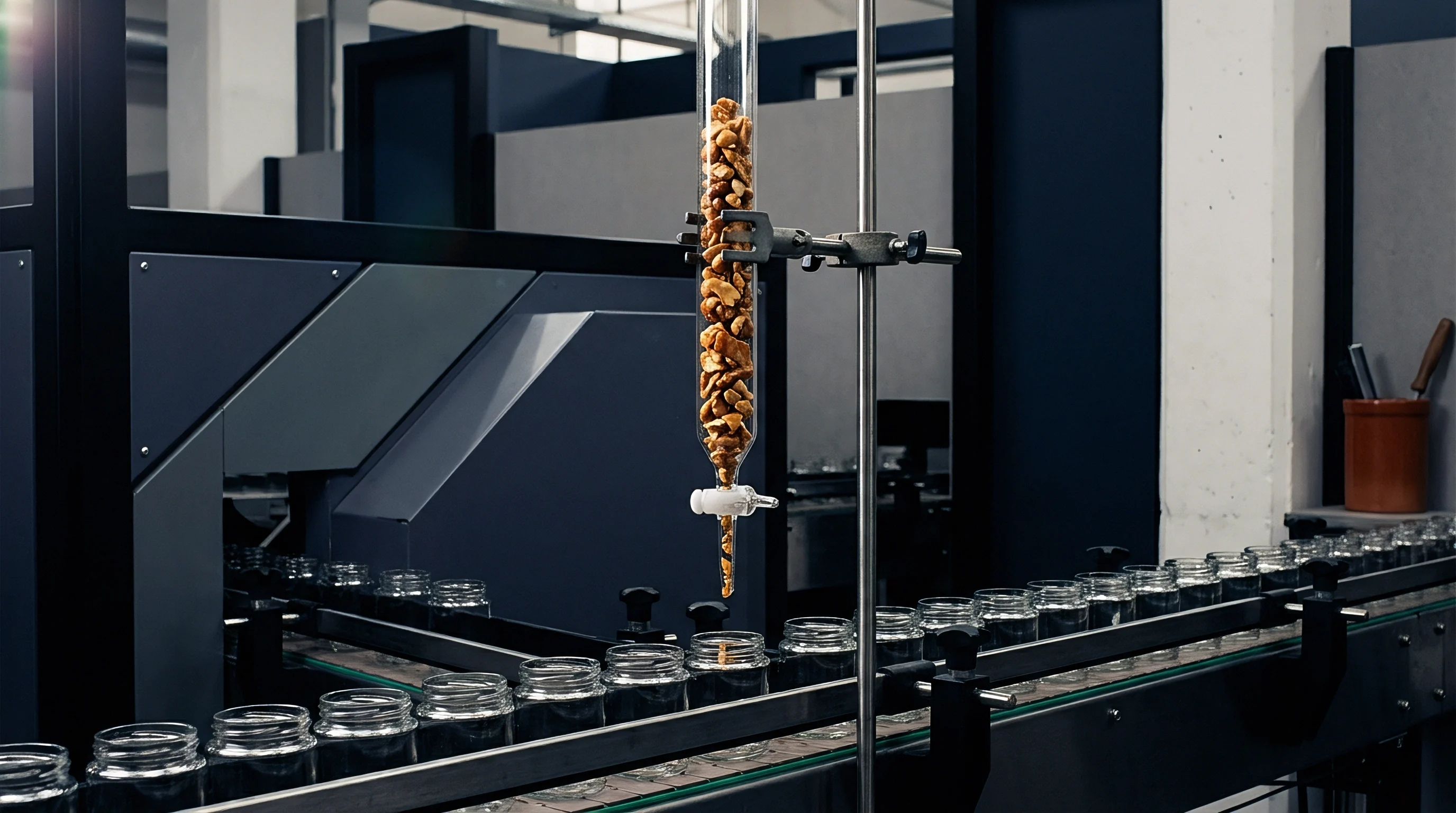
Laboratory Methods for Millisecond Liquid Absorption
Apparatus designs must record droplet volume loss and contact angle evolution at high frame rates. Automated contact angle testers capture droplet dynamics beginning ten milliseconds after impact. High-speed cameras running at 2000 frames per second track droplet height, contact diameter, and contact angle across the initial forty milliseconds of wetting.
Fast optical tracking reveals whether the contact line advances smoothly or pins against the substrate topography.
The Bristow absorption tester, standardized under TAPPI T 563 and ISO 9416, provides the baseline for short-duration liquid penetration. The instrument deposits a defined fluid volume through a high-speed metering head onto a spinning wheel lined with the paper substrate. Operating the wheel at speeds up to 2.5 meters per second achieves contact durations between 4 and 250 milliseconds.
Plotting fluid transfer volume against the square root of time generates an absorption curve displaying two distinct zones: an initial roughness filling phase and a subsequent capillary intake phase.
The slope of the capillary phase defines the fluid absorption rate. A sharp reduction in this slope at short contact times indicates capillary stalling. When testing aqueous inks on hard-sized folding carton grades, the fluid absorption coefficient often drops forty percent when contact time falls below fifteen milliseconds.
This inflection point identifies the speed limit for spontaneous liquid uptake.
| Measurement Technique | Standard Designation | Temporal Resolution | Primary Parameter Output |
|---|---|---|---|
| Bristow Absorption Wheel | TAPPI T 563, ISO 9416 | 4 to 250 milliseconds | Absorption coefficient and roughness volume |
| High Speed Dynamic Contact Angle | TAPPI T 558, ASTM D5725 | 10 to 1000 milliseconds | Transient contact angle and wetting velocity |
| Maximum Bubble Pressure | ASTM D3825, ISO 14370 | 1 to 100 milliseconds | Surface age dependent surface tension |
| Ultrasonic Liquid Penetration | Internal mill protocol | 10 to 5000 milliseconds | Transit time attenuation and fiber wetting index |

Mathematical Formulation of the Stalling Limit
Quantifying the threshold where capillary motion arrests involves balancing capillary driving pressure against viscous dissipation and dynamic contact line friction. In a cylindrical pore of radius r, fluid displacement velocity v follows from the balance between capillary pressure and Poiseuille resistance:
v = (r gamma_dyn cos(theta_dyn)) / (8 eta L)
In this expression, gamma_dyn represents the dynamic surface tension at surface age t, theta_dyn denotes the dynamic contact angle at advancing velocity v, eta is fluid dynamic viscosity, and L represents the instantaneous penetration depth. Capillary stalling occurs when the velocity v approaches zero, which arises whenever dynamic contact angle theta_dyn equals or exceeds ninety degrees.
The dynamic contact angle depends on capillary velocity through molecular-kinetic wetting models. Contact angle increases with velocity following empirical balances. Dynamic surface tension decays from pure water tension toward equilibrium through exponential relaxation:
gamma_dyn(t) = gamma_eq + (gamma_pure – gamma_eq) exp(-t / tau_diff)
Here, gamma_eq is the equilibrium surface tension, gamma_pure is 72.8 millinewtons per meter, t is surface age, and tau_diff represents the characteristic diffusion time of the surfactant molecule. The diffusion time links directly to surfactant bulk diffusion coefficient D and bulk concentration C through the relationship tau_diff = 1 / (D C^2).
Consider an operational flexographic printing scenario. Take an aqueous pigment ink running on an uncoated kraft paperboard with mean pore radius of 2.5 micrometers. Ink dynamic viscosity equals 0.015 pascal-seconds.
The ink carries an ethoxylated fluorosurfactant package exhibiting an equilibrium tension of 26 millinewtons per meter and a diffusion time constant tau_diff of 25 milliseconds. The printing press runs at 600 meters per minute (10 meters per second). The anilox nip contact zone measures 5 millimeters, providing a nip dwell time of 0.5 milliseconds, followed by an open draw of 150 millimeters before the hot-air dryer, yielding an open dwell time of 15 milliseconds.
Total fluid contact time prior to hot air drying is 15.5 milliseconds. Evaluating dynamic surface tension at 15.5 milliseconds yields:
gamma_dyn(15.5 ms) = 26 + (72.8 – 26) exp(-15.5 / 25) = 26 + 46.8 exp(-0.62) = 26 + 46.8 0.538 = 51.2 mN/m
At 51.2 millinewtons per meter, experimental data on this sized kraft substrate produces a dynamic contact angle theta_dyn of 88 degrees. The cosine of 88 degrees is 0.035. Calculate capillary pressure driving fluid intake:
P_cap = (2 gamma_dyn cos(theta_dyn)) / r = (2 0.0512 0.035) / (2.5 10^-6) = 1,433 pascals
Now evaluate the equilibrium state where surface tension reaches 26 millinewtons per meter and contact angle relaxes to 30 degrees, yielding a cosine of 0.866:
P_cap_eq = (2 0.026 0.866) / (2.5 10^-6) = 18,013 pascals
The available capillary driving force collapses by over ninety-two percent during the operational dwell window. Penetration depth L scales with the square root of integrated capillary pressure over time. With capillary driving pressure suppressed to 1,433 pascals, the calculated penetration depth within the 15.5-millisecond window reaches merely 0.62 micrometers, failing to clear the surface roughness layer of 1.8 micrometers.
Mechanical pinning arrests fluid motion completely.
How does the non-uniform distribution of pore diameters across recycled fibers shift this stalling boundary when machine speeds exceed twelve hundred meters per minute?

Rupture
Mechanical failure of converted packaging often originates directly from incomplete fluid anchoring caused by capillary stalling. On folding-boxboard carton lines, cold emulsion adhesives must penetrate the top liner to interlock with cellulose fibers before the score line springs open. If the adhesive stalls within the pigment coating or top ply, adhesive film consolidation occurs exclusively on the substrate surface.
The joint exhibits low mechanical peel resistance, causing carton flaps to pop open during cartoning or pallet transport.
Fiber tear provides the practical metric for bond evaluation. A sound bond produces one hundred percent fiber pull across the joint interface, demonstrating that adhesive strength exceeds the internal Z-directional tensile strength of the paperboard. When capillary stalling prevents penetration, delamination occurs cleanly along the glue-substrate interface, showing zero fiber transfer.
Microscopic examination of failed cartons reveals an intact, dried adhesive film that never entered the pore network.
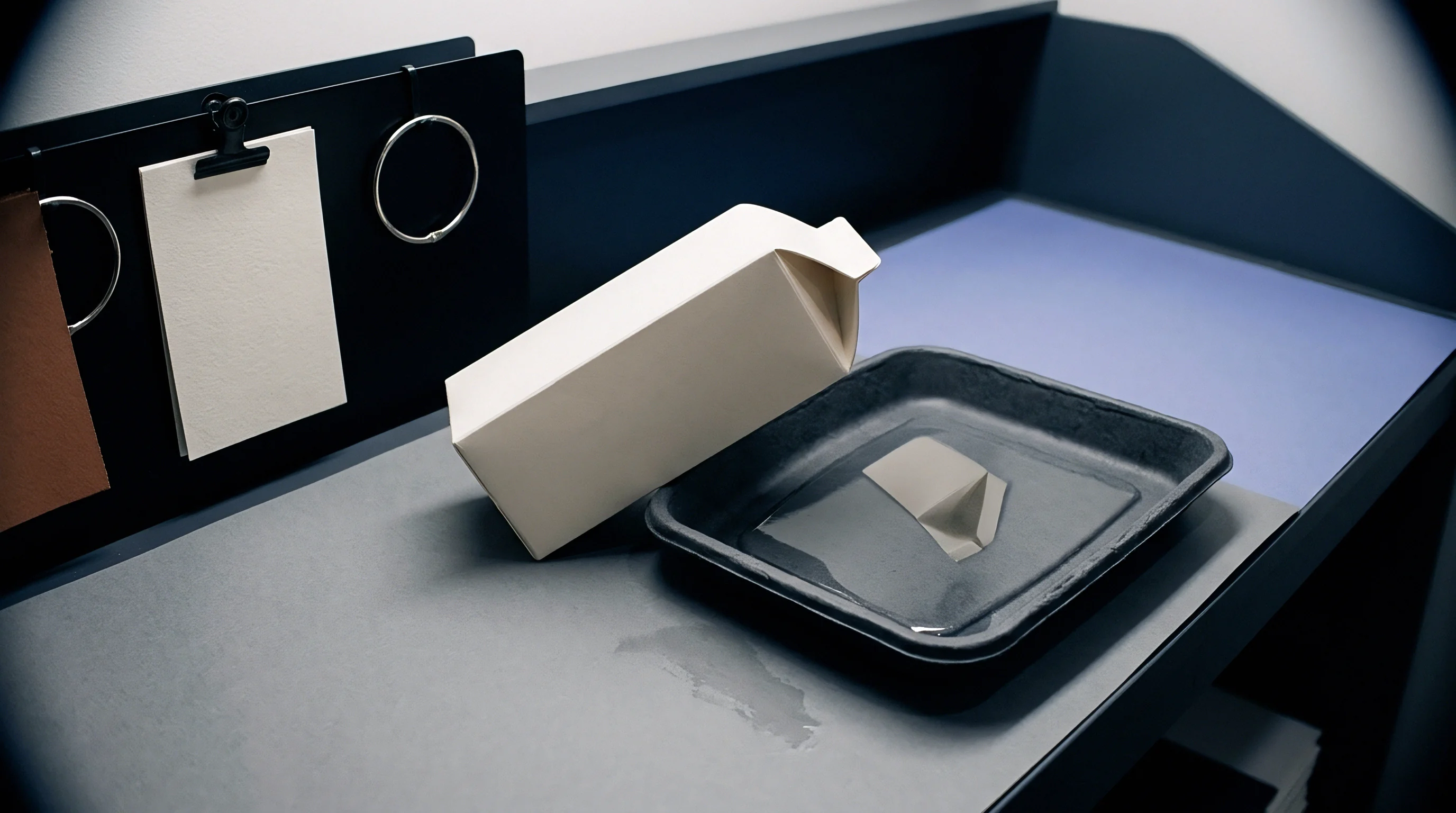
Adhesive Anchor Failure in Folding Boxboard
Adhesives applied on multi-point folder-gluers experience compression nips lasting less than thirty milliseconds. During this interval, polyvinyl acetate emulsion water must penetrate the paperboard to increase emulsion solids and initiate polymer coalescence. Capillary stalling of the aqueous carrier phase halts water drainage into the board.
The emulsion remains excessively dilute under compression, extending the required setting time.
Bond strength drops thirty percent. When cartons exit the compression belt, internal mechanical spring-back stresses from the scored creases challenge the green strength of the adhesive. If the adhesive has not drained water into the furnish, the setting joint ruptures immediately.
Raising line speed from 200 meters per minute to 450 meters per minute frequently triggers widespread flap pop-open defects across pharmaceutical cartons, solely because the reduced dwell time pushes liquid transport into the capillary stalling zone.
Paperboard with a Cobb sixty value of twenty grams per square meter exhibits zero water intake during the initial ten milliseconds of fluid contact.

Substrate Internal Sizing and Fiber Lignin Content
Furnish composition heavily modulates the threshold for capillary arrest. Mechanical pulps and unbleached kraft furnishes contain high residual lignin and natural fatty acid extractives. These hydrophobic components lower the native surface energy of the cell walls.
In bleached chemical pulp boards, surface energy ranges between 45 and 52 millinewtons per meter, whereas unbleached recycled fluting often tests below 34 millinewtons per meter. On low-energy fiber surfaces, any elevation in dynamic fluid tension immediately pushes the dynamic contact angle past ninety degrees, inducing stalling.
Internal sizing agents compound this problem. Mills add alkyl ketene dimer (AKD) or alkenyl succinic anhydride (ASA) to achieve target Cobb values for humidity resistance. Sizing molecules orient their hydrocarbon chains outward, presenting a low-energy barrier to aqueous fluids.
Excessive sizing or uneven size distribution creates localized hydrophobic zones where capillary suction drops to zero.
- Bleached virgin sulphate board allows fast surfactant adsorption due to high native surface energy, shifting the stalling limit beyond 900 meters per minute.
- Recycled testliner grades contain residual wax, defoamers, and synthetic sizing that prolong surfactant diffusion, inducing capillary arrest at 400 meters per minute.
- Double-coated folding boxboard presents a microporous pigment coating of calcium carbonate and latex, requiring low dynamic tension to penetrate pore diameters below 0.2 micrometers.
- Uncoated cupstock furnish requires balanced AKD sizing levels to resist liquid penetration under hydrostatic head without causing edge-wicking adhesive bond failure during cup forming.
A fast converting line permits zero room for wetting sluggishness. Sourcing managers who purchase low-grade recycled board based strictly on basis weight and static caliper discover that intermittent carton popping forces operators to slash running speeds by half, instantly doubling labor and machine hour costs per delivered unit.

Batch
Commercial qualification of paperboard inventory demands evaluating lot-to-lot absorption variation against converting line velocity. Sourcing engineers routinely buy paperboard by the metric ton while converting operations generate value by the thousand finished cartons. When unexpected capillary stalling induces bonding failure, waste rates escalate from a normal two percent allowance to fifteen or twenty percent of total run volume.
Scrap generation destroys job profitability within hours of production.
Basis weight and bulk measurements tell nothing about short-duration interfacial behavior. A mill certificate showing compliant caliper per ISO 534, target grammage per ISO 536, and sixty-second Cobb absorption within specification per ISO 535 provides zero protection against millisecond capillary arrest. Incoming lot verification must incorporate short-duration dynamic testing to guarantee that paperboard will run at full machine speeds without adhesive failure or ink pinholing.
Scrap Rates and Converting Line Yield
Converting economics hinge on first-pass yield. Consider a commercial print and converting job producing 500,000 folding cartons from solid bleached sulphate board with a basis weight of 300 grams per square meter. The board costs 1,250 dollars per metric ton landed.
The order consumes 75 metric tons of substrate, representing a base material outlay of 93,750 dollars. Running the job at an optimized line speed of 400 meters per minute requires 12.5 operating hours on a modern high-speed folder-gluer rated at 350 dollars per machine hour.
When dynamic surfactant stalling causes adhesive bond failure, machine operators must reduce line velocity to 180 meters per minute to extend contact dwell time past the relaxation threshold. Production time expands from 12.5 hours to 27.8 hours, generating 5,355 dollars in additional machine hour expense. Scrap rates climb to eight percent as operators clear unbonded, jammed cartons from the compression belts.
Defective cartons consume six metric tons of board, adding 7,500 dollars in wasted material costs. Total job margin erodes by 12,855 dollars, turning an anticipated ten percent operating margin into a net operational loss.
| Production Metric | Stable Converting Baseline | Capillary Stalled Production | Variance Impact |
|---|---|---|---|
| Converting Speed | 400 meters/minute | 180 meters/minute | -55.0 percent |
| Operating Run Time | 12.5 machine hours | 27.8 machine hours | +15.3 machine hours |
| Machine Hourly Cost | $4,375 total | $9,730 total | +$5,355 labor and overhead |
| Substrate Scrap Rate | 2.0 percent (1.5 tonnes) | 8.0 percent (6.0 tonnes) | +4.5 tonnes scrap |
| Scrap Substrate Expense | $1,875 | $7,500 | +$5,625 direct material loss |
| Finished Unit Cost | $0.201 per carton | $0.227 per carton | +$0.026 per carton |

Contract Clauses for Surface Absorption Tolerances
Procurement agreements must protect buyers from hidden variations in furnish surface energy and mill sizing additions. Standard purchase contracts reference static Cobb values, allowing mills to ship heavily sized lots that pass water repellency audits but stall during millisecond converting operations. Technical purchase specifications should define a maximum dynamic contact angle under short contact windows, tying pallet acceptance directly to high-speed wettability performance.
- Incoming lot sampling requires drawing three representative sheets from each delivered pallet across five percent of the shipment, conditioning specimens at 23 degrees Celsius and 50 percent relative humidity per ISO 187.
- Short duration absorption screening executes automated liquid absorption testing via Bristow wheel or high-speed dynamic contact angle testing at a surface age of twenty milliseconds.
- Specification limits dictate that advancing dynamic contact angle for reference aqueous testing fluids must remain below 75 degrees at twenty milliseconds, with dynamic absorption coefficients exceeding 8.0 milliliters per square meter per square root of second.
- Rejection thresholds mandate that any delivered reel or pallet failing dynamic absorption benchmarks across two consecutive tests triggers lot quarantine and mill reimbursement for resulting converting downtime.
Section 8.4 of the substrate supply master agreement holds the mill liable for all press make-ready scrap whenever short-duration absorption rates fall twenty-five percent below verified baseline values.
Under this contract provision, mill technical claims regarding static Cobb compliance cannot overturn incoming rejection notices when laboratory testing proves dynamic contact angle elevation at line operating speeds.