Standard Internal Bond Test Protocols for Recycled Folding Boxboard
Verify Scott Bond above 120 J/m² and ZDT above 220 kPa under ISO 187 conditioning to prevent blanket delamination and score splitting on recycled cartonboard.


Pendulum
Delamination resistance governs whether a multi-layer recycled cartonboard survives offset print tack, high-speed rotary cutting, and folder-gluer transfer. Mechanical impact energy instruments release a calibrated hammer against an aluminum angle specimen adhered between double-coated tape strips. The kinetic energy absorbed during dynamic sheet fracture yields the Scott internal bond value, expressed in joules per square metre (J/m²).
TAPPI T 569 defines this dynamic cleavage method, mirrored internationally by ISO 16260. A competing methodology, ISO 15754 and TAPPI T 541, applies a steady perpendicular tension to measure z-directional tensile strength (ZDT) in kilopascals (kPa). Both procedures evaluate the internal cohesion of fibrous plies, yet they record divergent mechanical responses under dynamic converting stresses.
High pendulum velocity exaggerates delamination energy. The hammer swings through its arc at approximately 3.0 metres per second, loading the specimen in peel and shear simultaneously. Elastic deformation of the adhesive tape absorbs a portion of the impact before the sheet core splits.
Laboratory technicians who calibrate equipment without correcting for tape resilience record artificially elevated bond numbers. Z-directional tensile testing eliminates peeling vectors by pulling the entire test face along a normal axis at a controlled crosshead displacement rate of 2.5 millimetres per minute. That static configuration eliminates velocity effects, giving a pure measurement of trans-thickness tensile strength.
| Test Protocol | Governing Standard | Stress Mode | Specimen Area | Rate of Separation | GD2 Recycled Board Range |
|---|---|---|---|---|---|
| Scott Impact Resistance | TAPPI T 569 / ISO 16260 | Dynamic Cleavage and Peel | 25.4 mm x 25.4 mm | Hammer impact at 3.0 m/s | 90 to 140 J/m² |
| Z-Directional Tensile | ISO 15754 / TAPPI T 541 | Uniform Normal Tension | 50.0 mm x 50.0 mm | Crosshead speed 2.5 mm/min | 180 to 280 kPa |
| T-Peel Ply Delamination | ASTM D1876 Modified | Direct 180-Degree Peel | 25.0 mm x 150.0 mm | Jaw separation 254 mm/min | 0.12 to 0.22 N/mm |
| Internal Shear Cohesion | DIN 54516 | In-Plane Shear Fracture | 50.0 mm x 50.0 mm | Constant displacement rate | 210 to 320 kPa |
| Comparative test values reflect commercial recycled cartonboard furnishes tested in conditioned atmospheres under ISO 187 rules. | |||||
Converters running heavy solid ink films on six-colour litho presses frequently discover that acceptable Scott Bond figures fail to protect against blanket delamination. Tack forces generated by viscous inks pull the top liner directly upward out of the sheet plane. This normal force mirrors ZDT mechanics rather than pendulum cleavage.
Recycled folding boxboard grades (white lined chipboard, classified as GD2 or GD3) exhibit lower ZDT values relative to virgin fibre folding boxboard (GC1 or GC2) because secondary fibres possess shorter average lengths and impaired fibrillation. Mills running secondary fibre blends lean heavily toward Scott Bond reporting because dynamic peel values show higher nominal numbers on laboratory certificates.
TAPPI T 569 internal bond values below 100 J/m² under 23 degrees Celsius and 50 percent relative humidity correlate directly with core splitting during carton erection.
Specifying internal bond targets on a purchase contract demands an exact pairing of standard designation, instrument calibration mass, and sample conditioning parameters. A certificate stating a bond rating of 120 J/m² conveys zero engineering value if the test house ran a high-range 1.0 J pendulum on low-density material, where instrument inertia obscures subtle core rupture. Testing laboratories must document the exact pendulum capacity utilized, ranging from 0.25 J to 1.0 J. When testing houses mix test methodologies across qualification runs, converters face blistered blisters, torn liners, and catastrophic downtime on automated packing lines.

Ply
The sheet cross-section of recycled folding boxboard contains distinct functional strata engineered to balance bending stiffness against raw material expenditure. White-lined chipboard features a coated virgin chemical pulp or deinked pulp (DIP) top liner, an underliner layer derived from unprinted newsprint or office waste, multiple bulky middle filler layers composed of mixed secondary fibres, and a reverse liner of newsprint or brown kraft. Secondary fibres shrink during repeated drying.
Every recycling cycle strips the cell wall of moisture, triggering irreversible lumen collapse and hornification. The resulting furnish exhibits reduced external fibrillation and a lower specific surface area available for hydrogen bonding across the sheet thickness.
Poor internal cohesion ruins print runs. Mill chemists introduce raw or cationized starch into the sheet during formation to rebuild inter-fibre cohesion within the recycled core. Automated spray headers distribute cooked cationic corn or potato starch at the forming table between individual couching webs, applying 1.5 to 3.5 grams of dry starch per square metre.
If drainage across the Fourdrinier wires is too rapid, starch molecules wash away into the white water loop before gelatinizing. Incomplete gelatinization leaves dry, brittle zones across the middle boundaries. High mineral filler contents (ground calcium carbonate and talc), often exceeding 12 percent in post-consumer recycled waste streams, further impede fibre contact by coating the secondary fibrils in inert stone dust.
- Inter-ply delamination occurs along the interface between the underliner and the first filler stratum when wet-end couching nip pressure falls below critical bonding levels.
- Intra-ply core fracture develops directly inside the recycled middle stratum where short mechanical fibres and mineral fillers dominate the local mass balance.
- Blistering under thermal load emerges during heat-set offset drying or hot-foil stamping when entrapped moisture boils within poorly bonded central strata.
- Surface liner rupture takes place when the tack of lithographic printing inks pulls the top fibrous skin entirely free from the underlying recycled core.
Cationic starch binds the middle layers. Without adequate chemical intervention, the bulky recycled filler layers pull apart under low mechanical shear. The core plies carry the thickness needed for carton bending stiffness while functioning as the mechanical weak point of the entire composite board structure.
Fibre hornification in recovered furnish shifts the mechanical fracture zone from the surface down into the starch-deficient central layers.
Moisture levels dictate the internal cohesion of the secondary pulp matrix. Dry board below 6.0 percent absolute moisture turns brittle, creating sharp, friable fractures during impact tests. Board stored in high-humidity ambient environments above 70 percent relative humidity absorbs moisture into the amorphous cellulose zones, softening hydrogen bonds and dropping ZDT values by up to 30 percent.
A furnish incorporating a high percentage of mechanical screen rejects demands elevated starch application rates to overcome the stiffness of thick, unrefined lignified fibres.
Board machines operating four or five forming wires simultaneously risk variable inter-layer bonding if web temperatures diverge at the couching nip. Warm bottom plies meeting cool top plies inhibit starch migration and generate asymmetric thermal stresses during final cylinder drying. The resulting differential tension leaves lingering internal stresses that release as premature ply separation under converter die-cutting knives.
Tape
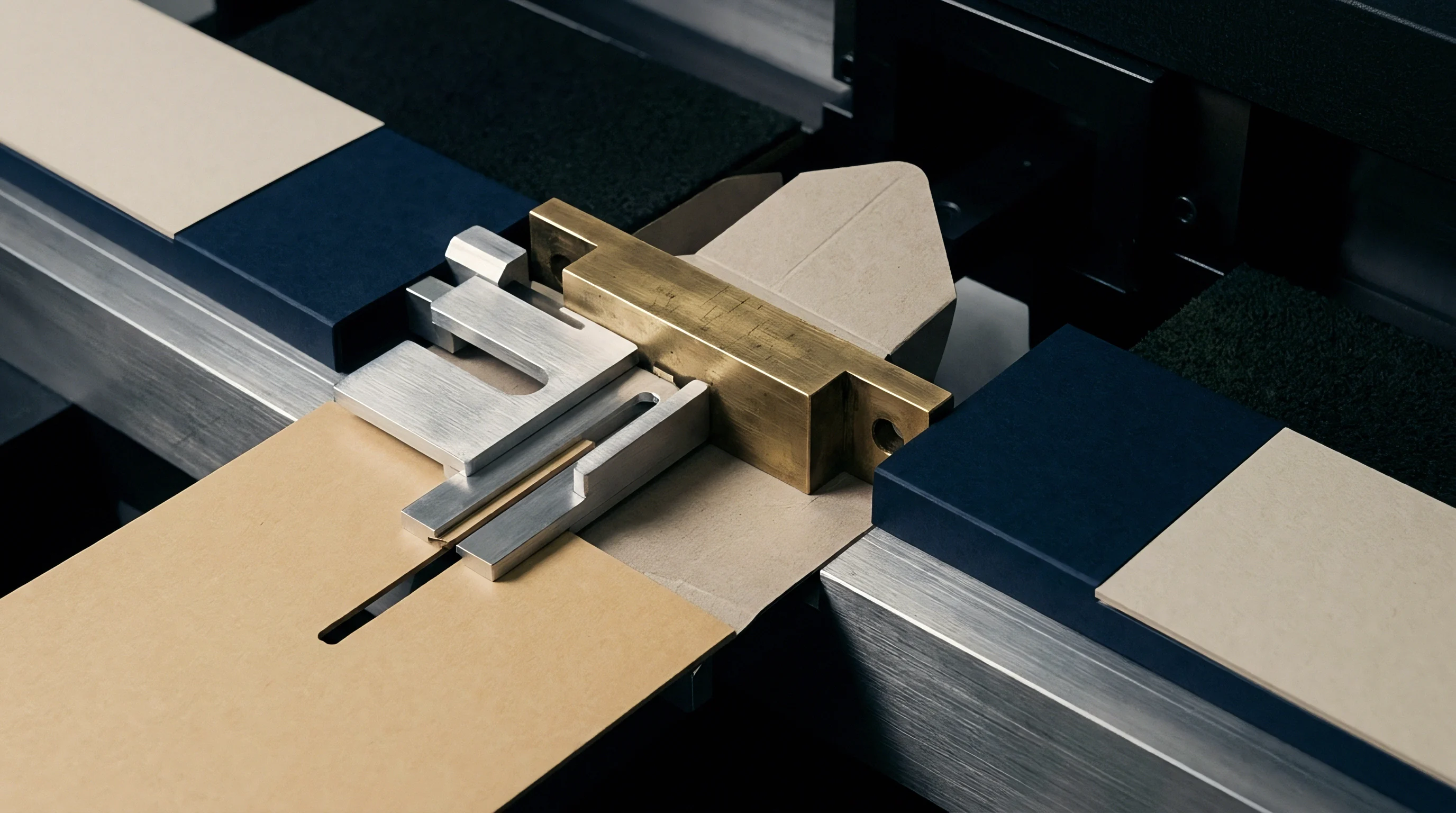
Double-sided pressure-sensitive adhesive links the cardboard specimen to the anvil base and the swinging angle fixture. Adhesive selection dictates whether the laboratory technician measures fibrous cohesion or superficial tape peeling. Standardized protocols specify high-shear acrylic or modified rubber adhesives mounted on polyester or paper film carriers, including 3M 410M.
When a test laboratory substitutes generic packaging tape, the adhesive layer shears sideways during pendulum impact, soaking up mechanical work and yielding artificially inflated bond values. The backing tape must exhibit higher internal shear resistance than the cross-directional tensile strength of the board specimen.
Contact pressure alters adhesive wet-out. Laboratory apparatus builders furnish automated compression stations equipped with a mechanical press or pneumatic ram to secure the specimen package. The anvil clamping stage applies a specific compression force, standardized between 0.7 MPa and 1.4 MPa, across the test specimen area for a predetermined dwell duration.
Deviations in pressure or dwell time alter the adhesive bond line dramatically, introducing non-linear testing errors.
| Test Variable | Standard Specification | Bench Deviation Mode | Observed Error on GD2 Board |
|---|---|---|---|
| Clamping Pressure | 1.05 MPa ± 0.05 MPa | Inadequate loading at 0.35 MPa | -18% recorded bond (early adhesive slip) |
| Dwell Duration | 3.0 seconds ± 0.5 s | Extended dwell at 15.0 seconds | +12% recorded bond (excessive penetration) |
| Adhesive System | 3M 410M rubber-resin film | Solvent acrylic transfer tape | +25% recorded bond (tape shear energy) |
| Ambient Relative Humidity | 50.0% ± 2.0% (ISO 187) | Unconditioned laboratory at 68% RH | -22% recorded bond (fibre bond plasticization) |
| Anvil Parallelism | Planar within 0.01 mm | Angular misalignment of 0.15 mm | -35% recorded bond (asymmetric peel initiation) |
Technicians must wipe metal anvil surfaces with isopropanol between runs. Clay, calcium carbonate, and unbound sizing chemicals shed from recycled board surfaces, forming a powdery release layer across the steel platen. This contamination prevents adhesive wet-out during subsequent test cycles.
Specimen conditioning fixes moisture balance. Samples must equilibrate inside a climate chamber maintaining 23 degrees Celsius and 50 percent relative humidity per ISO 187 for a minimum of 24 hours prior to adhesive application.
Laboratory clamps operating outside the 1.05 MPa pressure threshold invalidate all recorded Scott Bond figures.
Anvil angle fixtures suffer physical wear over extended usage cycles. The 90-degree corner of the aluminum angle absorbs repeated impacts from the pendulum striker, eventually burring the metal edges and altering the pivot geometry. If the angle face tilts slightly out of plane, the pendulum strike exerts uneven point loading along the front edge of the test specimen.
Instead of uniform cleavage across the entire 6.45 square centimetre face, the failure propagates as a progressive tear, lowering the instrument reading by up to 40 J/m². Mill quality control personnel routinely defend failing lots by attributing the low values to adhesive contamination on the converter bench.
Crease
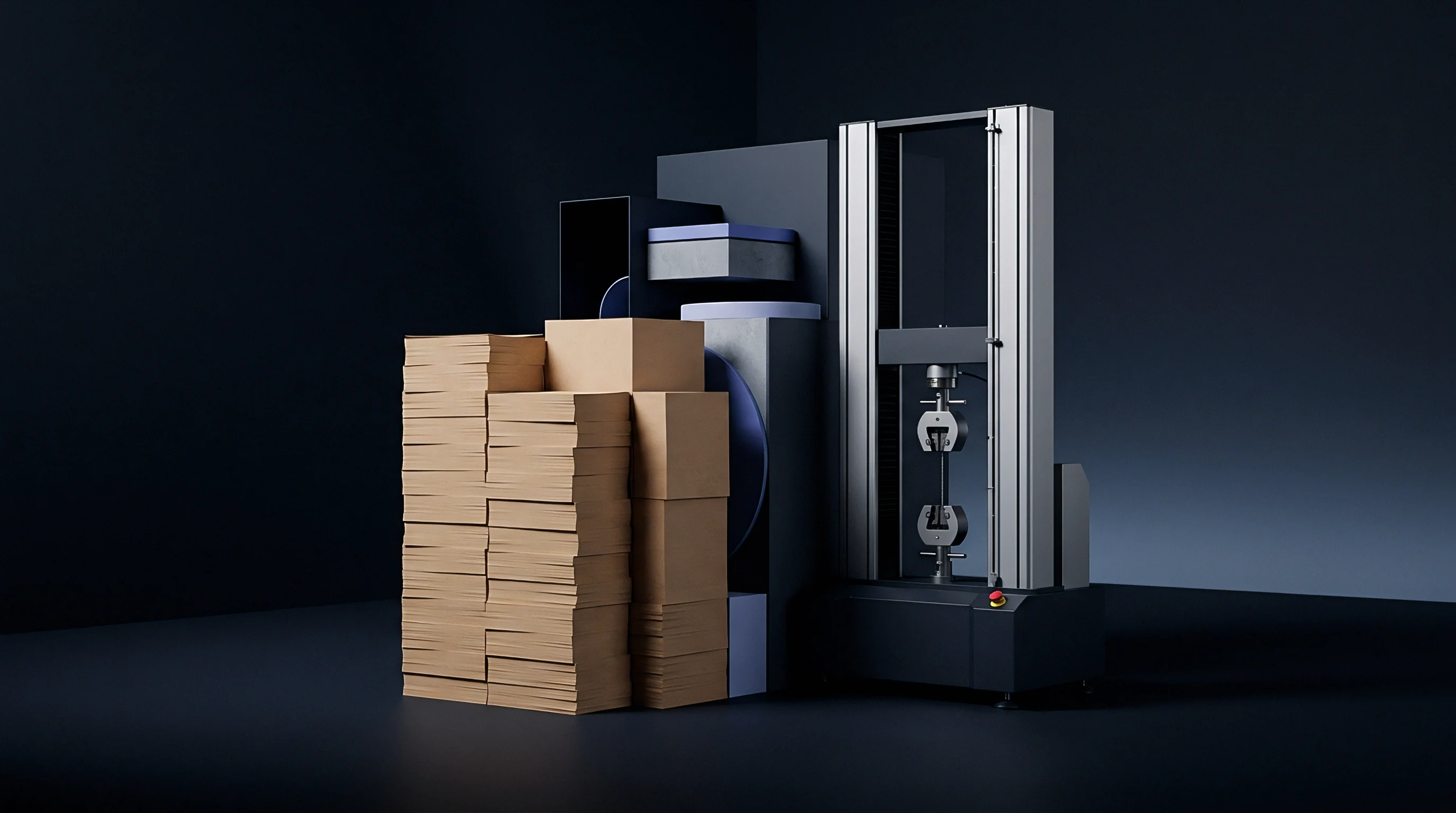
Die-cutting platens subject cartonboard to severe local shear, compression, and tensile loads along narrow score channels. In folding carton production, creasing rules deliberately induce controlled internal ply separation to create a flexible, durable hinge. The male rule forces the board down into a counter-matrix channel, shearing the middle strata while maintaining the continuous structure of the top and reverse liners.
When the internal bond strength of recycled boxboard is too low, the score rule causes wide delamination that extends far beyond the crease line, destroying the vertical panel stiffness of the carton.
Recycled fibres lose bonding potential. This reality forces carton designers to employ wider creasing matrix channels and shallower rule heights when running GD2 or GD3 recycled cartonboard compared to solid bleached sulphate (SBS) virgin board. Solid virgin boards possess extensive fibre networks that distribute creasing stresses evenly.
Recycled cores shear abruptly, forming ragged internal splits that manifest externally as cracked carton corners during folding.
- Channel width calculation matches board caliper and cross-directional stiffness by setting channel width equal to 1.5 times the board thickness plus rule thickness for virgin board, expanding to 1.7 to 1.9 times thickness for recycled cartonboard.
- Rule penetration profiling establishes depth into the counter-matrix, avoiding excessive vertical penetration that severs the brittle underliner of secondary fibre stocks.
- Folding torque evaluation measures the mechanical resistance of ninety-degree score breaks on automated testing gauges to verify that internal delamination remains localized.
- Glue flap integrity inspection monitors high-speed side-seam folder-gluers running at 400 metres per minute to confirm that mechanical folding hooks do not split the board body.
Fast folder-gluers pull corners apart. Modern automated packaging lines fold and glue cartons within fractions of a second. If internal bonding falls short, the physical force of folding fingers rips the glue flap apart from within its recycled core.
The adhesive bonds securely to the top liner, but the top liner detaches entirely from the fibrous centre of the board. The carton pops open immediately downstream in the packing line hopper, jamming the automated carton feeder.
Offset blanket tack tears weak liners. Sheetfed lithographic presses running high-tack inks at speeds exceeding 15,000 sheets per hour apply tremendous peeling forces to the surface of the cartonboard. As the printing plate transfers ink via the rubber blanket cylinder, the tacky ink film must split cleanly.
If the local ZDT of the board drops below 200 kPa, the ink tack overcomes internal fibrous cohesion. The press blanket tears the coated top liner away from the recycled core, generating a catastrophic blister defect that halts the press and destroys the printing blanket.
A contract delivery clause that omits minimum cross-directional ZDT values leaves the buyer without commercial recourse when press blankets delaminate the stock.
Thermal operations introduce additional delamination risks across recycled substrates. Hot foil stamping transfers metallic foils to box faces under temperatures between 130 and 160 degrees Celsius at pressures up to 40 MPa. Entrapped moisture inside the recycled middle plies vaporizes instantly under the hot die.
If the internal bond strength cannot withstand internal steam expansion, the board forms massive internal blisters under the stamped image. Packaging engineers eliminate this converting failure mode by specifying ISO 16260 minimum values directly inside the master procurement agreement.
Dossier
Procurement dossiers for recycled folding boxboard must translate mechanical sheet physics into enforceable commercial boundaries. Grade substitution represents a constant risk when transitioning projects from virgin fibre boxboard (GC2) to white-lined chipboard (GD2). Converters frequently propose GD2 based on attractive base material cost savings, ignoring the technical concessions demanded by lower internal bonding strength.
A balanced commercial qualification requires a complete audit of mill test certificates alongside empirical validation of delivered reels or pallets.
Mill certificates report average values only. A mill test dossier presenting a Scott Bond rating of 130 J/m² often conceals cross-machine basis weight variations and localized bonding deficits. Standard deviation across a single jumbo reel can exceed 25 J/m² when wet-end starch spray nozzles clog or develop uneven spray patterns.
Prudent sourcing managers mandate statistical process limits, specifying that no individual specimen within a 10-sample test set may register below 100 J/m² on TAPPI T 569 testing.
| Substrate Grade | Basis Weight | Caliper | Scott Bond Mean | Delamination Spoilage Rate | Delivered Cost per 1,000 Units |
|---|---|---|---|---|---|
| Virgin GC2 (FBB) | 250 g/m² | 400 µm | 210 J/m² | 0.4% | 42.50 USD |
| Recycled GD2 (WLC) | 280 g/m² | 400 µm | 125 J/m² | 2.8% | 37.10 USD |
| Recycled GT2 (Kraft Back) | 270 g/m² | 400 µm | 145 J/m² | 1.2% | 39.20 USD |
| Recycled GD3 (High Filler) | 290 g/m² | 400 µm | 95 J/m² | 6.5% | 38.90 USD |
Rigid cartons demand intact middle plies. Recycled GD2 board exhibits lower bulk than virgin GC2 board. Matching the bending stiffness of a 250 g/m² GC2 carton requires a GD2 specification of roughly 280 g/m², adding 12 percent more physical mass to achieve identical flexural resistance.
That additional mass alters parent sheet yield. A converter purchasing 50 metric tonnes of 280 g/m² recycled board yields fewer cut blanks per tonne than the lighter virgin equivalent. When line spoilage from score cracking and offset delamination increases from 0.4 percent to 2.8 percent, the initial price advantage of the cheaper recycled substrate disappears.
- Statistical threshold definitions state minimum allowable bond floors rather than ream averages, binding the supplier to a maximum allowable variance of 10 percent.
- Specimen conditioning verification requires supplier quality control labs to verify 24-hour equilibration under ISO 187 atmospheric parameters prior to reel sign-off.
- Tape reference standardization specifies acrylic or rubber testing media by product code to block testing labs from inflating bond numbers with soft tapes.
- Defect liability allocation links converting press downtime costs directly to verified delamination failures whenever laboratory test certificates reveal out-of-spec internal cohesion.
Extended Producer Responsibility (EPR) legislation across Europe and North America imposes modulating eco-fees based on material recyclability and post-consumer recycled content. Recycled white-lined chipboard qualifies for favorable EPR fee bands compared to virgin fibre alternatives. However, saving money on end-of-life disposal fees while running scrap rates above 5 percent on high-speed gluer lines bankrupts the operational budget.
Packaging buyers must balance the regulatory advantages of secondary fibre against the strict physical limits imposed by inter-ply bonding physics.
Technical dossiers must identify the mill machine code and wire layout used for every batch. Modern multi-Fourdrinier board machines equipped with top formers and modern starch spray systems produce recycled boxboards with Scott Bond numbers consistently matching 140 J/m². Older cylinder vat machines fail to distribute secondary fibres with sufficient uniformity, yielding patchy, unstable cores that split under moderate die-cutting loads.
Sourcing decisions grounded in verifiable internal bond testing isolate high-performing mills from obsolete operations, protecting downstream packaging lines from disastrous delamination failures.