Substrate Specification
Multi-ply coated recycled cartonboard featuring a double pigment coating on the top liner, a furnish composed of recovered paper fibres and a grey back layer satisfies industrial packaging requirements under DIN 19304 classification standards. Sourcing specifications designate gd2 cartonboard as a white-lined chipboard grade with medium coating weight, differentiating it from GD1 grades that possess superior surface brightness and GD3 grades that carry lighter coating formulations. The top layer utilizes bleached virgin chemical pulp or high-grade deinked white ledger pulp to support process colour printing, while middle and reverse layers consist of unsorted recovered post-consumer and post-industrial newsprint and packaging fibres.
The material standard stops applying to virgin fibre folding boxboards, solid unbleached kraft boards and recycled board configurations utilizing fully bleached reverse layers.
Ply Construction
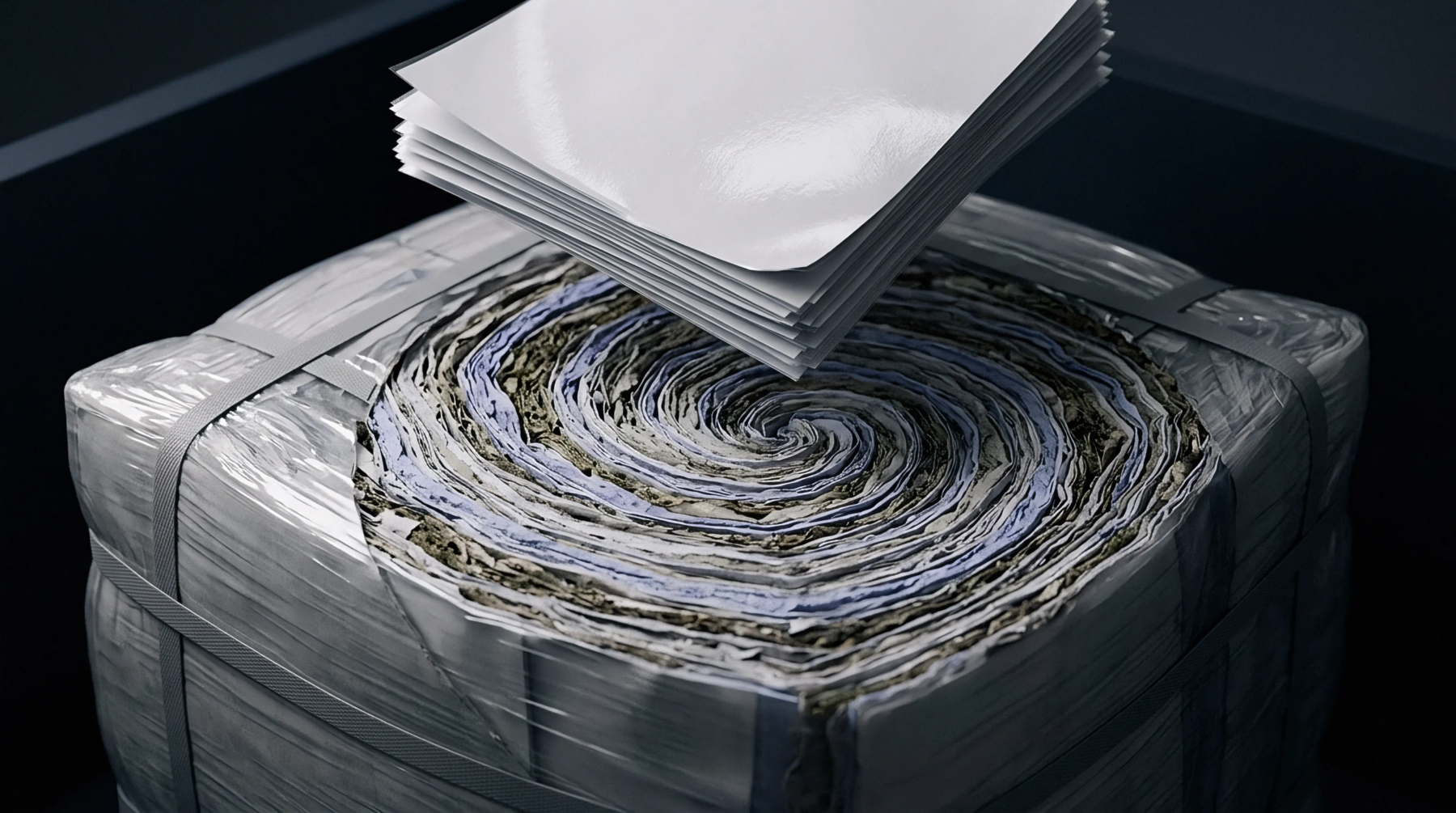
Structural stiffness and cost efficiency in this recycled cartonboard grade stem from mechanical stratification during fourdrinier or multi-cylinder vat forming. The double blade coating layer on the top liner delivers an ISO brightness between seventy-eight and eighty-one percent, offering a uniform surface for offset lithography and flexographic printing. The bulk of the caliper derives from recycled pulp plies containing residual mechanical fibres and filler minerals, which provide compressive bulk without requiring expensive bleached chemical furnish.
Sheet caliper typically ranges from two hundred and eighty microns to six hundred microns, corresponding to basis weights between two hundred and thirty grams per square metre and four hundred and fifty grams per square metre. Recycled fibres in the core possess lower tensile strength and bonding capacity than virgin softwood kraft, which mills counterbalance by increasing sheet basis weight to match the bending resistance of lighter folding boxboards. Starch spray applications between forming plies elevate ply bond strength, securing minimum Cobb values and preventing internal splitting during mechanical die-scoring and folding.
Converting Performance
High mineral filler content within the recycled middle layers reduces the natural elasticity of the sheet during sharp ninety-degree folding. Converting lines processing gd2 cartonboard require precise creasing matrix channels and rounded creasing rules to prevent delamination or unsightly cracking of the coated top liner along packaging edges. The grey reverse side presents high water absorbency, demanding adjusted adhesive formulations with rapid wet tack during straight-line folding carton gluing.
Food packaging converters incorporate virgin barrier liners or functional polymeric dispersion barriers when using this substrate, as non-deinked middle layers contain trace printing inks, mineral oil residues and volatile compounds that present chemical migration risks under food-contact safety regulations.