Dynamic Z Direction Cohesive Strength Testing for High Speed Packaging
Dynamic z-direction testing via TAPPI T 569 prevents high-speed packaging delamination by verifying inter-ply cohesive strength under real impact strain rates.

Split
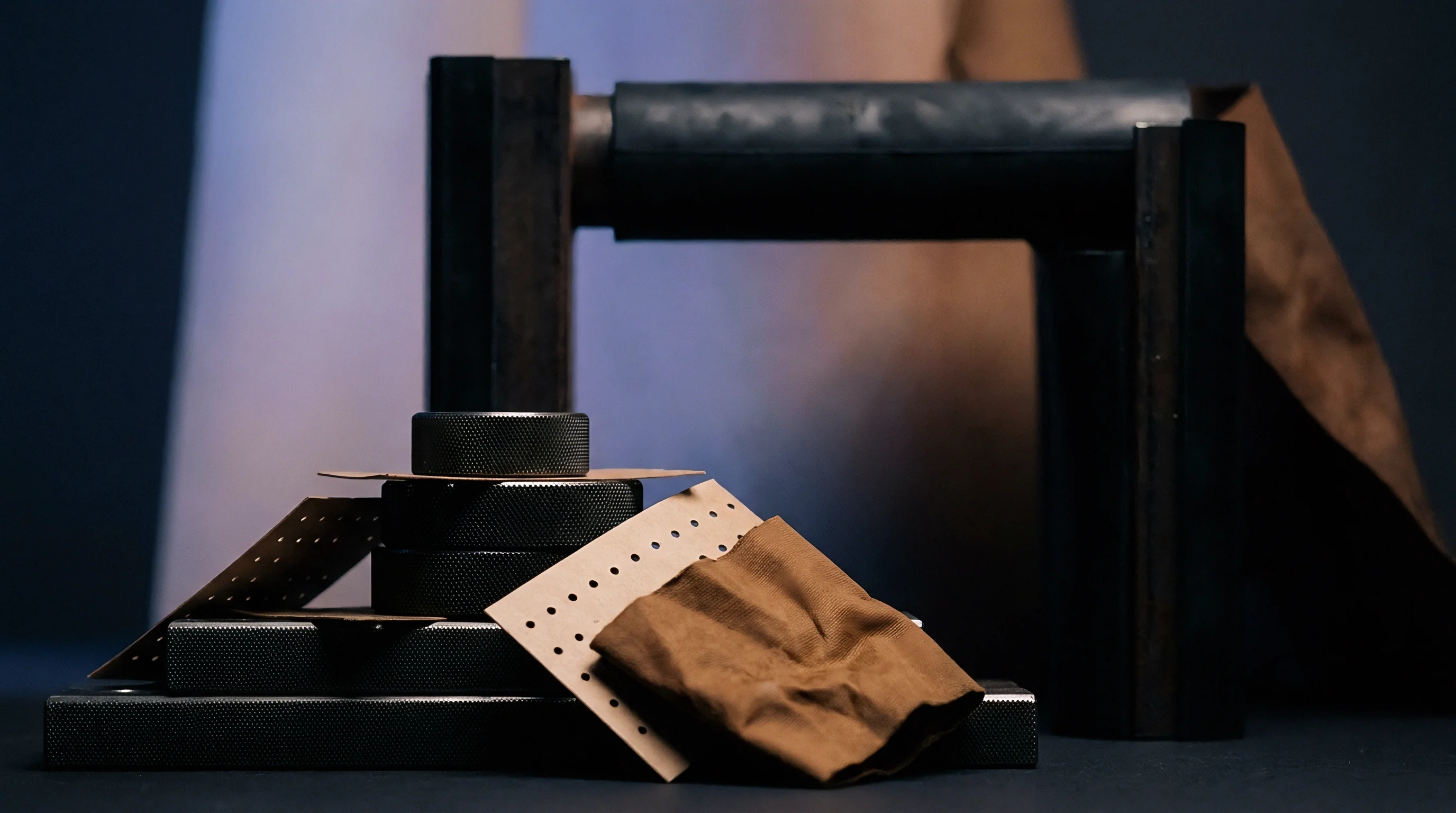
A pendulum hammer striking a double-sided tape anvil at 2.5 meters per second subjects paperboard to strain rates five orders of magnitude higher than a standard tensile clamp. In high-speed packaging lines running folding boxboard or solid bleached sulfate at 600 meters per minute, failure rarely occurs through slow, uniform tensile elongation. Structural failure presents as instant inter-ply separation under localized impact.
Mechanical strain concentrated at the glue flap, score line, or corner fold forces the fibrous network to absorb cleavage stress within fractions of a millisecond. Measuring resistance to this sudden delamination defines whether a carton holds its integrity through high-speed folder-gluers and cartoning machinery or splits open on the packaging line.
Internal cohesive strength in the z-direction reflects the energy needed to rupture the internal fiber matrix perpendicular to the plane of the sheet. Two dominant laboratory test methods evaluate this property, yet they probe entirely different viscoelastic regimes. ISO 1924 variants and TAPPI T 541 measure z-direction tensile strength under static or quasi-static conditions, moving the test platen at speeds between 10 and 25 millimeters per minute.
TAPPI T 569 and ISO 16260, commonly designated as Scott Bond testing, deliver a dynamic impact using a heavy pendulum that ruptures a 25.4 by 25.4 millimeter sample angle block. Static z-tensile stress is recorded in kilopascals, while dynamic impact energy is quantified in joules per square meter.
Z-tensile measures static cleavage.
The core disparity between static and dynamic values stems from the strain-rate sensitivity of cellulose fibers and inter-fiber hydrogen bonds. Under slow loading, micro-strains distribute across the fiber network, allowing localized stresses to relax before total bond failure occurs. Under dynamic impact, stress concentration is immediate.
Amorphous regions of hemicellulose and starch binders lack time to undergo molecular rearrangement. The sheet behaves as a rigid, brittle solid, transferring the kinetic energy directly into hydrogen bond breakage between plies.
| Paperboard Grade | Grammage (g/m²) | TAPPI T 541 Z-Tensile (kPa) | TAPPI T 569 Scott Bond (J/m²) | Dominant Failure Mode at High Speed |
|---|---|---|---|---|
| Solid Bleached Board (SBB/SBS) | 280 | 450 – 650 | 220 – 350 | Clean fiber tear across internal virgin bleached kraft plies |
| Folding Boxboard (FBB) | 300 | 300 – 450 | 140 – 210 | Delamination within central mechanical pulp middle layer |
| White Lined Chipboard (WLC) | 350 | 180 – 320 | 90 – 150 | Shear failure along short-fiber recycled fiber interfaces |
| Unbleached Kraftliner | 175 | 500 – 800 | 280 – 420 | High-energy z-directional micro-fiber necking and pullout |
Substrates with identical static z-tensile values often exhibit divergent dynamic energy absorption values. A solid bleached board manufactured with un-refined hardwood kraft in the middle ply can show acceptable static tensile resistance. Under dynamic pendulum stroke, that same middle ply ruptures prematurely because short, un-fibrillated fibers fail to dissipate rapid stress waves.
High-speed cartoning equipment running at 800 cartons per minute subjects side-seam glue joints to instantaneous peel forces upon leaving the compression belt. Static test values fail to predict line performance when the loading rate on the press exceeds laboratory test rates by factors of thousands.
A 300 g/m² folding boxboard conditioned at 23 °C and 50 percent relative humidity demonstrating a static z-tensile of 380 kPa can fail in folder-gluer compression belts if its dynamic energy absorption drops below 130 J/m².
Understanding internal ply bond failure requires separating surface strength from true z-directional cohesion. Wax pick tests and IGT surface strength evaluations gauge the anchor strength of coatings and surface sizing. Dynamic z-direction testing breaks the body of the sheet itself.
When a multi-ply board transitions through high-speed rotary creasing units, internal delamination within controlled boundaries is beneficial for clean folding. Excessive dynamic cohesion causes outer liner cracking, while insufficient cohesion causes uncontrolled ply splitting across the body of the box blank.
What structural modifications inside the middle-ply fiber web alter the dynamic-to-static failure ratio when machine speeds pass 800 meters per minute?

Impulse
Dynamic impact testing introduces measurement noise when operator technique or sample preparation drifts. The Scott Bond test apparatus relies on double-sided adhesive tape to secure the paperboard sample between a stationary anvil and an L-shaped aluminum angle block. The mechanical energy absorbed by the paperboard during pendulum impact equals the total energy lost by the pendulum minus operational tare losses and tape deformation work.
If the adhesive tape yields elastically during impact, energy readings artificially inflate, masking a weak fiber matrix beneath a compliant tape response.
Peak strain occurs within milliseconds.
Tape selection and pressing procedure govern test reproducibility across laboratory sites. High-tack acrylic adhesives bonded to rigid polyester carriers minimize tape compliance. Calibration protocols mandate pressing the angle block assembly under uniform hydraulic or mechanical pressure for a fixed dwell time.
Under-pressing leaves air pockets between tape and paperboard, causing sub-peak tape peeling that registers as falsely elevated impact energy. Over-pressing crushes bulk-sensitive substrates such as mechanical-pulp FBB, artificially inflating density and altering internal bond structure prior to impact testing.
- Cut paperboard samples into 25.4 by 25.4 millimeter squares using a dual-blade precision cutter to prevent edge delamination during preparation.
- Clean aluminum angle blocks and specimen anvils with isopropyl alcohol, ensuring complete removal of residual adhesive films and environmental oils.
- Apply high-tack double-sided testing tape to both faces of the paperboard sample without touching the active adhesive surface with bare fingers.
- Position the sample assembly into the automated specimen press, locking the alignment pins to ensure zero rotational offset during compression.
- Dwell the press at 1.4 megapascals of clamping force for exactly 3.0 seconds to standardize tape-to-substrate wet-out across all test reps.
- Mount the pressed angle block onto the magnetic latching block of the pendulum tester, release the pendulum stroke, and record the digital energy absorption reading in joules per square meter.
Double-sided tape compliance alters readings.
Environmental conditioning exerts a profound influence on dynamic energy absorption values. Standard laboratory conditioning under ISO 187 specifies 23 °C and 50 percent relative humidity. Cellulose fibers absorb atmospheric moisture rapidly, causing inter-fiber hydrogen bonds to plasticize.
As moisture content rises from 5 percent to 9 percent, static z-tensile values drop steadily. Dynamic impact values often exhibit a non-linear response. Moderate moisture increase enhances fiber elasticity, allowing greater viscoelastic energy dissipation before fracture.
Moisture exceeding 10 percent weakens the hydrogen-bonded network so severely that dynamic cleavage strength drops precipitously, leading to catastrophic carton failure in high-humidity filling plants.
Standardizing tape pressing pressure at 1.4 MPa with a 3.0-second dwell eliminates up to 25 J/m² of measurement noise caused by adhesive backing compliance.
Dynamic velocity profiles within testing equipment vary between instrument designs. Standard Scott Bond pendulums hit the anvil at roughly 2.5 to 3.0 meters per second. Advanced high-speed hydraulic micro-tensile rigs drive displacement rates up to 10 meters per second.
As test velocity increases, the measured cohesive energy shifts toward lower values for brittle recycled furnishes, while highly refined virgin kraft furnishes sustain higher energy absorption due to extensive fiber entanglement. Laboratories evaluating stock for ultra-high-speed packaging operations must align test velocity with the physical strain rates delivered by specific converting and packaging machinery.
Skipping routine anvil cleaning and tape dwell control yields false compliance certificates, causing high-speed folder-gluers to jam when low-cohesion board enters production under inflated mill test figures.

Fiber
Furnish engineering sets the ultimate threshold for dynamic z-direction strength. Softwood kraft pulps, derived from pine or spruce, deliver long fibers averaging 2.5 to 3.5 millimeters in length. Hardwood kraft pulps, derived from birch or eucalyptus, provide short fibers averaging 0.7 to 1.2 millimeters.
Mechanical pulps, including thermomechanical pulp (TMP) and chemi-thermomechanical pulp (CTMP), contain stiff, un-refined fiber bundles coated in hydrophobic lignin. In multi-ply folding boxboard structures, mill managers stratify these furnishes to balance bending stiffness against raw material cost.
Fiber length governs inter-ply shear.
Dynamic failure dynamics inside a multi-ply sheet depend on the bond density per unit volume and the flexibility of individual fibers. Softwood fibers beaten to high refining degrees exhibit high fibrillation, exposing micro-fibrils that interlock across ply boundaries during wet pressing on the paper machine. Hardwood fibers fill voids and smooth the surface, but offer fewer mechanical interlocks across internal interfaces.
Mechanical pulp cores, while essential for maximizing bulk and flexural stiffness at minimal weight, represent the weakest link under dynamic impact due to low hydrogen bonding capacity and high stiffness.
| Furnish Blend (Liner / Core) | Schopper-Riegler Refining (°SR) | Starch Addition Rate (kg/t) | Bulk (cm³/g) | Dynamic Z-Strength (J/m²) |
|---|---|---|---|---|
| 100% Bleached Softwood Kraft | 25 | 2.0 | 1.35 | 310 |
| 100% Bleached Softwood Kraft | 40 | 4.0 | 1.18 | 420 |
| 70% Hardwood / 30% CTMP Core | 18 | 0.0 | 1.85 | 115 |
| 70% Hardwood / 30% CTMP Core | 28 | 5.5 | 1.62 | 165 |
| 100% Old Corrugated Containers (OCC) | 35 | 8.0 | 1.40 | 135 |
Starch distribution determines ply bond.
Native and cationic starches sprayed between plies at the wet end of multi-ply paper machines enhance dynamic z-direction strength without requiring heavy mechanical refining that destroys sheet bulk. Cationic starches bind electrostatically to negatively charged cellulose fibers, creating localized adhesive networks at the ply interface. If starch application is uneven or if drying cylinder temperature profiles cause starch migration away from the ply boundary, dynamic bond strength collapses.
Starch concentration concentrated purely on the sheet surface improves pick resistance but leaves internal plies vulnerable to dynamic cleavage.
Increasing middle-ply refining energy lowers bulk while raising inter-ply dynamic bond strength up to an asymptotic limit dictated by fiber shortening.
Recycled fiber loops present specific challenges for z-direction integrity. Repeated wetting, hornification, drying, and repulping strip cellulose fibers of their natural swelling ability and internal flexibility. Recycled fibers resist collapse during wet pressing, yielding fewer contact points for hydrogen bonding.
Mills running 100 percent recycled containerboard or white lined chipboard rely heavily on synthetic strength resins, such as polyacrylamide (PAM) and glyoxalated polyacrylamide (GPAM), alongside heavy starch spraying to achieve baseline dynamic cohesive strength standards.
- Inter-ply delamination occurs when weak hydrogen bonding between adjacent machine webs splits clean along the ply boundary interface.
- Intra-ply core fracture presents as catastrophic fiber shearing inside the bulk mechanical or recycled middle layer, leaving intact surface liners.
- Fiber pullout cleavage happens when short hardwood or recycled fibers dislodge intact from the matrix under high-strain rates without fiber breakage.
- Brittle resin snap emerges in heavily starch-laden recycled sheets where rigid chemical bonds fracture instantly upon impact with minimal plastic deformation.
Refining lowers bulk while raising bond.
Balancing furnish bulk against dynamic strength requires maintaining fiber length while maximizing inter-fiber bonding capacity at ply interfaces.

Tack
High-speed folder-gluers convert flat die-cut paperboard blanks into folded, glued cartons at line speeds exceeding 500 meters per minute. Non-contact jetting nozzles apply cold emulsion adhesives or hot melt glues onto narrow glue flaps in millisecond bursts. As the carton blank passes through folding rails, the glue flap is pressed against the opposing panel under motorized compression belts.
Dwell time under compression routinely drops below 50 milliseconds on fast production runs.
Higher line speeds demand faster tack.
Adhesive tack development, often termed green strength, creates strong capillary and viscous forces long before the adhesive fully cures by water loss or cooling. High-tack adhesives generate intense normal and shear forces when the carton exits the compression section and elastic spring-back forces from the folded board push the joint open. If the adhesive’s internal tack forces exceed the dynamic z-direction cohesive strength of the paperboard substrate, the glue line does not fail.
Instead, the adhesive pulls the top layer of fibers clean off the board, or splits the internal core of the board apart.
Why Do High Speed Gluers Delaminate Coated Linerboard?
Coated paperboard substrates present complex surface energy and porosity profiles. Double-coated folding boxboards carry mineral coating layers of calcium carbonate and kaolin clay bound with styrene-butadiene latex. When cold water-based adhesives hit a coated surface, water must migrate through the coating layer into the raw base stock to allow adhesive polymer chains to mechanical-key into fibers.
If the coating formulation is excessively dense or hydrophobic, water migration stalls, forcing the adhesive to rely entirely on surface tack. Conversely, if the base board under the coating possesses poor dynamic z-direction cohesion, the sudden hydraulic stress of high-speed adhesive wet-out combined with high green tack strips the coating and top fiber layer straight off the middle ply.
| Converting Equipment | Line Speed (m/min) | Compression Dwell (ms) | Adhesive Type | Minimum Board Scott Bond (J/m²) |
|---|---|---|---|---|
| Standard Folder-Gluer | 250 – 350 | 120 – 180 | PVA Emulsion | 120 |
| High-Speed Carton Line | 450 – 600 | 40 – 70 | Fast-Setting Dextrin/PVA | 160 |
| Ultra-Speed Beverage Carrier Line | 650 – 850 | 15 – 35 | High-Tack Hot Melt / PVA Jet | 220 |
| E-Flute Microflute Laminator | 150 – 250 | 200 – 300 | Starch / Vinyl Acetate | 140 |
Cartonboard splitting halts high-speed lines.
Setting adhesive open time and compression parameters requires matching substrate properties against machine kinematics. A mill stock with high dynamic cohesive strength allows converting plant engineers to run aggressive, fast-tacking adhesives that hold cartons tight instantly after compression. A substrate with low or erratic dynamic ply bond forces gluers to reduce line speeds, open compression belts, or switch to slower-setting adhesives that risk carton opening inside shipping cases.
- Substrate porosity matching ensures adhesive liquid phase migrates into the base sheet at rates aligned with machine open times.
- Adhesive open time alignment prevents premature skinning of the glue bead prior to panel contact under compression rollers.
- Tack force capping limits maximum green tack strength below the documented lower tolerance boundary of the board’s dynamic z-strength.
- Score rupture inspection verifies that rotary creasing operations have not initiated micro-delamination cracks prior to adhesive application.
Adhesive suppliers routinely attribute glue line pop-open defects to inadequate board porosity or bad converter temperature settings, ignoring how low dynamic inter-ply cohesion inside the substrate causes the fiber web to rupture behind an intact glue bead.
Dispute
Disagreements between packaging converters and paperboard mills regarding delamination failures often hinge on test method misalignment and batch sampling protocols. A mill certificate shipping with a pallet of 320 g/m² solid bleached board may claim compliance based on static z-tensile measurements performed at reel turn-up under TAPPI T 541. If that board subsequently delaminates on a converter’s high-speed cartoning line running at 700 units per minute, the static test certificate provides zero legal or commercial defense for the mill.
Uncoated backs absorb water rapidly.
Commercial specifications must explicitly state the dynamic test standard, sample conditioning environment, and statistical confidence intervals required for acceptance. Specifying a nominal Scott Bond value of 180 J/m² without defining an absolute lower reject limit leaves the buyer vulnerable to batch variance. Across a standard 30-tonne paperboard reel, cross-direction moisture variations and basis weight drift generate localized troughs in internal bond strength.
A single reel section dropping below 110 J/m² will trigger intermittent line stoppage every few thousand cartons, destroying converting productivity even if the reel average meets the nominal specification.
A delivered lot meeting an average Scott Bond specification of 190 J/m² remains rejectable if individual rolls demonstrate a coefficient of variation exceeding 12 percent across the web width.
Downgauging initiatives escalate commercial risks tied to dynamic cohesive strength. When brand owners reduce board caliper from 450 micrometers to 380 micrometers to trim unit costs and lower Extended Producer Responsibility fees, the middle ply thickness contracts. Less fiber volume in the core reduces the strain energy dissipation capacity of the sheet.
Unless the mill increases furnish refining or starch loading to compensate, dynamic cohesive strength drops. The theoretical cost savings achieved by buying lower grammage board disappear when converting scrap rates rise by two percent due to glue-flap shear failure.
- Mill test report certificates containing roll-by-roll dynamic z-direction test data tied directly to reel number and manufacturing timestamp.
- Chain of custody environmental logs proving the delivered paperboard pallets maintained moisture barrier wrapping throughout transport and storage.
- High-speed video footage recording the exact failure location, line speed, and mechanical deformation pattern at the moment of gluer jam.
- Retained sample testing reports executed by an accredited third-party laboratory using calibrated TAPPI T 569 apparatus on un-glued blank stock.
Standard delivery contracts incorporate technical annexes defining substrate rejection criteria based on standardized impact strength minimums.
Contractual terms state that where delivered substrate rolls display dynamic z-direction cohesive strength below 140 J/m² as measured under ISO 16260 after 48 hours of ISO 187 conditioning, the converter retains the right to reject the entire batch tonnage, charging back associated machine downtime and make-ready waste expenses to the supplying mill.