Standard Internal Bond Testing Procedures for Recycled Folding Boxboard
Verify recycled folding boxboard internal bond strength using TAPPI T 569 dynamic impact testing to prevent line delamination during high-speed folding and gluing.


Cohesion
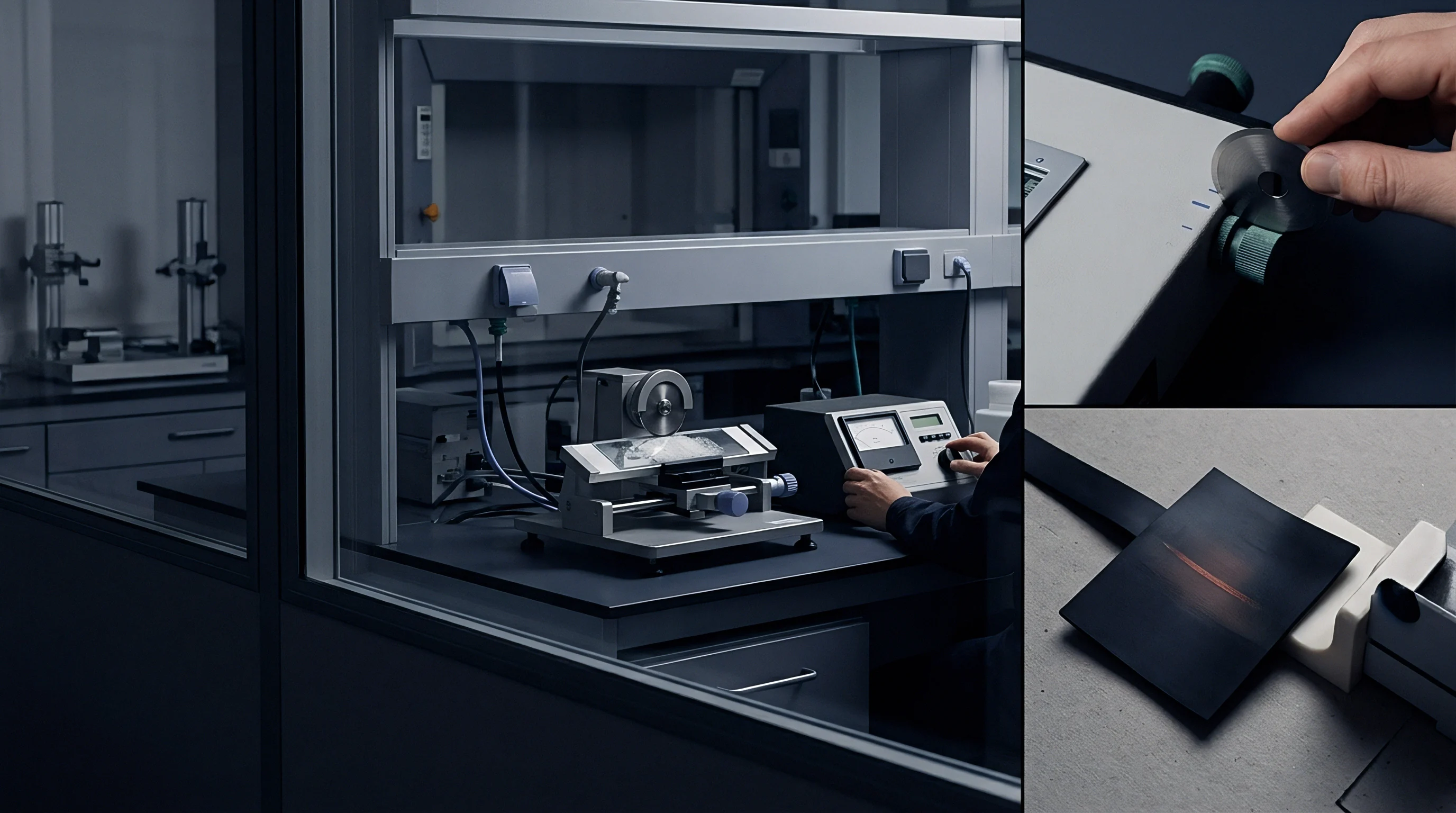
Fiber Interlocking in Recycled Fiber Matrixes
Multi-ply recycled folding boxboard relies on hydrogen bonding developed across distinct structural plies during web formation. Grades like GD2 and GD3 incorporate heavy fractions of post-consumer recovered fiber, mostly sorted office paper and old corrugated containers. Because repeated drying cycles cause hornification ~ restricting fiber swelling and shrinking specific surface area ~ inter-ply bond density drops.
Mills apply wet-end starch and synthetic strength agents to offset this loss, but density profiles across the top liner, filler plies, and back liner still vary considerably.
Internal bond strength defines the energy or force required to delaminate board along its weakest Z-directional plane. While virgin boards with stone groundwood or chemithermomechanical pulp centers form continuous fiber entanglements, recycled white lined chipboard contains discrete interfaces between vat-deposited plies. Delamination occurs whenever shear or normal stress outstrips the cohesive threshold of the filler plies or the ply-to-ply boundary.
| Board Specification | Pulp Composition | Z-Tensile Range (kPa) | Scott Bond Target (J/m²) | Dominant Delamination Zone |
|---|---|---|---|---|
| GC1 (Virgin FBB, Bleached Back) | 100% Primary Chemical / Mechanical | 350 – 500 | 180 – 250 | Central Mechanical Pulp Ply |
| GC2 (Virgin FBB, Cream Back) | Primary Chemical Top / Mechanical Core | 320 – 450 | 160 – 220 | Mechanical Core Interlayer |
| GD2 (Recycled Board, Processed Back) | Recovered Fiber Core / Deinked Top | 220 – 340 | 100 – 150 | Filler-to-Filler Ply Boundary |
| GD3 (Recycled Board, Unbleached Back) | Mixed Waste Core / Mixed Back | 180 – 280 | 80 – 130 | Back Liner Interface |
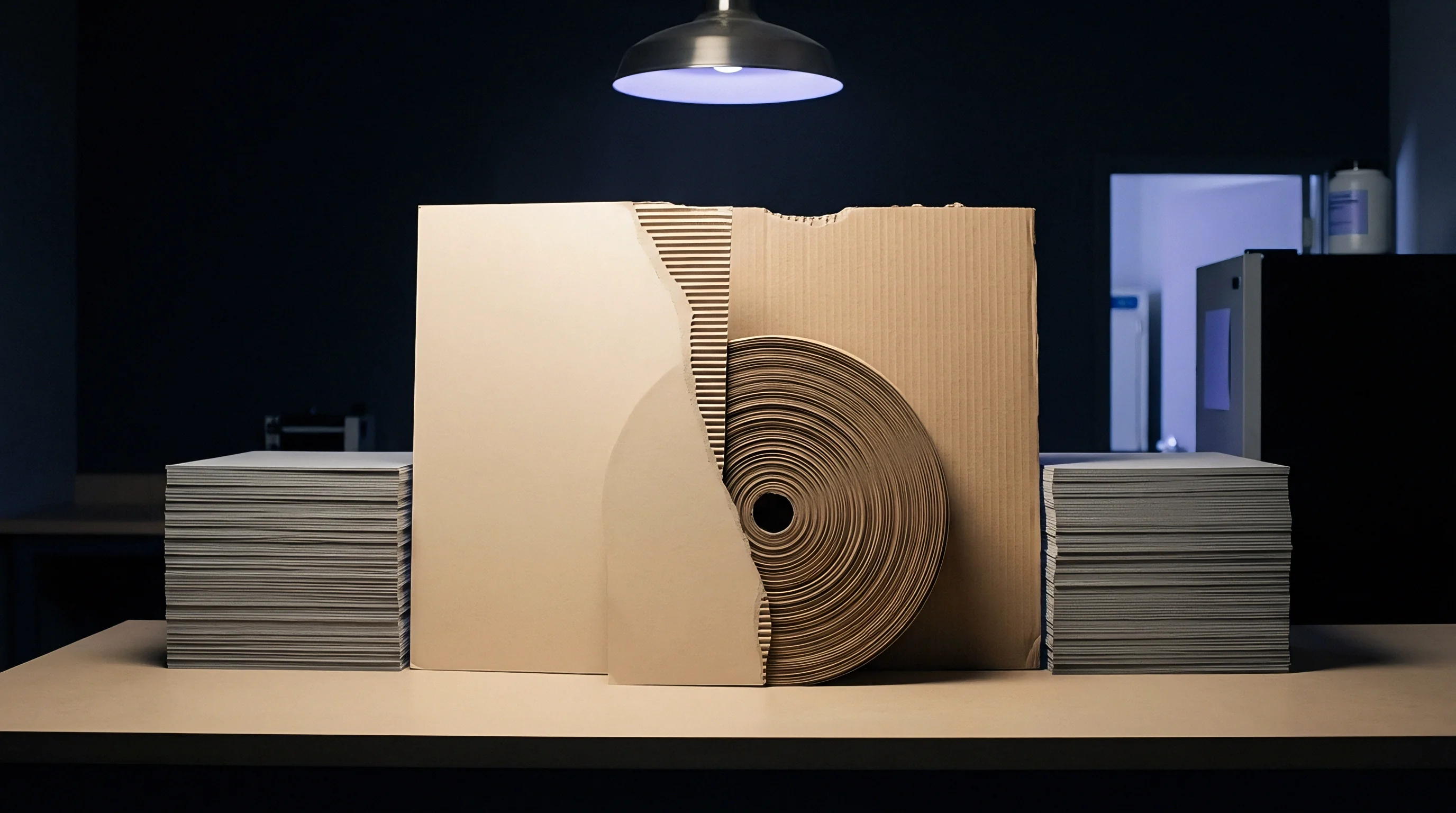
Converting Stress Fields and Ply Integrity
Surface finishing processes drive mechanical stresses straight into the cartonboard core. Rotary creasing channels compress local sheet thickness while pulling severe tensile stress through the lower plies. Deep embossing tooling exerts localized out-of-plane shear, and when lamination films bond to the top coating, shrinkage tension and downstream folding transfer peeling moments directly into the internal plies.
Inadequate cohesive strength shows up quickly during conversion. If internal fibers tear before forming a clean hinge bulge, cartons split right along score lines during high-speed folding. On automated packing lines, glue seams delaminate whenever adhesive hold exceeds the Z-directional shear resistance of the recycled plies underneath.
Low internal bond strength frequently traces to raw material hornification rather than customer warehouse conditions.
Converters running tight delivery schedules require dependable physical thresholds from recycled stock. Static tensile figures on a mill certificate can easily mask vulnerability to dynamic impact loading, and how a test method loads the internal network often decides whether a lot runs cleanly or fails on the line.
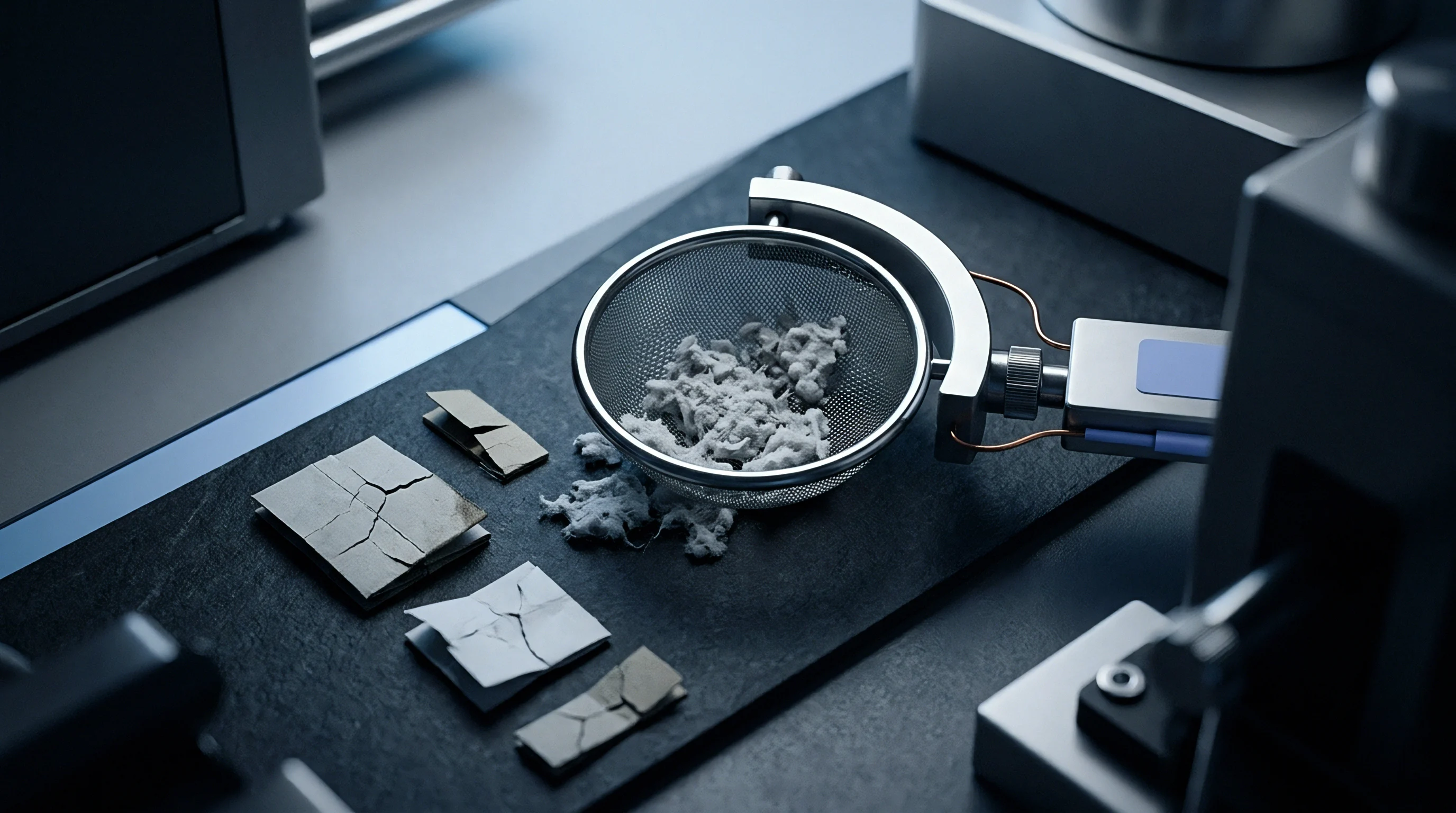

Apparatus
Dynamic Impact Vs Static Tensile Measurement Principles
Internal bond evaluation divides into two distinct mechanical testing approaches. Dynamic impact testing under TAPPI T 569 and ISO 16260 measures energy absorption during high-velocity rupture using a swinging pendulum. Static Z-directional tensile testing under ISO 15754 and TAPPI T 541 applies a steady perpendicular pull to capture peak stress prior to physical separation.
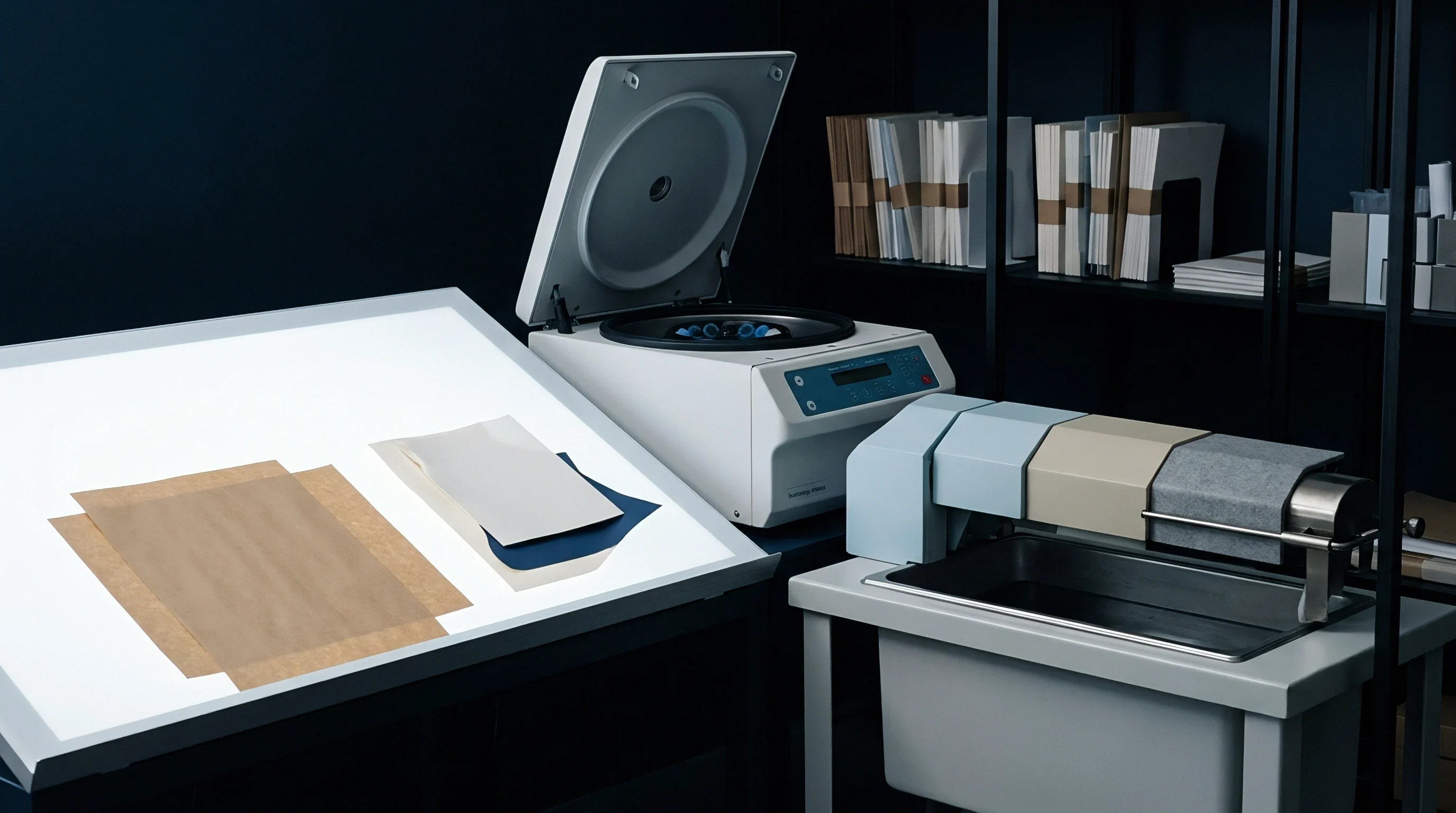
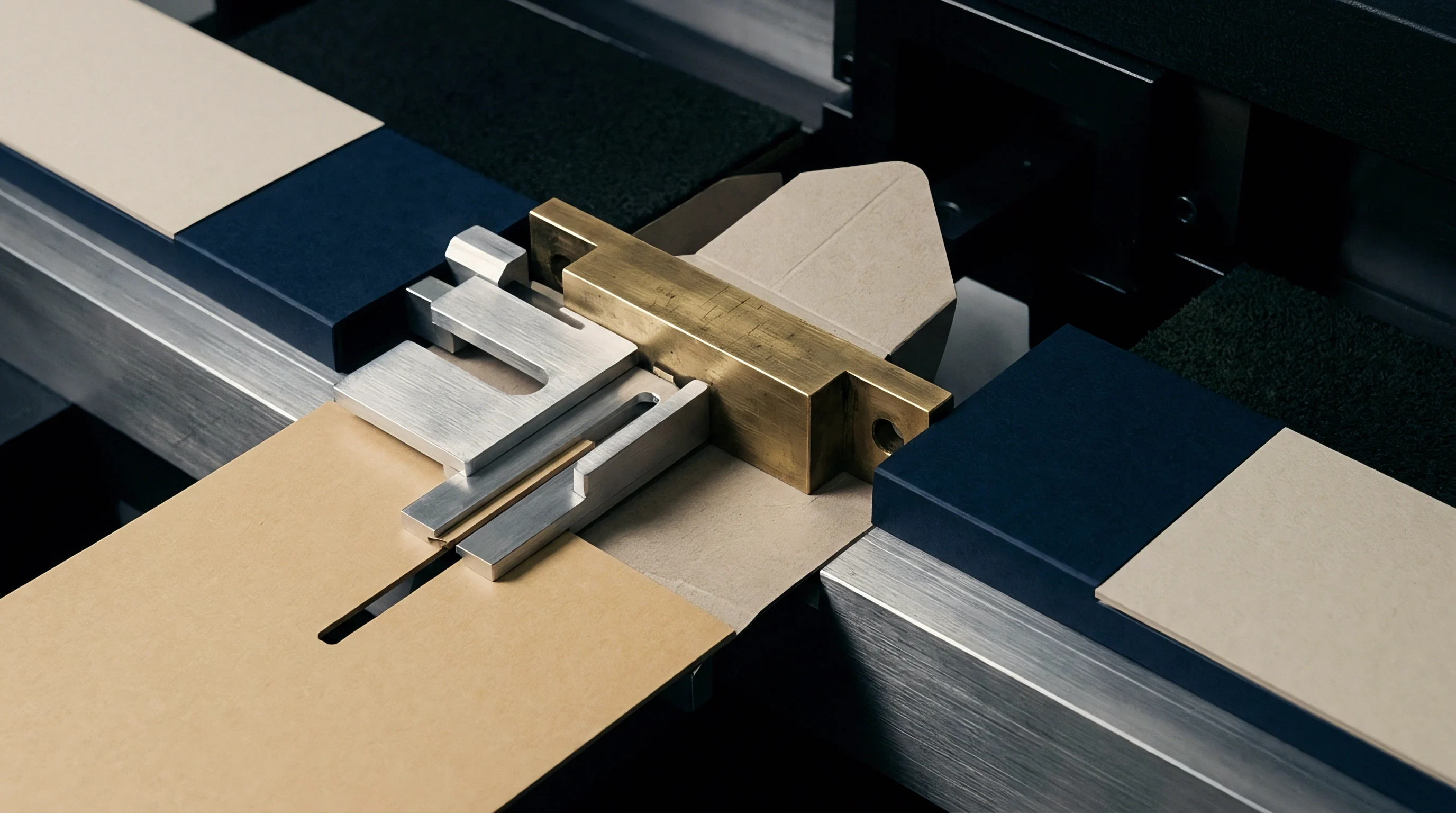
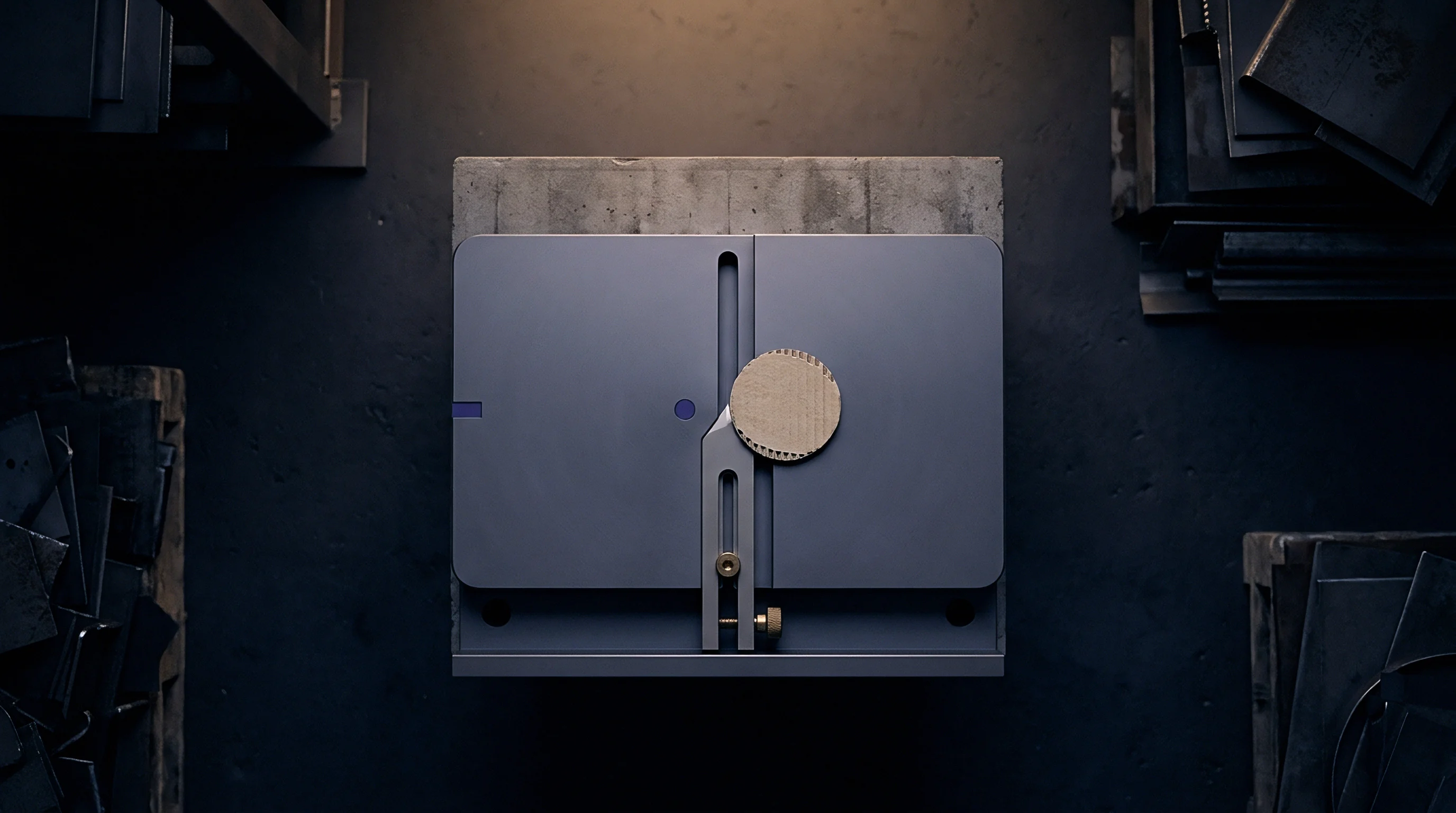
A Scott Internal Bond tester uses a weighted pendulum that strikes an L-shaped aluminum angle adhered to the specimen face. Stripping the metal fixture from the board absorbs kinetic energy, and the total loss reflects the internal rupture resistance of the fiber network, recorded in Joules per square meter. Static Z-directional instruments sandwich the sheet between flat steel platens, separating them at a fixed crosshead speed of 2.5 to 12.5 millimeters per minute to yield a stress curve in kilopascals.
Calibration Boundaries and Mechanical Variables
Pendulum devices remain sensitive to alignment errors, anvil mass, and bearing friction. Static tension frames eliminate inertial effects, isolating true tensile failure, but require strict parallelism between clamping platens. Any angular offset concentrates stress at the edge, peeling the specimen progressively instead of rupturing the entire test area at once.
Force transfers from the fixture to the board through double-sided tape, making adhesive selection critical. Acrylic pressure-sensitive tapes resist Z-axis compression but seat poorly on rough or coated liners; synthetic rubber tapes flow better into surface topography under pressure, yet creep when ambient temperatures rise. Any adhesive shear failure ruins the run, producing falsely depressed readings that mimic internal board failure.
| Test Standard | Operational Loading Type | Sample Dimensions | Adhesive Medium | Primary Output Unit |
|---|---|---|---|---|
| TAPPI T 569 / ISO 16260 | Dynamic Pendulum Impact | 25.4 mm x 25.4 mm | Pressure Sensitive Double-Coated Tape | Energy (J/m²) |
| ISO 15754 / TAPPI T 541 | Static Perpendicular Tension | 50.0 mm x 50.0 mm | High-Tack Double-Sided Film Tape | Stress (kPa) |
| DIN 54516 | Z-Directional Tensile Pull | 50.0 mm Diameter Disc | Structural Epoxy / High-Tack Tape | Force (N/cm²) |
Method selection depends on the stresses the carton will actually see. Heavy board converted into frozen food packaging takes severe impact spikes during rapid blank erection, making TAPPI T 569 energy absorption figures directly applicable. Conversely, film-laminated dry cartons under sustained flap tension align better with static tensile values under ISO 15754.
Contract rejection clauses specify TAPPI T 569 procedures when dynamic strength claims across converted lots require verification.
Impact energy values cannot be converted into static kilopascals through any universal calculation. Fiber orientation, moisture gradients, and filler distribution govern dynamic energy dissipation in ways that do not track static load accumulation. When test reports omit the specific test standard, meaningful comparisons between competing mills become impossible.

Preparation

Specimen Conditioning and Environmental Stability
Conditioning stabilizes board moisture prior to preparation. ISO 187 fixes standard testing atmosphere at 23 degrees Celsius and 50 percent relative humidity, held within tolerances of plus or minus one degree and plus or minus two percent humidity. Secondary fibers take up ambient moisture quickly; the resulting plasticization weakens inter-fiber hydrogen bonds, cutting bond values by ten to fifteen percent for each two percent gain in moisture content.
Sheets pulled directly from the plant floor rarely carry uniform moisture across their plies. Individual sheets need at least 24 hours suspended in circulating chamber air, while intact mill rolls and wrapped skids can take up to 72 hours to reach equilibrium down to the core.
Can Environmental Atmospheric Shifts Invalidate Mill Certificate Values?
Relative humidity above 65 percent swells secondary fiber cell walls, irreversibly shifting inter-fiber friction. Data from samples prepared outside standard conditioning cannot be reproduced or used to support technical claims against a mill. Rigorous chamber controls insulate test data from outside weather swings.
- Extract five representative sheets across the width of the board web, avoiding outer reel damage zones.
- Condition all retrieved specimens in accordance with ISO 187 parameters for a minimum of 24 continuous hours.
- Apply double-sided tape cleanly to both surfaces of the board sample without inducing localized manual pressure.
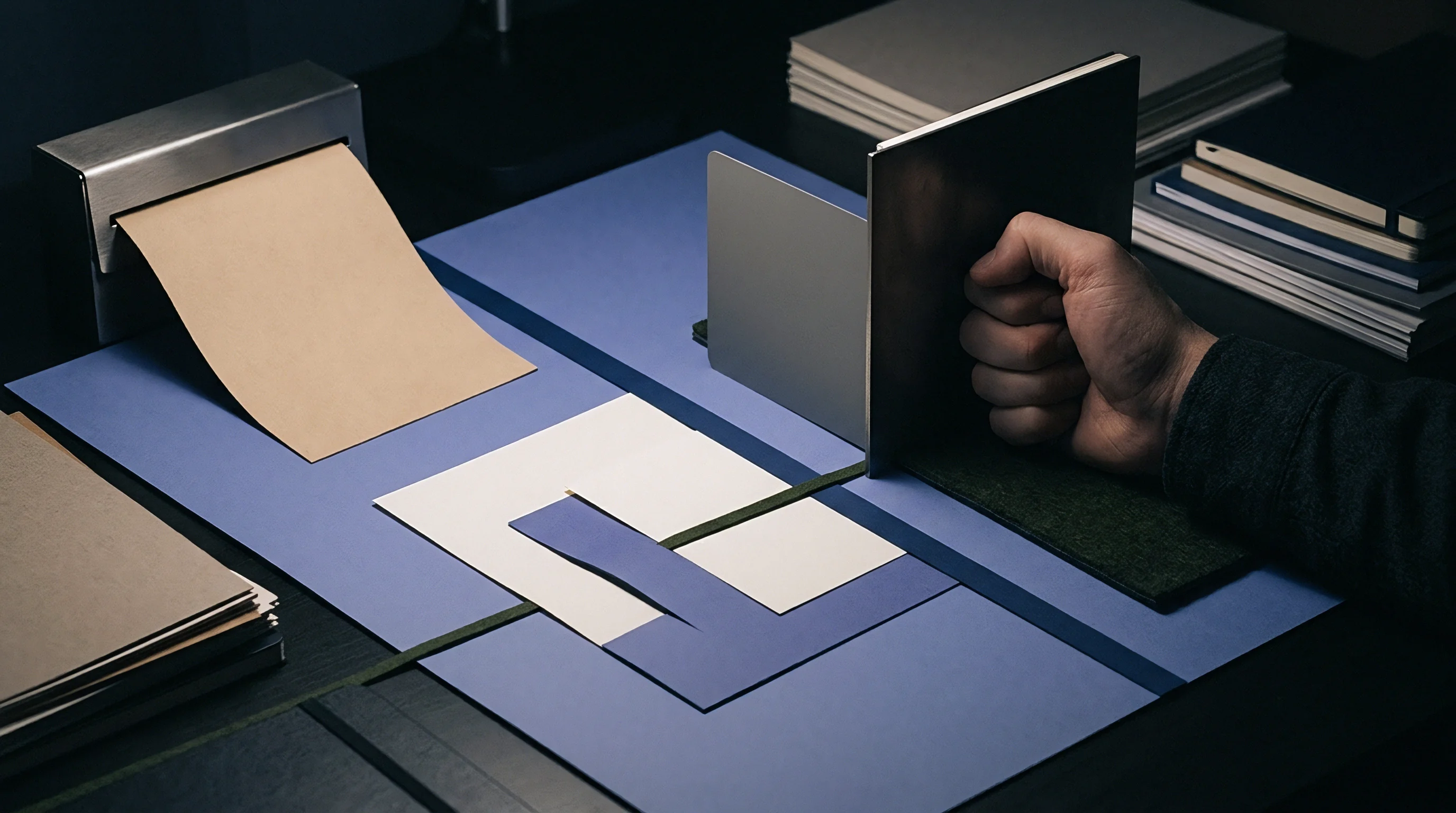
- Cut individual 25.4 mm by 25.4 mm test specimens using a pneumatic sample press to prevent edge delamination.
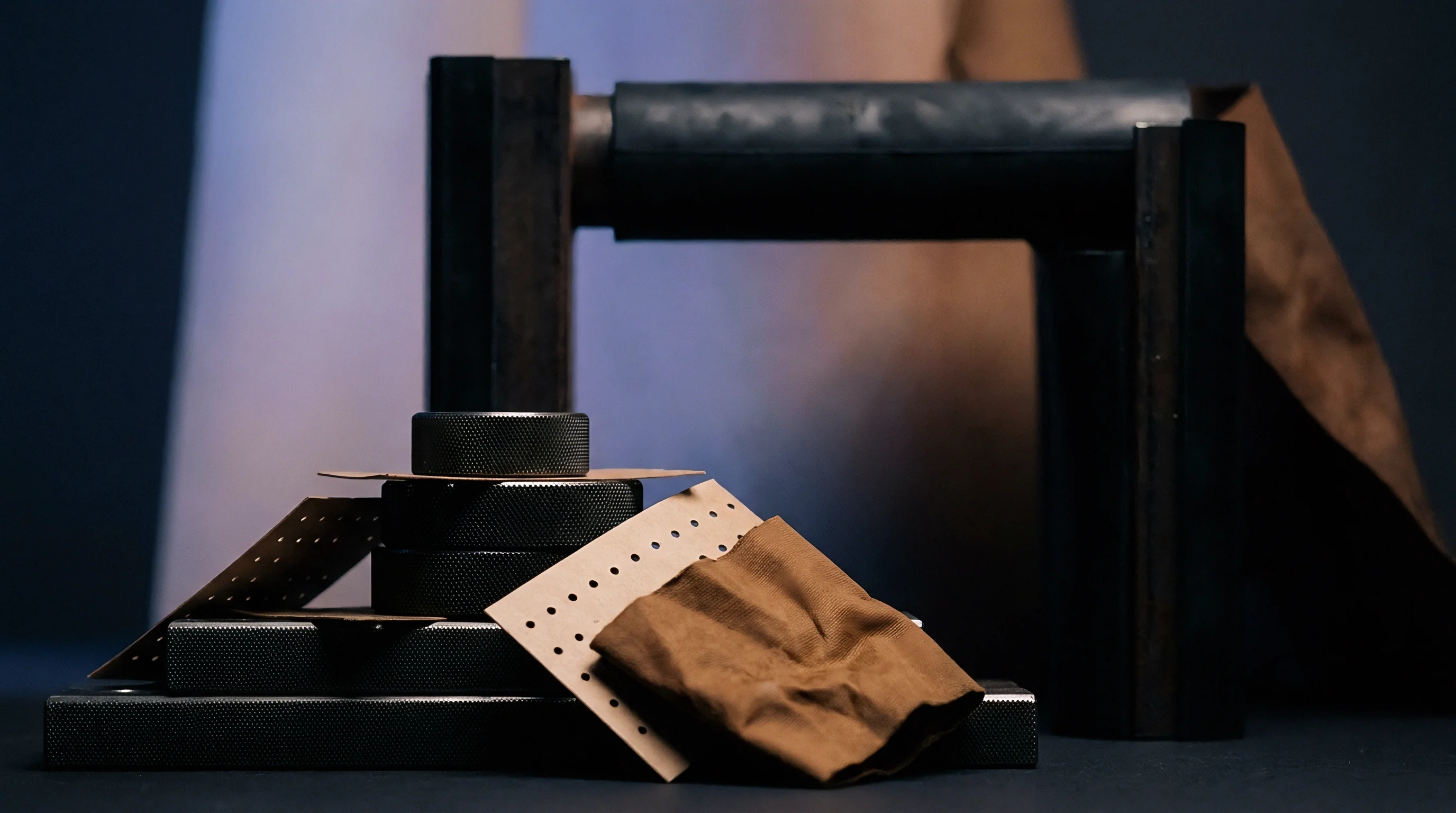
- Insert the taped specimens into the pressing station, applying 0.35 MPa of uniform hydraulic pressure for 30 seconds.
- Transfer the clamped assembly directly to the testing device and actuate the test within 60 seconds of press release.
Dull cutting tooling ruins test pieces before they reach the anvil. Guillotine blades with worn edges crush the specimen borders, starting micro-cracks through the recycled filler plies that trigger premature failure under lower impact loads.
Adhesive wet-out depends on clamping pressure and dwell time. Too little pressure leaves voids along the tape interface, dampening load transfer, while excessive pressure compacts the bulky filler plies, artificially raising local density and skewing internal bond readings upward.
Consistent dwell time and uniform clamping pressure matter far more than operator speed during sample preparation.
Standardized sample prep removes shift-to-shift operator discrepancies, and automated consolidation presses remove tactile bias entirely. With preparation variables locked down, examining the fracture planes provides a clear readout of core structural behavior.
Rupture
Fracture Plane Classification and Visual Audit
Post-rupture inspection distinguishes true internal board failure from surface picking or tape release. Valid data requires proof that failure occurred within the sheet structure itself. The exact location of the split points directly to specific chemical or mechanical shortcomings on the board machine.
Both fracture faces require magnified visual inspection under standard testing protocol. Full fiber coverage across both tape faces confirms an internal ply split. Conversely, separation between the top coating and the underlying liner indicates deficient coating binder penetration rather than a weak core.
- Internal Core Delamination shows torn fiber mats across both faces, verifying cohesive failure within the recycled filler plies.
- Ply-to-Ply Interface Separation produces smooth surfaces along vat boundaries, pointing to poor consolidation between plies at the cylinder molds.
- Top Coating Pick Failure leaves white mineral coating on the tape while underlying fibers remain intact.
- Tape Adhesive Failure exposes bare, glossy adhesive patches, indicating inadequate wet-out or contamination from surface dust.
- Composite Lamination Shear shows peeled film boundaries where exterior film pulled the top fibers sideways during the strike.

Surface Finishing Effects on Stress Distribution
Surface finishes alter how stress travels through recycled board during Z-directional loading. Polypropylene films change both flexural rigidity and surface restraint. During TAPPI T 569 impact tests on laminated specimens, the film restricts out-of-plane bending and forces shear stresses into the thin zone right below the adhesive interface.
Heavy foil stamping and deep embossing pre-stress the fiber matrix before testing begins. Cold-foiled areas often contain micro-fractures in the top liner, lowering Z-tensile results by up to 20 percent against unprinted controls. UV varnishes also shrink as they cross-link, pulling outer fibers into tension and biasing subsequent test results.
The image below details structural stress distribution across multi-ply board layers subjected to combined surface finishes and perpendicular tension.
Without root-cause analysis on laminated stock, converters frequently reject sound board lots for core failure when solvent migration from the lamination pass is the actual culprit. Solvents can soften starch bonds in the upper plies, degrading top-layer cohesion. Running parallel tests on unprinted base sheet alongside finished cartons isolates the true failure source.
Ignoring post-print film tension leads directly to catastrophic glue-flap detachment on consumer packaging lines.
Identifying the exact rupture zone settles accountability disputes among mills, ink suppliers, and laminators. Confirming whether failure originated in the raw board or during downstream finishing prevents converters from shouldering external defects. Turning that diagnostic ability into financial protection requires explicit terms in procurement contracts.

Dossier
Procurement Specifications and Commercial Risk Control
Procurement specifications for recycled board must tie numerical thresholds to specific testing protocols. Vague clauses referencing generic internal bond values allow suppliers to substitute static tensile results where dynamic impact metrics are needed. Robust contracts define nominal values, hard lower rejection limits, and maximum batch variance.
For GD2 board on automated packing lines, buyers commonly specify a Scott Bond minimum of 130 Joules per square meter under TAPPI T 569. If a delivery averages 135 Joules per square meter but runs a standard deviation above 15 Joules per square meter, tail-end sheets will fail during high-speed folding. Tight quality agreements govern this by mandating both average targets and a maximum coefficient of variation of 8 percent.
| Failure Mechanism | Physical Cause | Operational Consequence | Financial Impact per 100k Units |
|---|---|---|---|
| Auto-Gluer Delamination | Core Scott Bond below 90 J/m² | Line jams at 400 m/min, carton teardown | $4,500 – $8,000 downtime and scrap |
| Crease Line Splitting | Low moisture / hornified filler plies | Unsealed pack edges, product exposure | $12,000 – $22,000 full lot reject |
| Lamination Film Peeling | Surface coating pick failure | Blistering during high-speed blanking | $6,500 – $11,000 rework pass |
| Glue Seam Fiber Tear Failure | Inadequate ply-to-ply adhesion | Pop-open on retail filler lines | $35,000+ brand recall liabilities |
Worked Financial Calculation: Qualification Bench Testing Vs Line Downtime
The economics of raw material qualification show up clearly on high-volume runs. Consider a production run of 500,000 pharmaceutical cartons on 350 gsm GD2 board, priced at $85 per thousand units for a total contract value of $42,500. Raw substrate represents 45 percent of that total ($19,125).
Bypassing incoming qualification leaves the run vulnerable once the folder-gluer ramps up to 350 meters per minute. If an unverified lot enters production with an average Scott Bond of 85 J/m² against a specified 130 J/m², glue flaps delaminate immediately. Machine downtime runs $450 per hour, scrap climbs from a standard 1.5 percent to 12 percent, and 60,000 cartons must be scrapped and reproduced.
Direct scrap cost equals 60,000 cartons at $85 per thousand, totaling $5,100. Added press setup, laminating re-runs, and die-cutting make-ready add 14 machine hours at an average rate of $320 per hour, adding $4,480. Four hours of folder-gluer downtime adds $1,800.
Total failure cost reaches $11,380, eroding the net profit margin of the run entirely.
Mandatory receiving inspection under TAPPI T 569 requires five test specimens per pallet. Across ten pallets, testing costs $65 per pallet in labor and consumables ~ a $650 total investment that flags defective plies before pallets reach the feeder, enabling mill credit returns before converting costs accrue.
Can standardized internal bond testing routines completely eliminate converter liability when secondary fiber markets force mills to vary pulp blend recipes?