Geometric Resistance
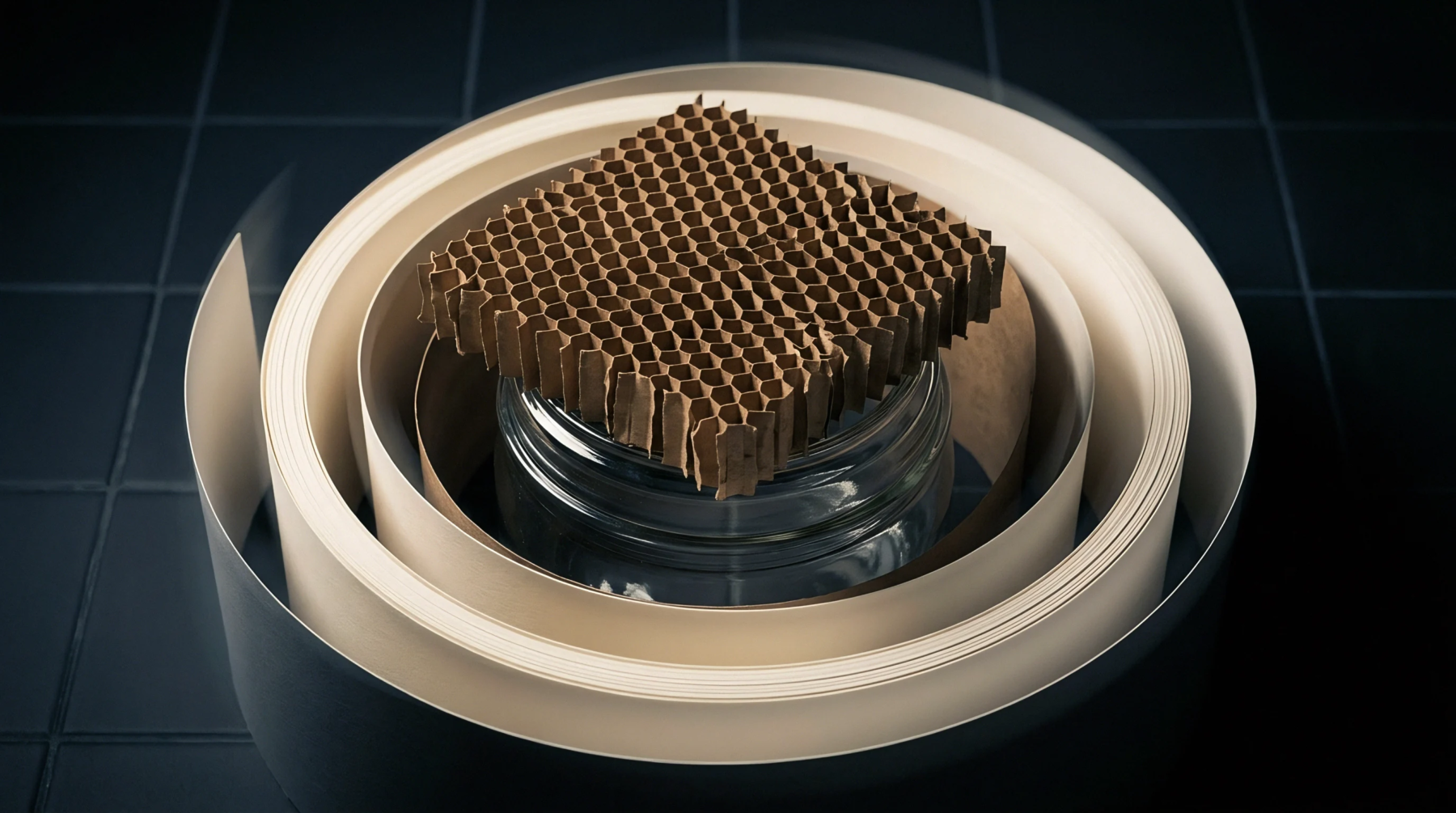
Structural capacity of a composite board section to resist bending depends on the distribution of its material relative to its neutral axis. The panel moment of inertia describes this geometric contribution to stiffness, reflecting how the thickness and arrangement of the liners and fluting affect bending resistance. High values indicate that the material is distributed further from the center, which increases the stiffness of the panel without adding extra weight.
Design Optimization
Calculations for the load-bearing capacity of corrugated boxes use this parameter to predict top-to-bottom compression strength. When designing packaging, increasing the flute height increases the panel moment of inertia by separating the face liners further from the neutral axis. This design strategy allows for lighter-weight papers to be used while maintaining the required stackability.
Heavy liners combined with thick fluting produce a high moment of inertia, enabling the production of durable transport packaging. The calculation is particularly important when evaluating the performance of double-wall and triple-wall corrugated boards under high stacking loads.
Converting Performance
Stress during folding and creasing must overcome this geometric stiffness to prevent cracking of the outer liners. An excessively high panel moment of inertia can make the board too rigid for standard converting equipment, leading to scoreline rupture or inaccurate folding. Adjusting the crease depth and tool geometry compensates for this stiffness during the manufacturing process.