Caliper Calibration Transfer Functions under Dynamic Web Aeroelastic Flutter
Dynamic web aeroelastic flutter corrupts non-contact caliper sensors, demanding mathematical frequency-domain transfer functions to preserve true sheet yield.
Foil
Static micrometer anvils exert precisely 50 kilopascals of mechanical pressure under ISO 534 to yield nominal caliper. Run that same paper web over an open draw at 1,200 metres per minute on a coater or tandem slitter, and physical contact vanishes. Entrained air forms a viscous lubricating boundary film across both sheet surfaces, dragging ambient air into the converging nip upstream of guide rolls.
The moving substrate experiences differential aerodynamic pressure distributions that lift, depress, and oscillate the sheet within the measurement gap of non-contact traversing scanners.
The web behaves as an elastic plate suspended in a moving viscous fluid. Ambient air density, viscosity, and web transport velocity generate viscous shear stresses along the sheet boundaries. When web velocity surpasses the surrounding air velocity, momentum transfer produces a moving boundary layer whose displacement thickness grows proportionally to the square root of downstream distance from the last supporting roll.
Flutter corrupts the gap.
Aerodynamic Boundary Layer Entrainment
Viscous traction sweeps air along the moving sheet surfaces. The surrounding fluid creates localized pressure variations whenever boundary geometry changes or line speeds accelerate past 600 metres per minute. Air entrainment drags a boundary layer whose static pressure drops according to local flow velocity gradients.
As air enters the clearance zone beneath an online measurement carriage, clearance convergence accelerates the airflow, generating a localized vacuum that pulls the flexible web toward the lower receiver head. The sheet wrinkles instantly.
Differential velocity across opposite web faces creates asymmetric boundary layer profiles. An upper surface open to ambient hall conditions experiences unobstructed shear dissipation, whereas the lower surface facing machine framework, vacuum pans, or catch basins encounters severe flow restriction. This aerodynamic asymmetry produces net normal pressure differentials across the sheet plane.
Online caliper scanners, calibrated on stationary samples supported by rigid steel anvils under TAPPI T 411, interpret this out-of-plane aeroelastic suction as physical material thinning or severe caliper divergence.
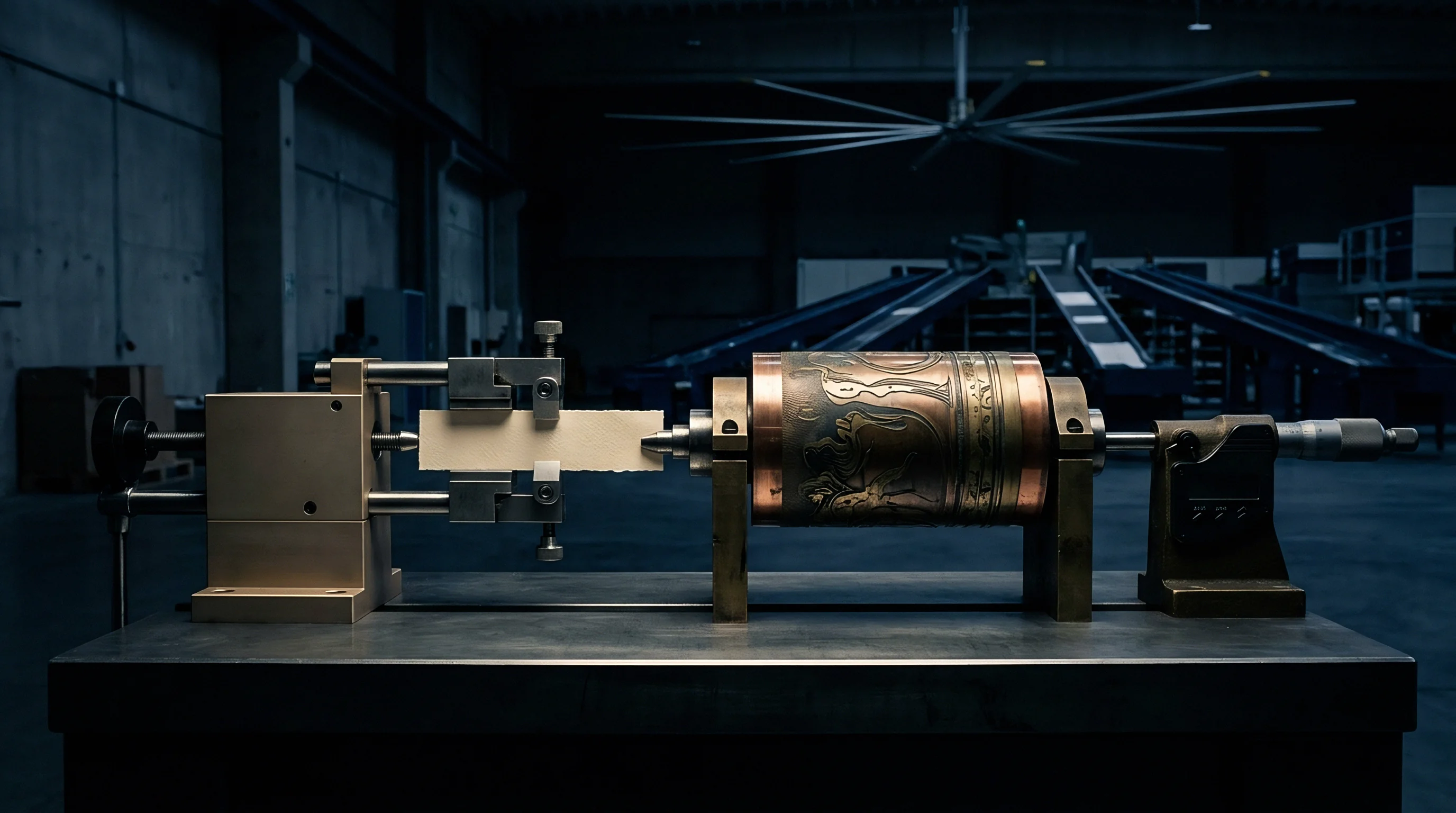
Under ISO 534 conditioning at 23 degrees Celsius and 50 percent relative humidity, a deadweight micrometer exerts 50 kilopascals across a 200 square millimetre anvil area to establish baseline thickness.
Bernoulli Displacement Mechanisms
Fluid acceleration inside narrow sensor gaps drops local static pressure below ambient atmospheric levels. Non-contact optical, confocal, and capacitive caliper heads operate with nominal sheet clearances between 2.0 and 8.0 millimetres. When a paper web traverses this gap at commercial converting velocities, the confined channel acts as an aerodynamic venturi tube.
Local air velocity increases as the cross-sectional area contracts, inducing strong transverse suction on the sheet.
Cross-direction web tension profiles dictate how severely the sheet yields to this aerodynamic pull. Regions of low local web tension bow toward the narrower passage, further contracting the channel, accelerating the local flow, and amplifying the Bernoulli depression in a self-exciting cycle. Traversing frames scan back and forth across these aerodynamic standing waves, recording cross-machine caliper variations that reflect flow geometry rather than actual fibrous mass distribution.
A supplier typically asserts that online sensors automatically compensate for flying height fluctuations through factory pre-sets, yet the installed hardware cannot separate aerodynamic suction from genuine caliper variation without external dynamic transfer functions.
Mode
Membrane tension and bending stiffness govern web resistance against fluid forces. When moving webs traverse unsupported free spans between idler rolls, aerodynamic coupling induces classical aeroelastic instability. The continuous sheet exchanges energy with the surrounding air stream, triggering self-excited transverse oscillations that intensify above critical web speeds.
The boundary layer shears.
These dynamic instabilities exhibit discrete spatial modes across machine and cross directions. Below critical flutter velocity, aerodynamic damping suppresses minor sheet excursions. Above critical velocity, fluid dynamic forces overcome structural damping and web tension stiffness, driving the sheet into limit-cycle aeroelastic flutter characterized by traveling transverse waves, edge flapping, and torsional oscillations.

Out of Plane Traveling Wave Frequencies
Transverse displacements travel along the moving substrate both downstream and upstream relative to web direction. For a paper web moving with velocity V under longitudinal machine-direction tension T and possessing mass per unit area m, transverse wave speeds follow hyperbolic partial differential wave equations coupled to fluid momentum terms. Upstream-propagating waves travel at the net propagation velocity minus web transport speed, while downstream waves travel at propagation velocity plus web speed.
Edge boundary conditions in slitting and coating free spans leave sheet borders completely unrestrained. Unpinned edges experience severe flapping modes with fundamental frequencies typically falling between 12 and 85 Hertz, accompanied by higher-order acoustic flutter harmonics extending past 350 Hertz. The web floats unstably.
Non-contact displacement sensors with integration time constants of 10 to 50 milliseconds alias these high-frequency traveling wave peaks into spurious low-frequency caliper drift.
When web transport velocity exceeds transverse wave speed, upstream wave propagation ceases and aeroelastic flutter concentrates entirely along unsupported sheet edges.
Flexural Rigidity across Furnish Classes
Substrate resistance against out-of-plane flutter deformation depends directly on flexural rigidity, defined as Young modulus multiplied by the sheet thickness cubed, divided by twelve times the quantity one minus Poisson ratio squared. High-bulk recycled board furnishes behave very differently from low-caliper supercalendered release liners. Mechanical pulp furnishes retain higher stiffness per unit basis weight than heavily refined chemical pulps, resisting aeroelastic deflection at elevated converting speeds.
Softwood kraft fibres provide structural networking that sustains web tension across wider free spans, whereas high filler loads of calcium carbonate or clay reduce elastic modulus and weaken dynamic stability. When furnish substitution introduces short hardwood or secondary recycled fibres to reduce furnish cost, flexural rigidity drops markedly. The web becomes vulnerable to flutter at lower machine speeds, degrading online scanner accuracy.
- Low-density mechanical folding boxboard exhibits elevated flexural rigidity per grammage unit, shifting the onset of dynamic flutter to velocities exceeding 950 metres per minute across open draws.
- Recycled testliner grades display pronounced cross-direction modulus valleys that trigger localized pocket flutter under identical line tensions.
- Supercalendered glassine release liners possess negligible bending resistance due to minimal thickness, fluttering violently under minor boundary layer turbulence at speeds below 500 metres per minute.
- Uncoated woodfree offset sheets show severe moisture-dependent stiffness loss when relative humidity swings shift sheet moisture content away from equilibrium states.
| Grade Specification | Basis Weight (ISO 536) | Static Caliper (ISO 534) | Bending Resistance (ISO 2493) | Critical Flutter Velocity | Dominant Flutter Mode |
|---|---|---|---|---|---|
| Solid Bleached Board Virgin SBS | 240 g/m² | 325 µm | 185 mN | 1,420 m/min | First Bending Standing |
| Folding Boxboard Mechanical FBB | 215 g/m² | 350 µm | 210 mN | 1,510 m/min | Torsional Harmonic |
| Coated Recycled Board WLC | 250 g/m² | 310 µm | 130 mN | 1,080 m/min | Edge Flap Traveling |
| Supercalendered Glassine SCG | 62 g/m² | 54 µm | 8 mN | 420 m/min | Acoustic Traveling Wave |
| Uncoated Woodfree Offset UWF | 80 g/m² | 102 µm | 19 mN | 680 m/min | Edge Flap Pocket Wave |
Open draws running these grades without aerodynamic stabilizers expose online sensors to substantial position bias. Whether internal furnish stratification and fibre orientation ratios can be engineered to raise critical flutter speeds without increasing basis weight remains an active question across modern mill operations.

Transform
Mathematical calibration models bridge static laboratory verification and high-speed line realities. Stationary micrometers capture thickness at zero web velocity and zero aerodynamic shear. When the web runs through an online scanner, the measured gap clearance combines real sheet caliper, static pass-line offset, and time-dependent out-of-plane aeroelastic flutter displacement.
Static bench calibrations fail.
The total sensor signal represents a convolution of true caliper and dynamic sheet displacement. To extract authentic caliper, engineers formulate dynamic transfer functions in the frequency domain using Laplace and Fourier transforms. The online calibration transfer function maps raw sensor output back to verified standard thickness by filtering, phase-correcting, and dampening aeroelastic flutter contributions.

Frequency Response Function Derivations
Linear time-invariant representations of non-contact sensor heads quantify how the instrument responds to physical sheet movements across a wide spectrum of frequencies. Let the true sheet caliper be denoted by h(t), the aerodynamic out-of-plane web displacement by z(t), and the sensor output voltage or digital unit by y(t). The system obeys a coupled transfer function where H_cal(s) defines caliper sensitivity and H_disp(s) defines out-of-plane displacement sensitivity.
The total frequency response function combines these elements into a matrix equation. Phase lag distorts thickness. When aeroelastic flutter excites the web at frequency omega, the sensor carriage records an apparent thickness modulated by the magnitude and phase of H_disp(j omega).
Because non-contact sensors possess finite beam diameters or spot sizes, the spatial averaging across moving flutter ripples introduces an additional low-pass filtering attenuation term that varies with web velocity.
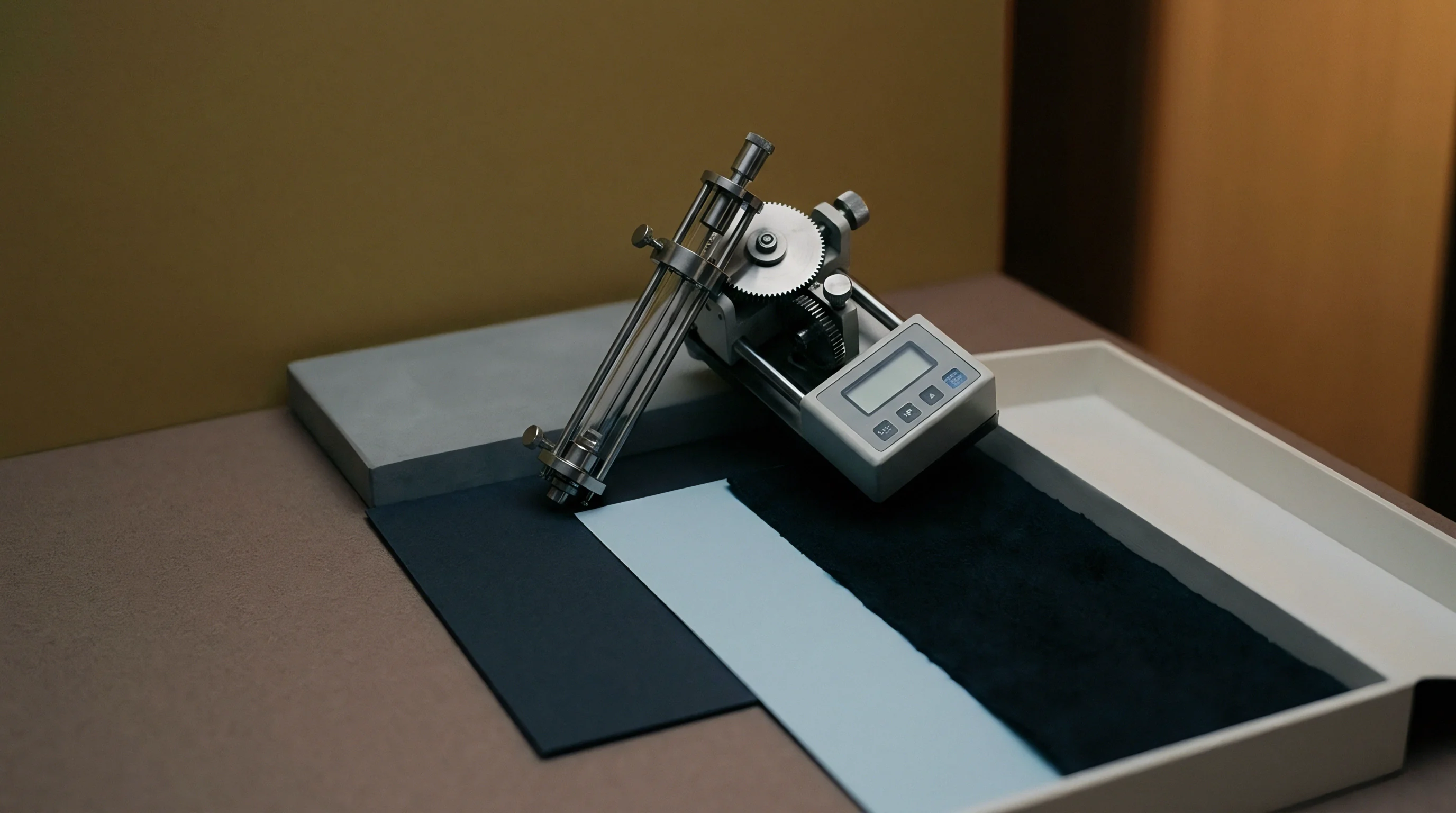
- Mechanical baseline gap evaluation quantifies static sensor frame thermal expansion, vibration modes, and electrical zero drifts prior to web threading.
- Hydrodynamic pressure profile mapping determines steady-state sheet depression across the scanner throat as a function of line velocity.
- Dynamic displacement response isolation identifies sensor phase lag and attenuation parameters through simultaneous laser Doppler vibrometry verification.
- Matrix transfer function inversion extracts real thickness variations from composite frequency-domain scanner data streams in real time.
Can Dynamic Transfer Functions Correct Sensor Flutter Bias?
Physical separation of web flutter from true thickness variations succeeds only when sensor sampling bandwidth significantly outpaces dominant flutter frequencies. Modern optical confocal chromatic sensors and dual-sided laser triangulation heads operate at sampling frequencies between 10 and 50 kilohertz. This rapid acquisition speed captures individual wave cycles, permitting real-time digital filtering of aeroelastic flutter components.
When web flutter amplitudes exceed the linear working range of displacement heads, sensor calibration curves collapse. A displacement excursion moving the sheet outside the optical focal depth or capacitive linear region generates severe harmonic distortion. Under these non-linear conditions, dynamic transfer functions must incorporate polynomial correction coefficients linked to web speed, machine-direction tension, and sheet grammage.
A capacitive sensor calibrated statically under TAPPI T 411 overestimates mean caliper by up to eight percent when web flutter excursions exceed twenty percent of nominal air gap clearance.
Inverting the transfer function matrix reconstructs true caliper across transient machine upsets. If web tension fluctuates during roll changes or reel transfers, the flutter frequency spectrum shifts toward lower frequencies, overlapping with genuine machine-direction basis weight variations. Damping stalls flutter waves.
A calibration transfer function adjusted dynamically to web line speed and real-time tension load cell data tracks these operational transitions without generating artificial caliper alarms.
| Sensor Operating Principle | Bandwidth (-3 dB) | Spot Size Diameter | Linear Gap Range | Phase Lag at 50 Hz | Calibration Error Margin |
|---|---|---|---|---|---|
| Dual Confocal Chromatic | 25 kHz | 0.08 mm | ±1.2 mm | 1.2 degrees | ±0.4 µm |
| Opposed Laser Triangulation | 15 kHz | 0.25 mm | ±2.5 mm | 3.8 degrees | ±0.8 µm |
| Dual-Head Capacitive Gauge | 2 kHz | 12.0 mm | ±0.6 mm | 18.5 degrees | ±1.9 µm |
| Beta Transmission / Nuclear | 0.05 kHz | 45.0 mm | ±5.0 mm | 84.0 degrees | ±3.2 µm |
| Data measured on 80 g/m² woodfree paper running at 1,000 m/min under 300 N/m tension, verified against offline ISO 534 deadweight micrometer testing. | |||||
Static calibration transfer functions break down whenever aerodynamic flutter displacement exceeds the linear measuring range of the physical sensor heads.

Sensor
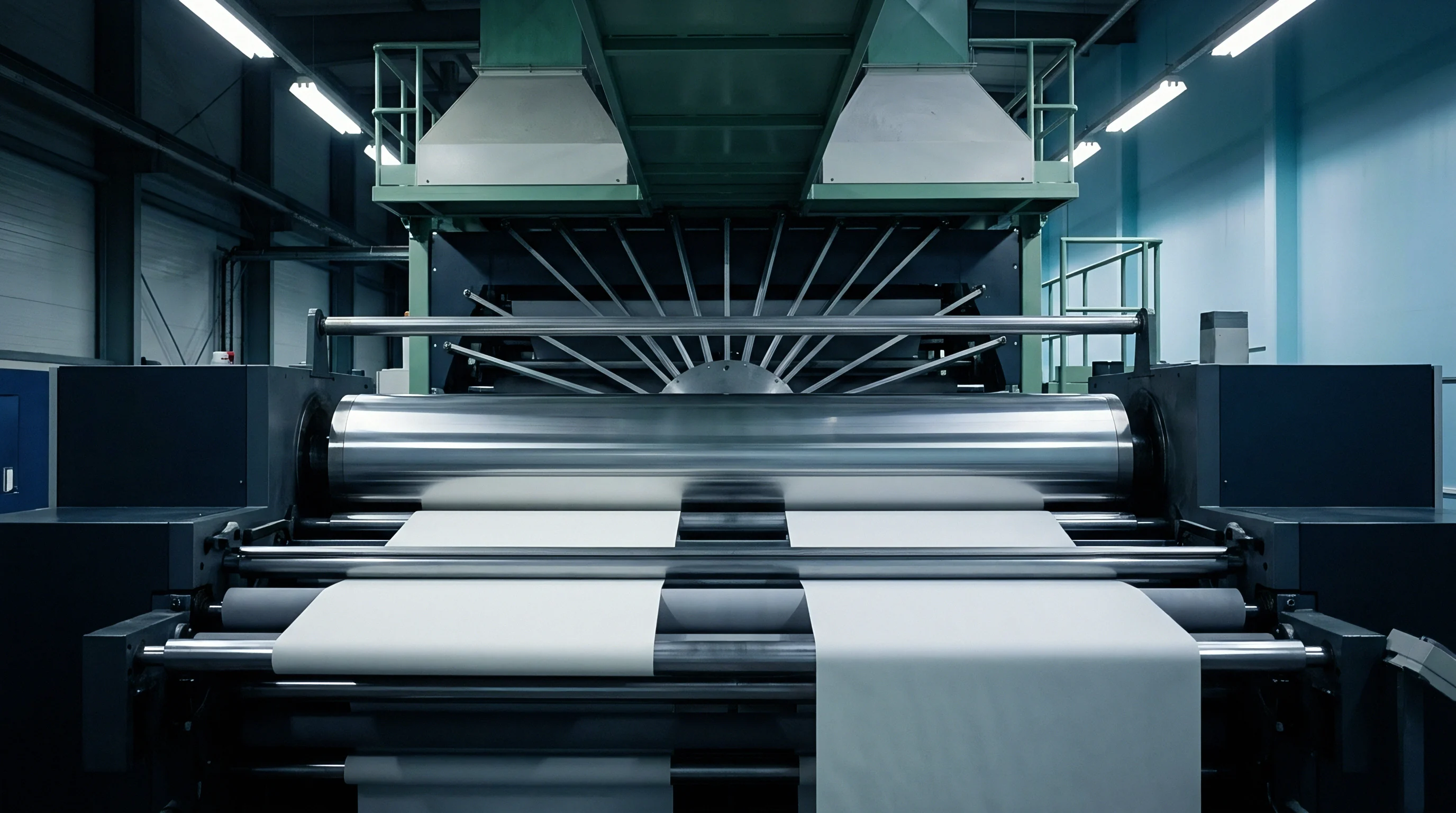
Instrumentation hardware determines how dynamic flutter interacts with signal processing chains. Older legacy paper machines relied on contacting ski gauges or magnetic reluctance sensors with physical contact shoes. These mechanical shoes rode directly on the moving web, using heavy pneumatic downforce to flatten aeroelastic ripples.
High line speeds, delicate coatings, and modern quality standards eliminated contact sensors from high-value graphic paper and barrier packaging lines. The gauge reads low.
Modern lines employ non-contact scanning assemblies. These systems suspend optical, capacitive, or nuclear heads on both sides of the moving sheet. Scanner stability depends on preserving absolute spatial positioning between upper and lower carriage heads across a six-metre machine width while traversing at 0.5 metres per second.
Optical Triangulation versus Dual Capacitive Probes
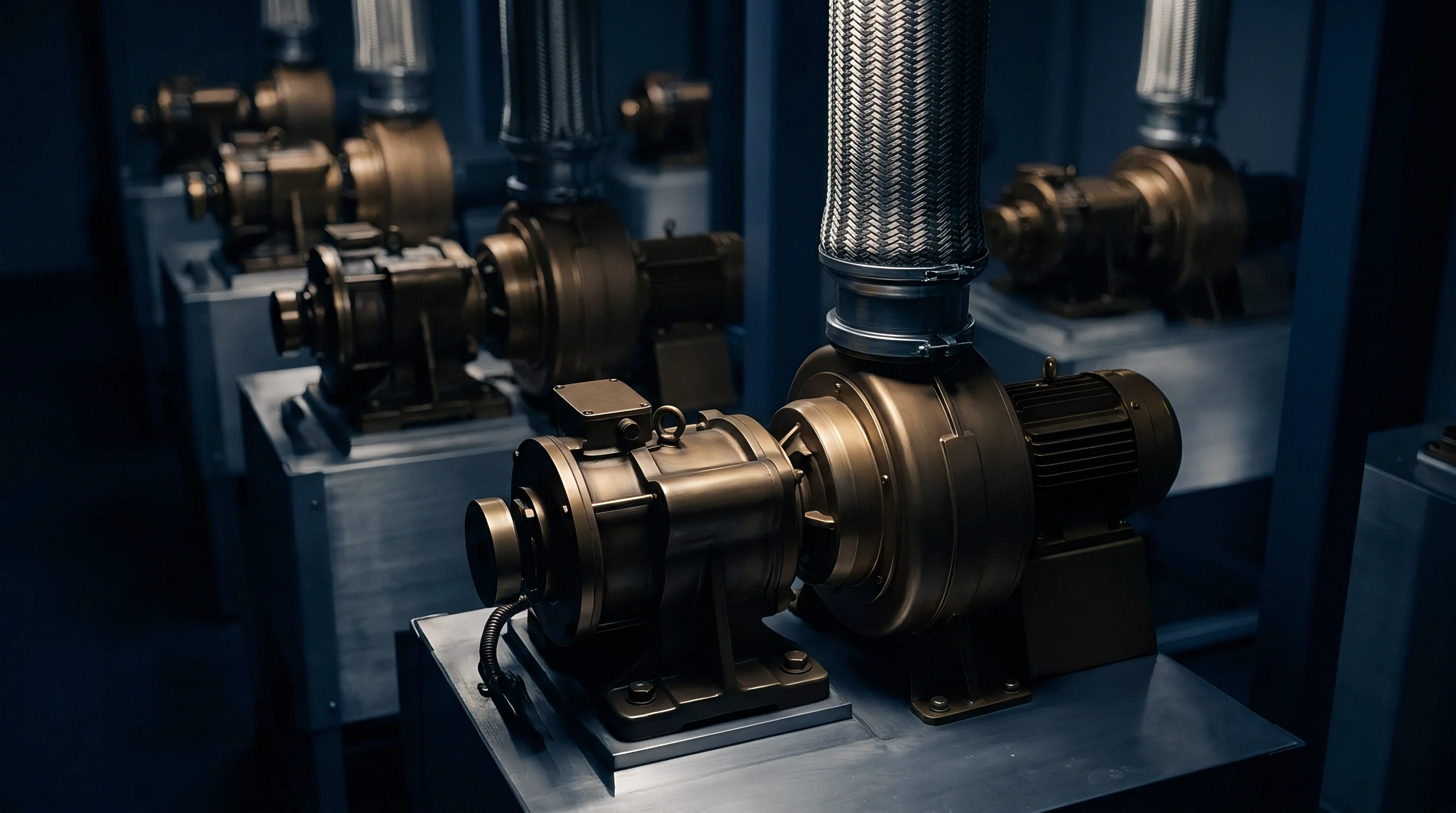
Laser triangulation heads calculate sheet position by projecting a concentrated semiconductor laser diode beam onto the paper surface and imaging the diffuse reflection onto a high-speed complementary metal-oxide-semiconductor sensor array. Two opposing heads measure distances to upper and lower web faces, computing caliper by subtracting both distance values from the calibrated head-to-head mechanical separation distance. Tension drops initiate flutter.
Dual capacitive probes detect capacitance variations between active sensing electrodes and the moving paper web, utilizing the sheet as a moving dielectric barrier or grounded target. Capacitive systems integrate spatial displacement over an electrode diameter of 10 to 25 millimetres. This broad spatial footprint averages out micro-roughness, yet it introduces severe phase distortions when exposed to high-frequency aeroelastic flutter ripples whose wavelengths are shorter than the electrode width.
- Optical triangulation heads provide sub-millimetre spatial resolution, capturing sharp boundary layer flutter waves without geometrical spatial averaging errors.
- Capacitive measurement assemblies tolerate minor airborne dust contamination, retaining electrical stability in high-temperature dryer environments where optical lenses coat over rapidly.
- Confocal chromatic systems eliminate speckle noise common to rough unbleached kraft papers, splitting white light wavelengths across a narrow focal depth to achieve sub-micron precision.

Does Air Bearing Stabilization Suppress High Frequency Flutter?
Aerodynamic sheet stabilizers integrated into sensor carriages mechanically calm the moving substrate before measurement. An air bearing stabilizer discharges micro-filtered compressed air through porous sintered bronze plates or precision laser-drilled micro-nozzles directly against the fluttering web. This continuous air cushion creates a stiff, lubricating aerodynamic film that arrests out-of-plane sheet movements, pinning the paper at a fixed vertical datum line.
Dual opposing air foils establish a balanced pressure zone within the scanner throat. The sheet glides between dual air cushions without mechanical contact, dampening aeroelastic flutter frequencies below 200 Hertz and narrowing vertical web excursion bands from 2.5 millimetres down to less than 25 microns. Air cushions collapse locally.
If compressor supply pressure drops or porous plate faces accumulate coating flakes, the pneumatic stiffness of the air bearing degrades, exposing sensors to unattenuated flutter.
A contract specification incorporating TAPPI T 411 calibration clauses without stating line speed compensation allows mills to contest gauge accuracy disputes on static grounds alone.
Procurement agreements governing delivered paper rolls enforce technical specifications established under ISO 534 testing standards. When mill acceptance trials run at full production speed, suppliers document compliance using online scanners equipped with manufacturer-certified dynamic transfer functions. If contract terms omit explicit calibration validation under dynamic flutter conditions, converters lose legal recourse when delivered reel profiles exhibit off-caliper gauge band rejections.

Spoilage
Uncalibrated online thickness measurements create financial waste across converting halls. The financial consequences of dynamic flutter errors do not emerge during papermaking scans; they surface downstream at the slitter-winder, laminator, and sheet-fed offset press. When an online sensor overestimates caliper due to aeroelastic sheet displacement, automated profile control software throttles calender roll induction heating zones incorrectly.
The calender stack applies uneven cross-direction nip pressure, introducing latent basis weight and density distortions into the web structure. The resulting roll builds wind with uneven diameter profiles, producing localized tight bands and loose pockets across the reel width. Caliper determines roll profile.
Gauge Band Rejection in Slitter Winders
Reel hardness variations trigger catastrophic winding defects. As a master reel slits into narrow shipping rolls, rolls cut from over-caliper bands build up larger diameters than adjacent rolls on the same winding shaft. Differential roll diameters force uneven web draw speeds, creating burst ridges, baggy edges, and severe web weave.
Trim waste climbs.
Baggy edges cause catastrophic misregistration on high-speed multi-colour printing presses. When vacuum feed belts advance sheets with cross-machine caliper variations into offset gripper bars, localized sheet slackness generates diagonal creasing, ink smearing, and blanket damage. A single blanket smash on a large format packaging press stops production, destroying makeready time and wasting parent board sheets.

Landed Yield Loss from Thickness Measurement Drift
Paperboard purchasing contracts trade on metric tonnage, but packaging converters manufacture and bill by unit carton count. Caliper drift directly erodes carton yield per purchased ton. Take an annual purchasing volume of 10,000 metric tons of folding boxboard at 1,400 dollars per ton, specifying a target caliper of 350 microns at 215 grams per square metre.
If online scanner calibration fails to account for aeroelastic flutter, the paper machine calender runs the sheet artificially thick to satisfy an apparent low-caliper signal. Assume the delivered stock drifts 3.5 percent over nominal caliper to 362 microns, forcing the mill to elevate basis weight by 7.5 grams per square metre to preserve bulk and stiffness targets. The calculation confirms this.
The converter receives 44.94 million square metres of usable board instead of the budgeted 46.51 million square metres from that 10,000-ton commitment. This yield erosion destroys 1.57 million square metres of structural packaging material, translating to a direct landed raw material loss of 48,930 dollars before printing presses pull a single sheet from a skid. Rejects mount rapidly.
| Caliper Calibration Condition | Delivered Basis Weight | Delivered Caliper | Total Usable Area | Slitter Defect Loss | Net Converted Cost Variance |
|---|---|---|---|---|---|
| Dynamic Transfer Validated | 215.0 g/m² | 350.2 µm | 46,511,627 m² | 0.8% | Baseline 0 USD |
| Uncompensated Moderate Flutter | 218.8 g/m² | 356.5 µm | 45,703,839 m² | 2.4% | +242,500 USD |
| Uncompensated Severe Flutter | 222.5 g/m² | 362.4 µm | 44,943,820 m² | 4.6% | +518,200 USD |
| Static Only Low Tension Drift | 226.0 g/m² | 368.1 µm | 44,247,787 m² | 7.2% | +812,400 USD |
The error compounds downstream. When converters fail to bind suppliers to dynamically calibrated online measurement transfer functions, raw material losses, slitter rejects, and press room downtime accumulate directly onto the converter balance sheet without commercial recourse.