Surface Topography
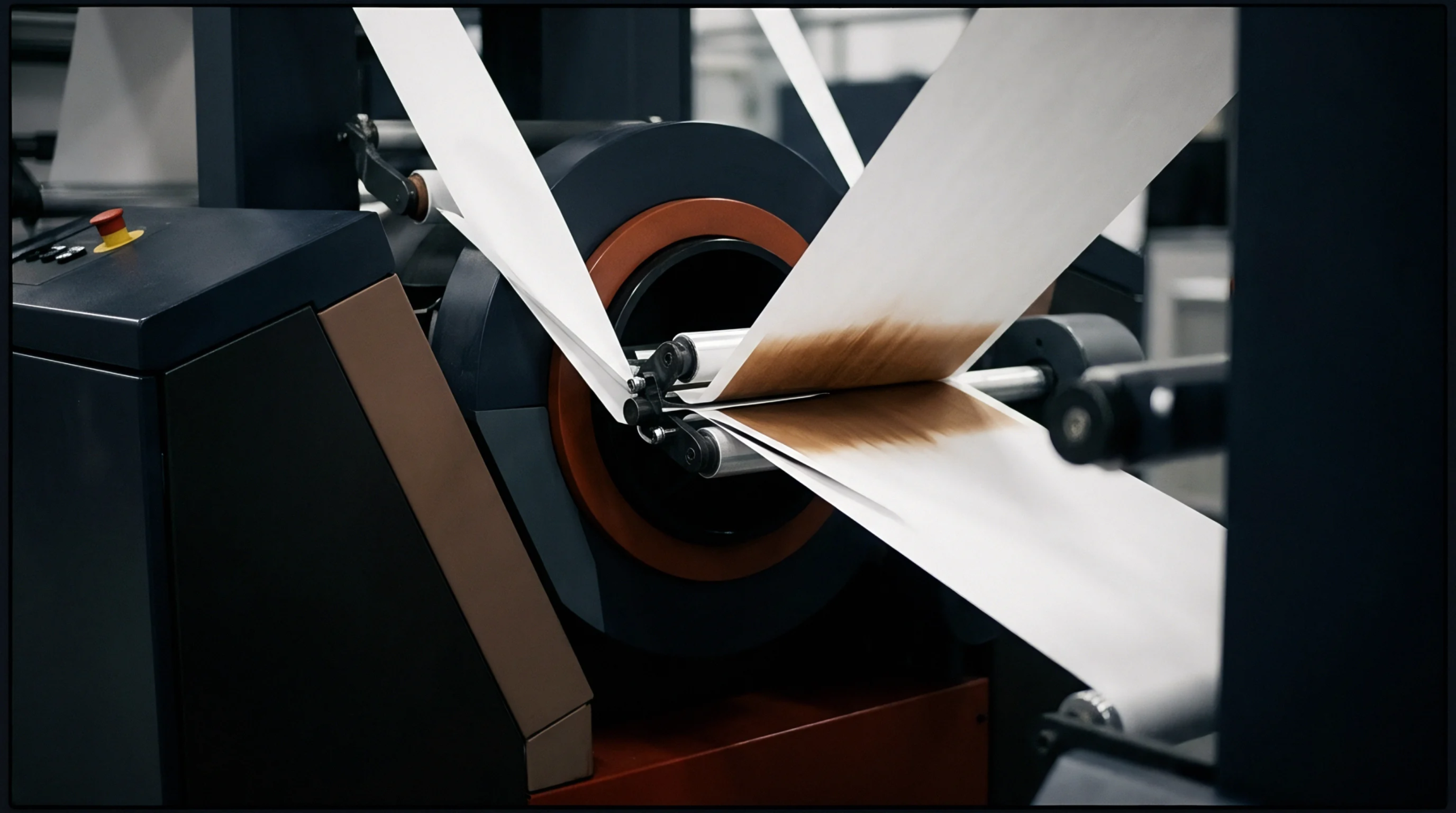
Laser triangulation displacement measurement provides non-contact height profiling for corrugated fluting and heavy linerboard webs moving through high-speed corrugating machinery. Operating on optical sectioning principles, confocal chromatic sensors project multi-wavelength white light through an objective lens with high chromatic aberration. Specific wavelengths focus precisely at distinct vertical distances because axial dispersion separates the spectral components along the optical axis.
Reflected light passes through a pinhole spatial filter to reach a spectrometer, where the dominant wavelength corresponds directly to the exact target distance. This optical configuration maintains sub-micron resolution during continuous production runs without deforming compressible fibre substrates. Deflecting rollers or web flutter introduce vibrational interference that degrades traditional tactile gauge readings, whereas optical sensors process returning backscatter instantaneously.
Inline scanners map three-dimensional surface profiles across the web width to detect micro-cracks, pinholes, and uneven coating distribution before secondary conversion steps occur. Calibrated reflectance values separate genuine substrate defects from harmless moisture variations across recycled kraft papers.
Layer Thickness
Precision measurement of extruded polyethylene moisture barriers on liquid packaging board requires absolute optical separation between transparent polymer films and underlying cellulosic fibres. Refractive index differences between dissimilar materials allow confocal chromatic sensors to capture distinct reflection peaks from both the upper polymer boundary and the lower fibre interface simultaneously. Converting plants rely on this dual-boundary detection to control extrusion die gaps and maintain exact grammage tolerances across multi-layer liquid cartons.
Adhesive lamination layers applied during flexible packaging production generate similar multi-peak waveforms that quantify coating thickness down to single-digit micrometres. Fluctuations in machine speed alter thermal expansion characteristics within drying tunnels, making continuous optical monitoring essential for preventing localized delamination failures during subsequent folding carton creasing operations.
Substrate Tolerance
Optical displacement sensors maintain calibration stability across high-gloss pigment-coated art papers where specular reflection blinds standard laser displacement units. Diffuse scattering properties of matte newsprint and unbleached kraft linerboard present different optical challenges that require precise numerical aperture adjustment within the receiving spectrometer. Converting lines operating at elevated speeds integrate real-time thickness feedback loops to adjust nip pressures automatically before permanent crushing damages internal fibre bonds.
Dimensional stability standards dictate maximum permissible caliper variation across corrugated board fluting mediums to ensure consistent stacking strength in finished shipping containers. High-precision optical profiling prevents costly press shutdowns caused by unexpected caliper spikes originating from irregular pulp refining or uneven pressing stages at the paper mill.