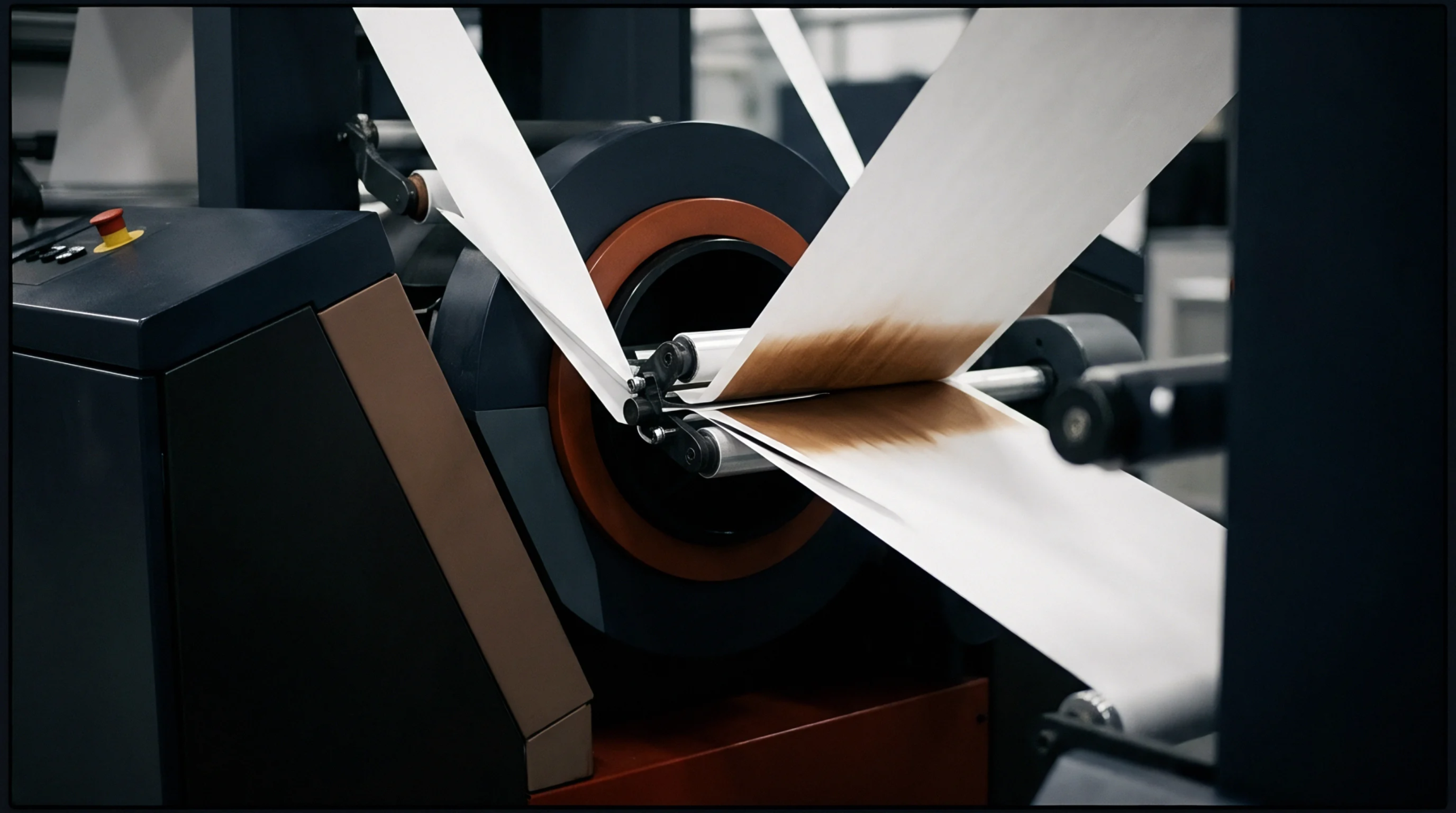
Dimensional Stability Adjustment
Material physics defines the physical response of substrates to temperature fluctuations through the coefficient of thermal expansion. Thermal expansion compensation manages the resulting volumetric changes in rollers, plates, and web materials during high speed converting operations. Precision engineering accounts for these shifts to maintain registration accuracy across long production runs.
Small variances in ambient heat produce measurable dimensional drift in metallic components and polymer films alike. Thermal expansion compensation corrects the calculated distance between impression points to prevent misaligned imagery or ink density loss.
Operational Calibration
Automated control systems monitor internal housing temperatures near critical contact points to predict mechanical growth. Sensor arrays feed data into the drive logic, which shifts the lateral or longitudinal settings to cancel out the expansion. Friction generates heat during heavy duty cycles, and this heat alters the circumference of steel mandrels.
Cooling circuits circulate fluid through these rollers to pull excess energy away before the substrate undergoes deformation. Engineers calculate the specific alloy properties to determine the required coolant flow rate and timing. Accurate synchronization requires constant adjustment as machine speed climbs and thermal load increases.
Performance Constraint
Material failure occurs when expansion exceeds the tolerance of the machine frame. Differential heating between the core and the surface of a roller introduces internal stress that warps the final output. Web tension profiles suffer when thermal growth shifts the center of gravity in transport drums.
Modern printing lines maintain strict thermal equilibrium to ensure the substrate remains within the specified width limits. Consistent control over these variables allows for high resolution color trapping despite the heat generated by electrical motors and mechanical gears. Mechanical systems that ignore these physics lose the capacity for micro precision at the output stage.