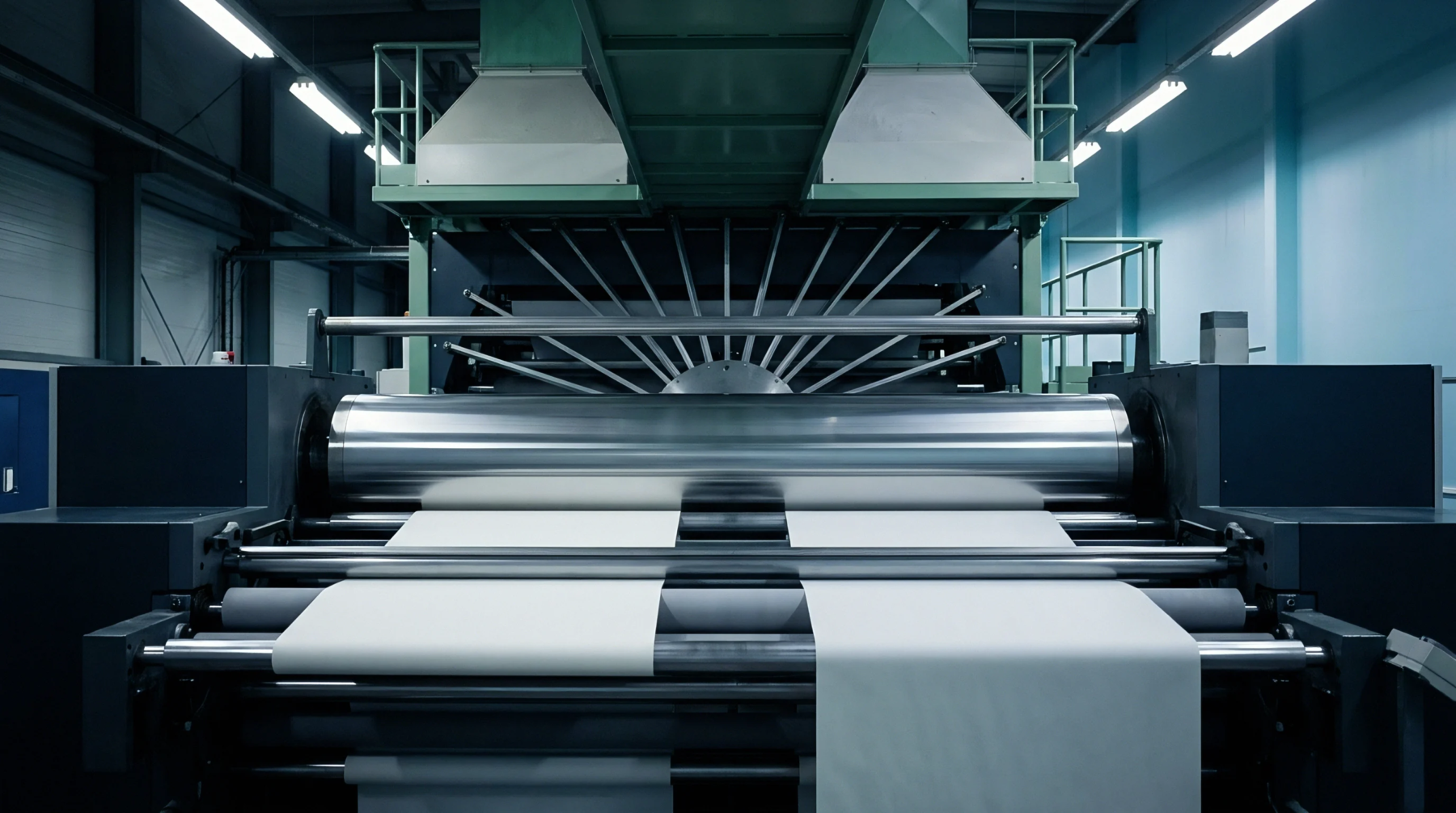
Dense Substrate
Smooth, highly transparent paper stock manufactured from chemical wood pulp exhibits high density and structural strength through intense mechanical compaction. Extended refining flattens pulp fibers while multi-nip heated calender stacks compress the web, collapsing inter-fiber voids to achieve high air resistance. Supercalendered glassine designates this dense paper substrate widely utilized as backing paper for pressure-sensitive labels and protective food packaging.
The material designation ceases to apply if paper pulping or chemical repulping breaks down the consolidated fiber matrix.
Manufacturing Process
High hydration levels achieved during mechanical pulp refining swell wood fibers, allowing close fiber-to-fiber bonding during sheet formation. Moisture content is adjusted before the web enters multi-roll supercalenders operating with alternating steel and fiber-filled rolls under high line loads and elevated surface temperatures. Elevated temperature and mechanical pressure plasticize cellulose fibers, producing a non-porous glass-like surface finish with exceptional transparency and low silicone absorption.
This extreme compaction creates low porosity and high tensile strength, providing an ideal smooth foundation for uniform silicone coating in release liner manufacturing.
Packaging Application
Release liner applications demand uniform caliper and high die-cutting punch resistance to enable clean label matrix stripping. Chemical resistance prevents grease penetration in direct food contact applications. Uniform surface smoothness ensures pinhole-free silicone coverage across full roll widths.