Discrepancy Resolution Mechanics for Chemical Extractives and Fillers in Recycled Fiber Ledger Audits
Reconciling recycled fiber ledgers requires deducting calcined mineral ash and solvent-extracted organics from bale weights to establish true secondary cellulose.
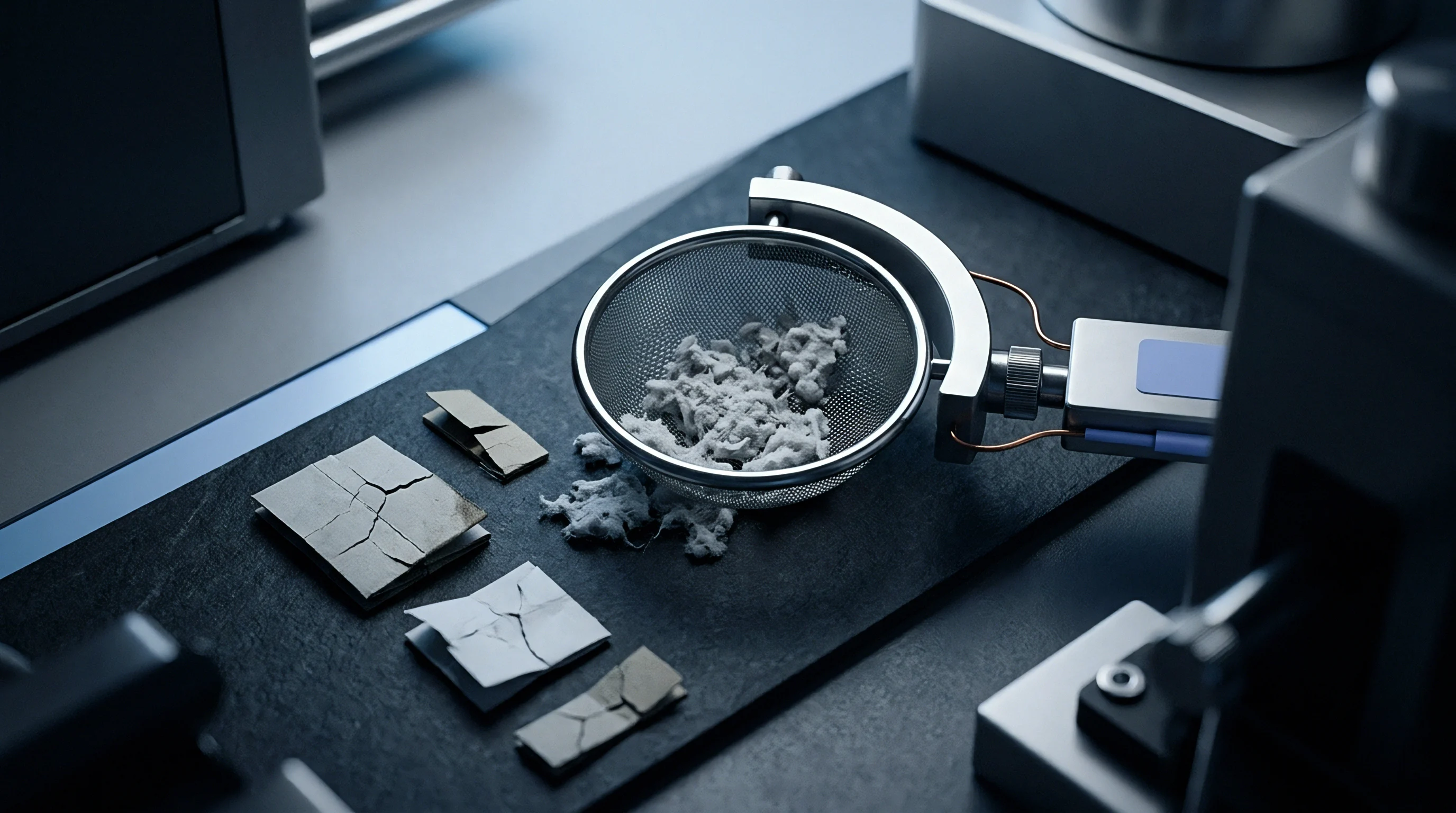
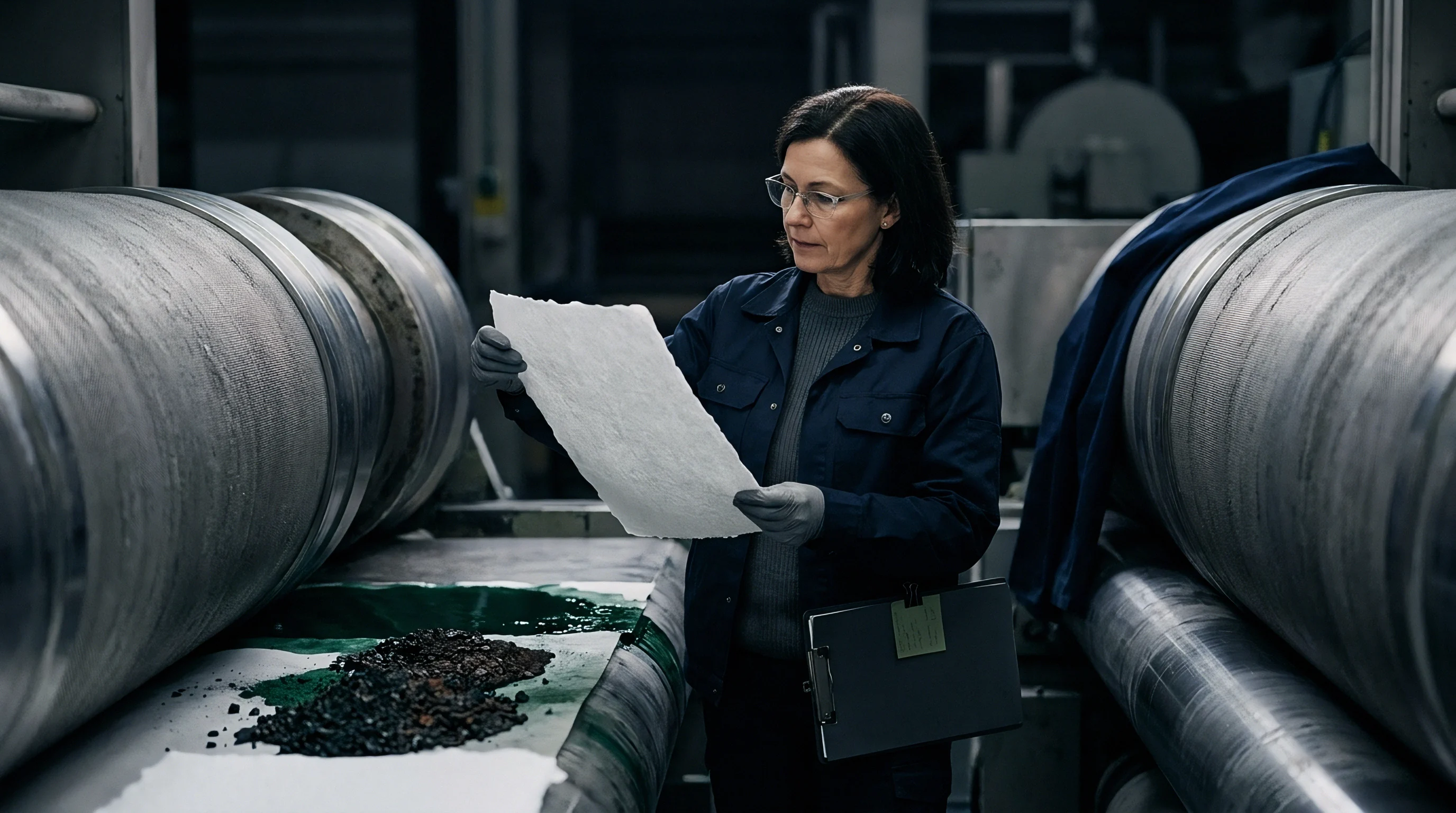
Assay
Baled recovered paper lands at the pulper dock with a moisture certificate and a nominal grade code, yet neither number reveals the non-fibrous mass entering the system. Laboratory technicians determine true fiber content by isolating volatile moisture, gravimetric ash, and solvent-extractable compounds from representative core samples. Standard moisture determinations governed by ISO 287 establish water loss at 105 degrees Celsius.
That drying cycle leaves inorganic pigments, synthetic binders, and chemical resins intact within the dry solid residue. High-speed deinking operations processing sorted graphic paper regularly encounter incoming dry furnishes containing up to thirty-five percent non-cellulosic solids by weight. Gravimetric scales register real mass.
An unadjusted ledger records that entire solid weight as secondary cellulose, creating an instantaneous accounting distortion across chain-of-custody ledgers.

Gravimetric Separation Boundaries on the Laboratory Bench
Analytical quantification of non-fiber components splits into thermal oxidation and chemical dissolution paths. Technicians execute oven drying at 105 degrees Celsius to reach a constant specimen mass before initiating chemical fractionation. The dried sample undergoes solvent reflux within a Soxhlet apparatus to draw out low-molecular-weight organics, fatty acids, resin soaps, hot-melt ethylene-vinyl acetate adhesives, and polyolefin waxes.
Gravimetric determination of the extracted liquor reveals the soluble chemical loading. The extracted fibrous pad undergoes muffle-furnace calcination to isolate residual mineral fillers.
Analytical precision varies across these distinct measurement phases because physical separation boundaries overlap. Thermal decomposition of organic adhesives begins at temperatures above 180 degrees Celsius, overlapping the upper boundary of severe moisture bake-outs. Solvent extractions using polar systems dissolve low-mass hemicellulose fractions alongside target synthetic additives.
Test houses counter this cross-phase contamination by maintaining strict temperature ceilings and predetermined solvent ratios.

Thermal Degradation Profiles in Ash Yield Measurements
Mineral quantification relies on controlled incineration under ISO 1762 at 525 degrees Celsius or ISO 2144 at 900 degrees Celsius. The lower thermal envelope incinerates cellulose, hemicellulose, and lignin while preserving volatile carbonate minerals in their unreacted states. The high-temperature protocol at 900 degrees Celsius combusts organic matrices faster while triggering chemical transformations within calcium carbonate, talc, and clay matrices.
Ash remains non-fibrous residue. The resulting mass differential between these two temperatures represents volatile mineral fractions escaping as gas rather than destroyed fiber mass.
Furnishes carrying heavy calcium carbonate loadings exhibit massive discrepancies between the two standard firing routines. At 900 degrees Celsius, calcium carbonate decomposes into solid calcium oxide and gaseous carbon dioxide. The escaping gas strips forty-four percent of the original carbonate mass from the crucible.
An uncalibrated technician recording the high-temperature residue understates total mineral filler intake, inadvertently allocating the volatilized carbon dioxide mass into the organic recycled fiber ledger balance.
A furnish containing sixteen percent calcium carbonate loses seven percent of its total dry mass purely as carbon dioxide during high-temperature combustion. The test house avoids this ledger inflation by maintaining incineration strictly at 525 degrees Celsius or applying stoichiometric correction factors back to the ignited residue weight. Direct gravimetric recovery sets the ceiling for all secondary credit issuance.
A balance ledger balances only when dry solids subtract their chemical additives before claiming fiber yields.


Clay
Inorganic pigments constitute the largest non-fibrous mass fraction within post-consumer recovered paper streams. Mills producing coated groundwood publications, supercalendered magazines, and woodfree printing papers incorporate high percentages of kaolin clay, ground calcium carbonate, precipitated calcium carbonate, and titanium dioxide. Unwashed filler chalk behaves as dead weight in the pulper while masquerading as recovered fiber in the credit journal.
When these graphic papers enter the recycling stream as Grade 1.11 or Grade 2.05 under EN 643 specifications, the total inorganic loading routinely spans fifteen to thirty-five percent of delivered bale dry weight.
Unwashed filler chalk behaves as dead weight in the pulper while masquerading as recovered fiber in the credit journal.

Mineral Loadings across Recovered Deinking Furnishes
Kaolin presents a hydrated aluminum silicate structure with the chemical composition Al2Si2O5(OH)4. During combustion at 525 degrees Celsius, kaolin retains its structural hydroxyl groups, yielding an ash measurement virtually identical to its active pigment loading. Firing kaolin at 900 degrees Celsius drives off structural dehydroxylation water, reducing the recovered ash mass by approximately thirteen to fourteen percent.
In contrast, calcium carbonate retains full mass stability at 525 degrees Celsius while shedding forty-four percent of its mass as carbon dioxide gas upon reaching 900 degrees Celsius.
Titanium dioxide retains its solid mass across both thermal bands, while talc experiences structural water loss only at the extreme upper reaches of thermal ignition. Because packaging mills convert recovered graphic papers into linerboard, fluting, or white-top testliner, these incoming minerals behave unpredictably during stock preparation. Flotation deinking cells reject up to eighty percent of free mineral fillers into the sludge waste stream.
Paperboard retains inorganic pigments. The fiber ledger that credits total bale weight without discounting unrecovered mineral sludges artificially inflates post-consumer fiber credits by dozens of metric tons per operating shift.
Discrepancy resolution demands identifying the specific mineral species present in the furnish rather than relying on a gross calcination figure. X-ray fluorescence spectrometry or hydrochloric acid effervescence tests verify the carbonate fraction against kaolinite layers. Once the mineral breakdown is quantified, auditors apply mineral-specific correction coefficients to align raw ash values with true pigment weight.
- Uncompensated Carbonate Decarboxylation converts calcium carbonate to calcium oxide inside high-temperature muffle furnaces, shedding forty-four percent of mineral mass as carbon dioxide gas and disguising unrecovered stone as fiber loss.
- Hydrated Silicate Dehydroxylation strips structural water molecules from kaolinite platelets between 550 and 800 degrees Celsius, introducing a fourteen percent gravimetric error into standard high-heat ash determinations.
- Flotation Sludge Rejection washes up to eighty percent of fine inorganic particles into wastewater clarifiers, creating a physical yield deficit against original bale weights recorded on incoming bills of lading.
- Retention Aid Saturation binds residual filler particles into the web during papermaking, skewing finished sheet basis weights and obscuring virgin furnish additions.

Why Do Standard Ignition Protocols Distort Mineral Mass?
Combustion tests measure residual solids after organic destruction rather than chemical compounds in their original states. The ISO 1762 standard keeps temperatures at 525 degrees Celsius plus or minus 25 degrees to prevent the breakdown of calcium carbonate. This test takes between four and six hours to achieve constant weight.
In commercial mill laboratories facing throughput quotas, operators often run ISO 2144 furnaces at 900 degrees Celsius to burn samples within forty-five minutes. Carbonate decomposes during calcination. That operational shortcut causes calcium carbonate to dissociate into calcium oxide, releasing gaseous carbon dioxide into the furnace exhaust.
Gravimetric ash determination conducted at 900 degrees Celsius underestimates calcium carbonate content by exactly forty-four percent due to carbon dioxide volatilization.
The resulting ash mass reflects the lighter calcium oxide footprint rather than the calcium carbonate filler present in the original furnish. When auditors reconcile intake balances against finished reels, that missing forty-four percent appears as lost organic matter. A paper buyer reviewing an uncorrected ledger calculates fiber consumption based on deficient ash figures, allowing mills to book ghost fiber into percentage-based recycled declarations.
| Mineral Filler Type | Chemical Formula | ISO 1762 Ash Yield at 525°C | ISO 2144 Ash Yield at 900°C | Stoichiometric Mass Factor |
|---|---|---|---|---|
| Ground Calcium Carbonate | CaCO3 | 99.2% to 100.0% | 56.0% | 1.786 to calcined CaO |
| Precipitated Calcium Carbonate | CaCO3 | 99.0% to 100.0% | 55.8% | 1.792 to calcined CaO |
| Hydrated Kaolin Clay | Al2Si2O5(OH)4 | 98.5% to 99.5% | 86.2% | 1.160 to calcined metakaolin |
| Talc Pigment | Mg3Si4O10(OH)2 | 98.0% to 99.5% | 94.5% | 1.058 to calcined residue |
| Titanium Dioxide (Rutile) | TiO2 | 99.8% to 100.0% | 99.8% | 1.000 to stable oxide |
The mill claims the furnace burns clean and the mass differential represents boiler steam escaping through the stack vents.
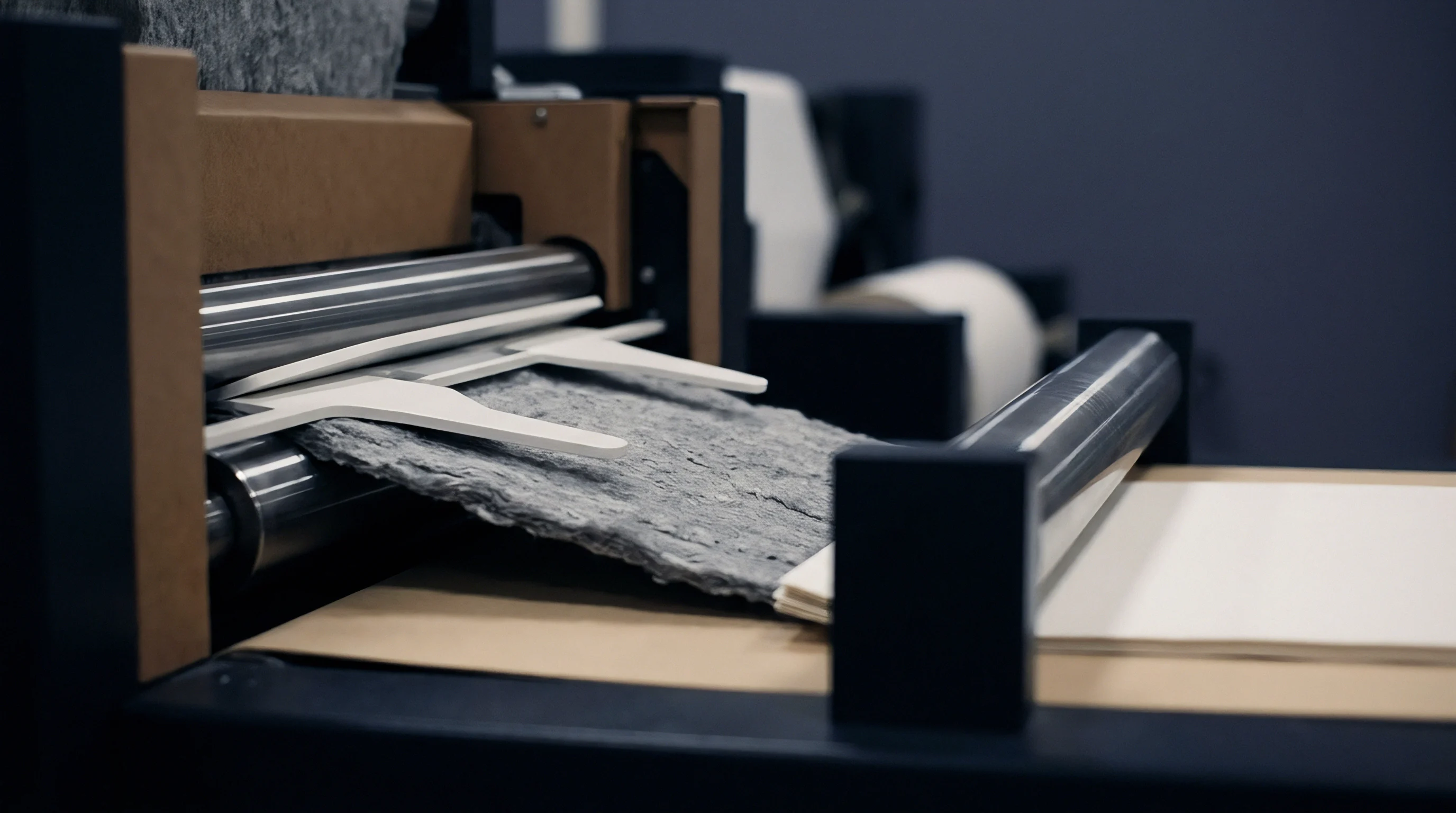
Solvent
Non-cellulosic organic materials infiltrate recycled pulp streams through barrier coatings, synthetic adhesives, printing inks, and processing chemistry. Dichloromethane dissolves polyolefin waxes. While mineral fillers represent visible, inert mass, chemical extractives represent reactive compounds that skew fiber balances and disrupt manufacturing runs.
Chemical extractives encompass wood resin acids, fatty acids, sterols, synthetic alkyl ketene dimer sizing agents, alkenyl succinic anhydride derivatives, wax emulsions, pressure-sensitive adhesives, and hot-melt polyolefins.
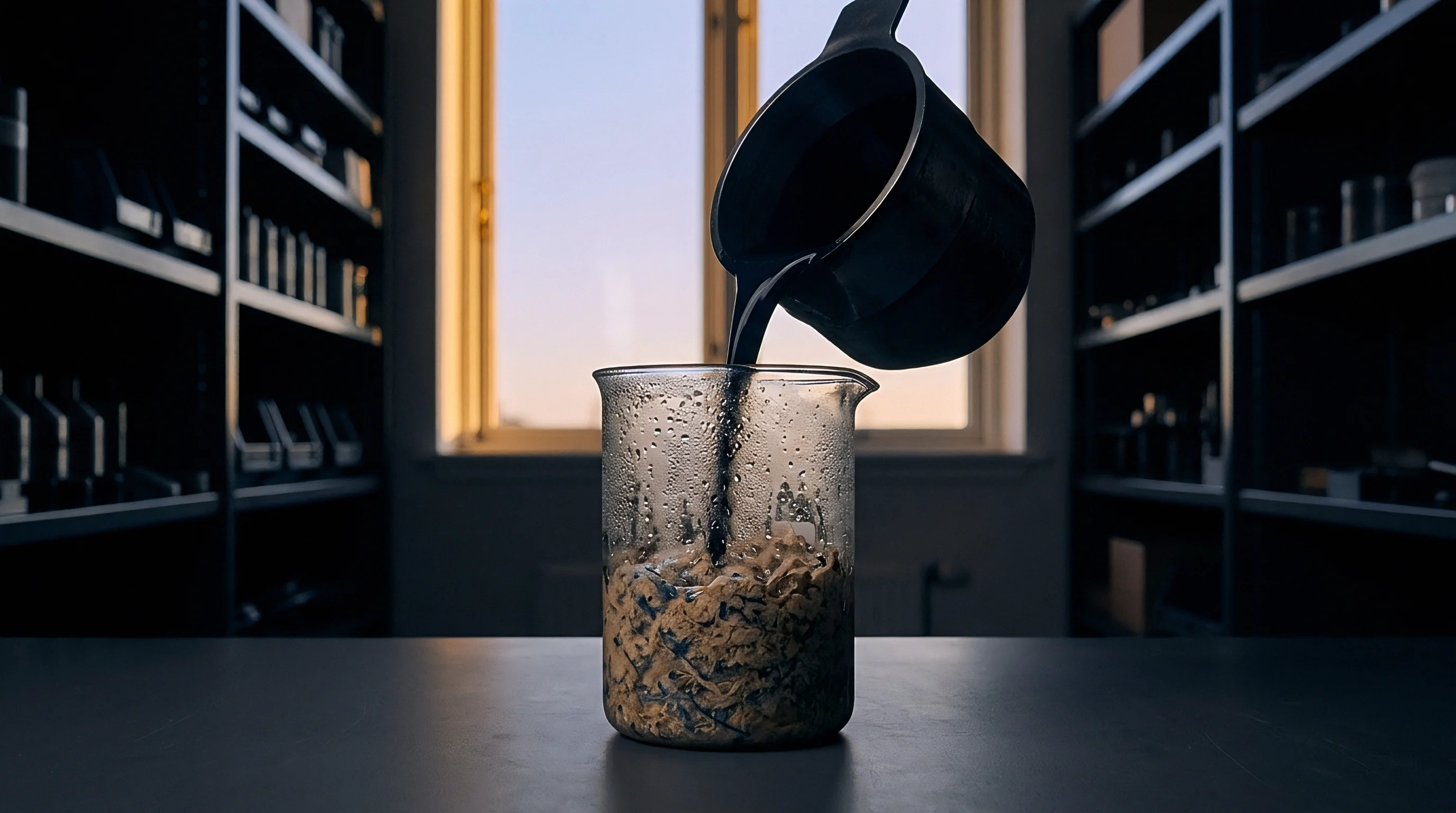
Organic Fractions within Repulped Furnish Streams
Determining the organic extractive loading requires solvent extraction techniques defined by ISO 14453 or TAPPI T 204. Solid paper specimens undergo continuous reflux within a Soxhlet chamber for minimums of sixteen cycles or four hours. Selection of the solvent system controls which chemical fractions separate from the cellulosic structure.
Acetone extracts polar wood resins alongside synthetic polymer binders, while petroleum ether isolates non-polar mineral oils and hydrocarbon waxes. Dichloromethane isolates lipophilic extractives, including pitch, micro-stickies, tackifiers, and paraffin barriers, without dissolving structural polysaccharides.
Furnishes composed of recovered corrugated containers under EN 643 Grade 1.04 or 1.05 carry heavy burdens of hot-melt ethylene-vinyl acetate adhesives, polyurethane tapes, and waterproofing waxes. In unbleached packaging grades, chemical extractives routinely constitute between two and six percent of total oven-dry bale mass. Solvents extract hydrophobic adhesives.
If a mill pulps one thousand metric tons of old corrugated containers, up to sixty tons consists of extractable synthetic resins and adhesives rather than papermaking fibers.
Standard chain-of-custody mass balances frequently treat this fraction as secondary cellulose. The extractive mass washes out in deinking clarifiers, sticks to dryer felts, or concentrates within mill white water loops. When ledger audits omit extractive assays, that missing mass is recorded as fiber processing yield loss or carried forward as phantom stock in credit banks.
- Lipophilic Polyolefin Waxes extracted via dichloromethane at 40 degrees Celsius quantify cold-wax coatings applied to agricultural shipping boxes, isolating paraffin barriers that strip out during screen separation.
- Pressure-Sensitive Sticky Polymers extracted via ethyl acetate or toluene capture acrylate elastomers and tackifying hydrocarbon resins originating from envelope windows and label matrices.
- Internal Synthetic Sizing Fractions quantified through acetone extraction measure unreacted alkyl ketene dimer or alkenyl succinic anhydride compounds added during original sheet formation.
- Polyvinyl Alcohol and Starch Binders isolated via hot water extraction under EN 647 quantify surface-applied corrugating starches and barrier resins that dissolve into process water.
Incorporation of ISO 14453 extractive deductibles into supply specifications bars suppliers from booking raw adhesive stickies as secondary pulp volume.
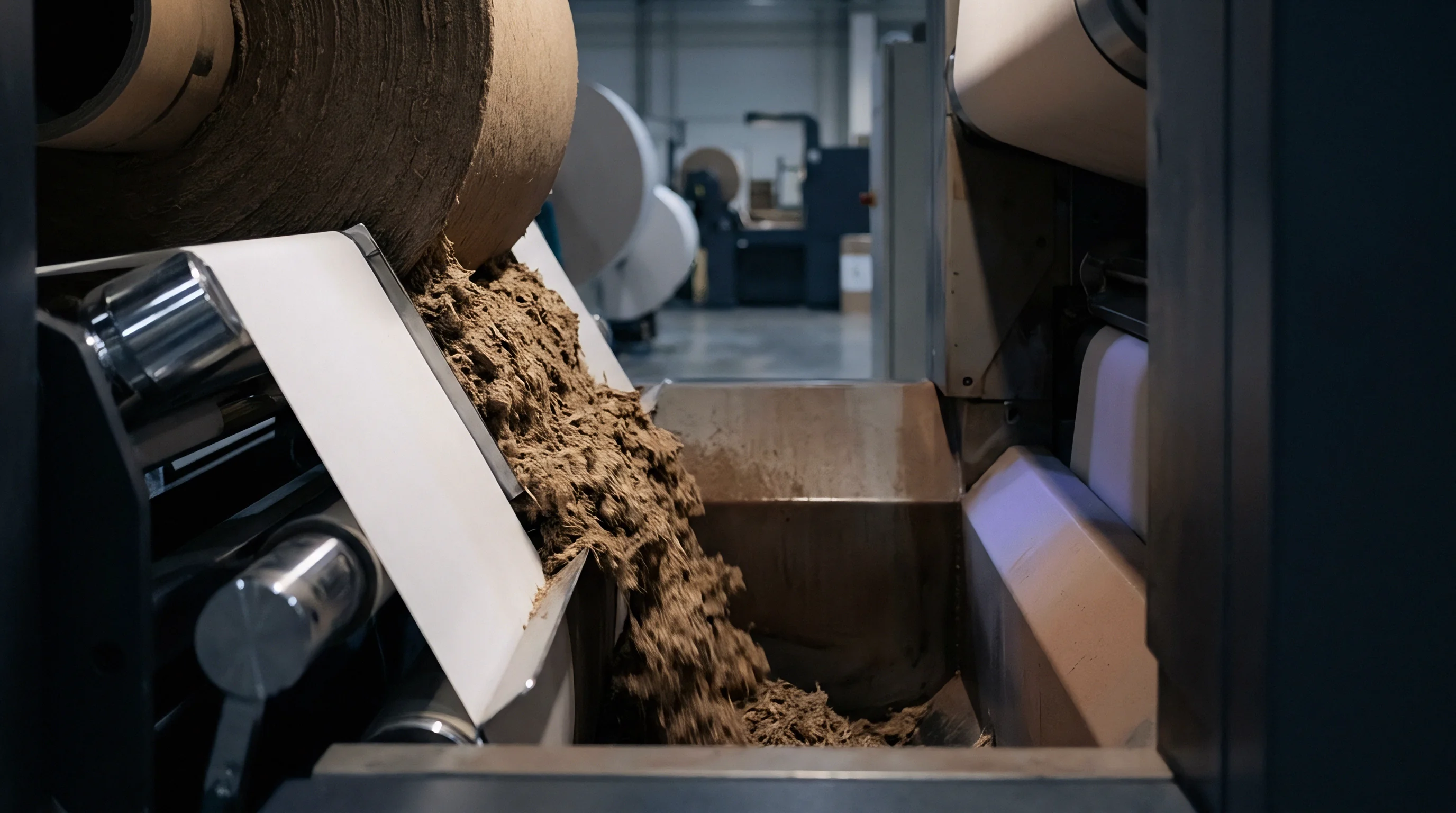
How Do Solvent Matrices Isolate Polymeric Stickies?
Different chemical solvents exhibit distinct polarities and thermodynamic affinities for target extractive compounds. The Hansen solubility parameters of dichloromethane closely align with pressure-sensitive tackifiers, polyisoprene derivatives, and ethylene-vinyl acetate co-polymers. When the solvent boils at 39.8 degrees Celsius in a Soxhlet extractor, the vapor rises, condenses, and percolates through the paper thimble.
Hydrophobic stickies dissolve into the solvent pool. Cellulosic fibers and insoluble starches remain behind in the extraction thimble.
Ethanol-benzene and ethanol-toluene mixtures display higher polarities, extracting natural wood resins, polyphenols, and low-molecular-weight lignins alongside synthetic polymers. Using ethanol-toluene on mechanical recovered fiber furnishes inflates the extractive tally by dissolving up to two percent of natural wood components. The test house selects pure dichloromethane to isolate synthetic papermaking contaminants from intrinsic wood chemistries.
Evaporation of the solvent under vacuum leaves a dry adhesive residue measured to the nearest 0.1 milligram.
| Extraction Standard | Solvent System | Reflux Duration | Primary Target Compounds | Typical Recovery Range |
|---|---|---|---|---|
| ISO 14453 | Dichloromethane (DCM) | 4 hours (16 cycles) | Waxes, stickies, pitch, EVA hot-melts | 1.5% to 4.2% dry basis |
| TAPPI T 204 om-18 | Ethanol-Benzene (1:2) | 6 hours | Resin acids, fatty acids, synthetic sizing | 2.8% to 6.5% dry basis |
| TAPPI T 204 om-18 | Acetone | 4 hours | Polar polymers, acrylate adhesives, oils | 1.8% to 4.8% dry basis |
| EN 645 | Cold Water Leachate | 24 hours | Free starches, soluble salts, surfactants | 0.8% to 2.2% dry basis |
| EN 647 | Hot Water Extraction | 2 hours at 90°C | Polyvinyl alcohol, carboxymethyl cellulose | 1.4% to 3.5% dry basis |
| Values represent typical ranges across EN 643 Group 1, 2, and 4 recovered papers conditioned at 23°C and 50% relative humidity. | ||||
Whether solvent extraction methods can differentiate recycled synthetic processing additives from natural softwood resin acids within mechanical pulp streams without gas chromatography verification remains an active engineering dispute.
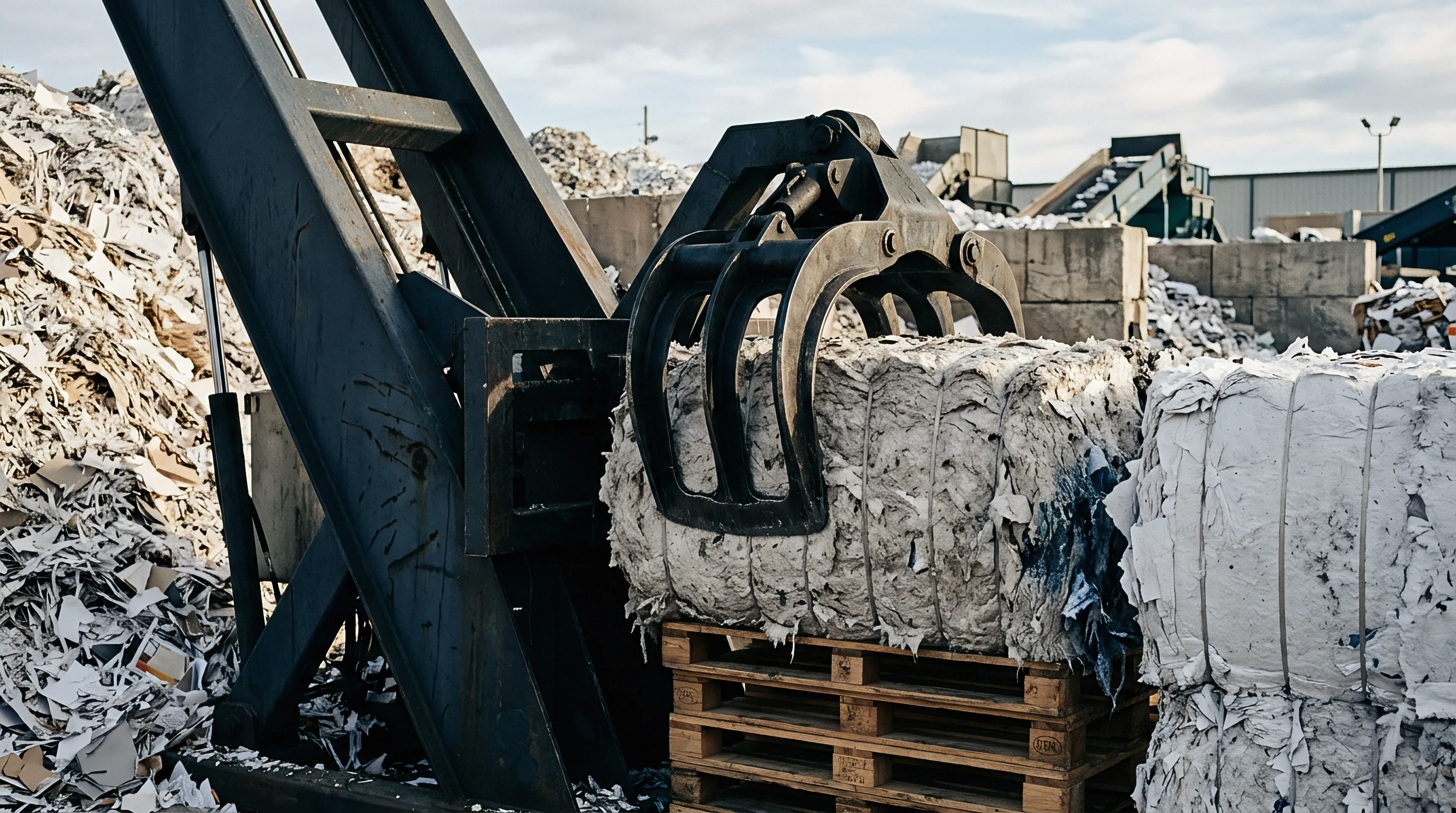

Reconciliation
Ledger discrepancies emerge when raw intake masses undergo credit booking before analytical discounts take effect. Credit ledgers overstate fiber content. FSC-STD-40-004 and PEFC ST 2002 chain-of-custody standards dictate mass balance ledgers operating under credit or percentage systems.
These schemes stipulate that claimed output volumes cannot exceed input volumes adjusted by true manufacturing conversion factors. When a mill feeds recovered paper into its hydrapulper, the gross wet weight recorded on the weighbridge ticket contains water, mineral fillers, and chemical extractives.

Mass Balance Corrections in Credit Account Ledgers
Auditors verify the integrity of recycled output claims by auditing physical conversion efficiencies against certified book balances. Calculating the true secondary fiber mass requires deducting three distinct non-fibrous fractions from the incoming raw weighbridge tally. The auditor deducts gross moisture above baseline equilibrium, corrected mineral ash loadings, and solvent-extractable non-fibrous synthetics.
The standard equation for determining the net certified recycled fiber mass entering the pulper is expressed through rigorous mass discounting. The gross mass of incoming paper bales is designated as M_gross. The fractional moisture content is w_moisture.
The corrected inorganic filler fraction is w_filler. The solvent-extractable organic fraction is w_extractive. The true fiber manufacturing yield through pulping, screening, and wet-end retention is Y_fiber.
The resulting net certified fiber credit, M_credit, calculates as:
M_credit = M_gross (1 – w_moisture) (1 – w_filler – w_extractive) Y_fiber
Omitting w_filler and w_extractive allows the mill to assign secondary fiber credits to stone dust and glue. If an auditor examines a ledger spanning six operating months where a mill processed 50,000 metric tons of recovered furnish without extractive and filler deductions, the ledger carries thousands of tons of fictitious fiber credits. When the mill sells packaging under an FSC Recycled Credit claim, the end buyer pays for secondary cellulose that washed out into wastewater lagoons as sludge.
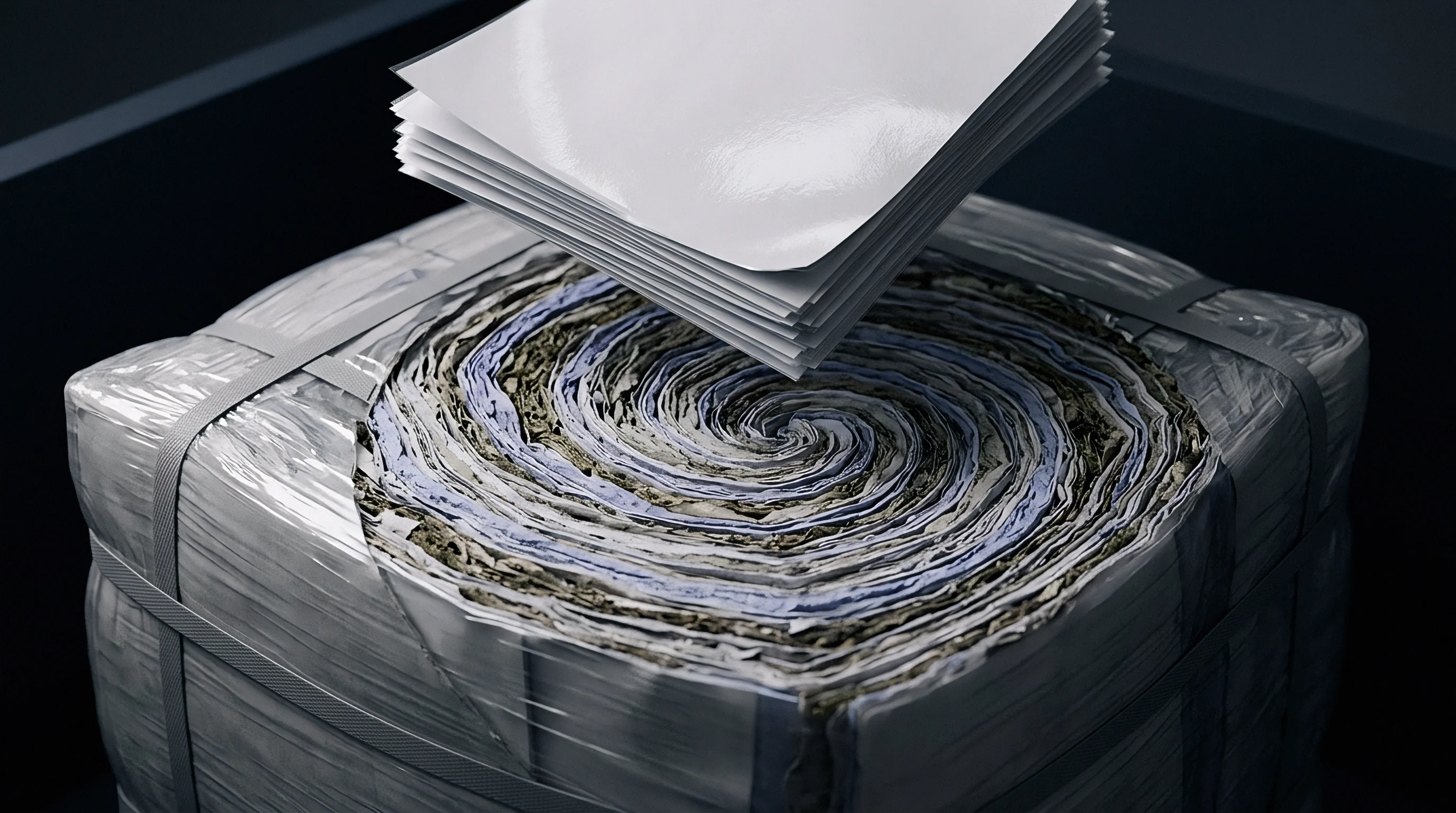
Mathematical Reconciliation for Flotation Line Reject Losses
Consider an industrial mill line processing sorted office paper into deinked pulp for folding boxboard. A commercial production run processes 1,000 air-dry metric tons of baled furnish. Invoices settle on net pulp.
The weighbridge verifies 1,000 metric tons at an audited moisture content of 10.0 percent, leaving 900.0 metric tons of bone-dry solid mass. Laboratory assays establish an ash content of 22.0 percent under ISO 1762 at 525 degrees Celsius, consisting primarily of calcium carbonate and kaolin filler pigments. ISO 14453 dichloromethane extraction yields 3.5 percent synthetic adhesives, coatings, and sizing agents.
Standard processing through flotation, screening, and centricleaning rejects ninety percent of the mineral filler and seventy percent of the chemical extractives into the reject discharge. Flotation deinking lines remove free ink particles alongside fine mineral platelets. Mechanical processing also incurs a four percent loss of short cellulose fibers into the sludge beds.
The uncorrected ledger credits the mill with 900.0 tons of dry secondary fiber multiplied by a generic mill yield of eighty-five percent, issuing 765.0 credit tons.
- Bale intake registers 1,000.0 gross metric tons at 10.0 percent moisture, leaving 900.0 metric tons of bone-dry solid intake.
- Ash testing via ISO 1762 isolates 22.0 percent inorganic filler, representing 198.0 dry metric tons of mineral matter.
- Solvent extraction via ISO 14453 reveals 3.5 percent chemical extractives, representing 31.5 dry metric tons of synthetic compounds.
- True cellulosic dry mass calculates as 900.0 minus 198.0 minus 31.5, leaving 670.5 metric tons of actual cellulose fiber.
- Screening rejects 178.2 tons of filler, 22.1 tons of extractives, and 26.8 tons of fiber fines, discharging 227.1 tons of dry sludge.
- Recovered usable fiber equals 643.7 dry metric tons, alongside 19.8 tons of retained filler and 9.4 tons of retained chemistry.
- The corrected pulp yield generates exactly 643.7 metric tons of genuine secondary fiber credits.
The discrepancy between the unadjusted ledger of 765.0 credit tons and the mathematically corrected tally of 643.7 credit tons equals 121.3 metric tons of nonexistent fiber. That spread represents a 15.9 percent overstatement of certified recycled material. Ledgers demand dry fiber mass.
When buyers purchase packaging certified on uncorrected credit banks, their claims rely on accounting artifacts.
| Audit Ledger Stage | Total Solid Mass (t) | Mineral Filler (t) | Extractives (t) | True Fiber (t) | Credit Ledger Impact |
|---|---|---|---|---|---|
| Gross Weighbridge Intake | 1,000.0 | 198.0 | 31.5 | 670.5 | Initial receipt recorded |
| Moisture Deduction (10%) | 900.0 | 198.0 | 31.5 | 670.5 | Bone-dry solid baseline |
| Uncorrected Ledger Allocation | 900.0 | Included | Included | 900.0 | Overstated fiber pool: +229.5 t |
| Pulping and Flotation Rejection | -227.1 | -178.2 | -22.1 | -26.8 | Waste sent to sludge dewatering |
| Retained Material in Web | 672.9 | 19.8 | 9.4 | 643.7 | Finished reel solid content |
| Corrected Net Fiber Allocation | 643.7 | 0.0 | 0.0 | 643.7 | Audited usable credit volume |
Supply agreements incorporating PEFC Annex 4 mass balance guidelines stipulate that all manufacturing conversion factors undergo third-party re-benchmarking whenever furnish ash content fluctuates by more than two percentage points over any rolling thirty-day production window.


Exposure
Imported packaging faces stringent scrutiny as regulatory frameworks transition from voluntary chain-of-custody claims to enforceable statutory mandates. Customs authorities impound non-compliant shipments. Under the European Packaging and Packaging Waste Regulation, corporate declarations of post-consumer recycled content require verification through technical dossiers and accredited test histories.
If border customs authorities or national market surveillance inspectorates audit a shipment of folding cartons carrying claims of eighty percent recycled content, they cross-examine mill input ledgers against physical core assays.
Regulatory Verification at Border Control Inspections
European border authorities enforcing Article 7 of the Packaging and Packaging Waste Regulation inspect physical shipments using thermogravimetric analysis and solvent digestion to verify declared compositions. If tests reveal that a twenty-ton shipment of paperboard contains twenty-six percent calcium carbonate and four percent synthetic coating resins, authorities deduct these components from the declared recycled fiber mass. Discrepancies inflate environmental claims.
When an unadjusted mill balance credited the raw bale weight directly into its recycled tally, the true post-consumer cellulosic content falls short of the statutory declaration printed on the bill of lading.
Penalties apply retroactively. Packaging and packaging waste laws penalize false environmental declarations through substantial administrative fines, mandatory product recalls, and customs impoundments at the port of entry. The importer of record bears primary legal liability for packaging compliance.
When the technical dossier fails an audit because the upstream mill credited kaolin clay and hot-melt stickies as recycled cellulose, the importing brand absorbs the fiscal exposure.
Customs inspectors examine the mineral fraction of incoming board to recalculate baseline tariff liabilities against certified declarations.
Commercial Remedies for Phantom Fiber Allocation
Tariff classification disputes represent an immediate commercial risk under harmonized customs schedules. Paperboard containing high mineral loadings risks reclassification between virgin kraftliner under heading 4804 and recycled containerboard under heading 4805. If an uncorrected fiber ledger causes a customs auditor to challenge the material composition, customs officials apply penalty duties across all retrospective shipments covered by the open binding tariff ruling.
Brand owners shield balance sheets by embedding precise technical verification clauses directly into substrate supply agreements. Qualified purchase contracts stipulate that declared recycled percentages reflect bone-dry, ash-free, and extractive-free cellulosic mass determined via ISO 1762 and ISO 14453 test regimes. Buyers verify test certificates directly.
Contracts require commercial mills to indemnify buyers against customs penalties, EPR eco-modulation fee adjustments, and packaging taxes triggered by fraudulent or deficient fiber mass balances.
Commercial contracts that omit analytical ash and extractive deduction covenants leave packaging buyers entirely liable for plastic and packaging taxes when market surveillance inspectors discover that twenty percent of declared secondary fiber consists of mined chalk and synthetic glue.