Paperboard Chemical Additive Retention and Migration Testing Methods
Paperboard chemical retention and migration compliance requires verifying wet-end additive fixation, simulant extractions, and mass transfer kinetic barriers.

Vat
Paperboard manufacturing depends on wet-end colloidal chemistry, where functional additives must bind to pulp fibers during brief dwell times in the headbox and wire section. Pulping and bleaching generate carboxyl and hydroxyl groups, giving cellulose fibers negative surface charges in aqueous suspension. Unassisted, small additives such as sizing agents, wet-strength resins, and mineral fillers fail to adhere to fiber walls because of electrostatic repulsion.
Adding cationic retention systems, coagulants, and flocculants changes the slurry charge profile, driving chemical sorption onto fibers before the web consolidates in the press section. Any unbound chemical passes through the forming wire into the white water loop, accumulating over production runs to raise biological oxygen demand and form machine deposits.
Retention occurs through charge neutralization, patch precipitation, polymer bridging, and microparticle action. Dual-polymer systems combine high-charge, low-molecular-weight cationic coagulants with low-charge, high-molecular-weight anionic acrylamide polymers to enhance retention while preserving sheet formation. Cationic starch acts as a dry-strength agent and wet-end binder, with a degree of substitution between 0.02 and 0.05 cationic groups per glucose unit.
These starch molecules adsorb inside fiber surface pores, creating positive patches that attract negatively charged pigments and fine fibers. Polyamidoamine-epichlorohydrin resins provide wet strength by cross-linking with carboxyl groups on cellulose fibers during drying, creating thermosetting networks that withstand water exposure.
Zeta potential serves as the primary indicator of colloidal surface charge in the pulp slurry. Sizing agents provide liquid resistance to virgin and recycled paperboard substrates. During thermal drying, alkyl ketene dimer sizing agents react directly with cellulose hydroxyl groups to form covalent ester bonds, orienting hydrophobic alkyl chains outward from the fiber surface.
Alkenyl succinic anhydride esterifies hydroxyl sites much faster, but hydrolyzes rapidly in water, requiring precise emulsion preparation with cationic starch or polymer stabilizers immediately before wet-end injection. Hydrolyzed sizing agents cannot bind to fibers and instead form sticky dross that fouls felt runs and reduces retention efficiency. When anionically charged wood extractives ~ anionic trash ~ disrupt the wet-end charge profile, cationic sizing agents lose effectiveness, forcing mills to increase dosage and material costs without improving barrier performance.
In auditing wet-end charge profiles, colloidal titration of white water samples using polydiallyldimethylammonium chloride measures the specific cationic demand required to reach zero charge potential at the headbox. Retention efficiency reflects the mass ratio of additive retained in the finished board relative to the total mass added to the stock slurry. Determining this value relies on first-pass ash retention measurements combined with high-performance liquid chromatography or gas chromatography testing on repulped board samples.
Evaluating wet-end additive retention mathematically requires establishing mass balance differential equations across the wire section. Overall first-pass retention measures total solids captured, while first-pass ash retention tracks inorganic mineral fillers and functional chemical complexes. The formula for calculating first-pass chemical additive retention is:
R = 100 (C_headbox – C_whitewater) / C_headbox
In this equation, R is the percentage of first-pass retention, C_headbox is the mass concentration of the targeted additive per unit volume in the headbox stock, and C_whitewater is its concentration measured in the primary white water tray under the forming wire. High-speed twin-wire formers yield lower single-pass retention values ~ typically 45 percent to 65 percent ~ than slower Fourdrinier machines, which run between 70 percent and 85 percent. High shear forces in modern formers strip loosely bound polymer complexes from fiber surfaces, requiring microparticle systems based on colloidal silica or bentonite clay to re-flocculate fine particulates through localized charge bridges.
Fixation efficiency determines whether active molecules remain locked inside the fiber matrix or leach out during converting and end use. Aluminum sulfate, or alum, remains an economical charge neutralizer in acid and neutral papermaking, forming trivalent aluminum species that bind rosin sizes onto fibers at pH levels between 4.5 and 5.5. Polyaluminum chloride replaces alum in neutral to weakly alkaline systems, supplying high-charge hydroxyaluminum complexes effective across pH ranges from 6.5 to 8.2.
Unbound additives in finished paperboard create compliance risks when in contact with aqueous, fatty, or acidic foods. Migration testing demonstrates that unreacted sizing monomers, residual wet-strength cross-linkers, and unbound retention polymers migrate into contact media whenever wet-end retention fails to fix them during formation and drying.
Overdosing retention aids degrades sheet formation through micro-flocculation, creating density variations that reduce burst strength and optical smoothness. High-yield mechanical pulps contain significant amounts of soluble lignosulfonates and hemicelluloses that compete for cationic polymers, suppressing additive fixation on structural fibers. Meanwhile, the accumulation of unretained sizing agents, defoamers, biocides, and degraded starches in closed-loop white water forces mills to balance water closure goals against chemical retention efficiency.
The thermodynamic equilibrium governing surfactant sorption on wet fibers leaves a residual fraction in white water loops, imposing a physical limit on achievable retention at commercial machine speeds.

Extractives
Verifying the safety and regulatory compliance of food-contact paperboard requires measuring chemical mass transfer from the board into foods or food simulants. The porous structure of paperboard permits both liquid-phase extraction and vapor-phase migration of residual additives, process chemicals, and environmental contaminants. European standard EN 1186, along with EN 645 and EN 647, specifies extraction protocols using liquid simulants for aqueous, acidic, alcoholic, and fatty contact, while EN 14338 covers vapor-phase extraction using modified polyphenylene oxide, commercially known as Tenax, for dry and fatty foods.
Test conditions reflect thermal exposures during packaging, storage, and reheating, specifying contact profiles ranging from ten days at 40 degrees Celsius for room-temperature storage to two hours at 170 degrees Celsius for oven applications.
Standard food simulants are selected based on specific extraction behaviors. Simulant A (10 percent ethanol in water by volume) mimics hydrophilic foods with aqueous components. Simulant B (3 percent acetic acid in water weight by volume) extracts basic substances and metals under acidic conditions such as fruit juices and preserves.
Simulant C uses 20 percent ethanol to represent alcoholic beverages and organic hydrophilic products. Simulant D1 uses 50 percent ethanol to model dairy products and oil-in-water emulsions. Simulant D2 uses rectified olive oil, vegetable oils, or synthetic fatty acid mixtures to extract lipophilic substances from board intended for fatty foods.
When olive oil causes chromatographic interference from natural wood extractives, substitute simulants like pure isooctane and 95 percent ethanol are applied under conditions calibrated for equivalent exposure severity.
Simulant selection dictates the severity of the test. Overall migration limits cap the total mass of non-volatile chemicals released from paperboard into a simulant. Regional regulations generally enforce an overall limit of 10 milligrams per square decimeter of packaging surface area, or 60 milligrams of total migrated substances per kilogram of simulant.
Specific migration limits target individual hazardous compounds based on toxicological reviews, acceptable daily intake calculations, and tolerable daily intake thresholds established by health authorities. These limits apply to monomer residues, plasticizers, photoinitiators, fluorinated grease-proofing agents, and heavy metals originating from coatings or wet-end additions.
Liquid extraction testing requires single-sided contact cells to prevent edge penetration. Exposed fiber along cut paperboard edges wicks liquid rapidly, inflating extraction yields and distorting actual surface migration performance. Standardized cells clamp the specimen against an inert Teflon seal, exposing a known area ~ typically 1 or 2 square decimeters ~ to a measured volume of simulant.
Maintaining the contact surface area to simulant volume ratio fixed at 6 square decimeters per kilogram or liter ensures consistent mass transport conditions across tests.
Solid-phase extraction with Tenax models vapor-phase transfer into dry or fatty foods without causing edge wicking or altering the cellulose matrix. Tenax adsorbent powder, possessing the thermal stability and pore structure needed to trap volatile and semi-volatile organic compounds, is applied evenly over the paperboard surface at 4 grams per square decimeter. The prepared cell is placed in a sealed glass vessel under controlled temperature for specified times.
Afterward, the powder is recovered and extracted with organic solvents like diethyl ether or n-hexane, concentrating the analytes for gas chromatography and mass spectrometry.
| Simulant Designator | Chemical Composition | Targeted Food Category | Standard Exposure Conditions | Primary Analytes Extracted |
|---|---|---|---|---|
| Simulant A | 10 percent Ethanol (v/v) | Aqueous, non-acidic foods | 10 days at 40 degrees Celsius | Water-soluble sizing agents, starch residues |
| Simulant B | 3 percent Acetic acid (w/v) | Acidic foods (pH below 4.5) | 10 days at 40 degrees Celsius | Heavy metals, wet-strength resins, amine residues |
| Simulant C | 20 percent Ethanol (v/v) | Alcoholic foods, weak emulsions | 10 days at 40 degrees Celsius | Glycols, low-molecular-weight polar additives |
| Simulant D1 | 50 percent Ethanol (v/v) | Dairy products, oil-water emulsions | 10 days at 40 degrees Celsius | Plasticizers, surfactants, defoamer residues |
| Simulant D2 | Vegetable oil or Isooctane | Fatty foods, lipophilic substances | 2 days at 20 degrees Celsius (Isooctane) | Mineral oils, photoinitiators, sizing monomers |
| Simulant E | Modified Polyphenylene Oxide (Tenax) | Dry foods, vapor-phase migration | 10 days at 60 degrees Celsius | Volatile organic compounds, MOSH/MOAH fractions |
Testing paperboard with functional barrier coatings requires distinguishing background substrate migration from coating failure. Materials such as extruded polyethylene, polybutylene succinate, acrylic dispersion coatings, and aluminum foil laminates block liquid and vapor migration as long as they remain continuous and defect-free. Testing measures migration through flat barrier sheets as well as through scored or creased specimens that simulate converting stresses from folding carton production.
Pinholes and micro-cracks accelerate localized migration, creating high-flux pathways that bypass the barrier entirely.
Sublayer extraction maps where additives reside across multilayer board structures. Triple-ply folding boxboards use different furnishes for individual layers, often sandwiching unbleached mechanical or recycled pulp middle plies between virgin bleached chemical pulp outer plies. Additives applied in inner plies can migrate laterally or diffuse outward during storage.
Mechanically delaminating the plies and profiling each layer chromatographically reveals whether internal sizing and retention agents remain fixed or migrate into food-contact layers prior to packaging.
Single-sided contact cell testing avoids edge-wicking artifacts that falsify liquid simulant extraction metrics on unsealed paperboard samples.
Standard extraction testing cannot recreate every pressure change and humidity fluctuation encountered in shipping channels. High humidity swells cellulose fibers, opening internal pore structures and accelerating the migration of water-soluble and semi-volatile compounds toward outer surfaces. Laboratory extractions provide compliance baselines, but shelf-life verification ultimately requires testing finished, filled packages under realistic storage and transport conditions.
Cold water extraction under EN 645 isolates water-soluble components at ambient temperatures without degrading sensitive additives. The method submerges 10 grams of shredded board in 250 milliliters of pure water for 24 hours at 23 degrees Celsius. Filtering through pre-washed membrane filters yields an extract tested for total organic carbon, biocide residues, glyoxal, and formaldehyde.
Hot water extraction via EN 647 modifies this process by heating the mixture at 80 degrees Celsius for 2 hours to simulate hot-fill, boiling, and retort applications. Higher temperatures accelerate wet-strength polymer hydrolysis, yielding higher formaldehyde and epichlorohydrin derivative levels than cold extraction.
Substitute protocols permit volatile solvents when vegetable oil extractions reach analytical limits. Extraction with isooctane for 2 days at 20 degrees Celsius yields lipophilic migration values equivalent to 10 days at 40 degrees Celsius in olive oil for certain polyolefins and rosin sizes. Extraction with 95 percent ethanol for 4 hours at 60 degrees Celsius simulates hot fat contact.
Evaporating the solvent extract under a nitrogen stream and weighing the residue determines overall migration. Detection limits must remain clearly above background solvent noise, requiring procedural blanks alongside spiked recovery controls.
Interpreting extraction numbers requires matching test results to the target food type. Testing with aqueous simulants indicates nothing about migration into fatty or dry goods. A board sample showing zero migration in cold water can release substantial mineral oil hydrocarbons or synthetic sizing compounds when exposed to fatty simulants or dry foods at elevated temperatures.
Likewise, liquid extraction tests on unbarriered board produce edge-wicking errors unless single-sided cells seal the sample perimeter.


Assay
Testing paperboard chemical additives relies on coupled chromatography and high-resolution mass spectrometry to detect trace analytes in cellulosic matrices. Extracting unbonded additives requires solvents that penetrate the matrix without dissolving structural fibers or degrading polymers. Accelerated solvent extraction, microwave-assisted extraction, and ultrasonic extraction isolate targets from ground paperboard samples using solvents matched to analyte polarity, including hexane, dichloromethane, methanol, and ethyl acetate.
Mineral oil hydrocarbons represent a primary concern in paperboard, particularly grades containing recycled fibers from newsprint and inks. Mineral oil saturated hydrocarbons (MOSH) consist of straight, branched, and alkyl-substituted cyclic alkanes. Mineral oil aromatic hydrocarbons (MOAH) comprise alkylated polycyclic aromatic hydrocarbons with one to four rings.
Measuring MOSH and MOAH requires online coupled HPLC-GC-FID as specified in EN 16998. High-performance liquid chromatography separates the raw extract into MOSH and MOAH fractions on a silver silica gel column. Those fractions transfer directly into a gas chromatograph with a non-polar capillary column, where gas-phase separation precedes flame ionization detection across carbon fraction ranges from C10 to C50.
During a lot dispute on 400 metric tons of folding boxboard, dual-column chromatography isolated 14.2 milligrams per kilogram of MOSH C16 to C35 fractions. Quantifying MOSH and MOAH profiles requires subtracting native plant waxes ~ biogenic hydrocarbons ~ that overlap with mineral oil fractions. Biogenic compounds, including odd-carbon n-alkanes from C23 to C33 from virgin wood pulp, interfere with MOSH mass calculations.
Epoxidation with meta-chloroperoxybenzoic acid removes olefinic interference before MOAH separation, preventing false positives from natural terpenes and rosin derivatives.

Advanced Mass Spectrometry Workflows
Testing for fluorinated grease-proofing agents (PFAS) requires specialized extraction and LC-MS/MS workflows. Polyfluorinated phosphate esters, side-chain fluorinated polymers, and fluorotelomer alcohols used to give paperboard oil and grease resistance undergo basic methanol extraction to hydrolyze polymer bonds. Extractable organic fluorine testing via combustion ion chromatography provides an initial total fluorine benchmark.
Samples burn in a hydropyrolysis furnace at 1000 degrees Celsius, converting organic fluorine into hydrogen fluoride gas, which is trapped in water and measured by ion chromatography. Samples with extractable organic fluorine above 50 milligrams per kilogram undergo targeted LC-MS/MS to identify specific short- and long-chain perfluorinated carboxylic and sulfonic acids down to microgram per kilogram levels.
Gas chromatography separates volatile compounds, while recycled pulp often carries residual printing inks. Primary aromatic amines can leach from azo pigments in inks or polyurethane adhesives used in multilayer laminations. Testing for primary aromatic amines involves weak acid extraction, solid-phase extraction clean-up, and LC-MS/MS using a triple quadrupole in multiple reaction monitoring mode.
Individual amines ~ including 4-aminobiphenyl, benzidine, and 4-chloro-o-toluidine ~ have specific limits, with total sums restricted below 0.01 milligrams per kilogram of food or simulant. Detection limits must reach 0.002 milligrams per kilogram per amine to satisfy European food contact regulations.
Photoinitiators in UV-cured inks and overprint varnishes ~ such as benzophenone, 4-methylbenzophenone, isopropylthioxanthone, and photo-initiator 907 ~ migrate through paperboard by vapor-phase sublimation while reels sit in storage. Measuring photoinitiator residues requires acetonitrile extraction followed by GC-MS in select ion monitoring mode. Internal standards, specifically deuterated benzophenone-d10, account for extraction losses and instrument drift.
Specific migration limits cap benzophenone at 0.6 milligrams per kilogram of food simulant.
Methodology and Detection Limits
Chromatographic quantification relies on careful sample preparation and baseline drift correction. High levels of rosin size or tall oil fatty acids cause interference that obscures target peaks in the C15 to C25 alkane window. SPE cartridges loaded with sulfuric-acid-modified silica gel clean up extracts by trapping polar compounds and pigments, allowing non-polar hydrocarbons to elute cleanly.
| Target Chemical Class | Primary Analytical Method | Solvent / Extraction Method | Quantification Standard | Target Limit of Detection |
|---|---|---|---|---|
| MOSH (C10 to C50) | Online HPLC-GC-FID | Hexane / Dichloromethane (1:1) | Bicyclohexyl / Cholestane | 0.5 mg/kg board |
| MOAH (C10 to C50) | Online HPLC-GC-FID after Epoxidation | Hexane / Dichloromethane (1:1) | 1-Methylnaphthalene / Perylene | 0.15 mg/kg board |
| PFAS Compounds | LC-MS/MS (ESI negative) | Methanol with 0.1 percent Ammonium Hydroxide | Isotopically labeled PFAS standards | 1.0 microgram/kg board |
| Primary Aromatic Amines | LC-MS/MS (ESI positive) | 3 percent Acetic acid / SPE clean-up | Deuterated aromatic amine analogues | 0.002 mg/kg simulant |
| Photoinitiators | GC-MS (SIM mode) | Acetonitrile ultrasonication | Benzophenone-d10 | 0.05 mg/kg board |
| Bisphenols (A, S, F) | HPLC-MS/MS | Methanol / Water (80:20) | 13C-labeled Bisphenol A | 0.01 mg/kg board |
Measuring volatile organic compounds emitted during high-temperature converting uses static headspace GC-MS. Paperboard samples are sealed in glass vials, heated at 120 degrees Celsius for 45 minutes, and the headspace gas is injected directly onto capillary columns. The assay quantifies residual monomers, including styrene, acrylic acid esters, and vinyl acetate from dispersion binders in barrier and print coatings.
Online coupled liquid chromatography to gas chromatography with flame ionization detection isolates mineral oil hydrocarbons while eliminating chromatographic interference from wood-derived terpenes.
Bisphenols ~ specifically Bisphenol A, S, and F ~ enter paperboard through recycled thermal paper receipts in post-consumer pulp. Assaying them involves extracting ground board with a methanol-water mixture, followed by LC-MS/MS separation. Calibration uses isotopically labeled 13C-Bisphenol A internal standards to offset ionization suppression caused by co-eluted sugars.
Specific migration limits cap Bisphenol A at 0.05 milligrams per kilogram of food, with a complete ban in infant packaging.
Assay validation requires measuring recovery rates across spiked control samples. Performance criteria demand recovery between 70 percent and 120 percent, with relative standard deviations under 15 percent across replicate injections. Matrix-matched calibration curves prevent errors caused by signal suppression or enhancement in mass spectrometry source chambers.
Laboratories run procedural blanks with every batch to verify that solvents, glassware, and instrument components introduce no background contamination.
Quantifying unknown non-intentionally added substances (NIAS) requires high-resolution mass spectrometry using time-of-flight or orbitrap mass analyzers. Non-targeted screening compares spectra against structure databases to identify degradation products, side-reaction impurities, and unexpected pulp contaminants. Molecular formula assignment relies on sub-ppm mass accuracy and isotopic pattern analysis, allowing risk assessors to estimate exposure levels and evaluate toxicological thresholds for unlisted migrants.
A testing laboratory suffered substantial losses when solvent contaminated with synthetic phthalates produced false-positive diisobutyl phthalate readings across 50 metric tons of certified medical-grade folding boxboard. Resolving the issue required re-purifying solvents, re-extracting duplicate retained samples, and re-running the mass spectrometry data before releasing the shipment.
Partitioning
Chemical migration from paperboard into food combines thermodynamic partitioning and kinetic diffusion. Paperboard is a porous network with chemical substances distributed across solid fibers, air voids, coating layers, and moisture. Mass transfer occurs through intra-fiber matrix diffusion, vapor-phase pore diffusion, and partition equilibrium at the boundaries between board, coatings, air gaps, and food.
Diffusion within solid cellulose fibers follows Fick’s second law, modeling transient mass transport over space and time. The differential equation for one-dimensional chemical diffusion through a board layer of thickness L is:
dC/dt = D (d^2 C / dx^2)
Here, C is the local concentration of the migrant at distance x from the internal boundary, t is exposure time, and D is the effective diffusion coefficient within the paperboard matrix. That effective diffusion coefficient accounts for structural tortuosity, pore volume, and chemical binding between migrants and cellulose hydroxyl networks. In paperboard, diffusion coefficients range from 10^-8 square centimeters per second for light volatile organic compounds down to 10^-14 square centimeters per second for heavy polymeric additives and resin oligomers.
Temperature accelerates diffusion following Arrhenius kinetics. Higher temperatures increase migrant kinetic energy, expand polymer free volume in barrier coatings, and raise chemical vapor pressures inside the board’s air pores. The Arrhenius equation for diffusion coefficient variation is written as:
D(T) = D_0 exp(-E_a / (R T))
In this equation, D_0 is the pre-exponential factor, E_a is activation energy, R is the universal gas constant, and T is absolute temperature in Kelvin. Thermal processing, hot-fill packaging, and microwave reheating can boost diffusion coefficients by two to four orders of magnitude compared to room-temperature storage, turning non-migrating residuals into active migrants in minutes.
Partitioning Coefficients and Equilibrium Dynamics
Thermodynamic partitioning limits the maximum mass of an additive that can transfer from paperboard into food at equilibrium. The partition coefficient, designated K_p/s, defines the equilibrium ratio of analyte concentration in the paperboard to that in the food or simulant:
K_p/s = C_paperboard_eq / C_simulant_eq
A high partition coefficient means the compound remains bound to the paperboard matrix, while a low coefficient indicates favorable mass transfer into the simulant. Non-polar lipophilic additives ~ such as synthetic sizing waxes and mineral oils ~ exhibit low partition coefficients when exposed to fatty food simulants like isooctane or olive oil, partitioning rapidly out of the board. Conversely, polar additives maintain higher partition coefficients against fatty foods, remaining bound to hydrophilic fiber walls.
Barrier coatings slow mass transfer rates, whereas higher temperatures accelerate diffusion kinetics. Mathematical migration modeling based on Piringer estimations can predict specific migration without immediate lab testing. Piringer models estimate upper-bound migration by applying worst-case diffusion coefficients calibrated to molecular weight, polymer matrix morphology, and storage temperature.
While accurate for uniform monolayer polymers like polyethylene terephthalate, Piringer models over-predict migration from porous cellulose networks because they omit pore entrapment and sorption effects, making experimental validation necessary for compliance dossiers.
Where Do Functional Barrier Layers Break Down?
Barrier performance depends on chemical composition, defect density, pinhole frequency, and mechanical stress sustained during converting. Extruded polyolefin layers, such as low-density polyethylene applied at 12 to 18 grams per square meter, block liquid water but allow semi-volatile mineral oil hydrocarbons and photoinitiators to migrate through the polymer matrix over extended storage. Fluoropolymer coatings and synthetic sizing agents provide liquid water and grease resistance, but offer no barrier against gas-phase volatile hydrocarbons.
| Migrant Compound | Molecular Weight (g/mol) | Substrate / Barrier Type | Temperature (deg C) | Effective Diffusion Coeff (cm^2/s) |
|---|---|---|---|---|
| Toluene | 92.14 | Uncoated Recycled Board | 23 | 4.5 x 10^-8 |
| Benzophenone | 182.22 | Virgin SBS Board | 23 | 1.2 x 10^-10 |
| MOSH C16-C20 | 226 to 282 | Dispersed Acrylic Barrier | 40 | 3.8 x 10^-11 |
| MOAH C20-C25 | 278 to 348 | LDPE Coated Board (15 g/m^2) | 40 | 8.4 x 10^-12 |
| Dibutyl Phthalate | 278.34 | PET Coated Board (20 g/m^2) | 40 | 2.1 x 10^-14 |
| Irganox 1010 | 1177.65 | Uncoated Virgin Board | 60 | 5.6 x 10^-13 |
Polyvinyl alcohol and ethylene vinyl alcohol copolymer coatings are effective gas and mineral oil vapor barriers when dry, but degrade sharply under high ambient humidity. Absorbed water acts as a plasticizer in the hydrophilic matrix, disrupting hydrogen bonds, lowering the glass transition temperature, and driving up diffusion coefficients by orders of magnitude. Cross-linked acrylic dispersions and micro-fibrillated cellulose coatings provide strong fat and mineral oil resistance while keeping the board repulpable, provided creasing during box folding does not crack the coating along score lines.
Vapor-phase migration through internal paperboard air pores dominates mass transfer kinetics for semi-volatile additives operating at ambient storage temperatures.
Multilayer transport models combine boundary resistance terms across each discrete ply. In a three-ply boxboard with a recycled core, a virgin bleached chemical pulp outer ply, and a water-based dispersion barrier, overall mass transfer resistance is the sum of individual layer resistances divided by their respective partition coefficients. Modeling must account for pinholes, where localized diffusion matches open gas-phase pore transport and bypasses the barrier completely.
While low-density polyethylene extrusion coating on a dry cereal package was assumed to act as an absolute barrier under all storage conditions, technical testing showed otherwise: while the polyethylene blocked liquid grease, semi-volatile MOSH and MOAH vapors migrated through the 15-micron coating within 30 days at 20 degrees Celsius, proving that polyolefin films fail as gas-phase barriers for mineral oils.

Sampling
Verifying additive retention and migration compliance across continuous mill runs requires standardized batch sampling and statistical process control. Paperboard machines produce tens of metric tons per hour across webs over six meters wide, with natural cross-machine and machine-direction variations in fiber orientation, moisture, grammage, and chemical distribution. Sampling protocols under TAPPI T 400 or EN ISO 186 mandate taking sheets across the full machine width at set intervals so test specimens represent the entire production lot.
Mill quality control relies on automated wet-end monitoring backed by offline lab testing. Online photometric charge analyzers track cationic demand at the headbox every five minutes, catching dosing drift before poor retention leads to additive buildup in white water circuits. Offline verification requires sampling finished rolls at the reel, stripping away at least five outer wraps to avoid atmospheric moisture and surface oxidation that skew surface retention assays.
Sampling plans vary with product risk profiles, while mills monitor retention aid feed rates and maintain compliance documents for every finished lot to prevent customs delays. High-risk grades ~ such as direct food-contact virgin folding boxboard or recycled board for dry foods ~ require full chemical migration screening on every master roll set. Standard packaging grades use reduced skip-lot sampling, provided process capability indexes (Cpk) remain above 1.33 for key wet-end retention parameters.
The following procedural sequence defines the standardized mill-floor batch sampling protocol for paperboard chemical migration compliance testing:
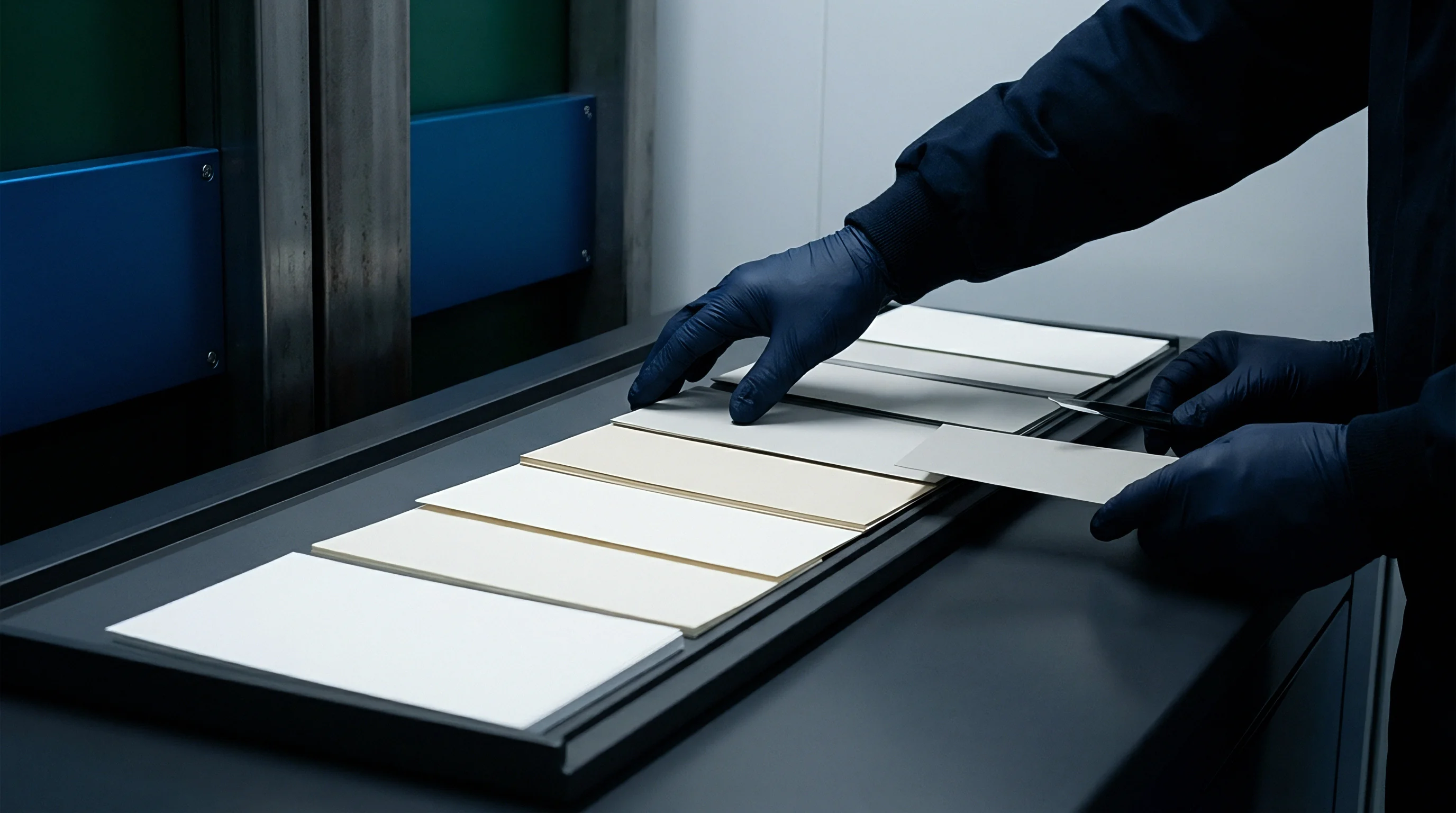
- Reeler Slab Collection Strip away five full outer wraps from the designated production roll to eliminate surface contamination, atmospheric oxidation, and handling damage before taking test sheets.
- Cross-Machine Profiling Cut full-width sheet specimens spanning front, center, and back machine positions, marking machine-direction orientation clearly on each collected sheet.
- Specimen Moisture Isolation Seal cut paperboard specimens immediately inside inert fluorinated ethylene propylene bags, purging ambient air to prevent volatile organic compound loss and moisture exchange.
- Chain of Custody Labeling Affix tamper-evident tracking labels containing mill reel numbers, machine identification, timestamp, grade specification code, and operator signatures to every sealed specimen bag.
- Laboratory Composite Preparation Die-cut circular test specimens measuring precisely 1.00 square decimeter from front, center, and back profiles to construct representative composite testing sets for migration cell assembly.
Batch verification requires confirming that physical samples match the chemical formulation on file in the mill’s compliance dossier. Changes to the furnish or chemistry ~ such as switching wet-strength resin suppliers, altering retention aid molecular weights, or adjusting virgin-to-recycled pulp ratios ~ invalidate existing certifications. Any unannounced formulation change triggers mandatory re-testing for overall and specific migration before the lot can be released.
| Inspection Level | Paperboard Application Scope | Sampling Frequency / Lot Size | Primary Target Analytes | Acceptable Quality Level (AQL) |
|---|---|---|---|---|
| Level I (Reduced) | Secondary outer packaging, non-food | 1 sample per 50 metric tons | Heavy metals, total ash retention | 4.0 percent defective |
| Level II (Normal) | Indirect food contact with inner pouch | 1 sample per 20 metric tons | Overall migration, biocide residues | 1.5 percent defective |
| Level III (Tightened) | Direct aqueous and fatty food contact | 1 sample per 10 metric tons | Specific migration, PAAs, PFAS | 0.65 percent defective |
| Critical Safety | Infant food packaging, ovenable board | 1 sample per master roll set | MOSH/MOAH, NIAS screening, photoinitiators | 0.10 percent defective |
Sample handling in the lab must prevent cross-contamination during cutting, conditioning, and cell setup. Airborne contaminants in testing facilities ~ such as phthalate plasticizers from plastic tubing, silicones from seals, or solvents from adjacent fume hoods ~ adsorb quickly onto clean paperboard. Test specimens must be conditioned at 23 degrees Celsius and 50 percent relative humidity in dedicated glass chambers fitted with activated carbon air filters before mounting.
Discrepancies between supplier Certificates of Analysis and customer acceptance tests usually trace back to storage conditions and timing differences. Semi-volatile organic additives continue migrating internally and evaporating during storage, changing measurable surface concentrations over time. A board lot tested straight off the machine shows lower surface migration potential than the same lot tested after 30 days on a pallet, where internal redistribution drives migrants toward the surface.
Quality assurance purchase agreements typically include explicit verification clauses to handle lot rejections from analytical migration testing. The following contractual clause defines the standard mechanism:
The buyer reserves the right to reject any delivered paperboard shipment if independent accredited laboratory testing according to EN 1186 and EN 16998 reveals chemical migration levels exceeding statutory specific migration limits or agreed specification thresholds by more than two standard deviations of the standardized test method precision, provided sample collection follows EN ISO 186 procedures and testing commences within 30 days of shipment receipt.
Valid lot verification requires holding retain samples from every production run for at least two years. Wrapped in aluminum foil and double-sealed in glass containers at ambient temperatures, these retains serve as definitive evidence if converting operations face field migration failures or customs holds months down the line.

Indemnity
Cross-border trade in paperboard packaging involves strict regulatory frameworks and financial exposure when chemical retention or migration fails. Customs authorities ~ enforcing EU Regulation 1935/2004 and the incoming Packaging and Packaging Waste Regulation, or US FDA 21 CFR 176.170 ~ inspect shipments for food-contact compliance. Shipments without valid Declarations of Compliance backed by accredited lab test dossiers risk customs holds, mandatory border re-testing, rejection, or destruction at the importer’s expense.
Commercial exposure extends beyond border rejections; non-compliant packaging that contaminates food leads to brand owner liabilities, product recalls, and litigation. Under strict product liability rules, every player in the supply chain ~ pulp suppliers, paperboard mills, converters, ink manufacturers, and brand owners ~ can share joint and several liability for migration damages. Defending against claims requires an unbroken documentary paper trail linking delivered paperboard batch numbers directly to accredited laboratory test reports.
Regulations governing paperboard additives are evolving rapidly, placing strict limits on legacy chemicals. EU Packaging and Packaging Waste Regulation rules limit heavy metals, capping the sum of lead, cadmium, mercury, and hexavalent chromium at less than 100 milligrams per kilogram in finished packaging. Regional bans are also phasing out intentionally added per- and polyfluoroalkyl substances (PFAS) in food-contact board, capping total fluorine at 50 milligrams per kilogram of dry board.
Mills that fail to transition to fluorine-free sizing face immediate market exclusion and legal liability across major territories.
| Regulatory Framework | Jurisdictional Scope | Target Chemical / Parameter | Mandatory Threshold / Limit | Legal / Commercial Consequence of Non-Compliance |
|---|---|---|---|---|
| Regulation EC 1935/2004 | European Union | Overall Migration Limit (OML) | 10 mg/dm^2 or 60 mg/kg food | Customs rejection, market withdrawal, administrative fines |
| BfR Recommendation XXXVI | Germany / EU Market | Primary Aromatic Amines (PAAs) | Sum below 0.01 mg/kg food | Immediate recall of packed food, converter contract termination |
| FDA 21 CFR 176.170 | United States | Chloroform Soluble Extractives | 0.5 mg/sq inch food contact | Import alert, FDA warning letters, border seizure |
| EU PPWR Article 5 | European Union | Heavy Metals (Pb, Cd, Hg, Cr VI) | Sum below 100 mg/kg total | Prohibition of sale, national enforcement penalty actions |
| State PFAS Laws (US) | Selected US States | Total Organic Fluorine (TOF) | Below 100 ppm (Intentionally added) | Civil penalties up to 10,000 USD per day, retail delisting |
| REACH Annex XVII | European Union | Bisphenol A (BPA) | 0.05 mg/kg SML (Prohibited in infants) | Supply chain indemnity claims, product liability lawsuits |
Declarations of Compliance serve as legal documents confirming regulatory responsibility across the supply chain. A defensible declaration must identify the paperboard grade, list intentionally added additives subject to restrictions, state dual-use additives, confirm barrier performance where relevant, and certify compliance with national rules like BfR Recommendation XXXVI or FDA food contact notifications. Generic declarations with vague promises ~ lacking references to specific lab report numbers and batch production dates ~ offer no real protection during regulatory audits.
Commercial contracts must assign financial liability for packaging lot destructions directly to the paperboard mill when post-delivery migration testing fails statutory standards.
Allocating risk in procurement contracts relies on structured indemnity clauses that shield converters and buyers from financial losses caused by latent retention or migration defects. Standard commercial indemnities require mills to reimburse buyers for substrate replacement, converter machine downtime, spoiled inventory, third-party lab fees, and legal defense costs. Mills typically try to limit exposure by capping liability at the invoice value of the paperboard lot, creating a risk gap that converters must address during contract negotiation.
Conversion contracts use clear warranty language to bridge the gap between raw board invoice value and potential recall costs. The math is simple: a single metric ton of defective board worth 1,200 Euros can yield 50,000 finished cartons holding packaged food valued at over 250,000 Euros. A migration failure discovered after retail distribution creates liabilities orders of magnitude higher than the original substrate price.
Indemnity terms must explicitly exclude chemical compliance defects from standard liability caps, treating migration failures as a breach of fundamental warranty obligations.
Building a solid defense dossier requires keeping complete technical files for ten years after distribution. A thorough compliance file contains raw material declarations, wet-end retention logs, certificates of analysis for every production lot, third-party migration reports for liquid and Tenax simulants, NIAS toxicological evaluations, and traceability records linking reel serial numbers to finished carton delivery notes. Maintaining these files ensures paperboard buyers can withstand market surveillance audits, protect their brand, and prevent customs holds at international borders.