Geolocation Data Gaps in Recycled Packaging Paper Compliance
Packaging paper claiming waste exemption under deforestation rules faces border detention whenever furnish blends contain unmapped virgin reinforcement pulp.

Boundary
Customs tariff code 4805.24 designates testliner containing over seventy percent recycled fiber, yet import filings under Regulation 2023/1115 split that entry into conflicting legal exposures. Article 2(7) excludes packaging paper produced entirely from material that completed its lifecycle and would otherwise face disposal as waste. The exemption operates on a binary condition.
If a paperboard shipment contains ninety-nine percent post-consumer recovered carton scrap and one percent virgin chemical reinforcement pulp, the entire consignment falls under plot-level due diligence. The consignment forfeits the waste exemption immediately upon the introduction of that single virgin bundle.
Importers discover this exposure when submitting Due Diligence Statements through the electronic information system. Entering a consignment containing virgin wood elements prompts an immediate digital request for polygon coordinates covering every forest parcel where harvest took place after December 31, 2020. Entering a purely post-consumer declaration bypasses that coordinate field entirely.
Paper mills routinely blend between five and twelve percent unbleached virgin kraft softwood into recycled linerboard slurries to satisfy cross-direction ring crush test minimums. When those mills fail to segregate lines or verify the geographic origin of their long-fiber furnish, the finished reel carries an unmapped regulatory defect.
Regulation 2023/1115 Article 9 revokes the waste exemption whenever virgin fiber enters the pulper, exposing the entire commercial volume to plot coordinate submission.
The boundary between exempt waste streams and regulated virgin inputs splits along furnish composition rather than finished packaging grammage. Fluting medium, white lined chipboard, and solid bleached sulfate present distinct risk profiles based on virgin fiber fractions added at the headbox.
| Paperboard Grade | Standard Furnish Blend | HS Tariff Code | Geolocation Obligation | Exemption Status |
|---|---|---|---|---|
| Testliner 3 | 100% recovered paper (mixed OCC) | 4805.24.00 | Zero plot coordinates | Exempt under Article 2(7) |
| Testliner 1 | 85% recovered OCC, 15% virgin softwood kraft | 4805.25.00 | Polygon points for 15% furnish | Regulated under Article 3 |
| Semi-Chemical Fluting | 70% virgin hardwood NSSC, 30% recovered fiber | 4805.11.00 | Polygon points for 70% furnish | Regulated under Article 3 |
| White Lined Chipboard | 90% recovered pulp, 10% virgin bleached hardwood top ply | 4810.92.00 | Polygon points for top-ply furnish | Regulated under Article 3 |
| Wellpappenrohpapier (Schrenz) | 100% unsorted mixed recovered paper | 4805.29.00 | Zero plot coordinates | Exempt under Article 2(7) |
Paper mills often procure furnish under commercial trade names that conceal virgin content. A specification stating high-strength recycled fluting frequently masks virgin semi-chemical pulp additions. The physical board looks uniform on the pallet.
The fiber slurry tells an opposing story under cross-examination.
A furnish containing unmapped virgin fibers invalidates an Article 2(7) customs exemption as swiftly as an outright timber smuggling violation.


Bale
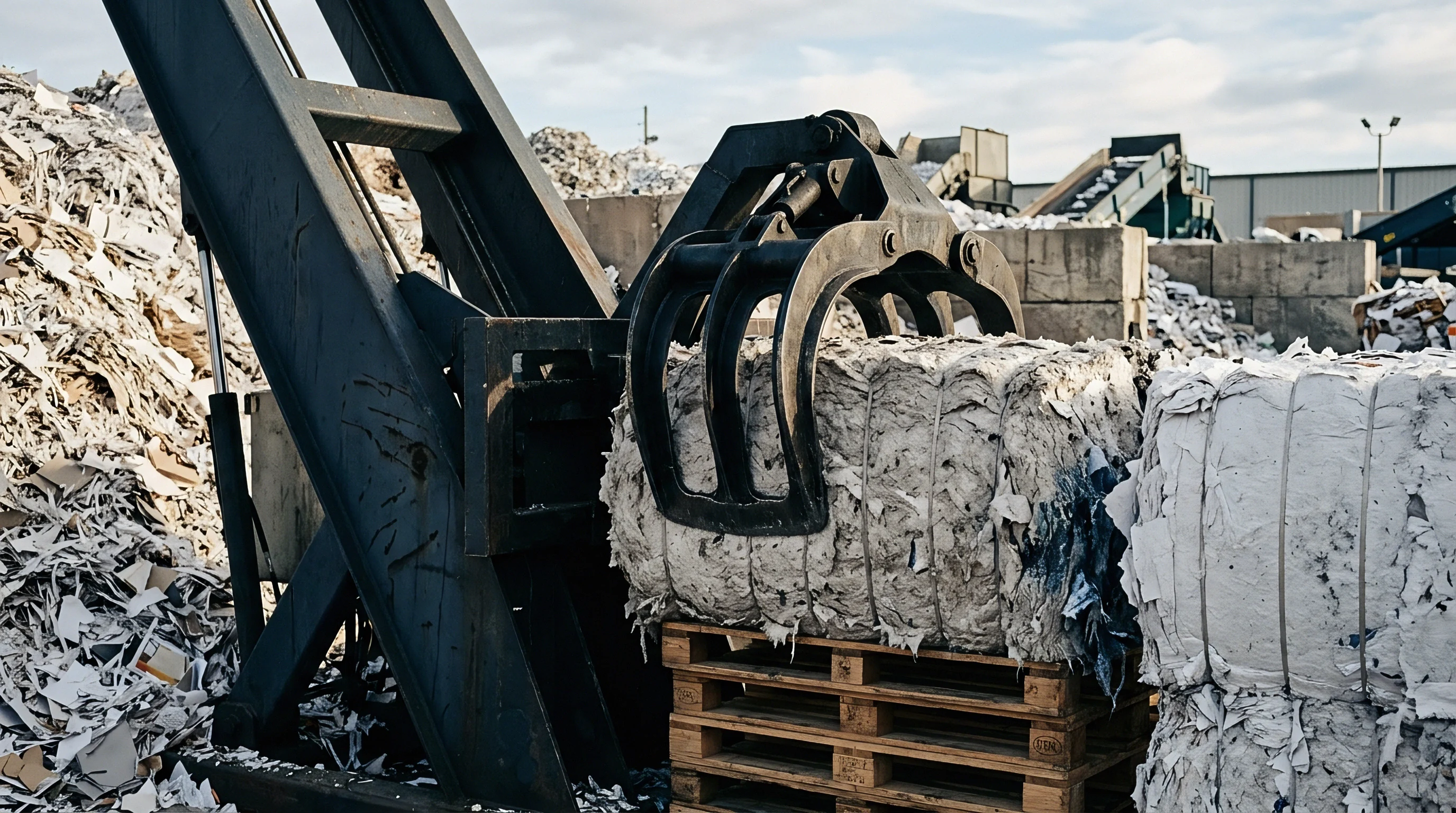
Raw materials entering the repulping hydrapulper arrive compacted under steel wire, compressed by hydraulic sorting presses across municipal and commercial collection hubs. The European standard EN 643 codifies recovered paper grades across five distinct groups, dividing commercial salvage from post-consumer domestic scrap. Group 1 grades, such as mixed paper and board (EN 643 grade 1.02.00) or supermarket corrugated paper and board (grade 1.04.00), originate from retail consumption or domestic kerbside collection.
These fibers meet the regulatory threshold of waste that completed its user life.

Which Scrap Classifications Trigger Geolocation Obligations?
Disputes center upon Group 3 and Group 4 grades, specifically printer offcuts, converting plant trim, and unprinted kraft scrap. Commercial converters sell side-trim scrap and rejected box blanks as high-value paperstock. The industry calls this material pre-consumer fiber.
Under strict statutory construction, scrap generated as an industrial processing residue prior to retail sale represents wood material that did not reach final consumption. When converting plants slice virgin kraftliner to manufacture cartons, the resulting baled edge-trim remains raw timber byproduct. Re-pulping that trim reintroduces virgin wood components into the production vat without establishing forest plot coordinates.
Secondary material sorting yards handle multi-ton volumes through high-speed mechanical shredders and optical sorters. Cross-contamination between EN 643 bales happens daily on the sorting floor. An operator dumps five bales of grade 4.02.00 (unprinted bleached sulfate woodfree cuttings) into the same storage bay housing post-consumer OCC.
When this combined stock drops into the hydrapulper, the resulting paper carries unmapped wood material. Mills that fail to isolate incoming truckloads contaminate clean secondary fiber stocks within minutes.
Paper sourced from industrial converter trim loses its post-consumer standing whenever national customs authorities classify processing offcuts as primary timber residues.
Physical contamination inside secondary paper warehouses follows predictable operational routes:
- Unsegregated converting scrap enters the secondary pulper loop when box-making plants return unprinted virgin trimmings directly to their partner mills.
- Mechanical pulp screening rejection causes sorting operators to blend virgin sawdust and sawmill shavings into packaging stock to hit bulk targets.
- Broke reintroduction cycles allow paper machines running virgin linerboard to dump non-specification reels straight into adjacent recycled board pulpers.
- Foreign collection commingling occurs when overseas recovery aggregators press mixed commercial packaging into domestic waste bales without documented batch separation.
A supplier will simply insist that fiber purchased from an industrial box factory counts as secondary recycling material because the manufacturing line ejected it into a waste bin.


Bench
Laboratory microscopy exposes furnish blends that supply chain invoices conceal. Verifying furnish integrity begins by dispersing paper samples into individual fibers in water according to ISO 5263. Technicians dry the resulting fiber suspension on glass slides before applying selective chemical reagents.
The primary forensic instrument for furnish segregation is the Graff C stain, formulated with zinc chloride, iodine, and potassium iodide per ISO 9184-4.

Fiber Differentiation by Chemical Staining
The Graff C stain stains lignified, semi-bleached, and fully bleached wood components in distinctive shades under optical magnification. Highly lignified mechanical pulps turn bright yellow. Unbleached chemical softwood pulps turn greenish-gray or olive.
Bleached chemical softwood fibers develop a wine-red or purple tint. Recovered fibers show distinct mechanical trauma, including shredded cell walls, bruised fibril layers, and fractured lumens caused by multiple passes through stock refiners. Undamaged, pristine tracheids with intact bordered pits demonstrate the direct addition of virgin wood furnish.
Virgin softwood additions reveal themselves during quantitative fiber count evaluations under ISO 9184-1. Analysts count one thousand fibers per slide using a mechanical stage, calculating mass percentages via specific species weight factors. When a declared 100% recycled testliner specimen displays ten percent pristine softwood tracheids showing zero fiber damage, the analyst identifies virgin furnish addition.
A fifteen percent virgin softwood addition increases the tensile energy absorption index by twenty-two percent while creating a direct customs reporting exposure.
Complementary analytical procedures quantify secondary chemical indicators. Measuring the water retention value under ISO 23714 demonstrates fiber hornification, a permanent loss of swelling capacity resulting from industrial drying. Recovered fibers exhibit low water retention values, typically between 80 and 110 grams of water per 100 grams of dry pulp.
Fresh virgin chemical pulps exhibit water retention values above 145 grams per 100 grams. A high water retention value in a sample claimed as secondary waste indicates fresh virgin pulp injection.
- Specimen slushing disperses two grams of packaging board in warm deionized water without mechanical fiber damage.
- Reagent application introduces zinc chloride iodine dye to dry fiber mounts for forty seconds at room temperature.
- Morphological scanning differentiates intact virgin softwood tracheids from split, fibrillated, and shortened secondary fibers.
- Lignin titration quantifies acid-insoluble Klason lignin percentages to confirm presence of unbleached chemical virgin furnish.
| Test Protocol | Analyte or Target Marker | Limit of Detection | Specimen Conditioning | Customs Evidentiary Weight |
|---|---|---|---|---|
| ISO 9184-4 (Graff C) | Tracheid morphology and chemical staining | 2.0% virgin long fiber fraction | Air-dried dispersed fibers, 23°C, 50% RH | Primary physical proof of furnish fraud |
| ISO 23714 | Water retention value (hornification index) | 5.0% change in swelling ratio | Centrifuged pulp at 3000 g for 30 minutes | Confirmatory secondary furnish evidence |
| TAPPI T 222 | Acid-insoluble Klason lignin | 0.1% by oven-dry pulp weight | 72% sulfuric acid hydrolysis at 20°C | Confirms unbleached kraft vs bleached waste |
| ISO 5350-1 | Visible dirt and residual ink particle count | 0.04 mm² equivalent black area | Reflected light on handsheet surface | Confirms prior printing and deinking steps |
| Methods require calibration against reference virgin and deinked recycled pulp matrices evaluated under ISO 187 standard conditioning environments. | ||||

Furnish Arithmetic and Strength Specifications
Take a 40-tonne commercial consignment of nominal 140 gsm recycled fluting medium. Assume the mill aims to deliver a short-span compression test (SCT) value of 2.10 kN/m to satisfy carton bursting specifications. Clean, low-grade recycled OCC pulp delivers an SCT rating of 1.75 kN/m under ISO 9895 conditions.
The mill compensates for weak secondary fibers by blending virgin unbleached kraft softwood into the chest.
Each one percent addition of virgin pine kraft furnish increases the batch SCT rating by 0.035 kN/m across the forming wire. Achieving the target 2.10 kN/m requires the mill to inject precisely ten percent virgin kraft pulp into the headbox blend. That addition consumes four dry tonnes of unbleached softwood fiber across the forty-tonne production run.
The mill invoices the paper as hundred percent recycled fluting to bypass EUDR compliance duties. When the port authority runs an ISO 9184-4 fiber distribution analysis, the lab detects that four-tonne addition within ninety minutes. The test renders the Article 2(7) waste exemption claim legally void.
Laboratories continue to dispute whether low-level virgin fiber counts under three percent represent intentional structural reinforcing pulp or routine trace contamination from poorly washed industrial processing chests.
Chain
Voluntary forest certification schemes fail to resolve this regulatory gap automatically. FSC-STD-40-004 and PEFC ST 2002 establish accounting methodologies developed to support commercial claims, not customs border enforcement. A commercial invoice displaying an FSC Recycled Credit statement confirms that the supplier maintains an administrative ledger balancing incoming recovered paper against outgoing sales volume.
The credit system functions via physical commingling.
Under the FSC credit system, a paper mill mixes certified post-consumer scrap, uncertified municipal waste, and uncertified virgin broke in the same pulping chest. The mill sells an equivalent volume of paper with an FSC Recycled Credit claim on the bill of lading. That documentary claim does not guarantee that the physical board on the pallet contains zero virgin wood cells.
If an importer presents an FSC Recycled Credit certificate to customs, the documentation proves accounting compliance under FSC rules. It does not provide the legal proof demanded by EU customs authorities for plot exemption under Regulation 2023/1115.
Credit ledger accounts balance book transfers across fiscal quarters while allowing virgin unmapped wood fibers into physical packaging reels.
Customs officials inspect the physical commodity entering the single market, disregarding book-and-claim balance sheets. Importers relying on transfer system certification retain higher evidentiary security. Under a strict FSC Transfer System, physical segregation prevents any non-recycled fiber from entering the product run.
If the transfer batch is compromised, the declaration fails.
A legally defensible compliance dossier requires specific documentary records to prove complete post-consumer origin:
- Mill intake tickets record incoming recovered paper deliveries by individual EN 643 grade classifications and weighbridge receipts.
- Furnish batch ledgers verify the exact mass breakdown of secondary fibers, wet-end sizing agents, and starch additions for every finished reel number.
- Physical segregation protocols detail the dedicated conveyors, pulping systems, and broke storage chests isolated from virgin production lines.
- Periodic microscopy audits confirm fiber morphology results across finished packaging lots prior to cross-border export.
Section 7.3 of the mill supply agreement shifts compliance liabilities by establishing that any delivery of paper labeled as post-consumer stock containing unmapped virgin fibers constitutes a material contractual breach requiring complete invoice cancellation.

Border
The operational crisis occurs when packaging reels dock at Antwerp, Rotterdam, or Hamburg. Under the Union Customs Code Article 198, market surveillance authorities impound consignments lacking requisite Due Diligence Statements. If an importer declares paper goods under HS code 4805 as exempt post-consumer material, but laboratory sampling reveals virgin softwood tracheids, customs authorities flag the entry for commercial fraud.
The shipment halts on the quay.
Demurrage fees accumulate immediately. Port container terminal storage fees reach 180 euros per container per day after the initial five-day laytime window expires. A break-bulk ship hold carrying two thousand tonnes of linerboard reels generates detention charges exceeding 15,000 euros daily while laboratories resolve fiber dispute tests.
The importer of record remains legally accountable under European corporate due diligence enforcement. National authorities apply commercial penalties based on turnover, confiscate goods, and suspend trade authorization numbers.
Brands buying retail packaging carry parallel commercial exposure. When an e-commerce retailer receives corrugated boxes made from impounded board, packing lines stop. Modern distribution centers operate on three-day packaging buffer stocks.
A delayed paper delivery cascades into factory inventory shortages within seventy-two hours. The retailer cancels the purchase order and passes the cost of disrupted operations back up the supply ladder.
Relying on unverified recycled declarations creates severe financial exposure through customs seizures, statutory corporate fines, warehouse demurrage accumulation, and immediate commercial retailer delisting.