Paperboard Recycled Content Verification Essentials for Retail Compliance
Recycled paperboard verification requires valid chain of custody certificates, mass balance ledgers, and lab migration test reports to clear retail compliance.

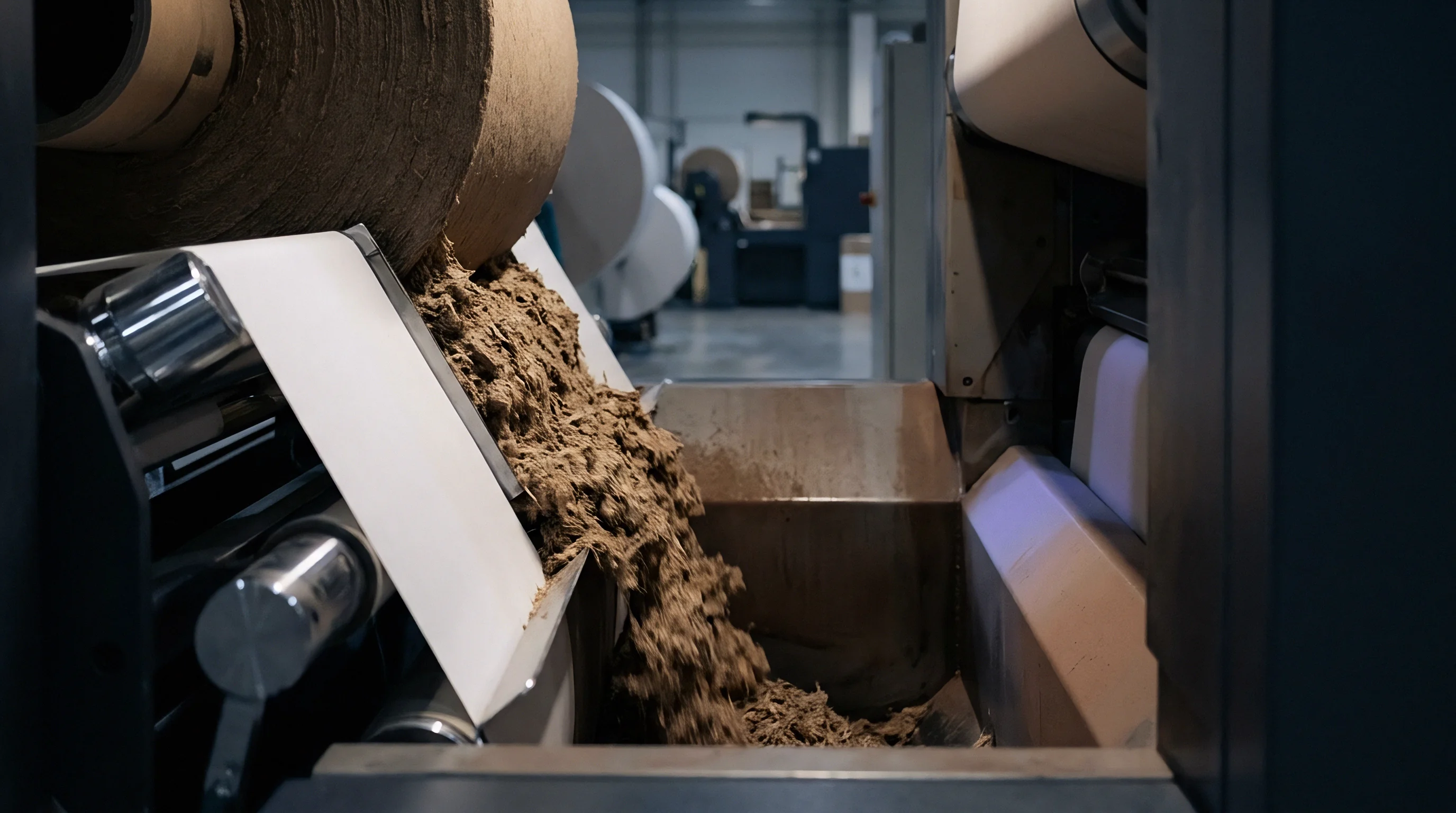
Trace
Chain of custody documentation provides the legal basis for any recycled paperboard claim printed on a package. When a buyer specifies post-consumer recycled content, tracing fiber from municipal collection through pulp mills, paper machines, and converters to the finished carton depends entirely on these systems. Standards from the Forest Stewardship Council (FSC-STD-40-004 v3-1) and the Programme for the Endorsement of Forest Certification (PEFC ST 2002:2020) frame these requirements.
Certification bodies issue scope certificates to individual facilities, but a facility certificate only confirms that a site can track material. It does not prove that a given pallet of coated recycled board contains the claimed post-consumer content unless the transaction documents for that shipment explicitly state the claim and license number.
Paperboard claims frequently break down between the mill delivery note and the converter invoice, long before reaching customs. Mills use three main accounting models to attribute recycled fiber: transfer, percentage, and credit systems. In a transfer system, mills cannot physically mix certified recycled fiber with virgin wood pulp in the same batch without dropping the entire batch claim to the lowest percentage present.
A percentage system assigns board output the weighted average percentage of recycled fiber used across a production run over a set timeframe. Credit systems operate differently: a mill feeds mixed recycled and virgin pulp into production, logs the certified recycled input in a credit account, and sells a corresponding volume of finished board with a high recycled content claim, leaving the rest of the run to be sold as uncertified board.
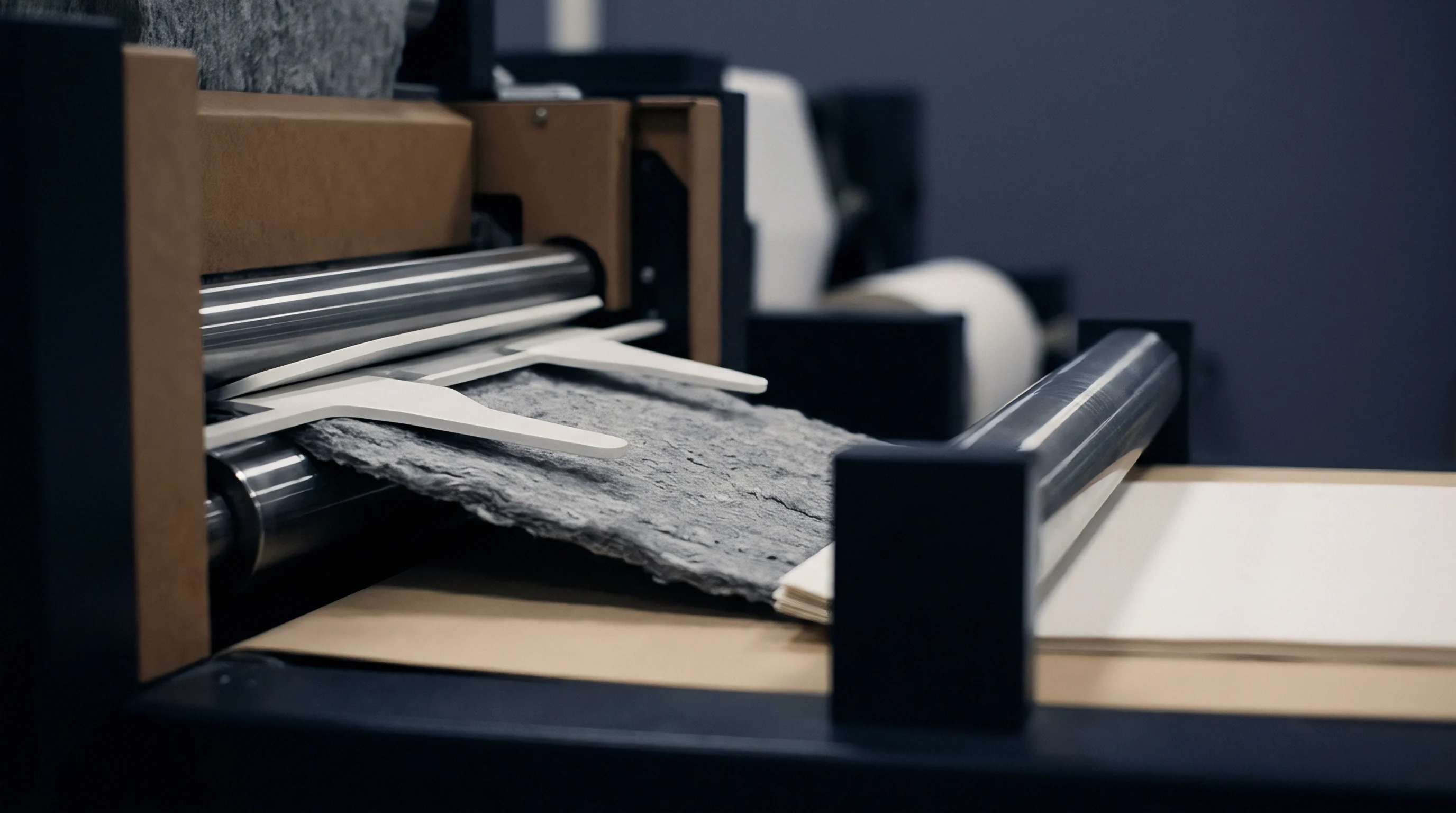
Chain of Custody Accounting System Architecture
Comparing how these accounting models handle mass balance and credit rolling periods reveals where compliance risks enter the supply chain before purchase orders are issued.
| Accounting System | Input Material Rules | Credit Period Limits | Scrap Loss Factor | Physical Fiber Distribution | Compliance Risk Exposure |
|---|---|---|---|---|---|
| Transfer System | Single certified material stream without physical mixing | Batch or job order basis | Direct mass balance deduction | Uniform physical recycled fiber throughout batch | Low risk; material segregation verified visually and mechanically |
| Percentage System | Mixed certified and uncertified inputs per batch | Maximum 12 months rolling window | Calculated percentage deduction across yield | Proportional physical recycled fiber across production | Medium risk; relies on accurate input batch weight logging |
| Credit System | Mixed certified and uncertified raw furnish inputs | Maximum 24 months (FSC) or 12 months (PEFC) | Manufacturing waste deducted before credit creation | Decoupled; physical carton may contain zero recycled fiber | High risk; claim valid on paper only via credit balance logs |
Credit systems allow mills to decouple physical fiber movement from where claims are assigned. For instance, a mill might run clay-coated news back board made from forty percent post-consumer recovered paper, forty percent pre-consumer industrial scrap, and twenty percent virgin mechanical pulp. Using credit rules, the mill can concentrate those post-consumer credits onto half the production batch, selling fifty percent of the run as hundred percent post-consumer recycled board and releasing the remainder with no claim at all.
As a result, the carton delivered to a packaging line may contain far less post-consumer fiber than the number printed on its panel. Schemes permit this decoupling to keep markets liquid and avoid frequent mill changeovers, but regulators targeting retail greenwashing now look much closer at whether physical reality matches the label.

Scope Verification and Invoice Validation Protocols
Validating chain of custody means cross-checking transaction records against public scheme databases. For every packaging shipment, procurement teams need to check three details: scope certificate validity, the exact claim statement on the bill of lading, and whether the product category matches official scope registers.
- Scope Certificate Expiry confirms that the mill or converter maintained an active, non-suspended scheme license on the date the board was produced.
- Claim Statement Wording checks that delivery paperwork displays the complete claim string, including scheme license numbers and credit identifiers.
- Product Group Register verifies that the grade delivered ~ such as white lined chipboard or folding boxboard ~ appears under certified categories in the public registry.
- Transaction Volume Limits checks invoice tonnage against the annual physical capacity numbers recorded during independent third-party audits.
Chain of custody breaks as soon as an uncertified merchant or broker takes title to the paperboard. If a broker without certification buys certified rolls from a mill and resells them to a converter, the chain breaks instantly. No matter how valid the mill certificate is, the converter cannot legally pass the claim along to the retail brand owner.
Every entity taking legal ownership of the paperboard prior to converting must maintain an active certificate. Auditing intermediate handling paperwork verifies that legal ownership never passed through an uncertified party.

Fibre Definition Discrepancies between ISO and PPWR
Conflicting definitions of pre-consumer and post-consumer recycled fiber create real regulatory friction for compliance teams. ISO 14021 defines post-consumer material as waste generated by households or end-user commercial, industrial, and institutional facilities, explicitly excluding manufacturing waste. Pre-consumer material covers converting scrap like print shop trim, die-cutting matrix waste, and mill broke repulped within the manufacturing plant.
The European Packaging and Packaging Waste Regulation draws a tighter line, excluding mill broke and internal process scrap from recycled content target calculations altogether. Mills historically blended envelope trimmings and unprinted box scrap into coated duplex board while claiming high recycled content. Regulators enforcing retail packaging declarations no longer accept internal scrap loops as recycled content.
To remain compliant, documentation must separate true post-consumer municipal waste streams from industrial pre-consumer trimmings.
Mill credit balances do not cover shipments automatically when tracking logs are missing from delivery documentation.


Contaminants
Using post-consumer recovered paper in paperboard introduces chemical risks from residual printing inks, adhesives, barrier coatings, and mixed municipal waste. Unlike virgin solid bleached sulphate board, recycled paperboard contains non-intentionally added substances capable of migrating into dry or fatty foods unless blocked by a functional barrier. Retail standards require screening for mineral oil hydrocarbons, phthalates, photoinitiators, and heavy metal residues before approving recycled board for direct or indirect food contact.
Mineral oil saturated hydrocarbons (MOSH) and mineral oil aromatic hydrocarbons (MOAH) are the main chemical liabilities in recycled paperboard. Mineral oils from newspaper inks persist through deinking and adsorb onto short cellulose fibers. MOSH fractions between carbon chain lengths C10 and C35 accumulate in human tissue, while MOAH fractions with three to seven aromatic rings carry mutagenic and carcinogenic risks.
European food safety guidelines set a maximum detection limit for MOAH in paperboard packaging at 0.5 milligrams per kilogram of food for C16 to C35 fractions.

Migration Testing Protocols and Simulant Selection
Assessing chemical safety requires standardized migration testing under fixed temperatures and durations. EN 645 (cold water extraction) and EN 647 (hot water extraction) measure soluble organic and inorganic compounds. For food contact testing under EN 14338, laboratories use modified polyphenylene oxide ~ sold under the trade name Tenax ~ as a solid sorbent simulant for dry and fatty foods.
- Tenax Simulant Exposure isolates volatile and semi-volatile migrants by exposing paperboard samples to poly-2,6-diphenyl-p-phenylene oxide at 40 degrees Celsius for ten days.
- Gas Chromatography Fractionation measures MOSH and MOAH concentrations via online coupled liquid chromatography-gas chromatography with flame ionization detection (LC-GC-FID).
- Photoinitiator Mass Spectrometry checks for residual UV-cure ink chemicals, including 2-isopropylthioxanthone and benzophenone, using solvent extraction and LC-MS/MS.
- Fluorinated Surfactant Extraction measures total organic fluorine and specific perfluorinated alkyl substances using combustion ion chromatography to identify historic oil-resistant coatings.
Testing conditions must reflect real shelf storage to hold up legally. Running a test at 20 degrees Celsius for twenty-four hours provides no legal defense for a package designed to sit on ambient retail shelves for six months. Labs use a standard surface-area-to-volume ratio of six square decimeters of paperboard per kilogram of food simulant to model carton geometry; shifting from this ratio distorts migration calculations and renders compliance certificates invalid.
At 40 degrees Celsius over ten days in Tenax simulant MPPO, functional barrier pinhole density above 0.5 per square meter permits mineral oil hydrocarbon migration beyond the 0.6 milligram per kilogram threshold.

Functional Barriers and Pinhole Integrity Analysis
Using post-consumer recycled pulp in food packaging requires functional migration barriers. Extrusion coatings of polyethylene or polybutylene succinate, alongside dispersion coatings like ethylene acrylic acid copolymers, block mineral oil vapors from passing through the paperboard into the package cavity. Alternatively, adding activated carbon adsorbents directly into the clay coating traps non-polar hydrocarbon molecules inside internal pore structures.
Evaluating a functional barrier comes down to uniform coating thickness and pinhole density. A ten-micrometer extrusion coating, applied without gaps, stops MOSH and MOAH vapor migration for up to two years under ambient storage. Pinholes caused by scoring, die-cutting, or heat sealing break that barrier and create fast diffusion pathways.
Labs test air permeability under ISO 5636-5 and run solvent absorption trials to confirm that mechanical creasing during converting hasn’t cracked the barrier layer.
Skipping chemical migration screening on recycled board shipments leaves retail brands vulnerable to border rejections, product recalls, and liability under European Regulation EC 1935/2004.


Bench
Verifying recycled content claims takes analytical methods that can tell post-consumer recovered fiber apart from mechanical pulp, chemical virgin pulp, and synthetic additives. Testing pairs microscopic fiber analysis with radiocarbon dating and recyclability screening to show whether a paperboard sample matches its declared furnish breakdown or contains undisclosed industrial fillers and synthetic binders.

What Analytical Methods Quantify Fibre Origin in Deinked Pulp?
ISO 9184 covers qualitative and quantitative fiber furnish analysis for paper and board. Technicians disintegrate paperboard samples in boiling distilled water and deposit the dispersed fibers onto glass slides. Chemical stains react with specific cell wall components, allowing analysts to distinguish fiber types under polarized light microscopy by color and cellular structure.
Graff “C” stain is the standard reagent for verifying paperboard furnish. Applied to a slide preparation, it turns bleached chemical softwood fibers blue-violet, unbleached softwood fibers yellow-brown, mechanical wood pulps bright yellow, and cotton or rag fibers red. Technicians tally at least five hundred fibers across multiple slide fields to determine volumetric ratios.
Post-consumer recycled pulp shows a mixed landscape of fibrillated chemical fibers, fractured vessel elements, residual carbon black ink, and synthetic fiber fragments. Solid bleached virgin board shows uniform softwood tracheids or hardwood vessels with no ink inclusions.
| Test Standard | Target Parameter | Test Conditions & Reagents | Detection Limit / Metric | Retail Compliance Threshold |
|---|---|---|---|---|
| ISO 9184-4 | Fiber Furnish Composition | Graff “C” stain, Herzberg stain, light microscopy at 100x | 0.5% mass fraction of total furnish | Must match certificate furnish declaration +/- 3% |
| EN 16640 | Bio-Based Carbon Fraction | Accelerator Mass Spectrometry (AMS) 14C radiocarbon ratio | 0.1% bio-based carbon fraction | Differentiates fossil coatings from cellulose fiber |
| CEPI Protocol v2 | Repulpability & Screening Yield | Disintegration at 40°C, 30,000 revolutions, 0.15mm slot screen | 0.1% coarse reject mass percentage | Coarse reject below 1.5%, stickies below 2000 mm²/kg |
| ISO 15360-2 | Macro-Sticky Contamination | Image analysis of heat-pressed screen residues on black filter paper | Area sum in mm² per kg dry pulp | Macro-sticky area below 500 mm²/kg dry fiber |
Radiocarbon dating under EN 16640 and ASTM D6866 provides an independent check on coatings and synthetic additives. Plant cellulose from recent tree growth carries a known equilibrium level of carbon-14, while fossil-based polymers, waxes, and synthetic sizing agents contain no carbon-14 at all. Measuring total organic carbon and analyzing the converted graphite via Accelerator Mass Spectrometry reveals the exact ratio of bio-based plant carbon to fossil-based carbon.
If a board sold as hundred percent recycled with a bio-wax coating yields a bio-based carbon result below ninety percent, synthetic polyethylene or fluoropolymer additives are present.
Under PEFC ST 2002:2020 Clause 6.3, a claim of recycled content derived from post-consumer material requires physical separation or an audited percentage system operating within a maximum twelve-month balance period.

Recyclability Evaluation under CEPI and PTS Protocols
Confirming that a recycled paperboard package can actually be recycled in municipal paper streams requires testing against the CEPI Recyclability Laboratory Test Method Version 2 or PTS-RH 021/97. These protocols model how boxboard behaves during industrial repulping, screening, and sheet formation. If a board with high post-consumer content fails screening, it ends up as landfill waste ~ violating European retail recyclability targets.
In the lab, disintegrators pulp board samples at five percent dry solids in 40 degree Celsius water for 30,000 revolutions. The slurry then runs through a Somerville fractionator fitted with a 0.15-millimeter slotted screen. Technicians weigh the coarse rejects ~ unpulped board flakes, plastic laminates, and wet-strength resin clusters.
High reject levels point to excessive chemical cross-linking that prevents the board from repulping in standard systems. Image analysis also quantifies macro-stickies from residual pressure-sensitive adhesives and hot-melts that cause wire blinding and web breaks on paper machines.
While bench testing isolates fiber ratios and chemical residues precisely, whether commercial deinking mills can economically remove micro-stickies from low-grade municipal collections without sacrificing final sheet stiffness remains an open question in paper science.


Ledger
Chain of custody documentation loses legal standing if mass balance accounting ignores manufacturing waste, trim losses, and moisture fluctuations during converting. A converter buys raw rolls in gross metric tons, runs the board through printing, die-cutting, gluing, and stripping, and ships finished cartons to buyers. An unbroken compliance ledger requires tracking yield losses at every step so that recycled claims on finished cartons never exceed the net certified fiber brought into the plant.

Converting Yield Loss and Shrinkage Calculations
Turning raw rolls into folded retail cartons creates scrap. Edge trim, gripper margins, window cutouts, and die-cutting matrix waste remove ten to twenty percent of the starting paperboard mass. If a converter buys one hundred metric tons of hundred percent recycled board and loses fifteen percent to scrap during production, the finished cartons weigh eighty-five metric tons.
The converter can only claim recycled content on those eighty-five metric tons. Spreading the full hundred metric tons of claims across the finished run constitutes a false declaration under scheme rules.
Unmanaged moisture shifts also warp mass balance figures. Because paperboard is hygroscopic, its mass fluctuates with relative humidity. Under standard conditioning (ISO 187: 23 degrees Celsius and 50 percent relative humidity), commercial paperboard reaches an equilibrium moisture content between six and eight percent.
Weighing unconditioned rolls after transit in high humidity produces inflated weight numbers. Converters have to convert incoming roll weights and outgoing package weights to dry fiber mass or standard conditioned mass before entering credits into the ledger.
Mill claim statements on delivery notes lose legal standing the moment raw material scrap is re-entered into pulp streams without post-consumer segregation logs.

Worked Step-by-Step Ledger Calculation
This procedure outlines the calculations required to verify net post-consumer recycled content credits across a run of clay-coated recycled board folding cartons.
- Determine the gross mass of incoming rolls from certified scale receipts.
- Extract the certified post-consumer fiber percentage from the claim statement on the mill delivery note for those roll invoice numbers.
- Multiply the gross roll mass by the certified post-consumer percentage to establish gross post-consumer credit input mass.
- Measure board moisture under ISO 287 and adjust the gross input mass to an eight percent moisture equilibrium baseline.
- Track total web waste, setup sheets, side trim, and die-cutting matrix scrap generated during the run.
- Deduct total measured scrap mass from the gross input mass to calculate net finished fiber mass.
- Apply the net fiber mass to the post-consumer credit ratio to determine the maximum weight of finished cartons that can carry the certified claim.
- Record the final calculated credit output in the scheme-audited ledger, closing the job file against incoming roll batch numbers.
Strict accounting prevents credit inflation. When a plant runs certified recycled board and virgin solid bleached board on the same conversion lines, scrap from both substrates often ends up in the same baler. If the converter sells that mixed scrap to a broker as premium pre-consumer paper while claiming full credit allocations on the finished cartons, they are double-counting credits.
Scheme auditors flag this as a major non-conformity when scrap sales records contradict digital ledger balances.
A valid mass balance ledger must account for trim waste and moisture variation before issuing percentage claim certificates to retail clients.


Customs
Cross-border enforcement of packaging claims has moved well past voluntary sustainability reports. Border agencies, environmental regulators, and retail compliance teams now inspect import documentation for technical proof before granting market entry. Across North America and Europe, printing an unsubstantiated green claim on packaging can result in customs holds, administrative fines, mandatory relabeling, or destruction of non-compliant inventory.

EU PPWR and Green Claims Directive Mandates
The European Packaging and Packaging Waste Regulation changes compliance risk for brands importing into the Single Market. Articles 6, 7, and 8 of the PPWR set mandatory minimum post-consumer targets for plastics while introducing strict recyclability grades for paper and board. Paperboard packaging must meet recyclability Performance Grade A, B, or C under standard test criteria; Grade A requires ninety-five percent of the package mass to be recoverable in standard industrial recycling systems.
| Regulatory Instrument | Jurisdiction | Scope & Content Mandate | Required Documentation File | Enforcement & Border Penalty |
|---|---|---|---|---|
| EU PPWR (Packaging Regulation) | European Union | Mandatory recyclability grading and post-consumer targets | Technical Passport, EN 13430 test report, CoC scope certificates | Customs import block, mandatory product withdrawal, eco-fee penalties |
| EU Green Claims Directive | European Union | Explicit prohibition of unsubstantiated environmental claims | Ex-ante third-party verification report, full lifecycle inventory | Fines up to 4% of annual regional turnover, public infringement notices |
| German Verpackungsgesetz (LUCID) | Germany | Producer responsibility registration and material volume filing | System participation declaration, mass balance volume logs | Sales prohibition on retail market, administrative fines up to 100,000 EUR |
| US FTC Green Guides / State Laws | United States | Substantiation of recycled content and recyclability claims | ASTM D6866 reports, ISO 14021 compliance file, mill furnish logs | FTC enforcement actions, state-level civil fines, class action exposure |
At the same time, the EU Green Claims Directive requires ex-ante third-party verification for any environmental claim printed on retail packaging, such as “100% Recycled Board” or “Eco-Friendly Recyclable Packaging.” General supplier declarations hold no weight without supporting lab reports and audited chain of custody records. Buyers need a compliance file containing raw material test reports, chemical migration certificates, ledger extracts, and active certificate codes available whenever market surveillance authorities inspect.

Compliance File Verification Checklist
Retail compliance teams need structured compliance dossiers that stand up to regulatory audits. A complete file requires the following documentation:
- Declaration of Compliance signed by an authorized regulatory officer confirming compliance with food contact framework Regulation EC 1935/2004.
- Chain of Custody Scope Certificate carrying valid FSC or PEFC registration numbers for the manufacturing mill facility.
- Chemical Migration Screening Report providing LC-GC-FID MOSH and MOAH test data under EN 14338 using Tenax exposure.
- Recyclability Assessment Certificate confirming pulpability and screening yield under CEPI Recyclability Laboratory Test Protocol Version 2.
- Mass Balance Ledger Statement detailing net converting scrap deductions and moisture corrections for the packaging lot.
National extended producer responsibility systems, like Germany’s LUCID registry under the Verpackungsgesetz, use packaging filings to set eco-modulation fee tiers. Certified recycled paperboard with documented recyclability earns lower fee rates. Unverified claims or non-recyclable synthetic coatings face maximum fee surcharges and risk registration suspension.
Technical packaging files must be reviewed against national registry requirements before shipments go out.
Under the EU Green Claims Directive, printing an environmental claim without prior verification by an accredited conformity assessment body invalidates the product’s authorization for sale across EU member states.


Contract
Procurement contracts need to translate technical verification standards into clear legal obligations. Without explicit compliance language, retail brand owners bear full financial and legal risk if a supplier delivers board with unverified recycled content or unacceptable chemical migration profiles. Purchase orders built on generic trade terms do not protect buyers against customs holds, product recalls, or greenwashing claims.
Risk Allocation and Warranty Structure
To allocate risk properly, contracts must treat specification targets, recycled content percentages, and chemical thresholds as absolute warranties rather than guidelines. Agreements should define “recycled content” against explicit standards, such as ISO 14021 post-consumer definitions, while explicitly excluding mill broke and unsegregated pre-consumer scrap. Substituting pre-consumer industrial scrap on an order specified for post-consumer recycled board constitutes a material breach that triggers non-conformity remedies.
Supply agreements should also include batch sampling protocols to govern material acceptance on delivery. Buyers should specify sampling under ISO 2859-1 or MIL-STD-105E General Inspection Level II. If a sample fails MOSH/MOAH migration limits, shows Graff “C” stain results at odds with the declared furnish, or lacks complete chain of custody documentation on the bill of lading, the buyer retains the right to reject the shipment at the supplier’s expense.

Indemnification and Enforcement Clauses
Indemnification clauses must address financial losses from customs holds, regulatory enforcement, and greenwashing claims resulting from non-compliant board. Supplier indemnities need to cover legal defense fees, administrative fines from market surveillance agencies, logistics costs for quarantining or returning inventory, and the complete cost of repackaging and reprinting.
Contracts should include specific protective wording: “Seller warrants that all paperboard material delivered under this agreement complies fully with FSC-STD-40-004 and Regulation EC 1935/2004, carrying verified post-consumer recycled content claims backed by active chain of custody certificates and accredited laboratory migration test reports. Seller agrees to defend, indemnify, and hold Buyer harmless against any administrative fines, regulatory sanctions, customs clearance delays, or commercial damages arising from Seller’s delivery of non-compliant or incorrectly documented paperboard substrate.” Explicit indemnities turn technical compliance from a vague vendor assurance into a enforceable commercial obligation with financial backing.
This clause ties the physical material specification directly to the compliance file, establishing legal liability before paperboard rolls reach the converting press.