Real Time High Speed Acoustic Emission Signal Calibration for Multiply Board Creasing
Acoustic emission calibrates multiply board creasing by tracking high-frequency ply delamination bursts to stop liner fractures before carton blanks leave the die.


Strike
Acoustic emission monitoring captures the transient elastic waves generated by rapid microstructural rearrangements during crease execution. When a female channel and male rule engage folding boxboard at line velocities reaching 300 to 600 meters per minute, the sheet undergoes localized shear, tensile stretching, and interlaminar delamination within a dwell time of three to six milliseconds. Conventional static quality control relies on post-process crease recovery force testing via DIN 55437 or visual crack inspection of folded flaps under magnification.
These offline inspections identify failure after thousands of defective linear meters have cleared the rotary die cylinder. Real-time acoustic emission converts this post-mortem examination into an inline qualification gate, isolating fiber delamination from surface liner rupture before the pallet leaves the converting floor.
The sensor sits directly on the anvil or within the rule fixture, isolated from press vibration via high-pass filtering. Piezoelectric ceramic elements detect the mechanical pulse waves propagated through the paperboard matrix. A successful crease demands controlled internal delamination across the middle plies of the board, allowing the sheet to act as a localized mechanical hinge.
Insufficient energy release correlates with an uncut hinge that overloads folder-gluer belts and skews cartons. Excessive energy release, characterized by high-amplitude burst signals above 75 decibels, reveals cross-directional tensile fracture of the outer bleached kraft liner. Calibrating this acoustic signature requires continuous separation of genuine fiber breakage events from the mechanical background noise of high-speed converting machinery.
Standard mill certificates recording nominal tensile stiffness and Cobb sizing numbers fail to predict the elastic wave velocity alterations caused by seasonal equilibrium moisture shifts.
Multiply boxboard exhibits pronounced structural anisotropy that directly governs acoustic wave velocity and frequency attenuation. The machine direction displays longitudinal elastic moduli between 6.0 and 9.5 gigapascals, whereas the cross direction exhibits moduli between 2.0 and 4.0 gigapascals. Z-directional acoustic attenuation is severe, driven by the porous, unrefined fiber morphology of mechanical or thermo-mechanical pulp cores.
Signals propagating through the caliper lose high-frequency components above 400 kilohertz over distances as short as twenty millimeters. Calibration routines must account for this spatial filtering by synchronizing acoustic burst timing with die-shaft encoder positions, ensuring that recorded wave packets correspond to specific rule engagements along the carton blank.

Mechanical Strain Regimes during High Speed Rule Penetration
Rule penetration forces the multiply sheet into a female channel defined by width and depth parameters dictated by the board caliper. The creasing process divides into three distinct mechanical phases, each displaying a discrete acoustic energy signature:
- Initial Contact Elastic Bending generates continuous low-amplitude emission below 35 decibels as the male rule contacts the top liner and initiates structural deflection across the unsupported span.
- Interlaminar Shear Propagation produces a cluster of transient acoustic bursts between 45 and 65 decibels, signaling intended delamination across the starch-bonded ply interfaces within the core.
- Bottom Liner Compressive Arrest terminates the cycle with a sharp acoustic spike, where excessive penetration depth risks punching through the bottom ply rather than folding it.
Operating speeds above 350 meters per minute reduce the contact dwell time to less than five milliseconds, shifting paperboard behavior from visco-elastic dissipation toward linear brittle fracture. Moisture content variations between 6.0 percent and 8.5 percent alter the interlaminar shear strength by up to thirty percent under ISO 187 standard conditioning. Low moisture stiffens the starch bonds, driving emission counts upward as plies shatter rather than peel cleanly.
High moisture dampens acoustic wave amplitude, masking delamination events beneath the electronic noise floor of the preamplifier. The calibration system must scale dynamic threshold levels based on inline web moisture data gathered before the creasing station.
The failure to account for these dynamic thresholds results in catastrophic line stoppages when uncreased blanks jam the folder-gluer feed hopper.
Sensor
Coupling acoustic emission sensors to an operational rotary or flatbed die requires rigid structural integration without compromising tooling longevity. Resonant piezoelectric transducers, typically based on lead zirconate titanate ceramics, provide the sensitivity required to capture high-frequency stress waves amidst heavy press operation. Broadband sensors spanning 100 kilohertz to 1.0 megahertz offer comprehensive spectral data, yet they capture excessive low-frequency acoustic noise generated by main drive gears, bearing wear, and sheet vacuum belts.
Converting operations achieve optimal signal-to-noise ratios by standardizing on differential resonant sensors centered between 150 kilohertz and 300 kilohertz, where paperboard fracture mechanisms display peak spectral density.
Sensor placement dictates signal fidelity. Mounting the transducer directly onto the reciprocating male rule block introduces severe mechanical shock loads and cable flex fatigue. Integrating the pickup into the female counterplate anvil offers superior acoustic transmission and structural stability.
The counterplate consists of steel or dense phenolic matrix material, acting as a low-loss acoustic waveguide. Wave propagation through a steel anvil exhibits minimal attenuation compared to transmission through the paperboard itself, preserving signal rise time and energy resolution. Preamplifiers positioned within 300 millimeters of the sensor package amplify weak microvolt signals by 40 to 60 decibels prior to transmission across rotary slip rings or industrial Ethernet channels.
Differential piezoelectric sensors centered at 175 kilohertz suppress mechanical drive hum while isolating the sharp shear bursts characteristic of internal ply separation.
Rotary die-cutting units present severe coupling challenges. The sensor rotates continuously at surface speeds exceeding seven meters per second, precluding hardwired instrumentation cables. Rotating wireless telemetry transmitters, powered by inductive coupling rings, transfer acoustic packet metrics to a stationary receiver mounted on the press frame.
The physical acoustic couplant between the sensor face and the tooling substrate must maintain constant acoustic impedance across millions of cycles. Viscous silicone compounds dry out or migrate under high centrifugal loads. Permanent installations utilize thin layers of structural cyanoacrylate or gold-plated dry mechanical contact interfaces torqued to precise clamping loads to stabilize the acoustic boundary layer.

Mounting Geometries and Signal Transmission Pathways
Tooling configurations require matching sensor housings to prevent mechanical distortion during die strike. The table below outlines the mechanical integration parameters across standard creasing configurations operating under industrial production conditions.
| Tooling Mechanism | Mounting Point | Coupling Method | Bandwidth Band | Noise Floor |
|---|---|---|---|---|
| Flatbed Reciprocating Steel Die | Lower Counterplate Chase | Cyanoacrylate Film | 100 to 450 kHz | 22 dB AE |
| Rotary Magnetic Cylinder | Solid Anvil Base Core | Torqued Mechanical Clamp | 150 to 300 kHz | 31 dB AE |
| Rotary Steel-on-Steel Rule | Internal Anvil Cavity | Cured Viscoelastic Gel | 120 to 350 kHz | 28 dB AE |
| Inline Folder-Gluer Disc Creaser | Bearing Support Block | Dry Precision Lapping | 180 to 500 kHz | 35 dB AE |
Transmission integrity hinges on grounding practices across the press chassis. Electrostatic charges built up on running paperboard webs discharge directly through conductive die tooling, introducing high-voltage electrical transients that mimic acoustic emission bursts. Ceramic isolation rings situated between the sensor casing and the counterplate chassis prevent ground loops and eliminate electrostatic contamination.
Differential signal signaling rejects common-mode electrical spikes generated by adjacent variable frequency motor drives. Signal conditioning blocks apply analog fourth-order Butterworth bandpass filters to strip out mechanical frequencies below 100 kilohertz prior to analog-to-digital conversion.
When tooling fabricators compromise sensor clamp torque tolerances, the loss of acoustic coupling renders whole production runs blind to subsurface liner failure.

Waveform
Raw acoustic signals generated by multiply board creasing arrive as discrete, decaying wave packets containing complex frequency and energy distributions. A singular creasing strike yields a packet duration between 50 and 800 microseconds, depending on caliper and pulp furnish. Digitizers sample these signals at rates between two and ten megasamples per second with sixteen-bit resolution.
Extracting actionable quality metrics requires continuous time-domain and frequency-domain parameterization, calculating signal duration, rise time, peak amplitude, and root-mean-square voltage alongside total energy calculated from the integrated rectified voltage envelope.
Signal discrimination isolates the specific failure modes that occur inside multiply structures. Solid bleached sulfate made purely of chemical pulp generates acoustic bursts with short rise times and sharp, narrow frequency peaks centered around 250 kilohertz when fibers shear. Folding boxboard, which incorporates a thick middle ply of groundwood or thermo-mechanical pulp bounded by chemical pulp outer plies, exhibits an extended, multi-modal signal profile.
The early arrival corresponds to top liner tension; the broad, undulating central packet represents delamination of the stiff mechanical pulp core; the trailing spike marks bottom liner compression against the female channel groove.
Acoustic Descriptors across Paperboard Grades
Distinct board grades demand customized parametric evaluation masks. The following attributes reflect baseline acoustic metrics derived under controlled die-penetration velocities at standard laboratory conditions of 23 degrees Celsius and 50 percent relative humidity:
- Bleached Chemical Pulp Liners yield sharp burst signatures characterized by rise times under twenty microseconds, peak amplitudes reaching 78 decibels, and predominant energy concentration between 220 and 320 kilohertz.
- Mechanical Middle Plies generate diffuse, long-duration emission lasting up to 450 microseconds, with energy distributed broadly across the 120 to 200 kilohertz band reflecting sequential fiber pull-out.
- Recycled Fiber Cores display attenuated wave packets with peak amplitudes below 52 decibels, marked by rapid signal damping caused by residual contaminants and short fiber lengths.
- Starch Interlaminar Adhesive Layers produce discrete, ultra-short acoustic spikes during brittle interfacial peel events, generating spectral components extending beyond 400 kilohertz.
Energy calculations isolate non-destructive delamination from structural ruin. Total acoustic energy correlates directly with the work of fracture expended during the creasing cycle. Insufficient energy indicates that plies failed to separate, meaning the board retained its initial plate stiffness and will bow outward upon carton folding.
An energy overshoot indicates total tensile wall fracture, where the folding surface tears open, compromising package integrity and barrier coatings. Real-time digital signal processors compute energy integrals across a moving time window aligned with the die entry stroke, comparing the cumulative energy curve against an envelope defined for the specific paperboard grade and caliper.
A low root-mean-square energy level during maximum rule penetration confirms insufficient core ply cleavage, guaranteeing carton panel bulge on high-speed cartoning lines.
Fourier analysis exposes subtle shifts in board elasticity before macroscopic failure occurs. When chemical pulp fibers undergo tensile micro-cracking, the signal shifts toward higher frequencies. When delamination proceeds smoothly through the mechanical core via shear cleavage, energy shifts into the lower 140 to 180 kilohertz band.
Real-time Fast Fourier Transforms executed on field-programmable gate arrays permit spectral energy ratio calculations on every individual crease. By monitoring the ratio of high-frequency energy to low-frequency energy, the monitoring unit detects worn creasing rules, debris build-up in female channels, and out-of-specification board shipments on the fly.
The tooling vendor routinely attributes premature liner cracking to excessive penetration depth rather than acknowledging irregular channel machining tolerances.


Benchmark
Establishing reference baselines requires an absolute acoustic source capable of generating repeatable elastic waves across the frequency spectrum of interest. Standard acoustic emission testing in structural metallurgy utilizes the ASTM E976 standard alongside the Hsu-Nielsen pencil lead break technique, which fractures a 0.5 millimeter, 2H polymer lead core against the test surface to launch a localized displacement step. On paperboard converting lines, the Hsu-Nielsen method exhibits critical limitations: the fibrous surface of paperboard yields under the metal guide collar, dampening the high-frequency wavefront and skewing calibration amplitudes by up to fifteen decibels depending on operator application angle.
Precision calibration utilizes pulsed Nd:YAG thermoelastic lasers or embedded piezoelectric pulse emitters mounted directly within dedicated calibration segments of the tooling. Laser-based calibration focuses a sub-nanosecond optical pulse onto the steel counterplate, launching a thermoelastic stress pulse without causing surface ablation. This non-contact mechanism delivers a flat velocity step wave that propagates through the anvil directly into the sensor array.
The system records the transfer function of the sensor, couplant, and mounting geometry, establishing an uncorrupted acoustic baseline before board material enters the nip.

How Does Caliper Variation Disrupt Acoustic Attenuation?
Variations in multiply board thickness alter the physical path length and internal damping properties of the acoustic channel. Thick folding boxboard measuring 600 micrometers attenuates stress waves significantly faster than a 350 micrometer stock. When board caliper increases by fifty micrometers without adjustment to the female channel width, localized compressive stresses rise sharply, altering the apparent acoustic impedance.
The stress pulse generated at the top liner face encounters multiple internal reflective boundaries at each ply interface before reaching the anvil-mounted sensor. Consequently, the calibration matrix must apply a dynamic attenuation compensation curve keyed to the continuous thickness readouts delivered by inline radiometric or optical caliper sensors.
The relationship between paperboard grammage, volumetric density, and acoustic attenuation demands quantitative calibration adjustments. The table below provides baseline transmission and attenuation metrics across representative commercial multiply board constructions tested at a nominal web speed of 400 meters per minute.
| Substrate Classification | Grammage Basis | Nominal Caliper | Longitudinal Velocity | Attenuation Coefficient |
|---|---|---|---|---|
| Folding Boxboard FBB GC1 | 280 g/m² | 410 µm | 2,150 m/s | 1.8 dB/mm |
| Folding Boxboard FBB GC2 | 350 g/m² | 580 µm | 1,820 m/s | 2.4 dB/mm |
| Solid Bleached Sulfate SBS | 320 g/m² | 400 µm | 2,600 m/s | 1.2 dB/mm |
| Coated Recycled Board CRB | 360 g/m² | 520 µm | 1,550 m/s | 3.1 dB/mm |
| Solid Unbleached Sulfate SUS | 380 g/m² | 490 µm | 2,450 m/s | 1.4 dB/mm |
Calibration procedures map the attenuation coefficient against running web tension. Web tension variations alter the contact pressure between the board and the lower anvil plate, modifying the acoustic transmission coefficient across the interface. Maintaining a web tension of 120 to 180 Newtons per linear meter stabilizes interface contact impedance.
An uncalibrated drop in web tension introduces an artificial signal attenuation of up to six decibels, triggering false alarms for uncreased or delamination-deficient board. Dynamic calibration scripts continuously poll the press load cell feedback to correct the acoustic signal threshold relative to current web tension values.
The contract specify ISO 187 conditioning for all baseline acceptance trials, ensuring that disputes over acoustic thresholds resolve against stabilized humidity benchmarks.
Trial
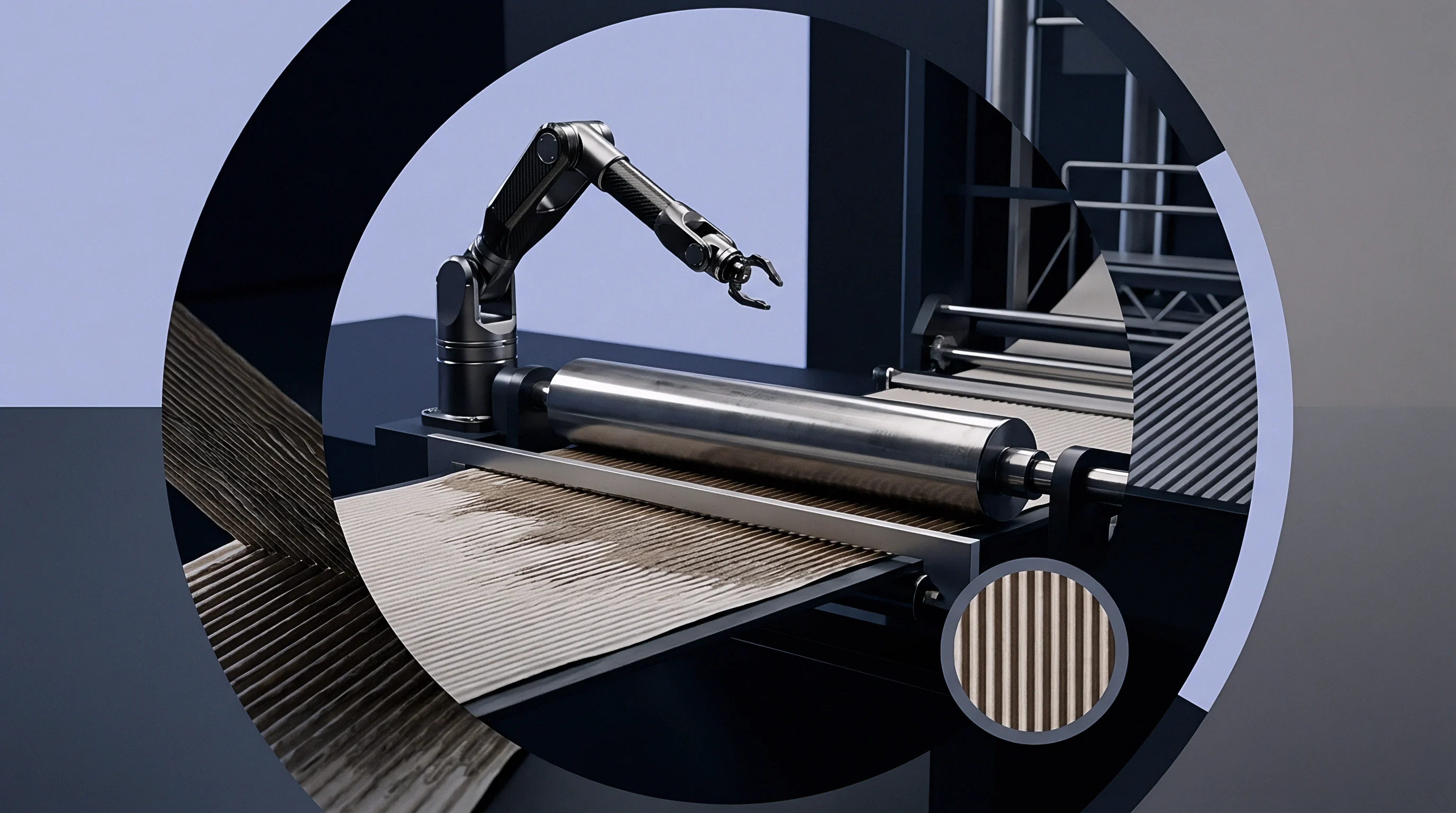
Industrial execution requires establishing acoustic calibration thresholds on the running converting floor under strict mechanical validation protocols. Consider a high-speed pharmaceutical packaging line processing 350 grams per square meter folding boxboard with a caliper of 520 micrometers. The male creasing rule carries a nominal tip radius of 0.35 millimeters, engaging a female channel width of 1.40 millimeters and a channel depth of 0.45 millimeters.
Operating line speed stands at 450 meters per minute, translating to an engagement frequency of 32 crease strikes per second on a rotary converting cylinder. Ambient factory noise reaches 88 decibels in the audible spectrum, driven by air ejectors, mechanical gears, and auxiliary trim extraction blowers.
The trial begins by running the tooling dry, with no board stock fed into the rotary nip, across the full production speed range from 100 to 500 meters per minute. Accelerometer and acoustic sensors record baseline mechanical noise profiles across the operational spectrum. Rotational harmonics of the main drive generate predictable peaks at 12 kilohertz, 24 kilohertz, and 48 kilohertz.
The digital bandpass filter window locks between 160 kilohertz and 280 kilohertz, completely rejecting machine drive frequencies. The mechanical baseline noise within this window stabilizes at a root-mean-square amplitude of 18 microvolts, setting the floating trigger threshold at 32 microvolts to prevent false positive acquisitions.
Multiply board stock enters the nip, and the line ramps to production velocity. Make-ready shims beneath the creasing rules undergo iterative adjustments of twenty-five micrometers to manipulate penetration depth while the acoustic acquisition system maps wave parameters against destructive physical crease tests:
- Shallow Rule Penetration at 0.30 millimeters penetration depth yields an acoustic energy average of 145 arbitrary units; physical testing reveals unopened middle plies with a ninety-degree crease fold resistance of 280 millinewtons, resulting in carton panel bow.
- Optimized Rule Penetration at 0.38 millimeters penetration depth generates acoustic energy between 320 and 440 arbitrary units; cross-sectional microscopy confirms continuous, controlled shear delamination across the thermo-mechanical pulp core with an intact top liner and a fold resistance of 115 millinewtons.
- Excessive Rule Penetration at 0.45 millimeters penetration depth causes acoustic energy to spike above 780 arbitrary units, marked by high-frequency burst events; visual inspection confirms fractured top liners and ruptured surface barrier coatings along the outer shoulder.
Calibration establishes a defined acoustic tolerance envelope bounded between 280 and 500 arbitrary energy units. During a production run of 150,000 sheets, the calibration system tracks real-time delamination fidelity. When a batch of board exhibiting five percent lower moisture arrives on the unwind roll, the middle plies resist delamination, and the acoustic amplitude shifts into high-frequency fracture bands.
The inline system identifies the drift within eight carton pitches, prompting the press control interface to increase female channel clearance by twenty micrometers or raise the relative humidity of the web conditioning zone.
Operating a high-speed line without dynamic acoustic baseline tracking risks whole shifts producing uncreased cartons that jam downstream automated filling machinery.

Ledger
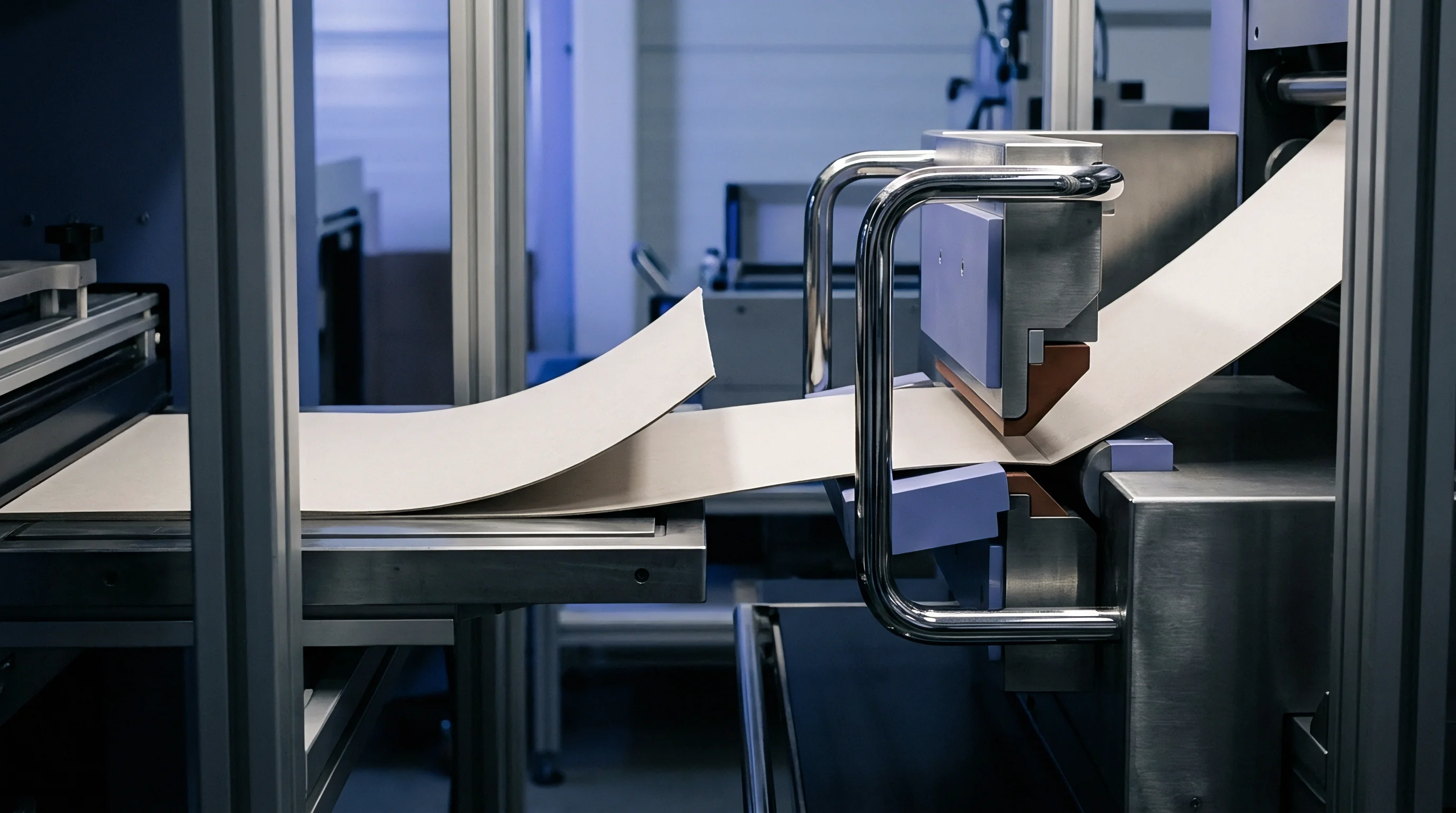
Integrating inline acoustic emission hardware introduces distinct tooling, capital, and maintenance expenses that must justify themselves through waste reduction and line availability improvements. Acoustic instrumentation for a modern four-station rotary die module requires specialized hardware: hardened piezoelectric sensors, frictionless inductive telemetry rings, high-speed field-programmable gate array signal processing units, and real-time press control software interfaces. Initial capital expenditure for a turnkey four-stream installation stands at approximately 48,000 to 65,000 USD per die-cutting line, with recurring maintenance and sensor calibration checks adding 4,000 USD annually per machine.
Cost recovery operates through scrap elimination during make-ready and high-speed drift prevention. High-speed folding carton lines running cosmetic, food, or pharmaceutical packaging run at production rates where five minutes of defective creasing creates up to 2,500 meters of unusable stock. For a 350 grams per square meter solid bleached sulfate board finished with soft-touch lamination and cold foil stamping, landed sheet costs reach 1.85 USD per square meter.
A single uncorrected liner fracture event spanning twenty minutes of undetected converting spoils over 7,400 USD in raw material, ignoring lost machine capacity and press operator labor rates charged at 240 USD per hour.
Make Ready Waste and Spoilage Dynamics
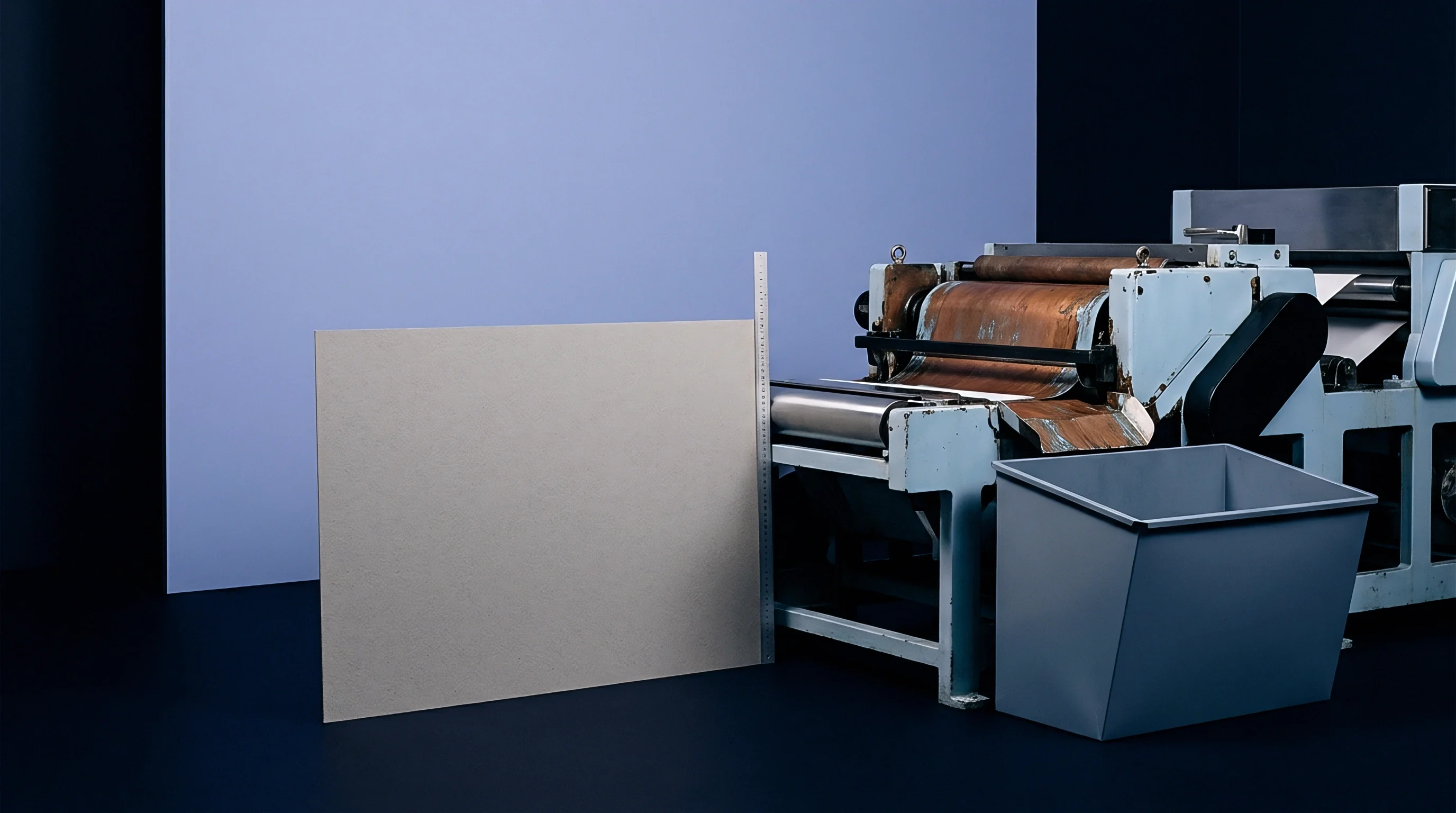
Make-ready routines traditionally rely on destructive hand-crease testing, cutting samples with a razor blade, checking fold angles with manual protractors, and running carton samples through offline L&W Crease Testers. This manual loop consumes between 45 and 90 minutes per job setup, cycling 400 to 800 sheets of substrate during impression patching. Inline acoustic emission calibration slashes make-ready scrap by providing immediate numerical verification of internal delamination upon the first-off impression strike.
Make-ready duration contracts to fifteen minutes, preserving expensive finished sheets carrying multi-pass embellishments.
The economic value compounds when considering downstream cartoning machine downtime. Pharmaceutical and consumer goods packing lines operate continuous-motion cartoners at speeds exceeding 400 cartons per minute. Cartons converted with inconsistent crease delamination exhibit erratic opening force.
If a carton fails to square up within the flight lugs, the cartoning line experiences an automated emergency stop. High-speed packaging lines charge downtime at rates between 800 and 1,500 USD per hour. A packaging converter that certifies acoustic delamination values on every shipped lot prevents line jam disputes, protecting enterprise supply agreements against severe contractual chargebacks.
Recyclability and surface barrier integrity dictate the ultimate commercial penalty. Modern barrier packaging incorporates ultra-thin water-based dispersion barriers or functional polymer skins to replace fluorochemical coatings. These functional barrier layers fracture under excessive creasing penetration before visual cracks appear in the bleached pulp base.
Microscopic acoustic burst tracking detects barrier rupture during the creasing pass. By maintaining acoustic parameters within the verified safe energy window, converters run high-barrier sustainable cartonboards without puncturing the functional barrier, eliminating field claim rejections for food oil staining or moisture ingress across retail supply chains.
Whether sensor package lifespans will survive continuous multi-year operational cycles under high-g reciprocating flatbed dies remains an open engineering inquiry.