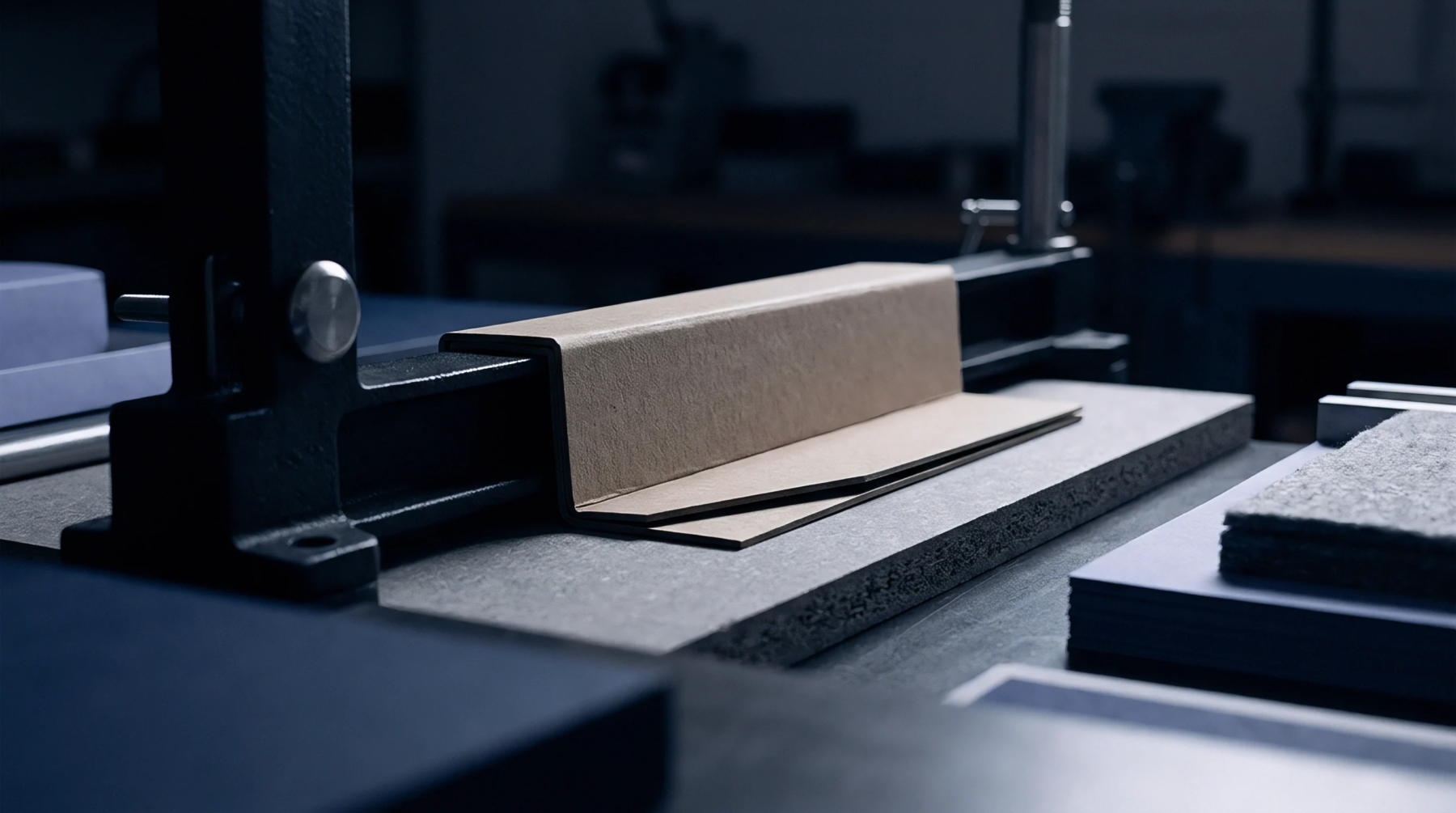
Female Channel
Die mechanics for precision extrusion define this component as the specific profile geometry in a mould that shapes the negative cavity during the forming phase. The female channel receives the molten polymer or fibrous slurry to determine the final cross section of the product. Industrial extruders employ this fixed geometry to ensure dimensional consistency across continuous production runs.
Pressure levels inside the cavity must remain uniform to prevent deformation of the outer wall as the material cools. Correct alignment between the inner core and the outer profile controls the wall thickness throughout the entire length of the substrate.
Geometric Tolerance
Accuracy during the machining of this hardware determines the flash limits for high speed filling lines. Engineers calculate the flow resistance based on the depth and width dimensions of the open slot. Deviations from the specified internal radius lead to variations in the structural integrity of the resulting tube or tray.
Surface roughness values inside the groove dictate how cleanly the material releases once the forming stage finishes. Monitoring the wear pattern on the lead edges allows operators to predict when recalibration becomes necessary. Excessive friction during the transit of the material causes thermal degradation which alters the mechanical properties of the final board or plastic sheet.
Process Output
Consistent performance depends on the thermal stability of the metal during high pressure injection cycles. The female channel maintains its physical shape under extreme load to produce an identical outcome across million-unit volumes. Variations in the cooling rate of the surrounding assembly create uneven stress distributions that warp the geometry of the finished part.
Metal fatigue at the interface indicates a loss of precision which compromises the output quality. Proper maintenance of these wear surfaces provides the primary control mechanism for dimensional conformity in packaging manufacture.