Calibrating Steel Counterplate Channel Tolerances for Heavyweight Coated Virgin Fibre Packaging
Calibrating steel counterplate channels for heavyweight virgin board sets width at 1.4 times board thickness plus rule width with 30 degree chamfers.


Groove
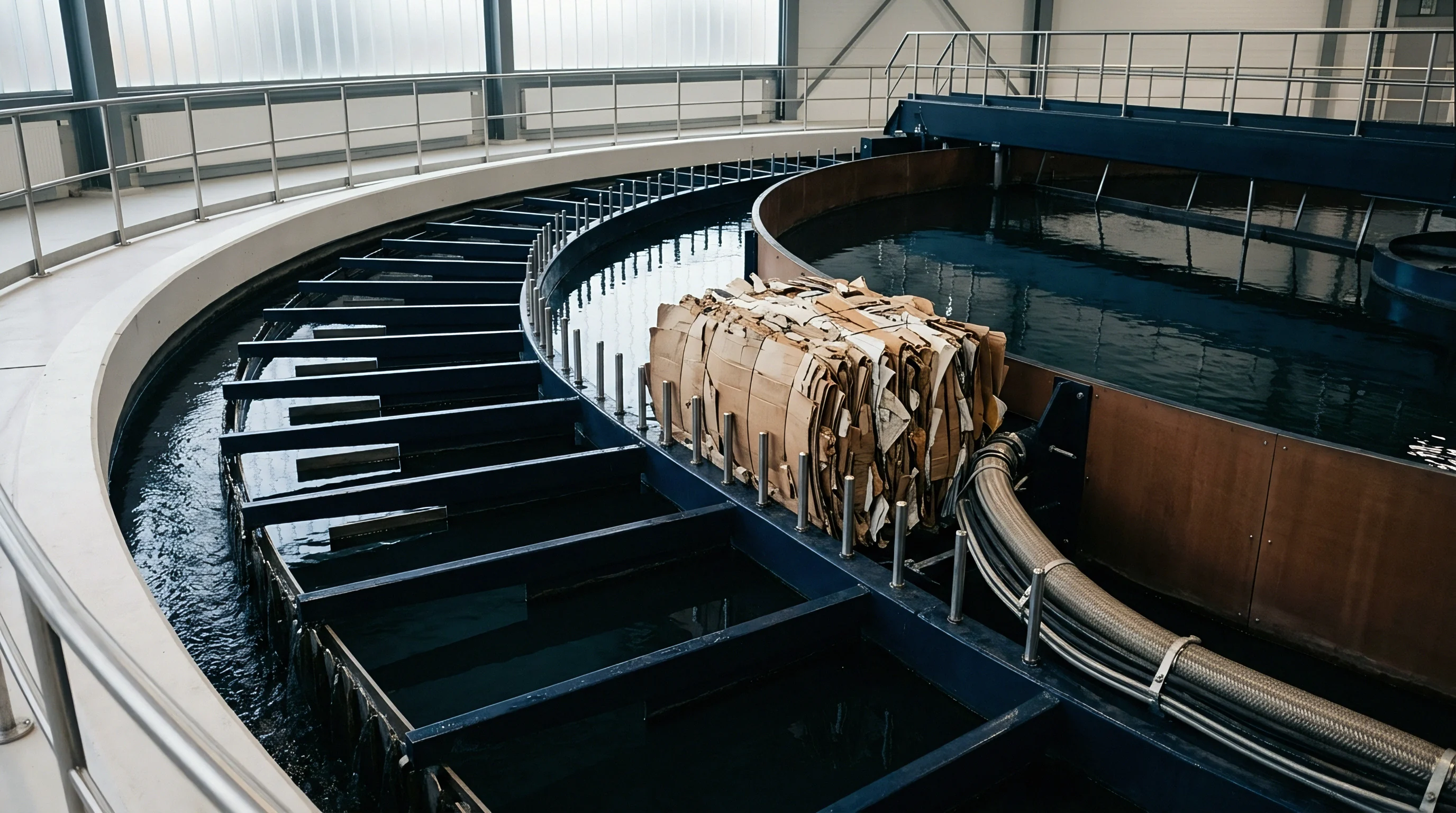
Dimensional Mechanics of Heavyweight Board Creasing
Solid bleached sulphate and folding boxboard substrates above 400 grams per square metre exhibit high bending resistance and internal structural density. Dense virgin board resists clean folding. When a steel scoring rule forces paperboard into a female channel, the material undergoes local shear deformation, delaminating internal fibre bonds to form a permanent hinge.
Standard packaging boards below 300 micrometres tolerate loose geometric approximations, but heavyweight virgin fibre layers between 450 and 800 micrometres demand exact physical clearance to prevent surface tearing and outer mineral coating fracture.
During high-speed carton erection, an improperly formed score bead produces variable folding torque, causing machine jams at throughput rates exceeding 500 cartons per minute. Standard industry formulas derived for light paperboard collapse when applied to dense virgin furnish. The ratio between board caliper, creasing rule thickness, and channel width shifts as substrate density increases.
Solid virgin fibres require deeper internal layer separation without breaching the double-coated top surface.

Calculating Channel Geometry for Coated Virgin Stock
The mathematical relationship governing female plate channel dimensions relies on paperboard thickness and rule thickness. For solid bleached virgin fibre substrates, the classical equation for female channel width sets width equal to 1.4 times the board thickness plus the rule thickness. Folding boxboard grades with mechanical pulp cores demand a multiplier of 1.5 due to higher bulk and compressibility.
Channel depth matches 1.0 times the board caliper for standard stiffness, or 0.95 times the caliper when converting high-density double-coated sheets.
Assume a converting line processes a 520 micrometre caliper solid bleached board using a 3-point creasing rule measuring 1.05 millimetres in width. Multiplying the board thickness of 0.52 millimetres by 1.4 yields 0.728 millimetres. Adding the rule thickness of 1.05 millimetres produces a target channel width of 1.778 millimetres.
The corresponding channel depth equals the board thickness of 0.520 millimetres. Deviating from this width by more than 0.030 millimetres alters the internal shear zone, resulting in either unlaminated top-coat cracking or loose, poorly defined score lines.
A wider channel width prevents top-coat splitting when converting dense solid bleached virgin board across high-speed packaging lines.
If the channel is cut too narrow, virgin fibres suffer excessive compression, forcing external tension onto the coated clay layer. If the channel is cut too wide, the score bead spreads horizontally, reducing structural score stiffness and causing carton distortion during glue application. The exact width calculation locks the shear boundary within the middle fibre layers.
Margin
CNC Milling Tolerances and Chamfer Geometries
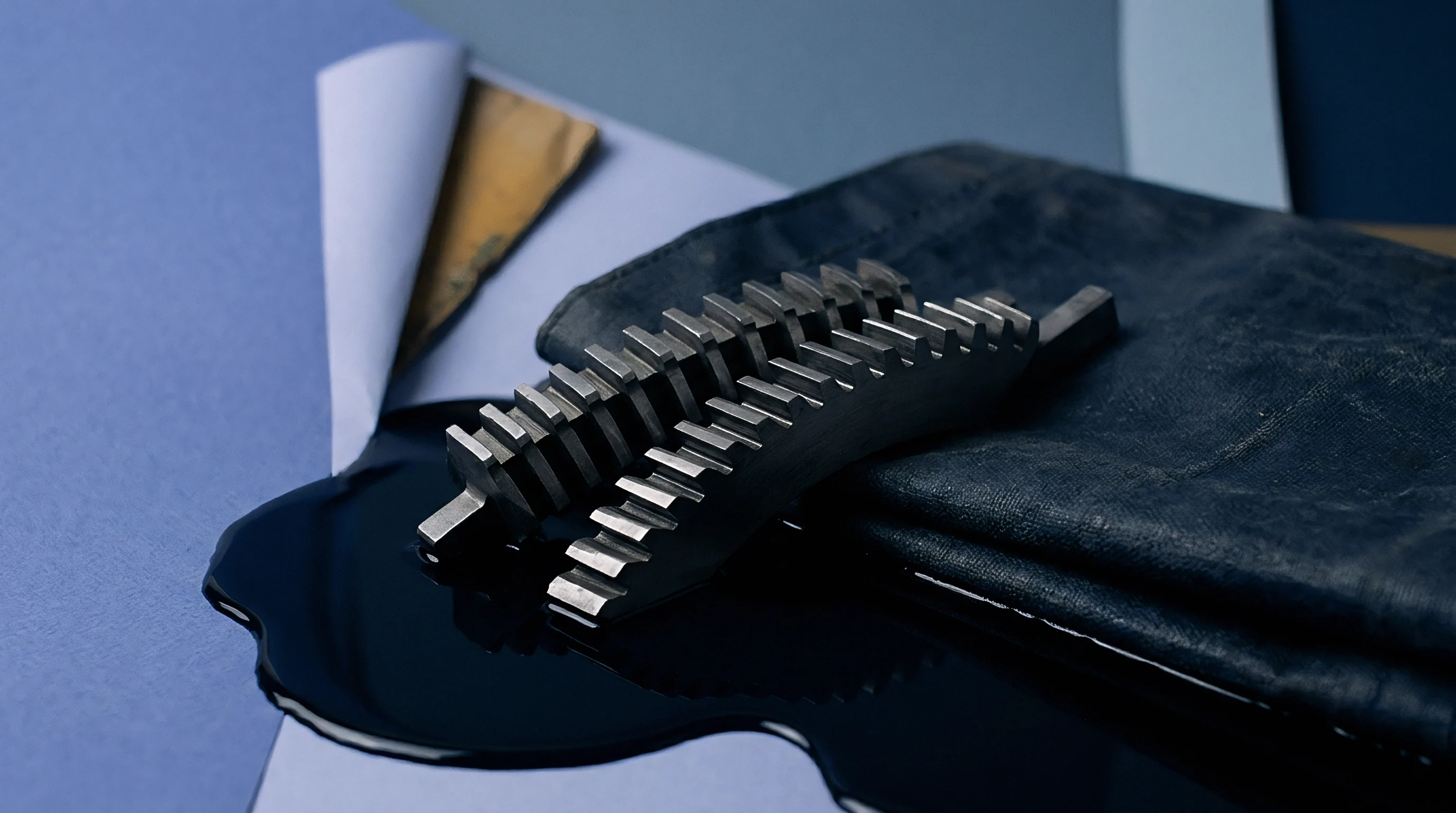
Positioning accuracy and profile finish define counterplate performance on flatbed die-cutters. Computer numerical control milling of hardened steel plates achieves channel width precision within plus or minus 0.010 millimetres across a 1400 millimetre sheet format. Conventional phenolic matrix channels exhibit lateral wall flex under continuous impression load, whereas steel walls remain rigid, maintaining consistent crease bead width over extended production runs.
| Tooling Substrate | Channel Width Tolerance (mm) | Positioning Accuracy (mm) | Maximum Run Life (Impressions) | Thermal Expansion (µm/m·°C) |
|---|---|---|---|---|
| CNC Milled Steel Plate | ±0.010 | ±0.015 | 2,000,000 | 11.5 |
| Phenolic Pertinax Plate | ±0.030 | ±0.040 | 250,000 | 22.0 |
| Press-On PVC Matrix | ±0.060 | ±0.100 | 50,000 | 65.0 |
| Data measured under atmospheric conditions of 23°C and 50% relative humidity per ISO 187 standards. | ||||
Milling the channel entry shoulder with a 30-degree to 45-degree relief chamfer eliminates sharp edges that cut into the bottom liner during creasing while eliminating matrix compression. Without a smooth entry radius, heavy impression tonnage forces virgin fibres against a hard square edge, causing shear failure along the score crease line.
Where Does Steel Counterplate Wear Shift Crease Geometry?
Friction between heavy paperboard and milled channel edges gradually alters channel geometry across multi-million impression runs. Abrasion occurs along the entry shoulder where the fibre sheet is dragged into the channel recess. Hardened steel counterplates treated with nickel-chrome plating resist edge degradation far beyond phenolic or plastic alternatives.
Machine operators inspect score beads at regular intervals to catch register drift before visual surface defects develop.
Milled steel counterplates maintain a dimensional channel tolerance within plus or minus 0.010 millimetres over a run life exceeding one million impressions.
- Coating Micro-Fissuring occurs when channel width narrows due to debris build-up, increasing tension across the outer mineral coat during 180-degree folding.
- Liner Shear Rupture develops when unchamfered channel shoulders cut directly into the reverse side plies under high impression tonnage.
- Asymmetrical Bead Formation results from register offset between the cutting die creasing rule and the female steel channel plate.
- Internal Delamination Breakdown happens when excessive channel depth prevents proper fibre compression, leaving the middle ply intact and stiff.
Score cracking on heavy virgin stock is often attributed to board dryness rather than tooling channel wear. While board moisture alters flexibility, a worn channel shoulder concentrates bending stress on the outer coating layer regardless of substrate conditioning.

Stress

Delamination Zone Dynamics and Surface Strain
Bending dense coated virgin board creates compressive stress on the inner fold radius and tensile stress on the outer face. Outer mineral coatings withstand maximum elongation values between 1.2 percent and 1.8 percent before physical cracking occurs. Proper creasing establishes a controlled internal delamination zone, allowing internal fibre plies to slide over one another during folding.
By spreading internal layers apart despite caliper variations, the outer coated liner experiences reduced elongation during cartoon assembly.
Z-direction tensile strength, measured under ISO 15754, indicates the internal bonding force of virgin paperboard plies. High-strength solid bleached boards possess Z-directional values between 350 and 500 kilopascals. Higher internal bond strength requires precise channel sizing to trigger internal ply separation.
If the female counterplate channel lacks sufficient depth, the creasing rule cannot displace the dense central plies, forcing all bending strain onto the outer double-coated surface layer.
Maintaining test atmospheric conditioning under ISO 187 at 23 degrees Celsius and 50 percent relative humidity prevents premature liner cracking during score verification.
Relative Humidity Modulation of Fiber Shear
Virgin fibres adjust their moisture content in response to ambient relative humidity, shifting board caliper and flexibility as moisture loss embrittles outer mineral coatings. Lowering pressroom relative humidity from 50 percent to 30 percent reduces board moisture content from 6.5 percent to below 4.5 percent, raising bending stiffness according to ISO 2493 standards. Dry fibre networks resist shear deformation during creasing, requiring wider female channels to avoid surface fracturing.
- Ultra High Volume Runs demand hardened CNC steel plates with registered dowel positioning to maintain channel width integrity across multi-shift production cycles.
- Moisture Sensitive Virgin Stock requires dynamic channel width adjustment formulas to account for seasonal pressroom humidity variations and board caliper swelling.
- Heavy Weight Caliper Bands above 600 micrometres demand 4-point creasing rules combined with 45-degree chamfered relief channels to distribute peak shear force.
- Recyclable Barrier Coated Formats necessitate smooth counterplate entry radii to prevent micro-fracturing water barrier dispersion layers applied to virgin liners.
How does dynamic moisture absorption across cross-border transit cycles alter the long-term folding memory of creased virgin board packaging?


Platen

Register Calibration across Flatbed Die-Cutters
Steel counterplate installation onto flatbed die-cutter chase plates relies on hardened steel registration pins to match male creasing rules with female steel channels, preventing improper relief angles that shear virgin liners. A positional error of 0.025 millimetres creates uneven pressure on score shoulders, causing the crease bead to lean toward one side. Asymmetrical score beads produce leaning cartons on automatic filling machines.
| Caliper Range (µm) | Rule Thickness (pt / mm) | Target Channel Width (mm) | Steel Counter Depth (mm) | Entry Chamfer Angle (°) |
|---|---|---|---|---|
| 450 – 500 | 2 pt / 0.71 mm | 1.41 – 1.48 | 0.450 | 30 |
| 501 – 600 | 3 pt / 1.05 mm | 1.75 – 1.89 | 0.520 | 30 |
| 601 – 700 | 3 pt / 1.05 mm | 1.89 – 2.03 | 0.650 | 45 |
| 701 – 800 | 4 pt / 1.42 mm | 2.40 – 2.54 | 0.780 | 45 |
Platen pressure setting determines score depth. Flatbed platen presses utilize fine tonnage control to compress paperboard into steel counter channels. Excessive impression tonnage crushes board structure outside the creasing area, diminishing overall carton stacking strength.
Insufficient tonnage produces shallow crease beads with poor fold memory, increasing opening force on automatic cartooning machinery.
Inadequate channel chamfering concentrates shear force along the crease shoulder, rupturing the external mineral coating layer.

Impression Depth Adjustment Protocols
Setting up steel counterplates requires structured calibration to prevent tooling damage, material waste, wall crushing from rule misalignment, or matrix displacement and register drift at high press speeds.
- Clean the steel platen baseplate thoroughly with solvent to eliminate oil residues, paper dust, and micro-burrs before mounting.
- Mount the laser-cut steel counterplate onto the registration pins located on the cutting plate, verifying flush contact across the entire bed.
- Lower the platen press impression tonnage to baseline level before introducing the first trial sheet of virgin fibre substrate.
- Increase impression pressure incrementally in 0.020 millimetre steps until the creasing rule achieves full penetration into the steel channel depth without crushing adjacent board areas.
- Inspect cross-sectioned crease samples under optical magnification to verify that internal ply delamination occurs cleanly without external top-coat splitting.
Failing to verify registration alignment between the creasing rule and steel counterplate destroys precision tooling edges within a single impression stroke.
Costing

Tooling Amortisation across High Volume Packaging Runs
Initial capital outlay for CNC milled steel counterplates ranges between 600 and 1200 Euros per set, compared to 150 Euros for phenolic Pertinax plates and 30 Euros for press-on PVC matrix strips. High volume orders amortise initial steel counterplate costs rapidly across production runs exceeding 500,000 units. Unit tooling costs drop below 0.001 Euros per carton, while preventing costly machine downtime caused by matrix failure.
| Tooling Technology | Initial Plate Cost (EUR) | Press Make-Ready Time (min) | Scrap Rate Target (%) | Break-Even Point (Impressions) |
|---|---|---|---|---|
| CNC Milled Steel Counterplate | 950 | 15 | 0.15 | 350,000 |
| Phenolic Pertinax Matrix | 220 | 40 | 0.80 | 75,000 |
| Standard Cut PVC Strips | 45 | 75 | 2.10 | Baseline |
Substrate moisture directly alters bending stiffness. Sourcing heavy coated virgin fibre board involves material expenditures ranging from 1400 to 2200 Euros per metric tonne. Waste generated through crease cracking directly degrades job profitability.
Steel counterplates reduce waste by maintaining fixed dimensional tolerances throughout multi-day converting runs.

Waste Arithmetic of Crease Failure
High-speed packaging lines running at 600 cartons per minute experience costly shutdowns when defective scores split or fail to fold at target torque limits. A single packaging line stoppage costs approximately 150 Euros per minute in lost operational capacity. Utilizing precision steel counterplates eliminates crease bead inconsistency, protecting converter margins against performance penalties written into high-volume supply contracts.
Standard purchase terms for heavy virgin board converting dictate that dimensional crease channel tolerances must comply strictly with DIN 55437 crease quality requirements to guarantee automated line performance.