Fibre Based Packaging Fees Set by the Substrate You Specify
Substrate selection fixes structural caliper, web trim yield, repulpability, and EPR eco-modulation fee tiers, governing net landed carton costs.

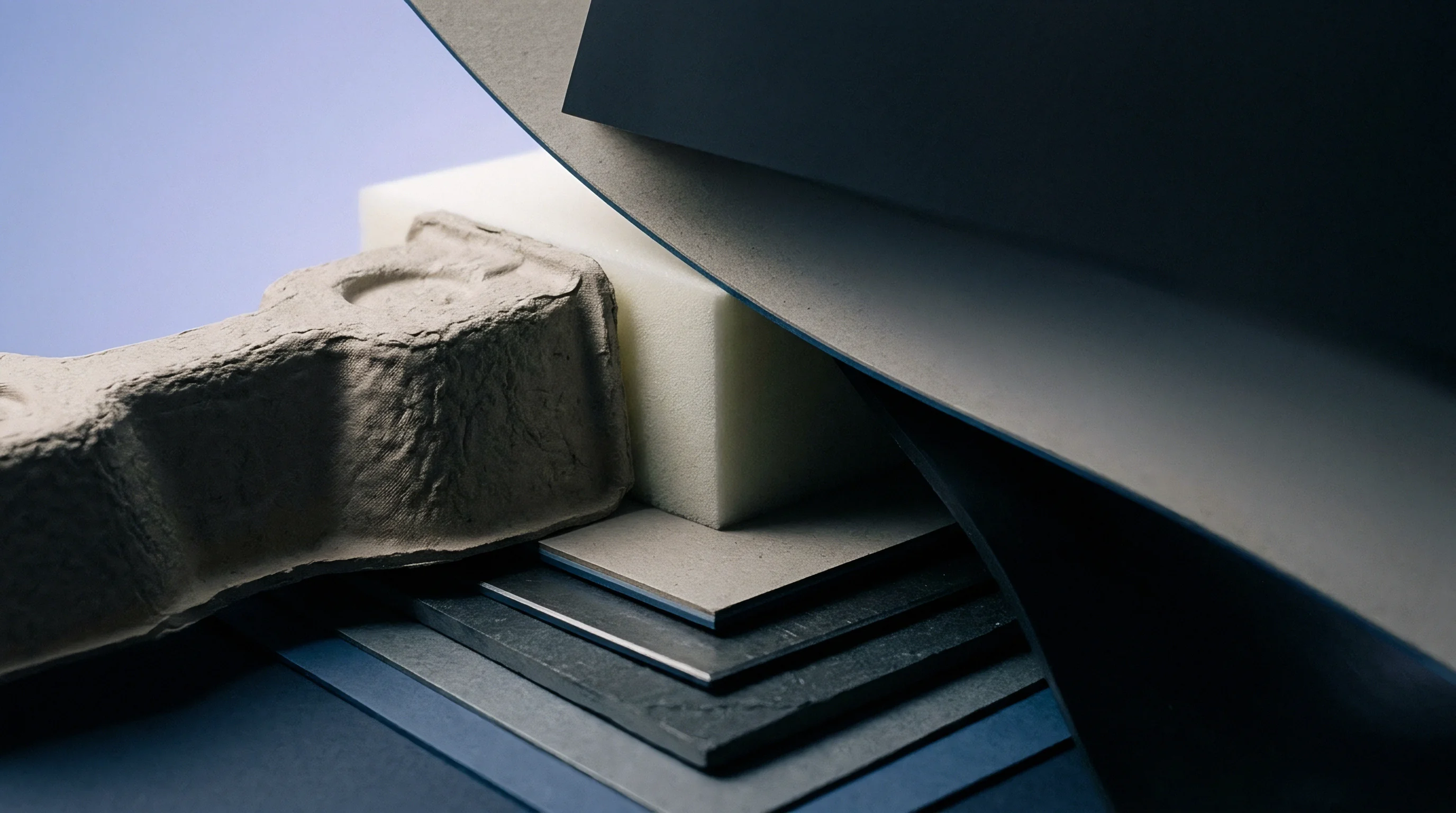
Furnish
Choosing a paperboard furnish sets mechanical performance, converting speeds, and regulatory risk long before plates hit the sheet. Fibre composition governs compression strength, while chemical additives manage moisture barriers and fluid holdout. Solid bleached sulphate from virgin hardwood and softwood pulps provides high tear strength per unit grammage; coated recycled board relies on shorter fibres that trade off bending stiffness at equivalent mass.
A 300 gram per square metre solid bleached sheet, for instance, measures 380 micrometres under ISO 534, yielding a specific volume of 1.27 cubic centimetres per gram. Switching to a folding boxboard with a mechanical pulp core at the same basis weight increases caliper to 430 micrometres ~ raising specific volume to 1.43 cubic centimetres per gram and bumping machine-direction bending resistance by 28 percent. That extra bulk allows structural designers to cut basis weight to 260 grams per square metre without sacrificing stack strength, trimming both raw material consumption and freight costs.
Because forming wires align fibres along the machine line, paperboard carries a machine-to-cross tensile ratio between 1.8 to 1 and 2.5 to 1. ISO 1924 tensile testing measures peak force to failure on a 15 millimetre strip conditioned at 23 degrees Celsius and 50 percent relative humidity. Tested this way, a 200 gram per square metre virgin bleached kraft liner hits 16.5 kilonewtons per metre in the machine direction and 7.2 kilonewtons per metre in the cross direction.
An equivalent recycled testliner yields just 9.8 kilonewtons per metre MD and 4.1 kilonewtons per metre CD. Virgin pulps retain longer fibres ~ averaging 2.5 to 3.2 millimetres in softwoods like Pinus taeda ~ while recycled furnishes contain fibres degraded to 0.8 to 1.4 millimetres through repeated repulping. This reduction in inter-fibre hydrogen bonding lowers internal bond strength (measured by Scott Bond testing under TAPPI T569), often triggering scoreline delamination or cracking when folding heavier calipers at speed.

Sourcing Yield and Structural Mass
Paperboard purchasing contracts trade on mass ~ charging per metric tonne ~ even though converting lines consume material by surface area. ISO 536 grammage verification relies on precision-cut 100 square centimetre samples weighed on a calibrated lab balance. Standard mill supply contracts allow a basis weight tolerance of plus or minus 4 percent across a run.
Should a 350 gram per square metre board arrive at its 364 gram upper limit, yield drops 3.8 percent per tonne. On a run of one million folding cartons with a 0.12 square metre blank, that upward grammage drift increases required stock from 42 metric tonnes to 43.68 metric tonnes. Virgin furnishes maintain far tighter basis weight profiles across the web than recycled grades, where variable filler loads and pulping swings introduce local density variations.
| Substrate Grade | Fibre Origin | Grammage (g/m²) ISO 536 | Caliper (µm) ISO 534 | Bulk (cm³/g) Calculated | MD Bending Resistance (mN) ISO 2493 | Scott Bond (J/m²) TAPPI T569 |
|---|---|---|---|---|---|---|
| Solid Bleached Sulphate (SBS) | 100% Virgin Chemical Hardwood/Softwood | 300 | 380 | 1.27 | 210 | 185 |
| Folding Boxboard (FBB) | Virgin Chemical Outer / Mechanical Core | 300 | 460 | 1.53 | 340 | 140 |
| Coated Recycled Board (CRB) | 100% Recycled Recovered Fibre | 350 | 420 | 1.20 | 180 | 105 |
| Uncoated Kraft Liner (UKL) | 100% Virgin Unbleached Softwood | 175 | 245 | 1.40 | 160 | 220 |
| Testliner Grade 2 | 100% Recycled Deinked Fibre | 175 | 225 | 1.29 | 110 | 115 |
Recycled furnishes inherently carry mineral fillers ~ calcium carbonate, kaolin clay, and talc ~ retained from previous print coatings and additives. While fillers lower furnish costs and provide surface smoothness and opacity, they add dead weight without strengthening the bonded fibre network. Ash testing under ISO 1762 incinerates samples at 525 degrees Celsius to measure inorganic residues.
High-grade virgin sulphate board stays below 1.5 percent ash by mass, mostly from titanium dioxide in the coating, whereas coated recycled board regularly shows 12 to 22 percent ash. This inorganic loading depresses the ISO 1974 specific tear index from 8.5 millinewton square metres per gram on virgin unbleached kraft to 4.2 on recycled containerboard, raising web break risks on high-speed rotogravure presses and increasing makeready waste.
Internal or size-press chemical sizing determines how fast fluids penetrate the porous sheet. Internal sizing with alkyl ketene dimer or alkenyl succinic anhydride emulsions alters fibre surface energy, pushing water contact angles past 90 degrees. Liquid uptake is measured through Cobb testing under ISO 535 over set exposure windows.
Unsized board exposed to a standard 60-second Cobb test absorbs over 150 grams of water per square metre, leading to rapid swelling and structural collapse under cold-chain condensation. Specifying hard-sized board with a Cobb 60 rating under 25 grams per square metre retains structural rigidity in refrigerated transit. For saturated environments, wet-strength resins like polyamide-epichlorohydrin crosslink during drying to form water-insoluble covalent bonds across fibres; fully soaked virgin carrier board treated this way retains up to 30 percent of its dry tensile strength, preventing carton failures on humid routes.
A double-coated solid bleached sulphate board specified at 300 grams per square metre retains 91 percent of its ISO 1924 tensile strength after 30 minutes of TAPPI T441 Cobb testing.
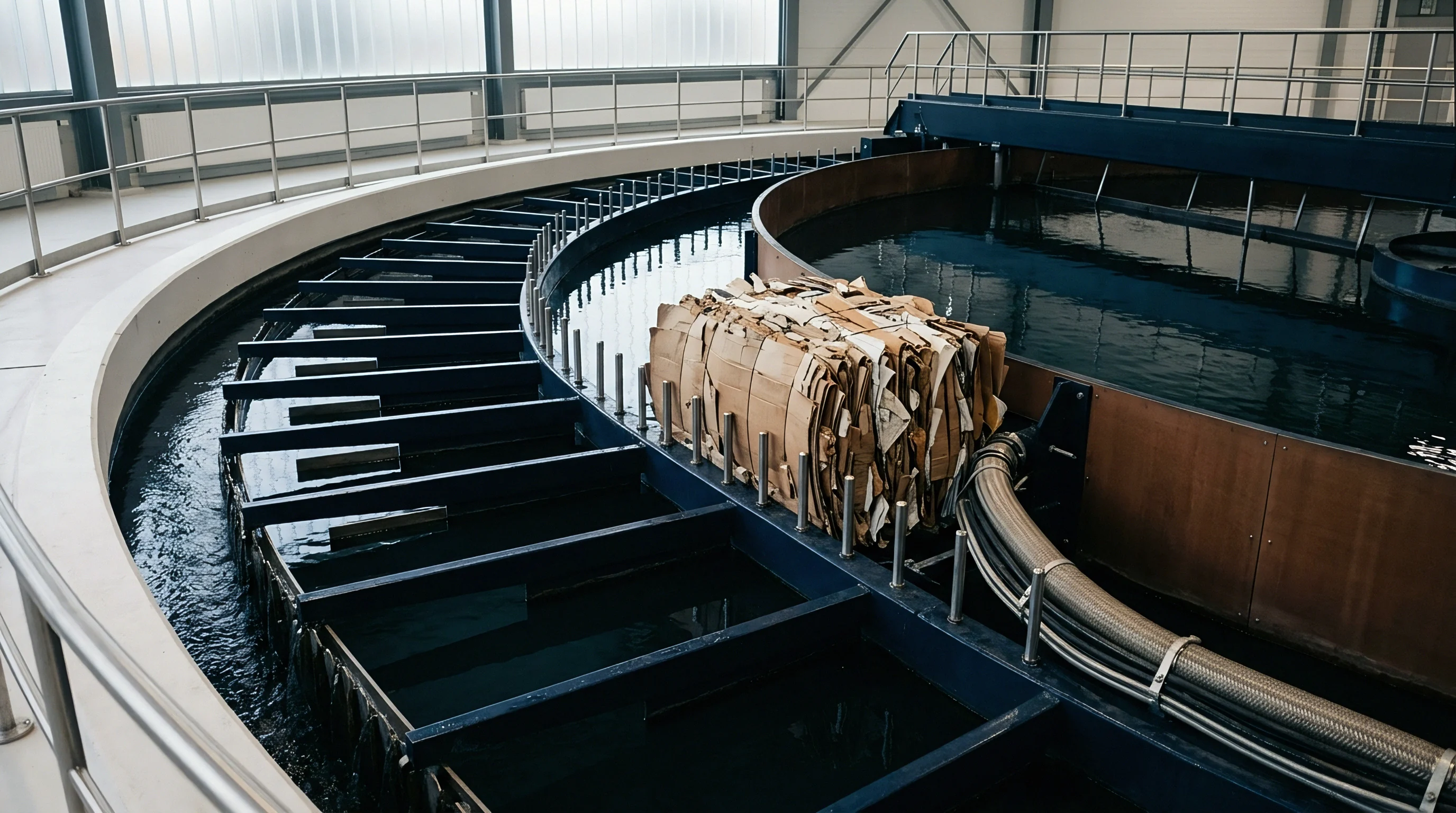
Polymer Laminates and Dispersion Barriers
Demanding barrier requirements historically pushed converters toward low-density polyethylene extrusions, foil laminations, and fluorochemical treatments. Liquid packaging board typically incorporates a 15 to 25 gram per square metre extruded low-density polyethylene layer to block moisture and oils. During extrusion coating, molten resin is forced through a flat die onto the moving board at temperatures up to 320 degrees Celsius to anchor into the surface fibres.
Although these layers achieve water vapour transmission rates below 5 grams per square metre per 24 hours (tested under ISO 15106 at 38 degrees Celsius and 90 percent relative humidity), the continuous film creates serious repulping bottlenecks. Standard recycling mills use ambient-water hydrapulpers and mechanical shear over 15 to 20 minute cycles. Continuous polymer skins resist this agitation, fouling rotor assemblies and plugging coarse screen extraction plates with unseparated debris.
Aqueous dispersion coatings bypass these recycling issues while still providing functional barrier performance. Formulations based on water-borne styrene-butadiene latex, acrylic copolymers, or polyhydroxyalkanoates are laid down via blade, rod, or curtain coaters, coalescing during drying into a continuous protective matrix across the fibre structure. A two-pass water-based dispersion applied at 8 grams per square metre total dry weight achieves a Kit Test rating of 12 under TAPPI T559, matching the oil holdout of fluorochemical treatments without the persistent environmental footprint.
In a hydrapulper, these coatings break into discrete micro-particles that wash through 0.15 millimetre screen slots and bind to clarifier flocs for clean removal during water treatment.
Laminating aluminum foil with polyurethane adhesives introduces even steeper hurdles for secondary fibre recovery. While thin metallic foils (typically 6 to 9 micrometres thick) provide an exceptional barrier against light, oxygen, and moisture ~ yielding oxygen transmission rates below 0.1 cubic centimetres per square metre per 24 hours under ISO 15105 ~ recovering the fibre requires specialized chemical or thermal separation lines outside conventional paper streams. As a result, foil-laminated specifications incur heavy fee penalties under current Extended Producer Responsibility frameworks owing to poor practical recyclability and high processing scrap rates.
Surface Energy and Ink Receptor Layers
Ink transfer, dot structure, and film adhesion depend directly on surface energy, micro-smoothness, and porosity. Raw, uncoated paperboard has a rough surface profile, regularly exceeding 800 millilitres per minute under Bendtsen testing (ISO 8791-2). Running offset litho directly on uncoated stock leads to vehicle drain into the core, producing low optical density, dot gain over 25 percent at the 50 percent tint level, and flat colour reproduction.
Adding mineral coatings based on kaolin clay, calcium carbonate, and synthetic binders smooths out this topography, bringing Parker Print-Surf roughness below 1.5 micrometres at 1000 kilopascals clamping pressure (ISO 8791-4). The resulting pore structure absorbs ink carriers predictably while holding pigment on the surface for sharp dot definition, high gloss, and clean drying times.
Coating chemistry dictates the board’s surface energy, determining how well liquid inks, varnishes, and cold-foil adhesives wet out. Critical surface tension is assessed using dyne pens under ASTM D2578. Standard mineral coatings generally measure between 38 and 44 dynes per centimetre.
Introducing silicone barrier additives or heavy wax sizing can pull surface energy down below 30 dynes per centimetre, causing water-based flexographic inks to bead, pinhole, or flake off. Converters running high-tack UV-curable inks monitor these values closely, often using inline corona discharge stations to bump the surface energy past 48 dynes per centimetre before printing.
Coating formulation also impacts crease flexibility on high-speed folder-gluers. When a box blank undergoes a 180-degree fold, the outer coating layer stretches under tension while the inner plies compress. Brittle, high-carbonate coatings formulated with insufficient latex binder will micro-fracture along the scoreline, exposing the dark core of recycled board or raw brown kraft beneath.
Formulating with fine-ground calcium carbonate and flexible synthetic binders preserves coating elongation across cut and score lines. Packaging specifications should establish clear binder-to-pigment ratios and coating weight ceilings to avoid fold-line flaking during automated cartoning.
Batch-to-batch stiffness variations below eight percent fall within standard trade customs, reflecting seasonal moisture shifts in raw pulp stores.


Deckle
Machine width and trim scheduling largely determine the commercial yield and layout efficiency of any packaging run. Paperboard machines produce parent reels at deckle widths between 2.5 and 8.5 metres. When a packaging buyer orders a specific carton footprint, the converter lays out the master sheet to fill the available machine deckle as closely as possible.
If a sheet format requires 2.30 metres of a 2.50-metre machine width, the remaining 20 centimetres becomes side-trim waste ~ an immediate 8 percent deckle loss slitter-cut at the winder and sent back to the broke pulper. Mills pass this unused capacity directly back to the customer through small-order upcharges, higher pricing per metric tonne, or restrictive minimum order quantities that force unwanted stock purchases.
Parent rolls carry inherent cross-machine physical variations stemming from headbox hydraulics and drying cylinder tension profiles. Basis weight and caliper vary naturally across the web, forming distinct edge-to-centre profiles. Edge zones experience unconstrained drying compared to the center sheet, leading to higher localized shrinkage and shifting fibre orientation angles.
Samples analyzed across the full deckle under ISO 536 often show basis weight rising by as much as 3.5 percent toward the deckle edges, accompanied by cross-direction caliper swings of 15 micrometres. Converting lines set up for centre-web caliper can experience feed jams, misfeeds, or uneven impression pressure when processing edge-lane sheets.
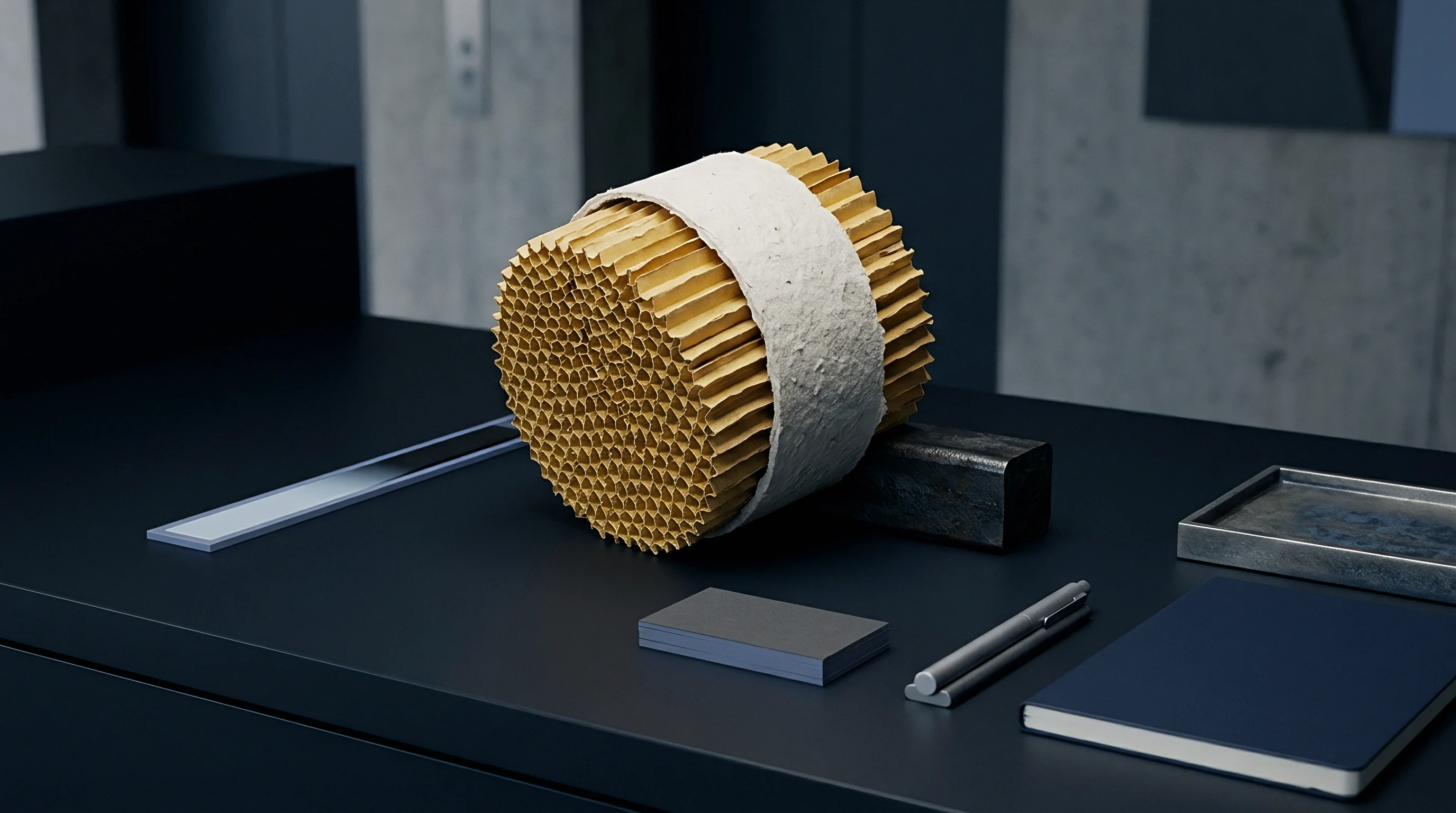
Trim Efficiency and Web Width Optimization
Maximizing yield means aligning press sheet dimensions to available mill deckles. Converting plants cut master sheets from parent reels using inline mill sheeters or offline web-fed sheeters. For example, a 1020 millimetre by 1420 millimetre press layout requires a 1430 millimetre web width once a 10 millimetre edge trim allowance is factored in.
On a 4500 millimetre mill deckle, running three 1430 millimetre webs uses 4290 millimetres, leaving 210 millimetres of unused edge trim ~ a 4.67 percent material loss. By coordinating production runs with other orders or altering blank dimensions by just a few millimetres to fit four widths across a 5800 millimetre deckle, trim waste can be brought under 1.2 percent, significantly trimming raw material costs.
Non-uniform cross-machine shrinkage creates structural differences from one side of a parent roll to the other. During drying, individual wood fibres shrink transversely by 5 to 15 percent, compared to less than 2 percent along their length. Because the outer edges of the paper web dry with minimal restraint, edge-lane board exhibits poorer dimensional stability and greater moisture responsiveness than centre-cut material.
Under ISO 8226 hygroexpansivity testing (cycling samples between 33 percent and 84 percent relative humidity), edge stock shows up to 40 percent greater cross-direction movement. In offset litho production, dampening water applied to these edge-cut sheets causes localized fan-out, pulling multi-colour printing units out of register and muddying fine graphics.

Cross Direction Stiffness and Score Integrity
Machine-direction fibre alignment creates substantial differences between MD and CD bending resistance. Taber stiffness testing under ISO 2493 measures the bending moment required to deflect a 38 millimetre wide strip by 15 degrees over a 50 millimetre span. A 350 gram per square metre solid bleached board typically tests at 24.5 millinewton-metres in the machine direction, but only 11.2 millinewton-metres in the cross direction.
Die-cutting layouts must place main load-bearing creases perpendicular to the machine direction; placing primary vertical scorelines parallel to the grain risks carton sidewall bowing, cutting warehouse pallet stack strength by as much as 35 percent.
Scoring paperboard forms a functional hinge by delaminating the internal plies while keeping surface coatings intact. Score quality is checked using depth gauges and creasing dies under controlled force. Inadequate rule penetration leaves internal plies bonded together, producing high folding resistance and ruptured surface coatings along the crease apex.
Excessive penetration, however, cuts through the back ply, destroying hinge integrity and causing carton skewing during high-speed erection on packaging lines. Clean delamination depends on balancing rule geometry against internal ply bond strength.
Contractual compliance with ISO 187 conditioning mandates that board sample testing occurs exclusively at 23 degrees Celsius and 50 percent relative humidity prior to formal rejection of non-conforming reels.
The crease stiffness ratio compares the force required to fold a creased sample 90 degrees against the force needed to bend an uncreased piece of the same board. Target ratios generally sit between 50 percent and 70 percent of original board stiffness. Recycled board, made of shorter, degraded fibres, exhibits a far narrower creasing window than virgin grades.
Weak Z-direction tensile strength in recycled sheets causes premature internal shearing under the creasing rule, yielding loose, spongy hinges that jam automatic carton feeding magazines. Sourcing specifications for recycled board should include strict Z-direction tensile floors under TAPPI T541 to guarantee stable scoring on fast cartoning machinery.
Incoming quality control must catch roll defects before material reaches the press or sheeter. Receiving inspections check for roll telescoping, tension bands, damaged cores, and moisture streaks. Profile testing with a Schmidt rebound hammer across the roll face identifies localized tension spikes caused by cross-web caliper ridges.
Reels with uneven hardness profiles cause web flutter, lateral register drift, and web breaks on rotary die-cutters. Cross-web thickness shifts can also stall folder-gluers whenever board caliper deviates from die clearance by more than five percent.
Ambient moisture shifts during transit or unconditioned warehouse storage can severely distort paperboard rolls. When cold rolls enter a heated pressroom, ambient humidity condenses against the unprotected outer wraps and roll edges. This absorbed moisture leads to fibre swelling, producing wavy edges, tight centres, and moisture bands across the sheet.
Under ISO 287, moisture checks require taking core-to-surface samples immediately upon stripping the protective wrapper. Packaging grades are typically manufactured to an equilibrium moisture content of 6.5 to 7.5 percent by weight. If unconditioned stock sits in environments exceeding 65 percent relative humidity, moisture content can climb beyond 9.5 percent, reducing bending stiffness by up to 20 percent and causing curl during ink drying.
Surface picking occurs on press when the tack of heavy litho inks exceeds the Z-directional surface strength of the coating layer. Pressroom surface strength is quantified with an IGT pick tester under ISO 3783, which drives an inked printing disc against the board under increasing velocity and set pressure. If the surface bond is inadequate, high-tack inks rip coating flakes or top-ply fibres straight off the sheet, leaving white voids in solid ink coverage and contaminating ink fountains.
Specifying minimum IGT pick speeds above 1.2 metres per second with medium-viscosity oils avoids picking issues during heavy ink laydowns.
Edge wicking along glue seams occurs when unsealed cut edges draw in atmospheric moisture or product liquids. Fluid ingress along cut edges weakens adhesive bonds at carton side seams. Cold-set polyvinyl acetate emulsions applied to coated or hard-sized boards depend on specific open and setting windows.
If porous, cut-edge fibres pull water out of the adhesive emulsion too quickly, the polymer cannot form a continuous film, leading to seam failure under humidity shifts. Defining edge-wicking thresholds via index penetration testing ensures structural joint reliability throughout the distribution chain.
Accepting three unconditioned reels of coated folding boxboard that bowed during summer transit incurred twelve thousand euros in secondary die-cutting fees.

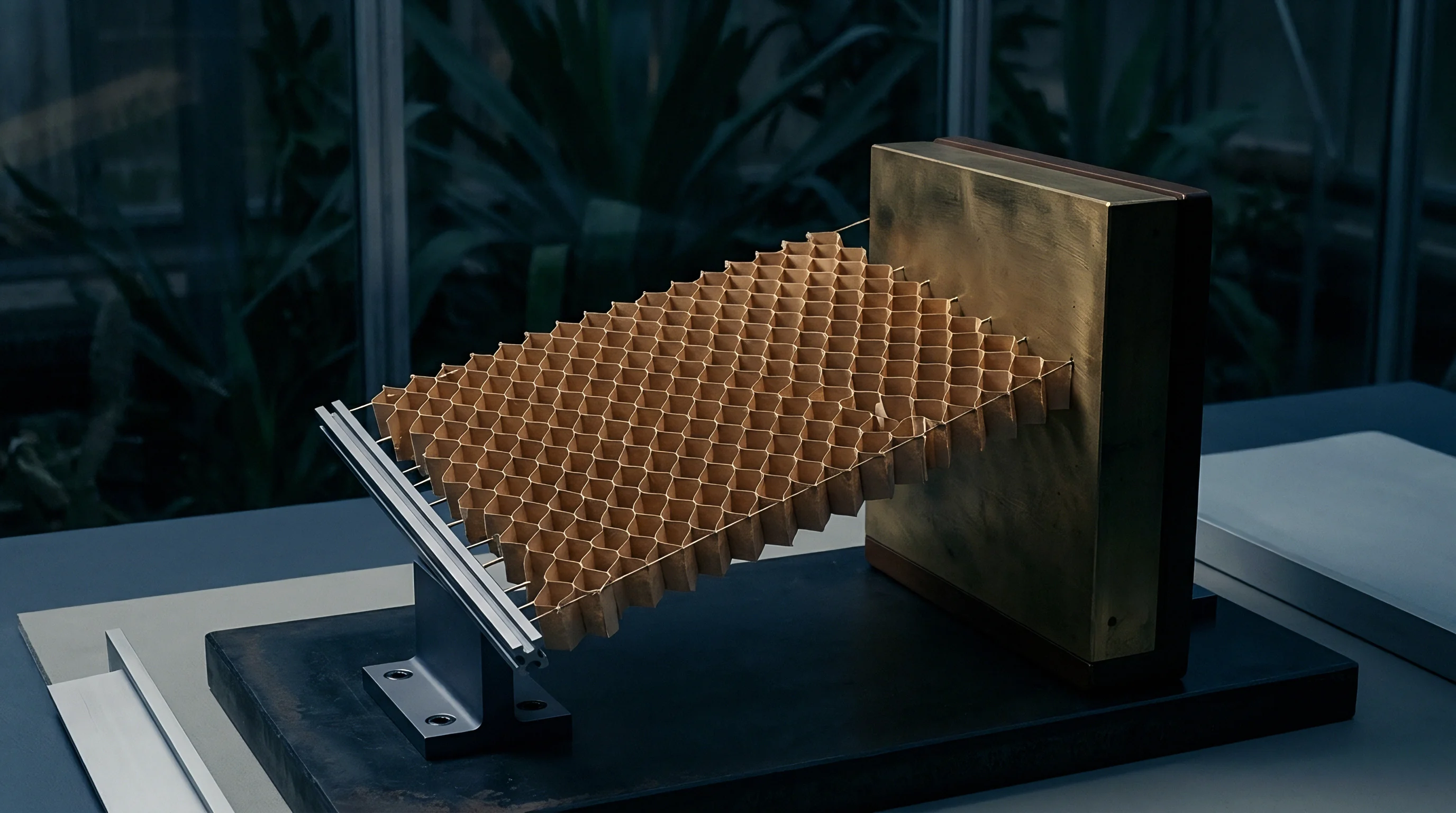
Modulation
Extended Producer Responsibility legislation ties packaging fees directly to the chemical and structural makeup of the specified substrate. Whereas older systems charged flat tariffs per metric tonne of paperboard placed on the market, modern frameworks ~ such as French CITEO rules, UK EPR regulations, and German ZSVR guidelines ~ use eco-modulated fee scales that penalize hard-to-recycle designs. A mono-material paperboard carton carrying simple mineral coatings sits in the lowest baseline fee tier.
Introducing non-separable polymer laminations, aluminum foil layers, insoluble adhesives, or heavy wax barriers shifts the carton into penalized tiers, increasing compliance costs per tonne by as much as 300 percent.
Eco-modulation schemes assess repulpability and usable fibre yield using standardized lab disintegration methods like PTS-RH 021/97, CEPI Version 2, and Aticelca 501/19. In these procedures, samples undergo hydrapulping at 40 degrees Celsius for 10 minutes at 5 percent stock consistency, and the resulting slurry is washed across a 0.15 millimetre screen to separate papermaking fibres from coarse contaminants and insoluble residues. Substrates yielding over 95 percent usable fibre by mass earn maximum fee discounts.
Substrates yielding under 80 percent face heavy surcharges, and anything under 60 percent is categorized as non-recyclable, triggering maximum statutory disposal tariffs.
Extended Producer Responsibility Tariff Schedules
European regulatory bodies enforce precise quantitative benchmarks for substrate recyclability. Under the European Union Packaging and Packaging Waste Regulation proposals, packaging formats must meet strict recyclability criteria by 2030 to be sold commercially. Recyclability Performance Grades run from Grade A (yields at or above 95 percent) down to Grade E (yields below 70 percent).
Grade A formats secure the lowest EPR tariffs, whereas Grades D and E carry heavy surcharges intended to offset secondary sorting and waste incineration costs.
Consider a folding carton made from 100 percent solid bleached sulphate with a water-based dispersion barrier: it qualifies as Grade A, incurring an EPR fee of roughly 80 euros per metric tonne across major European markets. Specifying that same carton with a 12 percent polyethylene extrusion layer drops its rating to Grade C or D under eco-modulation scoring, raising the EPR tariff to more than 240 euros per metric tonne. On top of that, the plastic fraction faces standalone plastic packaging taxes in markets like the UK and Spain, adding an extra 200 to 800 pounds per metric tonne on the polymer weight.
How Do Barrier Coatings Shift Eco Modulation Tiers?
Barrier chemistry plays a decisive role in repulping efficiency and resulting EPR fee tiers. Extruded low-density polyethylene coatings remain as continuous plastic sheets during hydrapulper disintegration. Because polyethylene does not break down or dissolve in water, it stays behind as large plastic flakes.
While mills with slotted screens and high-density cleaners can extract these flakes, high corona pretreatment or strong tie-layer adhesives can cause fibres to cling tightly to the discarded plastic, dragging total recovered fibre yield below the 85 percent compliance benchmark.
By contrast, dispersion barrier coatings formulate acrylic or vinyl acetate copolymers to break down under mild alkaline pulping conditions. The barrier fractures into microscopic, non-tacky particles that wash free of the fibres without blinding pulp screens. When tested under Aticelca 501/19, a certified dispersion-coated board leaves coarse screen residue below 1.5 percent and produces zero macro-stickies, earning an Aticelca Class A rating and securing the lowest EPR fee tier across European compliance schemes.
| Substrate Specification | Barrier / Coating Type | Fibre Yield (%) PTS-RH 021/97 | EPR Classification Tier | Base EPR Tariff (€/Tonne) | Plastic Tax Penalty (€/Tonne) | Net Landed EPR Exposure (€/100k Boxes) |
|---|---|---|---|---|---|---|
| Solid Bleached Board (300 g/m²) | Double Mineral Coating (Clay/CaCO₃) | 98.2 | Standard / Tier 1 (Grade A) | 75 | 0 | 270 |
| Folding Boxboard (280 g/m²) | Water-Based Acrylic Dispersion (6 g/m²) | 95.6 | Standard / Tier 1 (Grade A) | 85 | 0 | 285 |
| Folding Boxboard (280 g/m²) | Extruded LDPE Film (18 g/m²) | 84.1 | Penalized / Tier 2 (Grade C) | 240 | 800 (on plastic mass) | 912 |
| Recycled Board (350 g/m²) | PET Laminate Film (25 g/m²) | 72.4 | High Penalty / Tier 3 (Grade D) | 380 | 800 (on plastic mass) | 1582 |
| Kraft Board (250 g/m²) | Aluminum Foil + PE Tie Layer (15 g/m²) | 58.9 | Non-Recyclable (Grade E) | 520 | 800 (on plastic mass) | 1830 |
Release liners, wax treatments, and fluorochemical coatings similarly trigger automatic penalty tiers during eco-modulation audits. Paraffin wax applied via curtain coaters liquefies during hot pulping, dispersing fine hydrophobic droplets into the process water. As the slurry cools, this wax solidifies onto forming wires and press felts, creating persistent stickies that cause web breaks and surface defects on recycled paper machines.
Because of this, wax-coated boards are classified as non-recyclable across European systems, pushing statutory fees into the highest penalty brackets.
Worked Conversion Economics across Fee Tiers
Calculating true landed costs requires factoring in base sheet pricing, trim waste, converting efficiency, and end-of-life EPR fees. Take an annual run of 10 million frozen food cartons, each with a blank area of 0.08 square metres. Option A specifies a 300 gram per square metre solid bleached sulphate board with a 15 gram per square metre extruded low-density polyethylene coating, totalling 315 grams per square metre.
Option B specifies a 270 gram per square metre folding boxboard with a 6 gram per square metre water-based dispersion barrier, totalling 276 grams per square metre while delivering equivalent bending stiffness.
Option A requires 3.15 metric tonnes of board per 100,000 cartons. At a base substrate cost of 1,400 euros per metric tonne, raw material runs 4,410 euros per 100,000 units. The polyethylene film triggers a Tier 2 EPR fee of 240 euros per metric tonne, alongside a national plastic packaging tax of 800 euros per metric tonne on the 4.76 percent polymer content.
Combined regulatory fees add 875 euros per 100,000 units, bringing total material and fee costs to 5,285 euros per 100,000 cartons, or 528,500 euros across the 10 million carton run.
Option B uses 2.76 metric tonnes per 100,000 units thanks to substrate downgauging and lower coating weight. Even with a higher base price of 1,650 euros per metric tonne for the dispersion board, raw material costs are 4,554 euros per 100,000 units. The repulpable coating achieves a Grade A rating, which reduces the EPR tariff to 85 euros per metric tonne and incurs zero plastic tax.
Regulatory fees fall to 234.60 euros per 100,000 units. Total expenditure for Option B works out to 4,788.60 euros per 100,000 cartons ~ or 478,860 euros for the full run ~ delivering a net annual saving of 49,640 euros despite the 17.8 percent premium on the base substrate price.
Section 4.2 of the European Packaging Directive compliance schedule reclassifies paperboard with polyolefin content exceeding five percent total weight as composite material, terminating standard paper recycling fee offsets.


Audit
Cross-checking mill Certificates of Analysis against delivered stock protects converters and brand owners from unexpected production waste and regulatory exposure. While mill certificates report batch grammage, caliper, moisture, and strength values measured at the winder, these tests capture transient, unconditioned states immediately off the paper machine. Subsequent reel slitting, transit, and warehouse storage alter moisture levels and sheet dimensions.
Instituting systematic incoming sampling under ISO 186 verifies that delivered properties match contract specifications before rolls are loaded onto converting lines.
Incoming pallet and reel audits require representative sampling across manufacturing lots. ISO 186 establishes sample sizes proportional to the square root of total packaging units in the delivery. All test specimens must be conditioned in a laboratory controlled to 23 degrees Celsius (± 1°C) and 50 percent relative humidity (± 2°C) under ISO 187 standards.
Testing cold board straight off a delivery truck skews results: bending stiffness increases by up to 1.5 percent per degree drop in board temperature, while tensile strain capacity declines.

Reel Acceptance Protocols and Batch Sampling
Receiving inspections follow a structured sequence to verify sheet integrity and dimensional properties before release to production.
- Extract ten full-width sheet specimens from the middle layer of three randomly selected pallets per reel lot.
- Condition all test pieces inside an environmental chamber held at 23 degrees Celsius and 50 percent relative humidity for 24 hours.
- Measure caliper across nine points using a digital micrometer calibrated under ISO 534 protocols.
- Perform Cobb 60 water absorption runs on three top-surface and three reverse-surface cut squares.
- Weigh each conditioned specimen on a analytical balance to verify grammage against mill certificate declarations.
Acceptance decisions rely on statistical quality control limits. A contract for 300 gram per square metre board with a 4 percent tolerance band establishes specification limits between 288 and 312 grams per square metre. If a 30-sheet sample averages 314 grams per square metre, the lot fails receiving inspection.
Accepting that overweight board increases delivered tonnage by 4.6 percent, inflating transport weights and potentially breaching gross weight limits on transport paperwork.
| Physical Property Parameter | Standard Test Method | Industry Standard Tolerance | Financial Dispute Trigger Threshold |
|---|---|---|---|
| Grammage (Basis Weight) | ISO 536 / TAPPI T410 | ± 4.0 % of target nominal | Deviation > + 5.0 % (Yield Loss) or < – 4.0 % (Strength Failure) |
| Caliper (Thickness) | ISO 534 / TAPPI T411 | ± 5.0 % of target nominal | Deviation > ± 7.5 % (Folder-Gluer Jamming / Feeder Misfeed) |
| Bending Resistance (Taber 15°) | ISO 2493 / TAPPI T489 | ± 10.0 % of target nominal | Drop > 12.0 % (Carton Bulging / Stacking Collapse Risk) |
| Cobb 60 Water Absorption | ISO 535 / TAPPI T441 | ± 15.0 % of specified target | Increase > 25.0 % (Cold-Chain Condensation Softening) |
| Z-Direction Tensile Strength | TAPPI T541 / ISO 15754 | Minimum threshold limit | Drop > 15.0 % below minimum (Scoreline Rupture / Delamination) |
| Moisture Content | ISO 287 / TAPPI T412 | 6.5 % to 7.5 % total weight | Moisture > 9.0 % or < 5.0 % (Severe Sheet Curl / Wavy Edge) |
Procurement agreements should establish clear dispute thresholds tied to measurable laboratory deviations. When delivered substrate falls outside agreed parameters, converters issue formal Non-Conformance Reports. For instance, a cross-direction bending stiffness drop exceeding 12 percent below nominal values weakens structural box compression, forcing operators to slow folder-gluers by 20 to 30 percent to prevent feeder jams.
Contracts must include explicit remedy clauses covering machine downtime, make-ready scrap, and reduced line throughput caused by sub-spec board.
Certification Verification and Chain of Custody
Legal compliance demands end-to-end traceability linking converting runs back to certified pulp sources and approved chemical inventories. Forest management systems like FSC and PEFC require continuous chain-of-custody tracking through every processing stage. Receiving audits cross-check claim codes on mill invoices and packing lists against active database entries.
Any discrepancy between invoice codes and valid scope certificates invalidates environmental labeling claims, exposing brand owners to regulatory action under greenwashing and unfair competition statutes.
Standard QA receiving checks should include specific inspection checkpoints:
- Mill test report verification requires cross-checking reel serial numbers against raw pulp batch certificates before clearing production runs.
- Moisture meter calibration checks ensure handheld dielectric sensors match oven-dry values determined under ISO 287 standards.
- Pallet stack load audits prevent bottom-carton crushing by checking compression test values against warehouse vertical limits.
- Chemical inventory compliance screening verifies that surface sizing and dispersion additives appear on active food-contact safety registries under EU Regulation 1935/2004.
Direct food packaging requires documented verification of food-contact declarations. Frameworks such as EC Regulation 1935/2004 and German BfR Recommendation XXXVI specify migration limits for substances transferring into food. Testing under EN 1186 evaluates overall and specific migration for heavy metals, primary aromatic amines, residual solvents, and mineral oil hydrocarbons (MOSH/MOAH).
Recycled board carries elevated risks of mineral oil contamination from past printing inks; specifying virgin fibre or certified functional barriers keeps mineral oil migration below analytical detection thresholds, ensuring safety and compliance.
Unsealed board pallets stored in unheated transit hubs absorb ambient moisture within forty-eight hours, altering board caliper and weakening score lines.
Claims regarding recycled content require third-party verification to back statutory tax filings and public declarations. ISO 14021 defines self-declared environmental claims, distinguishing strictly between pre-consumer and post-consumer fractions. Pre-consumer material covers unprinted converter offcuts and mill broke re-pulped within the facility; post-consumer content comprises board collected from consumer or commercial waste streams.
Because packaging taxes increasingly recognize only post-consumer fibre, audit protocols must require mass-balance records demonstrating that supplier claims match actual physical furnish allocations.
Contract terms should state moisture limits as absolute windows rather than relative targets. When a mill certificate reports basis weight without noting the equilibrium conditioning state, treating that shipment as unverified protects the buyer from paying base-material rates for absorbed atmospheric moisture.