Non Linear Edge Fluting Mechanisms in Heavy Duty Corrugated Board under Rapid Thermal Reconditioning
Rapid steam reconditioning triggers non-linear edge fluting roll in corrugated board by dropping medium viscoelastic yield strength before heat reaches the core.

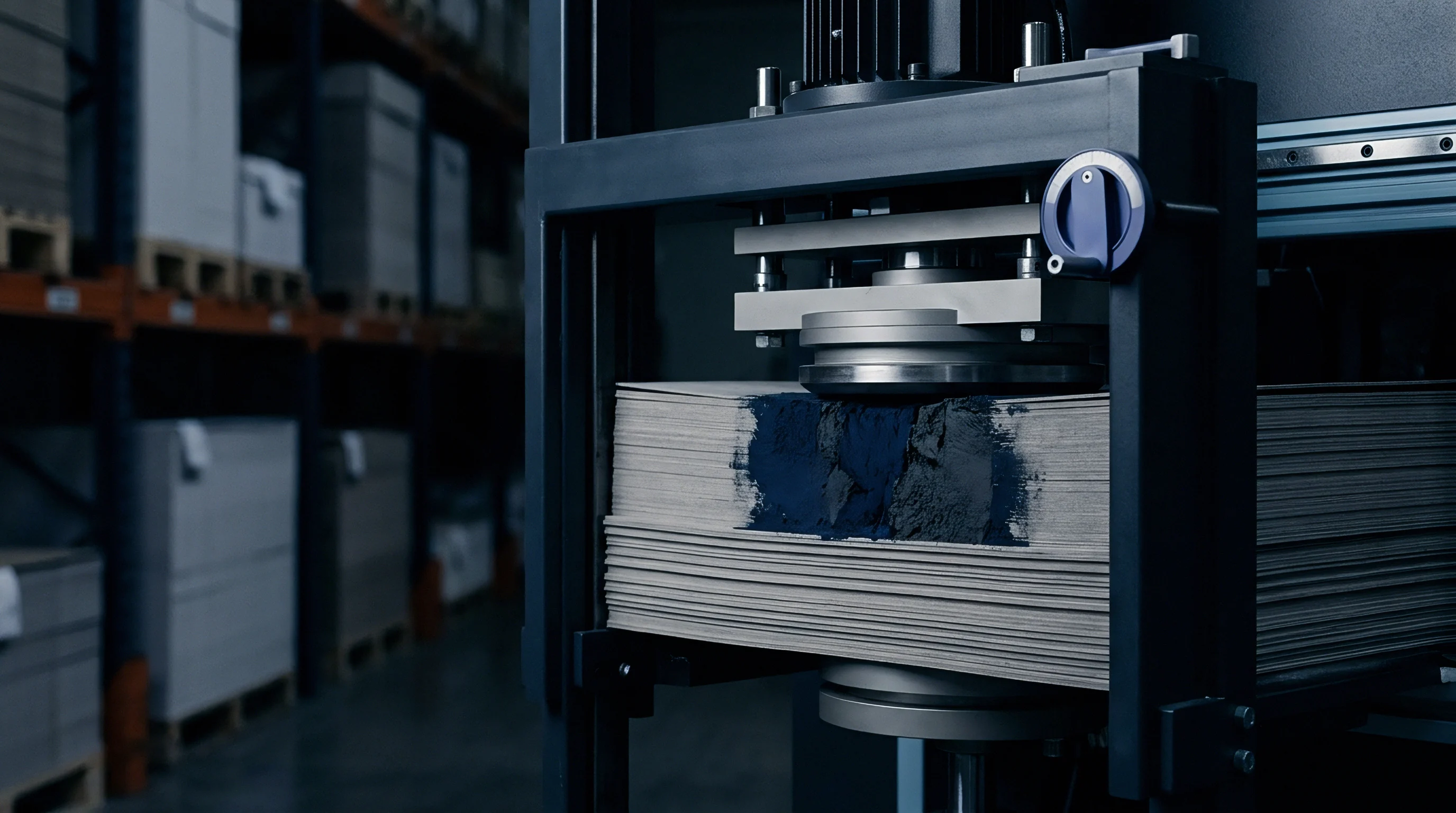
Matrix
Heavy duty double-wall and triple-wall corrugated board rely on a precise structural balance between linerboard facings and fluted inner mediums. High-grammage virgin kraftliners, often ranging from 300 gsm to 440 gsm, supply bending stiffness. Semi-chemical virgin softwood fluting mediums, typically running between 150 gsm and 220 gsm, supply the shear stiffness and flat crush resistance necessary to hold liner facings apart.
When these heavy structures undergo conversion, steam preconditioning and hot-plate drying temporarily alter the internal equilibrium of the composite sheet. At the freshly sheared raw edges of a board blank, unconfined thermal and moisture transport occurs at rates significantly higher than within the solid core of the sheet.
Adhesive performance at the fluting tips dictates how stress transfers across this hygrothermal boundary. Cross-linked starch adhesives modified with wet-strength resins cure into rigid, crystalline thermoset networks under standard corrugator hot-plate temperature regimes between 160°C and 180°C. In contrast, under-cured or thermoplastic starch formulations soften when exposed to secondary thermal reconditioning, such as rapid steam injection on pre-feeder lines or heated plate pressing during high-speed folding. This localized softening along exposed fluting tips causes non-linear tip roll, where the apex of the fluting medium rotates under lateral shear instead of maintaining vertical symmetry.
Standard purchasing specifications that ignore wet-strength starch resin qualification allow adhesive boundary failure when edge steam temperatures cross 65°C.
Fibre layout within the corrugating medium introduces additional directional anisotropy. Semi-chemical hardwood pulp contains short fibres with elevated hemicellulose content, delivering excellent ring crush resistance under ambient conditions. Softwood kraft pulps contain longer, flexible fibres that distribute tensile loads along the flute arc.
When exposed to edge thermal shock, differential swelling between these fibre species generates internal shear stresses along the fluting wall. These micro-mechanical forces trigger three distinct failure modes along open edges:
- Tip shear delamination occurs when heat breaks the starch bond line at the liner interface before the medium stress dissipates.
- Fibril wall micro-buckling develops along the compression side of the flute arc under rapid moisture desorption.
- Edge wall asymmetry develops when unconfined edge flutes warp laterally while interior flutes remain constrained by adjacent cells.
Corrugator operators frequently attribute edge deformation to improper slitter-scorer knife sharpness or uneven deckle shower alignment. While dull cut-off knives produce initial physical crush along raw edges, non-linear fluting deformation develops during subsequent thermal reconditioning as latent stress inside the medium releases unequally across the sheet deckle.

Creep
Corrugated fluting behaves as a non-linear viscoelastic structure. Elastic response dominates at ambient room conditioning, but elevated temperature and transient moisture absorption shift the medium into a plastic deformation regime. The glass transition temperature of amorphous hemicellulose and lignin inside virgin semi-chemical pulp drops sharply as moisture content rises.
At 5% moisture content, hemicellulose softens near 100°C. At 14% moisture content, this softening threshold drops to 55°C. Rapid thermal reconditioning drives moisture rapidly into the medium, dropping its yield strength precisely when compressive forces act during converting operations.
Flute profile geography dictates local stress concentrations under compressive loads. Gothic flute profiles exhibit sharp apex radii that concentrate bending moments along a narrow adhesive line. Sine profiles distribute bending moments across a broader arc, reducing peak local stress.
Under rapid thermal reconditioning, gothic profiles experience early plastic hinge formation at the flute crest, causing catastrophic edge roll under lower compressive loads than equivalent sine profiles.
| Medium Furnish Grade | Grammage (gsm) | Test Conditioning | Initial SCT (kN/m) | Yield Strain at 70°C (%) |
|---|---|---|---|---|
| Virgin Semi-Chemical Hardwood | 150 | 23°C / 50% RH | 2.45 | 1.12 |
| Virgin Semi-Chemical Hardwood | 150 | 70°C Thermal Reconditioning | 1.82 | 2.84 |
| 100% Recycled Fluting (WSA) | 160 | 23°C / 50% RH | 1.95 | 1.45 |
| 100% Recycled Fluting (WSA) | 160 | 70°C Thermal Reconditioning | 1.10 | 4.60 |
The mechanics of non-linear deformation follow a sequential mechanical progression during converting:
- Position the heavy duty board blank on the feed bed exposed to edge steam showers.
- Allow thermal energy to penetrate exposed flute cavities for a calculated dwell time under 1.5 seconds.
- Apply vertical stack pressure or feed roll clamping stress across the board surface.
- Observe plastic hinge initiation along the unconfined outer flute edges while central flutes deform elastically.
- Measure permanent caliper loss across the edge zone following cooling and moisture equalization.
Higher recycled fibre fractions in corrugating medium increase thermal creep rate by accelerating moisture absorption along broken cell walls.
Viscoelastic strain accumulates faster along board edges because heat transfers concurrently through three pathways: air convection inside open flute channels, solid conduction through the linerboard thickness, and phase-change latent heat transport via condensing steam. The core of the board remains insulated by air trapped inside sealed interior cells. Edge flutes lack this thermal boundary insulation.
They reach critical softening temperatures seconds before the interior matrix warms.
A simple rule of thumb governs this thermal edge threshold: thicker heavy duty boards experience wider thermal edge crush zones because internal air volume acts as a heat sink that amplifies the thermal delta between edge and core.
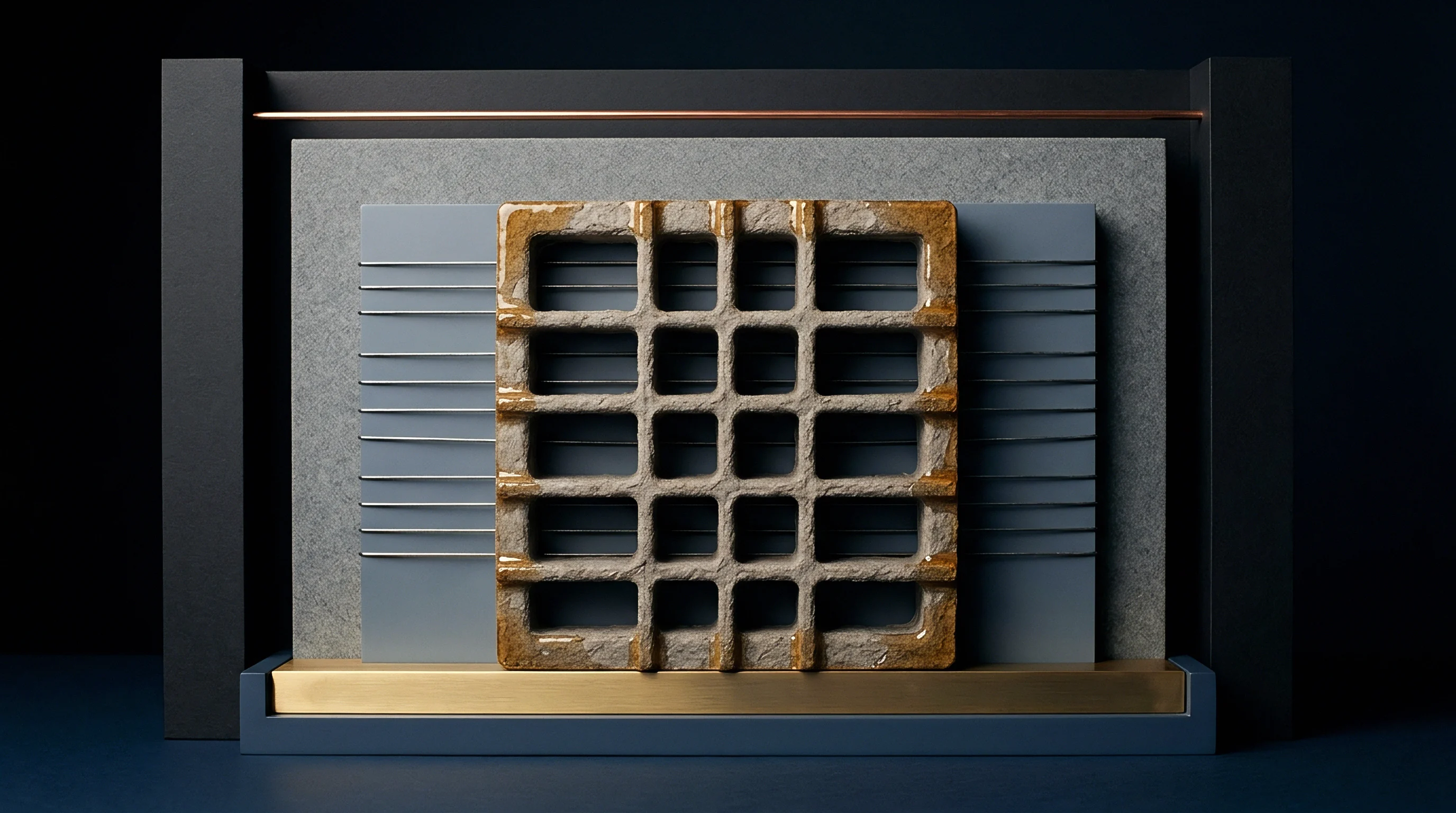

Vapor
Rapid thermal reconditioning relies on steam or direct radiant heat to restore flexibility to stiff, high-grammage board stock prior to creasing, slotting, and die-cutting. Without controlled reconditioning, heavy kraft facings split during 180-degree folding. However, moisture vapor diffusion rates through board edges exceed face diffusion rates by an order of magnitude.
Fickian diffusion governs moisture vapor transport into open edge flutes, where water molecules migrate along internal lumen channels and fibre surfaces.
Condensation occurs instantaneously when dry steam hits cold board stock inside open flute tubes. The latent heat of vaporization releases directly into the fluting medium wall, raising local medium temperature to 80°C in less than 200 milliseconds. Moisture content along the outer 15 millimeters of the flute medium jumps from an ambient 7% to over 16% during this transient phase.
The loss of structural modulus inside this narrow boundary zone creates a weak perimeter around an otherwise rigid board.
An edge moisture surge to 16% content reduces local compression strength by more than 40% within two tenths of a second.

Can Edge Flute Instability Be Predicted Prior to Steam Preconditioning?
Engineers calculate moisture transport kinetics using simplified thermal diffusion equations, but non-linear fluting deformation complicates predictability. As the medium softens, flute walls warp laterally, altering the cross-sectional area of the flute cavity. This geometric change restricts steam flow deeper into the channel while accelerating condensation at the blocked entrance.
The process becomes self-reinforcing. Localized thermal softening induces geometric collapse, which locks moisture in the edge boundary.
Edge seal coating presents a mechanical barrier to moisture vapor ingress during preconditioning. Hydrophobic starch additives, wax emulsions, or water-based acrylic barrier coatings applied at the corrugator slitter knife limit edge moisture uptake to under 2% during thermal reconditioning. Uncoated edges absorb vapor uncontrollably, causing immediate caliper loss under feed roll pressure.
Uncertainty persists regarding whether internal steam pressure inside small A-flute or C-flute channels accelerates or inhibits total wall deflection during sub-second thermal bursts.

Deflection
Verifying edge crush stability requires test protocols that accurately capture the impact of rapid thermal shifts. Standard ISO 3037 Edge Crush Testing mandates pre-conditioning samples to equilibrium at 23°C and 50% relative humidity. While ISO 3037 isolates material strength under static laboratory conditions, it fails to evaluate transient structural collapse that occurs on converting lines under thermal load.
Modified testing protocols apply short-span thermal bursts to specimen edges immediately prior to mechanical loading.
Short-span Compressive Strength testing under ISO 9895 confirms that fiber orientation index and internal sizing govern sheet response under moisture shock. Highly sized virgin semi-chemical medium maintains structural integrity significantly longer than unsized recycled medium when subjected to rapid edge steam. Short-span compression metrics reveal the fundamental material limits before geometric fluting shapes introduce structural buckling modes.
| Board Combination | Nominal Caliper (mm) | Standard ECT ISO 3037 (kN/m) | Thermal Shock ECT (kN/m) | ECT Retained Yield (%) |
|---|---|---|---|---|
| Double-Wall BC (440 K / 170 Sem-Chem / 440 K) | 6.80 | 18.5 | 14.2 | 76.7 |
| Double-Wall BC (300 K / 150 Recycled / 300 K) | 6.60 | 14.2 | 8.8 | 62.0 |
| Triple-Wall AAC (440 K / 200 Sem-Chem / 440 K) | 11.20 | 28.4 | 22.1 | 77.8 |
| Triple-Wall AAC (300 K / 160 Recycled / 300 K) | 10.80 | 21.0 | 12.2 | 58.1 |
Goods-in verification must audit specific technical criteria to isolate thermal susceptibility before placing large substrate orders:
- High-temperature Cobb sizing metrics evaluated at 60°C over 60 seconds to quantify hot condensate absorption rates.
- Resorcinol resin verification inside starch formulations using chemical indicator stains to verify thermosetting capability.
- Transverse caliper uniformity profiles measured across deckle edges with digital micrometer arrays under 50 kPa press pressure.
- Fiber alignment ratios confirmed via ultrasonic tensile stiffness testing to maintain cross-machine direction stiffness balance.
A board that passes standard ISO 3037 laboratory conditioning can still fail catastrophically under edge steam on an automated folder-gluer.
Contractual terms based on ISO 3037 allow converters to reject board shipments if edge crush values drop below certified figures after standard laboratory re-conditioning. Buyers adding custom thermal shock testing clauses into delivery contracts establish clear legal grounds for returning lots that fail under operational steam preheating regimes.
Yield
Non-linear edge fluting failure converts directly into financial loss at the packaging machine and conversion press. When edge flutes roll or crush during thermal reconditioning, total board caliper along the edge zone drops by 0.3 mm to 0.8 mm. This edge-taper effect starves folder-gluer feed belts of traction, inducing blank skew, slot misalignments, and frequent jam stoppages.
A high-speed die-cutter running at 8,000 sheets per hour loses significant operational margin when edge collapse requires line speed reductions of 30% to prevent jams.
Box Compression Test performance drops non-linearly with edge fluting degradation. Because container corners bear up to 70% of total vertical stacking loads, edge flute collapse within 50 millimeters of a vertical score line compromises the main load-bearing column of the finished box. A 15% loss in local edge ECT reduces total BCT performance by 22%, forcing packaging engineers to over-specify virgin kraftliner grammage to compensate for localized mechanical failure.
Consider a practical cost calculation for a 100,000-unit production run of heavy duty triple-wall bulk containers. Standard specification relies on a high-grammage recycled medium costing 580 EUR per tonne. Operating at a baseline board weight of 1,200 gsm, total substrate cost for the job equals 144,000 EUR.
Thermal edge collapse during preconditioning generates a 4.5% scrap rate due to score line splitting and blank feed jams, representing 6,480 EUR in direct raw material waste, plus 3.5 hours of press downtime billed at 450 EUR per hour.
Substituting a high-performance 180 gsm virgin semi-chemical medium increases initial substrate cost by 45 EUR per tonne, raising total substrate spend to 148,500 EUR. However, the superior thermal resistance of virgin semi-chemical pulp eliminates non-linear edge rolling. Scrap rates drop to 0.8%, saving 5,328 EUR in wasted board, while press speeds run at maximum rated capacity without thermal downtime stops.
Net operational savings yield a clear 2,100 EUR bottom-line gain despite the higher initial substrate unit price.
Ignoring non-linear edge fluting mechanisms during material selection guarantees ongoing financial losses through unrecoverable converting scrap, excessive downtime, and costly over-specification of linerboard facings.