Nip Loading
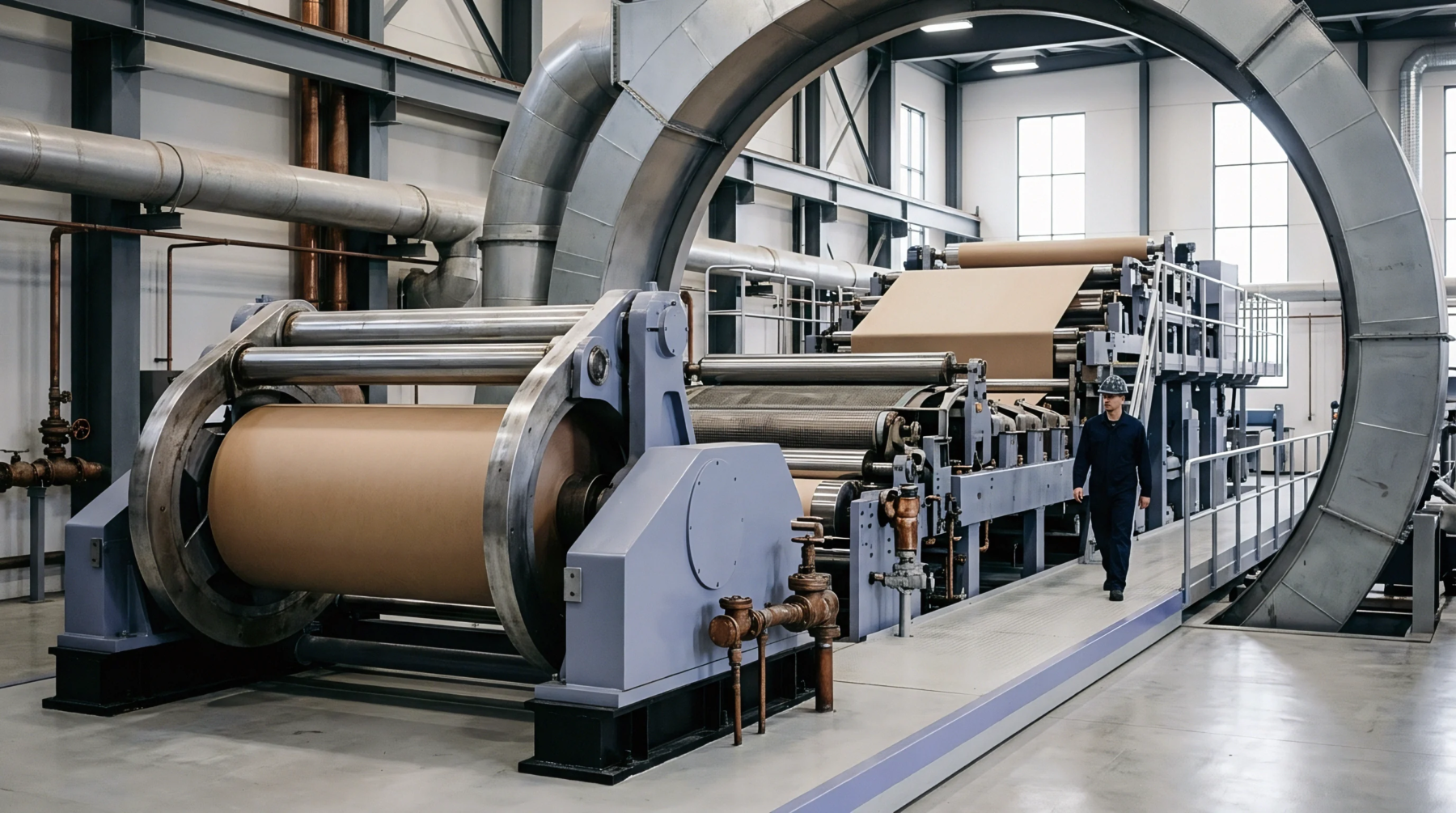
Overhead pressure apparatus in a two-drum surface winder controls nip force against the top of a growing paper roll. This mechanical device operates as a rider roll to establish initial winding tightness while wound roll weight is insufficient to compress paper layers against the support drums. Pneumatic or hydraulic loading cylinders apply downward force through the roll shell across the start of each winding cycle.
Programmed relief systems progressively decrease this applied mechanical load as the expanding paper log accumulates mass, preserving a steady total nip force. The physical configuration governs wound-in roll tension, density, and boundary air exclusion across paper and board finishing operations. Its functional domain terminates at surface winder designs, excluding center-driven winders that govern roll tightness through direct spindle torque control.
Structure Control
Wound roll integrity requires tight inner wraps to avoid core slippage alongside progressively softer outer layers to absorb shock. Insufficient loading early in the winding sequence generates loose cores, leading to roll dishing, star defects, and telescoping during subsequent printing press operations. Excessive sustained force compresses paper web boundaries, producing crepe wrinkles, calender cuts, and bursting failures within inner wraps.
Uniform cross-web pressure delivery across wide paper machines demands deflection-compensating designs, segmented shells, or cambered rolls to prevent concentrated localized loading.
Tension Mechanics
Surface friction between the roll and the incoming paper web expels the thin air boundary layer dragged along moving board surfaces. When high web speeds pull excess air between paper layers, interlayer friction drops, destabilizing winding geometry. As the paper reel expands and achieves sufficient gravitational mass, the rider roll transitions to an upward relieving mode that supports roll roundness without crushing base fibers.