Deinkability Score Impact on EPR Eco Modulation Fees in Recycled Stock
Deinkability scores under INGEDE Method 11 directly determine EPR eco-modulation fee surcharges or discounts on printed recycled paperboard packaging.
Index
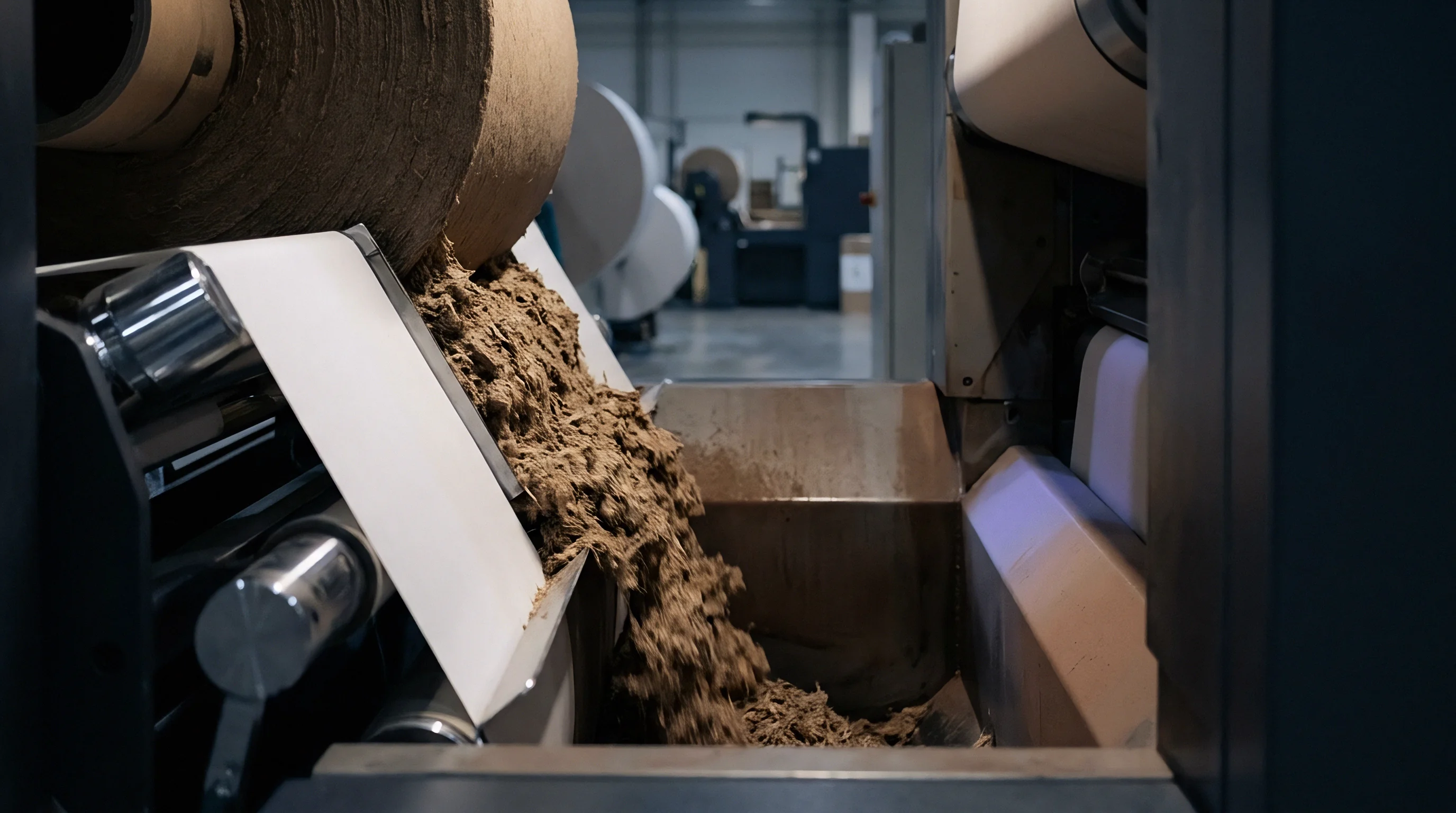
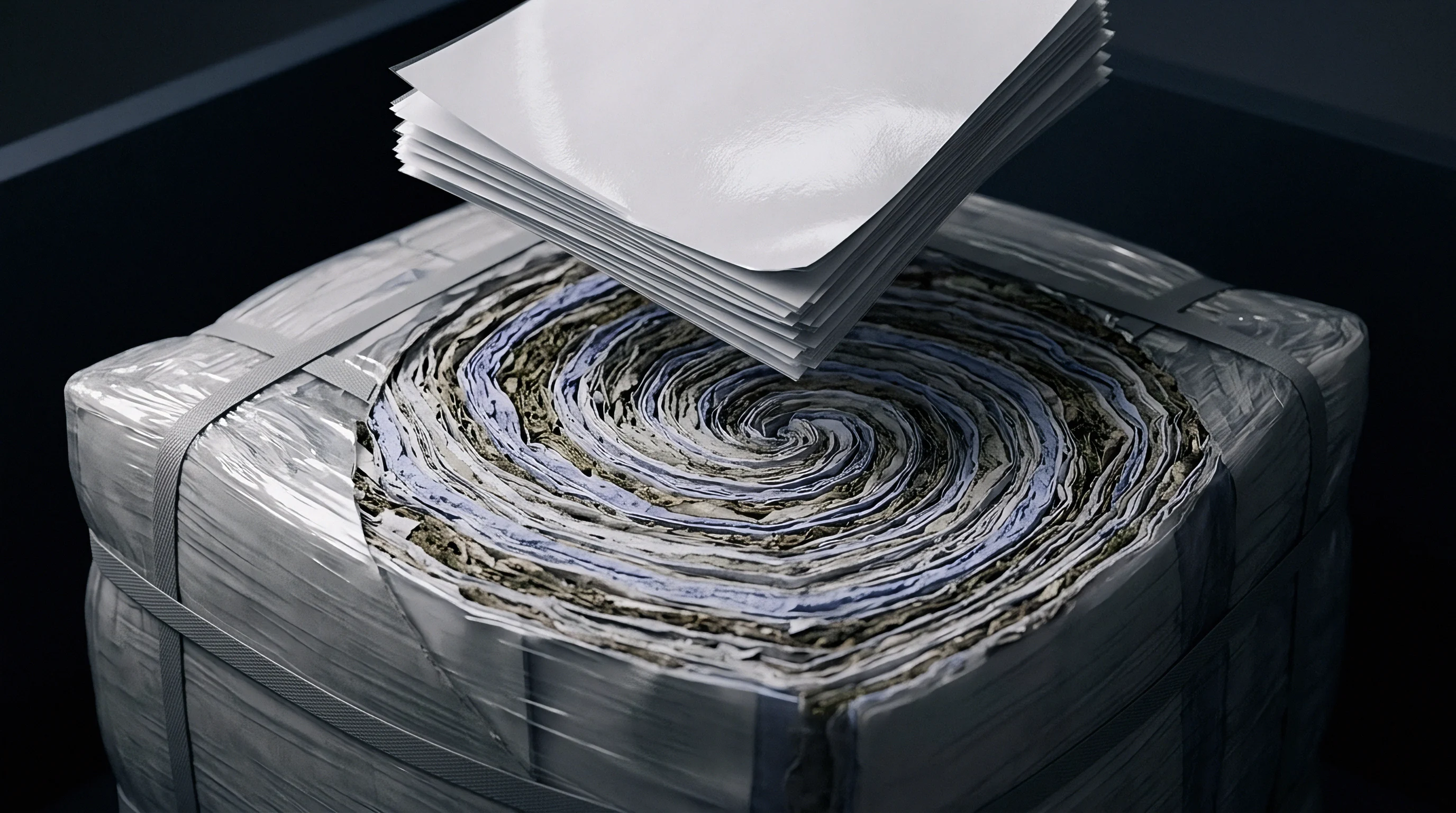
Across European markets, Extended Producer Responsibility schemes levy financial surcharges on printed packaging according to how easily secondary fibers can be recovered. A deinkability score gauges whether printing ink detaches cleanly from cellulose fibers during industrial flotation deinking ~ without discolouring the wash water or leaving visible specks across recycled paperboard sheets. Under these eco-modulation systems, packaging lands in tiered fee brackets: clean separation earns percentage discounts off base compliance fees, while poor deinking triggers malus penalties that sharply increase compliance costs.
The choice of paper stock sets the physical baseline for ink adhesion, vehicle absorption, and ultimate fiber release. Coated recycled boards with white top liners hold ink films directly on the surface, whereas uncoated substrates pull liquid ink vehicles deep into the fiber matrix. Together, ink chemistry, overprint varnish, and surface structure determine whether a deinking mill can recover ninety-five percent of applied pigments or ends up sending contaminated slurry to an incinerator.
Poor ink detachment during deinking flotation reduces recycled pulp yield and forces mills to discard contaminated furnish.
Producer Responsibility Organizations rely on standardized lab protocols to score samples submitted by brand owners and converters. Under the European Paper Recycling Council scorecard, which runs on a scale from negative one hundred to positive one hundred points, an aggregate score above seventy points qualifies a package for full recyclability status and fee discounts. Anything below zero designates the material as non-deinkable, triggering immediate penalties for the company placing the packaging on the market.
When packaging engineers specify non-deinkable energy-cured flexographic inks or insoluble acrylic varnishes, the resulting fee surcharges quickly erode any initial substrate savings. Laboratory deinkability testing confirms whether a given substrate-and-ink pairing will clear flotation before commercial print runs get underway.
The precise cutoff where incomplete ink removal tips a packaging run from a modest malus penalty into complete recyclability disqualification varies across regional regulatory regimes.
Filtrate
Under INGEDE Method 11, laboratory trials measure deinkability across five physical parameters following flotation deinking. Printed packaging samples are pulped under defined chemical, thermal, and mechanical conditions, after which the slurry moves to a flotation cell where rising air bubbles carry detached ink particles into a surface froth. Technicians then press the remaining accept pulp into standard handsheets to evaluate optical properties with spectrophotometers.
Luminosity values indicate overall brightness recovery against unprinted base stock, while color shifts along the CIE a-star and b-star axes flag residual dissolved pigments trapped in the fibers. Optical image analysis measures unseparated ink specks, divided into two distinct size ranges: micro-specks from fifty to two hundred fifty micrometers and macro-specks larger than two hundred fifty micrometers. Finally, filtrate discoloration gauges process water staining caused by soluble ink resins.
| Parameter | Evaluation Method | Target Threshold | Max Score Points |
|---|---|---|---|
| Luminosity Y | ISO 2470 Spectrophotometry | Greater than 60 percent | 30 |
| Color Shade a | CIE L a b Standard Shift | Shift less than 2.0 | 15 |
| Color Shade b | CIE L a b Standard Shift | Shift less than 3.0 | 15 |
| Dirt Speck Area A50 | ISO 5350 Image Analysis | Less than 600 mm²/m² | 20 |
| Filtrate Discoloration | Filter Paper Reflectance Y | Greater than 45 percent | 20 |
| Conditioned at 23 degrees Celsius and 50 percent relative humidity per ISO 187. Minimum total passing score is 70 points. | |||
Earning a passing score demands consistent performance across every criterion, since failing a single parameter docks enough points to push the aggregate into penalty territory. Soluble flexographic inks, for instance, frequently post outstanding dirt speck results because the particles disintegrate completely; yet those dissolved resins bleed directly into the wash water, dropping the filtrate discoloration score to zero.
Flotation deinking under INGEDE Method 11 achieves optimal ink particle removal when particle diameters remain within fifty to two hundred micrometers at forty degrees Celsius.
Standardized testing follows a rigid sequence to ensure reproducible results between mill laboratories and independent facilities.
- Disintegration of the printed stock at five percent consistency in water at forty degrees Celsius for twenty minutes under controlled chemical dosage.
- Dilution of the pulp suspension to six-tenths percent consistency followed by conditioning with fatty acid soaps.
- Flotation in a standardized laboratory cell for twelve minutes with aeration at a gas flow rate of two liters per minute.
- Separation of the accept pulp fraction from the reject froth layer containing concentrated ink particles.
- Preparation of laboratory handsheets from both raw pulp and flotation accepts for spectrophotometric and image analysis under ISO 187 atmospheric conditions.
Coated boards generally deliver cleaner filtrate than uncoated recycled grades. The mineral coating acts as a release barrier during pulping, allowing ink films to detach as intact, discrete flakes sized well for flotation. On uncoated stock, ink vehicles soak straight into the fiber pores, requiring aggressive mechanical shear that shatters pigments into sub-micrometer debris.
Evaluating uncoated recycled board also requires strict chemical control during pulping. Fatty acid collectors depend on calcium ion levels above fifteen German hardness degrees to generate the insoluble calcium soaps that bind to ink particles. When water hardness drops below this threshold, bubbles cannot latch onto ink, reducing removal efficiency by thirty percent.
Repulping under alkaline conditions at pH nine frees bound ink vehicles without degrading cellulose fiber length.

Varnish
The chemistry of inks, primers, and overprint varnishes ultimately dictates deinking performance on recycled board. Conventional mineral-oil offset inks release readily in standard alkaline flotation setups, but water-borne flexo inks and radiation-cured systems present serious hurdles. Energy-cured acrylates form tough, cross-linked polymer films that resist breaking apart during hydrapulping.
When Does Ink Cross Linking Trigger Eco Modulation Malus Tiers?
Ultraviolet and electron-beam curing create an insoluble polymeric web across the printed surface. Under mechanical shear, this network tears into large, elastic flakes exceeding two hundred fifty micrometers ~ too bulky for flotation bubbles to lift. The specks stay trapped in the pulp furnish and mar the visual quality of the finished sheet, triggering heavy point deductions for dirt speck area.
| Print Chemistry | Drying Mechanism | Deinking Flotation Behavior | EPR Modulation Classification |
|---|---|---|---|
| Conventional Offset | Oxidative / Absorption | Forms ideal 10-100 μm particles | Eligible for Bonus Tier |
| Water-Based Flexo | Evaporation / Coalescence | Dissolves into colloidal pigment debris | Triggers Medium Malus |
| UV-Cured Offset | Free Radical Polymerization | Forms oversized elastic flakes | Triggers High Malus |
| Water-Soluble OPV | Evaporation | Clarifies without staining filtrate | Neutral / Eligible for Bonus |
Water-borne flexographic inks on corrugated packaging fail in the opposite direction. While an acidic pulping environment keeps acrylic resins insoluble, standard alkaline deinking at pH nine saponifies the binder, scattering microscopic pigment particles throughout the water. These colloidal pigments slip right through flotation cells without attaching to bubbles, discolouring the wash water and sharply dragging down filtrate brightness.
Standard EN 13430 mandates that packaging design choices preserve secondary fiber repulpability without contaminating industrial deinking water circuits.
The converter’s choice of overprint varnish also determines how cleanly the ink layers underneath will detach. Water-based varnishes formulated for deinkability fragment cleanly without dissolving into colloidal haze. In contrast, incompatible barrier varnishes encapsulate pigments into heavy composite particles that sink in the flotation cell instead of rising into the froth.
- Polymeric film embrittlement occurs when energy-cured acrylate networks shatter into sub-micrometer fragments during pulping, resisting flotation bubble attachment.
- Alkali resin saponification failure arises when flexographic binder chemistry fails to clarify at pH nine, causing severe filtrate discoloration.
- Thermal plasticization sticky formation happens when hot-melt adhesive films soften during disintegration, blinding screen plates and contaminating fiber fractions.
Adhesives used along package folds and closures enter the deinking stream right alongside the ink. Under warm pulping conditions, hot-melt ethylene-vinyl acetate adhesives turn into tacky agglomerates known as macrostickies. These stick to paper machine felts, causing web breaks and surface blemishes on finished board.
Specifying alkali-dispersible or water-insoluble adhesives formulated to deinking guidelines keeps these agglomerates from forming in the pulp line.
Overlooking ink vehicle chemistry during packaging development practically guarantees higher eco-modulation fees across European distribution channels.

Surcharge
Extended Producer Responsibility schemes translate laboratory deinkability scores directly into operational packaging surcharges. Compliance organizations across Europe publish annual fee schedules setting baseline rates per tonne of paper and paperboard packaging. From there, eco-modulation rules adjust those rates up or down ~ using percentage multipliers or flat euro-per-tonne adjustments tied to certified recyclability results.
A folding boxboard package scoring above seventy points on the European Paper Recycling Council scorecard earns a discount, typically between ten and twenty-five percent off the base rate depending on the country. A score below zero, however, brings a penalty surcharge between fifty and one hundred percent. Packaging classified as completely non-recyclable faces statutory surcharges that can exceed one hundred fifty percent of baseline rates.
| Compliance Jurisdiction | Base Rate (EUR/Tonne) | Deinkable Bonus (Score > 70) | Non-Deinkable Malus (Score < 0) |
|---|---|---|---|
| France (Citeo System) | 190.00 | 10 percent discount (-19.00 EUR) | 100 percent fee penalty (+190.00 EUR) |
| Germany (VerpackG / ZSVR) | 210.00 | 15 percent discount (-31.50 EUR) | 50 percent fee penalty (+105.00 EUR) |
| United Kingdom (pEPR Scheme) | 280.00 GBP | 12 percent discount (-33.60 GBP) | 75 percent fee penalty (+210.00 GBP) |
| Italy (CONAI System) | 160.00 | 15 percent discount (-24.00 EUR) | 60 percent fee penalty (+96.00 EUR) |
At production volumes, the cost difference between deinkable and non-deinkable packaging widens rapidly. For a run consuming one thousand tonnes of 300 gsm recycled coated folding boxboard in a market with a base fee of 190.00 EUR per tonne, calculating true landed cost requires factoring eco-modulation rates into substrate selection from the start.
Under Option A, the packager specifies conventional offset printing with a water-based deinkable varnish, reaching a certified score of plus eighty points. That qualifies for a ten percent eco-modulation discount, dropping the fee to 171.00 EUR per tonne and bringing total EPR liability to 171,000 EUR for the one thousand tonne lot.
Option B applies high-gloss energy-cured UV flexographic ink across the entire surface, yielding an INGEDE score of negative twenty points. Under local rules, that score triggers a mandatory one hundred percent malus penalty, driving the compliance fee up to 380.00 EUR per tonne and total EPR expense to 380,000 EUR for the same volume.
The resulting spread between Option A and Option B comes to 209,000 EUR on a single one thousand tonne board order ~ an amount that exceeds the raw material price difference between basic recycled linerboard and premium virgin fiber board. Specifying an incompatible ink system can easily erase the cost advantage of using cheaper recycled stock.
Selecting water-soluble varnish systems without deinking evaluation exposes converting operations to maximum statutory EPR malus penalties.
To safeguard converting margins, packaging buyers set explicit verification checkpoints before issuing purchase orders.
- Submit ink vehicle certificates from ink suppliers verifying compliance with European Recycling Platform Guidelines before finalizing print production runs.
- Audit surface coating energy to verify that water-based overprint varnishes detach cleanly without generating redispersible micro-particles during pulping.
- Calculate baseline EPR fees by applying regional eco-modulation percentage modifiers to total projected tonnage prior to purchase order issuance.
- Verify laboratory testing scope by confirming that deinkability certificates originate from accredited facilities using ISO standardized atmospheric conditioning.
Energy-cured inks are often selected for surface rub resistance that water-borne coatings supposedly cannot match. Modern water-based overprint varnish formulations, however, deliver equivalent rub resistance while detaching cleanly during industrial flotation deinking.
Dossier
Sourcing teams enforce deinkability standards by writing mandatory laboratory certification into procurement contracts. Relying on informal supplier declarations leaves packaging buyers open to steep financial liability during regional eco-modulation audits; every paperboard specification requires a complete technical qualification dossier before commercial orders are placed.
That dossier centers on third-party test reports from accredited paper laboratories using INGEDE Method 11. Certificates document the exact ink coverage, drying conditions, varnish chemistries, and substrate grammages evaluated during the trial. Any change to ink film weight or coating formulation invalidates the score, requiring a full re-test of the modified structure.
Supply agreements also incorporate risk-allocation clauses that assign financial liability for EPR surcharges caused by non-compliant ink or substrate formulations. Standard contract language warrants that the converting partner meets all regional deinkability thresholds.
These agreements require the supplier to indemnify the packaging buyer against any EPR malus penalties caused by test failures traced to unapproved ink or coating substitutions.