Dynamic Contact Angle Measurement Techniques for Paper Coating Formulations
Dynamic contact angle testing under TAPPI T 558 exposes sub-second wetting and capillary absorption failures that traditional sixty-second Cobb tests completely miss.
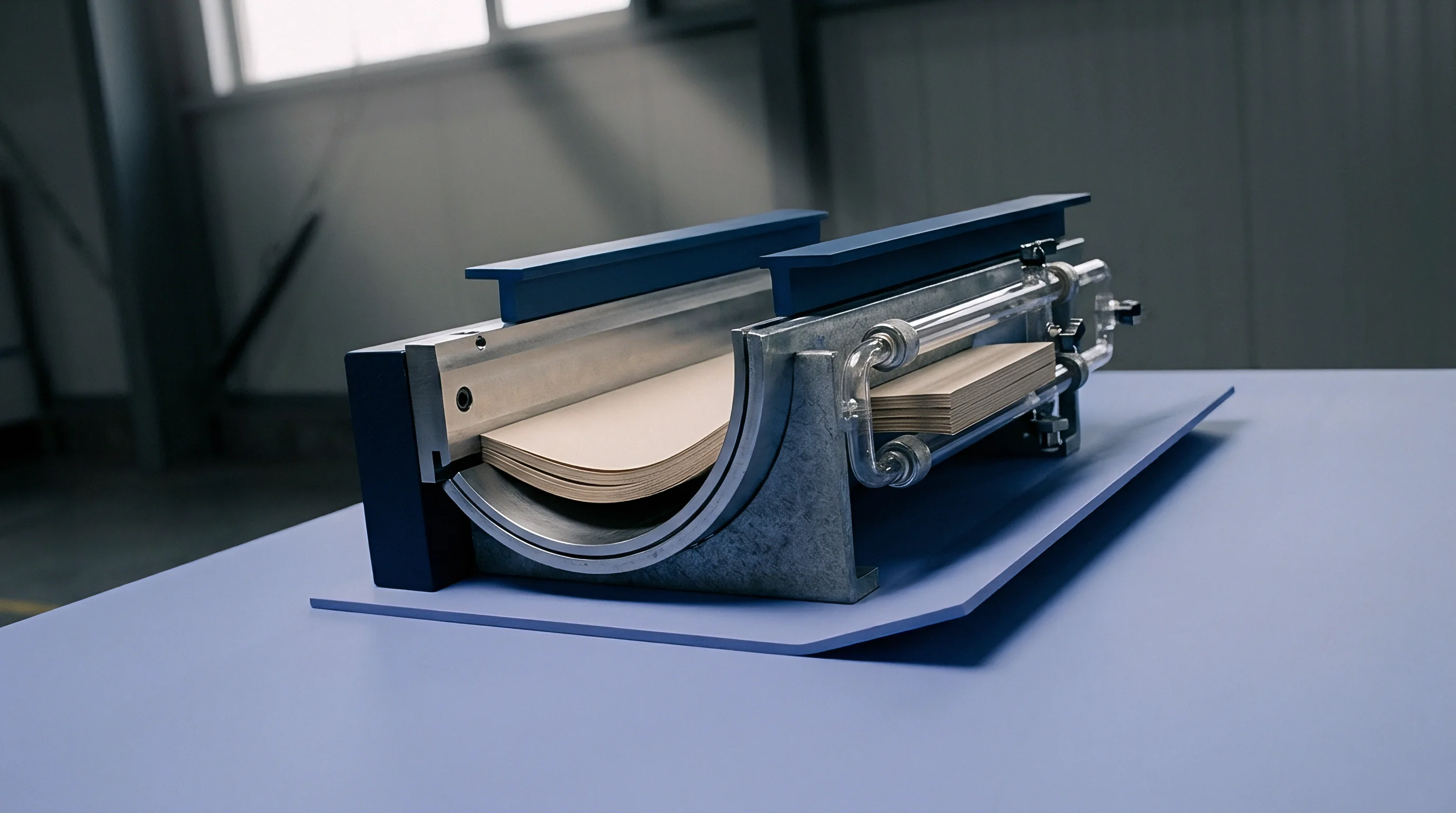
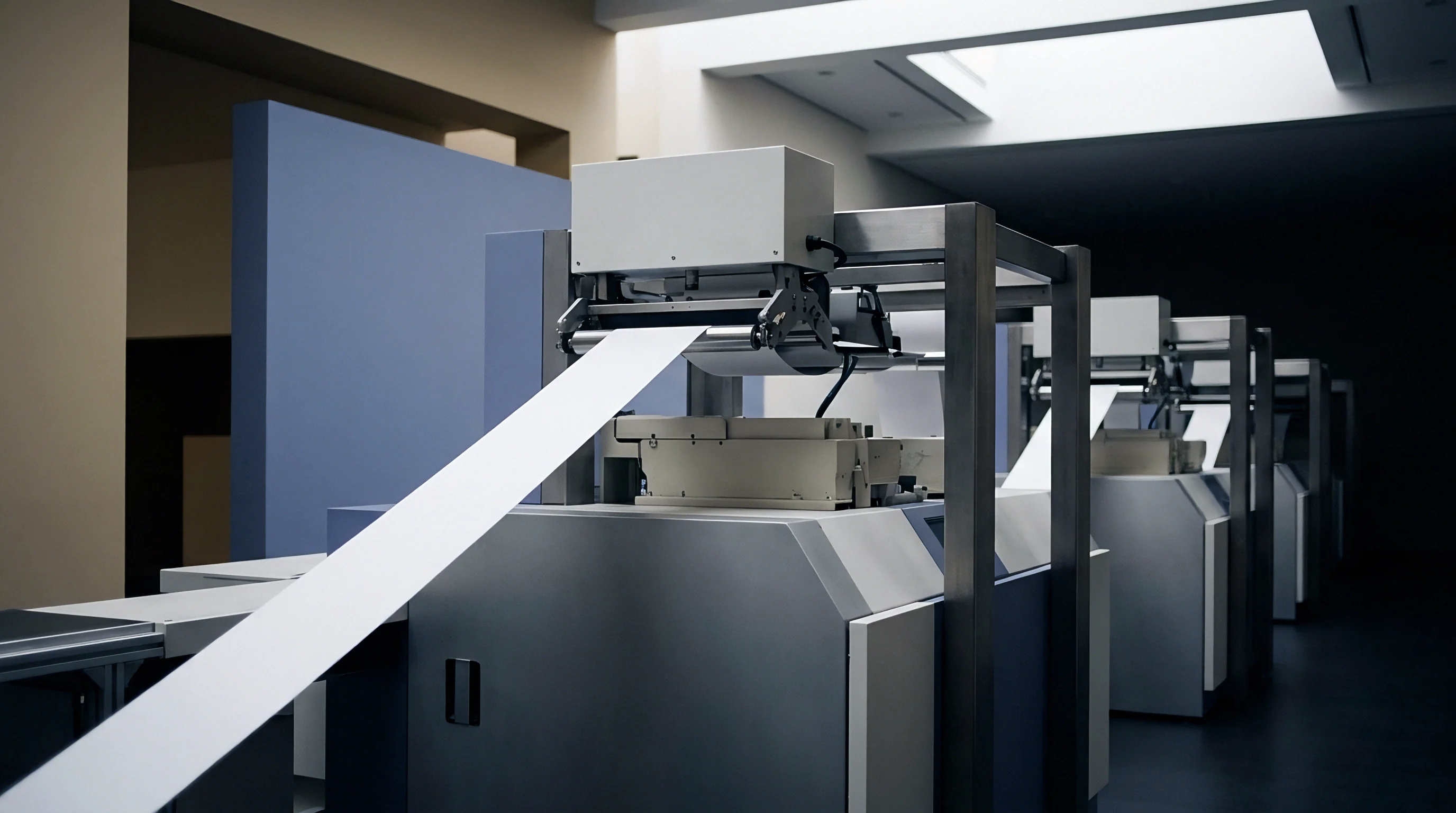
Drop
Sessile liquid profiles on coated paper surfaces evolve across millisecond intervals. When an aqueous formulation contacts a pigmented topcoat, the three-phase boundary line moves immediately under unbalanced interfacial tension. Static sessile contact angles, measured after thirty seconds on a laboratory bench, fail to predict what happens inside a printing press nip or curtain coater applicator where fluid interaction finishes in under one hundred milliseconds.
The baseline sits flat. Initial contact angles recorded at ten milliseconds show values forty to sixty degrees higher than their equilibrium states, governed by surface energy disparities between the liquid phase and dry mineral pigments.
Automated optical goniometry measures these advancing liquid profiles through high-speed digital video imaging. Under ASTM D5725 and TAPPI T 558, test specimens undergo exposure to micro-litre volumes of deionised water or specialised test inks at 23 °C and 50 percent relative humidity. Mill-floor converters rely on these early transient measurements to assess glue-flap holdout and ink bleed tendencies on high-speed folding boxboard lines.
Wetted contact lines move fast. The initial contact angle reflects pure surface wetting, whereas decay over subsequent intervals combines physical wetting with porous intake through the pigment coating structure.
An automated liquid dispenser applying a 4.0 microlitre droplet of deionised water at 23 °C and 50 percent relative humidity registers a contact angle decay from 108 degrees at 10 milliseconds to 62 degrees at 1000 milliseconds on a standard double-coated ground calcium carbonate sheet.

Transient Wetting at Sub-Second Mill Scales
Aqueous coatings deposited on raw baseboard must wet the fibre matrix uniformly before metering blades or air knives smooth the applied layer. Initial spreading proceeds according to molecular relaxation at the fluid-solid junction, where surfactant orientation dictates early interfacial energy. Slower wetting promotes pinholing and skips in the coating film, while excessively rapid fluid loss depletes the water envelope needed to keep latex binders stable under shear.
Industrial converting processes exhibit severe defects when formulation wetting kinetics drift outside established tolerances:
- Offset ink emulsification occurs when fountain solution beads up on hydrophobic topcoats, forcing press operators to over-saturate dampening units.
- Flexographic halo defects develop when low advancing angles allow thin water-based inks to bleed across non-image areas during rapid impression cycles.
- Glue seam delamination happens when packaging adhesives experience insufficient surface wetting within the eighty-millisecond dwell window of high-speed folding cartoning lines.
- Coating pick-out arises when uneven wetting during multi-station blade application creates localised moisture starvation, stripping the pre-coat off raw cellulose fibres.

Young Balance and Contact Line Hysteresis
Thermodynamic equilibria defined by Thomas Young assume smooth, homogeneous, insoluble surfaces. Commercial paperboard coatings satisfy none of these conditions. Topcoats contain ground calcium carbonate, kaolin clay, precipitated calcium carbonate, synthetic styrene-butadiene latex, and starch binders.
The physical surface presents microscopic roughness alongside chemical heterogeneity, causing contact angle hysteresis.
Advancing angles represent the resistance of dry coating components to fluid displacement of air. Receding angles measure fluid pin-down during dewetting. The difference between advancing and receding values directly indicates coating film uniformity.
Calendered coatings loaded with platelet-shaped kaolin clays demonstrate hysteresis values exceeding thirty-five degrees, caused by sharp edge angles of stacked clay crystals pinning the moving liquid line.
Ignoring contact line hysteresis during substrate qualification results in ink trapping failures, inconsistent varnish holdout across production batches, and unrecoverable waste during press startup.
Pore
Interstitial voids between mineral pigments establish capillary networks that pull liquid away from the surface profile. Coating structures consist of compacted particle matrices where pore diameters vary from twenty to five hundred nanometres. Liquid penetrates the pigment matrix.
The apparent contact angle measured by optical goniometers reflects both surface spreading along the plane of the paper and loss of volume due to fluid intake into these sub-micron channels.
Pigment particle size distribution dictates capillary suction pressure. Fine precipitated calcium carbonates yield narrow interstitial channels that generate elevated Laplace pressures, accelerating fluid uptake despite moderate intrinsic surface energy. In contrast, coarse ground calcium carbonates create larger average voids that reduce capillary pull, shifting liquid behaviour toward lateral wetting.
Latex binders concentrate near the surface. Calendering reduces total void space.
Capillary Suction inside Mineral Topcoats
Fluid intake through porous media follows the classical Lucas-Washburn relationship, where penetration depth scales with the square root of time, liquid surface tension, average pore radius, and the cosine of the internal wetting angle, inversely balanced by fluid viscosity. While this relationship assumes continuous cylindrical pores, mineral coating layers form interconnected tortuous networks. Topcoat tortuosity values typically range between 1.8 and 3.2, which delays the fluid front relative to idealized capillary models.
| Pigment and Binder System | Apparent Angle at 10 ms | Apparent Angle at 100 ms | Apparent Angle at 1000 ms | Penetration Rate Constant (mm/s^0.5) |
|---|---|---|---|---|
| 100% Fine Ground Calcium Carbonate (0.8 µm), 11 pph SBR | 104° | 76° | 38° | 0.82 |
| 70% GCC / 30% Fine Kaolin Clay, 11 pph SBR | 109° | 84° | 51° | 0.54 |
| 100% Precipitated Calcium Carbonate (Aragonite), 12 pph SA | 98° | 68° | 29° | 1.15 |
| 50% GCC / 50% Platelet Kaolin, 14 pph Latex, Calendered | 116° | 96° | 72° | 0.28 |
Capillary pressure drives initial fluid intake. High binder levels fill microscopic interstitial voids, effectively shutting down early fluid ingress and maintaining higher contact angles over the first two hundred milliseconds.
Blade coater shear forces align platelet kaolin clay parallel to the cellulose web, creating an irregular wetting boundary for water-based flexographic inks.

How Rapidly Does the Wetting Front Advance?
Initial liquid absorption exhibits an induction interval where viscous resistance and wetting line inertia govern transport before steady capillary flow establishes. Across the first five to twenty milliseconds, droplet volume remains nearly constant while contact angle decreases through pure interfacial spreading. After this induction interval, capillary suction begins to drain the fluid reservoir, accelerating droplet height reduction.
Converters processing board grades for barrier packaging evaluate this transition point using automated droplet analysis. In water-resistant barrier coatings featuring synthetic acrylics or bio-wax dispersions, the induction period extends beyond five seconds, maintaining contact angles above ninety degrees. In printing grades formulated with hydrophilic starches, the wetting angle collapses below thirty degrees within three hundred milliseconds.
Steep contact angle decay curves indicate open capillary structures that demand heavier ink film splits to achieve target colour densities on press.

Apparatus
Measurement hardware must capture physical events occurring faster than standard video frame rates. Traditional contact angle instruments operating at thirty frames per second miss the critical initial wetting window entirely, recording their earliest data points after the droplet has already undergone extensive capillary drainage. High-speed goniometers employ complementary metal-oxide-semiconductor sensors operating between five hundred and five thousand frames per second, coupled with automated micro-dosing systems.
The camera records five hundred frames. Syringe needles induce initial kinetic vibration. Droplet detachment introduces mechanical energy that distorts liquid profiles if the drop falls from excessive heights.
Professional testing rigs deploy piezo-electric dispensing heads or rapid-stroke plunger mechanisms that deposit small liquid volumes with minimal kinetic impact, conforming to TAPPI T 558 specifications.
High-Speed Optical Video Goniometry
Video-based optical tensiometry determines contact angles by fitting mathematical profiles to digitised droplet images. Standard edge-detection algorithms identify the baseline transition where the dark reflection of the liquid matches the physical substrate. The Young-Laplace fitting method calculates the theoretical droplet profile by balancing gravitational forces against interfacial tension, yielding reliable measurements on droplets with contact angles above twenty degrees.
Alternative fitting routines apply circular or polynomial approximations for low-profile droplets below twenty degrees where gravitational deformation becomes negligible. On porous paperboard substrates, baseline detection encounters ambiguity caused by individual cellulose fibres protruding through thin coating layers. Calendering smooths these protrusions, establishing a uniform optical horizon for sub-millisecond edge tracking.
Execution of repeatable contact angle testing follows a rigorous operational protocol:
- Substrate conditioning requires test sheets to rest for 24 hours at 23 °C and 50 percent relative humidity inside an environmental chamber conforming to ISO 187 standards.
- Liquid preparation involves verifying surface tension values of test liquids using a du Noüy ring tensiometer immediately before filling automated instrument syringes.
- Droplet deposition utilizes automated vertical staging to place a 3.0 microlitre droplet on the surface with drop release occurring within two millimetres of the test sheet.
- Image acquisition triggers high-speed capture at one thousand frames per second across an initial two-hundred millisecond window, reducing to fifty frames per second through five seconds.
- Baseline validation applies automated contour analysis to eliminate image frames where optical shadows or fibre debris distort the three-phase boundary line.
| Standard Method | Measurement Principle | Minimum Time Resolution | Test Fluid Volume | Primary Mechanical Target |
|---|---|---|---|---|
| TAPPI T 558 / ASTM D5725 | Automated Sessile Drop Video Analysis | 10 ms (High-speed units: 1 ms) | 1.0 to 4.0 µL | Transient wetting and capillary sorption |
| ASTM D724 | Manual Eyepiece Goniometer | 5000 ms | 50 µL | Equilibrium wetting on non-porous sheets |
| TAPPI T 519 / ASTM D5455 | Bristow Liquid Absorption Wheel | 10 ms to 2000 ms | 10 to 50 µL | Roughness index and fluid penetration rate |
| Ultrasonic Penetration (Emtec) | Acoustic Transmission Attenuation | 10 ms | Sample immersion bath | Liquid migration through full z-directional thickness |
| Calibration requires instrument baseline verification against optical glass reference standards of known contact angle before testing production reels. | ||||
Liquid Absorption and Bristow Wheel Geometry
The Bristow wheel provides mechanical liquid transfer that complements optical goniometer measurements. While goniometers study stationary droplets, the Bristow apparatus moves a paper strip beneath a fluid applicator head at precisely regulated velocities. Measuring the track length produced by a known volume of fluid yields two distinct parameters: the roughness volume consumed in surface topography depressions, and the fluid absorption rate into coating pores.
Bristow data reveals the wetting delay, an operational window where the fluid travels across the paper without measurable penetration. In highly sized or heavily coated boards, this wetting delay ranges from twenty to one hundred milliseconds. Liquid transfer during rotogravure and offset printing occurs inside this wetting delay, meaning press transfer depends primarily on surface energy and microscopic roughness rather than baseboard absorbency.
Mills frequently claim that static contact angle testing provides sufficient quality assurance, arguing that fast optical video goniometry introduces unnecessary complexity without changing converting performance.

Run
Moving converting webs expose applied coatings to violent mechanical forces. High blade pressures compress base stock. In blade coating operations, formulated coating slip experiences shear rates exceeding one million reciprocal seconds within the blade nip, followed by immediate consolidation as water leaves the formulation into the dry sheet.
Measuring the transient contact angle of the coating colour against the raw base web identifies whether the mix will lay down smoothly or create scratching defects.
Coating solids alter fluid boundary behavior. When water transfers from the applied coating into the raw cellulose web, the solids level in the wet boundary layer escalates sharply. If base sheet wetting is slow, the coating layer slides along the interface without bonding, creating film splitting defects at subsequent metering stations.
Fast wetting accelerates immobilisation, anchoring the coating securely against the base furnish.
Under TAPPI T 558, automated optical contact angle readings taken at the 100-millisecond mark establish whether an aqueous barrier coating passes baseline surface wettability tolerances for high-speed glue-flap adhesion.
Which Variables Govern Transient Wetting Angle Hysteresis?
Surfactant chemistry, surface topography, and binder distribution control wetting hysteresis on finished coated grades. Calendering rolls flatten mineral pigments, decreasing surface roughness and narrowing contact angle hysteresis bands. Non-uniform binder migration counteracts this smoothing effect.
During high-temperature infrared drying, moisture evaporating rapidly from the wet coating drags soluble starches and synthetic latex particles toward the top boundary.
This binder accumulation creates hydrophobic, low-energy patches distributed unevenly across the sheet plane. When water-based ink droplets strike these zones, advancing contact angles jump from seventy-five degrees to over one hundred degrees, creating localized print mottling. Measuring advancing and receding angles at multiple points across the reel width detects these binder distribution drifts before rolls ship to converting plants.
Converting lines run smoothly only when production lots remain within verified contact angle boundaries:
- Uncoated cupstock base requires water contact angles between 95° and 105° at 100 ms to guarantee continuous barrier polymer adhesion during extrusion coating.
- Double-coated folding boxboard requires water contact angles between 60° and 75° at 100 ms to prevent dot gain flaring while maintaining water-based varnish holdout.
- High-speed inkjet stock demands contact angles falling from 80° at 10 ms to below 30° at 200 ms to fix pigment particles at the surface while rapidly absorbing the carrier fluid.

Pressroom Fluid Transfer and Ink Trapping
Offset lithography relies on a delicate balance between aqueous dampening fountain solution and hydrophobic oily inks. If the coated substrate exhibits excessively high advancing contact angles toward the fountain solution, the water beads up, allowing oil-based ink to deposit on non-image areas. Conversely, if the contact angle decays too quickly, dampening water penetrates deep into the coating layer, weakening internal binder bonds and causing wet pick delamination on the second or third blanket station.
Flexographic packaging presses face distinct constraints with water-based and energy-curable inks. These formulations possess low surface tensions, ranging from twenty-four to thirty-six millinewtons per metre. For complete fluid transfer without pinholing, the critical surface tension of the coated board must exceed the liquid ink surface tension by at least ten millinewtons per metre at the five-millisecond contact window.
How do pigment blend adjustments alter the microsecond wetting envelope when line speeds double remains an open question across high-speed packaging converting plants.
Ledger
Formulation adjustments carried out to tune wetting behaviour directly alter mill production costs. Synthetic latex binders represent the most expensive component in mineral coating recipes, costing three to four times more per dry kilogram than calcium carbonate or kaolin pigments. Increasing styrene-butadiene latex content by two parts per hundred parts pigment raises raw coating material costs by twelve to fifteen dollars per metric tonne of coated board produced.
Latex binder increases pigment formulation costs. Delivered tonnage warrants laboratory verification. Off-spec coatings produce press mottle.
Sourcing managers evaluate these costs against converting risk. Skimping on binder lowers dry material outlay but increases the risk of offset picking, ink rejection, and glue-flap bonding failures in high-value packaging lines. Verifying transient contact angle curves on pre-production mill trials prevents costly grade failures during commercial print runs.
Binder Migration and Formulation Economics
Formulators manipulate drying rates and pigment selections to control wetting characteristics without inflating binder loading. Substituting fifteen parts fine ground calcium carbonate with ultrafine precipitated calcium carbonate raises pore volume and initial fluid uptake speed while holding synthetic binder content constant. This substitution adds roughly five dollars per dry tonne of formulation, saving ten dollars compared to achieving equivalent ink holdout through synthetic polymer additions.
| Binder Fraction (pph Pigment) | Dry Coating Cost per Tonne | Contact Angle at 100 ms | Ink Trap Ratio | Blanket Wash Interval |
|---|---|---|---|---|
| 9.0 pph SBR Latex | $184.00 | 58° | 78% | 8,000 Impressions |
| 11.0 pph SBR Latex | $201.00 | 74° | 88% | 22,000 Impressions |
| 13.0 pph SBR Latex | $218.00 | 92° | 81% | 14,000 Impressions |
| 11.0 pph SBR + 0.8 pph CMC | $207.50 | 71° | 91% | 28,000 Impressions |
Adding carboxymethyl cellulose controls water retention during blade application, preventing premature binder drainage into the baseboard and stabilising contact angles at lower total latex levels.
Higher latex binder migration toward the paper surface increases the contact angle while suppressing fluid penetration into the underlying pore network.
Commercial Claims and Specification Tolerances
Commercial disputes between mills and print packaging buyers frequently centre on print uniformity and adhesion failures. Standard mill quality certificates report basis weight, caliper, brightness, and Cobb sixty-second water absorption values. A substrate can pass all standard Cobb specifications while exhibiting catastrophic wetting failures inside sub-second converting operations, because a sixty-second Cobb test measures equilibrium bulk absorption rather than dynamic surface wettability.
Procurement agreements for demanding converting applications protect financial margins by incorporating transient contact angle thresholds directly into purchasing specifications. Defining acceptable contact angle tolerances at the fifty-millisecond and five-hundred-millisecond marks under TAPPI T 558 transfers performance risk to the paper mill. When arriving reels fail these metrics during goods-in qualification, converters possess legal grounds to reject out-of-specification tonnage before running press hours on compromised stock.
Under standard supply contract annexes governing functional barrier substrates, verified failure to meet contact angle decay parameters at 100 milliseconds triggers immediate lot rejection and supplier liability for converting make-ready downtime.