Reconciling Deinking Shrinkage and Chemical Contaminant Limits for Recycled Food Contact Board
Balancing flotation yield shrinkage against chemical contaminant removal determines whether multi-ply recycled board satisfies food contact limits cost-effectively.


Loss
Fiber recovery for food contact paperboard operates under a severe mass transfer paradox. Processing recovered paper stock through pulping, screening, and multi-stage washing removes ink particles and mineral oil saturated hydrocarbons, but each cleaning stage discards usable cellulose fibers along with contaminants. Commercial deinking systems operating on post-consumer graphic paper or recovered printed packaging average mass yield returns between seventy-five and eighty-eight percent, leaving twelve to twenty-five percent of incoming raw material in primary water treatment sludge.
When stock processing targets strict food contact chemical thresholds, mass yield drops further. Eliminating mineral oil aromatic hydrocarbons, phthalate plasticizers, and photoinitiators down to non-detectable extraction limits demands aggressive flotation and alkaline washing, which strips fine fibers and mineral fillers from the stock suspension.
High ash content in post-consumer recovered paper creates an immediate yield drag during pulping and deinking. Paperboard manufactured from unbleached kraft pulps retains high mechanical strength, but post-consumer stocks containing printed newsprint or magazine paper introduce mineral coatings comprising calcium carbonate, kaolin clay, and titanium dioxide. During pulping at four to six percent stock consistency, mechanical attrition frees ink vehicles from fiber surfaces.
Subsequent coarse and fine screening stages reject hydrophobic contaminants, adhesives, and unpulped flakes. High ash levels penalize wet end chemistry.
The mechanical separation of mineral pigments and damaged micro-fibers during multi-stage flotation at forty-five degrees Celsius reduces overall process mass yield to seventy-six percent while reducing total mineral oil hydrocarbon content from four hundred milligrams per kilogram to below fifteen milligrams per kilogram.
Chemical contaminant removal efficiency does not scale linearly with fiber mass retained in the pulp stream. Low-intensity washing preserves fiber yield at ninety-two percent, yet leaves mineral oil saturated hydrocarbon levels between one hundred fifty and three hundred milligrams per kilogram of dry fiber. Reaching compliance thresholds specified by European regulatory guidelines demands high collector surfactant dosages, elevated temperature washing, and extended cell flotation.
This aggressive mechanical and chemical treatment strips short fibers, known as fines, which carry a disproportionate mass fraction of bound inks and organic contaminants due to their high specific surface area. The resulting stock achieved chemical purity suitable for direct food packaging, but the mill incurs a mass yield loss exceeding twenty-two percent.
Primary sludge generated by high-intensity deinking consists of cellulose fines, mineral fillers, fatty acid collectors, and concentrated chemical pollutants. Disposal fees for this wet sludge, combined with lost fiber value, represent the true physical cost of chemical purification. Mills attempting to minimize mass shrinkage by recirculating process wash waters inevitably accumulate soluble organic substances, non-intentionally added substances, and trace heavy metals in closed water loops.
This water enrichment lowers the concentration gradient between fiber and liquid phases, reducing washing efficiency and allowing hydrophobic contaminants to re-adsorb onto acceptable long fibers.
Technical bulletins from recycled pulp suppliers commonly assert that post-consumer recovered paper streams inherently contain unpredictable contaminant baselines, leaving final food-contact compliance to functional barrier coatings applied during converting.

Purge
Separating non-polar organic contaminants from hydrophilic cellulose fibers relies on selective surface chemistry inside froth flotation cells and mechanical washing units. Post-consumer stock enters pulping units where mechanical shear breaks inter-fiber hydrogen bonds at elevated pH, typically adjusted between 8.5 and 10.5 using sodium hydroxide. Soluble silicates and chelating agents like diethylenetriaminepentaacetic acid prevent peroxide decomposition and aid in dispersing printed inks.
Hydrophobic mineral oils, binder resins, and synthetic waxes detach from fiber surfaces into the aqueous phase, where fatty acid soaps or alkoxylated surfactant collectors selectively bind to hydrophobic particles. Surfactant dosage alters foam density.
Flotation Mechanics and Surfactant Interactions
Air bubbles injected at the base of flotation cells contact collector-coated ink particles and organic molecules, carrying them into a surface foam layer that is mechanically skimmed away. Flotation efficiency depends heavily on particle size distribution. Particles ranging between ten and one hundred fifty micrometers float readily, whereas sub-micron particles and large sticky aggregates escape flotation removal.
Mineral oil hydrocarbons, lacking distinct polar functional groups, coalesce into micro-droplets that adhere weakly to bubble surfaces unless bridged by fatty acid collector ions. Fines carry elevated starch concentrations.
Washing stages complement flotation by removing sub-micron particles and water-soluble contaminants through mechanical dewatering. Screw presses and wire washers squeeze the pulp slurry from one percent consistency up to thirty percent consistency, passing water-soluble compounds, fine particles, and dissolved organic carbon through filtrate screens. High dewatering ratios strip water-soluble phthalates and bisphenols, but demand fresh water inputs up to fifteen cubic meters per tonne of dry pulp.
The discharge water carries away short micro-fibers, generating direct yield losses while removing chemical species that escape flotation extraction.
| Processing Stage | Targeted Contaminants | Removal Efficiency (%) | Mass Yield Loss (%) | Primary Mechanism |
|---|---|---|---|---|
Failure Modes in Separation Operations
Operational disruptions during deinking reduce contaminant rejection rates and destabilize pulp yield, compromising downstream food-contact safety profiles.
- Collector Surfactant Overload excessive chemical surfactant addition lowers aqueous surface tension below forty-five millinewtons per meter, destabilizing bubble formation and causing foam collapse that re-entrains skimmed inks into the accepts stream.
- Calcium Ion Depletion water hardness levels dropping below twelve degrees German hardness inhibit calcium-fatty acid soap precipitation, preventing effective hydrophobic bridge formation between bubbles and non-polar mineral oil molecules.
- Thermal Dispersion Breakdown operating temperatures exceeding sixty-five degrees Celsius soften micro-stickies and thermoplastic resins, forcing them through screen baskets where they re-agglomerate into film-forming deposits on papermaking felts.
- pH Neutralization Shock rapid pH shifts during stock chest transfer cause dissolved organic acids and humic substances to precipitate directly onto refined cellulose fibers, locking hydrophobic pollutants inside the paper matrix.
Flotation collectors targeting hydrophobic mineral oil fractions must generate stable surface foam without entraining cellulosic fines into the reject discharge.
Dispersion units operating between ninety and one hundred fifteen degrees Celsius mechanically break down persistent ink particles and micro-stickies below visual detection thresholds. High thermal energy input lowers the viscosity of mineral oil saturated hydrocarbons, allowing them to migrate out of porous fiber lumen structures into the liquid phase. Without immediate secondary flotation or washing, these liberated hydrocarbons adsorb onto unbleached fibers as stock cools.
Process engineers must balance energy input and chemical additions to prevent re-deposition while controlling total mass yield loss.
What remains undetermined in mill-scale trials is whether modified collector polymers can selectively target aromatic mineral oil fractions without entraining cellulosic fines into the foam reject stream.
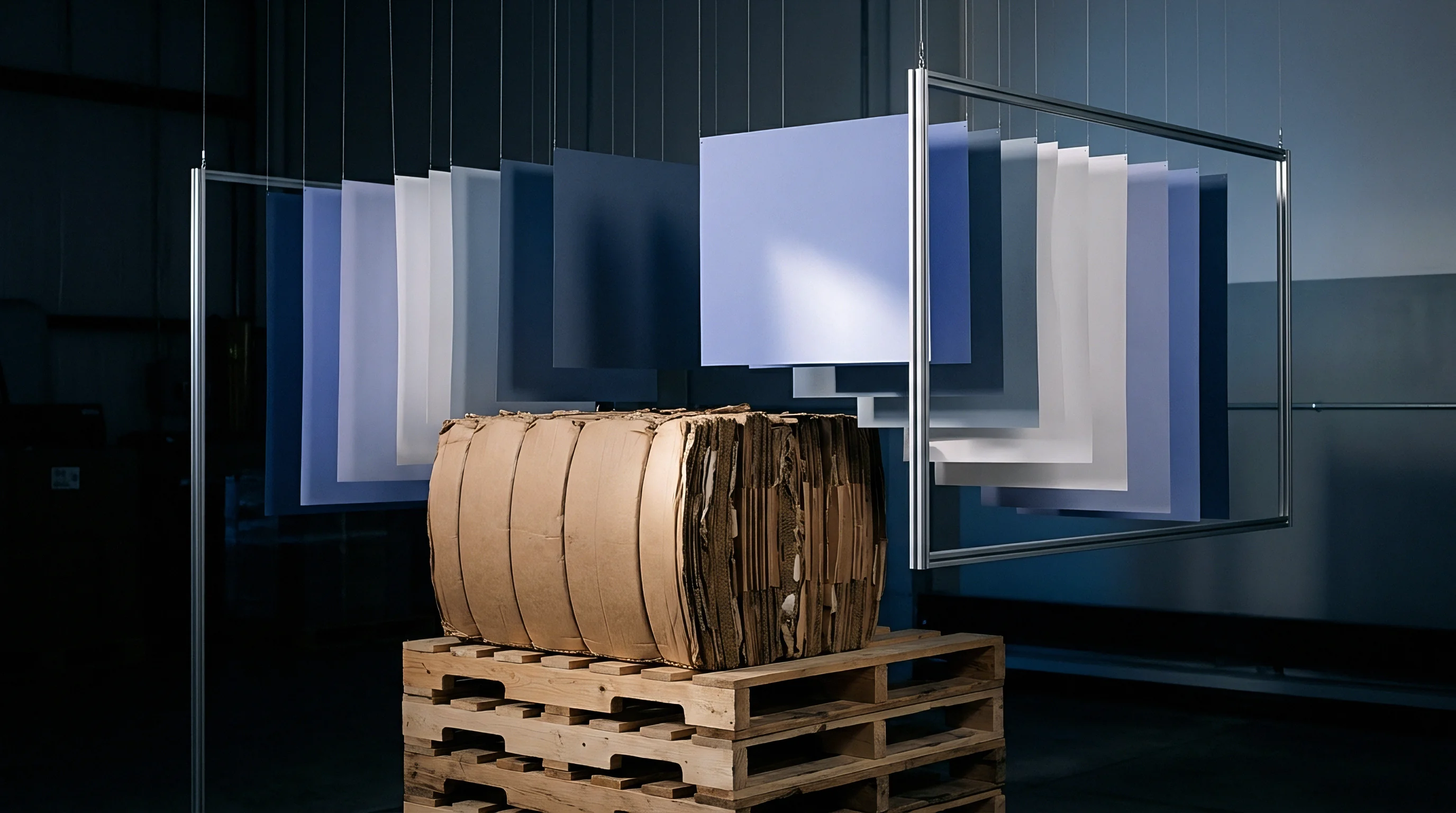
Layer
Multi-ply paperboard designs provide a strategic architecture for managing chemical compliance alongside yield losses. Instead of subjecting the entire pulp furnish to aggressive deinking and deep purification, boxboard mills divide stock preparation into distinct functional streams. Folding Boxboard and White Lined Chipboard grades utilize multi-fourdrinier or multi-vats to place high-purity virgin fibers or deeply deinked pulps on outer surfaces, while directing lower-cost recycled stocks with higher residual contaminant levels into internal core plies.
Multi-Ply Furnish Distribution
Constructing a three-ply or four-ply food contact board balances mechanical stiffness, optical properties, and chemical migration risk. Top plies typically comprise bleached chemical virgin pulp or fully deinked secondary pulp possessing high brightness and minimal organic residues. Middle plies incorporate un-deinked mechanical pulp, post-consumer recycled fiber, or internal mill broke.
Temperature accelerates hydrocarbon diffusion rates.
Placing un-deinked post-consumer pulp in core plies avoids the twenty-percent mass shrinkage associated with deep chemical washing. Residual mineral oils, photoinitiators, and plasticizers remain inside the internal core, separated from food products by clean outer plies and engineered functional barrier coatings. Gas-phase migration of volatile compounds from middle plies toward food contact surfaces requires continuous physical barriers or chemical adsorbents within the board construction.
Barrier coating weights applied to recycled fiber plies must maintain continuous film integrity across board surface contours to prevent hydrocarbon vapor transmission.
Functional Barrier Coatings and Application Dynamics
Coating technologies convert porous paperboard networks into effective barriers against mineral oil saturated hydrocarbons, mineral oil aromatic hydrocarbons, and volatile organic compounds. Water-based polymer dispersion coatings, such as ethylene-acrylic acid copolymers, polyvinylidene chloride, or bio-based polyesters, form continuous films over clay-coated board surfaces. Barrier performance relies on chemical structure, cross-linking density, and dry coat weight.
Aqueous barrier dispersions applied at six to twelve grams per square meter on a curtain coater or metering rod coater create tortuous paths that suppress hydrocarbon diffusion. Micro-fibrillated cellulose applied as a surface sizing layer forms a dense hydrogen-bonded network that inhibits non-polar solvent penetration. Applying thin polyolefin films through extrusion coating provides total moisture liquid protection, but absolute vapor phase barriers against low-molecular-weight compounds require aluminum foil laminates or specialized high-density polymer matrices.
Diffusion kinetics dictate that the lag time required for a volatile organic molecule to permeate through a paperboard substrate increases with the square of barrier thickness and inversely with the diffusion coefficient. Operating conditions during converting, such as crease folding, embossing, and thermal sealing, generate localized micro-fractures in rigid barrier coatings. Crease cracking breaches film continuity, allowing accelerated mineral oil gas-phase migration directly through board corner folds.
Mill engineers and packaging specifiers follow a strict structural sequence when configuring multi-ply board lines to control mass yield and food safety.
- Top Ply Stock Selection allocate virgin chemical pulp or deep-deinked post-consumer pulp tested below detection limits for aromatic hydrocarbons to direct food contact layers.
- Core Stock Preparation process low-grade post-consumer recycled paper through mechanical coarse screening and dispersion without flotation deinking to preserve bulk and fiber yield.
- Adsorbent Pigment Addition blend activated carbon, synthetic zeolites, or modified aluminosilicates into middle ply stock chests to trap migrating organic vapors inside the core structure.
- Barrier Layer Deposition apply an aqueous dispersion coating or micro-fibrillated cellulose film on the reverse side of the board at a minimum dry coat weight of eight grams per square meter.
- Pin-Hole Verification Testing measure surface energy and hydrocarbon gas transmission rates across cross-direction web samples using hexane vapor sorption methods before approving rolls for slitting.
Selecting lower deinking yield levels for core stocks remains commercially viable only when reverse-side functional barrier coatings maintain absolute film continuity across die-cut packaging folds.
Assay
Demonstrating compliance of recycled paperboard for food contact packaging demands analytical methodologies capable of isolating, identifying, and quantifying chemical substances at trace concentrations. Regulatory frameworks like European Regulation EC 1935/2004 demand that materials do not transfer constituents to food in quantities that endanger human health or bring about an unacceptable change in food composition. German BfR Recommendation XXXVI and its sub-recommendation XXXVI/3 define specific provisions, dry mass limits, and migration testing parameters for paper and board intended for food contact.
Which Contaminant Fractions Escape Mechanical Washing?
Flotation and mechanical washing remove bulk inks, surface-bound oils, and macro-sized particulate matter, but low-molecular-weight hydrophobic compounds adsorbed within cellulose fiber walls escape physical separation. Mineral oil saturated hydrocarbons with carbon chain numbers between C10 and C25, alongside mineral oil aromatic hydrocarbons containing one to three aromatic rings, remain bound inside micro-fibril pores. Diisopropylnaphthalenes, used as solvent carriers in carbonless copy papers, and photoinitiators like 2-isopropylthioxanthone or benzophenone from UV-cured flexographic inks, exhibit high affinity for cellulose fibers.
Cold extract tests measure soluble metals.
Chemical analysis utilizes online coupled liquid chromatography to gas chromatography with flame ionization detection to measure mineral oil fractions. The liquid chromatography stage separates aliphatic saturated hydrocarbons from aromatic hydrocarbons, preventing analytical interference between the two groups. Gas chromatography separates compounds by carbon number, displaying results as hump-like chromatograms representing complex unresolved mixtures.
Quantifying these fractions requires integrating total chromatographic areas between specific retention time markers, typically C10 to C16, C16 to C25, and C25 to C35.
Testing protocol standards specify solvent extraction using hexane and ethanol mixtures under controlled thermal conditions. Standard EN 645 defines cold water extraction for water-soluble substances, while EN 647 uses hot water extraction. Volatile and semi-volatile organic compounds migrating through the gas phase are evaluated using modified poly-2,6-diphenyl-p-phenylene oxide resin, commercially known as Tenax, acting as a dry food simulant under standard time and temperature conditions, such as ten days at forty degrees Celsius.
Hexane extracts volatile solvent residues. High temperature shifts diffusion constants. Tenax traps volatile hydrocarbons efficiently.
Gas chromatography isolates saturated rings.
| Chemical Species | Test Method / Standard | Simulant / Extraction Conditions | Analytical Instrument | Compliance Threshold |
|---|---|---|---|---|
Chromatographic quantification of mineral oil aromatic hydrocarbons using online LC-GC-FID requires complete solvent baseline separation to prevent false positive reporting in food contact certificates.
Evolving European packaging rules, specifically the Packaging and Packaging Waste Regulation, mandate minimum post-consumer recycled content targets in packaging while maintaining strict chemical safety limits. This regulatory overlap creates tension between material recycling quotas and chemical purity criteria. Mills supplying recycled packaging must maintain chain-of-custody documentation under FSC-STD-40-004 or PEFC ST 2002 to verify fiber origins, alongside comprehensive Declarations of Compliance containing batch-specific analytical migration test reports.
Supply agreements specifying that delivered paperboard batches must satisfy BfR Recommendation XXXVI/3 under EN 14338 testing conditions transfer financial responsibility for rejected inventory back to the manufacturing mill whenever chromatographic analysis reveals un-purged aromatic hydrocarbons.

Margin
Reconciling deinking mass yield shrinkage with chemical compliance requires quantitative modeling that integrates raw material costs, processing expenses, chemical additives, barrier application fees, and risk exposure. Operating a mill or specifying stock without precise yield arithmetic leads to unprofitable board production or non-compliant packaging deliveries.
Worked Financial and Yield Comparison Model
Consider a production campaign generating one hundred metric tonnes of finished 300 g/m2 coated boxboard intended for dry food packaging. Evaluate two distinct manufacturing options under identical economic baseline parameters.
Baseline cost inputs set recovered graphic paper at 180 EUR per tonne, virgin unbleached chemical pulp at 750 EUR per tonne, virgin bleached chemical pulp at 880 EUR per tonne, flotation collector chemicals at 3.20 EUR per kilogram, aqueous barrier dispersion at 2.80 EUR per dry kilogram, and primary sludge disposal fees at 90 EUR per wet tonne (forty percent dry solids content).
Yield loss drives landed board costs. Heavy sludge volume increases disposal fees. Top ply purity protects food safety.
Barrier weight dictates operational expense.
Option A utilizes a single-ply board strategy constructed from one hundred percent post-consumer recovered paper subjected to high-intensity flotation deinking, hot dispersion, and multi-stage washing to achieve food-grade purity without a specialized chemical barrier coating. Mass yield through this aggressive deinking plant drops to seventy-five percent, requiring 133.3 tonnes of recovered paper input to yield one hundred tonnes of clean fiber. Surfactant additions consume 8.5 kilograms per tonne of raw input.
Generated sludge totals 33.3 dry tonnes, yielding 83.25 wet tonnes for disposal.
Raw material expense for Option A totals 24,000 EUR for recovered paper. Collector surfactant costs reach 3,626 EUR. Sludge disposal fees sum to 7,492 EUR.
Processing energy and water treatment add 14,500 EUR. Total base fiber cost for Option A reaches 49,618 EUR, or 496.18 EUR per finished tonne of board.
Option B employs an engineered three-ply board strategy. The top ply (20% of total mass, or 20 tonnes) utilizes clean virgin chemical pulp. The middle core ply (60% of total mass, or 60 tonnes) utilizes low-intensity processed recovered paper with a gentle screening yield of ninety percent, requiring 66.7 tonnes of recovered paper input.
The bottom ply (20% of total mass, or 20 tonnes) utilizes virgin unbleached pulp. To prevent mineral oil migration from the core ply, an aqueous barrier coating is applied to the reverse side at a dry coat weight of eight grams per square meter, requiring 2.67 kilograms of dry polymer per tonne of finished board (267 kilograms total for the 100-tonne run).
Raw material expenses for Option B break down as follows: 20 tonnes top ply virgin bleached pulp at 17,600 EUR; 20 tonnes bottom ply virgin unbleached pulp at 15,000 EUR; 66.7 tonnes recovered paper input for the core ply at 12,006 EUR. Gentle core processing chemical costs total 800 EUR. Core sludge generation reaches 6.7 dry tonnes (16.75 wet tonnes), incurring 1,507 EUR in disposal fees.
Core processing energy adds 4,200 EUR. The reverse-side barrier coating consumes 267 kilograms of polymer at 748 EUR. Combined manufacturing costs for Option B sum to 56,861 EUR, or 568.61 EUR per finished tonne of board.
Although Option A yields a base fiber cost advantage of 72.43 EUR per finished tonne over Option B, Option A carries extreme chemical compliance risk. Statistical process variation in post-consumer feedstocks periodically causes residual MOSH/MOAH levels in Option A to exceed BfR XXXVI/3 limits, triggering border customs holds, product recalls, or total shipment rejections.

Operational Decision Steps for Sourcing Teams
Commercially defensible stock qualification follows a structured sequence to hedge exposure against compliance failures and yield penalties.
- Audit incoming recovered paper feedstocks quarterly using solvent extraction and GC-FID to establish baseline mineral oil hydrocarbon variation limits.
- Establish minimum mass yield thresholds for deinking lines to prevent excessive fine fiber loss and sludge generation fees.
- Calculate the break-even coat weight where functional aqueous barrier application costs equal the raw material cost savings achieved by utilizing un-deinked core plies.
- Demand batch-specific LC-GC-FID test reports showing MOSH and MOAH fractions along with Declarations of Compliance matching mill roll numbers before clearing customs shipments.
Calculating the net financial balance between deinking yield loss, primary sludge disposal fees, and functional barrier application costs determines overall board manufacturing margins.
Selecting pure deinking purification without barrier functionalization exposes packaging buyers to border holds and inventory destruction costs when high-density post-consumer stocks exceed chemical extraction limits.