Fibre Origin
Discarded paper waste gathered after final usage defines the source of this supply stream. Paper goods categorized as post-consumer recycled consist of materials retrieved from municipal collection programs or office recovery bins after households and commercial entities finish their initial utility. This specific classification excludes mill broke or conversion scrap produced during the manufacturing process because those remnants never reached the end user.
Recyclers sort these recovered stocks to remove contaminants like plastic films, adhesives, and non-paper debris before processing the fibers into new pulp.
Processing Requirement
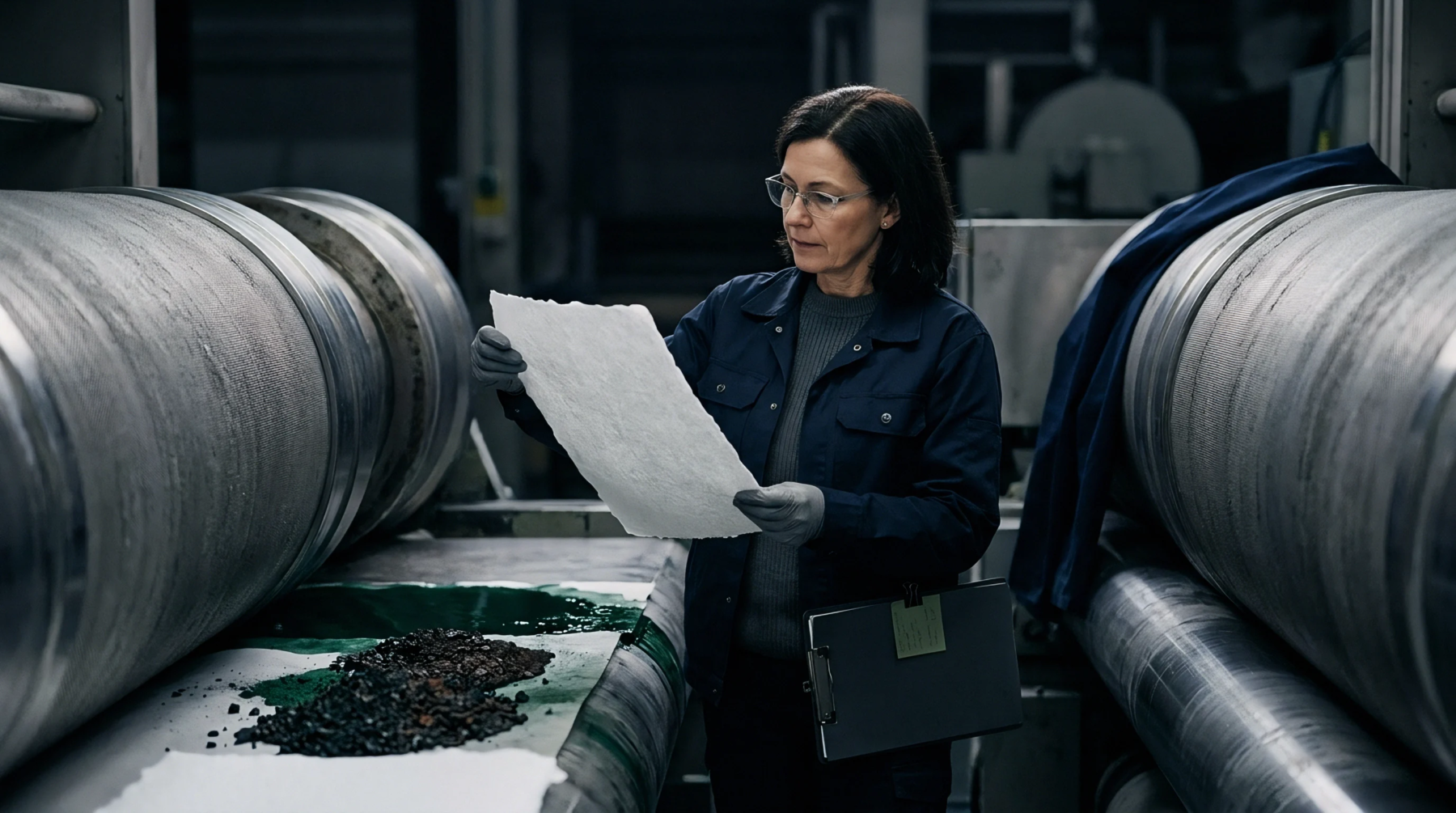
Pulping operations subject these recovered stocks to mechanical and chemical de-inking to strip away coatings and printer pigments. Mills operate flotation tanks where surfactants latch onto ink particles and float them to the surface for removal through mechanical skimming. High concentrations of this material change the physical properties of the resulting sheet because the cellulose fibers shorten and weaken with each cycle of repulping.
Engineers monitor the freeness and drainage rates of the mixture to maintain runnability on high-speed equipment. Adding virgin reinforcement fibers becomes necessary when the secondary stock composition exceeds the threshold for structural integrity.
Validation Protocol
Paper converters verify the content through chain of custody audits performed by third party certification bodies. Auditors inspect procurement invoices and mass balance ledgers to confirm that the input material genuinely matches the claim printed on the final packaging or commercial stationery. Such documentation separates verified secondary fiber from unknown scrap by tracking the movement of materials from the recovery point to the machine chest.
Certified percentages provide the only reliable method for purchasers to quantify their environmental impact while avoiding false claims regarding material circularity.