Analytical Testing Protocols for Food Contact Paperboard Extractives and Migration Metrics
Extractives and migration testing requires matching food simulants, extraction solvents, and analytical thresholds to specific regulatory contact conditions.


Extractives
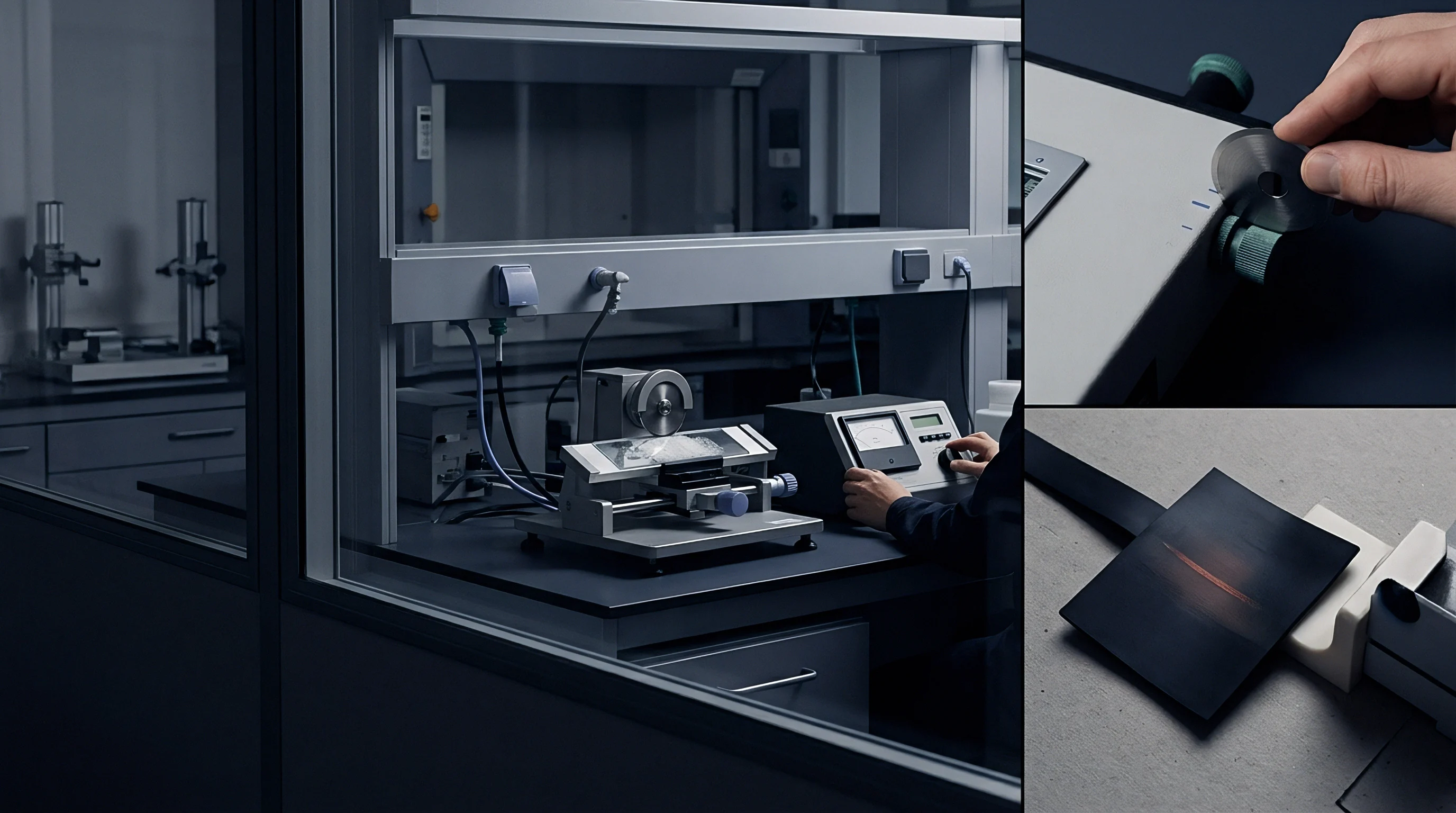
Food contact paperboard releases organic and inorganic compounds into contact media through dissolution, desorption, and swelling-driven extraction. Quantifying these substances involves measuring total extractive mass yields alongside individual target compounds under standardized temperature and solvent conditions. Standard test procedures separate cold water extractions from hot water extractions and organic solvent extractions to mirror specific food types and processing steps.
Cold water extraction performed according to standard EN 645 isolates water-soluble substances that transfer into aqueous food at ambient or refrigerated temperatures. The procedure exposes dry board samples to distilled water at 23 degrees Celsius for 24 hours. Mass yield calculations determine total dissolved dry matter, ionic species, and readily solubilized additives such as surface starches or residual processing aids.
Hot water extraction governed by standard EN 647 escalates thermal energy to 80 degrees Celsius over a 2-hour duration, replicating conditions found in hot-fill packaging and microwave re-heating applications.
Cold water extraction under EN 645 yields less than 0.1 milligrams per square decimeter of water-soluble organic matter on virgin bleached sulphate board at 23 degrees Celsius.
Organic solvent extractions evaluate hydrophobic constituents including sizing agents, synthetic polymers, defoamers, and printing ink components. Standard EN 15586 specifies volatile solvent exposure using 95 percent volume-by-volume ethanol or synthetic isooctane. When organic solvents contact paperboard, non-polar additives dissolve out of the cellulosic network at rates far exceeding water-based extraction rates.
| Paperboard Grade | Extraction Solvent | Test Condition | Mean Total Extractives | Primary Chemical Constituents |
|---|---|---|---|---|
| Solid Bleached Board (SBB) | Distilled Water (EN 645) | 23 °C for 24 hours | 0.08 mg/dm² | Starch, inorganic salts, traces of carboxymethyl cellulose |
| Solid Bleached Board (SBB) | 95% Ethanol (EN 15586) | 40 °C for 10 days | 0.45 mg/dm² | Alkyl ketene dimer (AKD), fatty acid esters, resin acids |
| Folding Boxboard (FBB) | Distilled Water (EN 647) | 80 °C for 2 hours | 0.22 mg/dm² | Lignosulfonates, hemicellulose fragments, starch derivatives |
| Folding Boxboard (FBB) | Isooctane (EN 15586) | 20 °C for 2 days | 1.12 mg/dm² | Alkenyl succinic anhydride (ASA), mineral wax, defoamer residues |
| Recycled White Lined Chipboard (WLC) | 95% Ethanol (EN 15586) | 60 °C for 10 days | 4.85 mg/dm² | Diisopropylnaphthalenes (DIPN), phthalates, mineral oil hydrocarbons |
The total extractive yield quantifies non-volatile matter remaining after solvent evaporation. Analytical balances with 0.1 milligram precision record mass changes between dried sample aliquots and blank control solvents. Converting gravimetric results into units of milligrams per square decimeter of packaging surface establishes the baseline metric for overall chemical purity across different board grammages and furnish blends.
Extractive values reflect both intentionally added chemistry and residual wood pulp components. Water-soluble carbohydrates and lignosulfonates leach out during hot water testing of mechanical pulps, whereas bleached chemical pulps exhibit minimal natural extractives.
Simulants
Selecting appropriate contact media determines the validity of paperboard migration assays. Direct liquid contact testing with aqueous or fatty food simulants presents physical challenges for paperboard substrates. Liquid immersion causes fiber swelling, structural weakening, and binder leaching that do not occur when packaging dry or non-greasy foods.
Regulatory guidelines define specific physical state simulants tailored to paper and board matrices.
Aqueous media include Simulant A (10 percent ethanol volume-by-volume), Simulant B (3 percent acetic acid weight-by-volume), and Simulant C (20 percent ethanol). For fatty food applications, liquid vegetable oils specified as Simulant D2 penetrate porous cellulose networks, making gravimetric phase separation difficult. Modified polyphenylene oxide, known commercially as Tenax and designated as Simulant E under standard EN 14338, serves as the solid sorbent simulant for dry and fatty food contact modeling.
Tenax captures volatile and semi-volatile substances migrating through the air gap or via direct contact without destroying paperboard fiber structure.
- Polyoxymethylene particle embedding occurs when micro-porous board surfaces retain solid adsorbent granules during post-exposure recovery.
- Matrix fiber delamination takes place when aqueous acetic acid weakens hydrogen bonding between unbleached kraft fibers during extended immersion.
- Solvent retention interference arises when volatile ethanol remains entrapped within hydrophobic sizing formulations prior to gravimetric analysis.
Testing paperboard with high-alcohol content liquid simulants causes total absorption into internal pores, altering physical transfer mechanisms. Time and temperature exposure profiles must reflect actual supply chain realities. Standard testing intervals span 10 days at 40 degrees Celsius for long-term ambient storage, escalating to 175 degrees Celsius for short-duration dual-ovenable packaging applications.
Testing paperboard against liquid Simulant D2 overestimates fat migration due to matrix disintegration rather than solubilization.
Simulant exposure parameters dictate whether migrants partition into the contact layer or remain bound inside the cellulosic matrix. High temperatures accelerate molecular kinetic energy, accelerating the migration of low molecular weight compounds. Low-density substrates show faster simulant saturation rates than highly calendered, dense packaging structures.
Simulant exposure temperatures exceeding the thermal softening point of internal sizing agents invalidate mass transfer metrics.

Chromatography
Quantifying specific chemical species migrating from paperboard into simulants or food samples demands high-resolution chromatographic separation paired with mass spectrometry. Headspace gas chromatography coupled to mass spectrometry (HS-GC-MS) screens volatile organic compounds, including residual converting solvents, aldehyde degradation products, and terpene fractions. Solid phase microextraction (SPME) pre-concentrates trace volatiles directly from the vial vapor space, lowering analytical detection thresholds.

Volatile Compound Identification via Headspace GC-MS
Headspace testing isolates compounds with high vapor pressures without injecting non-volatile paperboard extracts into the chromatographic column. Samples undergo equilibration in sealed vials at temperatures ranging from 60 to 105 degrees Celsius. Gas chromatography separates compounds on non-polar capillary columns such as 5 percent phenyl-methylpolysiloxane.
Electron ionization mass spectrometry identifies individual peaks by comparing fragmentation spectra against reference libraries.
Headspace Temperature Effects on Volatile Detection Limits
Elevating headspace equilibration temperature from 60 degrees Celsius to 100 degrees Celsius increases the vapor-phase concentration of semi-volatile residual solvents by factors between three and seven. Higher thermal energy overcomes sorption forces binding polar compounds to cellulose hydroxyl groups. Exceeding 105 degrees Celsius induces thermal degradation of paperboard starch coatings, generating artifact peaks like furfural and acetic acid that obscure target migrant signals.
For non-volatile and thermally labile compounds, liquid chromatography coupled to tandem mass spectrometry (LC-MS/MS) provides high specificity. LC-MS/MS quantifies primary aromatic amines (PAAs), photoinitiators from ultraviolet-cured inks, and per- and polyfluoroalkyl substances (PFAS). Electrospray ionization operating in positive or negative ion mode converts liquid chromatograph eluates into gas-phase ions for triple quadrupole mass filtering.
Evaluating mineral oil saturated hydrocarbons (MOSH) and mineral oil aromatic hydrocarbons (MOAH) requires online coupled high-performance liquid chromatography-gas chromatography with flame ionization detection (HPLC-GC-FID). Liquid chromatography separates the raw extract into distinct MOSH and MOAH fractions on a silver nitrate impregnated silica column. Each fraction transfers directly into separate GC capillary columns equipped with retention gaps for thermal desorption and FID quantification.
Gas chromatography coupled to flame ionization detection quantifies mineral oil saturated hydrocarbons down to 0.5 milligrams per kilogram of dry paperboard.
Consider a migration evaluation performed on a 300 gram per square meter recycled folding boxboard used in a 1 kilogram dry food carton with a surface area of 6 square decimeters. Chromatographic extraction of the board via solvent extraction yields a total MOSH concentration (carbon range C10 to C35) of 45.0 milligrams per kilogram of paperboard. Calculating the total mass of MOSH in one carton yields 13.5 milligrams based on a total carton packaging weight of 0.300 kilograms.
Assuming complete migration into the 1 kilogram food charge, the resulting food contamination level reaches 13.5 milligrams per kilogram of food. This value exceeds the toxicological target threshold of 0.5 milligrams per kilogram for MOSH fractions, proving that an un-coated recycled board without a functional barrier fails health safety criteria for direct dry food contact.
| Migrant Class | Analytical Technique | Limit of Detection (LOD) | Limit of Quantification (LOQ) | Regulatory Reference Metric |
|---|---|---|---|---|
| MOSH (C10-C35) | HPLC-GC-FID | 0.2 mg/kg board | 0.5 mg/kg board | BfR Draft Benchmark: 0.5 mg/kg food |
| MOAH (C10-C35) | HPLC-GC-FID | 0.05 mg/kg board | 0.15 mg/kg board | EU Regulation 2023/2006 Target: 0.15 mg/kg food |
| Benzophenone (Photoinitiator) | GC-MS / LC-MS | 0.02 mg/kg simulant | 0.05 mg/kg simulant | Specific Migration Limit: 0.6 mg/kg food |
| Primary Aromatic Amines (PAAs) | LC-MS/MS | 0.002 mg/kg simulant | 0.012 mg/kg simulant | Specific Migration Limit: 0.01 mg/kg food (total) |
| Perfluorooctanoic Acid (PFOA) | LC-MS/MS | 0.01 µg/dm² board | 0.05 µg/dm² board | Specific Migration Limit: 0.025 mg/kg food |
Uncertainty in chromatographic quantification stems from matrix interference and incomplete analyte recovery. Analytical laboratories validate recovery rates by spiking virgin paperboard matrices with known chemical standards prior to extraction. Recovery percentages ranging between 80 percent and 120 percent establish acceptable quantitative boundaries for compliance filings.
Technical committees continue to debate whether liquid chromatography should replace gas chromatography for measuring low molecular weight photoinitiators in aqueous extractions.
Swell
Physical interaction between liquid testing media and cellulosic fibers alters the molecular architecture of the paperboard matrix during extraction procedures. Cellulose fibers contain dense crystalline regions bound together by amorphous regions rich in hydroxyl groups. Exposure to aggressive solvents, particularly short-chain alcohols and organic solvent mixtures, disrupts hydrogen bonding within amorphous zones, causing physical swelling of the fiber walls.
Fiber swelling opens mechanical pores between interlocking cellulose strands, driving non-linear diffusion of high molecular weight additives into non-polar simulants. The volumetric expansion coefficient quantifies this physical shift. Swelling increases the internal free volume of the sheet structure, accelerating diffusion coefficients by up to two orders of magnitude relative to dry state mass transport.
High diffusion rates artificially inflate measured migration metrics compared to real-world migration into dry, solid foods.
- Condition board samples at 23 degrees Celsius and 50 percent relative humidity for 48 hours to reach moisture equilibrium.
- Measure baseline caliper using a micrometer across ten distributed sampling points to establish original structural thickness.
- Immerse samples in selected organic solvent mixtures at designated test temperatures for specified contact intervals.
- Remove samples and record immediate wet caliper expansion before solvent evaporation occurs.
- Extract volatile fraction in headspace vials to quantify absorbed mass fraction relative to dry fiber mass.
Structural expansion during organic solvent immersion can increase effective board caliper by 15 to 40 percent depending on the furnish composition and mechanical refining degree. Groundwood mechanical pulps exhibit higher swelling ratios in non-polar solvents than heavily bleached kraft pulps due to high residual lignin concentrations.
Fiber swelling opens mechanical pores between interlocking cellulose strands, driving non-linear diffusion of high molecular weight additives into non-polar simulants.
Testing protocols compensate for swelling phenomena by utilizing solid phase adsorbents like Tenax instead of liquid solvent immersion whenever testing non-fatty dry foods. Solid sorbent testing maintains the structural integrity of the cellulose matrix, preventing artificial pore opening and keeping mass transfer restricted to gas-phase volatility and surface boundary diffusion.
Standard DIN EN 1186-13 Section 5 specifies that solid simulant contact replaces liquid immersion whenever solvent swelling alters the structural density of porous paperboard substrates.

Liability
Translating raw laboratory metrics into commercial compliance files places severe legal duties on brand owners, converters, and paper mills. Framework Regulation EC 1935/2004 dictates that materials contacting food must not transfer constituents in quantities that endanger human health, cause an unacceptable change in food composition, or induce deterioration in organoleptic characteristics. Specific migration limits (SML) and overall migration limits (OML) enforce these mandates.
The Overall Migration Limit caps total non-volatile substance transfer at 10 milligrams per square decimeter of packaging surface area or 60 milligrams per kilogram of food simulant. Specific Migration Limits apply to individual toxicological substances listed under Regulation EU 10/2011 and national recommendations like BfR Recommendation XXXVI for paper and board. Exceeding an SML or OML during market surveillance testing invalidates the compliance status of the packaging lot, rendering the stock legally unmarketable.
- Analytical scope verification confirms that test reports match the precise grammage and resin formulation of the imported consignment.
- Simulant substitution proof demonstrates valid scientific justification when substituting modified polyphenylene oxide for liquid vegetable oils.
- Non-intentionally added substance screening documents mass spectrometry evaluations for unlisted breakdown products and printing ink transformation compounds.
- Functional barrier qualification provides time-temperature failure boundaries for polymer or mineral coatings separating recycled fiber from direct food contact.
Paperboard manufactured from post-consumer recycled fiber loops contains residual printing inks, adhesives, and environmental contaminants. Maintaining compliance for recycled packaging requires continuous screening for non-intentionally added substances (NIAS). Mass spectrometry screening workflows must establish toxicological safety for unidentified chromatographic peaks using threshold of toxicological concern (TTC) principles.
| Regulatory Parameter | Threshold Value | Governing Standard / Norm | Documentary Instrument Required |
|---|---|---|---|
| Overall Migration Limit (OML) | 10 mg/dm² or 60 mg/kg | Regulation EU 10/2011 / BfR XXXVI | Laboratory Migration Test Report |
| Primary Aromatic Amines (Individual) | 0.002 mg/kg food | Regulation EU 2020/1245 | LC-MS/MS Analytical Certificate |
| Primary Aromatic Amines (Sum) | 0.01 mg/kg food | Regulation EU 2020/1245 | LC-MS/MS Analytical Certificate |
| Unspecified NIAS (Cramer Class III) | 0.00025 mg/kg food (1.5 µg/day) | EFSA / TTC Concept | Toxicological Assessment Risk File |
| Heavy Metals (Lead, Cadmium, Mercury, Cr VI) | 100 mg/kg sum total concentration | Packaging & Packaging Waste Directive | XRF / ICP-OES Element Analysis |
Border authorities enforce compliance by reviewing Declarations of Compliance (DoC) alongside supporting test dossiers. A valid DoC must trace material lineage from primary pulp production through converting, printing, and coating processes. Missing analytical records or mismatched test conditions between the certificate and the imported paperboard specification expose the importer of record to immediate regulatory action.
Importing uncertified paperboard with missing migration documentation leads to immediate customs border impoundment and mandatory destruction of the non-compliant packaging lot.